 English
 Español
 Indonesia
Unstable water pressure can create practical problems in residential buildings, hotels, commercial facilities, and small industrial water systems. Users may notice weak flow when several outlets operate simultaneously, while facility managers may be concerned about unnecessary pump starts, operating noise, and energy consumption. Selecting a suitable water pressure boosting system requires more than checking the pump's rated flow and head. Control logic, motor performance, system demand, and installation conditions all influence how effectively the equipment responds to changing water use.
Understand Why Water Pressure Fluctuates
Water demand rarely remains constant throughout the day. A building may require only a small flow during quiet periods but experience a much higher demand when several taps, showers, or appliances operate together. A pump selected without considering these variations may struggle to maintain the required pressure or operate inefficiently under light loads.
Before choosing a booster pump, buyers should identify the required flow range, target outlet pressure, available inlet pressure, pipe layout, and number of simultaneous water outlets. These details help manufacturers evaluate the actual operating conditions rather than relying on a single peak-demand figure.
A properly matched system can respond more appropriately to changing demand and reduce avoidable pressure variations.
Use Variable Frequency Control to Match Demand
Traditional pump arrangements may rely on fixed-speed operation and switching according to pressure thresholds. Depending on the system design, this can result in noticeable pressure changes when the pump starts or stops.
Variable frequency control adjusts motor speed according to operating requirements. When water demand decreases, the controller can reduce pump speed where the system permits. When demand increases, it can raise the speed to help maintain the required pressure within the equipment's operating range.
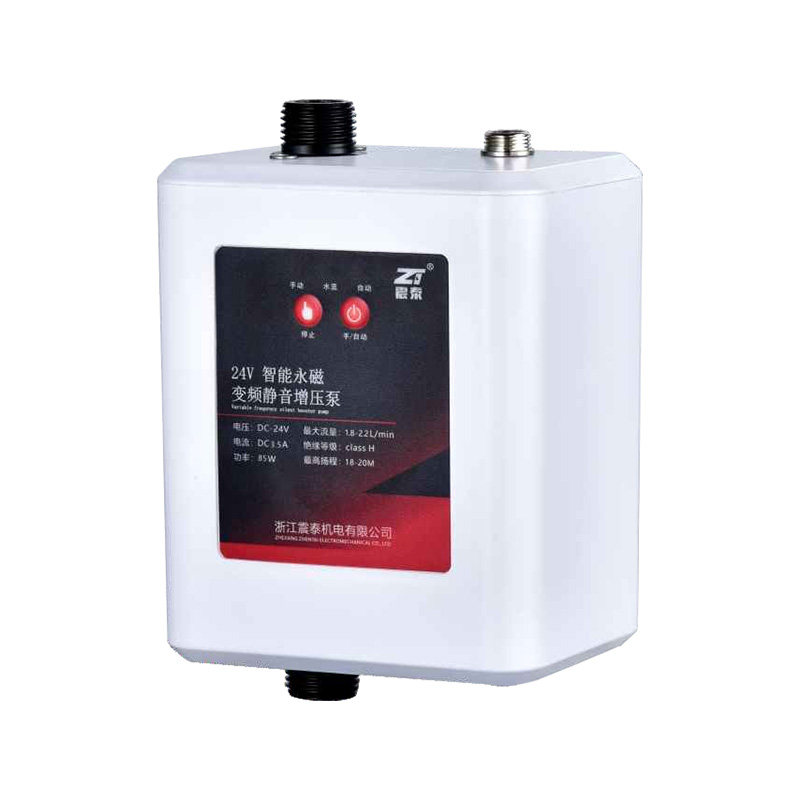
For buyers evaluating an Intelligent Permanent Magnet Variable Frequency Silent Booster Pump, the key question is how the control system responds to real demand changes. Relevant considerations include pressure sensor accuracy, controller settings, response behavior, and compatibility with the intended plumbing system.
Consider Motor Efficiency and System Compatibility
Permanent magnet motors can offer useful efficiency characteristics in appropriately designed pump systems, particularly when combined with variable speed control. However, overall performance depends on the complete equipment configuration, including the motor, hydraulic components, controller, and operating point.
Buyers should compare rated flow and head with the actual duty requirements instead of selecting a model based only on motor power. An oversized pump may operate away from its intended operating range during periods of low demand, while an undersized model may be unable to deliver sufficient pressure and flow during peak use.
Manufacturers can help assess these requirements by reviewing the system's pressure targets, expected demand variation, pipe resistance, and installation constraints before recommending a configuration.
Reduce Noise Through Design and Installation
Operating noise can affect comfort in apartments, hotels, offices, and other spaces where water supply equipment is installed near occupied areas. Noise may come from the motor, hydraulic turbulence, vibration transmitted through pipes, or unsuitable installation conditions.
A quiet booster pump design should therefore be evaluated as a complete system. Useful checks include:
- Whether the pump and motor are suitable for the required operating range
- Whether the mounting surface is stable and appropriate
- Whether connected pipes create unnecessary mechanical stress
- Whether valves or pipe restrictions contribute to turbulence
- Whether the installation provides suitable ventilation and maintenance access
A silent or low-noise product designation should not be treated as a guarantee of inaudible operation. Actual sound levels depend on equipment design, load, surroundings, and installation quality.
Check Pressure Protection and Control Functions
Stable water supply also depends on how the pump handles abnormal conditions. Depending on the model, useful control and protection functions may include overpressure protection, dry-run protection, overload response, temperature monitoring, and fault indication.
Buyers should confirm which functions are included in the selected configuration and understand their operating limits. In particular, protection against dry running may require appropriate sensors or control arrangements, depending on the pump design and water supply conditions.
For manufacturers, clearly documenting control functions and recommended operating conditions helps installers configure the equipment correctly and makes technical comparisons more meaningful during procurement.
Plan Installation and Maintenance Before Purchase
Even a well-selected pump can experience performance problems if the installation is poorly planned. Restricted inlet piping, air entering the system, unsuitable valves, leaks, or incorrect pressure settings can affect operation. Regular inspection is also important for identifying changes before they lead to service interruptions.
Before ordering, buyers should confirm connection sizes, installation orientation, electrical requirements, controller settings, and available maintenance access. It is also helpful to establish a basic inspection routine covering leaks, abnormal noise, pressure behavior, and visible signs of wear.
Providing these details early allows the manufacturer to assess compatibility and clarify any installation requirements before the equipment reaches the project site.
Choose a Booster Pump Around Real Operating Conditions
A dependable water pressure boosting solution should balance pressure stability, flow capacity, motor performance, noise management, and protection functions. Rather than choosing equipment from a single specification, buyers should evaluate how the complete system will perform under both low-demand and peak-demand conditions.
An Intelligent Permanent Magnet Variable Frequency Silent Booster Pump may be suitable for applications requiring responsive pressure control and attention to operating comfort, provided its specifications match the installation. For manufacturers and procurement teams, a clear understanding of system requirements is the starting point for selecting equipment that supports reliable water delivery and practical long-term operation.