 English
 Español
 Indonesia
Introduction
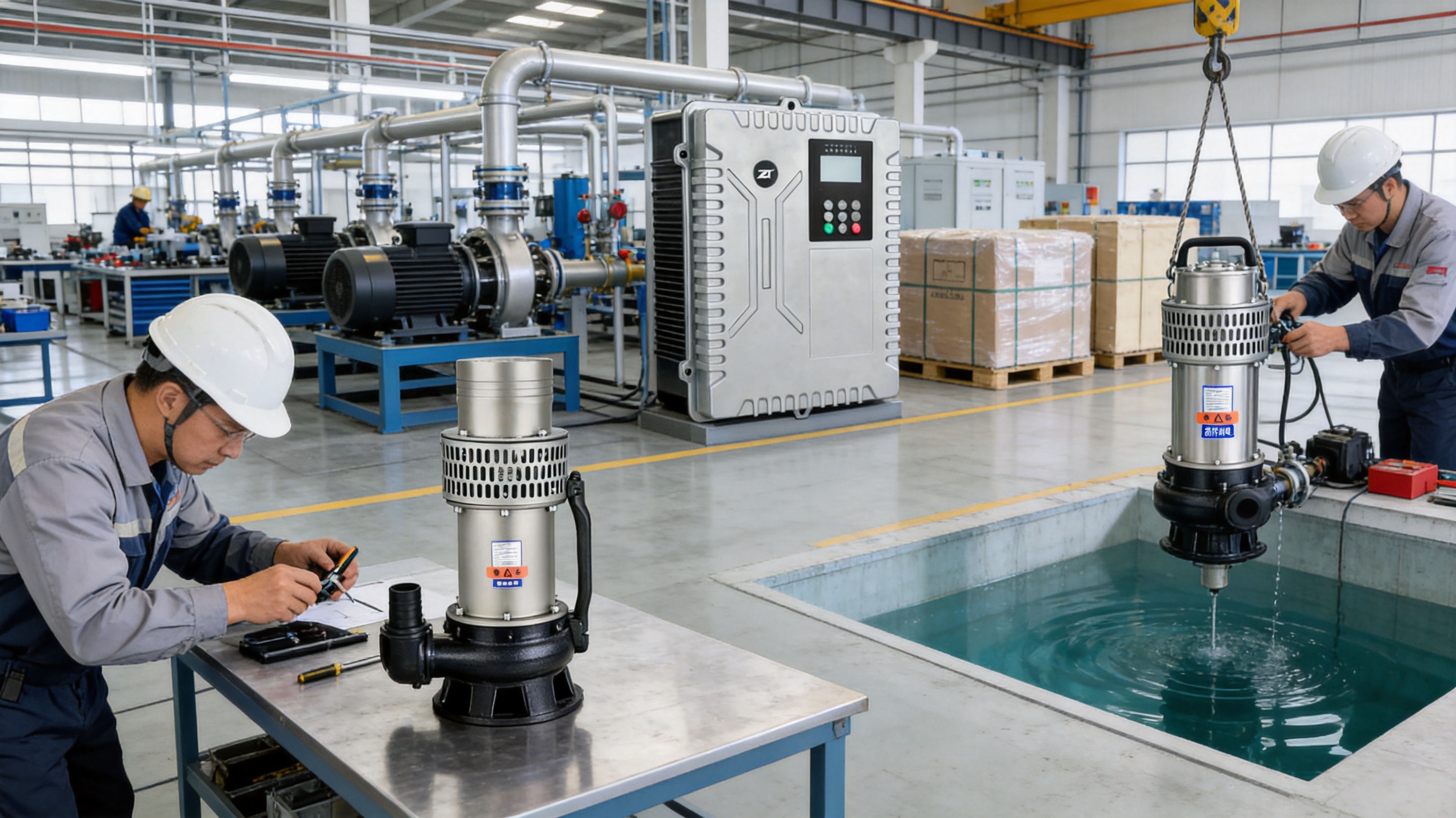
Reliable water transfer is essential for agricultural irrigation, aquaculture, drainage, ecological water management, industrial utility systems, and many other applications. In these environments, a pump must do more than move water from one location to another. It must operate consistently under changing loads, consume energy responsibly, tolerate demanding working conditions, and remain practical to install and maintain. The SZQ Permanent Magnet Variable Frequency Oil-Immersed Pump is designed to address these requirements through the combination of a permanent magnet motor, variable frequency control, and an oil-immersed submersible structure.
This pump is intended for users who need stable water delivery with efficient operation. Its submersible design allows the pump to work directly in the water, reducing the need for long suction pipelines and helping simplify installation. The permanent magnet motor supports efficient power conversion, while the variable frequency drive system enables performance adjustment according to actual operating conditions. Together, these technologies create a flexible pumping solution for farms, wells, fish ponds, drainage projects, and other water transfer applications.
The SZQ series is available in several configurations, with rated flows from 160 to 260 cubic meters per hour, rated heads from 6 to 10 meters, power ratings from 4 to 11 kilowatts, and a standard 380-volt electrical configuration. These specifications make the range suitable for high-volume, relatively low-head water transfer where stable output and operating economy are important.
Manufactured by Zhejiang ZhenTai Mechanical and Electrical Co., Ltd., the product is supported by a company specializing in aerators, air blowers, submersible pumps, and water pumps. The manufacturer serves aquaculture farms, agricultural projects, environmental applications, building drainage systems, and international OEM and ODM customers.
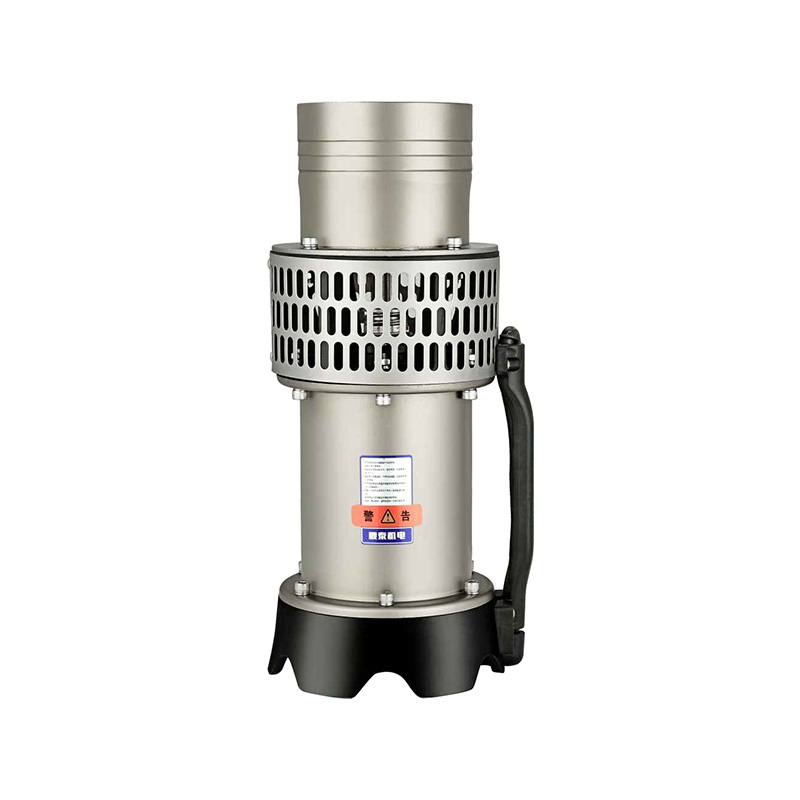
SZQ Permanent Magnet Variable Frequency Oil Immersed Pump
Product Overview
The SZQ Permanent Magnet Variable Frequency Oil-Immersed Pump is an oil-immersed submersible pump equipped with a permanent magnet motor and a variable frequency control system. Unlike a conventional surface-mounted pump, the unit is installed directly in the water or liquid environment for which it is designed. This arrangement places the pump close to the intake point and allows water to enter the pump without relying on a long suction lift.
The pump’s oil-immersed construction supports motor protection and heat management. The oil-filled motor chamber helps surround internal components and assists with heat transfer during operation. In a properly selected and correctly installed application, this structure can contribute to dependable service in environments where a dry motor and extended suction piping would be less convenient.
The permanent magnet motor is a major feature of the design. Permanent magnet motors can achieve efficient operation because the magnetic field is generated by permanent magnets rather than by continuously energized rotor windings. This design can reduce certain electrical losses and support a compact motor structure. When combined with variable frequency control, it allows the operating speed to be adjusted to match water demand, pipeline conditions, and system load.
The pump is not limited to a single fixed operating point. A variable frequency drive can regulate motor speed within the appropriate operating range. This flexibility is valuable when water demand changes throughout the day or when one pumping system serves different fields, ponds, tanks, or drainage areas. Instead of operating at full speed continuously, the pump can be adjusted to provide a more suitable flow and pressure level.
Before operation, the pump must be fully submerged and correctly installed in the working area. It should be connected to a stable power supply and a properly configured variable frequency control system. Operators should also confirm that the pump is suitable for the liquid, installation depth, pipeline arrangement, electrical conditions, and required flow and head.
Main Technical Specifications
The available SZQ models are designed around a six-inch, or approximately 150-millimeter, installation size. The models differ in rated flow, rated head, and motor power, allowing buyers to select a configuration according to the hydraulic requirements of a project.
| No. | Model | Rated Flow | Rated Head | Power | Size | Voltage |
|---|---|---|---|---|---|---|
| 1 | SZQ160-6-4 | 160 m³/h | 6 m | 4 kW | 6 inches, 150 mm | 380 V |
| 2 | SZQ200-7-5.5 | 200 m³/h | 7 m | 5.5 kW | 6 inches, 150 mm | 380 V |
| 3 | SZQ260-7-7.5 | 260 m³/h | 7 m | 7.5 kW | 6 inches, 150 mm | 380 V |
| 4 | SZQ250-10-11 | 250 m³/h | 10 m | 11 kW | 6 inches, 150 mm | 380 V |
The model designation provides useful information for preliminary selection. The flow and head values indicate the rated hydraulic performance, while the final number generally corresponds to the motor power in kilowatts. However, a final selection should always consider the complete system curve, pipe length, pipe diameter, elbows, valves, elevation difference, operating schedule, liquid characteristics, and required reserve capacity.
Permanent Magnet Motor Technology
The permanent magnet motor is one of the most important differences between the SZQ series and many conventional pump systems. In a traditional induction motor, the rotor magnetic field is generated through induced current. This process creates electrical losses in the rotor. A permanent magnet motor uses permanent magnets to establish the magnetic field, which can improve motor efficiency and reduce internal energy loss under suitable operating conditions.
Improved motor efficiency can have a direct influence on operating costs. Pumping systems often run for many hours each day, particularly in agricultural irrigation and aquaculture. Even a modest reduction in energy consumption can become significant over a full operating season. For large farms, fish pond groups, or industrial water circulation systems, energy efficiency is not only an environmental consideration but also a major part of the total cost of ownership.
The permanent magnet design can also support a compact and responsive motor structure. A compact motor can be advantageous in a submersible application because it helps maintain an integrated pump configuration. The motor and pump can be installed as one unit, without requiring a separate surface motor platform, coupling arrangement, or mechanical transmission system.
Another benefit is the compatibility between permanent magnet motor technology and variable frequency control. The motor can respond to speed commands from the drive system, allowing the pump to adapt to different water requirements. This is particularly useful where water demand changes as irrigation zones open and close, as pond levels change, or as drainage conditions develop after rainfall.
Actual performance depends on the complete electrical and hydraulic system. The variable frequency drive must be correctly matched to the motor, and operating limits must be respected. Professional installation and commissioning are essential to obtain the intended benefits of the permanent magnet system.
Variable Frequency Control for Flexible Water Delivery
Many pump installations operate under changing conditions. A fixed-speed pump may deliver more water than required during low-demand periods, causing unnecessary energy consumption, pressure fluctuations, throttling losses, and increased mechanical stress. A variable frequency drive provides a more flexible approach by changing motor speed to suit the required operating point.
When the required flow is lower, the pump may operate at a reduced speed within its permitted range. When greater output is needed, the drive can increase speed according to the control settings and system requirements. This enables a more appropriate relationship between demand and energy use.
Variable frequency control can also help with smoother starting. Instead of applying full voltage and full speed immediately, the drive can increase motor speed gradually. Soft starting may reduce starting current and help limit hydraulic shock in the connected pipeline. A smoother start can be valuable in systems with long pipes, flexible hoses, valves, or equipment that is sensitive to sudden pressure changes.
The technology also makes it easier to integrate the pump into automated water management systems. A farm may use water-level sensors, irrigation timers, flow sensors, or pressure feedback to control the pump. An aquaculture facility may coordinate water movement with pond conditions, filtration requirements, or scheduled exchange cycles. The variable frequency system provides a foundation for this type of operational adjustment.
Users should not treat variable frequency control as a substitute for correct pump selection. A drive cannot compensate for an unsuitable pump, an undersized pipeline, excessive suction restrictions, or a head requirement beyond the rated capability. The best results come from matching the pump model, drive settings, hydraulic system, and operating schedule as one complete design.
Advantages of the Oil-Immersed Submersible Structure
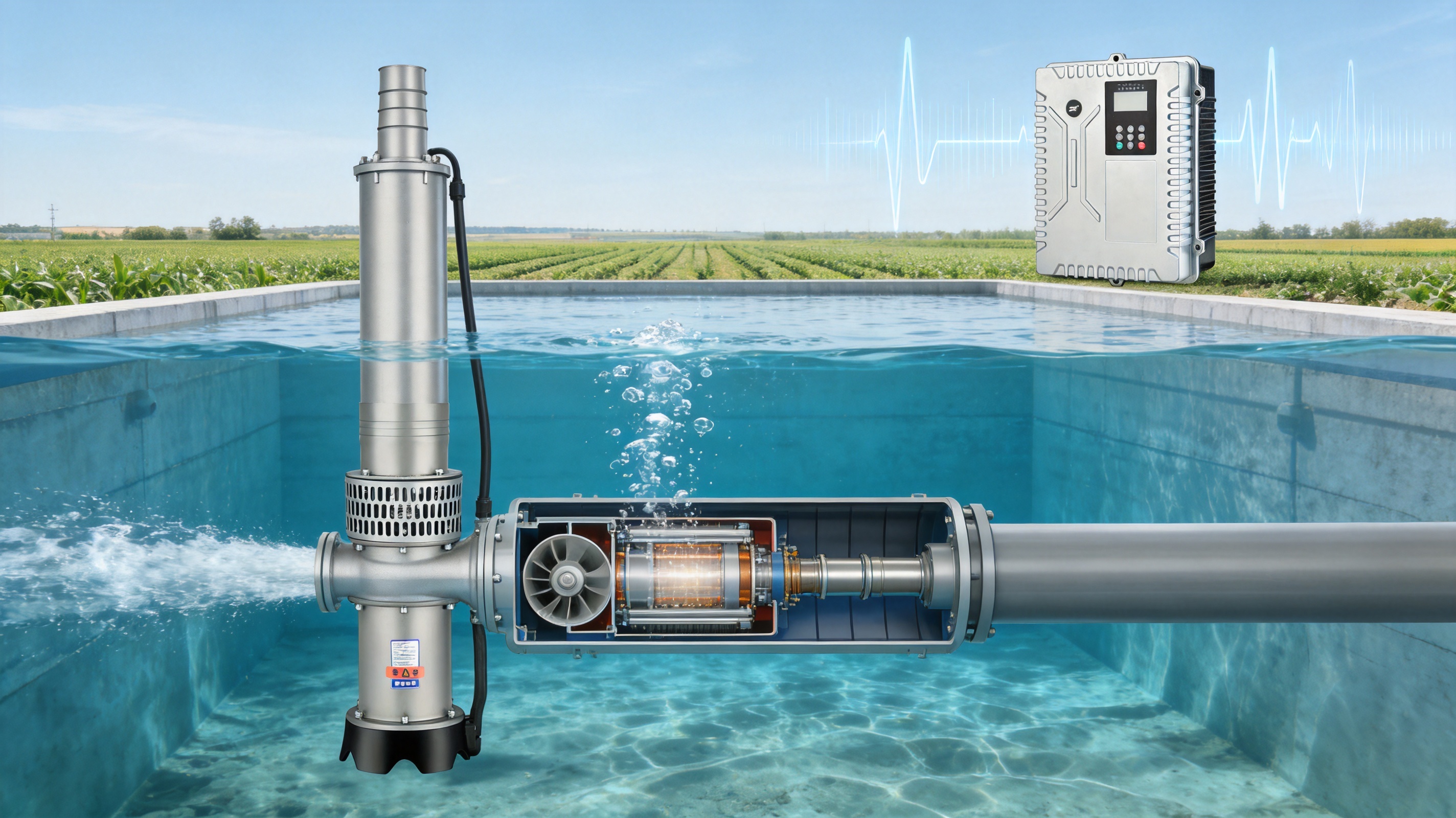
The oil-immersed submersible configuration is designed for direct placement in the water. This can simplify the layout of a pumping station because the pump does not need to be installed in a separate dry room above the water source. The unit can be positioned at the intake location, connected to the discharge pipeline, and operated after confirming that it is fully submerged and securely supported.
A submersible installation can reduce suction-related problems. Surface pumps must lift water through a suction line, and the suction system must be carefully sealed to avoid air leakage. Long suction lines, high suction lifts, and poor intake arrangements may lead to unstable operation or loss of prime. A submersible pump works below the water level, which can help provide a more direct intake path.
The oil-immersed motor arrangement is suitable for an integrated underwater unit. The oil surrounding the motor components can support heat dissipation and help protect internal parts when the pump is correctly sealed. This is especially relevant in applications where the pump operates for extended periods and the motor needs a dependable method of transferring heat.
Submersible pumps also offer installation flexibility. They can be used in wells, reservoirs, irrigation channels, fish ponds, collection pits, drainage areas, and other suitable water sources. The installation environment must still be evaluated carefully. The water should be compatible with the pump materials and design, and the pump should not be exposed to conditions outside its intended service range.
Compared with a conventional surface pump arrangement, the oil-immersed submersible design can reduce the number of external components. There may be no need for a separate base frame, coupling, shaft extension, suction priming system, or above-ground motor enclosure. Fewer external components can make the installation more compact and may reduce the time required for initial setup.
Comparison with Conventional Fixed-Speed Pumping Systems
Conventional fixed-speed pumps remain useful in many applications, but they may be less adaptable when the required flow changes. A fixed-speed unit generally operates at one primary speed, and operators adjust flow by using valves or by cycling the pump on and off. Throttling can reduce flow, but it may convert part of the input energy into pressure loss rather than useful water movement.
The SZQ system offers a different approach. Its variable frequency drive can adjust motor speed so that the pump operates closer to the required duty point. This may reduce unnecessary energy use and improve operational flexibility. The exact savings depend on the system curve, operating hours, control strategy, and selected model, but the principle is especially useful for variable-demand installations.
A conventional dry-installed pump may require a dedicated pump house, foundation, suction line, and priming arrangement. The submersible design can simplify the physical installation by placing the unit directly in the water. This can be beneficial for temporary drainage, remote irrigation points, or sites where building a pump room would be costly or inconvenient.
Compared with some standard submersible pumps using induction motors, the permanent magnet motor can provide an efficiency advantage under appropriate operating conditions. The variable frequency capability further distinguishes the SZQ series by allowing speed control rather than simple full-speed operation.
However, every pump technology has application limits. A permanent magnet variable frequency pump requires a suitable drive and correct programming. A submersible pump requires proper underwater installation, adequate water level, and protection against dry running. The product’s advantages are maximized when the system is engineered correctly from the beginning.
Applications in Agriculture
Agricultural irrigation is one of the most important application areas for the SZQ series. Farms often need to transfer large volumes of water from wells, reservoirs, canals, ponds, or collection basins to irrigation networks. The required flow can vary according to crop type, field size, weather, irrigation method, and the number of open zones.
The available flow range of 160 to 260 cubic meters per hour makes the series suitable for high-volume agricultural water movement. The relatively low rated head values are appropriate for applications where water needs to be moved across moderate elevation differences or through short to medium distribution systems. The correct model depends on the total dynamic head and required flow of the irrigation network.
Variable frequency control is useful for farms operating several irrigation areas. During one period, the farm may irrigate a smaller field section. At another time, multiple lines may operate simultaneously. The pump speed can be adjusted to help match the changing demand, provided that the drive and pump are operated within their approved limits.
Energy management is also important in agriculture. Pumping can represent a substantial share of farm electricity consumption. A permanent magnet motor combined with variable speed operation can support a more efficient irrigation strategy. In addition, smoother starting may help reduce stress on pipelines and electrical equipment.
The pump may be considered for farmland irrigation, greenhouse water supply, agricultural drainage, reservoir transfer, and water circulation between storage tanks. Farmers and project designers should verify water quality, sediment conditions, intake protection, cable routing, grounding, and access for inspection before installation.
Applications in Aquaculture and Fish Ponds
Aquaculture operations require dependable water movement to maintain pond conditions and support fish or aquatic animal health. Water pumps may be used for pond exchange, circulation, filling, drainage, filtration support, and transfer between production areas. The SZQ series can complement aeration equipment and other water management systems by providing high-volume water movement.
In a fish pond or aquaculture basin, the submersible design can provide a direct method of moving water without constructing a large above-ground pump station. This may be practical in outdoor pond groups and remote farm environments. The installation should prevent the pump from drawing excessive sediment, floating debris, or large particles that could affect operation.
Variable frequency operation allows water circulation to be adjusted according to pond conditions. For example, a lower flow may be appropriate during routine circulation, while a higher flow may be required during water replacement or drainage. Operators can coordinate pump operation with aerators, filtration systems, and water-level controls.
The pump and aeration equipment serve different primary functions. An aerator adds oxygen and improves water movement at the surface, while a water pump transfers water through a system. Using both types of equipment in a coordinated manner can support a more comprehensive aquaculture water management plan.
Before use in aquaculture, the buyer should confirm that the selected model and materials are suitable for the water chemistry and operating environment. The pump should be installed in a way that protects aquatic animals and prevents contact with moving components. Intake screens, protective cages, and appropriate positioning may be necessary depending on the pond design.
Drainage and Environmental Water Management
Water accumulation can occur in construction areas, building foundations, underground spaces, drainage pits, environmental facilities, and low-lying land. A submersible pump can be positioned directly in the collection area to remove water without requiring a long suction system. This makes the format suitable for many drainage tasks.
The SZQ series can be considered for high-volume drainage where the required head is within the model range. The model with a ten-meter rated head may be useful where the discharge point is higher or where the pipeline creates additional resistance. The final selection must include all static and friction losses rather than relying only on the vertical elevation.
In environmental water management, the pump may be used for reservoir transfer, landscape lake circulation, stormwater movement, and water-level control. The variable frequency system can help operators regulate the transfer rate and avoid unnecessarily aggressive pumping when only a moderate flow is required.
Drainage applications may expose pumps to silt, leaves, suspended solids, or other contaminants. The actual suitability of the pump depends on the liquid and the pump’s permissible particle size. Intake protection and routine cleaning are important for maintaining reliable operation. If the water contains abrasive solids, corrosive chemicals, or unusually high concentrations of debris, a specialized pump may be required.
Manufacturing Strengths and Quality Approach
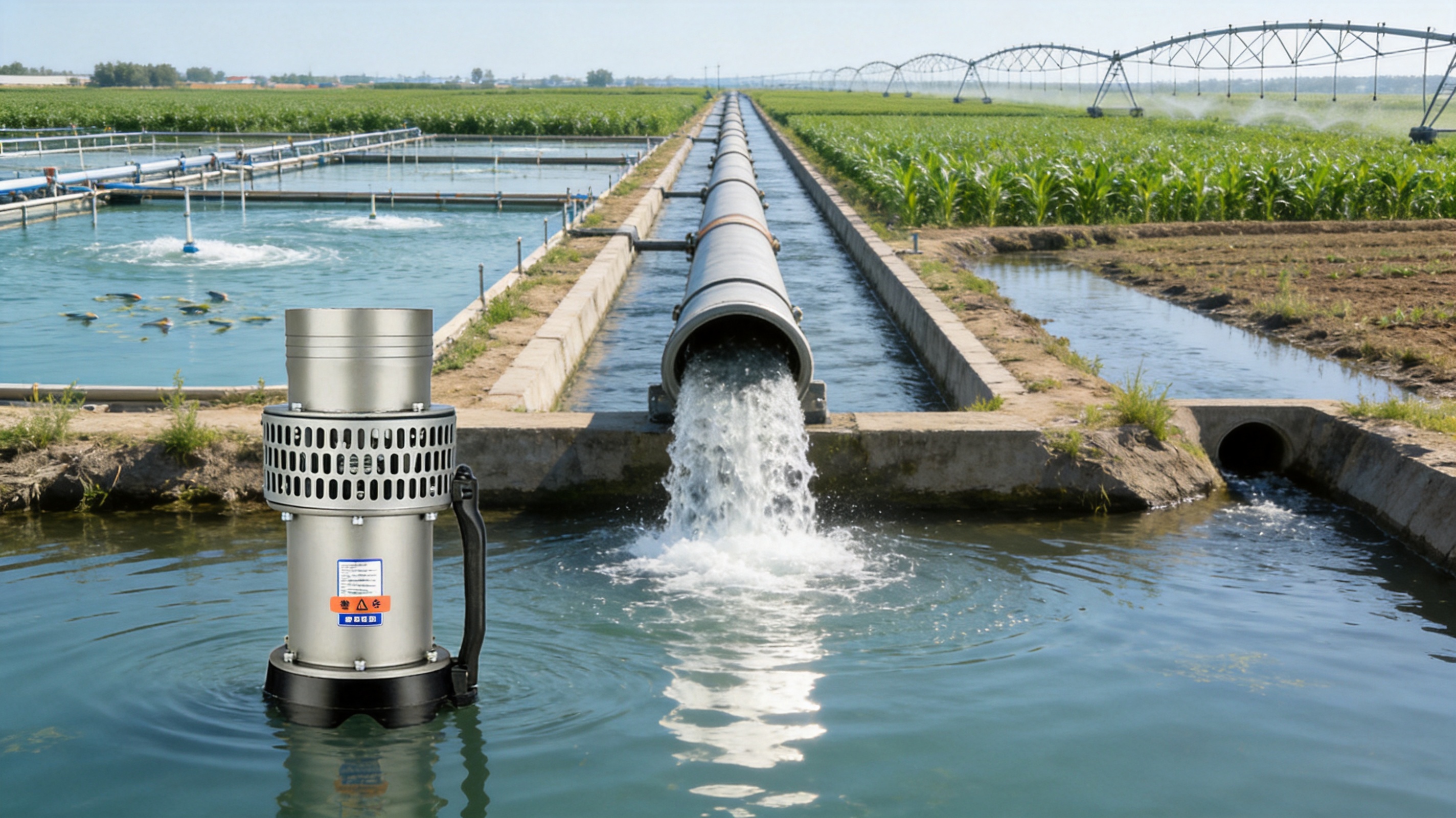
Zhejiang ZhenTai Mechanical and Electrical Co., Ltd. is based in Zhaoyang Industrial Park, Daxi Town, Wenling City, Zhejiang Province, China. Established in 2018, the company focuses on the research, development, and production of more than 90 products across 10 series. Its product categories include floating aerators, impeller aerators, water wheel aerators, submersible pumps, water pumps, and air blowers.
The company’s product range gives it experience across several related areas of fluid movement and aquaculture equipment. This broader manufacturing background can support a more complete understanding of water transfer, oxygenation, circulation, drainage, and farm water management requirements. Buyers seeking multiple types of equipment may benefit from working with a supplier that can coordinate product selection across different systems.
The SZQ pump reflects a manufacturing approach that combines motor technology, pump hydraulics, sealing, submersible construction, and electronic control. These elements must work together. A high-efficiency motor is not enough if the hydraulic design is unsuitable, and a reliable pump body is not enough if the control settings are poorly matched. Product development therefore requires attention to the complete operating system.
The company emphasizes quality, integrity, continuous technological innovation, reliable products, customized OEM and ODM services, and professional technical support. For international buyers, these capabilities are important because a successful order may involve more than the physical pump. It may also require technical documentation, packaging requirements, labeling, electrical configuration, model customization, and application guidance.
Advanced manufacturing in this product category includes careful control of motor assembly, pump assembly, sealing interfaces, electrical connections, and performance verification. The oil-immersed motor structure requires dependable sealing and correct internal assembly. The variable frequency system requires compatibility between the motor and drive. The hydraulic components require accurate alignment and appropriate inspection to support stable water delivery.
A professional manufacturing process should include incoming material control, component inspection, controlled assembly, electrical testing, leak and sealing checks where applicable, operational testing, and final inspection. The exact inspection procedures may vary by model and production order, but these stages are important for reducing assembly variation and supporting consistent product performance.
OEM and ODM Support for International Buyers
International distributors, agricultural equipment suppliers, aquaculture solution providers, and project contractors may require products adapted to their own markets. OEM and ODM support can help address these requirements. Customization may include product labeling, packaging design, documentation, cable arrangements, control cabinet integration, and other agreed technical details.
For OEM projects, buyers should provide clear information about the destination market, voltage and frequency requirements, operating liquid, installation conditions, required flow, required head, expected operating hours, and preferred control method. This information helps the manufacturer evaluate whether a standard model is suitable or whether a customized configuration should be considered.
Documentation is also important. Export buyers may require product specifications, installation instructions, wiring information, model identification, packaging details, inspection records, and commercial documents. A supplier with experience serving global customers can help coordinate these requirements before production.
OEM cooperation should not remove the need for technical verification. A private-label pump still needs to be correctly matched to the application. Buyers should review the rated performance, motor data, drive requirements, dimensions, cable length, discharge connection, operating limits, and maintenance recommendations before approving a production order.
Installation Guidelines
The pump must be fully submerged before operation. Running a submersible pump without adequate water coverage can cause overheating, unstable operation, seal damage, or motor failure. The minimum water level should be determined according to the installation design and the pump’s technical instructions.
The installation location should be stable and free from conditions that could cause the pump to tilt, become buried, or draw excessive sediment. In a pond, reservoir, or open water source, the pump may need to be supported above the bottom. An intake screen or protective structure can help prevent large debris from entering the pump.
The discharge pipeline should be selected according to the required flow and total head. An undersized pipe can create excessive friction loss and reduce delivered flow. Excessive bends, unnecessary valves, and sharp changes in direction should be minimized where practical. The discharge pipe should also be supported so that its weight is not transferred to the pump connection.
The electrical installation should be completed by qualified personnel. The 380-volt models must be connected to a compatible power system with appropriate protection, grounding, isolation, and cable sizing. The variable frequency drive should be correctly matched to the motor and configured according to the pump’s electrical requirements.
Before starting, operators should check the cable condition, connection security, insulation, grounding, water level, discharge valve position, pipeline support, and drive parameters. The pump should be started gradually when possible, and the initial operation should be monitored for abnormal noise, vibration, current, flow, leakage, or overheating.
Operators should not make electrical or mechanical adjustments while the pump is energized. The power supply must be isolated before inspection or maintenance. Safe working procedures are especially important because the pump operates in or near water and is connected to a high-voltage electrical system.
Maintenance and Service Considerations
Regular maintenance helps preserve pump performance and extend service life. The frequency of inspection depends on operating hours, water quality, sediment levels, installation conditions, and seasonal use. Agricultural and aquaculture users should establish a routine inspection schedule rather than waiting for a performance problem to appear.
Visual inspections should check the cable, lifting arrangement, discharge pipe, intake protection, mounting position, and signs of damage. The water source should be checked for excessive debris or sediment. If the pump intake becomes blocked, the motor may operate under abnormal conditions and the flow may fall below the expected level.
Electrical checks may include monitoring operating current, voltage stability, drive alarms, insulation condition, and grounding continuity. A change in current can indicate a hydraulic blockage, mechanical problem, abnormal load, or electrical issue. Drive alarms should be recorded and investigated instead of repeatedly being reset without identifying the cause.
The oil-immersed motor and sealing structure should be serviced according to the manufacturer’s instructions. Users should not open the motor chamber or replace oil without suitable technical knowledge and the correct service procedure. Improper maintenance can affect sealing reliability and may introduce contamination.
At the end of a seasonal operating period, the pump should be cleaned and inspected before storage or continued use. If the pump is removed from the water, it should be handled using an appropriate lifting method. The cable should not be used as a lifting rope. The unit should be protected from impact, freezing conditions, and contamination during storage.
How to Select the Correct Model
Model selection begins with the required flow. The user should calculate how much water must be transferred in a given period and determine whether the flow is continuous or intermittent. For example, a large irrigation system may require high flow during scheduled watering, while a drainage system may require maximum flow only after heavy rainfall.
The next factor is total dynamic head. This includes the vertical elevation difference between the water surface and discharge point, pipe friction, fittings, valves, filters, and other system resistance. The rated head listed for a model is not simply the maximum vertical height in every installation. The complete hydraulic system must be evaluated.
Operating hours and energy requirements should also be considered. A pump operating several hours per day may benefit more from high motor efficiency and variable speed control than a pump used only occasionally. The buyer should compare the expected operating pattern with the selected motor power and drive strategy.
Water quality is another essential factor. The buyer should identify whether the water contains sand, mud, fibers, leaves, chemicals, salt, or other substances. The pump should be selected only after confirming that the liquid is compatible with the pump’s construction and operating limits.
Electrical conditions must be verified before ordering. The listed models use 380 volts, but the buyer should confirm the available supply, phase configuration, frequency, drive requirements, cable length, and local electrical standards. International projects may require different electrical documentation or control cabinet arrangements.
Performance and Cost of Ownership
The purchase price is only one part of the cost of a pumping system. Energy, maintenance, downtime, installation, replacement parts, and labor can represent a substantial portion of the total cost over the equipment’s service life. A pump with efficient motor technology and flexible control can help users manage these ongoing expenses.
The permanent magnet motor is designed to support efficient energy conversion. The variable frequency drive can further improve operating economy when the system does not require full output continuously. Instead of using a valve to restrict excess flow, the operator may adjust pump speed to better match the actual water demand.
Submersible installation may also reduce infrastructure costs in certain projects. A surface pump may require a pump house, foundation, suction line, priming equipment, and additional mechanical components. A submersible unit can be installed directly at the water source, although it still requires proper support, electrical protection, discharge piping, and safe access.
Reliability has economic value as well. Unplanned downtime can interrupt irrigation, affect aquaculture water quality, delay drainage, or stop production processes. Correct model selection, proper installation, preventive maintenance, and timely troubleshooting can all contribute to better availability.
Buyers should evaluate the total system rather than focusing on a single specification. The most efficient pump is not always the one with the lowest rated power. The best choice is the model that delivers the required flow and head with appropriate energy use, stable operation, manageable maintenance, and compatibility with the site.
Why This Product Is Suitable for Global Projects
The SZQ series combines several characteristics that are valuable to international project buyers: high-volume water transfer, permanent magnet motor technology, variable frequency compatibility, submersible installation, and multiple available models. These features allow the product to serve a wide range of farms, aquaculture operations, drainage systems, and water management projects.
The product is manufactured by a supplier with experience in several water equipment categories. This can be useful for buyers who need a coordinated equipment source for aeration, pumping, and air supply. The company’s product portfolio covers applications including fish pond aeration, farmland irrigation, building foundation drainage, environmental protection, chemical industries, household water supply, ecological landscape lakes, and flood control and drainage.
The company’s location in Zhejiang provides access to an established manufacturing region for pumps and mechanical and electrical equipment. Its focus on research, development, production, OEM and ODM cooperation, and technical support supports its role as an export-oriented supplier.
For distributors, the SZQ series can provide a differentiated product offering compared with basic fixed-speed pumps. For contractors, the variable frequency feature can support more adaptable project designs. For farms and aquaculture operators, the permanent magnet motor and submersible layout may help improve efficiency and installation practicality.
Q&A
What type of pump is the SZQ series?
The SZQ series is an oil-immersed submersible water pump. It uses a permanent magnet motor and is designed to operate directly while submerged in the working water source.
What is the main advantage of the permanent magnet motor?
The permanent magnet motor can support efficient power conversion by using permanent magnets to create the rotor magnetic field. This may reduce certain motor losses and help lower energy consumption under suitable operating conditions.
Why is variable frequency control important?
Variable frequency control allows the motor speed to be adjusted according to water demand and system load. This can improve flexibility, support smoother starting, and reduce unnecessary energy use when full pump output is not required.
Can the pump operate above the water?
No. It is a submersible pump and must be fully submerged before operation. Running the pump without adequate water coverage can cause overheating, seal damage, and motor failure.
What are the available flow rates?
The listed models have rated flows of 160, 200, 260, and 250 cubic meters per hour. The correct model depends on the required flow, total dynamic head, pipeline resistance, and operating conditions.
What are the available rated heads?
The available rated heads are 6 meters, 7 meters, and 10 meters, depending on the model. The actual system head must include elevation, pipe friction, fittings, valves, and other losses.
What voltage do the listed models use?
The listed models use a rated voltage of 380 volts. Buyers should confirm the local power supply, phase configuration, frequency, drive compatibility, and electrical protection requirements before ordering.
Is the pump suitable for agriculture?
Yes. The pump is suitable for consideration in agricultural irrigation, reservoir transfer, farmland water supply, and agricultural drainage applications where the required flow and head are within the model range.
Can it be used in aquaculture?
It can be considered for aquaculture water transfer, pond circulation, filling, drainage, and water exchange. The water quality, debris level, intake protection, and installation arrangement should be reviewed before use.
Does the pump replace an aerator?
No. A pump primarily transfers and circulates water, while an aerator is designed to increase oxygen transfer and improve water movement. The two types of equipment may be used together in an aquaculture system.
What should be checked before installation?
Users should check the water level, liquid compatibility, required flow, total head, intake condition, pipeline design, cable condition, grounding, variable frequency drive settings, and electrical protection. The pump should be securely positioned and fully submerged.
Can the product be customized for OEM projects?
The manufacturer provides OEM and ODM services for global buyers. Customization requirements should be discussed in advance, including labeling, packaging, documentation, electrical configuration, cable requirements, and other technical details.
How should the pump be maintained?
Maintenance should include inspection of the cable, intake, discharge pipe, supports, operating current, drive alarms, vibration, flow, and water conditions. The oil chamber and sealing components should be serviced only according to the manufacturer’s instructions and by qualified personnel.
What causes reduced water flow?
Reduced flow may result from an obstructed intake, excessive pipe resistance, incorrect drive settings, insufficient water level, damaged components, an unsuitable model, or a system head higher than the rated operating condition. The complete system should be inspected before changing settings.
Can a variable frequency drive solve an incorrect model selection?
No. A variable frequency drive can adjust speed within the permitted operating range, but it cannot compensate for a pump that is fundamentally unsuitable for the required flow, head, liquid, or installation conditions.
Conclusion
The SZQ Permanent Magnet Variable Frequency Oil-Immersed Pump is designed for efficient and adaptable water transfer in agricultural, aquaculture, drainage, environmental, and industrial applications. Its main strengths come from the integration of a permanent magnet motor, variable frequency control, and an oil-immersed submersible structure.
The permanent magnet motor supports energy-conscious operation, while variable frequency control allows the pump to respond to changing water demand. The submersible design simplifies intake arrangements and can reduce the need for extensive surface pumping infrastructure. The available models cover rated flows from 160 to 260 cubic meters per hour and rated heads from 6 to 10 meters, providing options for different high-volume, moderate-head applications.
Manufactured by Zhejiang ZhenTai Mechanical and Electrical Co., Ltd., the pump benefits from a company focused on water equipment, aeration products, air blowers, research and development, OEM and ODM services, and international technical support. The manufacturer’s broader experience across aquaculture and water management equipment supports its ability to serve complete project requirements.
For the best result, buyers should select the model according to the complete hydraulic system, confirm electrical compatibility, install the unit fully submerged, use an appropriate variable frequency drive, and follow safe maintenance procedures. When properly matched and operated, the SZQ series can provide a practical combination of efficiency, stable water delivery, installation flexibility, and long-term application value.
References
1. Product specification materials for the SZQ Permanent Magnet Variable Frequency Oil-Immersed Pump, including model, rated flow, rated head, motor power, size, and voltage information.
2. Manufacturer information for Zhejiang ZhenTai Mechanical and Electrical Co., Ltd., including company profile, product categories, application areas, OEM and ODM capabilities, and technical service focus.
3. General engineering principles for submersible pump installation, hydraulic head calculation, pipeline resistance, electrical protection, and variable frequency drive operation.
4. General motor engineering references concerning permanent magnet motor efficiency, variable speed operation, thermal management, and electrical control.
5. General agricultural irrigation and aquaculture water management practices concerning flow control, drainage, water circulation, intake protection, and preventive pump maintenance.