 English
 Español
 Indonesia
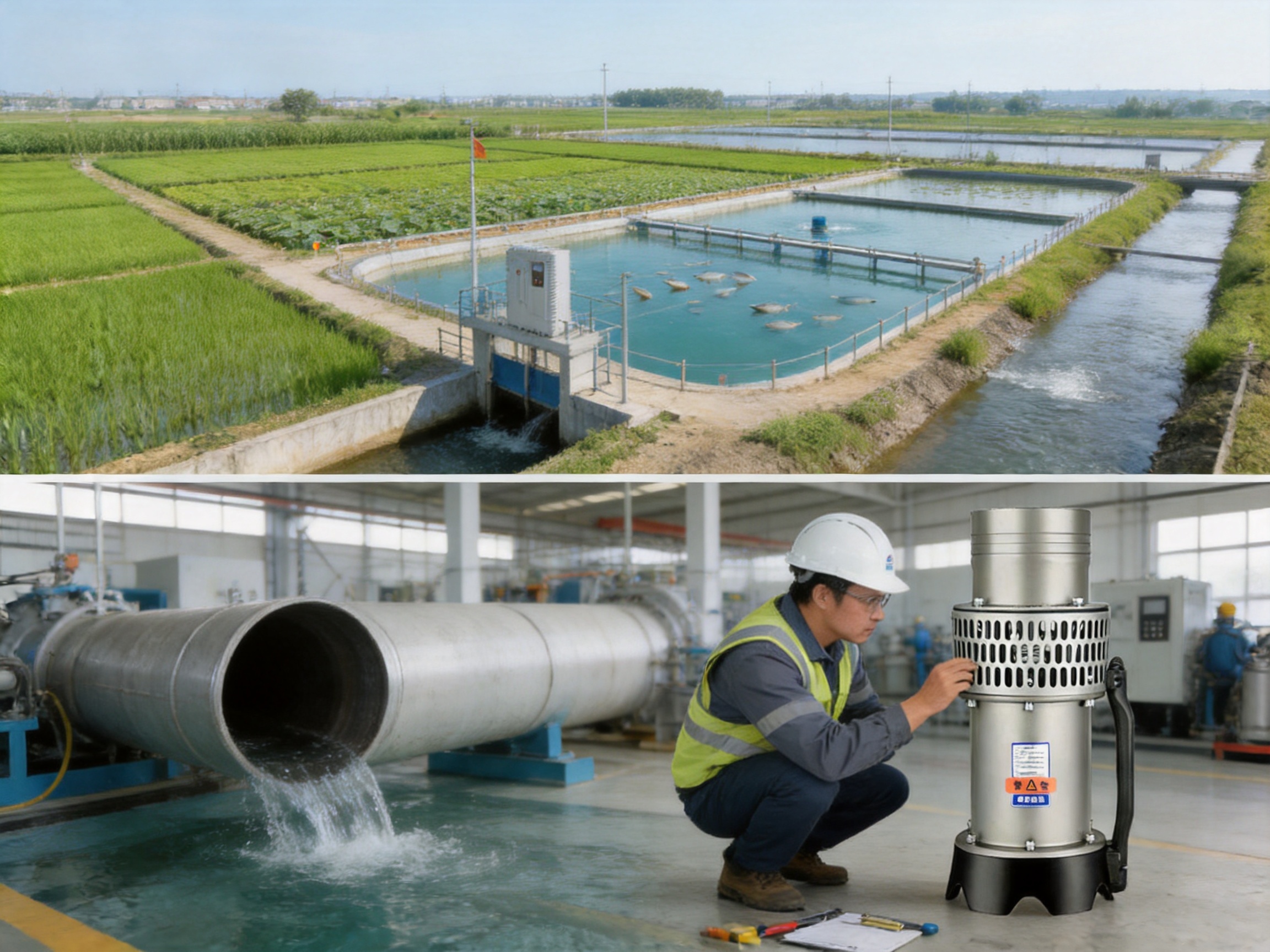
Water transfer systems used in agriculture, wells, aquaculture, drainage, and industrial facilities must deliver dependable performance under changing operating conditions. A pump may be required to move large volumes of water, operate for extended periods, work in a submerged environment, and maintain stable output despite variations in demand. At the same time, energy consumption, equipment life, maintenance requirements, and installation flexibility have become increasingly important for professional buyers.
The SZQ Permanent Magnet Variable Frequency Oil Immersed Pump is designed to address these requirements through the combination of a permanent magnet motor, variable frequency control, and an oil-immersed submersible structure. This configuration is intended to support efficient operation, stable water transfer, and long service life in demanding working environments. It is suitable for applications where the pump must be placed directly in the water source and where operating conditions may change during the pumping process.
Manufactured by Zhejiang ZhenTai Mechanical and Electrical Co., Ltd., the SZQ series is positioned for agricultural pumping, well water transfer, aquaculture support, irrigation projects, and other applications requiring a high-volume submersible pump. The available models provide rated flows from 160 to 260 cubic meters per hour, rated heads from 6 to 10 meters, power ratings from 4 to 11 kilowatts, and a standard voltage of 380 volts.
Understanding the SZQ Pump Configuration
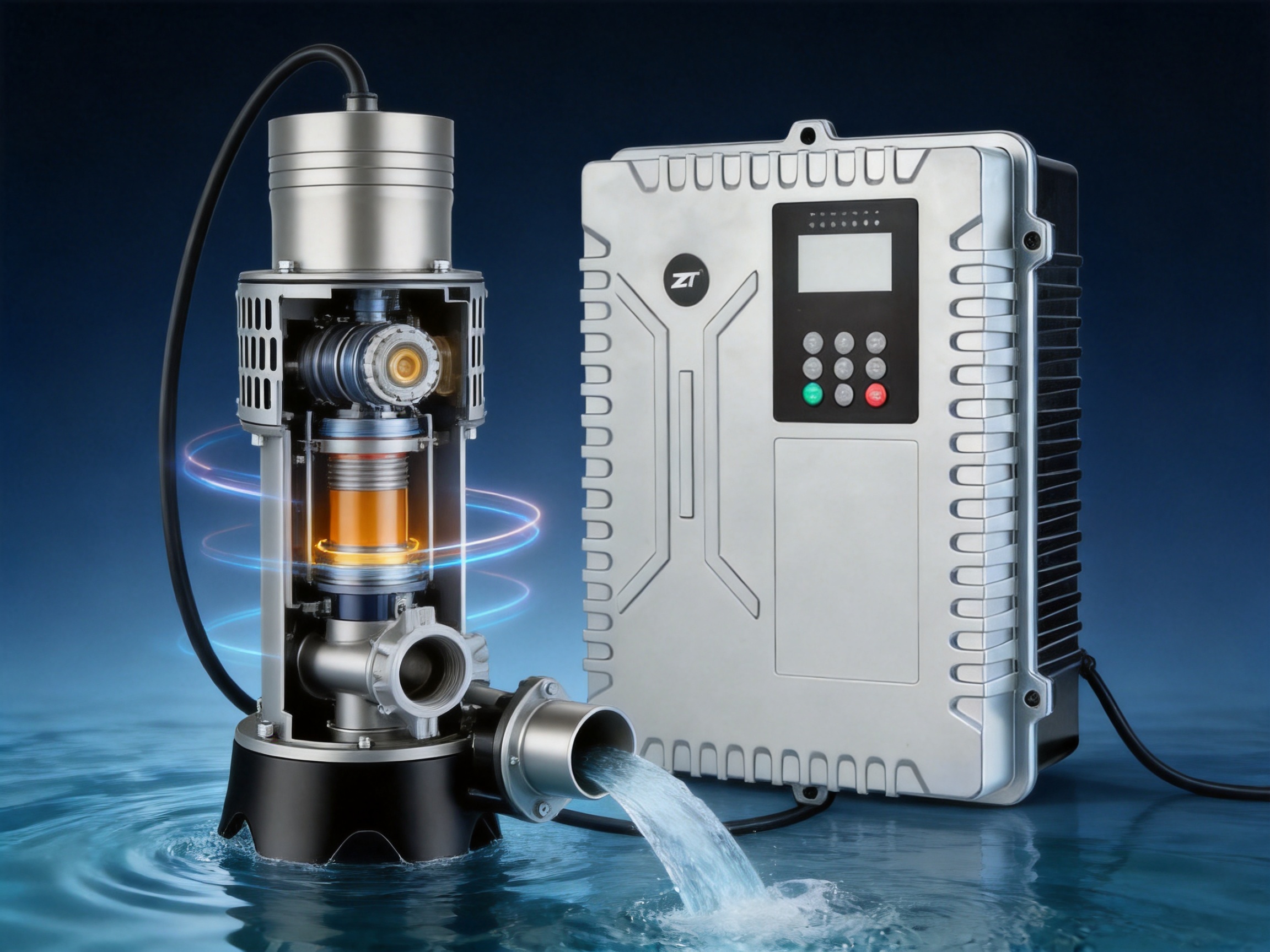
The SZQ series is an oil-immersed submersible pump equipped with a permanent magnet motor and a variable frequency drive system. Each part of this configuration contributes to the overall operating concept.
Oil-Immersed Submersible Structure
A submersible pump is installed directly in the water or liquid source rather than being positioned above the water with a long suction pipe. This arrangement can reduce suction-related installation difficulties and allows the pump to push water upward or through a discharge pipeline. The pump must be completely submerged before operation, and it must be installed in a suitable working area with adequate clearance and stable support.
The oil-immersed construction places the motor in an oil-filled environment intended to assist with insulation, cooling, and protection of internal motor components. Because the motor and pump are integrated into a submersible unit, the equipment can be used in locations where a surface-mounted pump would require additional suction arrangements or a more complicated foundation.
Oil immersion does not eliminate the need for correct installation and inspection. The pump should be checked for physical damage, cable condition, sealing integrity, and correct electrical connections before commissioning. Operators should also confirm that the application is compatible with the pump design and that the unit remains submerged during operation.
Permanent Magnet Motor Technology
The permanent magnet motor is a central feature of the SZQ design. Unlike a conventional motor that relies on an energized rotor winding to create part of its magnetic field, a permanent magnet motor uses permanent magnetic material in the rotor. This can reduce certain electrical losses and support efficient conversion of electrical energy into mechanical power.
In practical terms, permanent magnet motor technology can help a pump achieve efficient operation across a suitable operating range. Lower motor losses may reduce energy consumption and heat generation, while the compact motor arrangement can support a high power-to-size ratio. These benefits are particularly valuable in agricultural and aquaculture applications where pumps may operate for many hours during irrigation cycles, water exchange, pond management, or drainage work.
The actual energy performance of a complete pumping system depends on more than motor technology alone. Pump selection, water level, pipe diameter, discharge distance, fittings, operating frequency, voltage quality, and maintenance condition all influence power consumption. The permanent magnet motor provides an efficient foundation, but correct system design remains essential to obtain the best results.
Variable Frequency Control
The variable frequency drive system allows the operating speed of the motor to be adjusted according to the required water output and system conditions. Instead of operating at only one fixed speed, the pump can be controlled within a suitable frequency range determined by the drive, motor, application, and operating instructions.
Variable frequency control can be useful when water demand changes throughout the day or when a system requires gradual adjustment rather than continuous full-speed operation. For example, an irrigation system may need a high flow rate during peak demand but a lower flow rate during other periods. A farm drainage system may also experience changing water levels and flow requirements. By adjusting the operating speed, the system can better match pump output to demand.
Speed control may also support smoother starting and stopping. A controlled start can reduce sudden mechanical loading and help limit abrupt changes in pipeline pressure. This is especially useful in longer discharge lines or systems with multiple valves and fittings. The drive should be configured according to the motor data and the application requirements, and only qualified personnel should perform electrical commissioning.
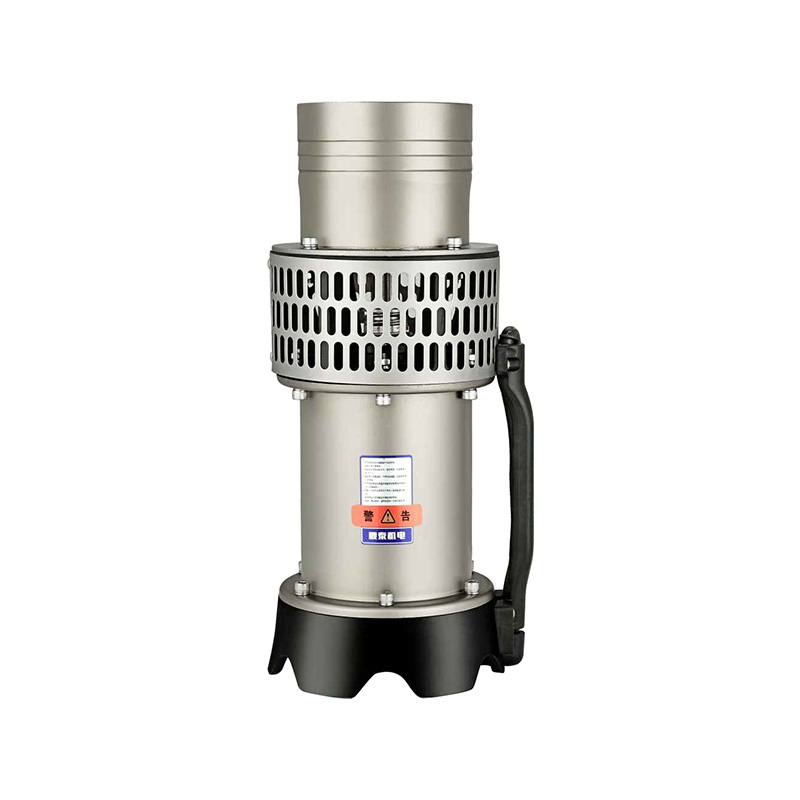
SZQ Permanent Magnet Variable Frequency Oil Immersed Pump
Main Advantages of the Permanent Magnet Variable Frequency Design
The SZQ pump combines several technologies that are often considered separately. Its primary advantages come from the interaction between the motor, drive, and submersible structure rather than from one component alone.
Improved Energy Efficiency Potential
A permanent magnet motor can operate with reduced rotor-related electrical losses compared with some traditional motor designs. When paired with variable frequency control, it can adjust speed to match the required duty point instead of running continuously at a fixed speed. This combination creates the potential for lower energy use in applications with changing demand.
Energy savings are most meaningful when the pump is selected and operated correctly. Running a pump far above the required flow can waste energy, while operating against excessive pipe resistance can increase the required power. A variable frequency system gives the operator more control, but it should not be used as a substitute for proper hydraulic design. Pipe sizing, total head, valve selection, and operating schedule should all be considered before final equipment selection.
For farms, fish ponds, wells, and irrigation projects, even a moderate reduction in daily electricity consumption can produce important long-term savings. The benefit becomes more significant when a pump operates for extended periods or when multiple pumps are installed across a project.
Stable Performance Under Changing Loads
Water transfer systems rarely operate under identical conditions at all times. Water levels may rise or fall, valves may be opened or closed, and different areas may demand different flow rates. The variable frequency drive allows the operator or control system to adjust pump speed in response to these conditions.
This adjustment capability can help maintain a more stable water supply and reduce unnecessary cycling between full operation and complete shutdown. It may also help the pump operate closer to an appropriate duty point, which can reduce stress on the motor and hydraulic components. The control strategy should be developed according to the actual application, with attention to minimum frequency, maximum frequency, acceleration time, deceleration time, and protection settings.
Submersible Installation Benefits
Because the pump is designed for submerged operation, it can be placed near the water source. This may simplify the layout of a pumping station and reduce the need for long suction pipes. A submersible configuration can be particularly useful where space is limited, where the water source is below ground level, or where a surface pump would be difficult to prime.
Submersible installation can also help reduce some external noise because the pump is surrounded by water. The unit is less exposed to the atmosphere than a surface-mounted motor, although appropriate safety measures are still required for the electrical supply, cable routing, control cabinet, and maintenance work.
High-Volume Water Transfer
The listed SZQ models are intended for substantial water movement. Rated flows range from 160 cubic meters per hour to 260 cubic meters per hour. These capacities make the series suitable for projects that require more than small domestic water delivery, including agricultural irrigation, pond water exchange, field drainage, water supply transfer, and other high-volume duties within the rated operating range.
The rated head range is 6 to 10 meters. This indicates that the series is oriented toward relatively high-flow, low-to-moderate-head applications rather than very high-pressure pumping. Buyers should compare the required total dynamic head with the pump rating before placing an order. If the pipeline rises significantly, has a long discharge distance, or includes many restrictions, the actual system head may be higher than the vertical elevation alone.
Potential for Extended Service Life
The permanent magnet motor and oil-immersed design are intended to support reliable operation over an extended service period. Oil surrounding the motor can assist thermal management and insulation, while the enclosed submersible structure protects internal components from direct exposure to the surrounding water when the unit is properly sealed and maintained.
Service life depends on the water quality, installation depth, operating frequency, voltage stability, frequency of starts and stops, and maintenance practices. Clean water generally places less stress on hydraulic passages than water containing heavy sediment, fibrous material, or abrasive particles. If the application involves difficult water conditions, the buyer should discuss material compatibility, screening, and protection requirements with the supplier before selection.
Comparison with Conventional Pumping Solutions
Every pump technology has an appropriate operating range. The main advantages of the SZQ series become clearer when it is compared with common alternatives, including fixed-speed submersible pumps, conventional induction-motor pumps, and surface-mounted centrifugal systems.
Compared with Fixed-Speed Submersible Pumps
A fixed-speed submersible pump generally operates at a predetermined speed whenever it is running. This can be suitable for a simple application with a constant water demand and a stable discharge system. However, fixed-speed operation may be less flexible when the required flow changes during the day.
The SZQ variable frequency design provides more operating flexibility. Users can adjust the output for different irrigation zones, water levels, or process requirements. Instead of regulating flow only through throttling valves, the system can reduce motor speed when lower output is needed. This may improve operating efficiency and reduce unnecessary pressure losses, depending on the system design.
The variable frequency configuration does require a compatible drive and appropriate settings. It also requires more attention during commissioning than a basic fixed-speed installation. Buyers should therefore evaluate both the energy benefits and the control requirements before choosing between the two types.
Compared with Conventional Induction-Motor Pumps
Induction motors remain widely used because of their familiar design, broad availability, and straightforward maintenance procedures. However, permanent magnet motors can offer an efficiency advantage in suitable applications because the rotor does not need to produce its magnetic field through the same type of energized winding losses associated with conventional induction motor operation.
The SZQ series also benefits from the ability to combine permanent magnet motor operation with variable frequency control. This combination may provide more precise speed adjustment and better energy matching than a basic fixed-speed induction motor pump. The exact comparison depends on the motor rating, operating point, drive efficiency, and local electricity conditions.
For buyers comparing suppliers, it is important to request complete technical information rather than relying only on general efficiency statements. Relevant information may include rated current, recommended frequency range, insulation class, protection grade, cable length, control requirements, and performance curves. A professional manufacturer should be able to assist with selection based on the actual application.
Compared with Surface-Mounted Pump Systems
Surface-mounted systems can be effective when the water source is easily accessible and the pump can be installed close to the suction point. They may offer convenient access for inspection and maintenance. However, they may also require priming, suction piping, foot valves, and careful control of suction conditions.
A submersible pump such as the SZQ is installed in the water source and pushes water through the discharge line. This can simplify some installations and reduce suction-side problems. It may be advantageous for wells, ponds, reservoirs, and drainage locations where the water level is below the position available for a surface pump.
On the other hand, submersible equipment may require lifting tools or additional labor when maintenance is necessary. The choice should consider the site layout, water quality, access conditions, maintenance plan, and required operating reliability.
Available Models and Technical Selection
The SZQ series includes four listed models. Their rated flow, head, motor power, size, and voltage are summarized below.
| No. | Model | Rated Flow | Rated Head | Power | Size | Voltage |
|---|---|---|---|---|---|---|
| 1 | SZQ160-6-4 | 160 m³/h | 6 m | 4 kW | 6 inches, 150 mm | 380 V |
| 2 | SZQ200-7-5.5 | 200 m³/h | 7 m | 5.5 kW | 6 inches, 150 mm | 380 V |
| 3 | SZQ260-7-7.5 | 260 m³/h | 7 m | 7.5 kW | 6 inches, 150 mm | 380 V |
| 4 | SZQ250-10-11 | 250 m³/h | 10 m | 11 kW | 6 inches, 150 mm | 380 V |
Choosing by Required Flow
The first selection factor is the required flow rate. Buyers should calculate how much water must be moved within a given period and select a pump capable of delivering that volume under the actual system head. The largest nominal flow is not always the best choice. Oversizing may increase energy consumption, produce excessive velocity in the pipeline, or create unstable operation when the system demand is low.
For a project requiring approximately 160 cubic meters per hour at a rated head near 6 meters, the SZQ160-6-4 model may be an appropriate starting point for evaluation. For a higher flow requirement near 200 cubic meters per hour and a 7-meter head, the SZQ200-7-5.5 model may be considered. The SZQ260-7-7.5 model offers the highest listed flow, while the SZQ250-10-11 model provides the highest listed head.
These figures are rated values and should not be treated as a complete performance curve. Actual flow may change with head, pipeline resistance, operating frequency, water level, and system layout. A final selection should be confirmed using the supplier's technical data and the customer's hydraulic calculations.
Choosing by Total Head
Total head includes more than the vertical distance between the water surface and discharge point. It may include static elevation, pipe friction, valves, elbows, filters, check valves, outlet restrictions, and any required pressure at the discharge point. A pump selected only by vertical lift may fail to achieve the expected flow after installation.
The SZQ models listed have rated heads of 6, 7, or 10 meters. Applications requiring greater head should be reviewed carefully. It may be necessary to use a different pump type, a multistage system, or a series arrangement, depending on the project. The manufacturer should receive accurate information about water levels, pipe dimensions, discharge distance, and desired flow before confirming the model.
Electrical Requirements
The listed models use a rated voltage of 380 volts. This is commonly associated with three-phase industrial and agricultural power systems, but the available supply must be confirmed at the installation site. A variable frequency drive compatible with the motor must be selected and configured correctly.
The control system should include suitable protection against overload, phase loss, overvoltage, undervoltage, excessive temperature, dry running where applicable, and abnormal operating conditions. The exact protection package depends on the drive and installation design. Electrical work must comply with local regulations and should be completed by qualified personnel.
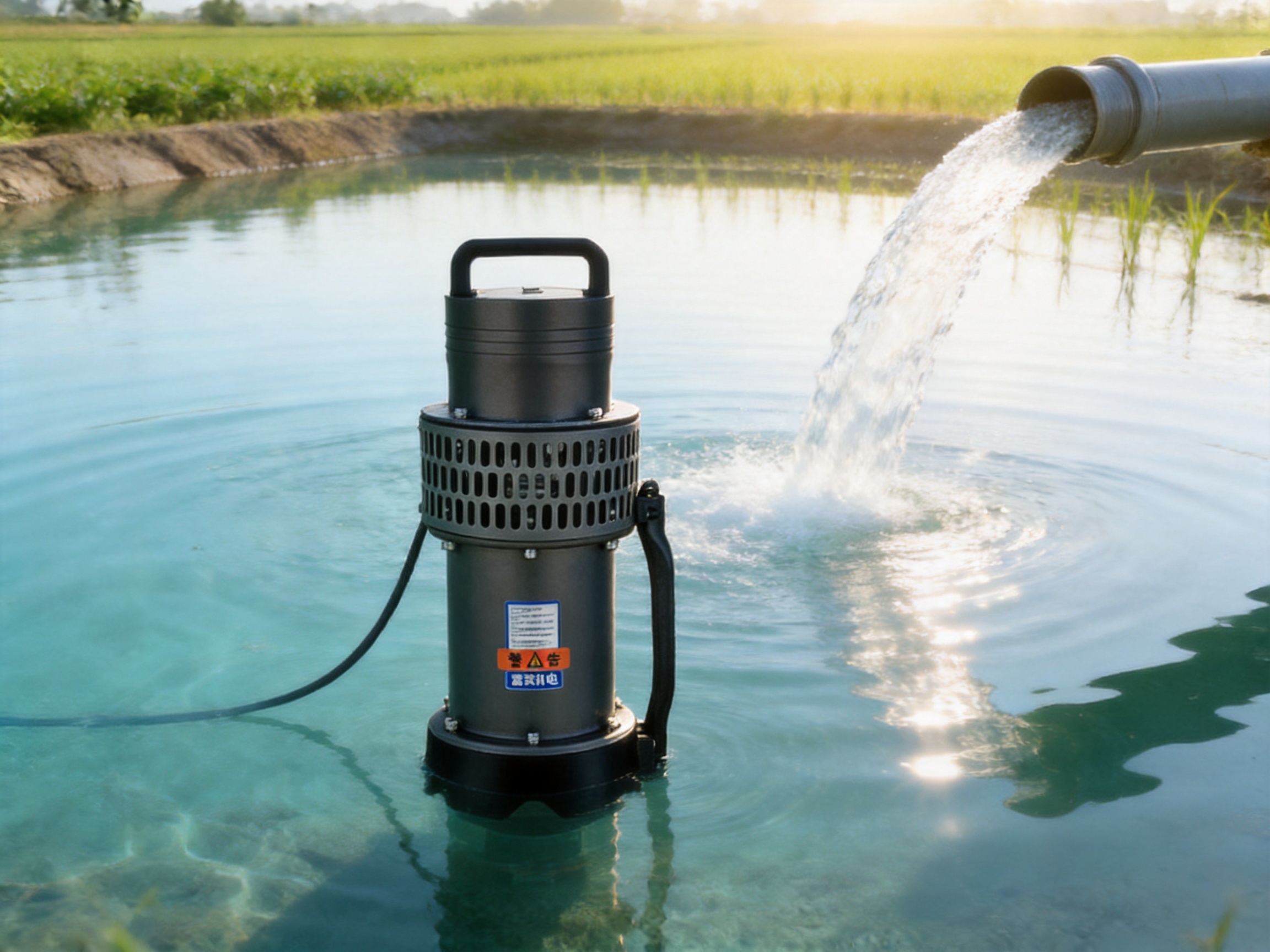
Manufacturing Strengths and Production Capabilities
The performance of a pump depends not only on its design but also on how consistently it is manufactured, assembled, inspected, and supported. Zhejiang ZhenTai Mechanical and Electrical Co., Ltd. is located in Wenling, Zhejiang Province, China, and was established in 2018. The company focuses on the research, development, and production of more than 90 products across 10 series.
Its product range includes floating aerators, impeller aerators, water wheel aerators, water pumps, and related equipment for aquaculture, irrigation, drainage, environmental protection, chemical applications, household water supply, ecological landscape lakes, and flood control. This product breadth gives the manufacturer experience with different motor, pump, water movement, and aeration requirements.
Product Development Experience
A manufacturer serving several water equipment categories must understand more than a single pump structure. Aerators and water pumps often operate in environments where electrical safety, water exposure, corrosion, energy efficiency, flow distribution, and continuous operation are important. Experience across these product families can support practical product development and application knowledge.
For the SZQ series, the use of a permanent magnet motor and variable frequency control reflects an emphasis on energy-efficient operation and adjustable performance. The oil-immersed submersible structure addresses the need for compact installation and stable operation in submerged conditions. Together, these features show an approach focused on matching pump design with real agricultural and water management requirements.
Manufacturing Process Considerations
The production of an oil-immersed variable frequency submersible pump requires careful control of several processes. Motor components must be assembled accurately, internal clearances must be controlled, and sealing areas must be checked. The oil-filled chamber must be properly prepared, and the finished unit must be inspected for insulation and sealing performance.
Hydraulic components also require consistent manufacturing. Impeller geometry, pump casing dimensions, shaft alignment, bearing installation, and discharge connection accuracy all affect flow and efficiency. Small variations can influence vibration, noise, power demand, and service life. A reliable production process therefore combines component quality control with assembly discipline and final testing.
Electrical integration is another important area. The motor must be compatible with variable frequency operation, and wiring, insulation, cable connections, and control parameters must be coordinated. The finished product should be tested under appropriate conditions to verify basic operating behavior before shipment.
Quality and Integrity
The company identifies quality, integrity, continuous technological innovation, reliable products, customized OEM and ODM services, and professional technical support as important business principles. These strengths are relevant to international buyers who need more than a product catalog. They may also need assistance with model selection, packaging, documentation, electrical matching, labeling, and application guidance.
For OEM and ODM projects, manufacturing capability includes the ability to understand customer specifications and convert them into repeatable production requirements. Depending on project scope, buyers may discuss nameplate information, packaging design, cable configuration, control cabinet requirements, product color, documentation, and market-specific technical details. Any customization should be confirmed in writing before production begins.
Support for Global Buyers
International customers often operate in different climates, electrical environments, and regulatory markets. A professional supplier should help clarify voltage, frequency, motor control, shipping dimensions, installation instructions, spare parts, warranty conditions, and recommended maintenance. This type of communication can reduce selection errors and improve commissioning efficiency.
ZhenTai's location in Wenling, Zhejiang Province, places the company in a region known for mechanical and electrical equipment manufacturing. For buyers, the practical value lies in supplier coordination, product availability, engineering communication, and export support rather than location alone. The final purchasing decision should be based on verified technical information, production capability, quality procedures, and service responsiveness.
Application Areas
Agricultural Irrigation
The SZQ pump can be considered for high-volume irrigation systems that transfer water from wells, reservoirs, ponds, or other sources to agricultural fields. Variable frequency control can help adjust flow for different irrigation zones and operating schedules. The pump may be used with pipelines, valves, sprinklers, open-channel outlets, or other delivery arrangements, provided the total head and flow requirements remain within the selected model's capabilities.
Farm operators should evaluate water source depth, seasonal water level changes, sediment concentration, electrical supply, and daily operating hours. Intake protection may be necessary when the water contains leaves, weeds, stones, or other debris. A suitable control system can also help prevent operation when the water level falls below the safe submergence requirement.
Fish Ponds and Aquaculture Facilities
In aquaculture facilities, pumps may be used for pond filling, water exchange, circulation, drainage, and transfer between tanks or ponds. The SZQ pump is primarily a water transfer pump rather than an aerator, so its role should be distinguished from the oxygenation function performed by floating aerators, impeller aerators, or water wheel aerators.
For fish ponds, smooth and controlled water movement can be important. Variable frequency operation may allow operators to adjust flow according to stocking conditions, water quality management, and pond requirements. Screens or protective devices may be needed to reduce the risk of fish entering the pump intake, depending on the installation.
Well and Reservoir Water Transfer
The submersible structure is suitable for applications where the pump must operate below the water level. Wells and reservoirs can present challenging installation conditions, including limited access, changing water levels, and the need for a long discharge pipeline. Correct pump positioning, cable support, pipe connection, and lifting arrangements are essential.
Before installation in a well, the buyer should verify the available diameter and the pump's physical dimensions. The listed models are identified as 6-inch units with a 150-millimeter size reference. The actual well casing and clearance should be checked carefully, including allowance for installation, cable movement, and maintenance removal.
Drainage and Flood Control
High-flow submersible pumps are often used to remove water from fields, construction areas, low-lying land, reservoirs, or drainage channels. The SZQ series may be evaluated for such work when the required head and water quality are compatible with the pump design.
Drainage water can contain mud, sand, stones, vegetation, and other materials that may affect pump operation. Buyers should not assume that every submersible water pump is suitable for heavily abrasive or solids-laden liquid. A pre-screen, settling arrangement, or alternative pump design may be needed. The supplier should be consulted when the water is not relatively clean.
Industrial and Environmental Water Systems
Water transfer is required in environmental protection facilities, industrial plants, chemical-related projects, landscape lakes, and building foundation drainage. The SZQ pump may be considered for compatible water applications within its rated performance range. However, chemical compatibility, liquid temperature, suspended solids, and special safety requirements must be evaluated before use.
For chemical liquids or unusual fluids, the pump should not be selected solely on the basis of flow and head. Materials, seals, oil compatibility, insulation, and motor protection must be reviewed. The standard configuration is intended for appropriate water transfer applications, and specialized media may require a different product or customized specification.
Installation and Operating Guidance
Pre-Installation Inspection
Before installation, inspect the pump body, cable, discharge connection, lifting points, and external surfaces. Confirm that the model matches the order and that there is no visible damage from transportation. Review the motor and variable frequency drive information, including rated voltage, rated power, recommended frequency range, and protective settings.
Check the water source for sufficient depth and adequate clearance. The pump must be fully submerged during operation. It should not rest on unstable mud, loose debris, or a location where the intake can become blocked. If necessary, use a stable support, guide rail, frame, or suspension arrangement appropriate to the site.
Electrical Connection
The electrical connection must be made by qualified personnel. Verify the incoming supply, grounding, phase sequence where applicable, drive capacity, cable rating, and protection functions. The control panel should be placed in a dry and accessible location protected from flooding and excessive heat.
Variable frequency settings should be based on the motor's technical data. Avoid applying an arbitrary frequency range. Acceleration and deceleration times should be selected to reduce sudden mechanical and hydraulic stress. If the system uses automatic level control, the sensor arrangement should prevent dry running and excessive starting frequency.
First Start-Up
Confirm that the pump is completely submerged and that the discharge line is connected securely. Open or adjust valves according to the system's starting procedure. Start the pump at a suitable low or normal frequency and observe current, vibration, noise, discharge flow, and water level.
Stop the pump immediately if there is abnormal noise, excessive vibration, unexpected current, lack of water output, or evidence of leakage. Investigate the cause before restarting. The first operating period should be monitored closely so that installation problems can be corrected before continuous operation begins.
Routine Maintenance
Routine maintenance should include inspection of the cable, lifting arrangement, discharge pipe, control cabinet, protective devices, and water intake area. Remove debris before it restricts flow. Check for abnormal operating sound, changes in current, reduced output, or repeated drive alarms.
Maintenance intervals depend on operating hours and water conditions. A pump used in clean water may require less frequent cleaning than one used in a muddy drainage application. If the unit is removed from service for a long period, it should be stored according to the manufacturer's instructions and protected from impact, moisture damage, and unauthorized electrical connection.
Purchasing Considerations for Distributors and OEM Buyers
Distributors, contractors, farm equipment suppliers, and project integrators should evaluate the complete supply package rather than the pump body alone. Important questions include model availability, production lead time, minimum order quantity, packaging, spare parts, technical documents, warranty terms, control system compatibility, and after-sales support.
OEM buyers should provide a clear specification covering flow, head, voltage, frequency, operating environment, installation depth, water quality, cable requirements, control method, and target market. If the pump will be sold under a private label, the buyer should also specify nameplate information, manuals, packaging, labels, and inspection requirements.
Product consistency is especially important for distributors. A supplier should be able to maintain stable model identification, rated performance, dimensions, and electrical configuration across repeated orders. Pre-shipment inspections, sample approval, and documented acceptance criteria can help reduce uncertainty in international procurement.
For project buyers, technical selection support can be more valuable than a low initial purchase price. A correctly selected pump is more likely to deliver the intended flow, consume energy efficiently, and operate reliably. The supplier should be given accurate project information so that the recommended model is based on actual conditions rather than a general catalog comparison.
Q&A: Common Questions About the SZQ Series
What type of pump is the SZQ series?
The SZQ series is an oil-immersed submersible water pump. It uses a permanent magnet motor and is designed to operate below the water level when properly installed and fully submerged.
What is the purpose of variable frequency control?
Variable frequency control allows the motor speed to be adjusted according to the required water flow and system conditions. It can support smoother starting, flexible output adjustment, and more efficient operation when demand changes.
What are the rated flow ranges of the listed models?
The listed models have rated flows of 160, 200, 260, and 250 cubic meters per hour. The correct model depends on the required flow at the actual system head, not on flow alone.
What is the highest rated head in the available table?
The SZQ250-10-11 model has the highest listed rated head at 10 meters. The other listed models have rated heads of 6 or 7 meters.
What voltage do the listed models use?
All four listed models use a rated voltage of 380 volts. The customer's local electrical supply and variable frequency drive must be confirmed before ordering.
Can the pump operate above the water?
The product is designed as a submersible pump and should be fully submerged before operation. It should not be operated as a conventional surface-mounted pump unless the manufacturer provides specific written instructions for a different arrangement.
Is the SZQ pump an aerator?
No. The SZQ is a water transfer pump. It can move and circulate water, but it should not be confused with a dedicated aerator designed primarily to introduce oxygen into aquaculture water.
Can the pump be used in a fish pond?
It may be used for suitable fish pond applications such as filling, drainage, circulation, or water exchange. Intake protection and water quality assessment are important, especially where fish, vegetation, sand, or other solids are present.
Can it be used for dirty water or sewage?
The available information identifies the product as a water pump but does not define a sewage or heavy-solids specification. Dirty water, abrasive water, sewage, or chemically aggressive liquids should be reviewed with the manufacturer before selection.
Does the permanent magnet motor guarantee energy savings in every application?
No pump technology can guarantee the same energy result in every system. The permanent magnet motor and variable frequency control can support efficient operation, but actual energy consumption also depends on head, flow, pipe resistance, frequency, voltage, operating schedule, and maintenance.
What information should buyers provide for model selection?
Buyers should provide the required flow, total head, water source depth, discharge distance, pipe size, water quality, operating hours, voltage, frequency, control method, and installation conditions. This information helps the supplier recommend a suitable model.
Is OEM or ODM service available?
The manufacturer states that it provides customized OEM and ODM services. Specific customization options, technical limits, order quantities, packaging, labeling, and lead times should be confirmed directly for each project.
Where is the manufacturer located?
Zhejiang ZhenTai Mechanical and Electrical Co., Ltd. is located in Zhaoyang Industrial Park, Daxi Town, Wenling City, Zhejiang Province, China.
Conclusion
The SZQ Permanent Magnet Variable Frequency Oil Immersed Pump is designed for efficient and adjustable water transfer in agricultural, aquaculture, drainage, well, reservoir, and compatible industrial applications. Its main technical advantages come from the combination of a permanent magnet motor, variable frequency drive system, and oil-immersed submersible structure.
The permanent magnet motor supports an efficiency-oriented design, while variable frequency control provides the flexibility to adjust output according to changing water demand. The submersible structure can simplify some installations by placing the pump directly in the water source. The available models cover rated flows from 160 to 260 cubic meters per hour and rated heads from 6 to 10 meters, with 380-volt electrical specifications.
Compared with basic fixed-speed or conventional surface-mounted solutions, the SZQ series can offer greater control flexibility and strong potential for energy-conscious operation. Its suitability depends on correct hydraulic selection, compatible water quality, proper submergence, suitable electrical protection, and regular maintenance.
Zhejiang ZhenTai Mechanical and Electrical Co., Ltd. supports the product with experience in water pumps, aerators, and other mechanical and electrical equipment. Its stated focus on product development, quality, technological innovation, OEM and ODM services, and technical support makes the company a potential partner for distributors, contractors, farms, aquaculture operators, and international project buyers.
For the best result, customers should provide complete application information before ordering and confirm the pump curve, operating range, control requirements, installation method, and service conditions. When correctly specified and professionally installed, the SZQ series can serve as an efficient and stable solution for large-volume water transfer.
References
1. Product technical information for the SZQ Permanent Magnet Variable Frequency Oil Immersed Pump, including model, flow, head, power, size, and voltage data.
2. Manufacturer company information for Zhejiang ZhenTai Mechanical and Electrical Co., Ltd., including product categories, manufacturing scope, OEM and ODM services, and application areas.
3. General principles of centrifugal pump selection, including flow, total dynamic head, pipe friction, and system operating points.
4. General engineering guidance for permanent magnet motor efficiency and variable frequency drive applications.
5. General installation and maintenance practices for submersible water pumps and electrically driven pumping systems.
6. General agricultural irrigation, aquaculture water exchange, drainage, and water transfer system design principles.