 English
 Español
 Indonesia
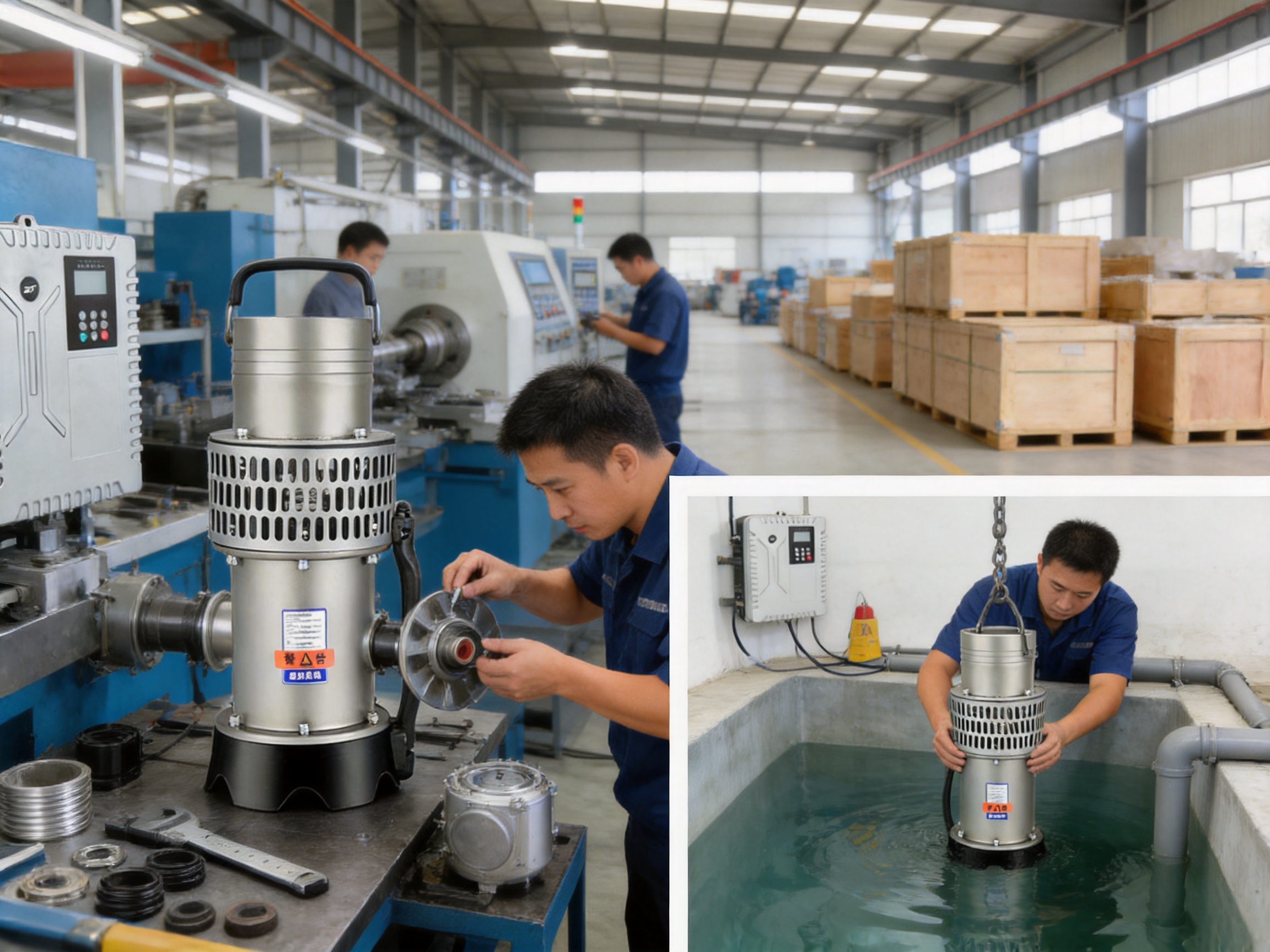
Reliable water movement is essential in agricultural irrigation, aquaculture, fish-pond management, drainage, ecological water systems, and many industrial applications. A pumping system must deliver the required flow and head while operating safely, efficiently, and consistently under changing working conditions. Energy consumption, motor durability, installation depth, maintenance requirements, and compatibility with local power systems all influence the total value of a pump.
The SZQ Permanent Magnet Variable Frequency Oil Immersed Pump is designed to address these requirements through the combination of a permanent magnet motor, variable frequency control, and an oil-immersed submersible structure. This configuration is intended to provide stable underwater operation, efficient energy use, and dependable water transfer in demanding environments. The pump is suitable for buyers seeking an agricultural water pump, a high-volume irrigation unit, an aquaculture pumping solution, or a submersible pump for OEM and project supply.
Manufactured by Zhejiang ZhenTai Mechanical and Electrical Co., Ltd., the SZQ series forms part of a broader product portfolio covering aerators, air blowers, submersible pumps, and water pumps. The company supplies equipment for aquaculture farms, irrigation projects, drainage applications, environmental systems, and other water-management fields. Its production and engineering experience support both standard product supply and customized OEM/ODM cooperation.
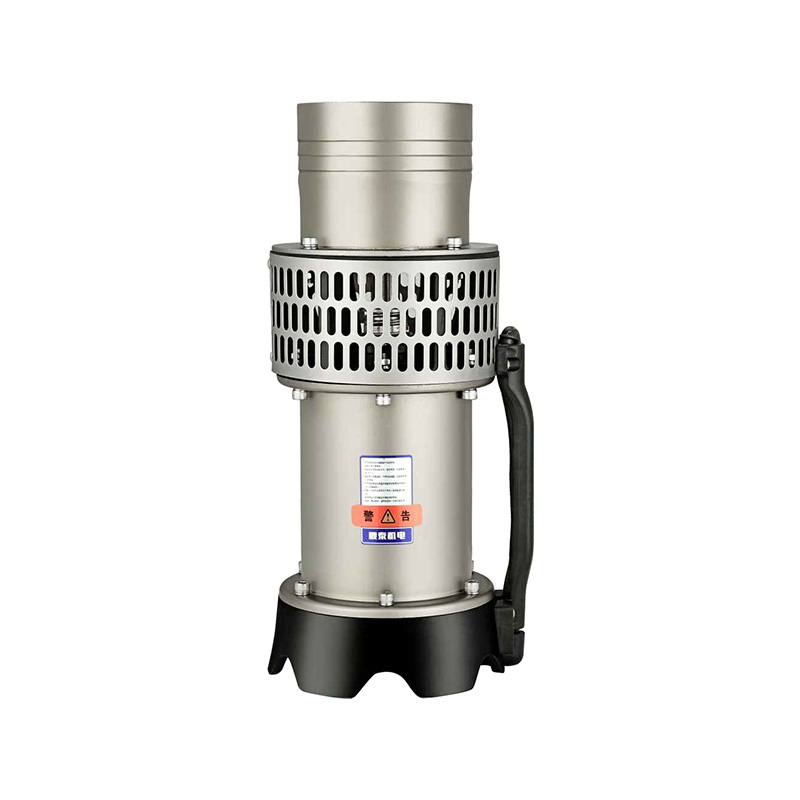
SZQ Permanent Magnet Variable Frequency Oil Immersed Pump
1. Product Overview
The SZQ series is a permanent magnet variable frequency oil-immersed submersible pump. Its main function is to transfer water from wells, ponds, reservoirs, tanks, irrigation channels, and other water sources. Because the pump is designed for submerged installation, the hydraulic unit can operate directly in the water rather than requiring a long surface suction pipe.
The pump uses a permanent magnet motor as its drive source. Unlike a conventional induction motor that relies on induced rotor current to produce torque, a permanent magnet motor uses permanent magnets in the rotor. This can reduce electrical losses associated with rotor excitation and help the motor maintain efficient operation across suitable working conditions.
The variable frequency control system allows the motor operating speed to be adjusted according to the required output. Rather than running continuously at a fixed speed, the system can be configured to respond to changes in flow demand, water level, pressure, or operating conditions. This feature is particularly useful in applications where full output is not always required.
The oil-immersed structure provides a dedicated operating environment for the motor and related internal components. Correctly selected oil can assist with internal lubrication and heat transfer, while the sealed construction helps isolate electrical and mechanical parts from the surrounding water. Proper sealing, installation, and maintenance remain essential for safe and reliable service.
The principal product characteristics include:
• Permanent magnet motor technology.
• Variable frequency drive system compatibility.
• Oil-immersed submersible construction.
• High-volume water transfer capability.
• Energy-saving operation under suitable control settings.
• Compact six-inch installation size for the listed models.
• Three-phase 380 V electrical configuration for the supplied specifications.
• Suitability for agricultural, aquaculture, irrigation, and water-management projects.
2. Main Operating Principle
The pump operates by converting electrical energy into mechanical rotation and then into hydraulic energy. When connected to an appropriate variable frequency drive, the permanent magnet motor rotates the pump impeller. The impeller creates a pressure difference that draws water into the pump and pushes it through the discharge system.
With variable frequency control, the motor speed can be adjusted within the appropriate operating range. Pump performance is influenced by speed: changes in speed affect flow, head, and power demand. In practical use, the variable frequency system can help the operator match pump output to the actual water requirement rather than using a constant maximum speed at all times.
The control system should be selected and configured according to the motor ratings, pump duty, power supply, cable arrangement, installation depth, and local electrical standards. Incorrect settings may cause excessive current, unstable operation, overheating, insufficient output, or premature component wear. Professional commissioning is recommended for commercial and project installations.
When the pump is installed underwater, the surrounding water supports the intended hydraulic operation and helps manage external heat. However, the pump must be fully submerged before operation. Running a submersible pump without sufficient water coverage can result in inadequate cooling, unstable hydraulic conditions, mechanical damage, or motor failure.
3. Permanent Magnet Motor Advantages
The permanent magnet motor is one of the key differences between the SZQ series and many conventional fixed-speed water pumps. In a traditional induction motor, part of the electrical input is used to create the magnetic field needed for motor operation. A permanent magnet motor obtains its magnetic field from permanent magnets, which can improve the conversion of electrical power into useful mechanical output.
In suitable operating conditions, the permanent magnet design can provide high motor efficiency, lower internal losses, and reduced heat generation. Lower heat generation may support longer service life for insulation and other motor components. Actual efficiency depends on the pump load, control method, operating speed, power quality, water conditions, and installation quality.
Permanent magnet motors can also provide strong torque characteristics within their designed operating range. This can help the pump start and maintain stable operation under changing loads. The motor and drive must be properly matched, as permanent magnet motors require compatible control equipment and correct parameter settings.
For agricultural users and commercial pumping operators, the energy-saving potential of a permanent magnet motor can be important. Pumps often operate for many hours each day, and even a modest reduction in energy consumption may produce meaningful savings over the equipment life. The economic benefit is especially relevant where electricity prices are high or where multiple pumps operate simultaneously.
Compared with a basic fixed-speed pump, the SZQ configuration can provide a more flexible operating response. The user may operate at a lower speed when lower flow is sufficient and increase speed when greater water delivery is required. This can help reduce unnecessary throttling and avoid continuously running the pump at a higher output than the system needs.
4. Benefits of Variable Frequency Control
Variable frequency control changes the electrical frequency supplied to the motor and adjusts the motor speed accordingly. In a water-transfer application, this provides an effective method for controlling output. The system can be set for a required flow or pressure, subject to the pump performance range and the capabilities of the drive.
One advantage is improved energy management. A fixed-speed pump may continue operating at full speed even when the water demand is low. The operator may then reduce flow by closing a valve, which can create additional hydraulic losses. A variable frequency system can instead reduce motor speed and produce a lower output more directly.
Another advantage is smoother system control. Irrigation networks, aquaculture water systems, and industrial water-transfer lines do not always require the same flow rate throughout the day. Variable frequency operation can support gradual adjustment, reducing abrupt starts and stops that may create hydraulic shock or mechanical stress.
Soft starting is also useful for electrical systems. A properly configured drive can increase motor speed progressively rather than applying the full starting condition instantly. This may reduce starting current and lessen stress on cables, switches, generators, and other electrical equipment. The exact starting performance depends on the drive configuration and power supply.
Variable frequency operation also provides opportunities for automation. The pump can potentially be integrated with pressure sensors, water-level sensors, flow meters, timers, or central control systems. This allows the pumping installation to respond to changes in water demand, tank level, irrigation schedules, or process requirements.
Users should not assume that every frequency or speed is suitable for every application. The pump should be operated within the manufacturer’s permitted range. Excessively low speed may reduce cooling or produce unstable hydraulic performance, while excessive speed may increase mechanical stress, current, or discharge pressure. A qualified technician should establish the operating parameters.
5. Oil-Immersed Submersible Construction
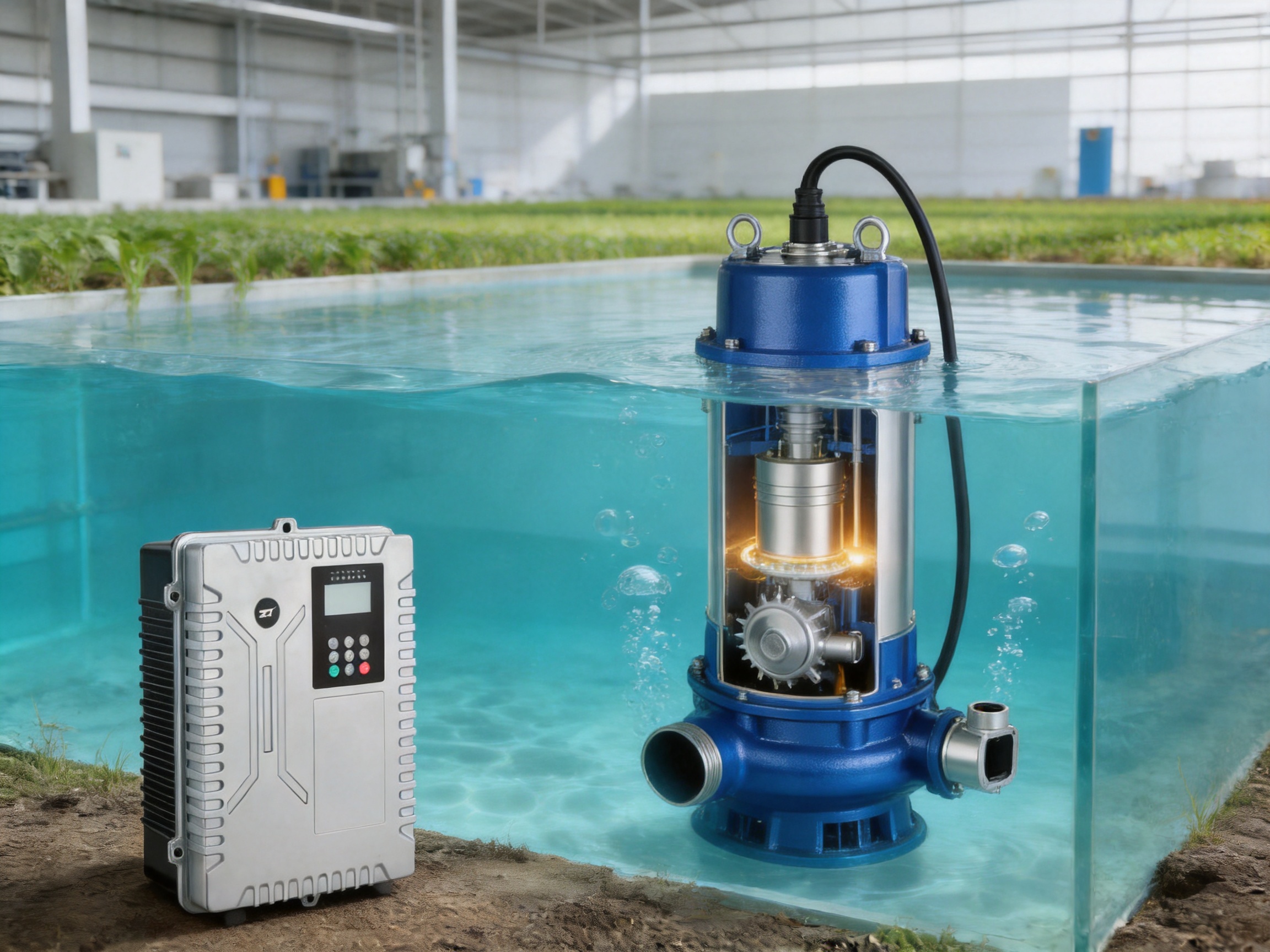
The oil-immersed design is intended to protect and support the internal motor environment. Oil can provide lubrication for appropriate mechanical components and assist in transferring heat away from operating parts. The sealed internal arrangement also helps separate the motor from the surrounding water during normal operation.
Submersible construction offers practical installation advantages. The pump is positioned directly in the water source, reducing the need for a long suction line. This can simplify the intake arrangement and reduce the risk of suction-side problems associated with poorly designed surface installations. The pump’s own position in the water can also help maintain a flooded inlet condition.
Submersible pumps are often useful where space is limited or where a surface pump house is inconvenient. They can be installed in wells, ponds, tanks, or other water bodies, provided that the dimensions, water quality, depth, mounting method, and electrical requirements are suitable.
The oil-immersed construction does not eliminate the need for inspection. Seals, cables, fasteners, bearings, and other components should be checked according to the maintenance schedule. If the pump shows abnormal noise, vibration, current, temperature, leakage, or reduced water output, it should be stopped and inspected.
Water quality is another important consideration. The listed product information identifies the SZQ series as a water pump, but the supplied data does not define a universal chemical-resistance rating or solids-handling specification. Buyers should confirm whether the source water contains sand, mud, fibrous matter, corrosive chemicals, salt, or other substances that could affect the pump.
6. Performance Specifications
The available SZQ models are designed for high-volume water transfer. All listed models use a six-inch, approximately 150-millimeter size and a 380-volt electrical specification. Their rated flow ranges from 160 to 260 cubic meters per hour, while rated head ranges from 6 to 10 meters.
| No. | Model | Rated Flow | Rated Head | Power | Size | Voltage |
|---|---|---|---|---|---|---|
| 1 | SZQ160-6-4 | 160 m³/h | 6 m | 4 kW | 6 inches / 150 mm | 380 V |
| 2 | SZQ200-7-5.5 | 200 m³/h | 7 m | 5.5 kW | 6 inches / 150 mm | 380 V |
| 3 | SZQ260-7-7.5 | 260 m³/h | 7 m | 7.5 kW | 6 inches / 150 mm | 380 V |
| 4 | SZQ250-10-11 | 250 m³/h | 10 m | 11 kW | 6 inches / 150 mm | 380 V |
The figures in this table are rated values and should be used as a starting point for equipment selection. Actual performance may vary according to pipe length, pipe diameter, valves, elevation, bends, water level, intake conditions, power quality, frequency setting, and system resistance.
Rated flow describes the approximate volume of water the pump is designed to transfer under the corresponding rated conditions. Rated head indicates the approximate pressure-producing capability expressed as a water column height. It is important to distinguish pump head from the vertical depth at which the pump is installed. Total dynamic head includes elevation difference and friction losses in the complete discharge system.
The 4 kW model may be appropriate where the required flow and head are relatively moderate within the listed range. The 5.5 kW and 7.5 kW models provide higher rated flow options. The 11 kW model offers the highest listed rated head and is suitable for applications requiring greater lifting performance, provided that the complete hydraulic system matches its operating conditions.
7. Comparison with Conventional Water Pumps
Buyers commonly compare submersible pumps according to price, motor efficiency, output, installation convenience, service life, control flexibility, and supplier support. The SZQ series has several characteristics that may distinguish it from a basic conventional pump.
First, the permanent magnet motor is designed for efficient energy conversion. A conventional induction motor may be reliable and widely available, but its energy performance can differ depending on its efficiency class, loading, and control method. The permanent magnet configuration can be attractive for applications with long operating hours and variable water demand.
Second, the SZQ series is designed for variable frequency operation. A conventional fixed-speed pump generally delivers one primary speed unless output is adjusted through valves or additional mechanical arrangements. Variable frequency control provides a more direct method of adjusting motor speed and pump output.
Third, the submersible arrangement can reduce suction-side installation complexity. Surface pumps may require careful priming, suction-pipe design, foot valves, and protection against air entry. A correctly installed submersible pump operates at the water source and can avoid many of these issues.
Fourth, the oil-immersed motor structure is designed for operation in a submerged environment. This can be advantageous where an enclosed water source, well, pond, or tank is available and where a surface motor would be exposed to dust, spray, weather, or limited installation space.
These advantages should be evaluated against the application requirements. A surface pump may be preferable where frequent visual access is needed, where the water source is shallow, or where the equipment must remain outside the water. A standard fixed-speed pump may also be suitable for simple systems with constant demand and limited control requirements. The SZQ series is most beneficial where energy efficiency, submerged installation, and adjustable output are priorities.
8. Applications in Agriculture and Irrigation
Agricultural irrigation requires dependable water delivery across changing fields, seasons, and crop cycles. The SZQ series can be used for transferring water from reservoirs, ponds, wells, canals, or storage tanks into irrigation networks, subject to suitable water quality and hydraulic conditions.
For farmland irrigation, variable frequency control can help match output to the number of active irrigation zones. When only part of a field is being irrigated, the pump may be operated at a lower speed. When more zones are opened, the speed can be increased within the approved range. This can support more efficient operation than running at full capacity throughout the entire irrigation cycle.
The pump may also support greenhouse irrigation, nursery systems, orchard watering, and general agricultural water supply. The correct model depends on the required flow, elevation, pipe network, and daily operating duration. Buyers should provide complete project data before selecting the pump.
Where water contains suspended sediment, an intake screen or suitable filtration arrangement may be needed. Excessive sand can accelerate wear in hydraulic components. The pump should not be selected solely according to the desired flow; the source-water condition must also be evaluated.
9. Applications in Aquaculture
Aquaculture systems depend on stable water movement for pond management, water exchange, circulation, and water-level control. The SZQ pump can serve as a high-volume water-transfer unit in fish farms and related aquatic production areas.
In pond operations, the pump may be used to transfer water between ponds, fill or drain culture areas, support water exchange, or move water from a reservoir to production ponds. Its high flow capacity is relevant to applications where large water volumes must be moved over a relatively short head.
The pump should be integrated carefully with aquaculture equipment. If the system also uses aerators or air blowers, the pumping schedule should be coordinated with dissolved-oxygen management and water-quality objectives. Pumping water alone does not replace aeration, filtration, biological management, or appropriate stocking practices.
For aquaculture installations, intake protection is important. Screens should be designed to prevent fish, large debris, and other unwanted materials from entering the pump. The screen must also provide sufficient open area so that it does not create excessive suction resistance.
Zhejiang ZhenTai Mechanical and Electrical Co., Ltd. also produces floating aerators, impeller aerators, water wheel aerators, and air blowers. This broader product range can be useful for buyers seeking coordinated aquaculture equipment from one manufacturing source.
10. Applications in Drainage and Environmental Systems
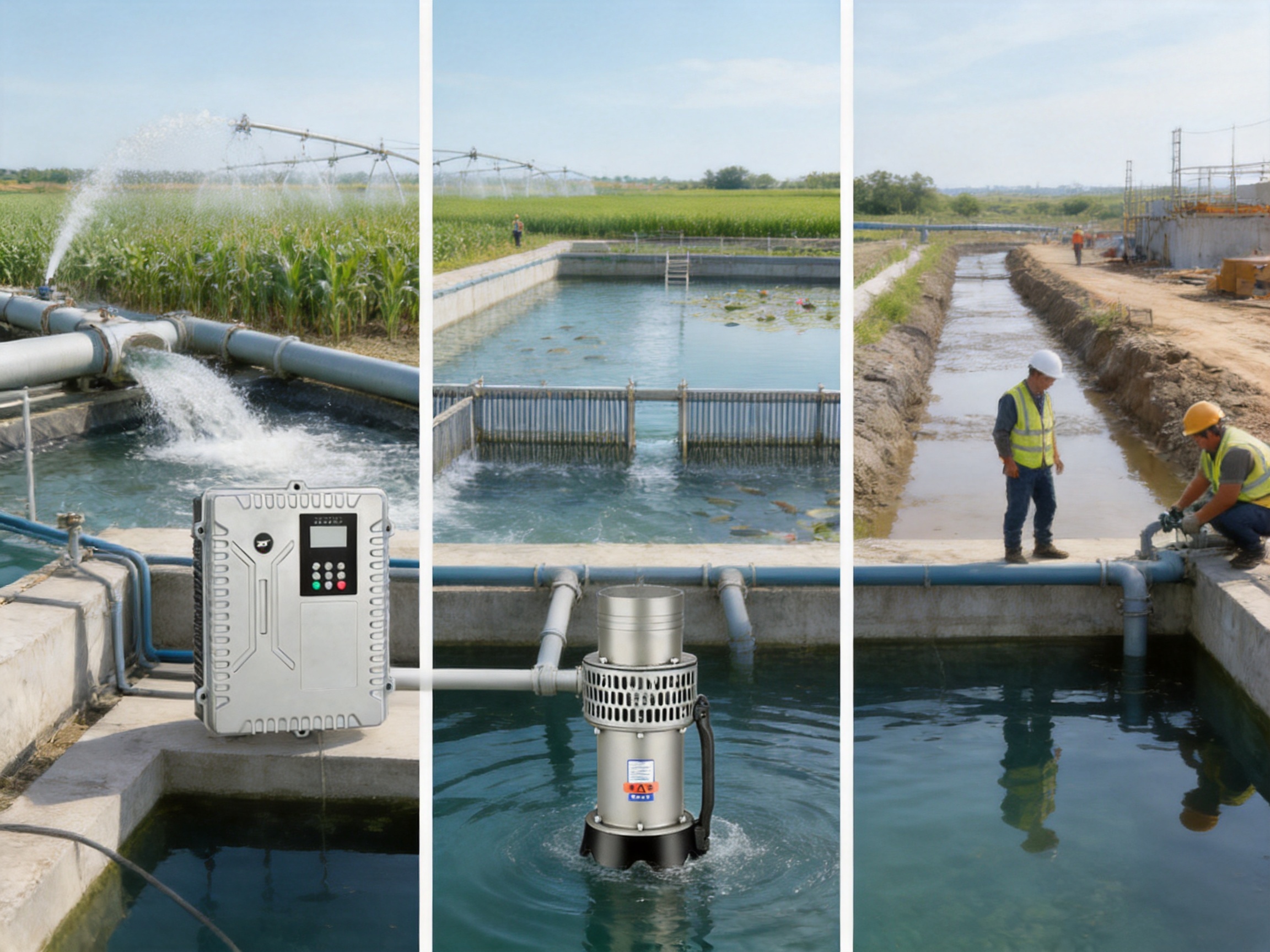
Submersible pumps are frequently used for drainage because they can be placed directly in a collection area. The SZQ series may be suitable for moving accumulated water from construction areas, drainage basins, foundation areas, ecological lakes, or other water-management locations when the water conditions and required duty are compatible.
In building foundation drainage, the pump can help transfer water away from excavated areas or collection pits. Correct positioning is important because the pump should remain stable and should not be allowed to rest in heavy sediment that could obstruct the inlet.
In ecological landscape systems, the pump may support circulation or water replenishment. Designers should confirm that the pump flow is appropriate for the pond volume, filtration system, pipe network, and environmental objectives. Excessive flow can disturb sediment or create unwanted turbulence, while insufficient flow may fail to provide the desired circulation.
For flood-control or emergency drainage, pump selection should include consideration of power availability, discharge routing, temporary installation stability, and debris protection. Emergency applications may require backup power or multiple pumps, depending on the risk level.
11. Manufacturing Strengths and Product Development
Zhejiang ZhenTai Mechanical and Electrical Co., Ltd. was established in 2018 and is located in Wenling, Zhejiang Province, China. The company specializes in the research, development, and production of more than 90 products across 10 series. Its product categories include floating aerators, impeller aerators, water wheel aerators, water pumps, and related equipment.
This product breadth supports a practical manufacturing approach. Pump and aeration products share many engineering requirements, including motor design, sealing, water protection, impeller balance, electrical safety, structural strength, and long-duration operation. Experience across these product families can help the manufacturer understand different water-management applications.
The company’s stated application areas include aquaculture, fish-pond aeration, farmland irrigation, building foundation drainage, environmental protection, chemical industries, household water supply, ecological landscape lakes, and flood-control drainage. Exposure to different operating environments encourages attention to product configuration, application matching, and customer-specific requirements.
Advanced manufacturing is not limited to the final assembly of a pump. It includes product design, material selection, machining, motor assembly, sealing, electrical integration, testing, packaging, and technical support. For a permanent magnet variable frequency pump, accurate motor construction and correct drive compatibility are especially important.
During motor production, the permanent magnets must be positioned securely and accurately. Rotor balance is important because imbalance can cause vibration, noise, bearing wear, and reduced service life. Stator winding quality, insulation, connection integrity, and electrical testing also influence operating reliability.
The hydraulic section requires appropriate impeller geometry and accurate alignment. Small dimensional differences can affect flow, head, efficiency, and vibration. Machined and molded parts should be inspected for dimensional consistency, while assembled units should be checked for smooth rotation and correct clearances.
Sealing is a critical manufacturing and service consideration for oil-immersed submersible equipment. Seal components must be correctly installed, and mating surfaces should be clean and undamaged. A reliable sealing process helps protect the motor from water ingress and helps retain the internal oil environment.
Testing should include electrical checks, rotation checks, leakage inspection, operating-current observation, vibration evaluation, and hydraulic performance verification where applicable. The specific test program may vary according to the model and customer requirements, but systematic inspection is essential for a product intended for submerged operation.
12. Quality and Engineering Support
Quality is influenced by both product design and production consistency. A pump may have an attractive specification but still perform poorly if the motor, seals, cable, impeller, or control system is not correctly matched. ZhenTai emphasizes quality, integrity, continuous technological innovation, reliable products, customized OEM/ODM services, and professional technical support.
For international buyers, technical support can be as important as the hardware itself. Correct model selection requires an understanding of flow, head, voltage, frequency, water quality, installation depth, discharge pipe size, and operating schedule. Supplier support can help reduce the risk of selecting a pump that is too small, too large, or unsuitable for the water conditions.
OEM and ODM cooperation can include private labeling, packaging requirements, documentation, electrical configuration, product configuration, and project-based supply. The exact scope should be confirmed in writing before production. Buyers should provide drawings, technical specifications, destination-market requirements, and inspection expectations as early as possible.
For container or project orders, packaging should protect the pump, cable, control equipment, and accessories from impact and moisture. Export documentation should identify the model, electrical rating, quantity, dimensions, and any special handling requirements. Clear documentation helps distributors and end users install and service the equipment correctly.
13. Installation Recommendations
Before installation, inspect the pump, power cable, discharge connection, mounting components, and control equipment. Confirm that the model matches the intended voltage and that the variable frequency drive is suitable for a permanent magnet motor. Do not energize the pump until all safety checks have been completed.
The pump must be fully submerged before operation. The water level should remain sufficient during the complete pumping cycle. If the water source may fall below the safe operating level, a level sensor or automatic protection system should be considered.
Position the pump securely and keep it away from loose sediment where possible. The inlet should have sufficient clearance to allow water to enter freely. A protective screen may be necessary in ponds, canals, or reservoirs containing leaves, plastic, stones, weeds, or other debris.
The discharge pipe should be supported independently where required. The pump should not carry the full weight of a long or unsupported pipe. Excessive pipe strain can damage connections and affect alignment. The pipe diameter should be selected to limit friction losses and preserve the intended flow.
Electrical installation should be performed by qualified personnel. The system should include appropriate grounding, overload protection, short-circuit protection, and isolation equipment. Cable joints must be protected against water ingress and mechanical damage. The control cabinet should be located in a dry, ventilated, and accessible position.
After installation, check the direction of rotation if the system design requires it. Observe current, vibration, noise, discharge flow, and water level during the initial test. Stop the pump immediately if there is abnormal sound, excessive vibration, unexpected current, or evidence of leakage.
14. Variable Frequency Drive Configuration
The variable frequency drive should be configured using the motor’s electrical data and the pump’s operating requirements. Important parameters may include rated voltage, rated current, motor power, base frequency, acceleration time, deceleration time, minimum frequency, maximum frequency, and protection limits.
Permanent magnet motors may require specific control modes, such as sensorless vector control or another compatible method. The drive manufacturer’s instructions should be followed. A drive intended only for standard induction motors may not provide suitable control for this pump.
Acceleration and deceleration should be adjusted to avoid unnecessary stress on the pump and piping. Very rapid changes may cause hydraulic transients, while excessively slow changes may delay system response. The best settings depend on pipe length, valve arrangement, water column, and application requirements.
Protection functions may include overcurrent, under-voltage, over-voltage, phase loss, overheating, dry-run protection, overload, and abnormal frequency monitoring. Not every drive includes all functions as standard, so the project designer should confirm the required protection features.
Operators should keep a record of the initial settings and actual operating values. Recording current, frequency, flow, pressure, and water level can help identify changes in pump performance and support preventive maintenance.
15. Maintenance and Service Life
Routine maintenance begins with observation. Operators should monitor changes in water output, current, vibration, noise, starting behavior, and operating temperature. A gradual decrease in flow may indicate blockage, wear, pipe changes, falling water level, or an electrical-control issue.
The intake screen should be inspected and cleaned when necessary. A blocked screen can restrict water entry, increase suction losses, and reduce pump performance. Cleaning intervals depend on the source water and seasonal conditions.
Electrical cables should be examined for cuts, abrasion, loose connections, and signs of water intrusion. The grounding system should be tested periodically. Any electrical fault should be handled by qualified personnel rather than by untrained operators.
The oil-immersed chamber and sealing system should be checked according to the supplier’s maintenance recommendations. If oil appears contaminated or if water ingress is suspected, the pump should be removed from service for inspection. The correct oil type and service procedure should be confirmed with the manufacturer.
Bearings, seals, and hydraulic components are wear parts in many pumping systems. Their service life depends on operating hours, water quality, sand concentration, alignment, vibration, frequency range, and maintenance quality. Using the pump within its recommended range can reduce unnecessary wear.
When the pump is removed from the water, it should be handled carefully. Avoid lifting it by the power cable unless the equipment is specifically designed for that method. Use appropriate lifting points, protect the cable, and keep the pump secured during inspection or transport.
16. Selecting the Correct SZQ Model
Model selection should begin with the required flow. Determine how many cubic meters of water must be moved per hour and whether that requirement is continuous or intermittent. The selected pump should provide the target flow at the actual total dynamic head, not merely at a zero-resistance condition.
Next, calculate total head. This includes vertical elevation, pressure requirements at the discharge point, pipe friction, valve losses, bends, filters, meters, and other fittings. A pump rated at 7 meters of head may not deliver its rated flow if the system resistance is close to or above that value.
Electrical requirements must also be confirmed. The listed models use 380 V, which is commonly associated with three-phase industrial power systems. Buyers should verify voltage, frequency, phase configuration, generator capacity, cable length, and drive compatibility in the destination country.
Water quality should be documented. Identify whether the source contains sand, silt, algae, vegetation, corrosive compounds, salt, or biological matter. If the water is chemically aggressive or contains substantial solids, additional materials or a different pump design may be required.
Operating hours affect the economic evaluation. A pump used for a few hours each week may be selected primarily for purchase cost and simplicity. A pump operating for many hours each day should be assessed for energy consumption, efficiency, control flexibility, service access, and total cost of ownership.
17. Total Cost of Ownership
The purchase price is only one part of a pumping project. Total cost of ownership includes electricity, installation, control equipment, discharge piping, maintenance, replacement parts, downtime, and eventual replacement.
The permanent magnet and variable frequency configuration may reduce operating costs where the pump runs frequently or where output changes significantly. Energy savings depend on the actual duty cycle. If the pump always operates at full rated speed and load, the advantage of variable speed may be smaller than in a system with frequent flow adjustment.
Correct sizing is essential. An oversized pump may consume more energy than necessary and require throttling. An undersized pump may run continuously at high load without achieving the required water delivery. A properly selected model can provide a better balance between capital cost, energy consumption, and service life.
Maintenance costs can also be reduced through correct installation and preventive inspection. Protecting the intake, avoiding dry running, maintaining electrical connections, and monitoring operating conditions can help prevent avoidable failures.
18. Why Work with a Specialized Manufacturer
A specialized manufacturer can provide more than a standard catalog product. It can help buyers compare models, review project conditions, arrange technical details, and coordinate production for larger orders. This is particularly valuable when pumps are being integrated into irrigation networks, aquaculture facilities, drainage projects, or distributor product lines.
Zhejiang ZhenTai Mechanical and Electrical Co., Ltd. offers a product range that covers several types of aeration and pumping equipment. This allows international buyers to source related products from one supplier when a project requires pumps, aerators, or air blowers together.
The company’s stated experience in more than 90 products across 10 series supports product diversification and application knowledge. Its focus on research, development, manufacturing, OEM/ODM service, and technical support is relevant to importers, engineering contractors, distributors, farm-equipment suppliers, and project developers.
Buyers should still conduct their own technical and commercial evaluation. Important questions include production lead time, warranty terms, spare-parts availability, inspection procedures, packaging, documentation, drive supply, installation guidance, and after-sales response. Clear communication before an order helps establish realistic performance expectations.
19. Recommended Buyer Information
When requesting a quotation, buyers should provide the desired flow in cubic meters per hour, total head in meters, water source, water quality, installation depth, pipe diameter, required operating hours, power supply, destination country, and whether variable frequency control is required.
For OEM or ODM projects, buyers should additionally provide branding requirements, packaging design, language requirements, product labels, technical documents, inspection standards, target quantity, delivery schedule, and any required accessories.
It is also useful to explain the end application. A pump for a fish farm may need different intake protection from a pump for irrigation. A drainage project may require different controls from a reservoir-transfer installation. Application information allows the supplier to recommend a more suitable configuration.
20. Frequently Asked Questions
What type of pump is the SZQ series?
The SZQ series is a permanent magnet variable frequency oil-immersed submersible pump. It is designed for underwater water transfer and can be used with a compatible variable frequency drive system.
What is the main advantage of the permanent magnet motor?
A permanent magnet motor can provide efficient electrical-to-mechanical energy conversion with reduced rotor excitation losses. In suitable applications, this may lower energy consumption and heat generation compared with some conventional motor designs.
Can the pump operate at different speeds?
Yes, the pump is designed for variable frequency control. The actual allowable speed and frequency range must be established according to the pump, motor, drive, hydraulic system, and manufacturer’s instructions.
Must the pump be completely submerged?
Yes. The pump should be fully submerged before operation, and the water level should remain adequate during pumping. Operating without sufficient submergence may cause inadequate cooling, unstable performance, or damage.
What voltage do the listed models use?
The listed models use a rated voltage of 380 V. Buyers should confirm the local power supply, phase configuration, frequency, and variable frequency drive compatibility before ordering.
What flow rates are available?
The listed models have rated flows of 160, 200, 260, and 250 cubic meters per hour, depending on the model. Actual flow depends on total dynamic head, piping, valves, speed, and water conditions.
Which model provides the highest listed head?
The SZQ250-10-11 model has the highest listed rated head at 10 meters and a rated power of 11 kW. The correct choice should still be based on the complete hydraulic system rather than head alone.
Can the pump be used for agricultural irrigation?
Yes. The SZQ series is suitable for agricultural water-transfer applications when the flow, head, water quality, electrical supply, and installation conditions match the pump specifications.
Can it be used in aquaculture?
Yes. It may be used for pond filling, water exchange, circulation, and transfer between water bodies. Intake screens and suitable protection should be provided where fish, vegetation, or debris may be present.
Can it handle water containing sand or solid particles?
The supplied product information does not define a universal solids-handling rating. Buyers should provide details about sand, silt, algae, and other suspended matter so the manufacturer can confirm suitability and recommend intake protection.
Is a variable frequency drive included?
The product is designed for variable frequency control, but the supplied information does not confirm that a drive is included with every order. Buyers should specify whether the drive, control cabinet, sensors, and related accessories are required.
What maintenance does an oil-immersed pump require?
Maintenance may include inspecting the cable, seals, oil chamber, intake screen, mounting system, electrical protection, vibration, current, and hydraulic output. The detailed service schedule should be confirmed with the supplier.
Who manufactures the SZQ series?
The SZQ series is manufactured by Zhejiang ZhenTai Mechanical and Electrical Co., Ltd., located in Zhaoyang Industrial Park, Daxi Town, Wenling City, Zhejiang Province, China.
Does the manufacturer offer OEM and ODM services?
The company states that it provides customized OEM/ODM services. Buyers should discuss branding, packaging, specifications, documentation, quantity, and inspection requirements before production.
21. Conclusion
The SZQ Permanent Magnet Variable Frequency Oil Immersed Pump combines three important technologies: permanent magnet motor efficiency, variable frequency operating flexibility, and oil-immersed submersible construction. Together, these features create a practical solution for high-volume water transfer in agriculture, aquaculture, irrigation, drainage, environmental systems, and related applications.
The listed models provide rated flows from 160 to 260 cubic meters per hour, rated heads from 6 to 10 meters, power ratings from 4 to 11 kW, six-inch installation sizing, and 380-volt electrical specifications. The range gives buyers several options for matching flow and head requirements.
Compared with a basic fixed-speed surface pump, the SZQ configuration can offer easier submerged installation, adjustable output, potential energy savings, and strong suitability for changing water demand. Its value is greatest when it is correctly selected, installed, controlled, and maintained.
Zhejiang ZhenTai Mechanical and Electrical Co., Ltd. supports the product with experience in water pumps, aerators, air blowers, research and development, manufacturing, OEM/ODM service, and technical assistance. For global buyers, distributors, farms, aquaculture operators, and engineering contractors, the series provides a flexible platform for efficient water-management projects.
Before purchase, users should verify total dynamic head, required flow, water quality, power supply, drive compatibility, installation depth, intake protection, and service requirements. With these factors properly evaluated, the SZQ series can contribute to stable water transfer, better energy management, and dependable operation in demanding working environments.
References
1. Product specification information for the SZQ Permanent Magnet Variable Frequency Oil Immersed Pump, including model, flow, head, power, size, and voltage data.
2. Manufacturer-provided company information for Zhejiang ZhenTai Mechanical and Electrical Co., Ltd., including product categories, application areas, manufacturing capabilities, and OEM/ODM services.
3. General principles of submersible pump installation, electrical protection, intake screening, discharge-pipe design, and preventive maintenance.
4. General engineering principles for permanent magnet motors and variable frequency drive applications in water-pumping systems.
5. General pump-system design principles covering total dynamic head, friction losses, flow requirements, energy consumption, and equipment selection.
6. General aquaculture and agricultural irrigation equipment practices concerning water transfer, pond management, water exchange, and irrigation distribution.