 English
 Español
 Indonesia
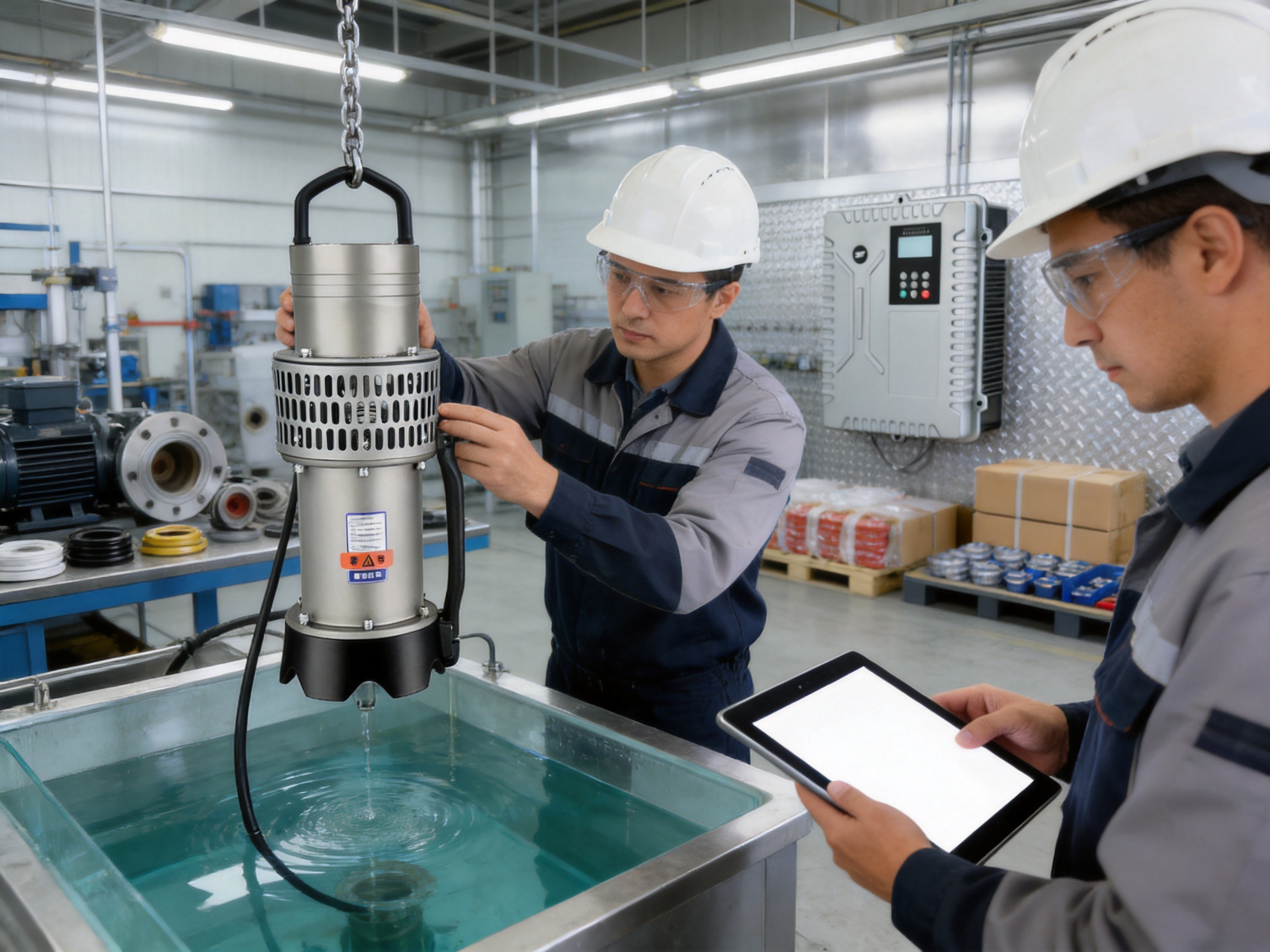
Reliable water movement is essential in agricultural irrigation, aquaculture, drainage, water-supply projects, ecological water management, and many other demanding applications. A pump used in these environments must do more than move water from one location to another. It must provide stable flow, operate efficiently, adapt to changing working conditions, tolerate continuous duty, and remain practical to install and maintain. The SZQ Permanent Magnet Variable Frequency Oil Immersed Pump is designed to meet these requirements through the combination of a permanent magnet motor, variable frequency control, and an oil-immersed submersible structure.
This product is intended for buyers seeking a modern alternative to conventional fixed-speed submersible pumps. Its permanent magnet motor is designed to deliver efficient power conversion, while variable frequency technology allows the pump to adjust operating performance according to actual system demand. The oil-immersed construction supports motor cooling and protection, and the submersible design allows the unit to operate directly in the water without requiring a separate dry installation space.
The SZQ series is available in several configurations, including models with rated flow from 160 to 260 cubic meters per hour, rated head from 6 to 10 meters, and motor power from 4 to 11 kilowatts. With a 380-volt electrical specification and a 6-inch, or 150-millimeter, size, the series is suitable for high-volume water transfer in farms, wells, fish ponds, irrigation systems, drainage areas, and related commercial projects.
Product Overview and Operating Principle
The SZQ pump is an oil-immersed submersible pump equipped with a permanent magnet motor and a variable frequency drive system. These three design elements work together to create a pumping solution that can operate efficiently in environments where water availability, flow requirements, and operating loads may change throughout the day.
In a conventional fixed-speed pump, the motor generally operates at a preset speed whenever the pump is switched on. If the required flow is lower than the pump’s maximum output, the system may still consume nearly the same amount of energy unless mechanical throttling or other control methods are used. This can result in unnecessary energy consumption, pressure fluctuations, and accelerated wear.
The SZQ design uses variable frequency control to regulate motor speed. When the water demand changes, the operating frequency can be adjusted to help match pump output with the actual requirement. This approach can reduce unnecessary operation at full capacity, improve control over water delivery, and support more efficient use of electrical power.
The permanent magnet motor is another important part of the design. Unlike a conventional induction motor, a permanent magnet motor uses permanent magnetic fields in the rotor to support torque generation. This can reduce certain electrical losses and improve motor efficiency, especially when the pump is operating under variable-speed conditions. The result is a compact, responsive, and energy-conscious drive system for submersible pumping.
Because the pump is submersible, the complete unit is placed directly in the water or other approved working medium. This eliminates the need for a separate surface-mounted pump room and reduces the length of suction piping. The water surrounding the pump also helps support heat transfer during operation, while the oil-immersed motor construction provides an additional internal environment for motor protection and cooling.
Main Technical Characteristics
Permanent Magnet Motor Technology
The permanent magnet motor is designed to provide efficient electromagnetic performance and stable torque. This is especially useful in applications that require long operating periods or frequent changes in load. Improved motor efficiency can help reduce energy losses during operation, while the motor’s compact arrangement can support a practical submersible structure.
For farms, irrigation contractors, aquaculture operators, and industrial users, motor efficiency is an important factor in total operating cost. Electricity may represent a significant portion of the lifetime cost of a pump. A motor that makes better use of input power can help reduce energy expenditure over time, particularly when used for regular irrigation cycles, water circulation, pond management, or drainage work.
Variable Frequency Drive Compatibility
The variable frequency drive system allows operating speed to be adjusted to suit changing conditions. The user can configure appropriate frequency settings based on water demand, pipeline resistance, required discharge, and system pressure. This makes the pump more flexible than a single-speed unit that can only operate at a fixed performance point.
Variable frequency operation can provide several practical benefits. It may help reduce water hammer during starting and stopping, improve control of discharge, lower mechanical shock, and support smoother operation. It can also allow one pump model to serve different operating conditions, reducing the need to use throttling valves or repeatedly switch between several fixed-speed pumps.
The drive system should be selected and configured according to the electrical requirements of the installation. Proper settings are essential for stable operation. Users should follow the product instructions, confirm the compatibility of the electrical supply, and use suitable protection and control equipment.
Oil-Immersed Submersible Construction
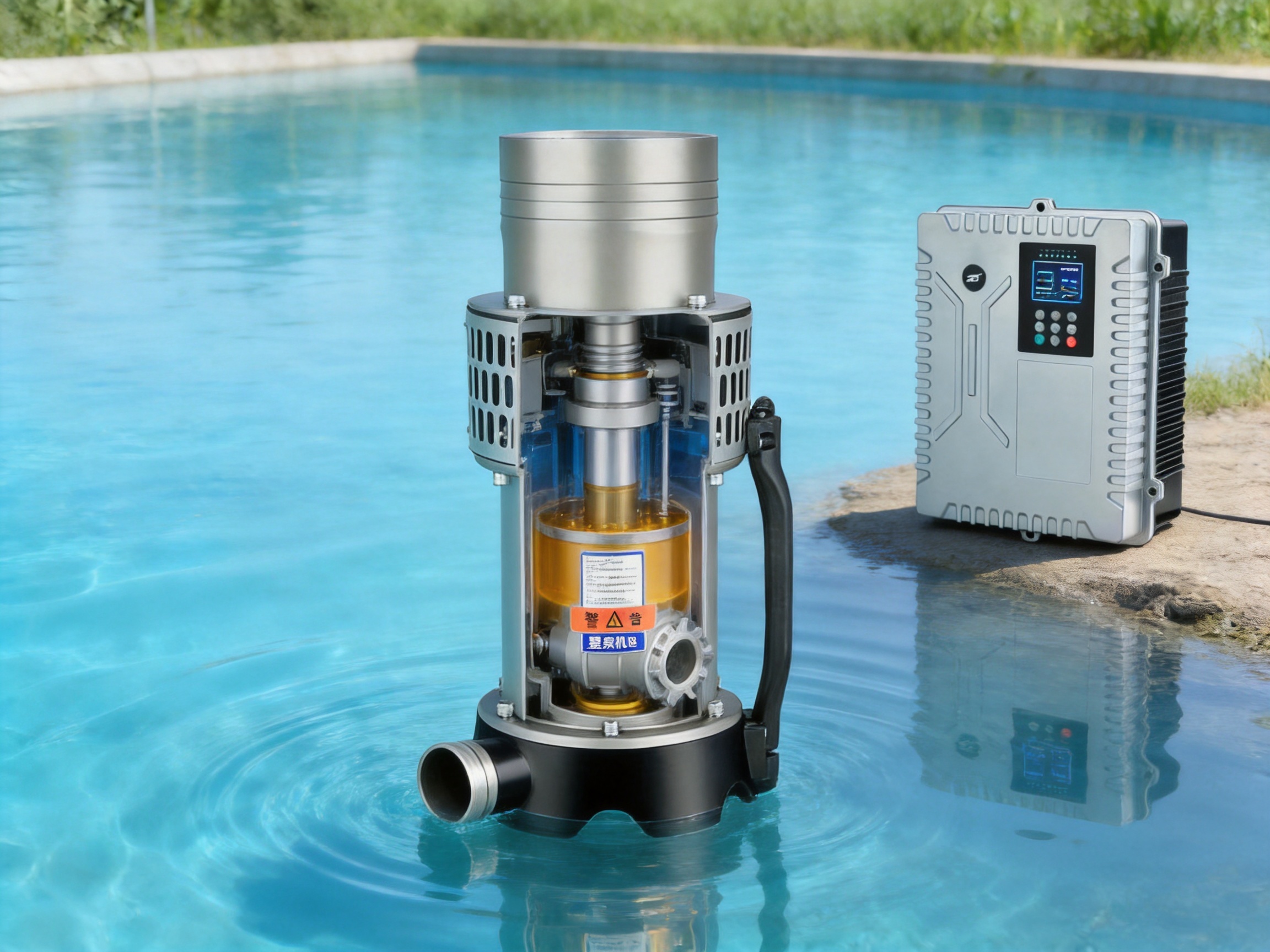
The oil-immersed structure is designed to protect the motor components and support heat dissipation. The oil-filled motor chamber creates a controlled internal environment around the motor, helping separate sensitive electrical and mechanical parts from direct contact with the external water. This is particularly valuable in submersible applications where the motor must operate below the water surface for extended periods.
Oil immersion can also support lubrication for selected internal components and help maintain a stable operating environment. The exact maintenance procedure depends on the pump configuration and service conditions, so operators should follow the manufacturer’s technical guidance when checking seals, oil condition, cable entries, and other protective components.
Submersible Installation
The submersible configuration allows the pump to be positioned close to the water source. This can simplify installation in wells, agricultural reservoirs, fish ponds, drainage pits, and other water collection areas. Since the pump works below the surface, it does not need to draw water through a long suction line, which can reduce the risk of suction losses and priming problems associated with some surface-mounted pump arrangements.
A submersible installation also saves space. There is no requirement for a large pump house beside the water source, making the product suitable for remote sites or projects where construction space is limited. The design can be particularly useful for irrigation areas, temporary drainage work, and rural water systems where a simple installation layout is preferred.
Even though the pump is designed for submerged operation, installation depth, water quality, cable routing, support arrangements, and operating conditions must be carefully considered. The pump must be fully submerged before operation, and the water level must remain sufficient to prevent dry running or inadequate cooling.
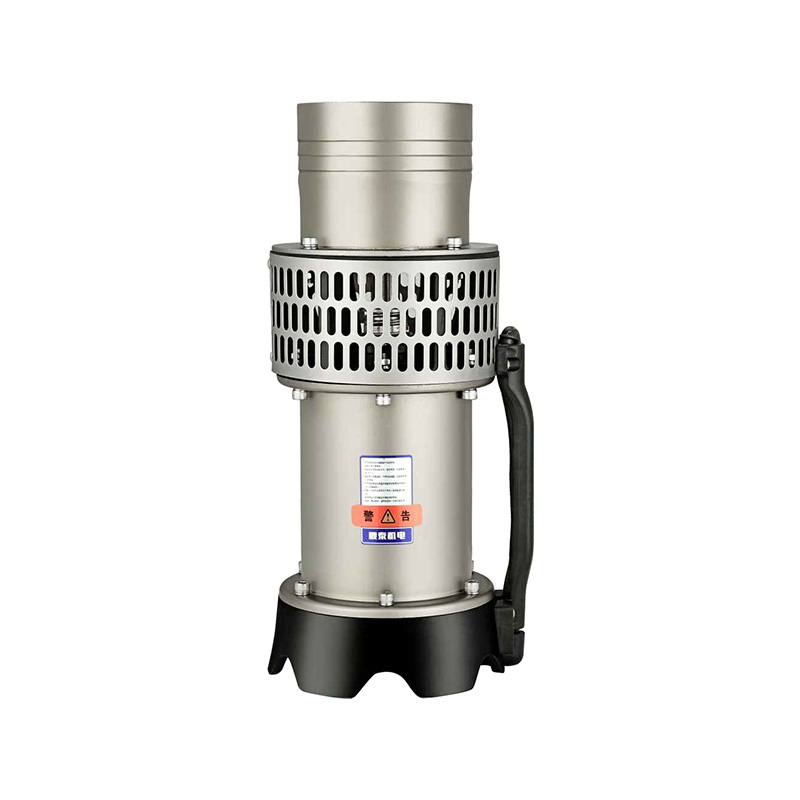
SZQ Permanent Magnet Variable Frequency Oil Immersed Pump
Performance Range of the SZQ Series
The SZQ series includes several models for different flow and head requirements. The available configurations provide a choice of output without changing the basic permanent magnet, variable frequency, and oil-immersed design concept.
| No. | Model | Rated Flow | Rated Head | Motor Power | Size | Voltage |
|---|---|---|---|---|---|---|
| 1 | SZQ160-6-4 | 160 m³/h | 6 m | 4 kW | 6 inches (150 mm) | 380 V |
| 2 | SZQ200-7-5.5 | 200 m³/h | 7 m | 5.5 kW | 6 inches (150 mm) | 380 V |
| 3 | SZQ260-7-7.5 | 260 m³/h | 7 m | 7.5 kW | 6 inches (150 mm) | 380 V |
| 4 | SZQ250-10-11 | 250 m³/h | 10 m | 11 kW | 6 inches (150 mm) | 380 V |
The model selection should be based on the complete operating system rather than rated flow alone. Users should evaluate the required delivery volume, vertical lifting height, pipeline length, pipe diameter, bends, valves, elevation changes, water quality, and desired operating frequency. A pump selected only according to nominal flow may not provide the expected result if the system resistance is significantly different from the design condition.
The SZQ160-6-4 model provides a rated flow of 160 cubic meters per hour at a rated head of 6 meters. It may be appropriate for moderate-volume transfer and lower-lift applications where a compact 4-kilowatt configuration is suitable.
The SZQ200-7-5.5 model increases rated flow to 200 cubic meters per hour and rated head to 7 meters. It can be considered for larger irrigation areas, pond transfer systems, and water circulation projects requiring additional capacity while maintaining a moderate motor power level.
The SZQ260-7-7.5 model offers the highest listed rated flow at 260 cubic meters per hour, with a rated head of 7 meters. This configuration is suitable for high-volume, relatively low-head water movement where fast transfer is a priority.
The SZQ250-10-11 model provides a rated flow of 250 cubic meters per hour and a rated head of 10 meters. It is intended for applications that require greater lifting performance than the 6- or 7-meter models. Its 11-kilowatt motor provides a higher power reserve for systems with greater elevation or resistance requirements.
Advantages Compared with Conventional Pump Solutions
Energy-Conscious Operation
One of the most important advantages of the SZQ series is its focus on efficient energy use. The permanent magnet motor is designed to reduce motor losses, while the variable frequency system allows the pump to operate closer to the required working point. Together, these technologies can help reduce unnecessary power consumption compared with a conventional fixed-speed pump that operates continuously at full speed.
Energy savings are influenced by many factors, including frequency setting, water level, pipe resistance, operating hours, and installation quality. The product should not be viewed as an automatic guarantee of a specific energy reduction in every project. However, its motor and control architecture provides a strong foundation for efficient operation when properly selected and configured.
For agricultural users, the energy advantage can be significant because irrigation pumps may run for long periods during planting and growing seasons. For aquaculture farms, pumps may operate on regular schedules for water exchange, circulation, and pond management. In these settings, even moderate improvements in operating efficiency may contribute to meaningful long-term cost control.
Flexible Output Regulation
Fixed-speed pumps are often selected according to the highest anticipated demand. This can mean that the pump produces more flow than necessary during normal operation. Operators may then use valves to restrict flow, but throttling can waste energy because the motor continues to operate at a high speed while the valve creates additional resistance.
Variable frequency control offers a more direct method of adjusting output. Instead of restricting excessive flow after it has been generated, the operator can reduce motor speed to better match the desired delivery rate. This can improve system control and may reduce the energy associated with unnecessary pressure and flow.
Variable speed also supports gradual starting and stopping. Smooth acceleration can reduce sudden hydraulic shock in pipelines and reduce mechanical stress on couplings, supports, and other system components. Smooth control is especially useful in larger irrigation and water-transfer systems where abrupt changes may affect downstream equipment.
Stable Performance in Demanding Environments
The oil-immersed submersible structure is designed for operation in challenging water environments. By placing the motor below the water surface and using an oil-filled internal chamber, the product is suited to installations where a surface pump would be difficult to protect from weather, flooding, dust, or limited space.
The submersible arrangement can also reduce the possibility of suction-side air entry when correctly installed. This supports stable pumping and simplifies the layout between the water source and delivery pipeline. In a well-designed installation, the pump can transfer water directly from the source without the extended suction arrangements required by certain surface systems.
Reduced Installation Space
A surface pump installation may require a foundation, weather shelter, suction pipe, foot valve, priming system, and additional protective structures. The SZQ pump can reduce the need for several of these elements because the pump itself is placed in the water.
This does not mean that no installation preparation is needed. The user still needs appropriate discharge piping, electrical protection, lifting or support arrangements, and secure cable routing. Nevertheless, the compact underwater arrangement can be advantageous where land is limited or where the water source is located away from permanent buildings.
Potentially Lower Maintenance Burden
Submersible pumps have fewer exposed external moving components than some surface-mounted arrangements. The motor and hydraulic assembly are integrated into a single underwater unit, reducing the number of above-ground mechanical connections. The enclosed oil-immersed design can also help protect internal components from the surrounding water when seals and protective systems are maintained correctly.
Maintenance requirements still exist. Operators should inspect electrical cables, control cabinets, seals, lifting chains, discharge connections, and pump performance. Water containing excessive sand, abrasive particles, corrosive substances, or large solids may increase wear and should be evaluated before installation.
Applications in Agriculture and Irrigation
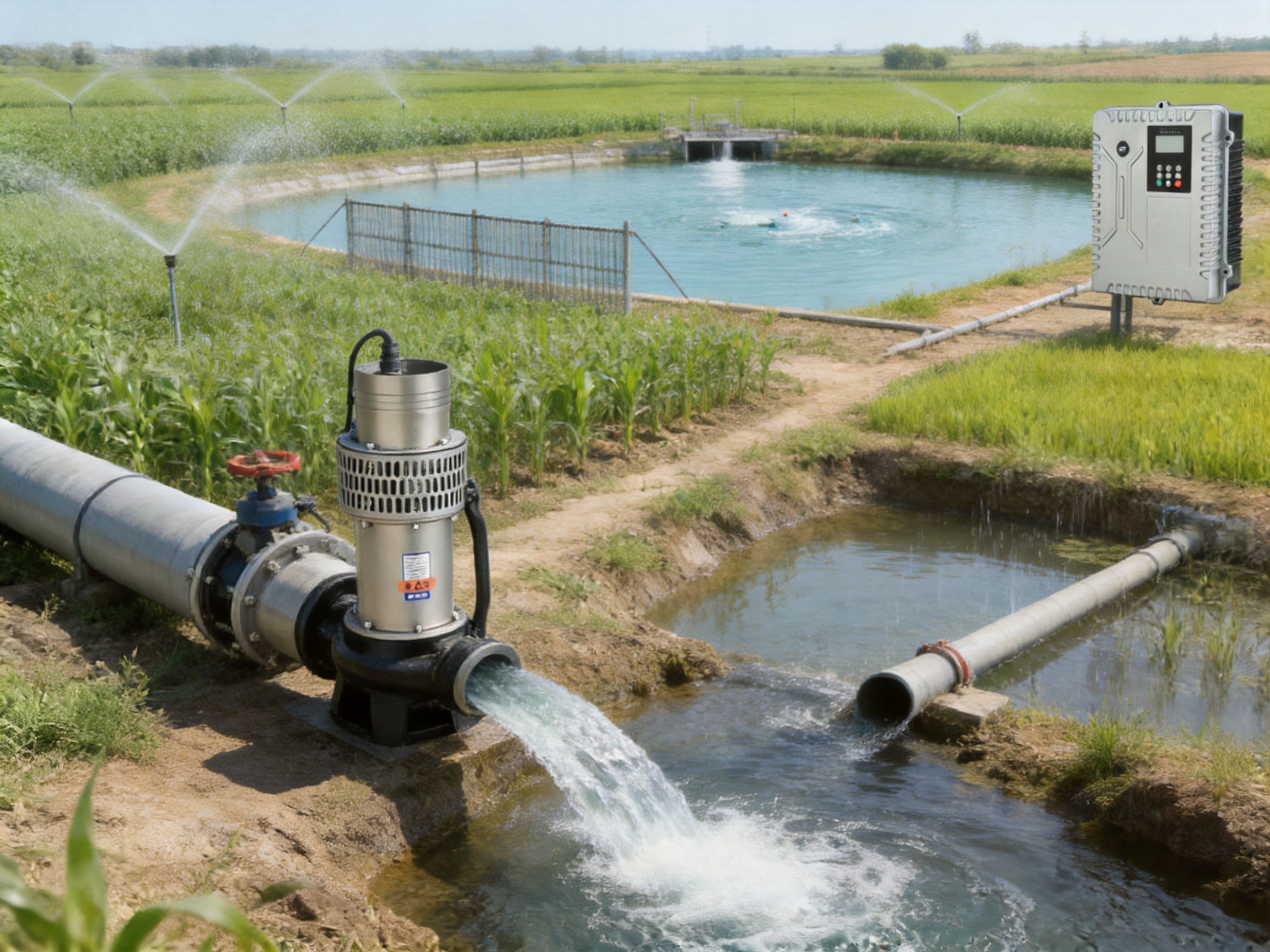
Agricultural irrigation is one of the primary application areas for high-volume submersible pumps. Farms may need to transfer water from wells, reservoirs, canals, ponds, or storage basins to sprinkler systems, field pipelines, drip irrigation networks, and open distribution channels.
The SZQ series can support irrigation projects that require substantial flow at relatively low or moderate head. Its variable frequency control allows operators to adjust output according to field conditions. For example, a farm may require higher flow when several irrigation zones operate simultaneously and lower flow when only one zone is active.
In addition, water demand may change during the growing season. Newly planted areas, mature crops, greenhouses, and orchard systems may each require different delivery conditions. A variable frequency pump can provide greater flexibility than a pump selected for only one fixed operating point.
The pump can also be used for water transfer between agricultural reservoirs. During periods of heavy rainfall, it may support drainage or redistribution. During dry periods, it may move stored water to a field irrigation network. The ability to work directly in a reservoir or collection basin can simplify the installation compared with a surface pump located far from the water.
Before selecting a model, agricultural users should calculate the total dynamic head. This includes the elevation difference between the source and destination, friction losses in pipes, losses through fittings and valves, and any required pressure at the irrigation equipment. Correct sizing helps prevent overloading and supports efficient operation.
Applications in Aquaculture and Fish Ponds
Aquaculture operations require reliable water management to maintain suitable conditions for fish, shrimp, and other aquatic organisms. Pumps may be used for pond filling, water exchange, circulation, transfer between production areas, drainage, and emergency water movement.
The SZQ pump can provide high-volume water transfer for ponds and aquaculture facilities. Its variable frequency operation may help operators regulate circulation rates and avoid unnecessary turbulence when lower flow is sufficient. The submersible design is suitable for installation in reservoirs, intake basins, and pond-side collection areas, subject to proper screening and water-quality assessment.
In an aquaculture system, the pump intake should be positioned to minimize the entry of leaves, ropes, plastic materials, fish, and large solids. A suitable intake screen or protective arrangement may be necessary. The screen must be maintained so that blockage does not create excessive inlet resistance or cause the pump to operate outside its intended condition.
Where water exchange is performed according to a schedule, the variable frequency drive can help adjust the rate of transfer. A lower speed may be used for gradual water replacement, while higher output can be selected for rapid filling or emergency drainage when appropriate.
Aquaculture operators should also consider the effect of water quality on pump materials and seals. Freshwater, brackish water, saltwater, and chemically treated water can have different effects on equipment. The pump should be confirmed as suitable for the specific medium before purchase.
Drainage, Flood Control, and Environmental Water Management
Submersible pumps are widely used in drainage because they can operate directly in pits, collection tanks, flooded areas, and temporary water bodies. The SZQ series may be used to remove accumulated water from agricultural land, construction areas, foundation pits, storage zones, and drainage channels when the water characteristics are compatible with the pump.
In flood-control situations, rapid water transfer is often more important than high pressure. The larger-flow models in the series can support high-volume movement across relatively short vertical distances. Their submersible design allows deployment near the lowest collection point, helping reduce the need for long suction lines.
For construction and foundation drainage, the pump can be installed in a collection pit to move groundwater or rainwater away from the work area. The user should ensure that construction debris, stones, metal fragments, cement particles, and abrasive solids do not enter the hydraulic system unless the pump is specifically designed for such materials.
Environmental projects may use pumps for ecological lake management, water circulation, wetland support, landscape water systems, and reservoir transfer. Variable speed can be useful in these applications because water movement requirements may change according to weather, season, oxygenation strategy, or landscape operating schedules.
Although the product is categorized as a water pump, each project must be evaluated according to the actual fluid. Standard water pumps are generally intended for clean or moderately clean water within their specified operating range. Sewage, sludge, oil-contaminated water, corrosive liquids, and heavily abrasive fluids may require a different pump design.
Installation Requirements
Confirm Full Submergence
The pump must be fully submerged before operation. Submergence is important for cooling, hydraulic performance, and protection of the motor. Operating the pump with insufficient water coverage may lead to overheating, unstable flow, seal damage, or premature failure.
The installation location should maintain an adequate water level during the complete operating cycle. If the water source can fall below the minimum safe level, the system should include a level sensor, automatic shutdown device, or other protective arrangement.
Prepare the Electrical System
The listed SZQ models use a 380-volt electrical specification. The power supply must be stable and suitable for the motor and variable frequency drive. Electrical work should be completed by qualified personnel, with appropriate grounding, overload protection, short-circuit protection, isolation, and emergency shutdown arrangements.
The variable frequency drive should be selected with sufficient capacity and configured according to the motor’s rated data. The operator should set acceleration and deceleration parameters, maximum and minimum frequency, current limits, and other control values in accordance with the equipment instructions.
Cables must be routed and supported so that they are protected from abrasion, sharp edges, pulling forces, vehicle traffic, and excessive bending. Cable connections must be properly sealed and kept away from conditions that could allow water penetration into electrical components.
Check the Pipeline and Discharge Arrangement
The discharge pipe should be selected according to the expected flow, pressure, length, and installation environment. An undersized pipe can create excessive friction loss and force the pump to operate inefficiently. A correctly sized pipeline supports stable delivery and helps the variable frequency system work effectively.
All pipe connections should be secure and sealed. Supports should be provided where necessary to prevent excessive load from being transferred to the pump outlet. Valves, bends, and other fittings should be arranged to reduce unnecessary resistance and allow practical maintenance.
Lower the Pump Safely
The pump should be lowered using suitable lifting equipment or a secure support system. The power cable must not be used as the lifting rope. The unit should be positioned vertically or in the orientation specified for the installation, with sufficient clearance around the intake to avoid blockage.
Before energizing the pump, the operator should verify that all mechanical connections are secure, the pump is submerged, the electrical system is correctly connected, and the discharge route is open. The initial start should be monitored for unusual noise, vibration, current, leakage, or unstable flow.
Operating Recommendations
Before each operating cycle, inspect the water level, intake area, cable condition, control panel, and discharge pipeline. Confirm that no foreign objects are blocking the intake and that valves are in the correct position.
Start the pump at an appropriate frequency rather than immediately applying the highest possible speed. Gradual acceleration can reduce hydraulic shock and allow the operator to verify that the system is functioning correctly. Once stable operation is confirmed, adjust the frequency to reach the required flow or pressure.
During operation, monitor motor current, operating frequency, discharge behavior, vibration, water level, and temperature indications available through the control system. A sudden change in sound or flow may indicate blockage, air entry, excessive wear, voltage problems, or a change in water level.
Do not allow the pump to run dry. Dry running can damage seals and increase motor temperature. If the water level is unstable, automatic level protection is strongly recommended.
When stopping the pump, reduce the speed gradually where practical. This can help limit water hammer and mechanical stress. After shutdown, isolate the electrical supply before performing inspection or maintenance.
Maintenance and Service Considerations
Preventive maintenance helps extend service life and reduce unexpected downtime. The inspection schedule should be adapted to operating hours, water quality, seasonal conditions, and the importance of the installation.
Regularly inspect the intake screen and remove leaves, weeds, plastic, sediment, and other materials that could restrict flow. A blocked intake may cause reduced performance, increased load, or unstable operation.
Check the discharge pipeline for leakage, unusual vibration, loose supports, and damaged fittings. Pipeline problems can create performance changes that may initially appear to be pump faults.
Inspect the power cable and cable entry for cuts, abrasion, swelling, or other signs of damage. Cable maintenance should be performed only after the power supply has been isolated and verified as safe.
Oil condition and oil chamber integrity should be checked according to the manufacturer’s maintenance recommendations. If the oil appears contaminated, milky, or unusually dark, the pump should be removed from service for further inspection. Such conditions may indicate seal wear or water entry.
Mechanical seals, bearings, impellers, and other wear components should be checked when performance declines or abnormal noise develops. Replacement parts should match the pump configuration. Using unsuitable components can affect efficiency, sealing, balance, and safety.
At the end of a seasonal operating period, the pump may be removed, cleaned, inspected, and stored in accordance with the service instructions. In cold climates, protection against freezing should be considered for exposed pipes and associated equipment.
Manufacturing Strengths and Quality Focus
The pump is produced by Zhejiang ZhenTai Mechanical and Electrical Co., Ltd., a Chinese manufacturer based in Wenling, Zhejiang Province. Established in 2018, the company specializes in the research, development, and production of more than 90 products across 10 series.
The company’s product range includes floating aerators, impeller aerators, water wheel aerators, water pumps, air blowers, and related equipment for aquaculture, agriculture, drainage, environmental protection, and water management. This broad product portfolio gives the manufacturer experience across different water-handling requirements and application environments.
A key manufacturing strength is the ability to combine product development with practical application knowledge. Pump and aeration equipment must be designed not only around motor output but also around water conditions, installation methods, operating schedules, energy use, and customer service requirements. Experience across aquaculture and irrigation products can support a more complete understanding of these factors.
The development of the SZQ series reflects a focus on integrating modern motor technology with practical field requirements. The permanent magnet motor addresses energy efficiency, the variable frequency system addresses operating flexibility, and the oil-immersed submersible construction addresses space, cooling, and environmental protection requirements.
Manufacturing quality depends on consistent control of materials, machining, motor assembly, sealing, electrical connections, hydraulic components, and final testing. For submersible equipment, sealing quality is especially important because the motor must remain protected while operating underwater. Accurate assembly and inspection of cable entries, oil chambers, seals, and housings are essential parts of reliable production.
The company also emphasizes continuous technological innovation, product reliability, customized OEM and ODM services, and professional technical support. These capabilities are valuable for distributors, importers, engineering contractors, and project buyers who may require model adjustments, private labeling, packaging customization, technical documentation, or support for different regional markets.
Product Development and Application Adaptability
Manufacturers that serve multiple industries can develop a broader view of pump requirements. An irrigation buyer may prioritize flow and energy consumption, while an aquaculture buyer may focus on water quality, continuous operation, and intake protection. A drainage contractor may prioritize portability, rapid deployment, and high-volume transfer. Product development must account for these different priorities.
The SZQ series provides a platform that can be adapted through model selection and variable frequency settings. This allows the same general product concept to serve different water-transfer tasks without requiring every customer to use an entirely different pump architecture.
OEM and ODM Support
For international buyers, OEM and ODM support can simplify market development. A distributor may require specific nameplate information, packaging standards, manuals, color schemes, cable arrangements, or model identification. Project contractors may need product documentation aligned with their own system design.
Customized support should be discussed before production. Buyers should provide required voltage, frequency, application medium, expected flow, head, operating hours, installation depth, packaging requirements, and applicable market standards. Clear technical communication helps reduce the risk of selecting an unsuitable configuration.
Technical Support for Global Buyers
Professional technical support is important because pump performance depends on the complete system. A manufacturer that can help review flow, head, pipeline layout, control requirements, and installation conditions can help buyers make more reliable purchasing decisions.
For international projects, technical support may include product selection, model confirmation, wiring information, installation guidance, troubleshooting assistance, spare-parts coordination, and after-sales communication. These services can be particularly valuable for distributors who serve agricultural and aquaculture customers across different regions.
How to Select the Correct Model
Model selection should begin with the required flow rate. Determine how much water must be transferred per hour, whether the demand is continuous or intermittent, and whether several outlets will operate at the same time.
The next consideration is rated head. Head includes the vertical distance from the water surface or pump location to the discharge point, plus the friction losses caused by pipes, bends, valves, filters, and other components. A system with a longer or narrower pipeline may require a higher head even if the elevation difference is small.
Users should also consider whether the rated performance is required at full frequency or whether the system will operate at variable speed. If the pump is expected to work at a lower frequency for most of the time, the operating point should be checked carefully to ensure that adequate flow and cooling are maintained.
Water quality must be assessed before ordering. Clean water, irrigation water, pond water, drainage water, and water containing suspended solids can create different demands on seals, impellers, and protective screens. If the water includes corrosive chemicals, high salinity, abrasive sand, or large solids, the manufacturer should be consulted.
The electrical supply is another essential factor. The listed models use 380 volts, but buyers should confirm local voltage, frequency, phase arrangement, control cabinet requirements, and applicable electrical standards. A suitable variable frequency drive and protection system must be included in the project design.
Safety Considerations
Electrical and submersible equipment must be installed by qualified personnel. Before touching the pump, cable, control cabinet, or pipeline, disconnect and isolate the power supply. Confirm that the circuit cannot be energized accidentally.
Never enter a water tank, well, pit, pond, or other confined area to handle the pump while it is energized. Follow local safety regulations for confined spaces, lifting operations, electrical work, and water installations.
Use proper lifting equipment when moving the pump. The product should be secured during installation and removal to prevent falling, impact, or injury. Do not lift the unit by the power cable.
Keep unauthorized persons away from the control cabinet and pump installation area. Where the pump is used in public or commercial locations, protective barriers, warning signs, and secure access arrangements may be required.
Total Cost and Long-Term Value
The purchase price is only one part of the total cost of a pumping system. Buyers should also consider energy consumption, installation labor, control equipment, maintenance, spare parts, downtime, and expected service life.
The SZQ series is designed to create value through efficient motor technology and adjustable operation. If the pump operates for many hours, the energy-saving potential of permanent magnet and variable frequency technology may have a meaningful effect on lifetime operating cost. The actual result depends on correct sizing and control.
A submersible installation may reduce construction requirements because it does not need a large pump room or long suction arrangement. This can lower civil work and simplify deployment in remote areas. The product’s model range also gives buyers the ability to choose a configuration closer to the required application instead of using one oversized pump for every project.
Reliable operation can further reduce indirect costs. Unexpected pump failure may interrupt irrigation, affect aquaculture water quality, delay drainage, or reduce project productivity. Regular inspection, correct installation, suitable water conditions, and proper frequency settings are therefore important parts of achieving long-term value.
Why the SZQ Series Is Suitable for Export Projects
International buyers often require a product that combines technical performance, application flexibility, stable supply, and manufacturer support. The SZQ series addresses several of these requirements through its range of flow and head options, 380-volt specification, variable frequency compatibility, and submersible installation format.
The product can serve agricultural equipment distributors, aquaculture suppliers, irrigation contractors, water-management companies, drainage specialists, and OEM project developers. Its applications span farms, wells, ponds, reservoirs, ecological lakes, drainage areas, and other water-transfer locations.
The manufacturer’s location in Wenling, Zhejiang Province, places the product within a major Chinese manufacturing region for pumps and electromechanical equipment. The company’s experience with a broad product range and its stated commitment to quality, integrity, innovation, and technical service support its ability to work with global customers.
Buyers should request complete technical confirmation before placing an order. Important information includes the selected model, rated flow, rated head, motor power, voltage, frequency drive requirements, cable length, packaging, spare parts, documentation, delivery terms, and warranty conditions.
Frequently Asked Questions
What type of pump is the SZQ product?
The SZQ is an oil-immersed submersible water pump equipped with a permanent magnet motor and variable frequency control system. It is designed for submerged water transfer in agricultural, aquaculture, drainage, and related applications.
What is the main advantage of the permanent magnet motor?
The permanent magnet motor is designed to provide efficient power conversion, stable torque, and good compatibility with variable-speed operation. It may help reduce electrical losses compared with conventional motor arrangements, particularly when the pump is correctly selected and operated.
Why is variable frequency control useful?
Variable frequency control allows the pump speed to be adjusted according to water demand and system conditions. This can improve flow regulation, reduce unnecessary full-speed operation, support smoother starting and stopping, and potentially lower energy consumption.
Can the pump run above the water surface?
No. The pump is designed for submersible operation and must be fully submerged before starting. Operating it without adequate water coverage may cause overheating, seal damage, unstable performance, or motor failure.
What voltage do the listed models use?
The listed SZQ models are specified for 380 volts. Buyers should confirm the local electrical supply, phase arrangement, frequency, control equipment, and protection requirements before ordering.
Which model provides the highest rated flow?
The SZQ260-7-7.5 model has the highest listed rated flow at 260 cubic meters per hour, with a rated head of 7 meters and motor power of 7.5 kilowatts.
Which model provides the highest rated head?
The SZQ250-10-11 model provides the highest listed rated head at 10 meters. Its rated flow is 250 cubic meters per hour and its motor power is 11 kilowatts.
Can the pump be used for aquaculture?
Yes, the product can be used for suitable aquaculture water-transfer tasks such as pond filling, water exchange, circulation, and drainage. The intake should be protected against fish, leaves, weeds, plastic, and other foreign materials, and the water quality should be compatible with the pump.
Can it be used for irrigation?
Yes. The pump is suitable for transferring water from wells, ponds, reservoirs, canals, and agricultural storage areas to irrigation systems. The correct model should be selected according to required flow, total head, pipeline resistance, and operating schedule.
Does the pump require a pump room?
The submersible design does not normally require a conventional surface pump room. However, the installation still requires suitable discharge piping, electrical controls, safe cable routing, lifting arrangements, and protection for the control equipment.
What should be checked before starting the pump?
Check that the pump is fully submerged, the intake is clear, the discharge pipeline is connected, the electrical supply is stable, the variable frequency drive is correctly configured, and all safety protections are active. Monitor the first start for abnormal sound, vibration, current, leakage, or unstable flow.
Can the pump handle sewage or heavy sludge?
The supplied information describes the product as a water pump. Sewage, heavy sludge, corrosive liquid, high-sand water, and abrasive materials may require a specialized pump design. The fluid characteristics should be confirmed with the manufacturer before use.
What information should buyers provide for model selection?
Buyers should provide the required flow, total head, water source, water quality, installation depth, pipeline size and length, operating hours, local voltage, frequency, control requirements, and any special OEM or packaging requirements.
Does the manufacturer offer OEM and ODM services?
The company provides customized OEM and ODM services for global buyers. Specific requirements such as branding, packaging, nameplates, documentation, electrical configuration, and product modifications should be discussed before production.
How can service life be extended?
Service life can be supported by correct model selection, full submergence, clean intake conditions, stable electrical supply, suitable variable frequency settings, regular inspection, proper cable protection, and timely maintenance of seals, oil chambers, pipelines, and control equipment.
Conclusion
The SZQ Permanent Magnet Variable Frequency Oil Immersed Pump combines three valuable technologies in one submersible water-transfer solution: permanent magnet motor efficiency, variable frequency operating flexibility, and oil-immersed protection. This combination makes the series suitable for farms, irrigation projects, aquaculture facilities, wells, reservoirs, drainage systems, ecological water projects, and other demanding applications.
Compared with conventional fixed-speed pump arrangements, the SZQ series offers greater control over operating speed and the potential for more efficient energy use. Its submersible construction can simplify installation, reduce space requirements, and support stable water transfer close to the source. The available models provide different flow, head, and motor power combinations for practical project selection.
The product is manufactured by Zhejiang ZhenTai Mechanical and Electrical Co., Ltd., a Chinese producer with a broad range of aeration, pumping, and electromechanical equipment. The company’s experience in aquaculture, irrigation, drainage, environmental protection, and water management supports its ability to develop application-oriented products and provide OEM, ODM, and technical services for international buyers.
For the best result, the pump should be selected according to the complete hydraulic and electrical system rather than a single rated specification. Correct submergence, stable power, suitable frequency settings, clean intake conditions, proper installation, and preventive maintenance are essential. When these requirements are followed, the SZQ series can provide an efficient, flexible, and practical solution for high-volume water transfer.
References
1. Product technical information supplied for the SZQ Permanent Magnet Variable Frequency Oil Immersed Pump series.
2. Manufacturer information supplied by Zhejiang ZhenTai Mechanical and Electrical Co., Ltd.
3. General engineering principles for permanent magnet motor efficiency and variable frequency drive operation.
4. General guidance for submersible pump installation, electrical protection, water-level control, and preventive maintenance.
5. General agricultural irrigation and aquaculture water-management application practices.