 English
 Español
 Indonesia
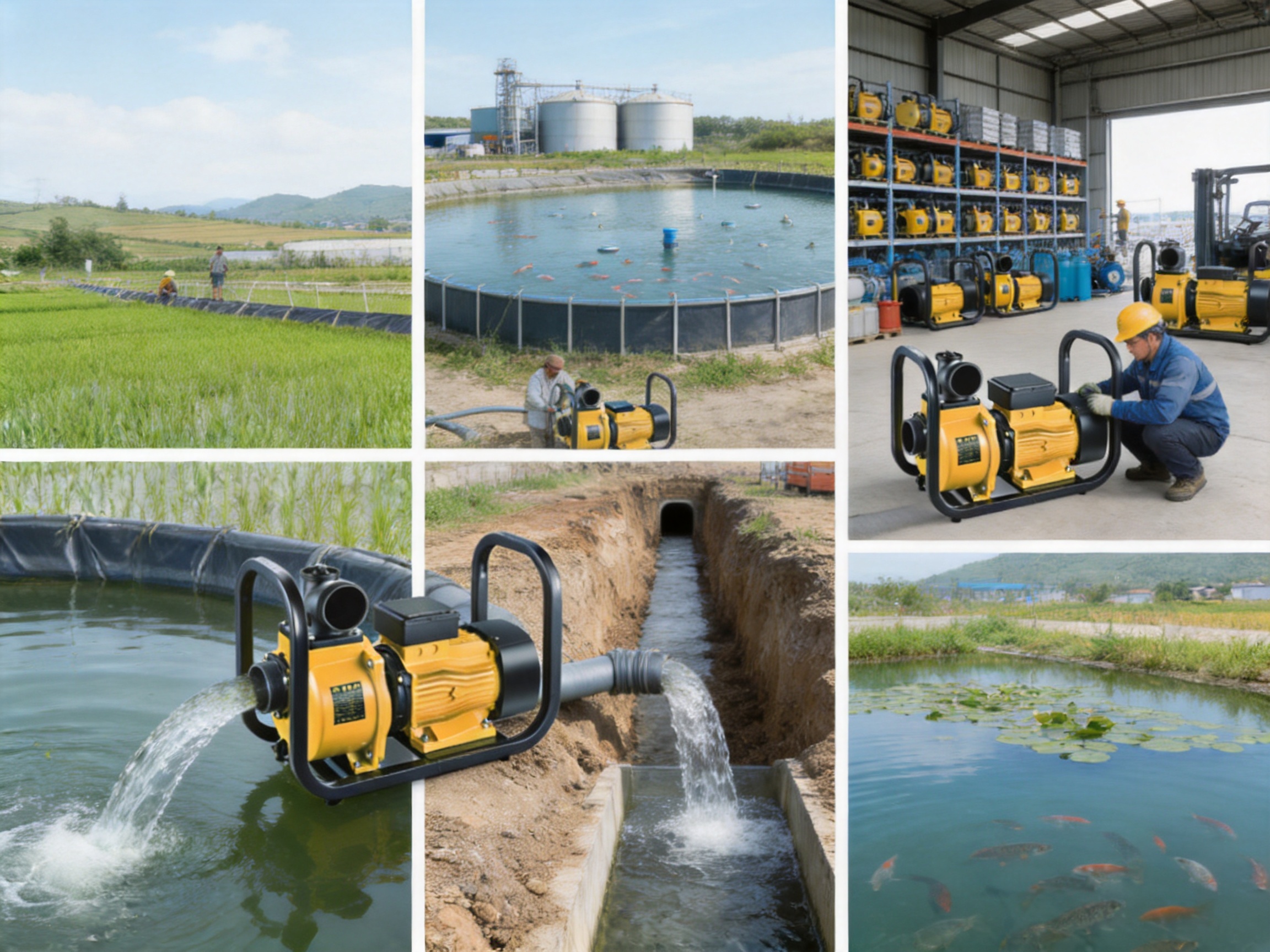
Reliable water movement is essential in agricultural irrigation, farm water supply, drainage, construction support, environmental management, and many other applications. When a project requires a large volume of water to be transferred quickly, the pump must deliver more than simple circulation. It must provide consistent flow, practical suction performance, dependable lifting capability, manageable energy consumption, and convenient installation. The DSU Series high-flow electric pump is designed to meet these requirements through a combination of aluminum construction, a self-priming operating concept, a flow-channel impeller, and a matching flow-channel volute structure.
The DSU Series includes the DSU-50 and DSU-80 models. The two models are designed for different pipeline sizes and capacity requirements, with maximum displacements of 25 m³/h and 50 m³/h respectively. Both models provide a maximum lift of 28 meters and a suction capability of 8 meters. Their 2,900 rpm operating speed, 50 Hz frequency, and 220/380 V voltage options make them suitable for a range of agricultural, industrial, and general water-transfer installations.
Manufactured by Zhejiang ZhenTai Mechanical and Electrical Co., Ltd., the pump reflects the company’s broader experience in aerators, submersible pumps, air blowers, and water pumps. The manufacturer develops and produces more than 90 products across 10 product series, serving applications such as aquaculture, fish pond aeration, farmland irrigation, drainage, environmental protection, household water supply, chemical industries, ecological landscape lakes, and flood control. This product background gives the DSU Series a practical position in projects where water movement, equipment durability, and supplier support are all important purchasing considerations.
Why High-Flow Water Transfer Requires the Right Pump Design
Water transfer projects differ greatly in their hydraulic demands. A small domestic circulation system may prioritize compact dimensions and low operating noise, while an agricultural installation may need to move thousands of liters of water over a short period. A drainage project may require rapid water removal, whereas a farm supply system may need steady and repeatable delivery through a fixed pipeline. Selecting a pump only by motor power can result in poor performance if the pump’s hydraulic structure does not match the actual application.
The DSU Series is designed around high-volume transfer. Its hydraulic performance is supported by a flow-channel impeller and a flow-channel volute. These components guide water through the pump in a way intended to support strong discharge capacity and stable operation. The design is especially useful where the purchaser needs a practical balance between flow, head, suction, energy use, and equipment portability.
A high-flow pump must also remain easy to handle. Large cast-iron equipment may offer strength, but its weight can make transportation, installation, maintenance, and repositioning more difficult. The DSU Series uses an aluminum alloy motor housing and aluminum alloy pump casing. This lightweight construction helps make the pump easier to move and install while also providing a useful level of structural durability for ordinary water-transfer applications.
Another important requirement is operational convenience. Traditional submersible pumps are placed directly into the water, which can be useful in certain drainage environments but may create challenges involving cable protection, lifting equipment, underwater maintenance, and access to the motor. The DSU Series is designed for self-priming operation and does not need to be submerged like a traditional submersible pump. This allows the pump to remain accessible above the water source while connected to inlet and outlet pipelines.
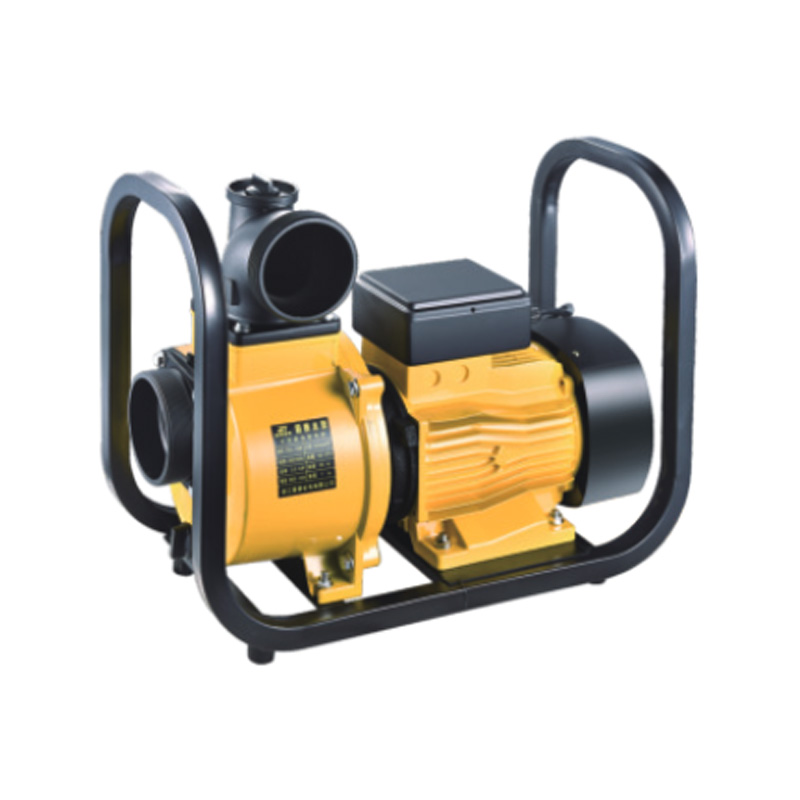
DSU Series High-Flow Electric Pump
Product Overview and Main Design Features
Aluminum Alloy Motor Housing
The motor housing is made from aluminum alloy. This material contributes to a lighter overall structure, helping users transport the unit between irrigation areas, storage locations, construction sites, or drainage points. Lower equipment weight can also simplify installation because fewer lifting resources may be required for positioning the pump.
An aluminum motor housing can support practical heat dissipation because aluminum is a good thermal conductor. Although actual thermal performance depends on the complete motor design, operating conditions, ventilation, electrical supply, and maintenance, the material selection supports the goal of reliable continuous use within the rated operating range. The housing also protects the motor components from the ordinary mechanical conditions associated with pump installation and operation.
Aluminum Alloy Pump Casing
The pump casing is also made from aluminum alloy. This gives the DSU Series a consistent lightweight structure from the motor section through the hydraulic section. A casing must maintain the internal flow passage, support the impeller and volute arrangement, and withstand the pressure created during operation. The aluminum alloy casing is therefore an important part of the pump’s balance between portability and service practicality.
For agricultural buyers and wholesalers, casing material can influence the total ownership experience. A pump that is easier to handle may be moved more frequently without requiring specialized transport arrangements. This is valuable when one pump is used seasonally in different irrigation locations, when a dealer needs to demonstrate equipment to customers, or when a farm must store machinery after the irrigation season.
Flow-Channel Impeller
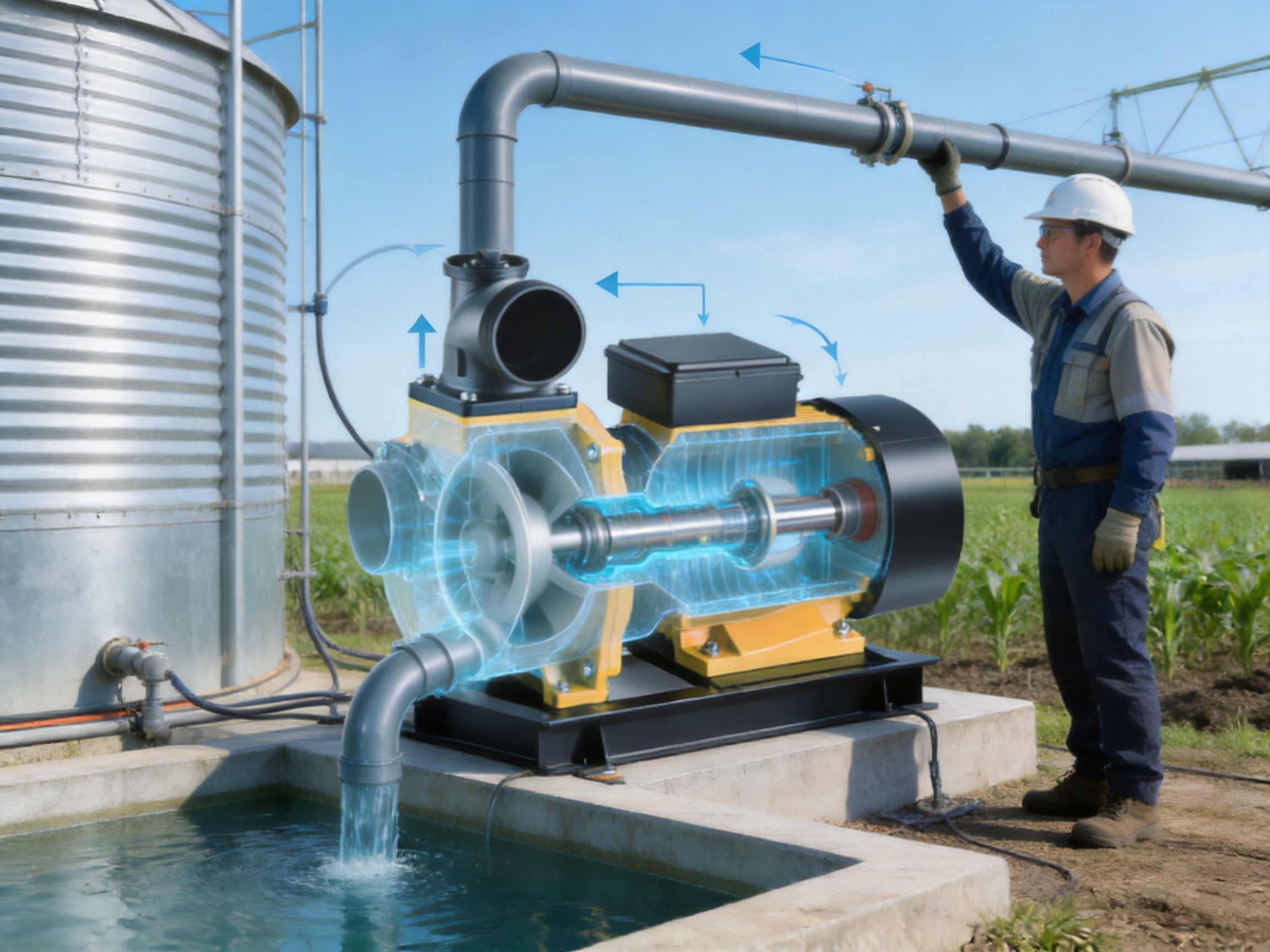
The DSU Series uses a flow-channel impeller. The impeller is one of the most important hydraulic components in a centrifugal-style water pump because it transfers mechanical energy from the rotating motor shaft to the water. Its geometry affects flow rate, pressure generation, efficiency, and the pump’s ability to manage the intended water-transfer duty.
The flow-channel impeller is selected for high-flow performance. It works together with the volute to guide water from the inlet through the rotating hydraulic section and toward the discharge outlet. This coordinated structure helps the pump provide a stable hydraulic response rather than relying only on motor power. For projects that require rapid movement of water, the impeller and volute combination is a central advantage of the design.
Flow-Channel Volute Structure
The volute receives water from the impeller and helps convert part of the water’s velocity into useful pressure. The DSU Series uses a flow-channel volute structure that matches the flow-channel impeller. This compatibility is important because hydraulic components must work as a system. A strong motor cannot compensate for an unsuitable internal flow passage, and a high-capacity impeller cannot provide its intended performance if the surrounding casing restricts water movement.
The flow-channel configuration supports the product’s stated combination of self-priming operation, high flow, high head, and low-power-consumption design. Actual performance depends on pipeline length, pipe diameter, elevation differences, inlet conditions, water quality, valves, fittings, and operating point. Nevertheless, the hydraulic design gives the pump a clear purpose: efficient transfer of comparatively large water volumes in practical agricultural and general-purpose installations.
Performance Specifications
The DSU Series is available in two primary models. DSU-50 uses a 50-size inlet and outlet, while DSU-80 uses an 80-size inlet and outlet. The larger DSU-80 model provides twice the listed maximum displacement of the DSU-50 model, making it appropriate for projects that require greater water movement capacity.
| Specification | DSU-50 | DSU-80 |
|---|---|---|
| Inlet and outlet size | 50 | 80 |
| Maximum displacement Q.max | 25 m³/h | 50 m³/h |
| Maximum lift H.max | 28 m | 28 m |
| Suction capability | 8 m | 8 m |
| Power | 2.2 kW | 2.5 kW |
| Speed | 2,900 rpm | 2,900 rpm |
| Voltage | 220/380 V | 220/380 V |
| Frequency | 50 Hz | 50 Hz |
The maximum displacement figures describe the highest listed flow capacity under suitable operating conditions. They should not be interpreted as a guaranteed flow rate at every head or pipeline configuration. As with all pumps, increasing discharge resistance or elevation can reduce the actual flow. Buyers should compare the required duty point with the pump’s performance data and confirm the appropriate model with the supplier before placing an order.
Both models provide a listed maximum lift of 28 meters. This gives the series flexibility for farm irrigation lines, water transfer between tanks, drainage discharge points, and other installations where the outlet is located above the water source. The 8-meter suction capability is useful when the pump is positioned beside, rather than inside, the water source. Correct inlet-pipe installation remains essential because suction-side air leakage, excessive pipe length, blocked strainers, or an unsuitable pipe diameter can reduce performance.
The DSU-50 uses a 2.2 kW motor and the DSU-80 uses a 2.5 kW motor. These power ratings are relatively close even though the listed maximum displacement is different. This supports the idea that the hydraulic size and flow-channel design are important contributors to capacity, not merely motor wattage. The low-power-consumption design is attractive to users who need high-volume movement without selecting a substantially larger motor for every application.
Advantages Compared with Conventional Alternatives
Compared with Submersible Pumps
Submersible pumps are useful when the pump must operate underwater, especially in deep pits, flooded spaces, wells, or temporary drainage locations. However, submersion also places the motor, electrical cable, and pump body inside the water environment. Retrieval may be required for inspection or cleaning, and access can be inconvenient when the pump is installed in a deep or muddy location.
The DSU Series provides an alternative for users who prefer a self-priming, above-water installation. The pump can be placed on a stable surface beside the water source and connected to inlet and outlet pipelines. This arrangement makes the motor and casing easier to inspect, allows the operator to observe the installation more directly, and can simplify routine maintenance. It is particularly suitable for irrigation channels, storage tanks, ponds, and transfer operations where the pump does not need to be submerged.
The two pump types should not be treated as identical replacements in every application. A submersible pump may be more suitable where there is no practical dry location or where the water level changes substantially. The DSU Series is more suitable where the user values accessible installation, self-priming operation, and high-flow transfer from an external position.
Compared with Heavy Cast-Iron Pumps
Heavy cast-iron pumps can be valued for their rigidity and traditional industrial construction, but they may be difficult to transport and reposition. Weight becomes a practical concern when a pump is used at multiple fields, temporary drainage points, or rural installations without permanent lifting equipment.
The DSU Series uses aluminum alloy for both the motor housing and pump casing. This reduces the burden of manual handling and supports a more portable installation. For wholesalers, lighter equipment can also reduce storage and logistics challenges. For farms, it may allow workers to move the pump between water sources with less effort, provided that safe handling procedures are followed.
Material selection must always be matched to the water and operating environment. Aluminum alloy is suitable for many ordinary water-transfer duties, but the user should confirm compatibility when pumping corrosive liquids, chemically treated water, seawater, abrasive mixtures, or fluids containing unusual contaminants. The DSU Series is presented primarily as a water pump for irrigation, drainage, farm water supply, and related water-transfer work.
Compared with Small Domestic Pumps
Small domestic water pumps often prioritize compact household supply duties, limited flow rates, and intermittent use. They may be appropriate for a home, garden, or small tank, but their capacity may be insufficient for a farm irrigation line or a large drainage task.
The DSU Series is intended for a broader water-transfer role. Its maximum listed flow reaches 25 m³/h for DSU-50 and 50 m³/h for DSU-80. These capacities make the series more suitable for agricultural users, farm water supply projects, larger gardens, pond management, and commercial water-transfer operations than many small household units.
Compared with Oversized High-Power Equipment
Another common purchasing mistake is selecting a pump with substantially more motor power than the application requires. Oversized equipment may increase purchase cost, electricity consumption, installation complexity, and the risk of operating far from the pump’s preferred working point.
The DSU Series offers two sizes so that the buyer can select a more suitable capacity. DSU-50 is designed for a maximum listed displacement of 25 m³/h, while DSU-80 reaches 50 m³/h. This model range helps distributors and end users match equipment to pipeline size and water demand instead of using one oversized pump for every project.
Applications in Irrigation and Agriculture
Farmland Irrigation
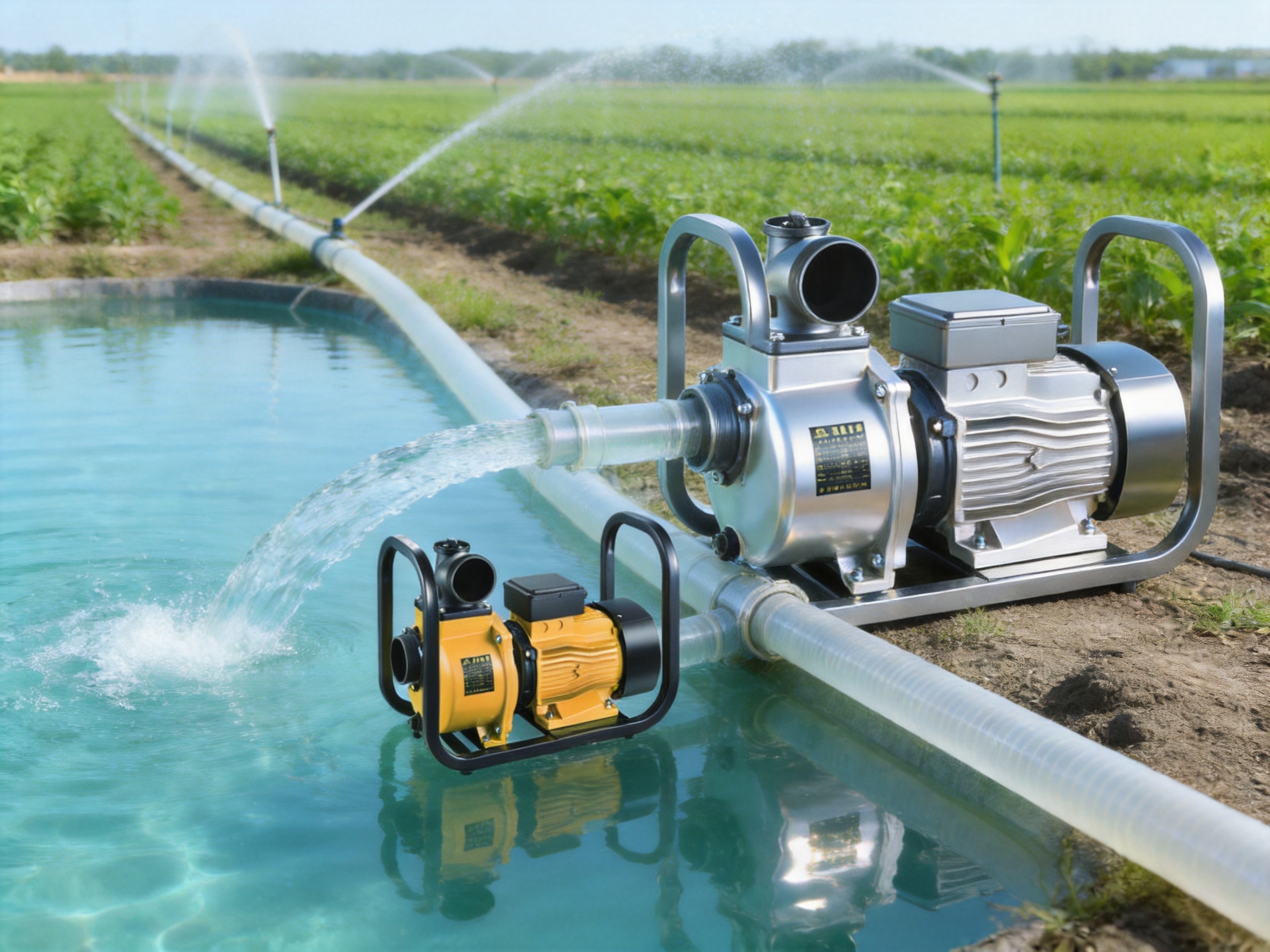
Irrigation systems must deliver water from a source such as a pond, reservoir, canal, tank, or shallow collection area to crops, sprinkler lines, drip irrigation equipment, or field channels. The DSU Series can serve as a transfer pump between the water source and the irrigation network. Its high-flow design is suitable when the farmer needs to fill a storage tank quickly, supply a larger field zone, or move water through a fixed irrigation pipeline.
The DSU-50 may be suitable for smaller farms, shorter pipelines, and moderate water requirements. The DSU-80 provides a larger listed maximum displacement and may be selected for higher-capacity irrigation arrangements. The final selection should consider the distance from the source, elevation difference, pipeline diameter, number of bends, filters, valves, and the desired operating schedule.
Farm Water Supply
Farms often need water for livestock areas, cleaning, crop preparation, equipment washing, and general utility use. A reliable above-water pump can provide water from a tank or pond without requiring a permanent submersible installation. The self-priming concept is useful when the pump is located beside the source and must draw water through an inlet pipeline.
For stable operation, the pump should be installed on a level and firm foundation. The inlet pipe should be properly supported and sealed, and the pipe diameter should be compatible with the pump inlet. Air entering through loose connections can interfere with priming and reduce the pump’s ability to deliver water. The outlet should also be arranged to minimize unnecessary resistance.
Drainage and Flood Control
Drainage projects require water to be removed quickly from low areas, work zones, agricultural land, foundation excavations, or temporary collection points. The DSU Series can support drainage where the pump can be positioned outside the water and connected to an inlet hose or pipe. Its maximum lift of 28 meters provides useful flexibility for discharging water to a higher location, subject to actual flow conditions.
Drainage water may contain mud, leaves, sand, or other solids. Users should evaluate the water condition before operation and protect the inlet against large debris. The standard product description identifies the pump as a water-transfer pump with a flow-channel impeller; it does not establish that the unit is intended for heavily abrasive slurry or large-solid sewage. Proper screening and application confirmation are therefore important in drainage work.
Pond and Aquaculture Support
The manufacturer serves the aquaculture sector through a broader range of aerators, pumps, and related equipment. The DSU Series can be used for water transfer in fish ponds, tank filling, pond maintenance, and supporting water-exchange operations where the water quality and solids content are compatible with the pump design.
It is important to distinguish water transfer from aeration. An aerator is designed primarily to introduce oxygen and create water movement for aquatic organisms, while the DSU Series is designed primarily to move water through pipelines. In an aquaculture facility, the products may support different functions and can be selected as complementary equipment rather than direct substitutes.
Manufacturing Strengths and Product Development Capability
Zhejiang ZhenTai Mechanical and Electrical Co., Ltd. was established in 2018 and is located in Wenling, Zhejiang Province, China. The company specializes in the research, development, and production of more than 90 products across 10 series. Its product categories include floating aerators, impeller aerators, water wheel aerators, water pumps, submersible pumps, and air blowers.
This product diversity is relevant to the DSU Series because pump manufacturing knowledge is supported by experience across several water-management applications. Aquaculture equipment, irrigation pumps, drainage pumps, and air blowers may serve different purposes, but each requires attention to motor performance, water movement, structural materials, assembly quality, and field reliability. A supplier with multiple related product lines can better understand the practical conditions faced by farms, contractors, distributors, and environmental projects.
Material and Component Coordination
The DSU Series demonstrates a coordinated approach to component selection. The aluminum alloy motor housing and pump casing are matched with a flow-channel impeller and flow-channel volute. This combination addresses several product objectives at the same time: reducing unnecessary weight, maintaining a functional hydraulic passage, supporting high flow, and providing a practical structure for self-priming water transfer.
Manufacturing quality depends not only on individual materials but also on how components are formed, machined, fitted, and assembled. The casing must maintain the designed internal passage, the impeller must rotate correctly, the shaft and motor must remain aligned, and sealing components must be installed properly. These factors are especially important in high-speed operation at 2,900 rpm.
Research and Development Focus
The company’s focus on research, development, and continuous technological innovation supports ongoing improvement across its product range. For a pump manufacturer, development work may include hydraulic optimization, motor matching, casing design, material selection, assembly methods, product adaptation, and customer-specific requirements. The DSU Series reflects a product-development approach that emphasizes practical performance rather than a single specification alone.
For international buyers, research and development capability is valuable because water-transfer conditions vary from country to country. Electrical standards, voltage requirements, climate, pipeline design, agricultural practices, and installation habits may differ. A supplier able to provide product customization and technical discussion can help buyers choose the suitable model and configuration for the intended market.
Production and Assembly Considerations
The production of an electric pump involves multiple stages. Metal housings and casings must be formed to the required dimensions. Hydraulic passages must be maintained accurately so that the impeller and volute work together. Motor components must be assembled with attention to winding, insulation, shaft alignment, bearing support, and electrical connections. The final pump must then be checked for safe operation and hydraulic function.
Although the supplied product information does not specify individual factory machines, certifications, or inspection instruments, the manufacturer’s specialization in multiple pump and aerator product series indicates an established production focus in mechanical and electrical equipment. Buyers seeking detailed procurement information can request factory quality procedures, available test reports, packaging standards, inspection records, and technical drawings before ordering.
OEM and ODM Support
ZhenTai offers customized OEM and ODM services for global buyers. This can benefit importers, distributors, agricultural equipment brands, and project contractors that need product labeling, packaging adaptation, market-specific documentation, or selected design changes. Customization should be discussed in detail because the feasibility of a change depends on order quantity, tooling, electrical requirements, materials, packaging, and compliance expectations.
OEM and ODM cooperation can also help wholesalers create a more coherent product portfolio. A distributor may require different model names, packaging languages, rating plates, instruction manuals, or accessory combinations for separate markets. Early communication with the manufacturer can reduce misunderstandings and help ensure that the pump delivered matches the buyer’s sales and installation requirements.
Installation Guidance for Reliable Operation
Choosing the Pump Location
Before operation, place the pump on a stable and level surface. The location should be protected from unnecessary vibration, flooding, impact, and excessive exposure to dirt. Because the DSU Series is designed for self-priming operation, the pump can be positioned outside the water source, but it should remain close enough to reduce suction-side losses.
The pump should be accessible for inspection and maintenance. Operators need to be able to check the electrical connection, inlet pipe, outlet pipe, seals, and general condition without placing themselves in an unsafe position. Adequate space around the motor also supports ventilation and reduces the likelihood of accidental contact with rotating or electrical parts.
Installing the Inlet Pipeline
The inlet pipeline must be properly connected and sealed. Any air leak on the suction side can prevent effective priming or cause unstable operation. The inlet hose or pipe should be appropriately supported so that its weight is not transferred to the pump casing. Sharp bends, excessive length, and undersized pipe can increase resistance and reduce the actual water flow.
The inlet should be kept clear of large debris. If the water contains leaves, stones, fibers, or other objects, an appropriate strainer may be required. The strainer must be maintained so that it does not become blocked. A blocked inlet can cause poor performance, increased suction difficulty, and possible damage if the pump operates without sufficient water supply.
Installing the Outlet Pipeline
The discharge pipe should be selected according to the required flow and lift. Unnecessary restrictions, excessive elbows, partially closed valves, and long narrow pipelines may cause pressure loss. The outlet must be secured to prevent movement when the pump starts or stops. If water is discharged to an elevated tank or field, the pipe should be supported along its route.
The listed maximum lift is 28 meters for both DSU-50 and DSU-80. This value should be considered together with friction loss and the required flow rate. A system that approaches the maximum lift may deliver less than the maximum displacement. Buyers should provide the manufacturer with the actual pipeline layout when seeking a more precise recommendation.
Electrical Connection
Connect the power supply according to the rated requirements. The models are listed for 220/380 V and 50 Hz operation. The actual wiring arrangement must be completed by a qualified person who understands the local electrical standard and the motor connection requirements. Protection against overload, short circuit, leakage, and improper grounding should be included according to applicable regulations.
Before starting the pump, verify that the voltage, frequency, connection method, cable size, and protective devices are appropriate. Do not operate the pump with damaged cables, loose terminals, exposed conductors, or an unsuitable power source. Electrical safety is particularly important in irrigation and drainage environments because water, wet ground, and metal equipment can increase the risk of electric shock.
Starting and Monitoring
After the mechanical and electrical connections have been checked, confirm that the pump is ready for self-priming operation according to the applicable instructions. Observe the pump during startup. Unusual vibration, abnormal noise, overheating, unstable discharge, or failure to establish flow should be investigated promptly.
During operation, monitor the water supply and make sure the pump is not running without sufficient water. Check for leakage at the inlet and outlet connections. If performance changes, stop the pump safely and inspect the strainer, pipeline, valve arrangement, and water source. Preventive attention is usually more effective than continuing to operate a pump under abnormal conditions.
Maintenance and Service Considerations
Regular maintenance helps preserve hydraulic performance and extend service life. The maintenance schedule should be adapted to operating hours, water quality, installation conditions, and seasonal use. Agricultural equipment may remain unused for long periods and then operate intensively during irrigation seasons, so inspection before seasonal startup is especially important.
Inspect the aluminum alloy casing and motor housing for impact damage, corrosion, cracks, or loose fasteners. Check the inlet strainer and remove accumulated debris. Examine hoses, pipes, clamps, valves, and seals for air leakage or water leakage. Confirm that the pump remains firmly mounted and that vibration has not loosened the installation.
The motor and electrical components should be kept dry and protected from unauthorized access. Power must be disconnected before inspection or maintenance. Any repair involving wiring, motor components, seals, bearings, or internal hydraulic parts should be performed by qualified service personnel or according to the manufacturer’s technical guidance.
If the pump is stored for an extended period, clean the exterior and protect the unit from moisture, dust, freezing conditions, and mechanical impact. Drainage and storage procedures should follow the product instructions and the characteristics of the water that was pumped. Before returning the pump to service, inspect all connections and confirm that the electrical system remains safe.
How to Select Between DSU-50 and DSU-80
The most direct difference between the models is the inlet and outlet size and the maximum listed displacement. DSU-50 has a size designation of 50 and a maximum displacement of 25 m³/h. DSU-80 has a size designation of 80 and a maximum displacement of 50 m³/h. Both share the listed 28-meter maximum lift, 8-meter suction capability, 2,900 rpm speed, 50 Hz frequency, and 220/380 V voltage options.
Select DSU-50 when the project has a smaller pipeline, a moderate flow requirement, or a need for a more compact transfer solution. It may be suitable for smaller agricultural plots, tank filling, general farm use, and moderate drainage tasks. Its 2.2 kW rating provides a practical option for buyers who do not require the larger model’s maximum listed volume.
Select DSU-80 when the project requires higher water movement and has an appropriately sized pipeline. Its 50 m³/h maximum displacement is designed for larger-volume transfer. It may be suitable for bigger irrigation zones, larger farm water-supply systems, more demanding tank transfer, or drainage work where the water must be moved quickly.
The correct selection must consider more than the maximum flow. A larger model connected to a restricted pipeline may not achieve its potential and may create unnecessary system resistance. Conversely, a smaller model may not provide sufficient flow if the project requires rapid filling or high-volume discharge. The best approach is to define the desired flow rate, total lift, suction distance, pipeline dimensions, water condition, and operating time before choosing the model.
Value for Agricultural Buyers and Wholesalers
Agricultural buyers typically need equipment that is practical, serviceable, and adaptable to changing field conditions. The DSU Series offers two capacity options, self-priming operation, lightweight aluminum construction, and a design intended for high-flow transfer. These features can make the product easier to position within a farm equipment portfolio.
Wholesalers may benefit from carrying a product that serves several related markets. The same model family can be presented for irrigation, drainage, farm water supply, pond water transfer, construction support, and general water movement. This broad application range can help distributors serve different customer groups without managing an excessively large number of pump platforms.
The manufacturer’s wider product range also creates opportunities for product bundling. A distributor serving aquaculture farms may source aerators, air blowers, and water pumps from the same supplier. A contractor working on drainage and environmental projects may require water pumps together with other water-management equipment. One-source purchasing can simplify communication, packaging coordination, technical discussions, and after-sales support.
For international purchasers, supplier reliability includes more than product specifications. Buyers may also evaluate response speed, spare-parts availability, packaging, production lead time, inspection support, technical documents, and the ability to maintain consistent product quality across repeat orders. ZhenTai’s stated focus on integrity, technological innovation, customized OEM/ODM services, and professional technical support is relevant to these procurement concerns.
Recommended Buyer Checklist
Before ordering a DSU Series pump, the buyer should identify the required water flow in cubic meters per hour and the expected operating head. The buyer should also measure the vertical distance from the water surface to the discharge point and estimate pipeline friction. These details help prevent a mismatch between the published maximum figures and the actual operating requirement.
The water source should be described accurately. Clean water, pond water, irrigation water, and drainage water may have different levels of debris and suspended solids. If the water contains sand, mud, chemicals, salt, or large particles, the purchaser should ask whether additional filtration, material selection, or a different pump design is needed.
Electrical conditions must also be confirmed. The supplied specifications list 220/380 V and 50 Hz, but local electrical systems and installation rules vary. The buyer should verify whether the intended site uses the required voltage, whether single-phase or three-phase connection is appropriate, and whether the supplier can provide the required motor configuration.
Finally, buyers should confirm the complete supply scope. Important questions may include whether inlet and outlet connectors are included, what protective devices are recommended, which spare parts are available, what documents accompany the pump, how the product is packaged, and what inspection procedures are used before shipment. Clear communication before production can reduce installation and logistics problems later.
Frequently Asked Questions
What is the DSU Series high-flow electric pump designed for?
The DSU Series is designed for high-volume water transfer in applications such as irrigation, drainage, farm water supply, pond water transfer, tank filling, and related projects. It is especially suitable when the user needs a self-priming pump that can be installed outside the water source.
Does the DSU Series need to be submerged?
No. The pump is designed for self-priming operation and does not need to be submerged like a traditional submersible pump. It should be installed on a stable surface and connected correctly to the inlet and outlet pipelines.
What is the maximum flow of the DSU-50 model?
The DSU-50 has a listed maximum displacement of 25 m³/h. Actual flow depends on total head, pipeline size, suction conditions, valves, fittings, water level, and other installation factors.
What is the maximum flow of the DSU-80 model?
The DSU-80 has a listed maximum displacement of 50 m³/h. It is the higher-capacity model in the DSU Series and is intended for applications requiring greater water movement through a suitable pipeline.
What are the maximum lift and suction figures?
Both DSU-50 and DSU-80 have a listed maximum lift of 28 meters and a suction capability of 8 meters. These figures must be considered together with pipeline friction and the required flow rate.
What materials are used in the pump?
The motor housing and pump casing are made from aluminum alloy. The pump uses a flow-channel impeller and a flow-channel volute structure. This combination supports a lightweight design and high-flow water-transfer performance.
Which model should a small farm choose?
A small farm may prefer the DSU-50 when its flow requirement and pipeline size are compatible with the 25 m³/h maximum listed displacement. The final choice should be based on the required flow, lift, suction distance, and operating conditions rather than farm size alone.
When is the DSU-80 a better choice?
The DSU-80 is a better choice when the project requires a higher transfer volume and uses a suitable 80-size inlet and outlet pipeline. Its listed maximum displacement is 50 m³/h, twice the listed maximum displacement of the DSU-50.
Can the pump be used for dirty water?
The DSU Series is described as a water-transfer pump. Users should prevent large debris from entering the pump and should ask the supplier about compatibility when pumping muddy, abrasive, chemically contaminated, saline, or solids-laden water. A strainer or additional filtration may be required.
What electrical supply is listed for the pump?
The listed electrical supply is 220/380 V at 50 Hz. A qualified electrician should confirm the correct wiring, protection, grounding, and local compliance requirements before operation.
Can the manufacturer provide OEM or ODM services?
Yes. Zhejiang ZhenTai Mechanical and Electrical Co., Ltd. states that it provides customized OEM and ODM services for global buyers. Specific requirements should be discussed before ordering, including labels, packaging, technical documents, electrical configurations, and any requested product changes.
What should be checked if the pump does not prime?
Check whether the inlet pipe is correctly connected, whether the suction-side joints are airtight, whether the water source is sufficient, whether the inlet is blocked, and whether the pump has been installed according to the operating instructions. If the problem continues, stop the pump and contact qualified service personnel or the supplier.
Conclusion
The DSU Series high-flow electric pump is designed for buyers who need practical, high-volume water transfer without the weight and installation limitations associated with some conventional pump designs. Its aluminum alloy motor housing and pump casing support portability, while the flow-channel impeller and volute are intended to provide stable hydraulic performance. Self-priming operation allows the pump to be installed outside the water source, making inspection and maintenance more accessible than with many submerged installations.
With a maximum listed displacement of 25 m³/h for DSU-50 and 50 m³/h for DSU-80, the series covers different flow requirements. Both models provide a listed 28-meter maximum lift, 8-meter suction capability, 2,900 rpm speed, and 220/380 V, 50 Hz electrical specifications. These features make the pump suitable for irrigation, farm water supply, drainage, pond water transfer, tank filling, and other water-management tasks when the system is properly designed.
The manufacturer strengthens the product offering through experience in aerators, water pumps, submersible pumps, and air blowers, as well as research and development, OEM/ODM support, and technical service for global customers. For agricultural buyers, wholesalers, contractors, and equipment distributors, the DSU Series provides a focused solution that combines capacity options, lightweight construction, convenient installation, and broad application potential.
References
1. Product specification information for the DSU Series High-Flow Electric Pump, including model data, materials, hydraulic ratings, power, speed, voltage, and frequency.
2. Manufacturer-provided company profile for Zhejiang ZhenTai Mechanical and Electrical Co., Ltd., including product categories, industry applications, research and development focus, and OEM/ODM services.
3. General principles of centrifugal pump selection, including flow rate, total head, suction conditions, pipeline resistance, and operating-point evaluation.
4. General agricultural irrigation equipment practices concerning pump installation, inlet-pipe sealing, filtration, electrical protection, and routine maintenance.
5. General water-transfer equipment safety practices concerning stable installation, qualified electrical connection, inspection, storage, and preventive maintenance.