 English
 Español
 Indonesia
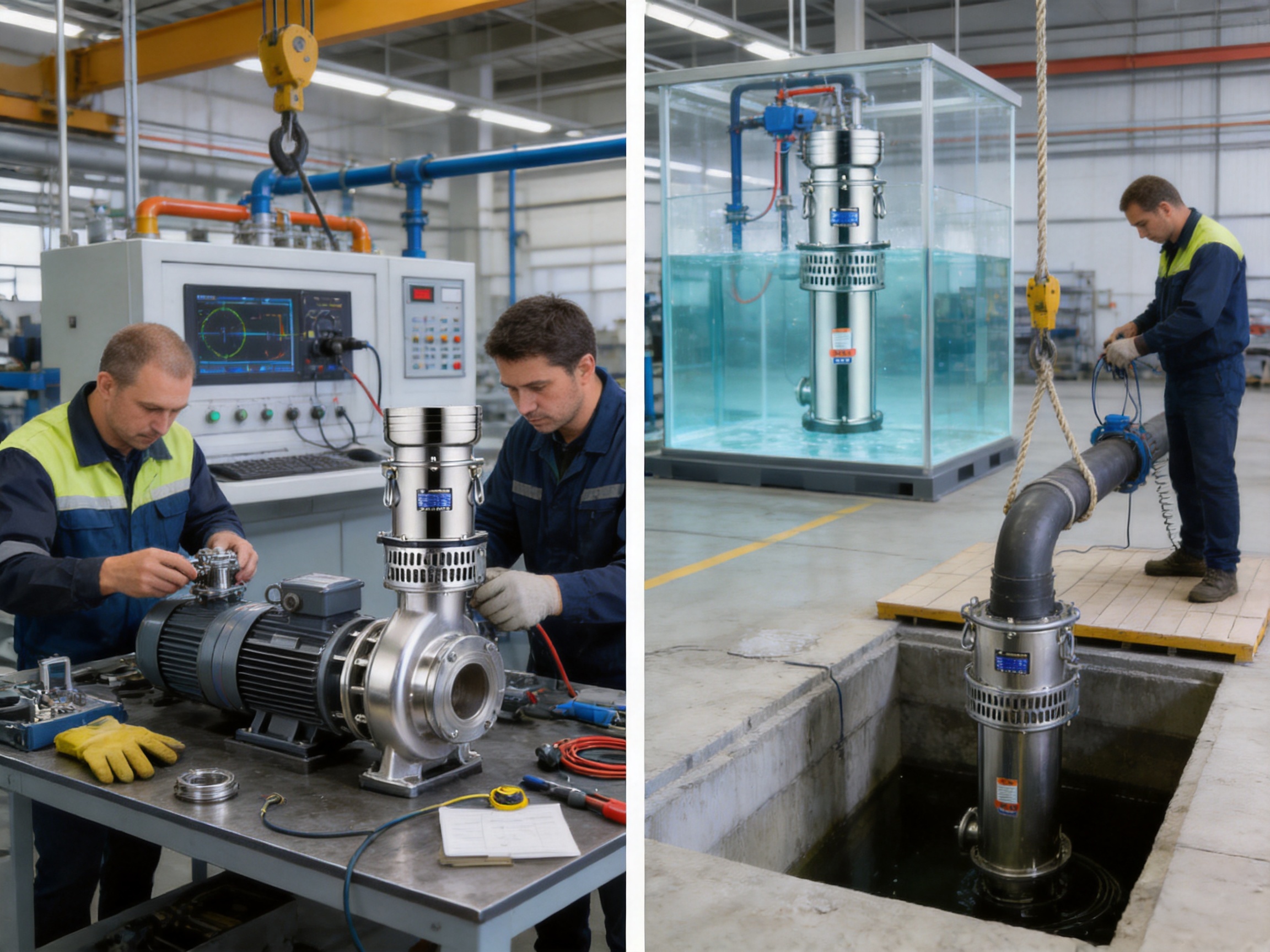
Reliable water transfer is essential in agriculture, aquaculture, industrial processing, municipal drainage, construction, and many other operating environments. A pump must do more than move water from one location to another. It must withstand continuous submersion, maintain stable hydraulic performance, resist corrosion, protect its motor from water intrusion, and remain practical for installation and maintenance. The QY all stainless steel oil-immersed submersible pump is designed around these requirements.
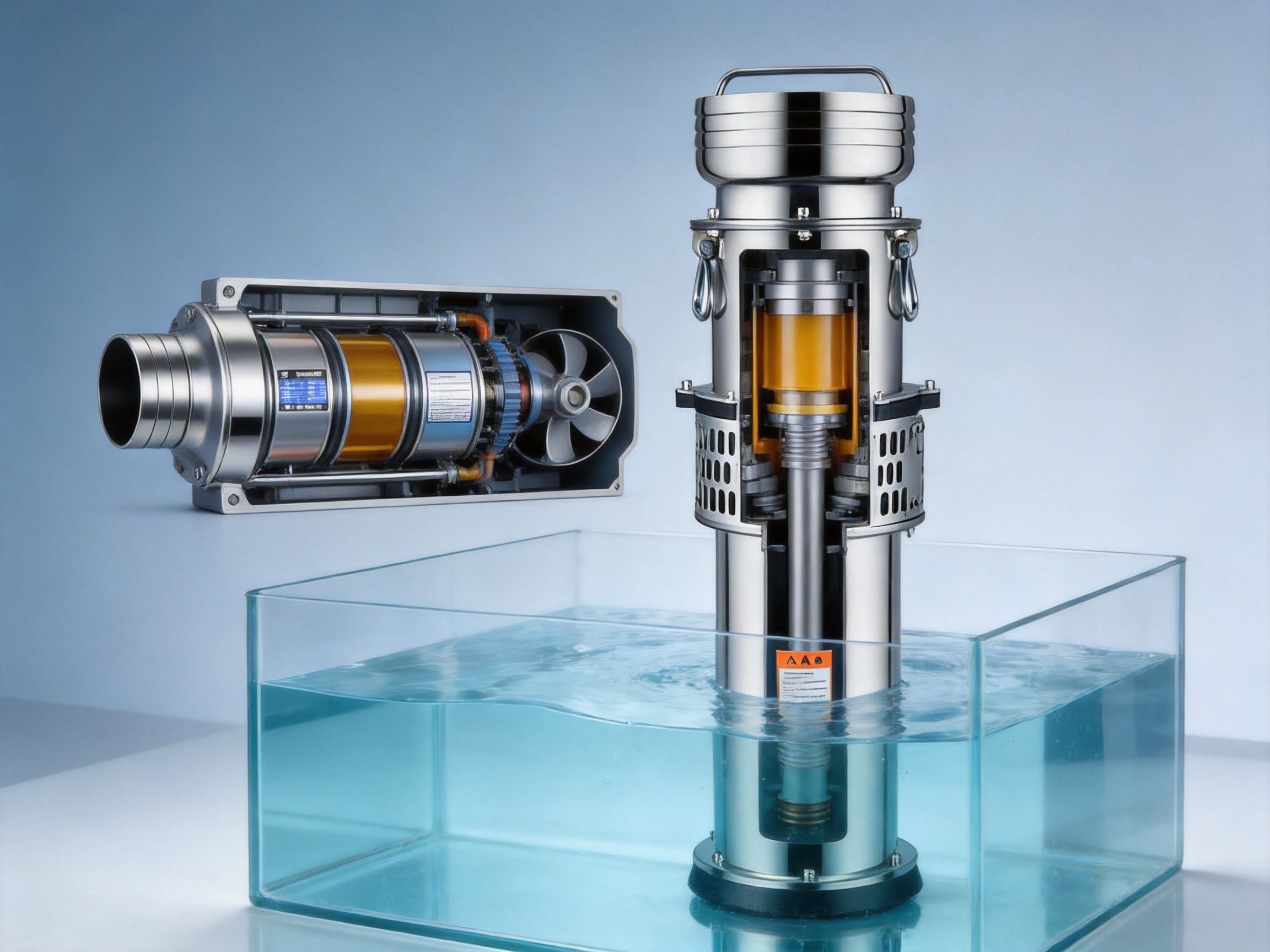
This pump combines a stainless steel pump body, an oil-filled three-phase asynchronous motor, an integrated mechanical seal box, and a compact vertical pump-motor arrangement. Its structure is intended for direct submersible operation, allowing the unit to work close to the water source without requiring a long suction pipe or a separate priming system. The available QY models cover flow rates from 65 to 280 cubic meters per hour, maximum heads from 5 to 15 meters, and motor powers from 3 to 7.5 kW.
The all stainless steel construction is particularly valuable in applications where ordinary materials may experience accelerated rusting, surface degradation, or reduced service life. Irrigation channels, fish ponds, drainage pools, industrial water systems, and outdoor installations may expose pumps to moisture, dissolved minerals, fertilizers, treatment chemicals, or changing environmental conditions. By using stainless steel throughout the main pump structure, the QY series offers a durable solution for buyers seeking dependable water movement and improved resistance to corrosion.
Product Overview and Operating Principle
The QY series is an oil-immersed submersible water pump. Unlike a conventional surface-mounted pump, it is placed directly into the water. The pump body and motor form an integrated vertical assembly, with the motor positioned in the lower section and the pump section located above it. This layout creates a compact unit that can be lowered into a reservoir, pond, tank, drainage pit, or other water source.
The motor is a three-phase asynchronous motor filled with insulating oil. The oil-filled design supports motor insulation and helps protect internal electrical components from the surrounding water when the sealing system is correctly maintained. The motor drives the pump impeller, which transfers mechanical energy into hydraulic energy. Water enters through the pump inlet, is accelerated by the rotating impeller, and exits through the discharge path at the required flow and pressure.
The pump also incorporates an integrated mechanical seal box. Mechanical sealing is important because the motor and electrical components must be isolated from the pumped liquid. The seal arrangement is designed to reduce the risk of water entering the motor chamber and to help maintain stable operation during submersible service. Regular inspection remains necessary, but integrating the sealing unit into the pump structure helps create a more organized and compact design.
Because the pump operates while submerged, the surrounding water helps cool the pump system during use. This makes the design suitable for applications that require repeated or continuous water transfer, provided the operating conditions remain within the selected model’s flow, head, electrical, and installation requirements.
Key Construction Features
Full Stainless Steel Pump Structure
The most distinctive feature of the QY series is its all stainless steel structure. Stainless steel is widely selected for equipment that must operate in wet locations because it offers better resistance to rust and surface corrosion than many ordinary carbon steel materials. This is especially important for pumps installed outdoors or in environments where drying between operating cycles is difficult.
A stainless steel pump body can also support easier cleaning and more stable long-term appearance. In aquaculture, agricultural, and industrial settings, equipment may come into contact with sediment, organic deposits, fertilizer residue, or mineral-bearing water. A corrosion-resistant surface helps reduce the impact of these conditions and supports more predictable maintenance routines.
Material selection does not eliminate the need for proper operation. Pumped water quality, chloride concentration, temperature, abrasive particles, and chemical exposure must still be evaluated before purchase. Nevertheless, the stainless steel structure gives the QY pump an important advantage over standard pumps that may be less suitable for humid, corrosive, or frequently submerged environments.
Oil-Filled Three-Phase Motor
The three-phase asynchronous motor provides the driving force for the pump. Three-phase motors are widely used in agricultural and industrial installations because they are suitable for continuous mechanical work and can provide stable performance when connected to an appropriate electrical supply. The listed QY models use a 380-volt supply, which is common in many industrial and commercial power systems.
The oil-filled motor design provides an additional layer of protection for the motor chamber. Insulating oil surrounds the internal motor components and supports electrical insulation. It also contributes to heat transfer within the motor housing. When combined with an effective mechanical sealing system, the oil-filled arrangement is well suited to submersible operation.
Electrical protection is still essential. The pump should be connected through suitable overload protection, short-circuit protection, grounding, and control equipment. The power supply should match the motor requirements, and installation should be performed by qualified personnel. Correct protection helps prevent damage caused by overload, phase loss, voltage instability, or operating conditions outside the pump’s design range.
Integrated Vertical Pump-Motor Design
The vertical integrated structure reduces the space required for installation. Since the motor and pump are combined into one submersible unit, the system does not require a separate above-ground motor base, long shaft, or dedicated suction arrangement. This can simplify installation in drainage pits, ponds, reservoirs, irrigation basins, and temporary water transfer locations.
The pump’s weight and dimensions should always be considered before lowering it into position. A suitable lifting rope, cable, or support system should be used. The power cable must not be used as the lifting element, and the pump should not be allowed to rest in unstable sediment or become buried in mud. Proper positioning helps protect the inlet, discharge connection, power cable, and sealing system.
Integrated Mechanical Seal Box
The mechanical seal box is an important component in any submersible pump. It separates the pumped water from the motor chamber and supports the protection of the oil-filled motor. Its integrated arrangement helps reduce the number of exposed connection points and contributes to the compact form of the pump.
Seal performance depends on correct installation and service conditions. Abrasive sand, sharp debris, excessive temperature, dry running, and improper alignment can accelerate wear. For that reason, inspection should form part of the maintenance plan. Operators should monitor unusual leakage, abnormal noise, increased current draw, vibration, reduced flow, and changes in motor performance.
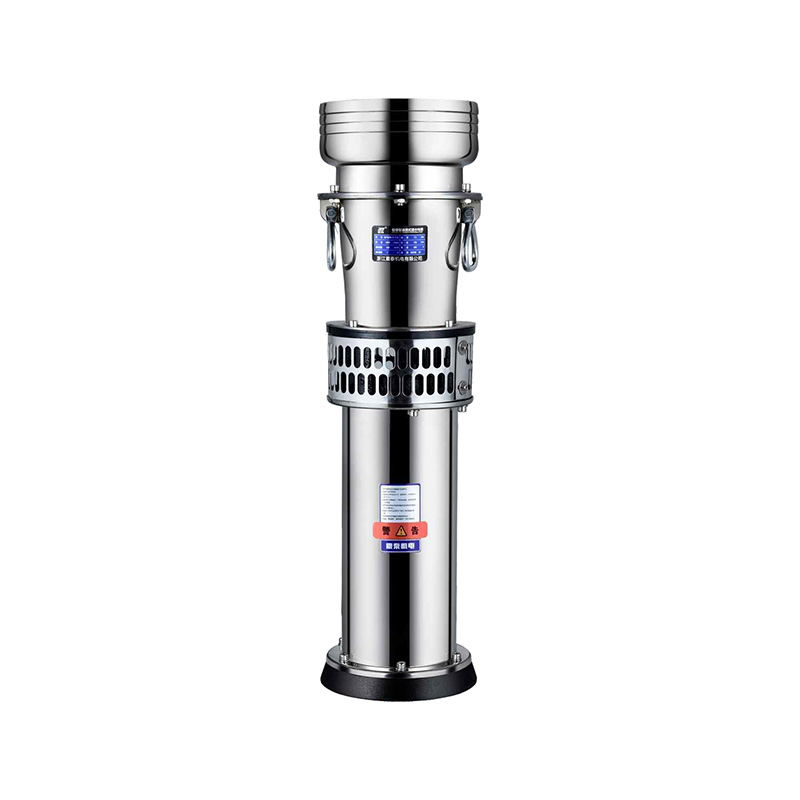
QY All Stainless Steel Oil Immersed Submersible Pump
Performance Range and Model Selection
The QY series includes multiple combinations of flow, head, power, and outlet size. This allows distributors, contractors, farms, and industrial users to select a configuration that more closely matches the required water transfer duty instead of using one oversized or undersized pump for every project.
| No. | Model | Maximum Flow | Maximum Head | Power | Size | Voltage |
| 1 | QY65-10-3 | 65 m³/h | 10 m | 3 kW | 4 inches / 100 mm | 380 V |
| 2 | QY160-5-3 | 160 m³/h | 5 m | 3 kW | 6 inches / 150 mm | 380 V |
| 3 | QY95-14-4 | 95 m³/h | 14 m | 4 kW | 4 inches / 100 mm | 380 V |
| 4 | QY180-10-4 | 180 m³/h | 10 m | 4 kW | 6 inches / 150 mm | 380 V |
| 5 | QY160-12-5.5 | 160 m³/h | 12 m | 5.5 kW | 6 inches / 150 mm | 380 V |
| 6 | QY250-8-5.5 | 250 m³/h | 8 m | 5.5 kW | 8 inches / 200 mm | 380 V |
| 7 | QY280-15-7.5 | 280 m³/h | 15 m | 7.5 kW | 6 inches / 150 mm | 380 V |
| 8 | QY280-10-7.5 | 280 m³/h | 10 m | 7.5 kW | 8 inches / 200 mm | 380 V |
Understanding Flow Rate
Maximum flow is the highest stated water delivery capacity associated with a model under specified test and operating conditions. Flow rate is normally expressed in cubic meters per hour. One cubic meter equals 1,000 liters, so a model rated at 160 cubic meters per hour can theoretically move up to 160,000 liters per hour under the applicable conditions.
Actual flow at the installation site may be lower because of pipe friction, elevation changes, valves, bends, filters, discharge restrictions, and water conditions. Buyers should therefore avoid selecting a pump solely by comparing the maximum flow figure. The required operating point should be identified by considering both flow and total dynamic head.
Understanding Head
Maximum head indicates the approximate pressure-producing capacity of the pump expressed as meters of water column. The head requirement includes vertical elevation as well as friction losses in the piping system. For example, pumping water from a low drainage basin to a higher discharge point requires enough head to overcome the vertical height difference and the resistance of the pipe.
A pump rated for a 15-meter maximum head should not automatically be expected to deliver its maximum flow at 15 meters. In most pump systems, flow decreases as the required head increases. The correct model is the one whose performance curve or application data meets the project’s required flow at the actual total head.
Matching Power and Outlet Size
Motor power provides an indication of the energy available for water transfer, but higher power alone does not guarantee better results. A larger motor may be appropriate for higher flow or higher head, while a smaller motor may be more efficient for a modest duty. Outlet size influences flow velocity and pipe compatibility. The 4-inch, 6-inch, and 8-inch configurations provide options for different system layouts.
Before ordering, users should confirm the discharge pipe diameter, required delivery distance, operating hours, voltage, phase, water quality, and installation depth. Distributors can use the model range to support different customer applications while maintaining a focused product family and common product concept.
Advantages Compared with Conventional Submersible Pumps
Improved Corrosion Resistance
Many standard pumps use painted steel, cast iron, or other materials that may require additional protection in wet or corrosive locations. Coatings can be effective, but scratches, impact damage, and long-term exposure may gradually reduce their protective value. The stainless steel construction of the QY series provides inherent material resistance rather than relying only on an external coating.
This advantage is relevant to water transfer in agricultural areas, aquaculture facilities, drainage systems, and industrial locations where moisture is constant. It can also be useful for exporters and project suppliers who need a pump capable of serving several markets with different environmental conditions.
Compact Installation
A surface pump may require a stable foundation, suction pipe, foot valve, priming arrangement, and protection from weather. A submersible pump places the pumping equipment near the water source and avoids many suction-side complications. The QY integrated structure can help reduce installation space and simplify deployment in locations where a conventional pump room is not practical.
Reduced Priming Requirements
Because the pump is designed to operate below the water surface, the pump chamber is naturally surrounded by water during normal installation. This helps avoid the repeated manual priming that may be required by some surface-mounted centrifugal systems. Operators must still ensure that the pump is fully submerged before starting and must never operate it dry.
Suitable Capacity Range
The QY model range extends from moderate agricultural water transfer to high-volume drainage and irrigation duties. Flow capacities up to 280 cubic meters per hour allow the same product family to serve farms, fish ponds, construction drainage projects, and larger water management systems. This range can be useful for distributors that want several capacity options from one manufacturer.
Stable Three-Phase Operation
Three-phase motor technology is familiar to industrial users and is generally well suited to repeated operation. The 380-volt configuration can integrate with many commercial and industrial electrical systems. Proper control equipment remains necessary, but the motor platform is practical for customers who require more power than a single-phase domestic pump can normally provide.
Serviceable Product Architecture
The pump, seal unit, and motor are arranged as identifiable functional sections within one assembly. This supports systematic inspection and troubleshooting. A service technician can examine the electrical system, oil-filled motor chamber, sealing arrangement, pump inlet, discharge connection, and external structure as part of a planned maintenance process.
Manufacturing Strengths and Production Approach
The manufacturer, Zhejiang ZhenTai Mechanical and Electrical Co., Ltd., is located in Wenling, Zhejiang Province, China, an area known for the production of pumps and motor-driven equipment. Established in 2018, the company develops and produces more than 90 products across 10 series. Its product portfolio includes floating aerators, impeller aerators, water wheel aerators, water pumps, submersible pumps, and air blowers.
This product breadth provides a useful manufacturing foundation for the QY series. A company working across pumps, aerators, motors, and aquaculture equipment can develop experience in rotating assemblies, water movement, electrical drive systems, sealing, structural fabrication, and application support. The resulting knowledge is relevant to the production of a submersible pump intended for agriculture, aquaculture, drainage, and industrial water systems.
Material-Focused Fabrication
Producing an all stainless steel pump requires careful attention to material selection, cutting, forming, joining, surface preparation, and dimensional accuracy. Stainless steel components must be handled in a way that preserves the intended surface quality and avoids unnecessary contamination from unsuitable tools or materials. The pump structure must also maintain correct alignment between the motor, pump body, shaft, impeller, and sealing components.
A disciplined fabrication process helps ensure that the stainless steel body is not merely attractive but also mechanically suitable for submerged service. The finished structure must support the weight of the motor, resist hydraulic forces, provide correct connection points, and protect internal components during operation.
Integrated Assembly Control
The QY pump combines mechanical, hydraulic, and electrical systems in a single product. Assembly quality therefore affects the complete operating result. The motor must be correctly installed within the lower housing, the pump section must be aligned above it, the shaft and impeller must rotate freely, and the mechanical seal must be correctly positioned.
Oil filling is another important assembly operation. The oil-filled chamber must use an appropriate insulating medium and must be sealed correctly. The amount and condition of the oil can influence insulation, heat transfer, and internal protection. Careful assembly records and inspection procedures support consistent product quality across production batches.
Quality-Oriented Testing
Submersible pumps should be evaluated through a combination of visual, dimensional, electrical, mechanical, sealing, and performance checks. Typical manufacturing control may include inspection of the stainless steel body, verification of connection dimensions, motor electrical checks, rotation checks, seal inspection, and operating tests under controlled conditions.
Hydraulic testing is important because the customer’s decision depends on water delivery. Flow and head should be assessed according to the model’s intended performance range. Electrical checks help identify insulation or connection problems before shipment. Mechanical observation can reveal unusual vibration, noise, or rotating resistance. Seal-related checks help support confidence in the pump’s submersible function.
The exact inspection procedure depends on the model, order requirements, and applicable market standards. Buyers with specific certification, testing, labeling, packaging, or documentation requirements should communicate them before production. This is particularly important for OEM and ODM projects.
Product Development Capability
The company’s product range and research-and-development focus support customized equipment discussions. Different customers may require changes in voltage, cable length, outlet arrangement, packaging, labels, product color, documentation, or application configuration. OEM and ODM cooperation can help importers and distributors align the product with local market needs.
Customization should be evaluated carefully because changes to the motor, impeller, sealing structure, or hydraulic dimensions can affect performance. A responsible development process begins with a clear specification, followed by technical review, sample confirmation, production planning, and final inspection. This approach helps prevent misunderstandings between the manufacturer and the buyer.
Applications in Agriculture and Irrigation
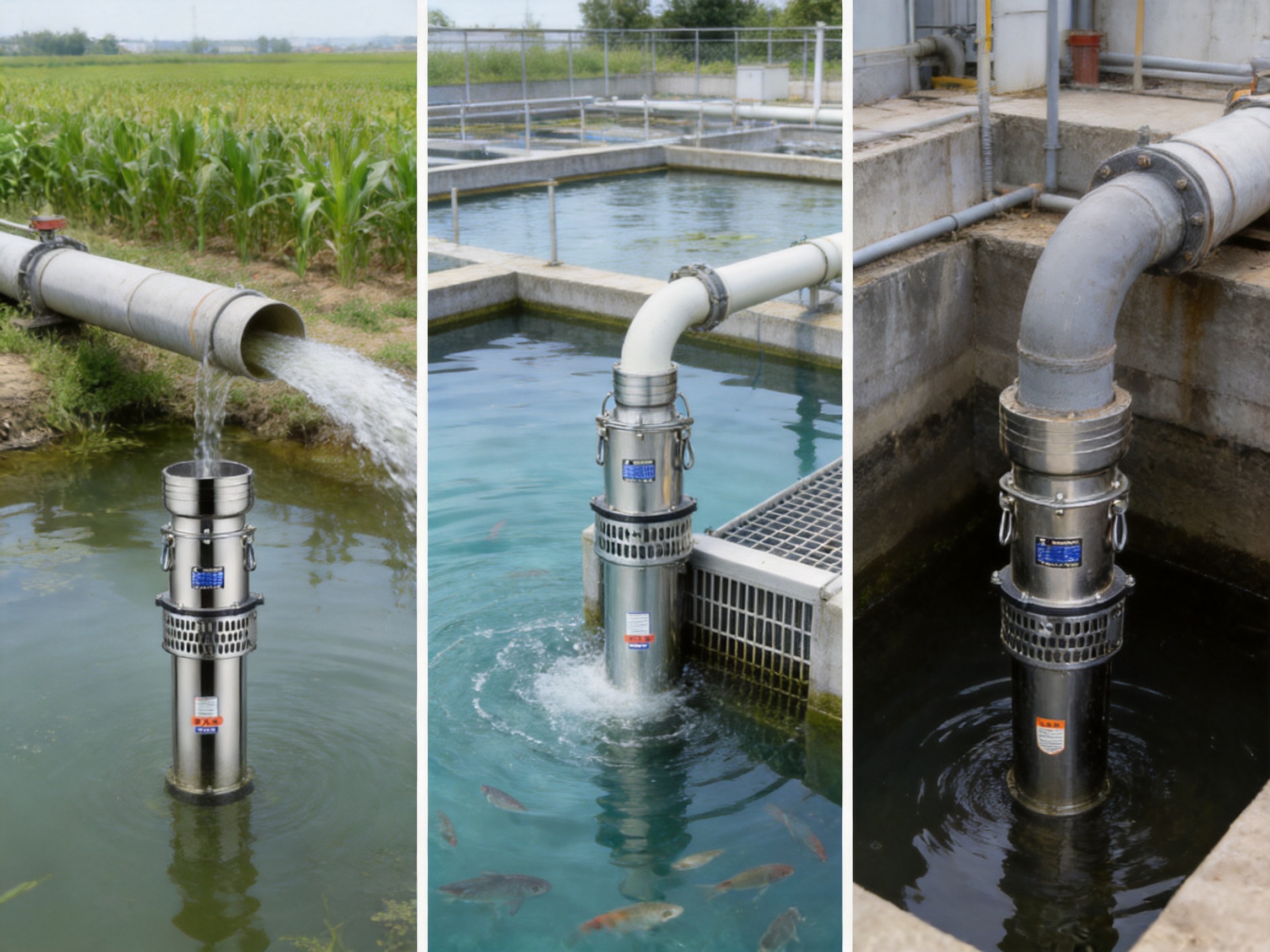
Agricultural water systems often require pumps that can move substantial quantities of water over relatively low to moderate heads. The QY series is suitable for irrigation transfer from ponds, reservoirs, canals, and collection basins when the selected model matches the project requirements.
The pump can be used to transfer water to irrigation channels, storage tanks, sprinkler systems, or field distribution lines. In open-field farming, water availability may change throughout the season, making a submersible pump useful for drawing water from temporary or permanent sources. The stainless steel structure is beneficial where equipment is repeatedly exposed to moisture, fertilizer residue, and outdoor conditions.
For irrigation design, users should calculate the required flow according to crop area, irrigation method, operating time, and available water supply. Pipe diameter should be selected to limit excessive friction losses. A pump operating against unnecessary resistance may consume more energy and deliver less water than expected. Correct system sizing is therefore as important as the pump itself.
Applications in Aquaculture and Fish Ponds
Aquaculture facilities depend on controlled water movement for pond exchange, circulation, tank filling, drainage, and water management. The QY pump can support high-volume water transfer where the water source and operating conditions are suitable.
In fish ponds, the pump may be used to move water between ponds, transfer water into treatment or holding areas, or assist with drainage during cleaning and maintenance. It is important to distinguish water transfer from aeration. The QY pump is a water pump, not an air blower or dedicated aerator. It should be selected for hydraulic movement rather than for introducing oxygen directly into the water.
When used in aquaculture, operators should consider fish safety, inlet protection, debris levels, sediment, and the possibility of clogging. The pump should be positioned so that it does not draw excessive mud, plant material, or large solids into the inlet. If the water contains abrasive particles, the maintenance interval may need to be shortened.
Applications in Industrial and Municipal Drainage
Industrial facilities may require submersible pumps for water collection pits, process-area drainage, equipment washdown water, or emergency water removal. Municipal and property-management users may apply similar equipment to stormwater basins, foundation drainage, service areas, and flood-control projects.
The QY stainless steel structure provides an advantage in locations where equipment remains damp for long periods. The pump can be installed in a drainage pit or collection tank and activated when the water level reaches the required operating point. Automatic level control can be added by the system integrator when appropriate, although the control method must be compatible with the pump and electrical system.
For industrial liquids, material compatibility must be confirmed before use. The information provided describes the pump as a water pump. Highly corrosive chemicals, flammable liquids, hot liquids, sewage containing large solids, and liquids with a high concentration of abrasive material may require a different pump design and should not be assumed suitable without technical approval.
Installation Guidelines
Before installation, confirm the model, voltage, power rating, discharge size, cable condition, lifting arrangement, and control equipment. Inspect the pump for visible damage caused during transportation. Check that the discharge connection is secure and that the pump can be lowered without striking the tank, pond wall, or bottom surface.
The pump must be fully submerged before operation. Starting the pump without adequate water coverage can result in overheating, seal damage, unstable operation, or motor failure. The minimum water level should be determined according to the pump’s installation requirements and the project design.
Place the pump on a stable support or suspend it securely using an appropriate lifting arrangement. Avoid placing the inlet directly into deep sediment. If the pump sinks into mud, the inlet may become blocked and the motor may experience inadequate cooling or excessive load.
Use a discharge pipe with a suitable diameter and pressure rating. Excessively narrow piping can produce high friction losses and reduce actual flow. Secure the pipe so that its weight does not place stress on the pump outlet. Where flexible hoses are used, ensure that they cannot kink or collapse during operation.
Connect the pump to a stable three-phase electrical supply that matches the nameplate requirements. The 380-volt models should not be connected to an incompatible voltage. Electrical installation should include grounding and appropriate protective devices. A qualified electrician should verify phase connections, insulation condition, overload settings, and emergency isolation arrangements.
After installation, check the direction of rotation if the commissioning procedure requires it. Observe the first operating cycle carefully. Look for abnormal vibration, unusual noise, unstable flow, excessive current, leakage, cable movement, and unexpected heating. Stop the pump immediately if a serious abnormality appears.
Maintenance and Service Recommendations
Regular maintenance helps preserve pump performance and extends service life. The inspection frequency depends on operating hours, water quality, sediment, temperature, and the importance of the installation. A pump used continuously in abrasive water may require more frequent inspection than a pump used occasionally in clean irrigation water.
Inspect the outer stainless steel structure for impact, deformation, severe deposits, or signs of corrosion. Stainless steel provides improved resistance but should still be cleaned when deposits accumulate. Remove mud, plant material, and other debris from the inlet area before they harden or restrict water entry.
Check the power cable for cuts, abrasion, crushed sections, or damaged insulation. Do not operate the pump if the cable is compromised. Inspect electrical connections and protective equipment regularly. Any electrical repair should be completed by a qualified technician.
Monitor the mechanical seal area for signs of leakage. A small change in leakage behavior may indicate seal wear or an installation problem. Continuing to operate a pump with a damaged seal can expose the motor chamber to water and increase repair costs.
Listen for changes in operating sound. Grinding, rattling, intermittent knocking, or increased vibration may indicate bearing wear, impeller damage, blockage, misalignment, or cavitation-related conditions. Reduced flow can result from a blocked inlet, a restricted discharge pipe, incorrect rotation, excessive head, or hydraulic wear.
When removing the pump from the water, disconnect and isolate the power supply first. Do not pull the pump by its electrical cable. Use the designated lifting point or a suitable support rope. After removal, rinse the exterior if the water contains sediment or corrosive deposits, then inspect the unit before storage.
Safety Considerations
Submersible pump safety depends on correct electrical installation and responsible operating procedures. Never enter a tank, pond, drainage pit, or other water area while the pump is connected to power. Isolate the electrical supply and verify that it cannot be restarted before inspection or maintenance.
Keep hands, tools, clothing, and loose materials away from the pump inlet and rotating components. Do not operate the pump with protective components removed. Ensure that children and unauthorized personnel cannot access the installation area.
Do not use the pump for liquids that are outside the approved application range. Fuel, flammable liquids, explosive atmospheres, high-temperature liquids, or aggressive chemicals may require specialized equipment. The standard QY description is for submersible water pumping, including agricultural, industrial, and municipal water transfer applications.
Correct selection is also a safety issue. An undersized discharge pipe can increase system resistance, while an unsuitable motor protection setting can permit overheating. A pump installed in an unstable location may move, overturn, or place stress on the discharge connection. Professional installation is recommended for commercial and industrial systems.
Why Choose a Specialized Pump Manufacturer
Working with a specialized pump manufacturer offers advantages beyond the supply of a single unit. The manufacturer can provide access to multiple pump categories, application knowledge, product matching, spare-part discussions, packaging support, and technical communication. This is valuable for distributors that serve agricultural, aquaculture, construction, and industrial customers with different water-handling requirements.
Zhejiang ZhenTai Mechanical and Electrical Co., Ltd. focuses on aerators, water pumps, submersible pumps, air blowers, and related equipment. Its product portfolio covers more than 90 products in 10 series. This breadth allows global buyers to discuss complementary equipment, such as water transfer pumps for use alongside aerators in fish ponds or drainage pumps for irrigation projects.
The company also provides OEM and ODM cooperation. For importers and private-label distributors, this can support market-specific branding, product documentation, packaging requirements, and model selection. Technical requirements should be clearly specified before production so that electrical ratings, materials, dimensions, labeling, and performance expectations are confirmed in writing.
Professional technical support is especially important for submersible pumps because installation conditions strongly influence performance. A reliable supplier should be able to discuss flow, head, pipe size, power supply, water quality, installation depth, and intended operating schedule. This information helps buyers select a model that is appropriate rather than simply choosing the highest available capacity.
Commercial Value for Distributors and OEM Buyers
For distributors, the QY series offers a straightforward product structure with a clear range of flow, head, motor power, and connection size. The model family can be presented to agricultural, aquaculture, drainage, and industrial customers without requiring a completely different pump concept for each application.
The stainless steel construction can serve as a strong selling point in markets where customers are concerned about rust, outdoor exposure, and long-term service. The oil-filled three-phase motor and integrated mechanical seal provide additional features for buyers seeking a purpose-built submersible pump rather than a converted surface pump.
Distributors should support the product with accurate technical information. Sales materials should explain that maximum flow and maximum head are not necessarily achieved simultaneously. They should also communicate the importance of full submersion, stable voltage, grounding, overload protection, and regular seal inspection.
For OEM buyers, the product can form part of a wider water-management equipment program. It may be combined with aerators, air blowers, control panels, hoses, discharge pipes, filters, and water-level devices. A complete package can provide greater value to farms, fishery projects, contractors, and municipal users than a pump supplied without application guidance.
Selection Checklist for Project Buyers
Before selecting a QY model, identify the required water flow in cubic meters per hour. Estimate how much water must be transferred and how quickly the task must be completed. Avoid selecting a model based only on the largest available flow figure, because excessive capacity may increase purchase cost, energy use, and system stress.
Calculate total head by combining vertical lift with friction losses. Include the height from the water surface to the discharge point, pipe length, bends, valves, filters, and any elevation changes. If the calculation is uncertain, consult a qualified pump engineer or supplier.
Confirm the power supply. The listed models use 380 volts and three-phase asynchronous motors. Check whether the installation site has the required electrical service and whether suitable motor protection is available.
Confirm the discharge size and pipe compatibility. The available models include 4-inch, 6-inch, and 8-inch sizes. Select a pipe system that can handle the expected flow without excessive loss or mechanical strain.
Evaluate water quality. Identify whether the water contains sand, gravel, vegetation, fertilizer, chemicals, salt, or other substances that could affect the stainless steel body, impeller, mechanical seal, or motor. Request technical confirmation if the liquid differs significantly from clean or moderately contaminated water.
Define the operating schedule. Continuous operation, seasonal irrigation, emergency drainage, and occasional pond maintenance may require different maintenance and control arrangements. Explain the intended duty cycle to the supplier before ordering.
Review delivery and customization requirements. OEM and ODM projects may require special labels, cartons, cables, manuals, voltage configurations, or inspection documents. Confirm these details during the quotation and sample approval stages.
Frequently Asked Questions
What is an oil-immersed submersible pump?
An oil-immersed submersible pump is a pump with an oil-filled motor chamber designed to operate below the water surface. The insulating oil supports motor protection and heat transfer, while the mechanical seal helps separate the motor chamber from the pumped water.
What materials are used in this pump?
The pump is designed with an all stainless steel structure. The motor is a three-phase asynchronous motor, and the motor chamber is oil filled. The unit also includes an integrated mechanical seal box.
Can the pump operate outside the water?
No. The pump is designed for submersible operation and should be fully submerged before starting. Operating it without sufficient water can cause overheating, seal damage, inadequate cooling, and motor failure.
What voltage do the listed models use?
The listed models use a 380-volt three-phase power supply. Buyers should confirm the nameplate information and electrical requirements before installation. An incompatible power supply can damage the motor or create a safety hazard.
Which QY model provides the highest listed flow?
The QY280-15-7.5 and QY280-10-7.5 models both have a listed maximum flow of 280 cubic meters per hour. Their head ratings and outlet sizes differ, so the correct choice depends on the required pressure, pipe system, and installation conditions.
Which model has the highest listed head?
The QY280-15-7.5 model has the highest listed maximum head at 15 meters. Actual flow at that head will depend on the complete pump performance characteristics and the resistance of the connected piping system.
Is the pump suitable for irrigation?
Yes. The QY series is suitable for many agricultural water transfer and irrigation applications when the flow, head, water quality, voltage, and installation conditions are properly matched.
Is it suitable for aquaculture?
It can be used for water transfer, pond filling, drainage, and circulation in aquaculture systems. It is not a replacement for an aerator or air blower when the main requirement is oxygenation. The inlet should also be protected from excessive sediment, vegetation, and large debris.
Does stainless steel make the pump completely corrosion-proof?
No material should be considered completely corrosion-proof in every environment. Stainless steel provides improved resistance compared with many ordinary materials, but water chemistry, chloride concentration, chemicals, temperature, abrasion, and maintenance still affect service life.
How often should the pump be maintained?
Maintenance frequency depends on operating hours, water quality, sediment, and application conditions. Operators should regularly inspect the cable, inlet, stainless steel body, mechanical seal area, electrical protection, vibration, noise, and flow performance.
Can the pump be customized for OEM orders?
The manufacturer supports OEM and ODM cooperation. Custom requirements may include packaging, labels, documentation, cable arrangements, and other project details. Any change affecting voltage, motor power, hydraulic performance, or materials should be reviewed and confirmed before production.
What information should buyers provide when requesting a quotation?
Buyers should provide the required flow, total head, water type, installation depth, pipe size, power supply, operating schedule, quantity, destination market, and any OEM or certification requirements. This information helps the supplier recommend a suitable model and prepare accurate commercial documentation.
Conclusion
The QY all stainless steel oil-immersed submersible pump is designed for dependable water transfer in applications where corrosion resistance, compact installation, and stable three-phase operation are important. Its stainless steel structure supports long-term use in wet environments, while the oil-filled motor and integrated mechanical seal are designed for submersible service.
With models ranging from 65 to 280 cubic meters per hour, maximum heads from 5 to 15 meters, and power ratings from 3 to 7.5 kW, the series offers practical options for irrigation, aquaculture, drainage, industrial water handling, and municipal projects. Its advantages over many conventional pump designs include improved material resistance, reduced installation complexity, direct operation in the water source, and a focused range for different capacity requirements.
The manufacturer’s experience across pumps, aerators, air blowers, and aquaculture equipment provides a broad foundation for product development and application support. Its stainless steel fabrication, integrated assembly concept, multi-category production capability, and OEM/ODM services make the product suitable for distributors, contractors, and project buyers seeking a reliable water-pumping partner.
Successful operation depends on correct model selection, full submersion, suitable electrical protection, compatible piping, proper installation, and regular maintenance. When these conditions are addressed, the QY series can provide a durable and practical solution for demanding water transfer environments.
References
1. Manufacturer-provided QY series product specifications and model data.
2. Manufacturer-provided company profile and product portfolio information.
3. General engineering principles for centrifugal pump flow, head, pipe friction, and system selection.
4. General maintenance practices for submersible pumps, mechanical seals, oil-filled motors, and three-phase electrical equipment.
5. General material-selection principles for stainless steel equipment used in wet and corrosion-exposed environments.