 English
 Español
 Indonesia
Reliable water pressure is essential in modern homes, recreational vehicles, small buildings, irrigation systems, and many light-duty water-supply applications. When the incoming water supply is weak or fluctuates during periods of high demand, users may experience slow filling, unstable shower pressure, insufficient flow at upper floors, or interruptions when several outlets operate at the same time. A properly selected booster pump can solve these problems by increasing pressure only when it is needed and maintaining a more comfortable, consistent water supply.
The 24V Intelligent Permanent Magnet Variable Frequency Silent Booster Pump is designed for this purpose. It combines a permanent magnet synchronous motor, intelligent variable frequency control, automatic start and stop operation, and a low-noise operating design in one compact water-pressure solution. The 24V model delivers a rated power of 100 W, a maximum head of 19 meters, a flow rate of 1.9 cubic meters per hour, and a 20 mm connection caliber.
Unlike a basic fixed-speed pump that operates at one speed regardless of actual water demand, this intelligent booster pump adjusts its operating speed through a variable frequency control system. The pump can respond to changing demand, reduce unnecessary energy use, and help provide steadier pressure. Its permanent magnet motor further improves motor efficiency and power density while supporting quiet operation.
Manufactured by Zhejiang ZhenTai Mechanical and Electrical Co., Ltd., the pump benefits from the company’s experience in water pumps, aerators, air blowers, and submersible pumping equipment. The manufacturer develops and produces more than 90 products across 10 product series for applications ranging from aquaculture and irrigation to household water supply, drainage, environmental protection, and ecological water systems.
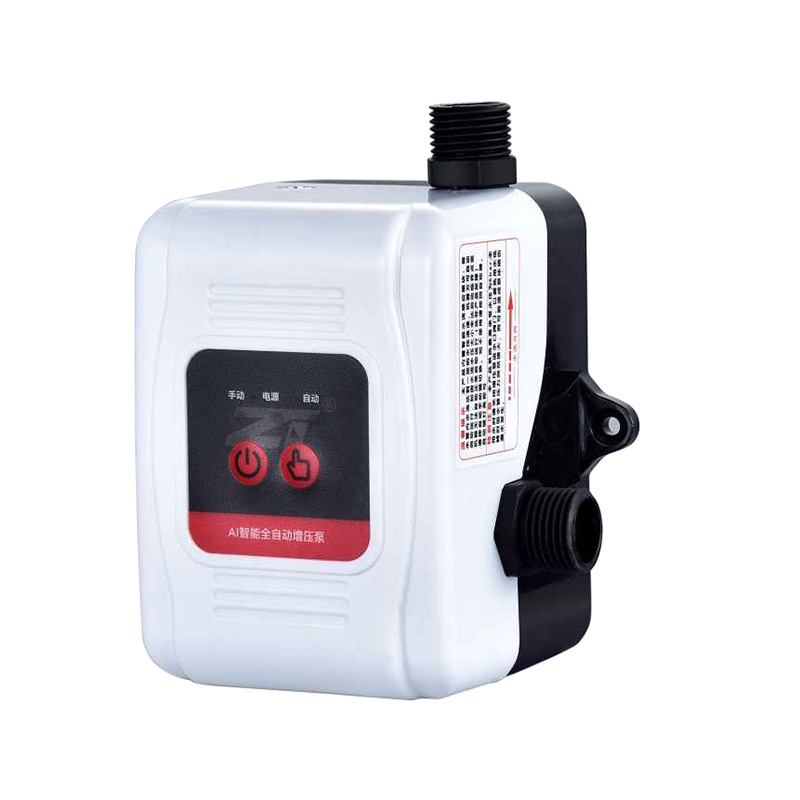
24V Intelligent Permanent Magnet Variable Frequency Silent Booster Pump
Product Overview
The 24V Intelligent Permanent Magnet Variable Frequency Silent Booster Pump is a pressure-boosting water pump intended for applications where stable water delivery and low operating noise are important. It is especially suitable for household water systems, mobile or recreational water systems, small water-supply installations, and other locations requiring a compact low-voltage booster solution.
The pump uses a permanent magnet synchronous motor as its drive unit. In this type of motor, permanent magnets generate the magnetic field required for motor operation. Compared with a conventional motor design that relies more heavily on electrical excitation of the rotor, a permanent magnet motor can achieve efficient power conversion and a compact construction. The result is a motor that can provide strong output while limiting unnecessary heat and energy loss during operation.
The integrated variable frequency control system is another important feature. Water demand does not remain constant throughout the day. A household may use only a small amount of water when one tap is open, but demand can rise when a shower, washing machine, kitchen faucet, or irrigation outlet is used. The pump’s intelligent control system adjusts the motor speed according to demand, helping the system deliver appropriate pressure instead of simply running continuously at full speed.
Automatic start and stop operation improves convenience. When the system detects a water demand, the pump can start automatically. When the demand ends, the pump can stop automatically. This reduces the need for manual operation and helps prevent unnecessary running when all outlets are closed.
The product is described as a silent booster pump because its motor and control design are intended to reduce operating noise. Low noise is particularly valuable in residential environments, apartments, utility rooms, mobile homes, and other locations where pump sound can become a daily disturbance.
Key Specifications
| Item | Specification |
|---|---|
| Product type | Intelligent permanent magnet variable frequency booster pump |
| Recommended low-voltage model | ZTDC24V |
| Rated power | 100 W |
| Maximum head | 19 m |
| Flow rate | 1.9 m³/h |
| Connection caliber | 20 mm |
| Motor type | Permanent magnet synchronous motor |
| Control system | Intelligent variable frequency control |
| Operating mode | Automatic start and stop |
| Noise characteristic | Low-noise operation design |
The same product series also includes higher-voltage configurations. The available information lists a 400 W ZTDC220V model with a 35 m head, a 2.7 m³/h flow rate, and a 25 mm caliber, as well as a 600 W ZTDC220V model with a 35 m head, a 3.5 m³/h flow rate, and a 25 mm caliber. These models can support buyers who require a different power supply or greater capacity.
Performance values should always be evaluated together with the actual installation conditions. The maximum head and rated flow are reference values, while the delivered flow at a specific outlet depends on pipe length, pipe diameter, elevation, fittings, valves, inlet conditions, and the pressure required by the application. Correct system sizing is therefore important for achieving the desired result.
How the Permanent Magnet Motor Creates an Advantage
The motor is the heart of any booster pump. A pump’s hydraulic design determines how water is moved, but the motor determines how efficiently electrical energy is converted into mechanical power. The use of a permanent magnet synchronous motor gives this booster pump several important advantages over conventional fixed-speed pumps using more traditional motor arrangements.
High Motor Efficiency
Permanent magnet motors can reduce certain electrical losses because the magnetic field is produced by permanent magnets rather than by a continuously energized rotor winding. Lower internal losses can contribute to improved motor efficiency, particularly when the motor is operated across a range of speeds through variable frequency control.
For a booster pump that may operate frequently during the day, efficiency has practical value. The pump does not need to consume the same amount of energy every time a small outlet is opened. By adjusting speed in response to demand, the system can provide useful pressure while avoiding excessive output when the water requirement is limited.
Strong Power Output in a Compact Structure
A permanent magnet synchronous motor can provide a favorable power-to-size ratio. This supports the development of compact pumping equipment that can be installed in locations where space is limited. A compact structure is useful for household utility rooms, under-counter systems, RV compartments, equipment cabinets, and small technical rooms.
Compact construction also makes equipment planning easier. Installers can reserve less space for the pump while still obtaining an effective pressure-boosting function. However, adequate access should always be maintained for inspection, connection checks, and future maintenance.
Reduced Heat and Operating Losses
Motor losses normally appear as heat. Excessive heat can affect efficiency, component life, and the surrounding installation environment. By using an efficient motor design and intelligent speed regulation, the pump can limit unnecessary energy conversion losses. This supports stable operation and may help reduce thermal stress during normal use.
Suitable for Low-Voltage Applications
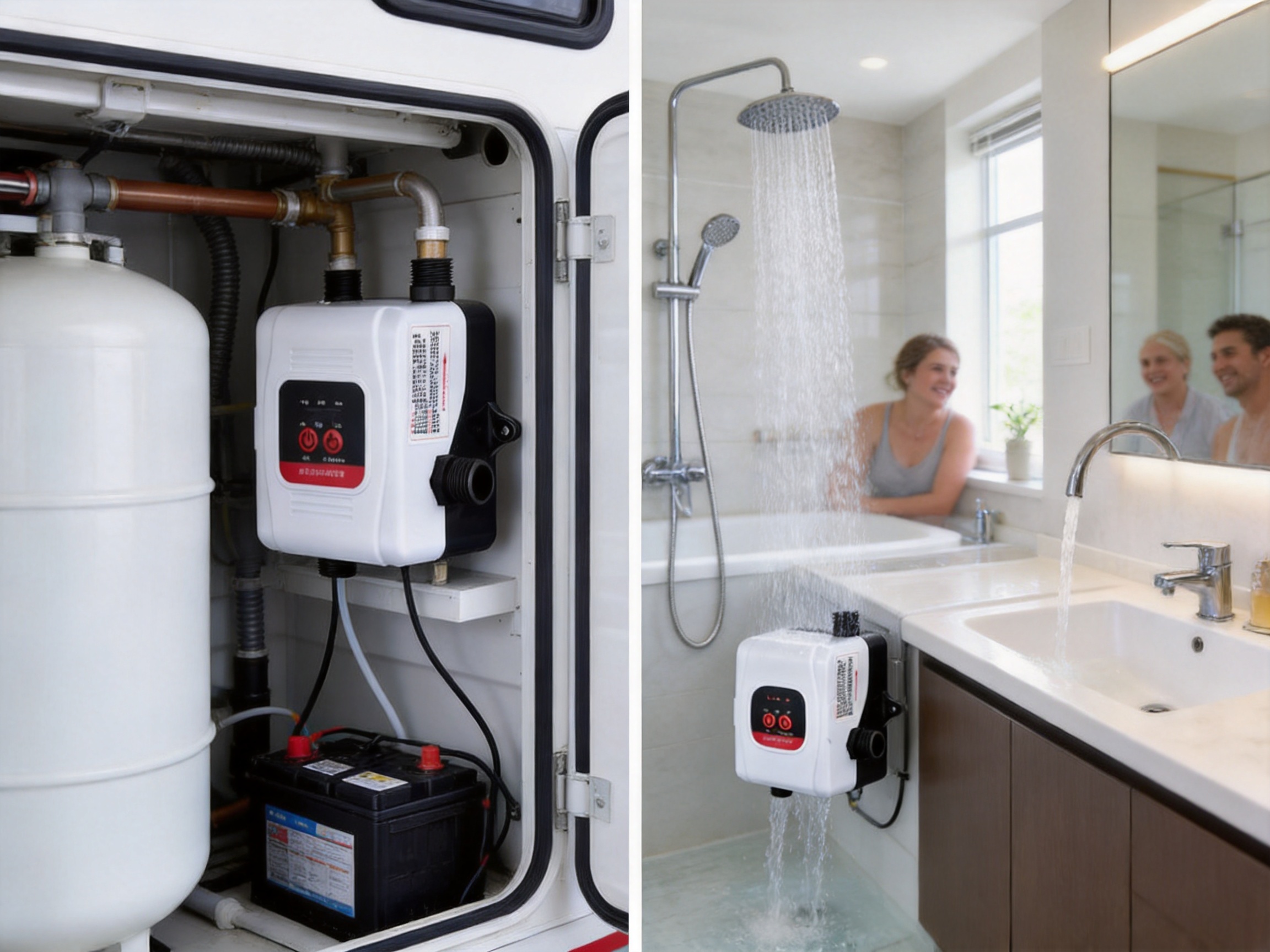
The 24V configuration is especially attractive for systems built around low-voltage power sources. It can be considered for RVs, boats where appropriate system requirements are met, mobile water equipment, off-grid installations, battery-supported systems, and specialized low-voltage water-supply equipment.
Low-voltage equipment still requires careful electrical planning. The power supply must be stable and correctly matched to the pump. Wiring must be properly sized, connections must be secure, and suitable protective devices should be used. The product should not be connected to a power source outside its specified electrical requirements.
Variable Frequency Control for More Stable Pressure
A conventional booster pump often has two basic operating states: on and off. When it is on, it may run at a fixed speed. This simple arrangement can be suitable for basic systems, but it may create pressure fluctuations, frequent cycling, unnecessary energy consumption, and audible changes in operation.
The variable frequency control system in this pump provides a more responsive approach. It changes the operating frequency supplied to the motor, which changes the motor speed. When demand increases, the pump can increase output. When demand decreases, it can reduce speed. When no demand is present, the automatic control system can stop the pump.
Pressure Stability
Stable pressure improves the user experience. A shower can operate more comfortably, a faucet can receive a more consistent flow, and water can be delivered more effectively to outlets that are farther away or positioned at a higher elevation. The variable frequency system does not eliminate every pressure variation because the final result depends on the whole plumbing system, but it provides a more intelligent response than a basic fixed-speed pump.
Reduced Energy Waste
Running a pump at full speed when only a small amount of water is needed can waste energy. Variable frequency operation allows the pump to match its output more closely to the actual requirement. This is one of the main reasons variable speed systems are increasingly used in modern water-supply equipment.
The potential energy benefit is especially relevant when the pump operates for long periods or starts frequently during daily water use. Actual savings depend on operating time, system pressure, water demand, pipe design, and the selected control settings.
Lower Mechanical Stress
Sudden starts and stops can place stress on pump components, pipe connections, and the water system. A controlled speed transition can make operation smoother than abrupt full-speed cycling. This may reduce shock and vibration in the installation and help create a more comfortable operating environment.
Automatic Demand Response
Automatic start and stop operation means that the user does not need to switch the pump on manually each time water is required. The system responds to demand through its control logic. This is convenient for household users and valuable in mobile or remote installations where direct supervision may not be practical.
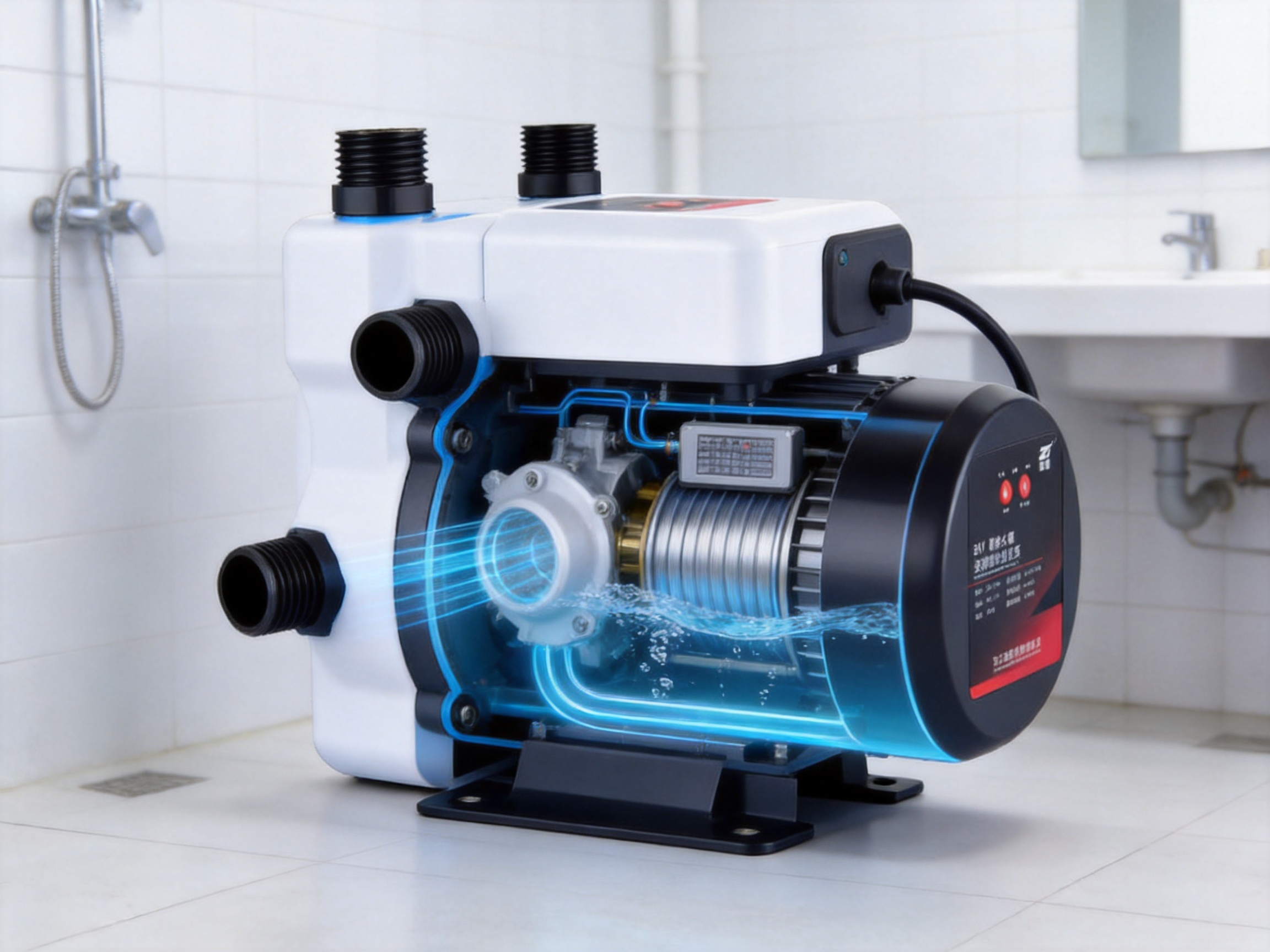
Low-Noise Design for Residential and Mobile Use
Noise is a major consideration when selecting a booster pump. A pump installed near a bedroom, kitchen, bathroom, living area, office, or recreational vehicle can become inconvenient if it produces strong vibration or a high operating sound. The low-noise design of this pump is intended to reduce that concern.
Several factors contribute to perceived pump noise. Motor speed, hydraulic turbulence, vibration, mounting conditions, pipe resonance, air in the water line, and loose connections can all affect the final sound level. The pump’s permanent magnet motor and variable frequency control help support quiet operation, but correct installation is also essential.
The unit should be installed on a firm and stable surface. Connections should be secured without excessive force, and the surrounding pipework should not place abnormal mechanical load on the pump body. Where appropriate, vibration-isolating materials may be used between the equipment and its mounting surface, provided that they do not make the installation unstable.
A sheltered indoor location is recommended. If the pump is installed in an area exposed to weather, moisture, dust, freezing temperatures, or direct sunlight, the installer should provide suitable protection and confirm that the environment is appropriate for the product. The pump should not be allowed to operate dry, and the water system should be checked for air leakage or blocked passages.
Advantages Compared with Basic Booster Pumps
Many basic booster pumps are designed around a single-speed motor and a simple pressure switch. Such products can be economical and useful in uncomplicated applications, but they may not provide the same level of control, efficiency, or comfort as an intelligent variable frequency model.
Compared with Fixed-Speed Operation
A fixed-speed pump delivers approximately the same motor speed whenever it is running. If the system needs only a small amount of water, the pump may provide more output than necessary. This can cause pressure surges, rapid cycling, and higher energy consumption. The variable frequency system offers a more flexible response by adjusting speed according to demand.
Compared with Conventional Induction Motors
Conventional induction motors remain widely used, but a permanent magnet synchronous motor can provide higher efficiency and a more compact structure in suitable applications. The permanent magnet design also supports accurate speed control, which complements the variable frequency system.
Compared with Manually Operated Pumps
A manually operated pump requires the user to start and stop the equipment. This can lead to accidental continuous operation or failure to activate the pump when water is needed. Automatic start and stop control improves convenience and reduces dependence on manual supervision.
Compared with High-Noise Equipment
Some low-cost pumps may produce noticeable mechanical or electrical noise, especially when installed on a rigid surface or operated at a high fixed speed. The silent booster pump design prioritizes low-noise operation, making it more appropriate for residential and user-facing environments.
Compared with One-Size-Fits-All Solutions
The product series includes 24V and 220V configurations with different power, head, flow, and caliber values. This gives distributors, installers, and project buyers more flexibility when matching the product to the electrical system and water requirement. A range of configurations is more useful than a single model that cannot accommodate different installation conditions.
Applications
Household Water Supply
The 24V booster pump can be used in small household water-supply systems where incoming pressure is insufficient. Typical examples may include houses with elevated storage tanks, remote water sources, weak municipal pressure, or long internal pipe runs. It can support faucets, showers, washing equipment, and other suitable outlets when the total demand remains within the pump’s performance range.
Before installation, the user should calculate the required flow and pressure. The pump should not be selected solely by its maximum head or by the motor power. The actual demand at the same time, the elevation difference, and the resistance of the pipe system must all be considered.
Recreational Vehicles
RVs and mobile homes often use compact water systems powered by batteries or low-voltage electrical equipment. A 24V pump can integrate into an appropriate low-voltage system and provide pressure for sinks, showers, and other water outlets. Its compact design and low-noise characteristics are useful in a small living environment.
Mobile installations must account for movement and vibration. The pump should be mounted securely, pipes should be supported, and electrical wiring should be protected against abrasion. If the vehicle uses a battery bank, the capacity and charging system should be checked to ensure that the pump can operate reliably during expected periods of use.
Small Irrigation Systems
The pump can support small irrigation systems when the required flow and pressure are compatible with its specifications. It may be used for garden watering, greenhouse supply, localized irrigation, and other low-capacity applications. An appropriate filter should be considered when the water contains particles that could affect pump performance.
Water Transfer and Pressure Boosting
The pump may also be considered for water transfer between tanks or for boosting pressure within a small distribution network. The water source should be clean enough for the equipment, and the inlet line should be designed to prevent excessive restriction or air entry.
Specialized Low-Voltage Equipment
Manufacturers and equipment integrators may use the 24V pump in customized water systems. OEM and ODM buyers can discuss product integration, electrical requirements, connection arrangements, packaging, and application-specific solutions with the manufacturer. Any customized design should be validated through technical testing before commercial deployment.
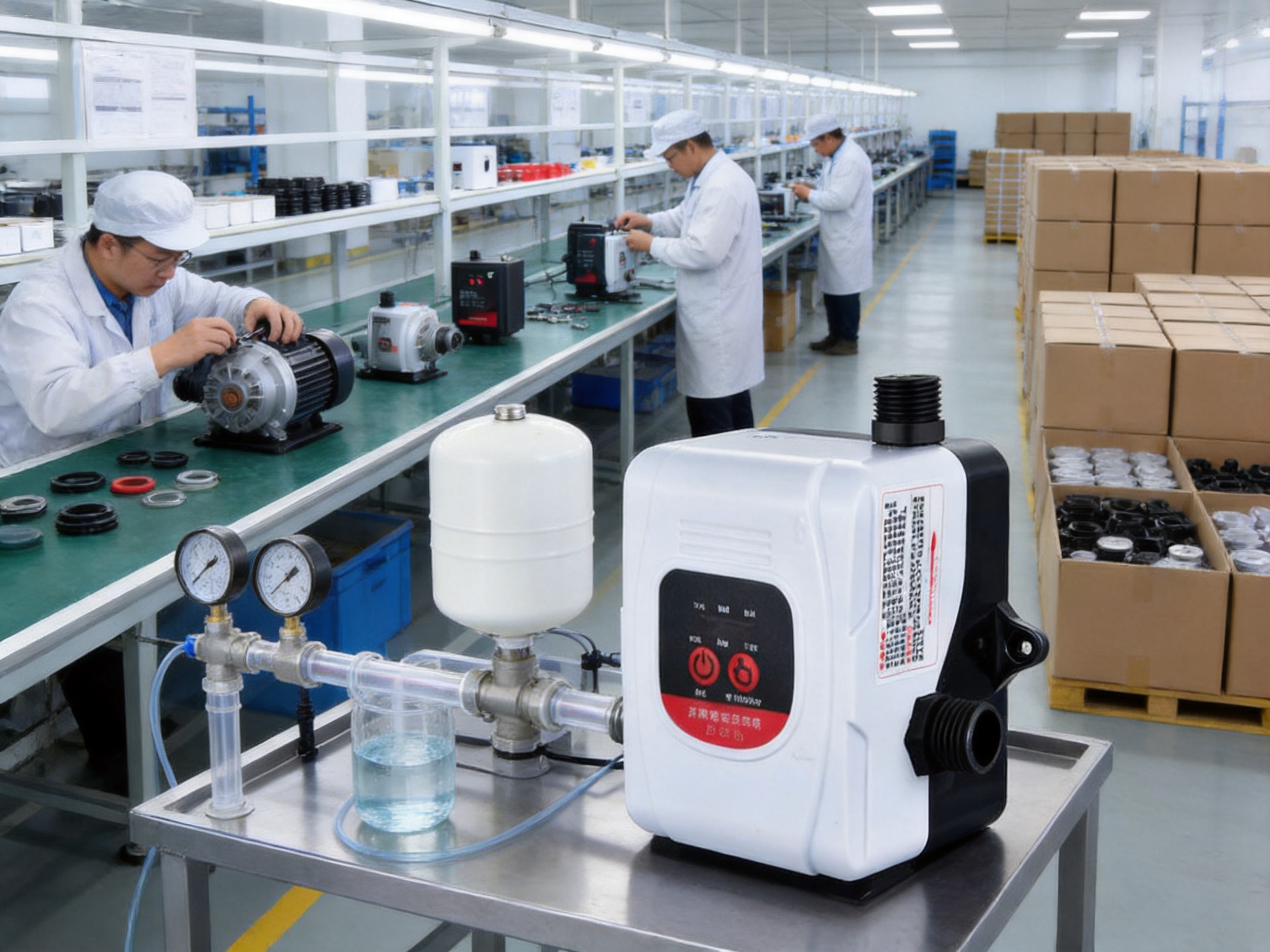
Manufacturing Strength and Product Development Capability
The performance of a booster pump depends not only on its published specifications but also on the manufacturer’s engineering discipline, production management, testing procedures, and ability to maintain consistent quality. Zhejiang ZhenTai Mechanical and Electrical Co., Ltd. was established in 2018 in Wenling, Zhejiang Province, China, a region known for mechanical and electrical manufacturing activity.
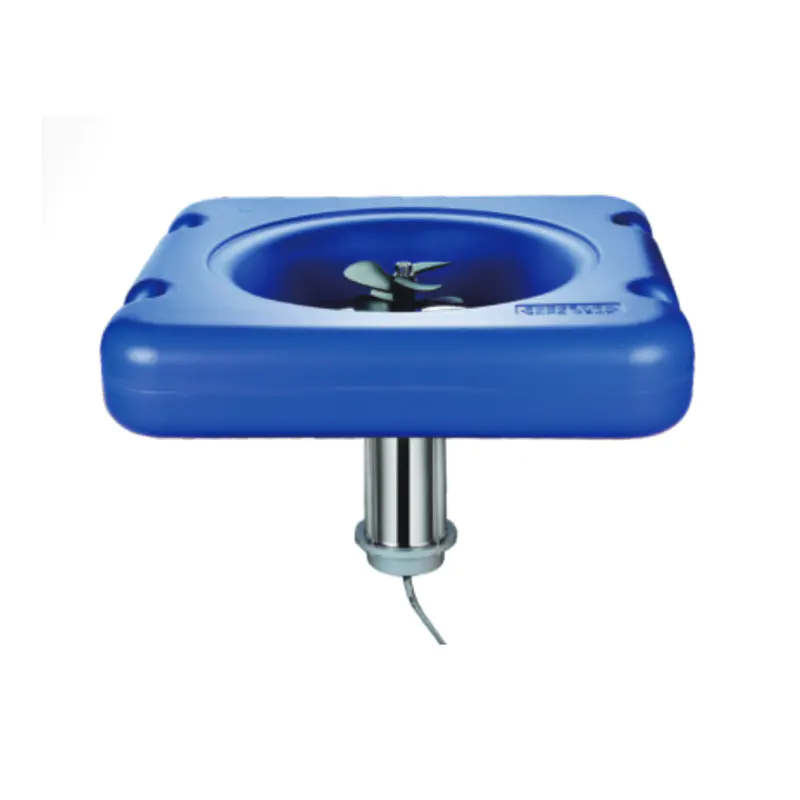
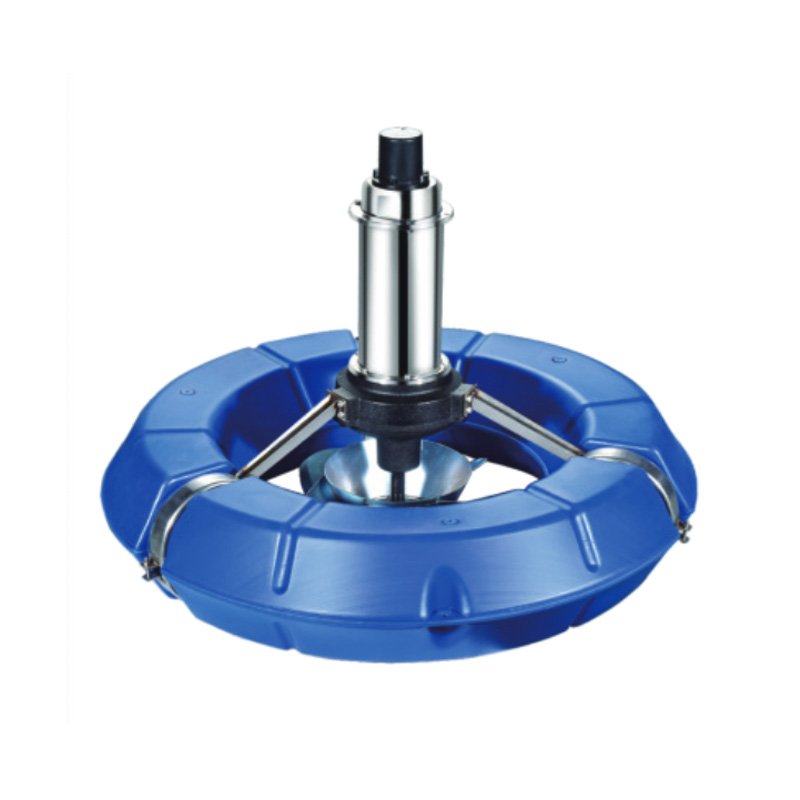
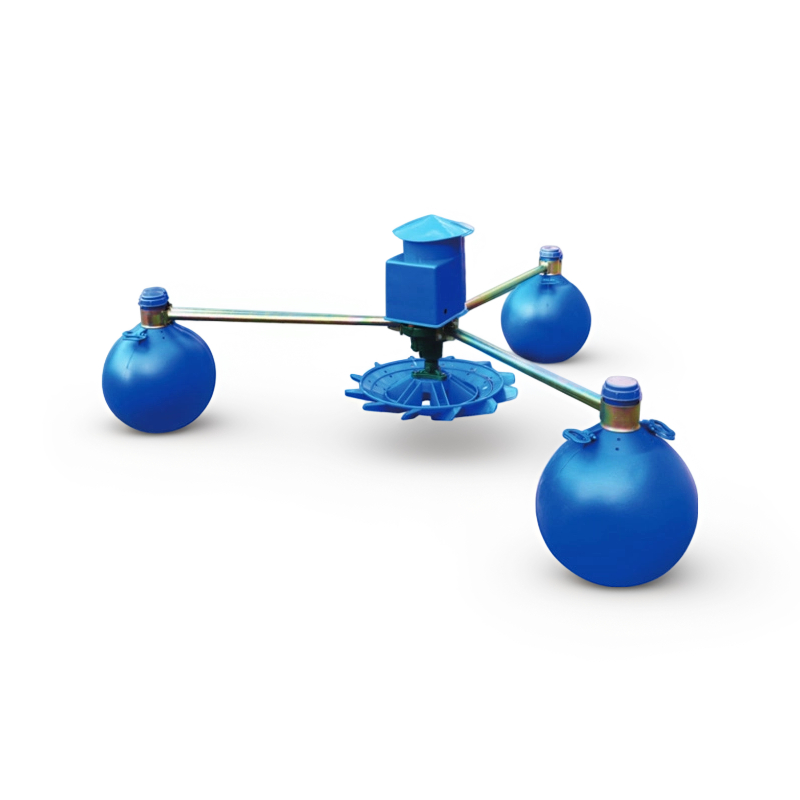
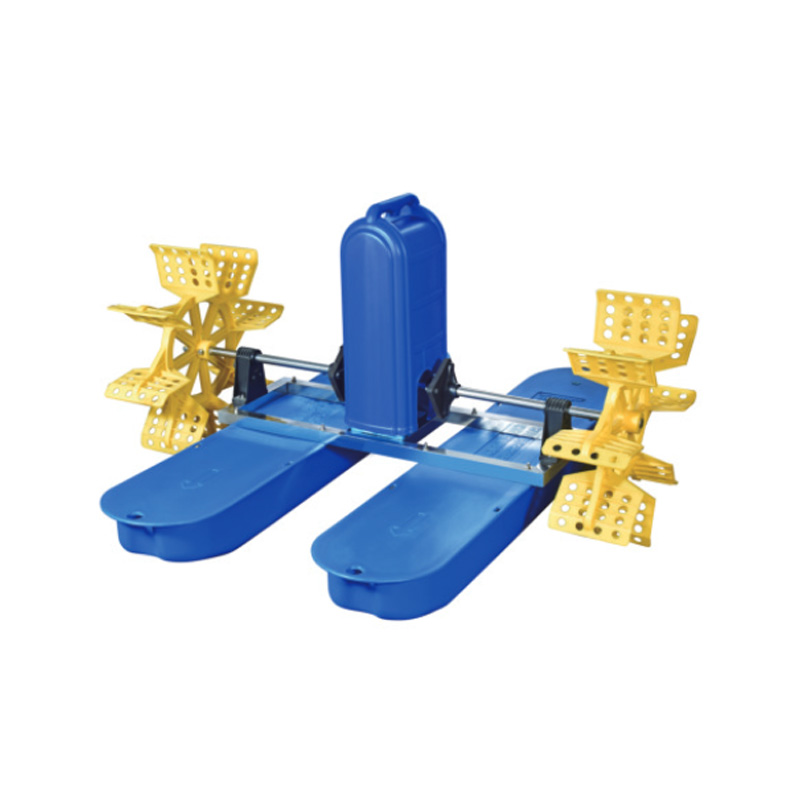
The company specializes in the research, development, and production of more than 90 products across 10 series. Its product range includes floating aerators, impeller aerators, water wheel aerators, water pumps, submersible pumps, air blowers, and related equipment. This broad portfolio gives the company experience across multiple types of motor-driven water and air equipment.
Integrated Product Knowledge
Manufacturing different types of pumps and aerators requires knowledge of motors, impellers, hydraulic passages, sealing systems, electrical controls, housings, and application environments. Experience across these categories supports a more complete understanding of how equipment performs in real installations.
The intelligent booster pump reflects this combined capability. It is not simply a motor attached to a water chamber. It integrates motor technology, electronic control, automatic operation, hydraulic output, low-noise design, and installation requirements in one product platform.
Research and Development Orientation
The company emphasizes research, development, continuous technological innovation, and product improvement. For a modern booster pump, product development includes more than increasing motor power. It also involves improving energy efficiency, controlling speed, reducing operating noise, supporting automatic operation, and creating models for different voltage and capacity requirements.
Variable frequency products require coordination between mechanical and electronic design. The motor, controller, sensors, software logic, pump hydraulics, and protection functions must operate together. A manufacturer with experience in both mechanical and electrical products is well positioned to develop and refine this type of equipment.
Production Across Multiple Product Series
A diverse product portfolio can create manufacturing advantages when managed correctly. Shared expertise in motors, assembly methods, electrical integration, inspection, packaging, and spare-part planning can support production efficiency. It also allows the company to serve different industries, including aquaculture, irrigation, household water supply, environmental protection, and drainage.
For distributors, this breadth can simplify sourcing. Instead of searching for separate suppliers for every category, buyers can communicate with one manufacturer regarding aerators, pumps, air blowers, and related products. This may help reduce coordination complexity in projects that require several types of equipment.
OEM and ODM Support
The company welcomes OEM and ODM cooperation for global buyers. This is important for distributors and equipment brands that require customized labels, packaging, product combinations, technical documentation, or application-specific configurations. Customization should be discussed in detail, including minimum order quantities, design responsibilities, testing requirements, delivery schedules, and after-sales support.
OEM and ODM capability is most valuable when it is supported by technical communication. Buyers should provide information about the intended water source, power supply, target market, operating environment, performance requirements, and installation method. Clear specifications reduce misunderstandings and improve the probability that the final product will match the application.
Manufacturing and Quality Considerations
Although detailed factory process data may vary by production batch and model, a reliable pump manufacturing program normally requires controlled procedures at several stages. These include component sourcing, motor assembly, pump-body assembly, control-system integration, electrical inspection, hydraulic performance testing, noise observation, appearance inspection, and final packaging.
Component Control
Important components include the motor, controller, impeller or hydraulic assembly, seals, bearings, housing, electrical terminals, and connection parts. Consistent component specifications are important because small variations can affect pump efficiency, vibration, noise, and service life.
Material selection should consider the intended water quality and operating environment. The pump should be used only with liquids compatible with its construction and design. Aggressive chemicals, abrasive liquids, highly contaminated water, or liquids containing excessive solids may require a different pump type.
Motor and Controller Integration
Permanent magnet motors and variable frequency controllers must be matched correctly. The control system needs to provide suitable operating frequency and voltage while responding to water demand. Poor matching may cause inefficient operation, unstable speed, overheating, or protection faults.
Integrated production and engineering coordination help ensure that the motor and controller are treated as one operating system rather than unrelated components. This is particularly important for automatic start and stop behavior and for maintaining stable pressure at changing flow rates.
Assembly Accuracy
Mechanical alignment affects vibration, noise, and efficiency. Assembly procedures should ensure that rotating components, seals, housings, and connection points are correctly positioned. Proper fastening torque and sealing procedures help reduce the risk of water leakage or mechanical looseness during operation.
Testing and Inspection
Performance inspection should confirm that the pump can operate within the stated electrical and hydraulic range. Relevant checks may include starting behavior, running current, flow, head, automatic control response, leakage, abnormal vibration, and noise. Testing helps identify assembly problems before products are shipped to customers.
For buyers, it is reasonable to request available inspection information, product manuals, electrical diagrams, packaging standards, and technical support procedures. Project buyers may also request sample testing or pre-shipment inspection according to the commercial agreement.
Packaging and Export Readiness
Water pumps often travel through several stages of transportation before reaching the final user. Packaging should protect the housing, connections, motor, controller, and accessories from impact, moisture, and movement. Export buyers should confirm carton dimensions, gross weight, pallet requirements, labeling, spare parts, and documentation before placing a large order.
Installation Guidance
Correct installation is necessary for safe and effective operation. The pump should be placed indoors or in a sheltered location that protects it from rain, flooding, excessive dust, direct sunlight, and freezing conditions. The installation area should provide adequate ventilation and enough space for inspection.
The water inlet and outlet connections must be properly aligned and securely tightened. Pipework should be supported independently so that its weight does not hang on the pump connections. The inlet line should be as direct as practical and should avoid unnecessary restrictions, sharp bends, or conditions that could introduce air into the pump.
Before starting the pump, confirm that the water system is filled as required and that the pump is not being asked to run dry. Check all valves, filters, joints, and connections. If the pump is installed in a system with a tank, confirm that the tank level and inlet conditions are sufficient for stable operation.
The electrical connection should be made to a stable 24V power supply suitable for the pump’s rated requirements. Wiring should be correctly sized for the operating current and installation distance. A qualified technician should handle electrical work where local regulations require it.
After installation, open a suitable water outlet and observe the pump’s starting behavior. Check for leakage, unusual vibration, abnormal noise, unstable pressure, or overheating. If any abnormal condition occurs, stop the pump and inspect the system before continuing operation.
Operation and Maintenance
The automatic control system is intended to simplify daily operation. Under normal conditions, the pump starts when water demand is detected and stops when demand ends. Users should avoid repeatedly opening and closing outlets in rapid succession because excessive cycling may place unnecessary stress on the system.
Periodic inspection should include checking pipe connections, electrical terminals, mounting points, filters, valves, and the surrounding area for leaks or moisture. If a filter is installed, it should be cleaned according to the water quality and operating frequency.
Air in the water line may cause irregular operation, noise, or reduced output. If the pump does not deliver the expected pressure, check for air leaks, blocked filters, closed valves, inadequate inlet water, incorrect wiring, and excessive pipe resistance before assuming that the pump itself has failed.
The pump should be protected from freezing. Water that freezes inside the pump or connected pipework can expand and damage components. In seasonal installations, the system should be drained or otherwise protected according to the local climate and installation design.
Maintenance should be carried out with the power supply disconnected. Do not open electrical components or attempt repairs without appropriate technical knowledge. If the equipment requires service, users should contact the supplier or a qualified technician and provide the model, operating conditions, symptoms, and installation details.
Selection Advice for Distributors and Project Buyers
Distributors should evaluate the complete product specification rather than focusing only on price. A product with intelligent control, a permanent magnet motor, low-noise operation, and automatic start and stop may deliver greater value over its service life than a lower-priced fixed-speed pump that consumes more energy or requires more user involvement.
Buyers should identify the target application, expected daily operating time, voltage availability, desired pressure, maximum flow, pipe caliber, water quality, climate, and installation location. These details help determine whether the 24V model is suitable or whether a 220V model with higher output would be more appropriate.
Product support is also important. A dependable supplier should be able to provide technical specifications, product drawings where available, operating instructions, packaging information, order communication, and assistance with application questions. For international buyers, response speed and clarity can significantly affect project efficiency.
The manufacturer’s broader product range may benefit buyers working on aquaculture, irrigation, drainage, or ecological water projects. A supplier capable of providing aerators, air blowers, submersible pumps, and water pumps can support coordinated procurement for complete water-management systems.
Why the Product Is Suitable for Global Markets
The pump addresses several common requirements found in international water-supply markets. Energy efficiency is increasingly important as users seek to reduce operating costs. Low noise is valued in homes, apartments, mobile living spaces, and small commercial buildings. Automatic operation reduces user workload, while variable frequency control supports a more modern and responsive pressure-boosting experience.
The availability of a 24V model expands the potential application range beyond conventional household electrical systems. It can support products and projects built around low-voltage power architecture, subject to local electrical requirements and proper system design.
The availability of higher-voltage models in the same series also gives distributors an opportunity to serve different market segments. A buyer may select a compact 24V model for a low-voltage application or choose a higher-capacity 220V model for a larger water system.
Global buyers should confirm local requirements before import or installation. These may include electrical safety rules, labeling, documentation, packaging requirements, environmental conditions, and product registration. The manufacturer can discuss applicable customization and documentation needs during the inquiry process.
Frequently Asked Questions
What is the main function of this pump?
The main function is to increase and stabilize water pressure in a suitable water-supply system. It automatically starts when water demand is detected and stops when demand ends, while its variable frequency control adjusts motor speed to match changing demand.
What is the rated power of the 24V model?
The listed 24V model, identified as ZTDC24V, has a rated power of 100 W.
What are the head and flow specifications?
The 24V model is listed with a maximum head of 19 meters and a flow rate of 1.9 cubic meters per hour. Actual performance at a specific outlet depends on the complete pipe system and operating conditions.
Is this a fixed-speed pump?
No. It uses an intelligent variable frequency control system that adjusts the operating speed according to water demand. This differs from a conventional pump that runs at one fixed speed whenever it is switched on.
Why is a permanent magnet motor used?
The permanent magnet synchronous motor is used to support high efficiency, strong power output, compact construction, and low-noise operation. It also works well with variable frequency speed control.
Can the pump operate continuously?
The pump is designed for automatic start and stop operation based on water demand. Whether continuous operation is suitable depends on the system design, water conditions, heat dissipation, and the manufacturer’s operating instructions. Users should not exceed the specified working conditions.
Is the pump suitable for an RV?
The 24V configuration can be considered for RV and mobile water systems that use a compatible low-voltage power supply. The installation must account for battery capacity, wiring, movement, vibration, water storage, and the required flow and pressure.
Can it be used for irrigation?
It may be used in small irrigation systems when the required pressure and flow are within the pump’s capability. The water quality, filtration, pipe diameter, elevation, and irrigation outlet requirements should be checked before selection.
Where should the pump be installed?
It should be installed in a suitable indoor or sheltered location. The area should be protected from rain, flooding, excessive dust, freezing conditions, and direct exposure to harsh weather. The pump should be mounted securely with enough space for inspection and maintenance.
How can operating noise be reduced further?
Use a firm and stable mounting surface, support the connected pipes, remove air from the water line, keep the pump properly primed, and check that all connections are secure. Pipe vibration and loose fittings can increase perceived noise even when the pump itself is operating normally.
Does the pump require manual switching?
Under normal conditions, the intelligent system automatically starts and stops the pump according to water demand. A suitable power connection and correctly installed water system are still required.
Are other models available?
The listed series includes a 400 W ZTDC220V model with a 35 m head, 2.7 m³/h flow rate, and 25 mm caliber, as well as a 600 W ZTDC220V model with a 35 m head, 3.5 m³/h flow rate, and 25 mm caliber.
Can the manufacturer provide OEM or ODM services?
Yes. The manufacturer welcomes OEM and ODM cooperation for global buyers. Buyers should discuss labeling, packaging, specifications, documentation, order quantities, testing, and delivery requirements in advance.
What information should be provided when requesting a quotation?
Useful information includes the required voltage, target flow, required head or pressure, water type, operating hours, installation environment, connection size, destination market, quantity, packaging requirements, and whether OEM or ODM service is needed.
Conclusion
The 24V Intelligent Permanent Magnet Variable Frequency Silent Booster Pump combines several technologies that address the weaknesses of basic fixed-speed pressure pumps. Its permanent magnet synchronous motor supports efficient and powerful operation. Its intelligent variable frequency system responds to changing demand, helps maintain stable pressure, and reduces unnecessary full-speed running. Automatic start and stop operation improves convenience, while the low-noise design makes the pump suitable for residential and mobile environments.
With a 100 W rating, 19 m maximum head, 1.9 m³/h flow rate, and 20 mm caliber, the 24V model is a practical option for appropriately sized household, RV, small irrigation, and low-voltage water-supply systems. The product family also includes higher-capacity 220V models for applications requiring greater output.
The manufacturer strengthens the product offering through broad experience in pumps, aerators, air blowers, and related mechanical and electrical equipment. Its research and development focus, multi-series production capability, global customer service, and OEM/ODM support provide a foundation for serving distributors, installers, equipment brands, and project buyers.
As with any water pump, the best results depend on correct selection, installation, electrical connection, and maintenance. When the pump is matched to the actual system requirements and installed in accordance with proper technical practice, it can provide a quiet, efficient, and convenient solution for stable water pressure.
References
1. Product specification information for the intelligent permanent magnet variable frequency silent booster pump, including model, power, head, flow, caliber, motor type, and control method.
2. Manufacturer company information for Zhejiang ZhenTai Mechanical and Electrical Co., Ltd., including product categories, research and development activities, manufacturing scope, and OEM/ODM services.
3. General principles of permanent magnet synchronous motor operation and variable frequency motor control.
4. General water-pump installation practices for inlet piping, outlet piping, electrical connection, priming, filtration, and maintenance.
5. General guidelines for selecting booster pumps according to flow demand, pressure requirement, pipe resistance, elevation, and operating environment.