 English
 Español
 Indonesia
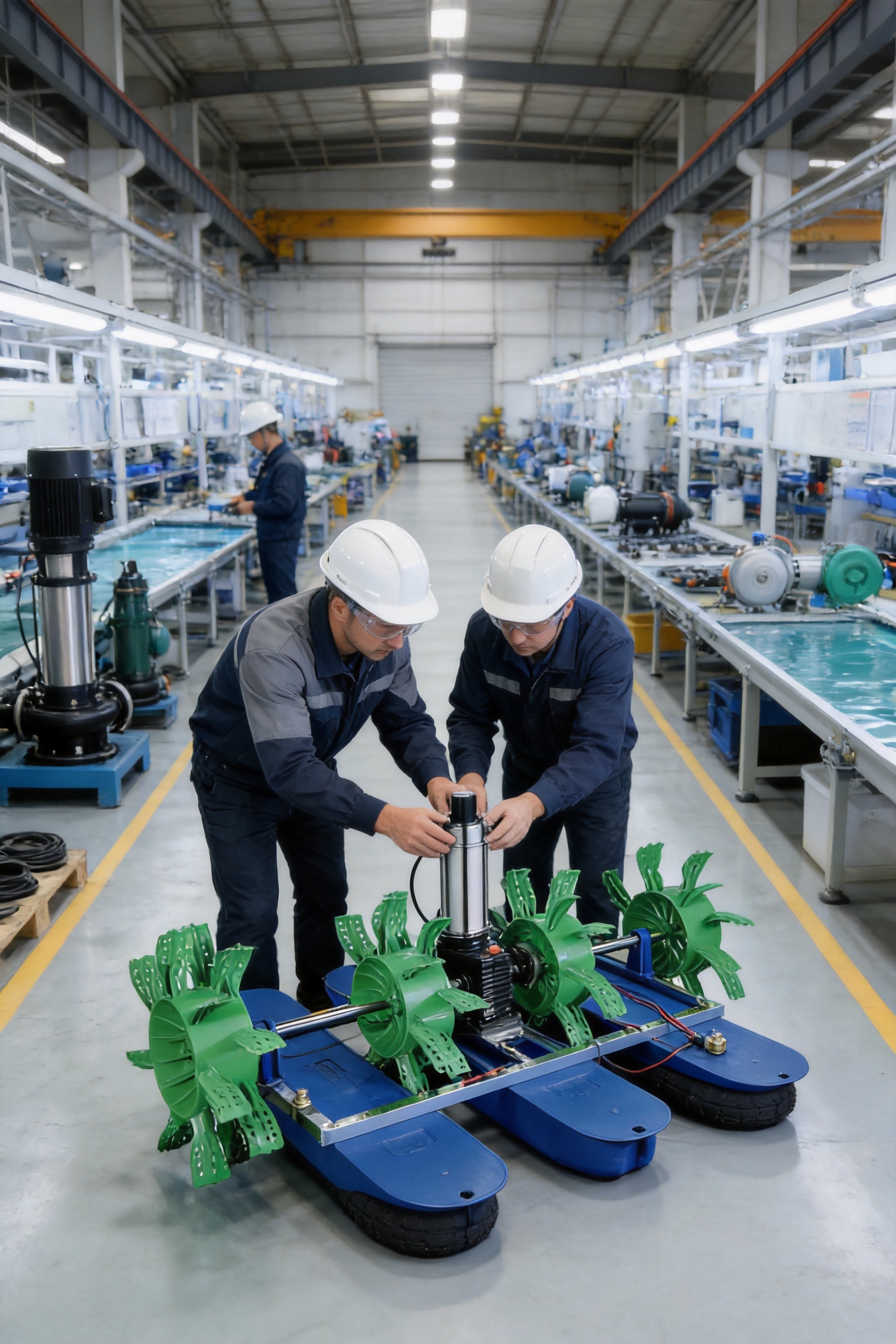
Modern aquaculture operations depend on reliable water movement and continuous oxygen management. As stocking densities increase, the demand for efficient aeration becomes more important than ever. Fish, shrimp, and other aquatic species consume dissolved oxygen continuously, while organic matter, feed residues, algae, and microbial activity place additional pressure on pond oxygen levels. A properly selected aerator must therefore do more than splash water. It must promote circulation, improve oxygen transfer, operate reliably for extended periods, and remain practical for farm owners, distributors, and equipment integrators.
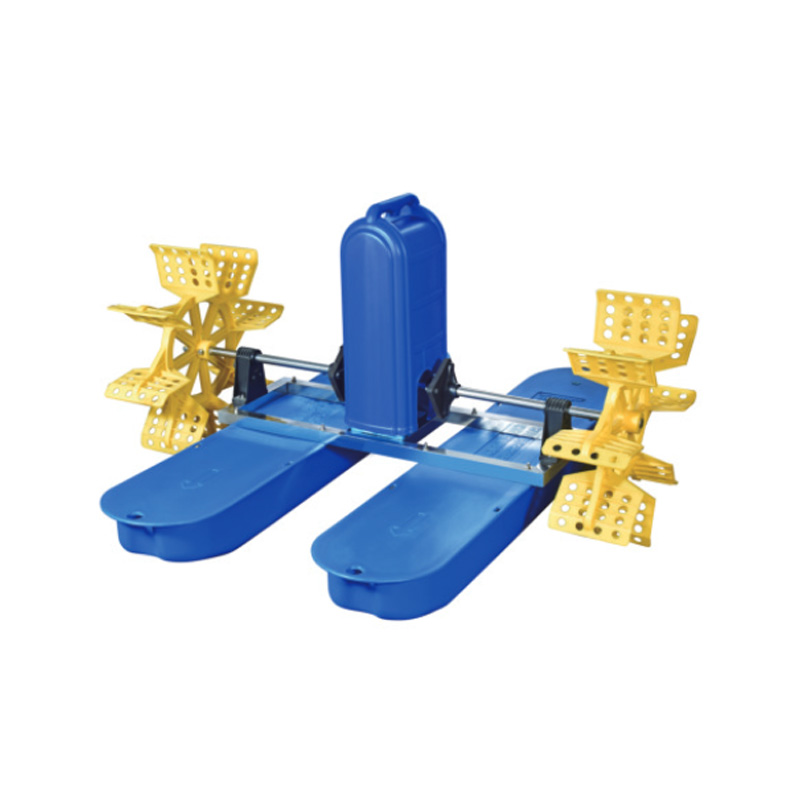
The Water-Cooled Super Impeller Paddle Wheel Aerator is designed to address these requirements through a combination of paddle wheel aeration, an optimized super impeller, and a water-cooled motor system. Developed for demanding pond environments, the unit generates a strong water projection pattern while distributing oxygen across a broad area. Its design is particularly suitable for deep ponds, shrimp farms, fish ponds, and high-density aquaculture facilities where stable oxygen levels are essential for productivity and animal health.
Compared with a conventional paddle wheel aerator, the product uses an upgraded impeller structure developed around fluid dynamics principles. The impeller is engineered to drive water outward and create a wider circulation pattern. This helps move oxygenated surface water through a larger portion of the pond and supports more consistent dissolved oxygen distribution. The water-cooled motor further supports long operating periods by using the surrounding pond water to assist heat dissipation.
Manufactured by Zhejiang ZhenTai Mechanical and Electrical Co., Ltd., the aerator forms part of a broader product range that includes floating aerators, impeller aerators, water wheel aerators, submersible pumps, water pumps, and air blowers. The company’s experience across more than 90 products in 10 series gives it a practical foundation for serving aquaculture, irrigation, drainage, environmental protection, and water management applications.
Why Efficient Aeration Matters in Modern Aquaculture
Dissolved oxygen is one of the most important operating parameters in a fish or shrimp pond. Aquatic animals need oxygen for respiration, while beneficial microorganisms need oxygen to decompose organic material. When oxygen levels fall, animals may gather near the water surface, reduce feeding activity, grow more slowly, or become vulnerable to disease. Severe oxygen depletion can result in significant stock losses.
Oxygen demand is rarely constant. It may rise during the night as photosynthetic activity stops, after heavy feeding, during periods of high temperature, or when a sudden change in weather affects algae and pond biology. In high-density production systems, natural oxygen replenishment is often insufficient. Mechanical aeration is therefore used to supplement natural oxygen transfer and to move water through areas where oxygen may otherwise become depleted.
A good aerator performs two related functions. First, it increases the contact between air and water, allowing oxygen to enter the pond. Second, it creates water movement that distributes the oxygenated water. An aerator with strong splash but limited circulation may only improve conditions near the machine. An aerator with a well-designed circulation pattern can help move oxygen throughout a larger area and reduce stagnant zones.
The Water-Cooled Super Impeller Paddle Wheel Aerator is designed around this broader understanding of aeration. Its paddle wheel and super impeller work together to project water, expose more water to atmospheric oxygen, and create continuous circulation. This makes it suitable for operators who need both oxygen transfer and active water movement rather than simple surface agitation.
Product Overview
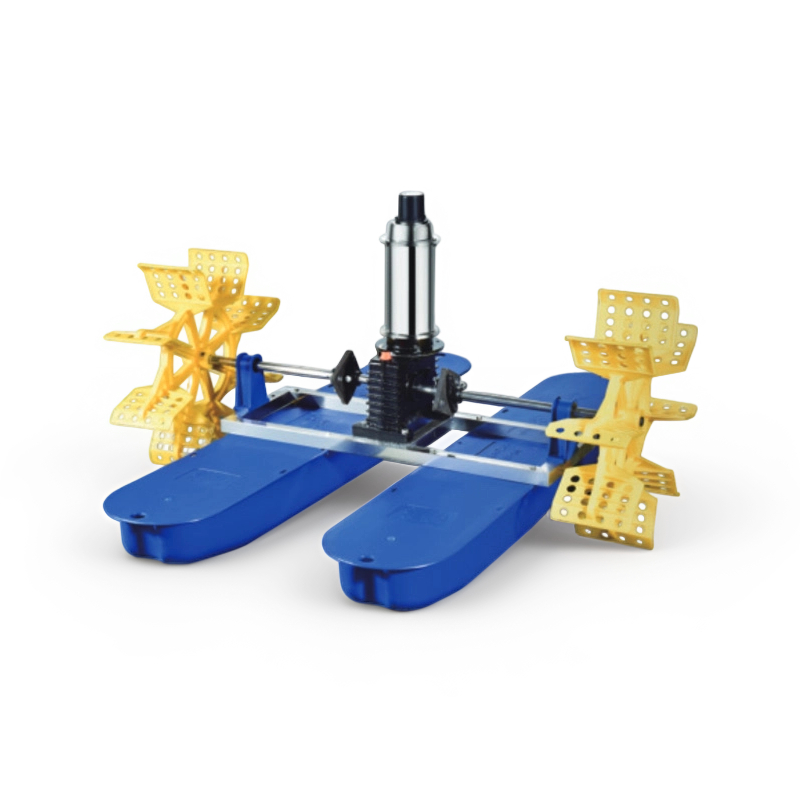
The product is a paddle wheel aerator equipped with an optimized super impeller and a water-cooled motor. The paddle wheel action lifts and throws pond water, while the impeller structure enhances the intensity and width of water projection. As water droplets and streams interact with the air, oxygen transfer is promoted. The resulting circulation helps carry oxygenated water away from the equipment and brings lower-oxygen water back toward the aeration zone.
The design is especially relevant to deep ponds and intensive aquaculture applications. In a deeper pond, oxygen distribution can be uneven because the surface and lower water layers may have different oxygen conditions. Strong water circulation can help reduce this separation. In high-density shrimp farming, where oxygen demand can change rapidly, a high-output aerator can provide an important layer of operational security.
The water-cooled motor is another central feature. Rather than relying only on air movement around the motor housing, the system uses water as part of the cooling process. This assists heat dissipation during operation and supports stable performance during extended use. Proper cooling is important because motors operating in hot and humid environments may experience increased thermal stress, particularly when running for long hours during warm weather.
The equipment is available in several configurations, including 0.75 kW, 1.1 kW, and 1.5 kW versions. The listed voltage options include 220 V and 380 V, allowing buyers to select a configuration that matches the available electrical infrastructure. The product range also gives distributors and farm operators flexibility when matching aerator capacity to pond size, stocking density, and operating conditions.
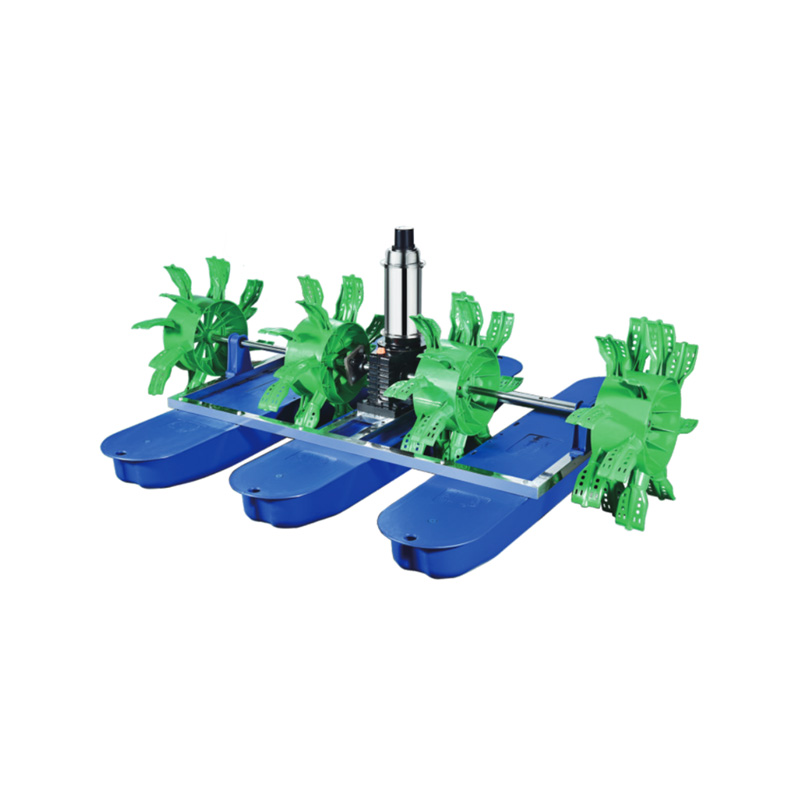
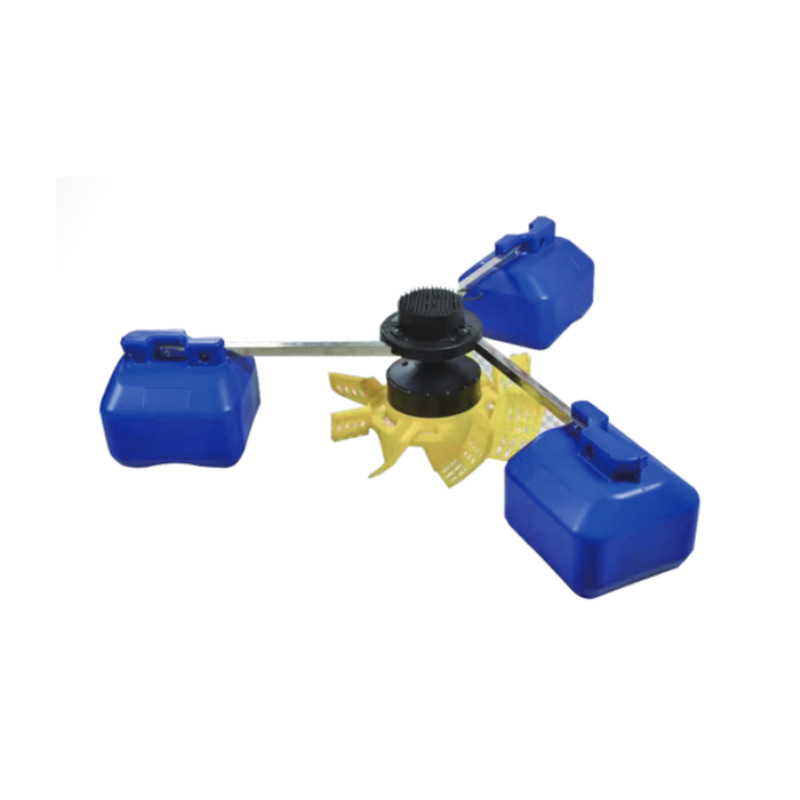
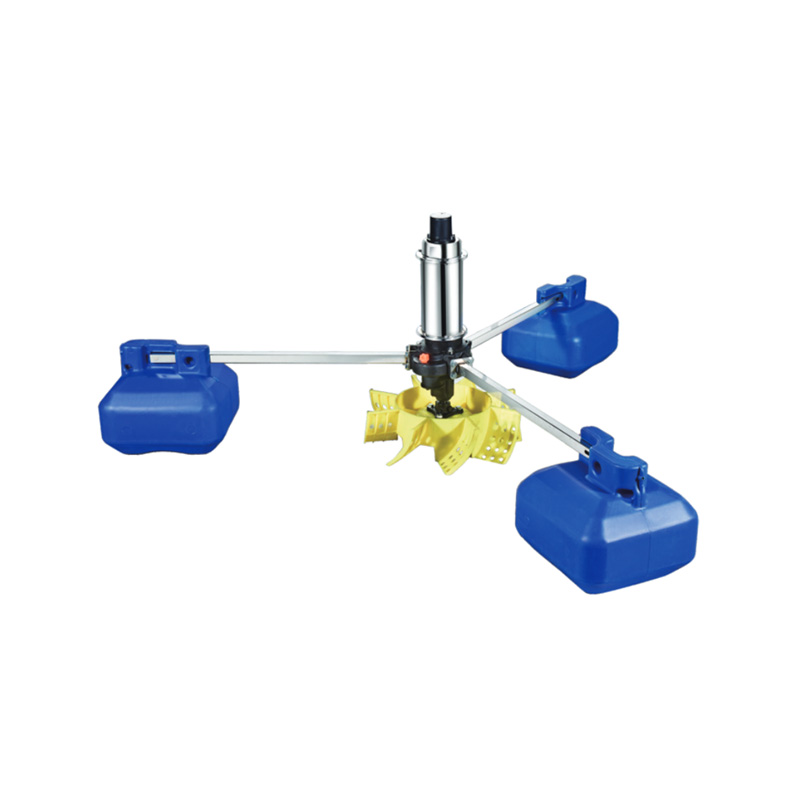
Water Cooled Super Impeller Paddle Wheel Aerator
Super Impeller Technology and Water Projection
The super impeller is the principal upgrade over a traditional paddle wheel structure. Its geometry has been optimized using fluid dynamics principles to improve how water is captured, accelerated, and projected. Instead of relying only on basic paddle rotation, the impeller is intended to create stronger and more organized water movement.
When the impeller rotates, it transfers mechanical energy to the surrounding pond water. The water is projected outward in a pattern that increases the active circulation zone. This action contributes to two important aeration effects: water is exposed to the atmosphere, and oxygenated water is transported across the pond surface. The wider circulation pattern can help reduce localized oxygen concentration differences.
A stronger projection pattern may also improve the practical coverage of the machine. In a pond with multiple aerators, wider circulation can support better coordination between units. In a smaller installation, it may help the farm operator obtain useful water movement without placing the equipment excessively close to pond edges. Actual coverage depends on pond shape, depth, aerator placement, weather, stocking conditions, and other operating factors, so installation should be planned for the specific site.
The impeller design also has value in applications where water movement is as important as oxygen input. Shrimp ponds, for example, can develop areas where organic material accumulates or where water circulation is weaker. By continuously moving the water, the aerator can assist the overall pond management strategy. It should not be viewed as a replacement for water-quality monitoring, sludge management, or proper feeding practices, but it can be an important mechanical component within a complete production system.
Compared with a basic paddle wheel aerator, the super impeller configuration is positioned as a higher-output option. Its purpose is not simply to increase rotation speed. The focus is on using the impeller structure to improve the way energy is transferred to the water. This design approach can help distributors offer an upgraded product to farms that require stronger circulation and more demanding aeration performance.
Fluid Dynamics as a Design Principle
Fluid dynamics provides a useful framework for understanding the product’s operating concept. Water movement is affected by impeller shape, blade angle, rotational speed, immersion depth, resistance from the surrounding water, and the geometry of the discharge path. A carefully designed impeller can produce a more useful flow pattern than a simple rotating element with less controlled water engagement.
The objective is to generate water movement that is strong enough to support oxygen transfer and circulation while maintaining practical power efficiency. The listed performance data show power efficiency values of at least 1.25 kg O₂/kWh for the models provided. This figure indicates the relationship between oxygen transfer and electrical input under the relevant test conditions. Buyers should confirm detailed test standards and site-specific performance expectations before final system design.
The oxygen transfer rate listed for the available models ranges from at least 1.10 kg O₂/h to at least 1.90 kg O₂/h. These values provide a basis for comparing configurations, although actual results can vary according to water temperature, salinity, altitude, pond depth, water quality, and operating conditions. A professional selection process should consider the complete farm system rather than relying on motor power alone.
Water-Cooled Motor for Stable Long-Term Operation
Aquaculture aerators often operate in challenging conditions. They may run through the night, during periods of high temperature, or for extended periods when dissolved oxygen levels are unstable. The motor must therefore tolerate continuous work while remaining protected from excessive heat.
The water-cooled motor system uses the surrounding water to assist thermal management. As the aerator operates, the cooling arrangement helps remove heat from the motor and supports more stable working conditions. This is particularly useful in warm climates, where ambient air temperature can make conventional air cooling less effective. It also suits farms where aerators operate for long schedules and where maintenance access may be limited.
Stable motor temperature can support several practical benefits. It may help reduce thermal stress on internal components, support consistent output, and improve operational confidence during high-demand periods. Cooling does not eliminate the need for correct installation or maintenance. Electrical connections must remain properly protected, the equipment must be securely positioned, and the motor should be operated within its specified conditions.
The water-cooled design also reflects the product’s application-oriented engineering. Rather than treating the motor and impeller as separate elements, the system is designed as a complete pond aeration unit. The motor delivers the mechanical power, the impeller converts that power into water movement, and the cooling arrangement helps the motor continue working in the pond environment.
Suitability for Deep Ponds and High-Density Farms
Deep ponds can present special oxygen distribution challenges. Surface aeration may not automatically deliver oxygen to every part of the water column. Strong circulation is therefore important because it can help move water between different pond zones. While the aerator does not replace independent water-quality testing or supplemental aeration methods where necessary, its wider water projection can support a more active circulation pattern.
High-density aquaculture operations also need equipment that can respond to elevated oxygen demand. More animals per unit of water generally means greater respiration and a smaller margin for error when oxygen levels decline. The super impeller paddle wheel aerator is intended for this type of environment, providing higher-output options and continuous water movement.
Shrimp farms may benefit from the combination of oxygen transfer and circulation. Shrimp are sensitive to changes in water quality, and farm managers often need to maintain stable conditions across large pond areas. Positioning aerators to create a planned circulation route can assist in distributing oxygenated water and supporting more uniform pond conditions.
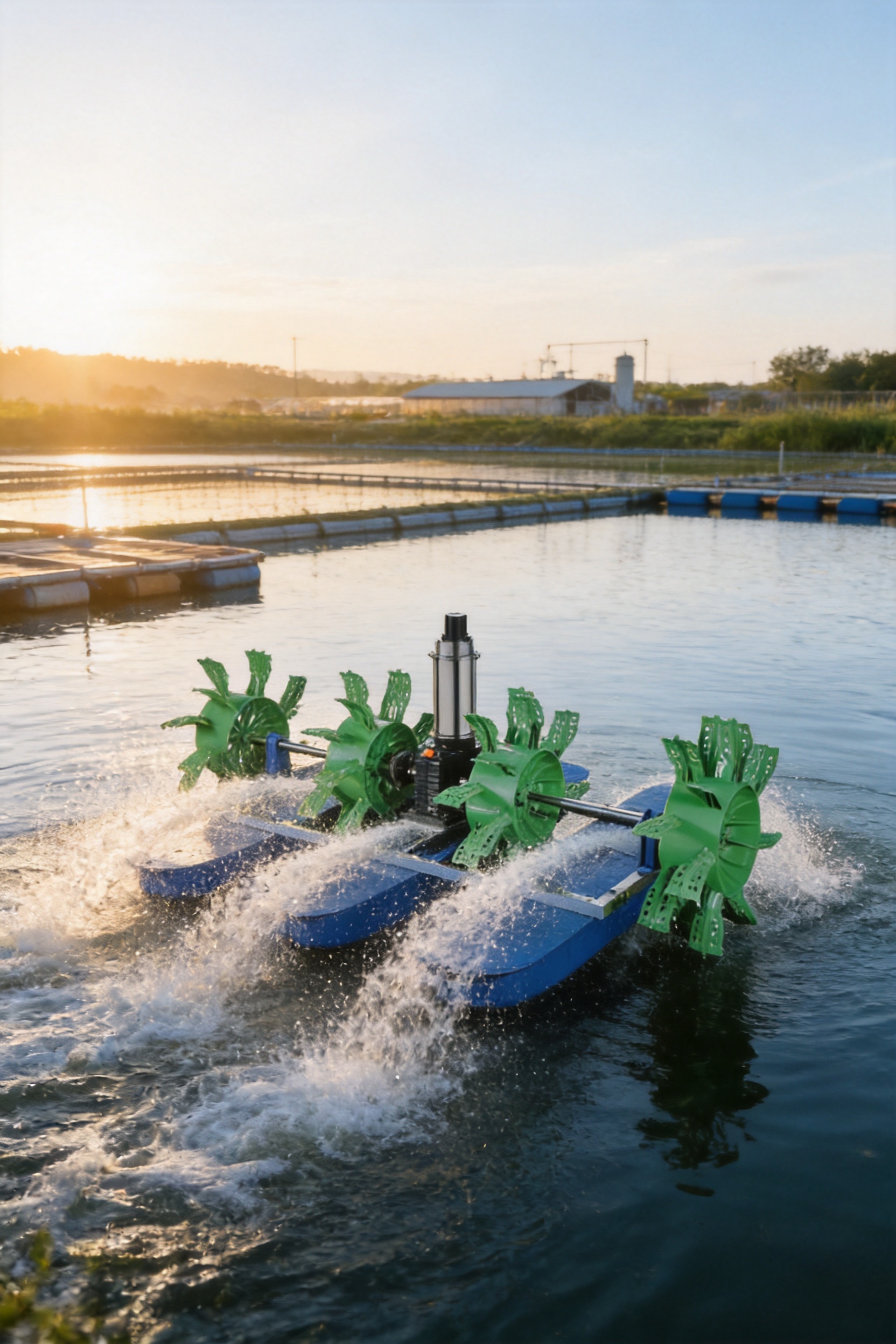
Performance Specifications
The following table summarizes the product information supplied for the available configurations. The performance values should be understood as listed reference data. Final performance depends on test conditions and the operating environment.
| Model | Voltage | Power | Oxygen Transfer Rate | Power Efficiency | No-Load Noise | Weight | Listed 20-Container Quantity |
|---|---|---|---|---|---|---|---|
| ZT-0.75 | 380 V | 0.75 kW | ≥1.10 kg O₂/h | ≥1.25 kg O₂/kWh | ≤78 dB(A) | 80 kg | 85 units |
| ZT-1.1 | 380 V | 1.1 kW | ≥1.25 kg O₂/h | ≥1.25 kg O₂/kWh | ≤80 dB(A) | 80 kg | 85 units |
| ZT-1.5 | 220 V | 1.5 kW | ≥1.90 kg O₂/h | ≥1.25 kg O₂/kWh | ≤80 dB(A) | 100 kg | 70 units |
| ZT-1.5 | 380 V | 1.5 kW | ≥1.90 kg O₂/h | ≥1.25 kg O₂/kWh | ≤80 dB(A) | 100 kg | 70 units |
The repeated ZT-1.5 model designation reflects two voltage configurations rather than two different power ratings. Buyers should specify the required voltage clearly when placing an order. Electrical compatibility is an essential part of equipment selection, particularly for farms using different power supplies across separate ponds or facilities.
The listed noise values are no-load reference values. Operating noise may vary when the aerator is installed in water and working under load. Noise management may be relevant for farms near residential areas, worker accommodation, or environmentally sensitive locations. Correct installation and regular maintenance can also help avoid unnecessary vibration and abnormal noise.
Advantages Over Conventional Aeration Equipment
Wider Water Circulation
A conventional paddle wheel can create useful surface agitation, but its circulation pattern may be more limited depending on its paddle and impeller geometry. The super impeller configuration is designed to project water more strongly and across a wider area. This broader movement can help distribute oxygen and reduce stagnant sections of the pond.
Combined Aeration and Circulation
The product is not designed solely to introduce air at one point. It continuously moves water while promoting contact with the atmosphere. This combined action is valuable in larger or deeper ponds, where oxygen must be carried away from the aerator rather than remaining concentrated near the machine.
Water-Cooled Motor Operation
The water-cooled motor supports heat dissipation during long-term operation. Compared with equipment that depends only on ambient air cooling, a water-cooled arrangement is well suited to warm and humid aquaculture environments. Stable thermal management can be particularly useful during summer operation and overnight aeration schedules.
Multiple Power and Voltage Options
The 0.75 kW, 1.1 kW, and 1.5 kW configurations allow buyers to select a suitable output level. The availability of 220 V and 380 V versions helps accommodate different electrical systems. This flexibility supports distributors serving multiple markets and farm operators expanding their installations in stages.
Application Flexibility
The aerator can be used in fish ponds, shrimp farms, deep ponds, and intensive aquaculture environments. Its broad application range makes it suitable for farm owners, equipment distributors, engineering contractors, and OEM partners. The same basic product platform can be considered for different production layouts after appropriate capacity and installation assessment.
Practical Export and Distribution Value
The product is supplied by a manufacturer with a broad water equipment portfolio. This can simplify sourcing for buyers who need aerators together with pumps or other water-handling products. A distributor may be able to develop a more complete aquaculture equipment offering instead of purchasing each product category from unrelated suppliers.
Manufacturing Strengths and Engineering Capability
Zhejiang ZhenTai Mechanical and Electrical Co., Ltd. was established in 2018 and is located in Wenling, Zhejiang Province, China. The company specializes in research, development, and production across more than 90 products in 10 series. Its portfolio includes floating aerators, impeller aerators, water wheel aerators, water pumps, submersible pumps, and air blowers.
This product breadth is relevant to the manufacturing of the Water-Cooled Super Impeller Paddle Wheel Aerator. Aeration equipment combines mechanical structures, motor systems, water-contact components, electrical performance, and application-specific installation requirements. Experience with related pumps and blowers can contribute to a more integrated understanding of fluid movement and motor-driven water equipment.
The product’s super impeller is described as an optimized fluid dynamics structure. This indicates that product development is focused on water movement rather than only on motor size. The company’s stated emphasis on continuous technological innovation supports the development of upgraded aerator designs for changing aquaculture requirements.
A strong manufacturing process for this type of equipment should begin with application analysis. Engineers need to understand the required oxygen transfer, water depth, pond layout, power availability, operating schedule, and environmental conditions. These factors influence the choice of motor power, voltage, impeller structure, and installation method.
Product development should then connect design objectives with production practicality. The impeller must be shaped for consistent water engagement, the motor assembly must be suited to the cooling method, and the complete unit must be robust enough for pond use. Manufacturing consistency is important because small differences in alignment, balance, or assembly can influence vibration, noise, and long-term reliability.
Quality control is also essential for equipment operating in water. Motors and electrical components require appropriate protection, while mechanical parts must be checked for correct fit and secure assembly. Before shipment, products should be inspected against the applicable technical requirements, including power configuration, operating condition, overall assembly, and packaging protection.
Although specific certifications and test standards are not provided in the supplied product information, buyers can request the relevant inspection documents, test reports, electrical details, spare-parts information, and installation guidance during the purchasing process. This is especially important for international distributors and OEM customers who may have market-specific requirements.
Product Portfolio as a Manufacturing Advantage
A manufacturer that produces aerators, pumps, and air blowers can offer customers a wider technical solution. Aquaculture projects frequently require several types of water-handling equipment. Aerators may be used together with pumps for water exchange, drainage, circulation, or irrigation. Access to related products can simplify technical communication and procurement.
The company’s range also demonstrates familiarity with different water applications. Its products are used in aquaculture, fish pond aeration, farmland irrigation, building foundation drainage, environmental protection, chemical industries, household water supply, ecological landscape lakes, and flood control and drainage. These fields require different flow patterns, operating conditions, and equipment configurations.
This cross-application experience can support OEM and ODM cooperation. Buyers may request product adjustments, private labeling, packaging changes, voltage configurations, or application-specific technical support, subject to confirmation with the manufacturer. A direct discussion is recommended before ordering customized products because requirements can affect tooling, production schedules, testing, and minimum order quantities.
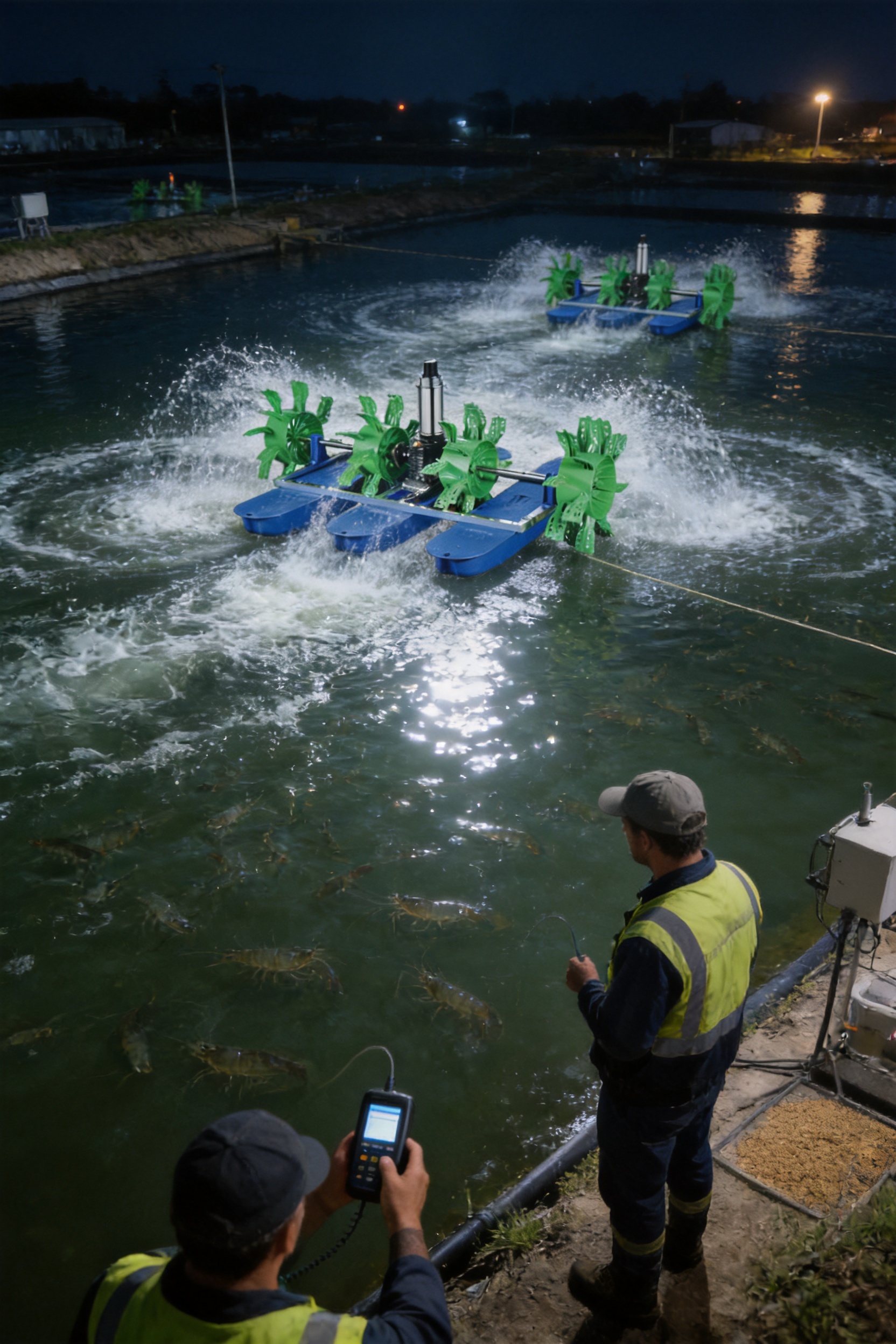
Installation and Operating Guidance
The aerator should be installed securely on the pond surface before operation. A stable installation helps maintain the intended position and reduces unwanted movement. The equipment should be located so that the water projection pattern supports the planned pond circulation route. Operators should consider pond boundaries, corners, inlets, outlets, feeding zones, and areas where organic material may accumulate.
Before connecting power, inspect the unit for visible damage and confirm that the voltage matches the available electrical supply. The 220 V and 380 V configurations are not interchangeable without proper technical confirmation. Electrical installation should be completed by qualified personnel, with suitable protection against moisture and accidental contact.
The aerator should be started only after confirming that the motor, impeller, and supporting structure are correctly positioned. During operation, observe the water projection, vibration, sound, and motor behavior. Abnormal noise, excessive vibration, reduced water movement, or unusual heating should be investigated promptly.
Operating schedules should be based on pond conditions. Many farms operate aerators during the night or during periods of high oxygen demand, but the exact schedule depends on stocking density, feeding, weather, water temperature, algae activity, and dissolved oxygen measurements. Automated controls or monitoring systems may be used where appropriate.
Regular maintenance supports reliable operation. The equipment should be checked for debris, biological growth, loose fasteners, cable damage, and changes in water projection. Cleaning should be performed according to the manufacturer’s instructions. Before maintenance, isolate the power supply and ensure that the aerator cannot start unexpectedly.
Because the product operates in a pond environment, installation planning should include worker safety. Personnel should avoid approaching moving components, and maintenance should never be performed while the unit is energized. Appropriate barriers, warning signs, and operating procedures are recommended for commercial farms.
Using the Aerator in Shrimp Farming
Shrimp farming often requires careful control of oxygen, organic matter, and water movement. As shrimp biomass increases, oxygen demand rises. Feeding also introduces organic material that can increase microbial oxygen consumption. The aerator can help respond to these demands by continuously agitating the water, transferring oxygen at the surface, and moving oxygenated water through the pond.
Placement is particularly important in shrimp ponds. Aerators may be arranged to establish a circular or directional water flow that helps keep the pond active. The correct arrangement depends on pond shape and the farm’s management approach. Several units may be coordinated to avoid dead zones and to support the movement of suspended material toward designated collection areas.
The aerator should be used together with dissolved oxygen meters and other water-quality monitoring tools. Mechanical aeration improves the physical environment, but operators still need to monitor pH, temperature, ammonia, nitrite, salinity where applicable, and other relevant parameters. Good aeration is one part of a complete shrimp production system.
The 1.5 kW configuration, with a listed oxygen transfer rate of at least 1.90 kg O₂/h, may be considered for applications requiring higher output. The 0.75 kW and 1.1 kW configurations may be suitable for different pond sizes or for installations where several smaller units are preferred. Final selection should be based on farm calculations and the manufacturer’s technical advice.
Using the Aerator in Fish Ponds
Fish ponds may experience oxygen depletion after feeding, during hot weather, or before sunrise. A paddle wheel aerator can provide visible water movement and help improve oxygen distribution. The super impeller design is useful when the operator wants a stronger circulation pattern than a basic surface agitator can provide.
In larger ponds, multiple aerators can be positioned to create overlapping circulation zones. The installation should avoid directing excessive flow toward pond banks, liners, or structures that could be damaged by continuous water impact. The objective is to maintain useful movement while protecting the pond infrastructure.
Fish species, stocking density, feeding rate, and water depth all affect the required aeration capacity. Buyers should not select equipment based only on horsepower or kilowatts. Oxygen transfer data, pond conditions, operating hours, and the availability of backup equipment should also be considered.
Selection Guide for Buyers and Distributors
When selecting a model, begin by identifying the electrical supply. The supplied specifications include 380 V versions for the 0.75 kW and 1.1 kW models, and both 220 V and 380 V versions for the 1.5 kW model. Confirm whether the farm uses single-phase or three-phase power and verify compatibility with the exact product configuration.
Next, evaluate pond characteristics. Important factors include pond surface area, average and maximum depth, shape, water salinity, stocking density, species, expected biomass, and local climate. A deep pond or high-density shrimp pond may require stronger circulation and a carefully planned number of aerators.
Consider the operating schedule and redundancy requirements. Farms that rely heavily on mechanical aeration may benefit from backup units or spare parts. The cost of a backup should be compared with the potential cost of oxygen depletion and stock loss. Distributors can add value by offering installation planning, replacement components, technical support, and operating guidance.
Buyers should also ask about packaging, lead time, container loading, spare parts, warranty terms, electrical documentation, and after-sales support. The listed container quantities are useful for preliminary logistics planning, but final loading depends on packaging dimensions and shipment arrangements. Confirm all logistics details before issuing a purchase order.
OEM and ODM buyers should provide clear product requirements. These may include branding, labels, colors, manuals, voltage, plug or cable requirements, packaging language, and target-market documentation. A detailed technical agreement helps prevent misunderstandings and allows the factory to plan production and inspection appropriately.
Maintenance and Service Considerations
Preventive maintenance is generally more economical than emergency repair. Operators should establish a regular inspection schedule based on running hours and pond conditions. The schedule may include checking the impeller, motor housing, support frame, fasteners, cables, and water-flow pattern.
Debris can affect the impeller and reduce water projection. Algae, roots, ropes, feed bags, and other foreign material should be removed safely after power isolation. If the flow pattern changes, the operator should determine whether the cause is obstruction, wear, loose assembly, or a change in water level.
Vibration should be treated as an early warning sign. It may indicate imbalance, a loose component, an installation problem, or mechanical wear. Continuing to operate a severely vibrating unit can increase stress on the motor and supporting structure. Early inspection can help prevent a minor problem from becoming a major failure.
The water-cooled motor system should be operated only under the conditions specified by the manufacturer. Operators should not modify cooling passages, electrical components, or structural supports without technical approval. For replacement parts, it is best to provide the model, voltage, power rating, serial information if available, and a description of the issue.
For international customers, a dependable supplier should be able to support communication about installation, spare parts, and troubleshooting. Zhejiang ZhenTai Mechanical and Electrical Co., Ltd. states that it provides professional technical support and customized OEM/ODM services for customers worldwide. Buyers should confirm the scope and response process of after-sales support before final purchase.
Environmental and Operational Value
Efficient aeration can contribute to better use of pond infrastructure. When oxygen is distributed more effectively, farm operators may be able to manage larger production areas with a planned aeration layout. The goal is not simply to run equipment continuously at maximum output, but to use the appropriate capacity at the appropriate time.
The listed power-efficiency value of at least 1.25 kg O₂/kWh provides a useful basis for comparing oxygen transfer against energy input. Energy consumption remains an important operating cost for aquaculture farms, especially when aerators run overnight or throughout a production cycle. Buyers should compare products using equivalent test conditions and should consider actual local electricity costs.
Motor cooling also supports practical operational stability. A unit that manages heat effectively can be more suitable for warm environments and long operating schedules. Nevertheless, energy efficiency and reliability depend on correct sizing, proper installation, regular cleaning, and appropriate operating controls.
Aeration equipment should be integrated into a wider environmental management plan. Responsible aquaculture includes monitoring water quality, managing feed, reducing unnecessary discharge, maintaining pond infrastructure, and handling sludge appropriately. The aerator supports these objectives by improving water movement and oxygen availability, but it cannot independently solve every water-quality problem.
Why Choose a Specialized Manufacturer
Purchasing from a specialized manufacturer can provide advantages beyond the basic equipment itself. A company involved in research, development, and production can participate in product improvement and provide technical information directly. This is particularly important when an aerator must be adapted to a specific pond, market, or electrical system.
Zhejiang ZhenTai Mechanical and Electrical Co., Ltd. focuses on mechanical and electrical water equipment and offers a product portfolio covering multiple aeration and pumping categories. Its manufacturing base in Wenling, Zhejiang Province, places the company within a region known for mechanical and electrical production. The company’s stated focus on integrity, quality, technological innovation, customized services, and technical support is relevant to international buyers looking for a long-term supply relationship.
The company can serve several customer types. Farm operators may purchase equipment for direct installation. Importers and distributors may seek regular container shipments. Engineering contractors may need aeration products for complete aquaculture projects. OEM partners may require customized packaging or product configurations. Each customer group can discuss its technical and commercial requirements with the manufacturer.
A broad product range can also reduce sourcing complexity. Buyers who need aerators, submersible pumps, water pumps, and air blowers may prefer to coordinate with one supplier for part or all of a project. This can simplify communication, documentation, spare-parts planning, and shipment coordination.
Q&A
What type of product is the Water-Cooled Super Impeller Paddle Wheel Aerator?
It is a paddle wheel aerator equipped with an optimized super impeller and a water-cooled motor. The unit is designed to transfer oxygen into pond water while creating a broad circulation pattern.
What is the main difference between this product and a traditional paddle wheel aerator?
The product uses a specially optimized super impeller developed around fluid dynamics principles. It is intended to generate stronger water projection and wider circulation than a conventional paddle wheel design.
Why is the motor water-cooled?
The water-cooled motor uses surrounding pond water to assist heat dissipation. This supports stable operation during long-term use, particularly in warm aquaculture environments.
Which applications are most suitable for the aerator?
The aerator is suitable for fish ponds, shrimp farms, deep ponds, high-density aquaculture facilities, and other intensive water-culture applications that require oxygen transfer and circulation.
What power ratings are available?
The listed power ratings are 0.75 kW, 1.1 kW, and 1.5 kW. The 1.5 kW configuration is listed in both 220 V and 380 V versions, while the 0.75 kW and 1.1 kW configurations are listed at 380 V.
What oxygen transfer rates are listed?
The listed rates are at least 1.10 kg O₂/h for the ZT-0.75 model, at least 1.25 kg O₂/h for the ZT-1.1 model, and at least 1.90 kg O₂/h for the ZT-1.5 models.
Can the aerator be used in a deep pond?
Yes. The product is specifically described as suitable for deep ponds. However, installation position, water depth, pond shape, and the number of aerators should be evaluated for each site.
Is the aerator suitable for shrimp farming?
Yes. The combination of water projection, oxygen transfer, and circulation makes it suitable for shrimp farming and other high-density aquaculture operations. Operators should use it together with dissolved oxygen and water-quality monitoring.
How should the aerator be installed?
The aerator should be secured on the pond surface before operation. The position should support the desired circulation pattern and should be selected with consideration for pond edges, structures, feeding zones, and other equipment.
What should be checked before operation?
Confirm that the unit is securely installed, the voltage is correct, electrical connections are protected, and the impeller and motor are free from visible damage or obstruction. Qualified personnel should complete electrical work.
Does the manufacturer provide OEM and ODM services?
The company states that it provides customized OEM/ODM services for customers worldwide. Buyers should discuss branding, packaging, voltage, documentation, minimum order quantities, and production requirements directly with the manufacturer.
What other products does the manufacturer supply?
The company supplies floating aerators, impeller aerators, water wheel aerators, submersible pumps, water pumps, air blowers, and other products used in aquaculture, irrigation, drainage, environmental protection, and water management.
Conclusion
The Water-Cooled Super Impeller Paddle Wheel Aerator is designed for aquaculture operators who need more than basic surface agitation. Its optimized super impeller generates strong water projection and supports wider circulation, while the paddle wheel action promotes contact between water and air. The water-cooled motor assists heat dissipation and supports stable operation during long running periods.
With 0.75 kW, 1.1 kW, and 1.5 kW configurations, together with selected 220 V and 380 V options, the product can serve a range of pond installations. Its listed oxygen transfer performance and power-efficiency values provide a useful starting point for technical comparison. Final selection should always take account of pond size, depth, species, biomass, climate, stocking density, and operating strategy.
The product also benefits from the manufacturing capabilities of Zhejiang ZhenTai Mechanical and Electrical Co., Ltd. The company’s experience across more than 90 products in 10 series, its focus on water equipment, and its OEM/ODM and technical-support capabilities make it a potential supply partner for farms, distributors, contractors, and international buyers.
For high-density fish and shrimp production, reliable aeration is an essential part of daily farm management. By combining fluid-dynamics-based impeller development, water-cooled motor operation, practical power options, and a broad manufacturing portfolio, this aerator provides a focused solution for improving oxygen transfer and pond circulation in demanding aquaculture environments.
References
1. Product technical information supplied for the Water-Cooled Super Impeller Paddle Wheel Aerator, including model, voltage, power, oxygen transfer rate, power efficiency, noise, weight, and container data.
2. Manufacturer company profile supplied for Zhejiang ZhenTai Mechanical and Electrical Co., Ltd., including product categories, manufacturing scope, application fields, and OEM/ODM capabilities.
3. General aquaculture engineering principles concerning dissolved oxygen management, mechanical aeration, water circulation, and pond operation.
4. General fluid dynamics principles applied to rotating impellers, water projection, circulation patterns, and energy transfer in mechanical aeration systems.