 English
 Español
 Indonesia
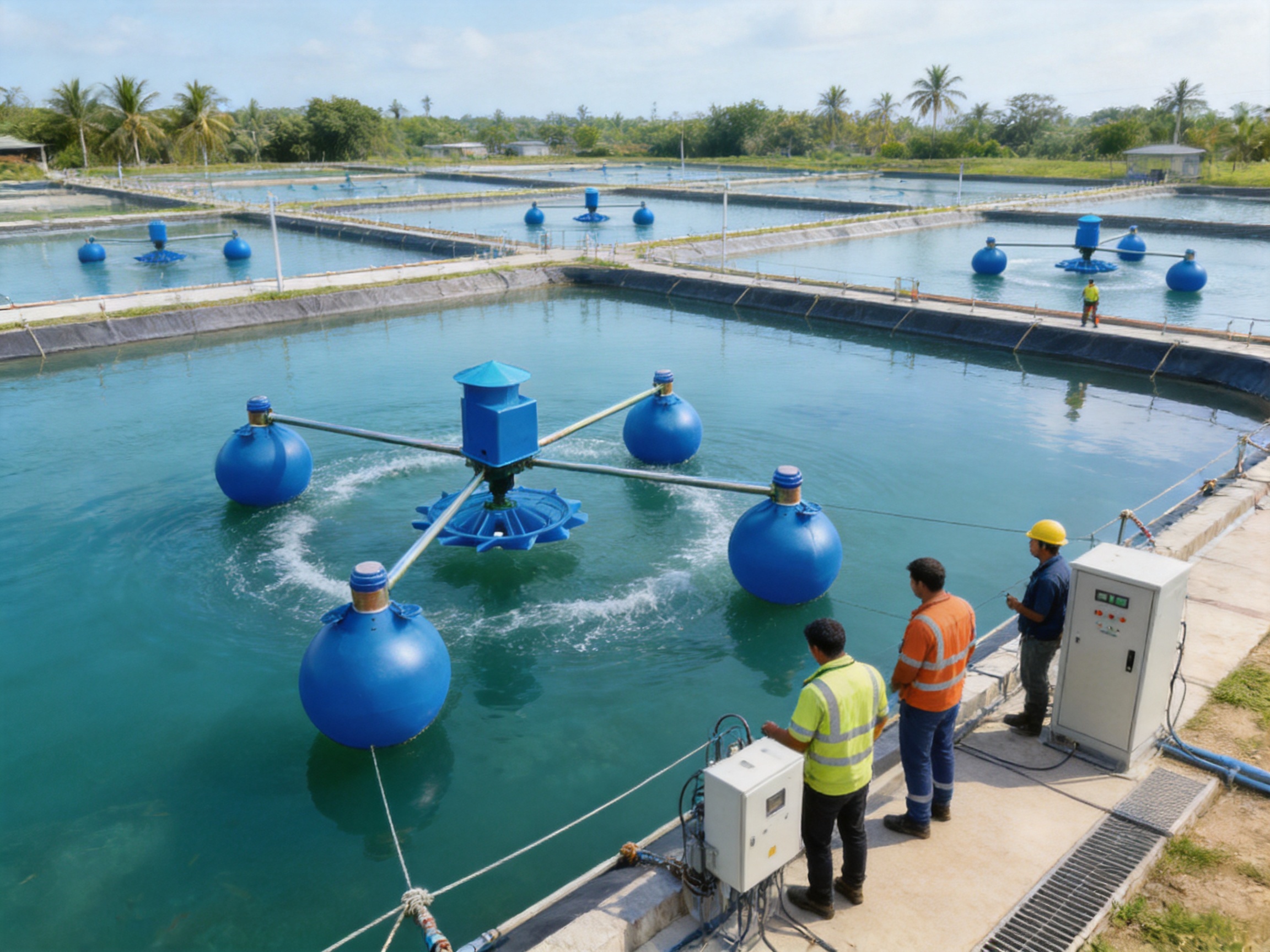
Effective oxygen management is one of the most important requirements in modern aquaculture. Fish, shrimp, beneficial microorganisms, and other aquatic organisms all depend on adequate dissolved oxygen to maintain healthy growth and stable pond conditions. When oxygen levels fall, especially during hot weather, cloudy periods, overcast nights, or periods of intensive feeding, aquatic animals can become stressed and water quality can deteriorate quickly. A dependable aeration system helps pond operators respond to these risks while supporting more consistent production.
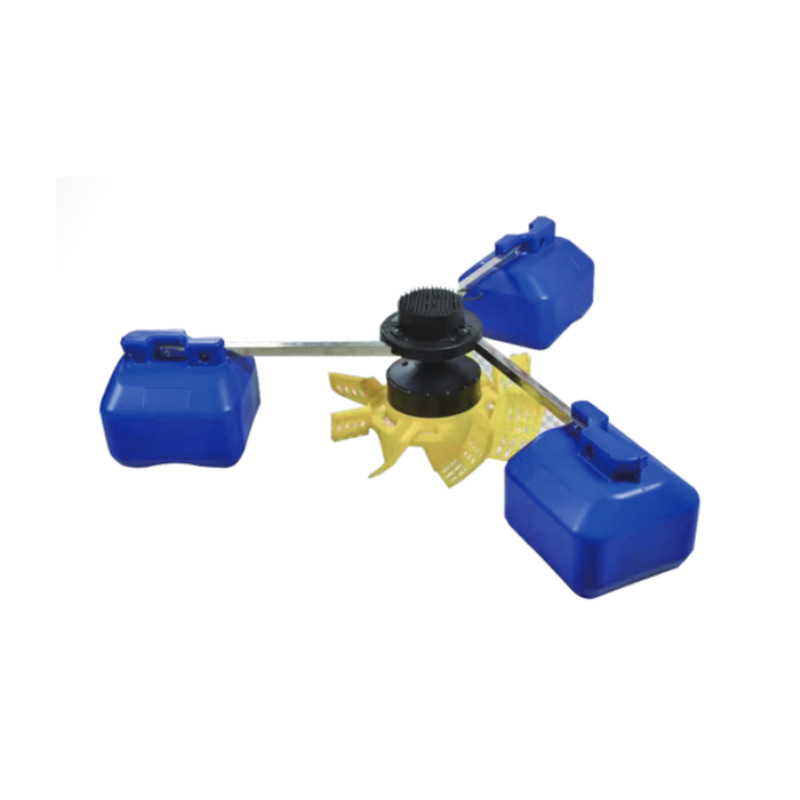
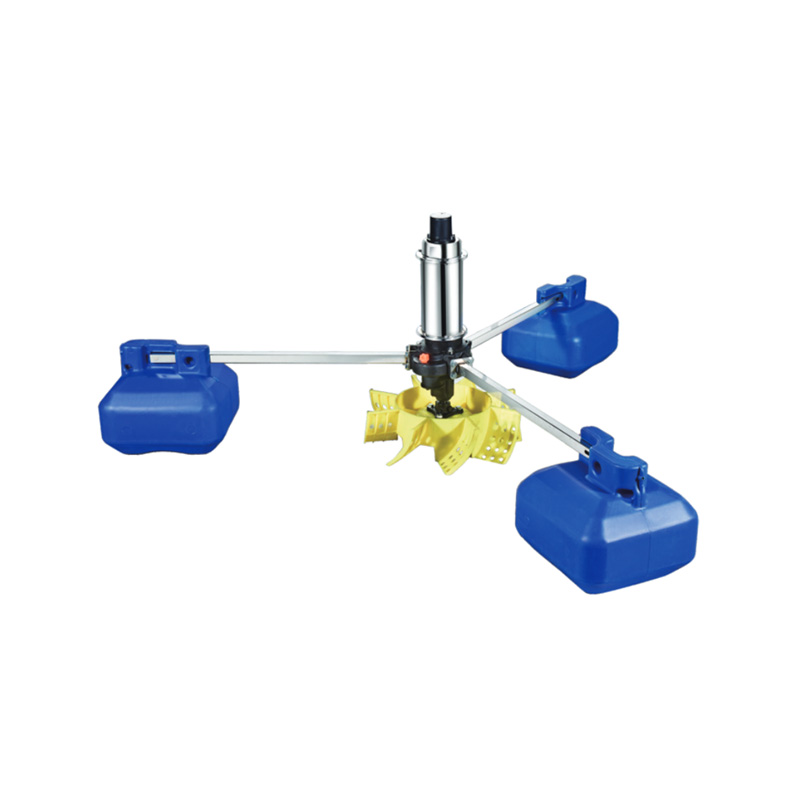
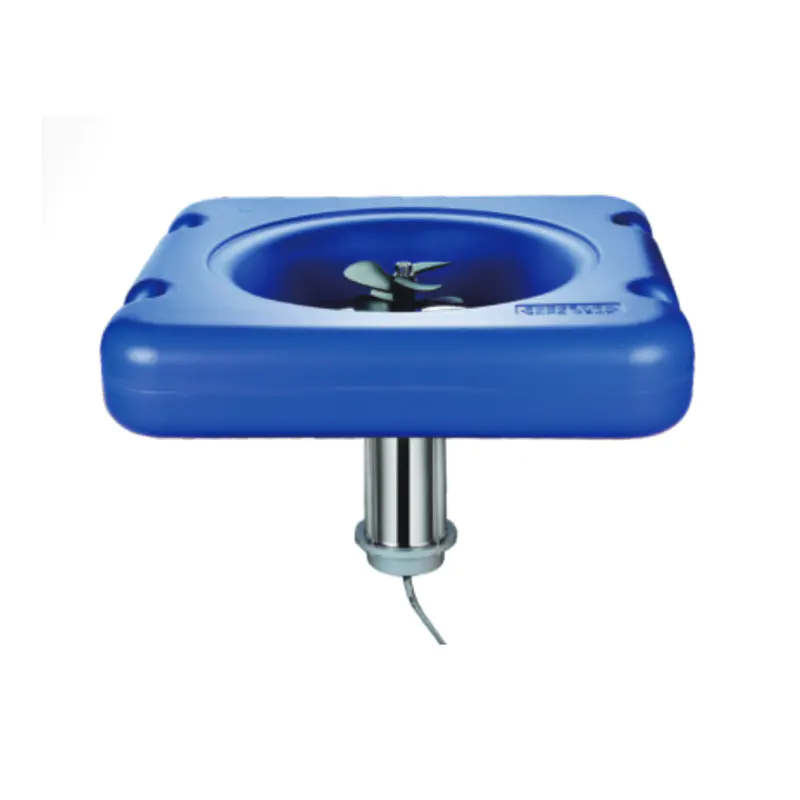
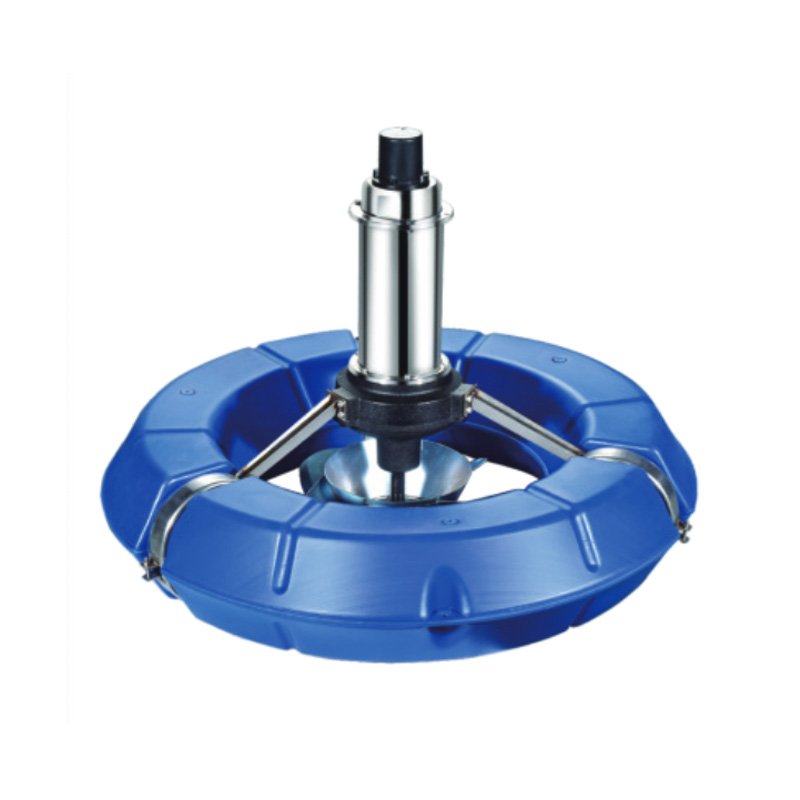
The Surface Floating Impeller Aerator is designed for this purpose. It uses a surface-mounted impeller to stir and agitate pond water, increase contact between water and air, and promote oxygen transfer. Its floating structure enables convenient installation on the water surface, while its modular mechanical design supports practical maintenance and long-term operation. The product is suitable for fish ponds, shrimp ponds, aquaculture farms, ecological water areas, and other applications where surface aeration and water circulation are required.
Unlike a simple water agitator, a well-designed impeller aerator must combine hydraulic performance, mechanical durability, motor reliability, flotation stability, and ease of service. The product described in this article is built around an alloy steel gear system, a non-welded impeller assembly, high-quality copper motor winding, and a PE float. These features are intended to improve operating stability and service life under demanding working conditions.
With power options from 1.1 kW to 3 kW, the aerator can be selected for different pond sizes and operating requirements. It is also available with plastic, stainless steel, or hot-dip galvanized steel plate impellers, allowing buyers to consider application conditions, water quality, durability expectations, and project budget when selecting a configuration.
Why Surface Aeration Matters in Aquaculture
Dissolved oxygen is a critical water-quality parameter in fish and shrimp farming. Aquatic animals consume oxygen continuously through respiration, while organic matter, uneaten feed, and microorganisms also contribute to oxygen demand. During periods of high stocking density or heavy feeding, the oxygen requirement of a pond may increase significantly.
Oxygen stratification can also occur in ponds. The water near the surface may contain more oxygen because it contacts the atmosphere, while deeper water can become oxygen deficient. Organic sediment at the bottom consumes oxygen as it decomposes. If the water remains poorly mixed, oxygen levels can vary substantially from one area of the pond to another.
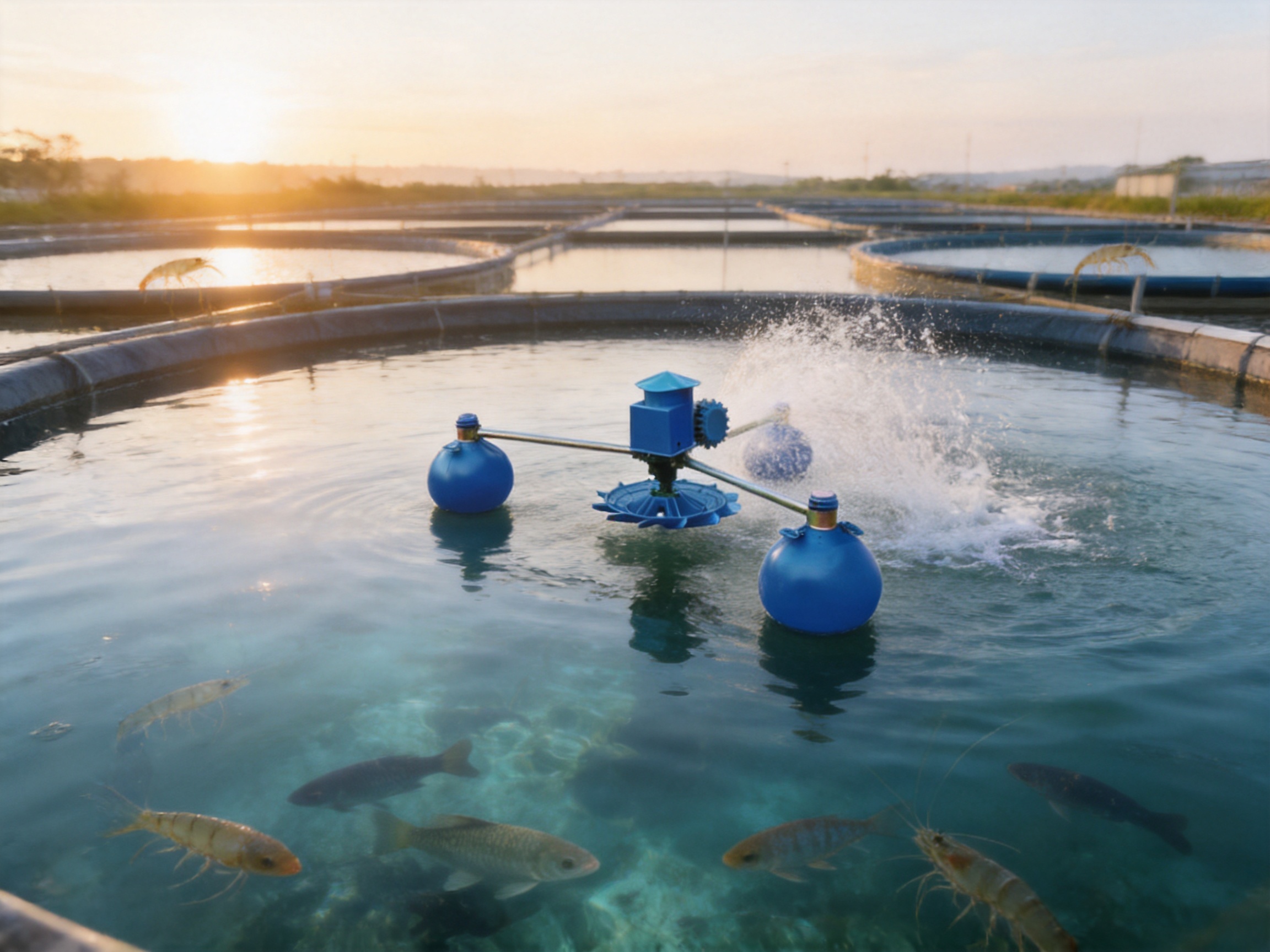
A surface floating impeller aerator addresses these conditions by creating vigorous water movement near the surface. The rotating impeller breaks up the surface and increases the contact area between air and water. At the same time, the movement helps circulate water and distribute oxygenated surface water across a wider area. This combined effect supports more uniform pond conditions than passive water movement alone.
Aeration may be used continuously or according to a farm’s operating schedule. Some farms operate aerators during the night and early morning, when natural photosynthesis is not supplying oxygen. Others use aerators during feeding, periods of high biomass, hot weather, or emergency low-oxygen conditions. The correct operating strategy depends on species, stocking density, water depth, climate, feed loading, and the farm’s water-management plan.
Product Overview
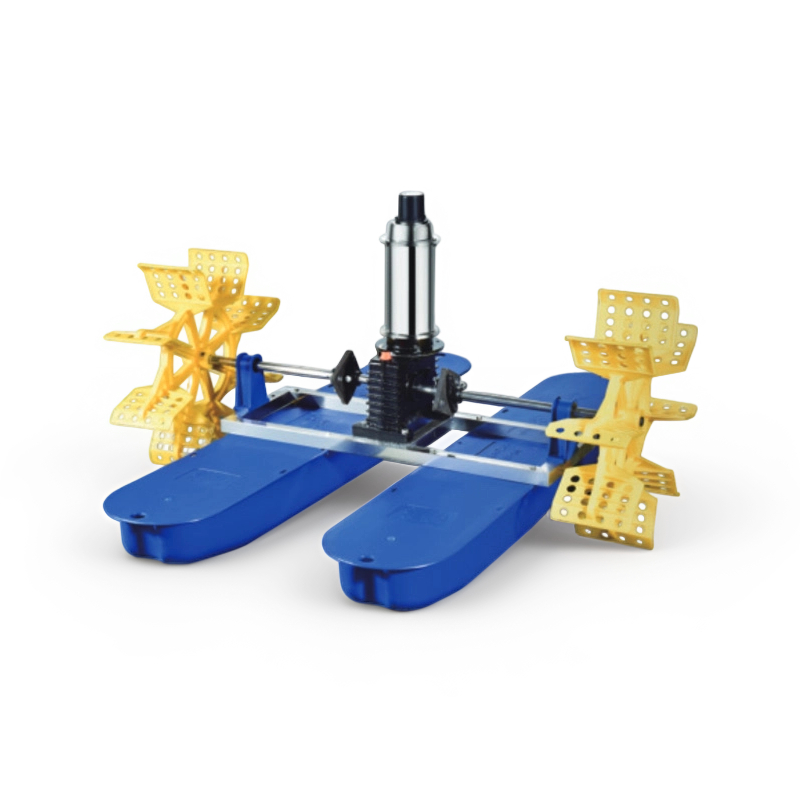
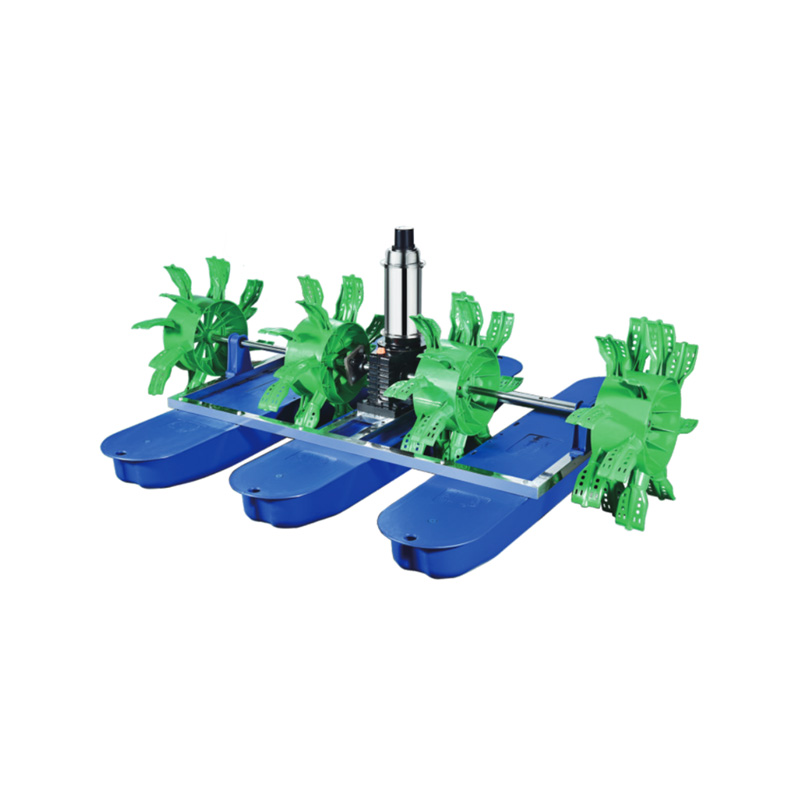
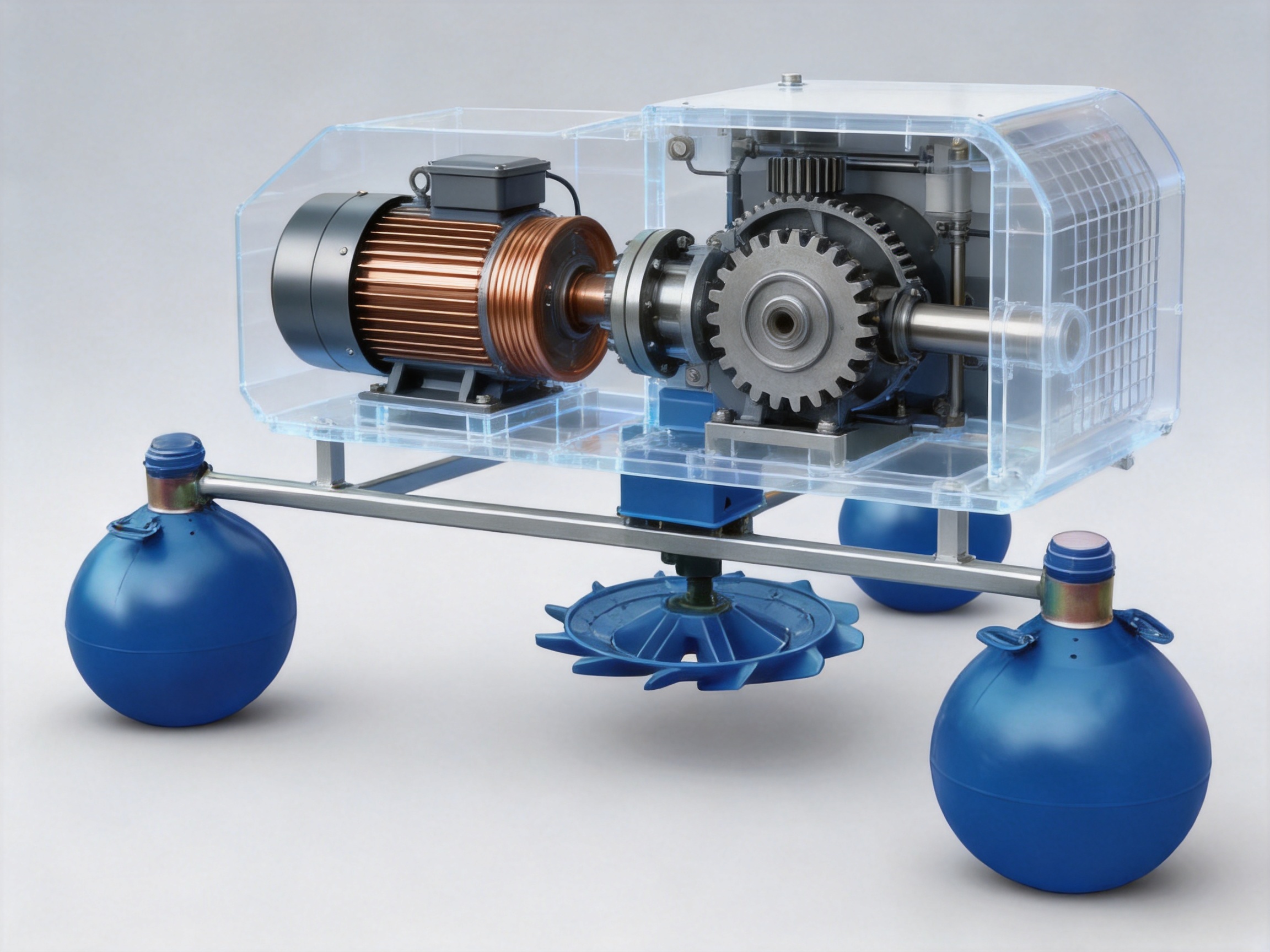
The Surface Floating Impeller Aerator is a floating aquaculture machine driven by an electric motor and gear transmission. The motor supplies rotational energy to the impeller. The gear system transfers this power through the mechanical drive, and the impeller agitates the water surface to facilitate oxygen transfer and water circulation.
The unit is designed around a modular component structure. In practical terms, this means the main functional assemblies can be considered separately during production, inspection, installation, and maintenance. A modular arrangement can help simplify the replacement of serviceable components and make it easier for buyers to specify options for different projects.
The float is made from polyethylene, commonly referred to as PE. This material is suitable for floating equipment because it is lightweight and resistant to water exposure. The floating structure supports the aerator at the water surface while allowing the impeller to remain correctly positioned for operation.
The impeller can be supplied in plastic, stainless steel, or hot-dip galvanized steel plate. These options provide flexibility for different operating environments. Plastic can be selected where light weight and corrosion resistance are priorities. Stainless steel is suitable for buyers seeking a robust metallic option with strong corrosion resistance. Hot-dip galvanized steel plate provides a protective zinc coating for applications requiring a durable steel construction at a controlled cost.
Key Product Specifications
The available models include 1.1 kW, 1.5 kW, and 3 kW configurations. The supplied specification data lists a rated speed of 110 revolutions per minute for the models shown. Both 380 V and 220 V options are listed for the 1.5 kW model, which can help buyers match the equipment to the electrical infrastructure available at the installation site.
| Model | Voltage | Power | Rated Speed | Oxygen Transfer Rate | Power Efficiency | Recommended Load | Weight | Approximate 20-Foot Container Quantity |
|---|---|---|---|---|---|---|---|---|
| ZT-1.1 | 380 V | 1.1 kW | 110 r/min | ≥1.6 kg O₂/h | ≥1.4 kg O₂/kWh | 3–4 mu | 70 kg | 85 units |
| ZT-1.5 | 380 V | 1.5 kW | 110 r/min | ≥2.3 kg O₂/h | ≥1.5 kg O₂/kWh | 4–8 mu | 80 kg | 80 units |
| ZT-1.5 | 220 V | 1.5 kW | 110 r/min | ≥2.3 kg O₂/h | ≥1.5 kg O₂/kWh | 4–8 mu | 80 kg | 80 units |
| ZT-3 | 380 V | 3 kW | 110 r/min | ≥4.5 kg O₂/h | ≥1.5 kg O₂/kWh | 8–12 mu | 100 kg | 80 units |
The load figures in the supplied data are stated in mu, a traditional Chinese area unit. International buyers should confirm the local pond-area conversion, stocking density, water depth, species, and expected oxygen demand before final selection. The stated oxygen transfer and power efficiency values should also be understood as reference performance data that may vary with water temperature, salinity, depth, water quality, impeller material, test method, and operating conditions.
Container quantities are included as approximate logistics information. Final loading capacity can vary according to packaging, palletization, accessory configuration, export requirements, and container loading method. Buyers should request a final packing list before arranging transportation.
Alloy Steel Gear System for Long-Term Operation
The gear system is one of the most important mechanical elements of a surface aerator. It operates under repeated loads while transmitting motor power to the impeller. If the gear teeth wear prematurely, the machine may develop excessive noise, vibration, backlash, or reduced transmission efficiency. In severe cases, gear damage can cause unplanned downtime.
This aerator uses chrome-manganese-titanium alloy steel for the gear material. Alloying elements are selected to improve the mechanical properties of the base steel. The specified material is intended to provide a suitable balance of strength, toughness, wear resistance, and fatigue performance for the transmission system.
The gear surface receives carbon-nitride hardening, also known as carbonitriding. This treatment modifies the surface layer of the steel by introducing carbon and nitrogen at elevated temperature. The result is a harder working surface combined with a comparatively tougher inner structure. Such a combination is valuable in gears because the teeth require resistance to surface wear, while the core must withstand repeated loads without becoming excessively brittle.
Compared with an untreated gear system, a properly hardened alloy gear can offer improved resistance to tooth-surface wear and more stable service under regular operation. This is particularly relevant for aquaculture equipment, which may run for long periods and may be exposed to humidity, splashing water, temperature changes, and variable loads.
The gear treatment does not remove the need for correct installation and maintenance. Lubrication, alignment, sealing, operating load, and motor protection all affect gear life. Nevertheless, the combination of alloy steel and carbon-nitride surface hardening gives the transmission a stronger foundation than a basic untreated steel arrangement.
Non-Welded Impeller Assembly
The impeller is the component that directly interacts with the water. Its geometry, balance, material, and connection to the drive system influence the machine’s hydraulic effect and mechanical stability. A poorly balanced impeller can increase vibration, load the bearings unevenly, and reduce the service life of the motor and gearbox.
The impeller in this product adopts a non-welded assembled design. This structure helps improve concentricity and supports smoother rotation. Because the components are assembled rather than joined through a conventional welded structure, the design can reduce the risk of deformation associated with welding heat and uneven weld contraction.
Improved concentricity means that the rotating assembly can remain more accurately aligned around its intended axis. Smoother rotation may help reduce vibration and mechanical stress during operation. This is especially useful for floating equipment, where unnecessary vibration can affect the stability of the float and increase the load transmitted to the supporting structure.
The non-welded construction also supports modular replacement and configuration. Depending on the project, buyers may select a plastic impeller, stainless steel impeller, or hot-dip galvanized steel plate impeller. The selected material should reflect the water chemistry, expected service conditions, maintenance plan, and required operating life.
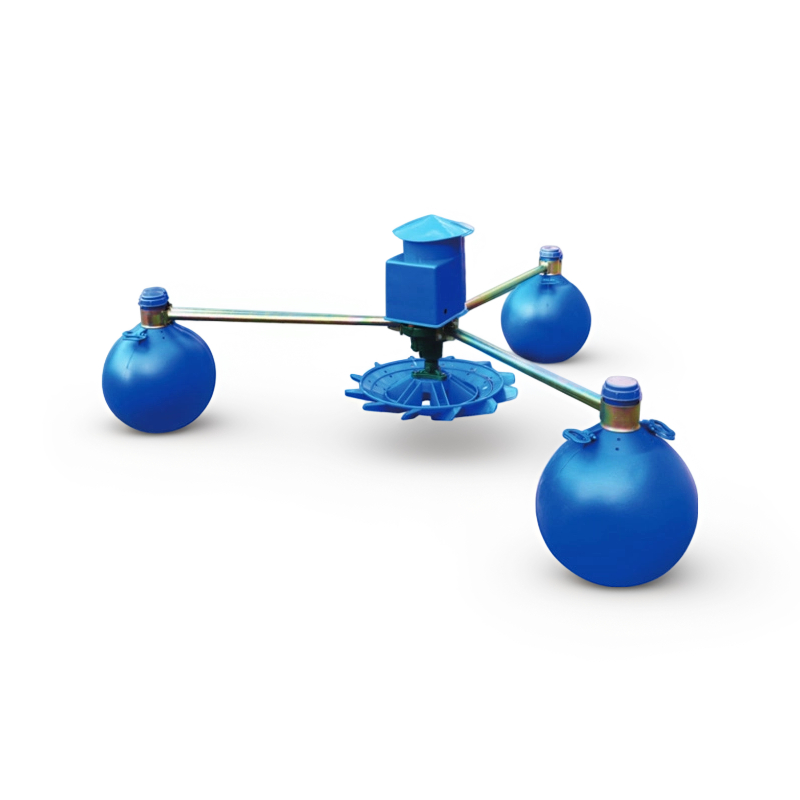
Surface Floating Impeller Aerator
Motor Reliability and Electrical Safety
The motor is manufactured with high-quality copper enameled wire. Copper is widely used in electric motor windings because it offers good electrical conductivity and supports efficient transfer of electrical energy into mechanical power. A properly manufactured copper winding can help reduce resistive losses and maintain dependable motor performance.
The winding is also produced with an enhanced insulation process. Motor insulation must separate the conductive winding from the core and other electrical components. In a wet or humid environment, insulation quality is especially important because moisture, condensation, and contamination can reduce electrical resistance and increase the risk of faults.
A high-standard insulation process supports safer operation and helps protect the winding system during normal use. However, electrical safety depends on the complete installation. The power supply, cable selection, grounding, overload protection, leakage protection, control panel, and installation environment should all comply with applicable local electrical regulations.
The 380 V models are generally suitable for installations with three-phase industrial power, subject to local electrical conditions. The 220 V version of the 1.5 kW model offers an option for sites with a different power arrangement. Buyers should confirm frequency, phase, voltage tolerance, starting current, cable length, and protection requirements before placing an order.
Optional protective devices are available. The exact protection package should be agreed during technical communication because the required configuration may depend on the motor, control system, local standards, and customer application. Typical protection planning may include overload protection, short-circuit protection, phase-loss protection, leakage protection, and appropriate grounding.
PE Floating Structure
The float is made from PE, or polyethylene. A floating aerator needs a stable buoyant structure that can support the motor, gear system, impeller, and associated frame while maintaining the correct position on the water. The float must also withstand repeated exposure to moisture, sunlight, splashing, and normal handling during installation and maintenance.
Polyethylene is widely used in floating equipment because it is lightweight and suitable for water-contact applications. Its relatively low weight can simplify transportation and installation compared with a fully metallic floating structure. The material also provides useful resistance to corrosion, which is important in pond environments where water may contain dissolved salts, fertilizers, treatment chemicals, or organic compounds.
A stable float contributes to consistent impeller immersion and operating geometry. If the equipment tilts excessively, the impeller may not interact with the water evenly, and the mechanical load may become unbalanced. Correct flotation therefore supports both hydraulic performance and mechanical reliability.
Before installation, operators should inspect the float, frame, fasteners, and connection points. The equipment should be positioned in an area with sufficient clearance from pond banks, cages, pipes, feeding equipment, and other obstacles. Mooring arrangements should be selected according to pond size, wind exposure, water movement, and the need to reposition the machine.
Advantages Compared with Basic Floating Aerators
Many floating aerators can create visible water movement, but the quality of the mechanical and manufacturing design determines how consistently they can operate over time. The Surface Floating Impeller Aerator offers several advantages compared with a basic unit that uses untreated gears, welded rotating parts, ordinary motor winding, or a less adaptable structure.
Improved Transmission Durability
The chrome-manganese-titanium alloy gear material and carbon-nitride hardening process are intended to improve resistance to surface wear. This can be an advantage for farms that need repeated daily operation and want to reduce the risk of early gear degradation.
Smoother Rotational Performance
The non-welded impeller assembly is designed to improve concentricity. Better alignment can help reduce vibration, noise, and uneven mechanical loading. This provides an advantage over impellers that may experience greater distortion or imbalance after welding.
Flexible Impeller Materials
Plastic, stainless steel, and hot-dip galvanized steel plate options allow the buyer to match the impeller to the application. A single fixed material may not be ideal for every pond, especially where water chemistry and maintenance expectations differ.
Adaptable Electrical Configuration
The listed 1.5 kW model is available in both 380 V and 220 V versions. This makes the product more adaptable for different farm power systems, although final electrical compatibility must always be confirmed before shipment and installation.
Modular Service Approach
The modular component design supports practical inspection and service. Instead of treating the complete machine as a single inseparable unit, maintenance personnel can evaluate the motor, gear system, impeller, float, and protective components as functional assemblies.
Export-Oriented Product Range
The manufacturer produces several equipment categories, including aerators, water pumps, submersible pumps, and air blowers. This broader product range can help international buyers coordinate multiple water-management requirements with one experienced supplier rather than sourcing every type of equipment separately.
Manufacturing Strengths
Zhejiang ZhenTai Mechanical and Electrical Co., Ltd. was established in 2018 and is located in Wenling, Zhejiang Province, China. The company specializes in research, development, and production across more than 90 products in 10 series. Its product categories include floating aerators, impeller aerators, water wheel aerators, and water pumps, as well as equipment used in irrigation, drainage, and environmental applications.
The company’s manufacturing strengths are reflected in the product’s component choices and process focus. The use of treated alloy gears demonstrates attention to transmission durability. The non-welded impeller design shows an emphasis on rotational accuracy. The use of copper enameled wire and enhanced insulation demonstrates attention to motor reliability. The PE float and multiple impeller-material choices show consideration for practical installation and application variation.
A manufacturer with experience across aerators and pumps can develop a broader understanding of water movement, motor selection, impeller design, sealing, corrosion exposure, and field maintenance. This combined knowledge is useful when equipment is supplied for aquaculture farms, irrigation projects, ecological lakes, drainage systems, and other water-management applications.
The company also offers OEM and ODM services for global buyers. OEM cooperation may be suitable for customers who need private labeling, specified packaging, customized documentation, or a defined product configuration. ODM cooperation may be suitable for buyers seeking assistance with product adaptation, technical specifications, or application-based development.
For importers, distributors, engineering contractors, and aquaculture equipment dealers, manufacturing capability is important beyond the individual machine. Buyers may require stable production, repeatable specifications, spare parts, technical communication, quality documentation, export packing, and after-sales support. A supplier that can address these areas can reduce the practical difficulty of international procurement.
Manufacturing Process Considerations
The performance of an aerator depends on more than the nominal motor power. Each major assembly must be manufactured and inspected in a way that supports the complete system. The following process considerations are important for the Surface Floating Impeller Aerator.
Gear Material and Heat Treatment
The gear manufacturing process begins with suitable alloy steel. The gear blank must be formed and machined to the required dimensions before surface treatment. Carbon-nitride hardening is then applied to improve the surface properties. After treatment, gear dimensions, surface condition, tooth accuracy, and hardness should be checked according to the manufacturer’s internal standards and the requirements of the final application.
Correct heat-treatment control is important. Insufficient treatment may not provide the intended wear resistance, while excessive or uneven treatment can affect dimensional accuracy and toughness. Controlled production procedures help maintain more consistent gear performance from one batch to another.
Impeller Assembly and Balance
The impeller components must be produced with attention to dimensional accuracy and assembly alignment. A non-welded design can reduce heat-related deformation, but the assembly still requires accurate machining, fastening, and inspection. The finished rotating part should be checked for concentricity and balance before it is combined with the drive system.
A balanced impeller supports smoother operation. It can also help protect the bearings, gear system, frame, and float from unnecessary vibration. This is an important manufacturing advantage because mechanical stability affects both immediate operating quality and long-term service cost.
Motor Winding and Insulation
The motor production process includes winding the copper enameled wire, forming the coils, connecting the winding, applying insulation materials, and conducting electrical tests. The insulation process must be compatible with the motor’s operating temperature and environment. Testing may include resistance, insulation, and functional checks according to the manufacturer’s procedures and applicable requirements.
For a floating aquaculture machine, the motor should be matched properly to the gear system and impeller load. A mismatch can cause excessive current, overheating, poor efficiency, or reduced service life. Correct motor selection is therefore part of the product’s overall engineering quality.
Float and Structural Assembly
The PE float and metal support structure must be assembled to maintain stable buoyancy and load distribution. Fasteners and connection points should be secure, and the complete unit should be evaluated for balance. The final structure needs to support the rotating equipment without allowing unnecessary movement or tilting.
Manufacturing inspection should include visual checks, dimensional checks, assembly checks, and operational testing. Where applicable, the aerator can be evaluated for rotational smoothness, motor current, vibration, water movement, and general operating condition before packaging.
Applications in Fish and Shrimp Farming
The aerator can be used in freshwater and suitable brackish-water aquaculture applications, subject to the selected material and local water conditions. It is appropriate for fish ponds, shrimp ponds, nursery ponds, grow-out ponds, and other managed aquatic environments where oxygen transfer and circulation are required.
In fish farming, the aerator can help maintain oxygen availability during periods of high biological demand. It may be used in carp, tilapia, catfish, bass, and other farming systems, provided that the pond layout and operating conditions are suitable.
In shrimp farming, oxygen management is closely connected to stocking density, feed input, water exchange, organic loading, and weather. A floating impeller aerator can be positioned to create circulation and support more even water conditions. The selected power and number of units should be based on the complete farm design rather than on pond area alone.
The aerator may also be useful in wastewater-related ponds, ecological water bodies, and landscape lakes where surface movement and oxygenation are needed. In these applications, water chemistry and debris loading should be reviewed carefully. The impeller material and protective arrangement may need to be selected differently from those used in a standard aquaculture pond.
How to Select the Correct Model
Model selection should begin with the actual oxygen demand of the pond. Pond area is only one factor. Stocking density, species, biomass, water depth, feeding rate, temperature, organic matter, salinity, natural aeration, and the required emergency capacity should all be considered.
The 1.1 kW model provides the lowest listed power level and may be suitable for smaller ponds or lower-load applications. The 1.5 kW models provide a higher oxygen transfer rate and offer a choice between 380 V and 220 V power configurations. The 3 kW model provides the highest listed oxygen transfer rate and is intended for larger or more demanding applications within the stated operating range.
Buyers should also consider whether the equipment will be used as a primary aeration system, a supplementary system, or an emergency backup. A farm that depends on aeration for high-density production may require multiple units arranged to provide coverage and redundancy. Multiple smaller units may offer greater placement flexibility, while larger units may simplify equipment management in some ponds.
Water quality should influence the impeller-material decision. Plastic, stainless steel, and hot-dip galvanized steel plate each provide different balances of weight, corrosion resistance, durability, and cost. A technical discussion with the supplier is recommended when the pond contains high salinity, chemical residues, abrasive solids, or unusual contaminants.
Electrical infrastructure is another key consideration. The buyer should confirm the available voltage, phase, frequency, cable distance, control equipment, and protection devices. The installation should be performed by qualified personnel, and the motor should not be operated without appropriate grounding and safety protection.
Installation Guidance
The aerator should be installed on a stable section of the pond with enough open water for the impeller to operate freely. Avoid placing it directly beside pond walls, fixed obstacles, submerged pipes, heavy vegetation, or areas where debris can collect around the rotating component.
Mooring lines should hold the unit in the intended position without restricting the float or placing excessive stress on the frame. The arrangement should account for wind, waves, water-level changes, and routine access for inspection. The unit should be positioned so that operators can reach it safely when maintenance is required.
Before connecting the power supply, inspect the unit for transport damage. Check the float, support structure, impeller, fasteners, cable, motor, and gear housing. Confirm that the impeller rotates freely by the approved manual inspection method and that no foreign object is present in the rotating area.
Electrical connections must be protected from water exposure and installed according to local regulations. Cable routing should prevent abrasion, sharp bends, and accidental pulling. Appropriate circuit protection and grounding should be installed before startup.
During the initial test, observe the direction of rotation, water movement, vibration, sound, current, and float stability. If unusual noise, excessive vibration, abnormal current, or unstable flotation occurs, stop the machine and investigate the cause before continuous operation.
Maintenance and Operating Practices
Regular inspection is essential for maintaining aerator performance. Operators should check the impeller, float, gear housing, motor, cables, fasteners, mooring system, and protective devices according to an established schedule.
The impeller should be kept free from ropes, plastic waste, aquatic plants, fishing nets, and other foreign objects. Debris can reduce water movement, increase the motor load, damage the impeller, or cause unsafe operating conditions.
The gear system should be inspected for abnormal noise, leakage, vibration, and temperature. Lubrication should follow the manufacturer’s specified procedure and lubricant requirements. Operators should not mix incompatible lubricants or open the gear housing unnecessarily in a wet or contaminated environment.
The motor should be monitored for overheating, unusual sound, insulation concerns, and changes in operating current. Electrical inspection should be completed by qualified personnel. If the equipment has been idle for an extended period, the motor and cable system should be checked before restarting.
The float should be inspected for cracks, deformation, loose connections, or signs of damage. A damaged float can affect the operating angle and place additional stress on the impeller and transmission system. Any structural problem should be repaired or evaluated before continued use.
Maintenance records can help operators identify gradual changes in performance. Useful information may include operating hours, current readings, unusual sounds, repair dates, lubricant changes, impeller condition, and water-quality events. These records support preventive maintenance and may help reduce unexpected downtime.
Energy Efficiency and Operating Cost
The listed power-efficiency values are at least 1.4 kg O₂/kWh for the 1.1 kW model and at least 1.5 kg O₂/kWh for the listed 1.5 kW and 3 kW models. These figures indicate the stated relationship between oxygen transfer and electrical consumption under the relevant test conditions.
Actual energy cost depends on the number of operating hours, electricity price, water conditions, equipment loading, and aeration strategy. A machine may be technically efficient but still consume unnecessary energy if it is operated continuously when demand is low. Conversely, insufficient operation can create water-quality problems and production losses.
Farm managers should develop an operating schedule based on dissolved oxygen monitoring, weather, feeding, biomass, and pond conditions. Automated controls or timers may be used where appropriate, but control equipment must be matched to the motor and installed with suitable protection.
Efficient aeration is not only a matter of motor power. It also depends on impeller condition, correct immersion, clean water flow, gear condition, balanced operation, and proper installation. The product’s treated gear system and non-welded impeller design support the mechanical conditions needed for dependable operation over time.
Quality, OEM, and Export Support
International buyers often require more than a standard product. They may need customized voltage, private labeling, special packaging, translated manuals, spare parts, additional protection, or documentation for local import and installation. OEM and ODM capability gives the supplier a basis for discussing these requirements.
For distributors, consistent product specifications are especially important. Repeat orders should maintain the same motor power, dimensions, impeller configuration, float arrangement, packaging, and performance expectations unless a change is agreed in advance. A professional technical communication process helps prevent misunderstandings between the manufacturer and the buyer.
Export packing should protect the float, motor, impeller, and gear system during handling and transportation. Buyers should confirm whether the product is shipped assembled or partially disassembled, what accessories are included, and whether spare parts are available. Container quantity data can support preliminary logistics planning, but final loading should be confirmed with the shipping package and order quantity.
ZhenTai’s location in Wenling, Zhejiang Province, places the company within an established Chinese manufacturing region for motors, pumps, and mechanical equipment. Its product experience across aquaculture, irrigation, drainage, environmental protection, and related applications can support buyers seeking a broader equipment supply relationship.
Recommended Buyer Checklist
Before ordering, buyers should identify the pond type, target species, pond area, water depth, stocking density, expected biomass, and required oxygen capacity. They should also describe water salinity, temperature range, chemical exposure, debris conditions, and the intended operating schedule.
The buyer should confirm the selected model, voltage, frequency, phase, impeller material, protection devices, packaging method, spare parts, delivery terms, and technical documents. If the product will be installed by a local contractor, the installation requirements should be shared in advance.
For large projects, it is advisable to request a proposed equipment layout. The layout should consider circulation patterns, wind direction, pond shape, access routes, electrical cable length, and emergency operation. The number of aerators should be determined through the farm’s oxygen-management plan rather than by relying only on a general area estimate.
Buyers should also ask for the applicable performance test conditions. Oxygen transfer results can vary between clean water testing and actual pond water. A clear understanding of test methods helps importers, engineers, and farm operators compare products fairly.
Q&A
What is a surface floating impeller aerator?
It is a floating electric aeration machine that uses a rotating impeller to agitate the water surface. The movement increases air-water contact and promotes oxygen transfer while also helping circulate pond water.
Where can this aerator be used?
It can be used in fish ponds, shrimp ponds, aquaculture farms, ecological lakes, and other water-management applications where surface aeration is required. The exact suitability depends on water quality, pond design, species, and operating conditions.
What power options are available?
The listed models include 1.1 kW, 1.5 kW, and 3 kW configurations. The 1.5 kW model is listed in both 380 V and 220 V versions. Buyers should confirm the complete electrical specification before ordering.
What is the purpose of the alloy steel gear system?
The gear system transmits motor power to the impeller. Chrome-manganese-titanium alloy steel and carbon-nitride surface hardening are used to improve gear-surface durability and support stable operation under repeated loads.
Why is the impeller non-welded?
The non-welded assembled design is intended to improve concentricity and reduce the possibility of heat-related deformation. Better concentricity can support smoother rotation and help reduce vibration during operation.
Which impeller material should a buyer choose?
The available options are plastic, stainless steel, and hot-dip galvanized steel plate. The correct selection depends on water chemistry, corrosion exposure, mechanical requirements, maintenance expectations, and budget.
What material is used for the float?
The float is made from PE, or polyethylene. It provides a lightweight floating structure suitable for supporting the aerator at the water surface.
Does the aerator include protective devices?
Optional protective devices are available. The required protection should be confirmed according to the motor, power supply, local regulations, and customer installation requirements.
Can the product be customized for international buyers?
The manufacturer provides OEM and ODM services. Buyers can discuss labeling, packaging, electrical configuration, documentation, accessory requirements, and other project-specific details with the supplier.
How should the correct model be selected?
Selection should consider oxygen demand, pond area, water depth, stocking density, species, feed input, climate, water quality, electrical supply, and whether the unit will provide primary, supplementary, or emergency aeration.
Can one aerator serve an entire pond?
That depends on pond size, shape, biomass, water depth, and oxygen demand. Large or intensively stocked ponds may require multiple aerators to provide adequate coverage and operational redundancy.
What maintenance is required?
Operators should inspect the impeller, float, gear system, motor, cable, fasteners, mooring arrangement, and protective devices. Foreign objects should be removed, lubrication should follow the manufacturer’s instructions, and abnormal noise or vibration should be investigated promptly.
Are the listed oxygen transfer figures guaranteed in every pond?
No performance figure should be interpreted without its test conditions. Actual oxygen transfer can change with water temperature, salinity, depth, water quality, impeller material, installation, and operating conditions. Buyers should request detailed test information for engineering decisions.
Conclusion
The Surface Floating Impeller Aerator combines practical floating installation with a mechanically reinforced drive system for aquaculture and water-management applications. Its chrome-manganese-titanium alloy gear system, carbon-nitride gear hardening, non-welded impeller assembly, copper motor winding, enhanced insulation process, and PE float are designed to support durability, smoother operation, and dependable service.
The availability of 1.1 kW, 1.5 kW, and 3 kW models provides flexibility for different pond requirements. Plastic, stainless steel, and hot-dip galvanized steel plate impeller options allow the product to be matched to varying water conditions and project budgets. Optional protective devices and OEM/ODM support further improve its suitability for international buyers.
Zhejiang ZhenTai Mechanical and Electrical Co., Ltd. brings experience in aerators, pumps, blowers, irrigation equipment, drainage equipment, and related machinery. Its focus on modular design, material selection, manufacturing processes, technical development, and customer support gives buyers a practical foundation for sourcing aquaculture aeration equipment from China.
For the best result, the aerator should be selected as part of a complete oxygen-management plan. Correct model selection, suitable installation, safe electrical work, regular maintenance, and monitoring of dissolved oxygen will help the equipment deliver its intended value in fish and shrimp pond operations.
References
1. Manufacturer-supplied product specifications for the Surface Floating Impeller Aerator, including model, voltage, power, rated speed, oxygen transfer rate, power efficiency, load, weight, and container information.
2. Manufacturer-supplied technical description of the alloy gear system, carbon-nitride hardening process, non-welded impeller assembly, copper enameled wire, motor insulation, PE float, and impeller material options.
3. Manufacturer-supplied company profile for Zhejiang ZhenTai Mechanical and Electrical Co., Ltd., including product categories, manufacturing experience, application fields, and OEM/ODM services.
4. General aquaculture engineering principles concerning dissolved oxygen management, surface aeration, water circulation, pond loading, and equipment maintenance.
5. General electric motor engineering principles concerning copper windings, insulation systems, overload protection, grounding, and safe installation in wet environments.