 English
 Español
 Indonesia
Reliable oxygen management is one of the most important requirements in modern aquaculture. Fish, shrimp, beneficial microorganisms, and other aquatic organisms all depend on dissolved oxygen to maintain healthy growth and stable pond conditions. When oxygen levels fall, feed conversion can deteriorate, organic matter can accumulate, harmful gases may develop, and aquatic animals can experience stress or mortality. For this reason, a properly selected aeration system is not simply an accessory. It is a central part of pond management and production control.
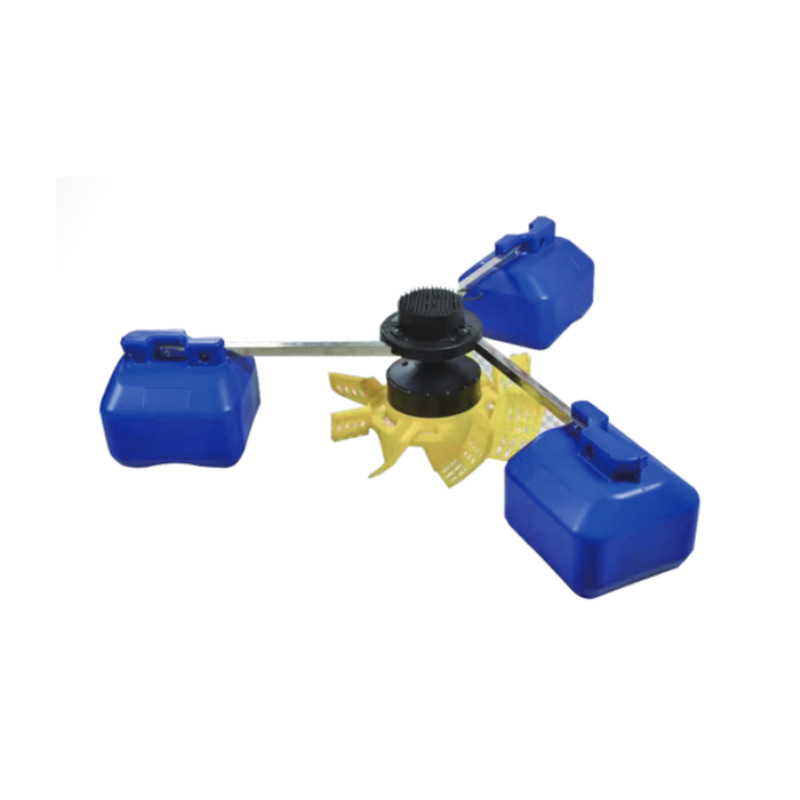
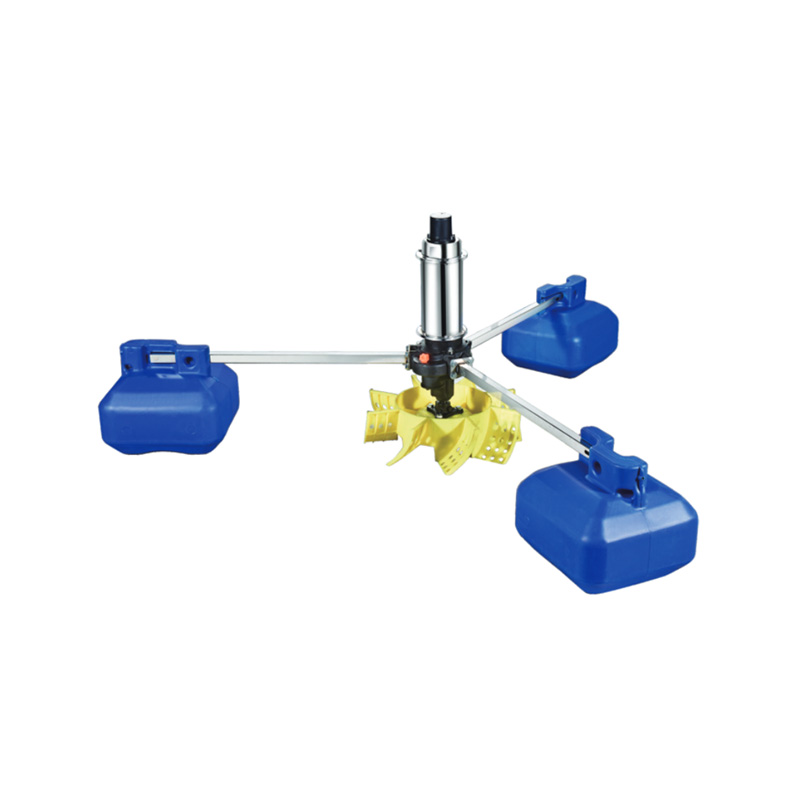
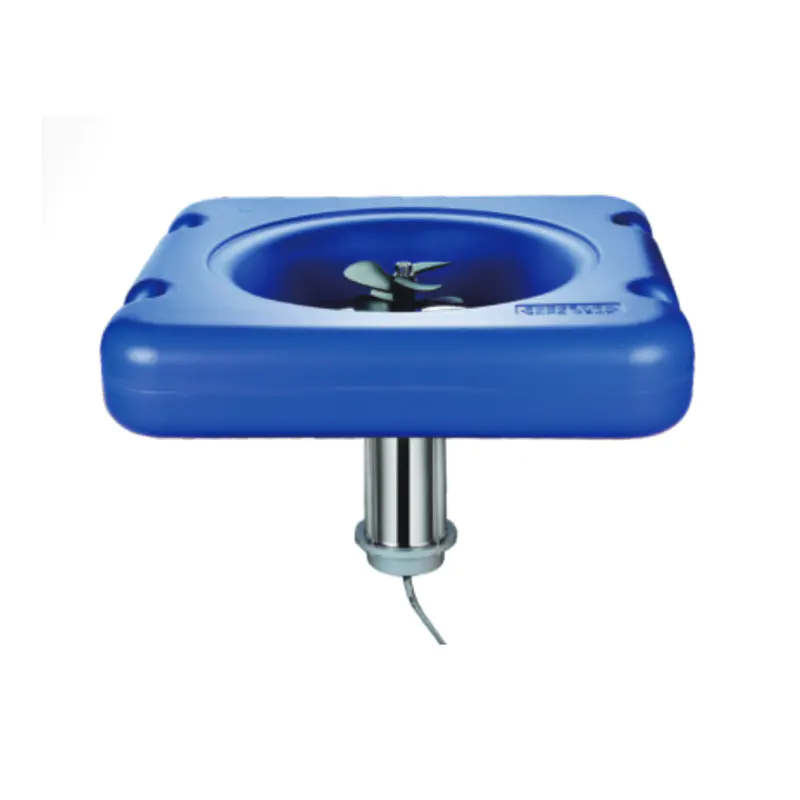
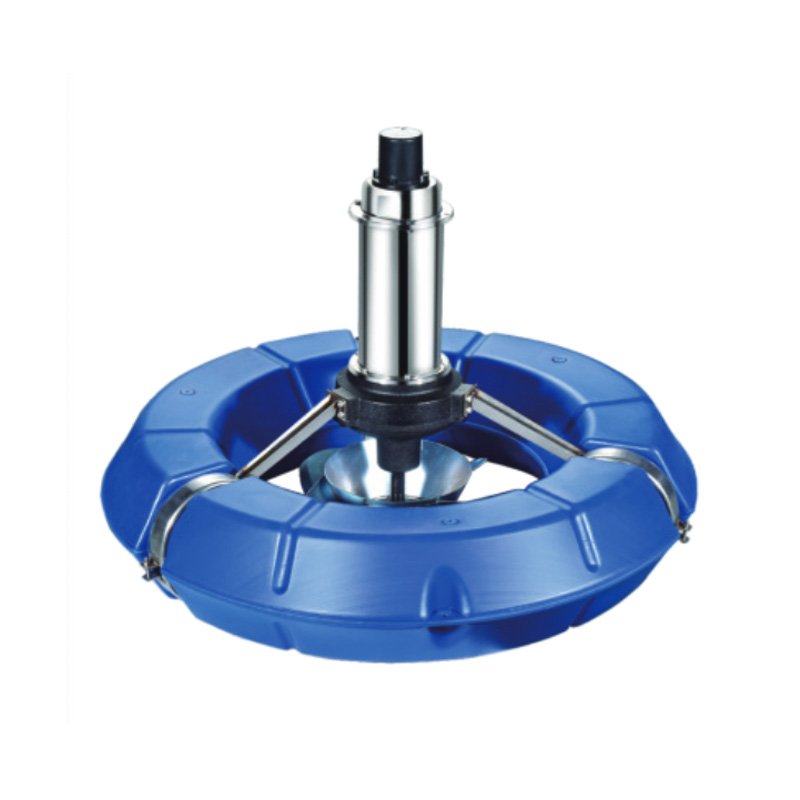
The surface floating impeller aerator is designed to address these requirements through vigorous surface agitation and water circulation. By rotating an impeller at the water surface, the unit breaks the water into moving streams and droplets, increases contact between water and air, and helps distribute oxygen throughout the pond. Its floating structure allows it to operate directly on the pond surface without requiring a permanent foundation, while its modular construction supports installation, maintenance, and configuration flexibility.
This product is suitable for fish ponds, shrimp ponds, aquaculture farms, ecological water areas, and other applications where surface aeration and circulation are required. Available power options include 1.1 kW, 1.5 kW, and 3 kW models, with selected configurations available for 380 V or 220 V power supplies. Depending on the model and working conditions, the equipment provides an oxygen transfer rate from at least 1.6 to at least 4.5 kg of oxygen per hour.
In addition to its operating performance, the aerator is built around several manufacturing details intended to improve long-term stability. These include a chrome-manganese-titanium alloy steel gear system, carbon-nitride hardening of the gear surface, a non-welded assembled impeller, high-quality copper enameled motor wire, an enhanced insulation process, and a durable PE float. Together, these design features help distinguish the unit from simpler aerators that rely on ordinary materials, welded impellers, or less carefully controlled motor construction.
Why Surface Aeration Matters in Aquaculture
Dissolved oxygen is continuously consumed in an active aquaculture pond. Fish and shrimp use oxygen for respiration, while bacteria consume oxygen as they decompose uneaten feed, feces, plant residues, and other organic matter. Warm water generally holds less oxygen than cool water, and oxygen demand often increases as animals grow and biomass rises. Weather conditions, algae activity, water depth, stocking density, and feeding intensity can all affect the oxygen balance.
A pond can therefore move from an acceptable condition to an oxygen-deficient condition within a relatively short time. This risk is especially significant at night and before sunrise, when photosynthesis has stopped but respiration continues. Cloudy weather, heavy rainfall, algae crashes, or excessive organic loading can create additional pressure on the pond environment.
An aerator helps by creating a larger and more active air-water interface. Surface movement exposes new water to the atmosphere, while splashing and circulation help move oxygenated water away from the immediate operating area. The result is a more dynamic pond environment with improved gas exchange and better circulation of water layers.
The purpose of a floating impeller aerator is not merely to make visible waves. A well-designed unit must convert motor power into effective water movement while maintaining mechanical reliability. The motor, gear system, shaft, impeller, float, and electrical protection arrangements must work together. If any one of these components is poorly designed or inadequately manufactured, operating efficiency and service life may be reduced.
Product Overview
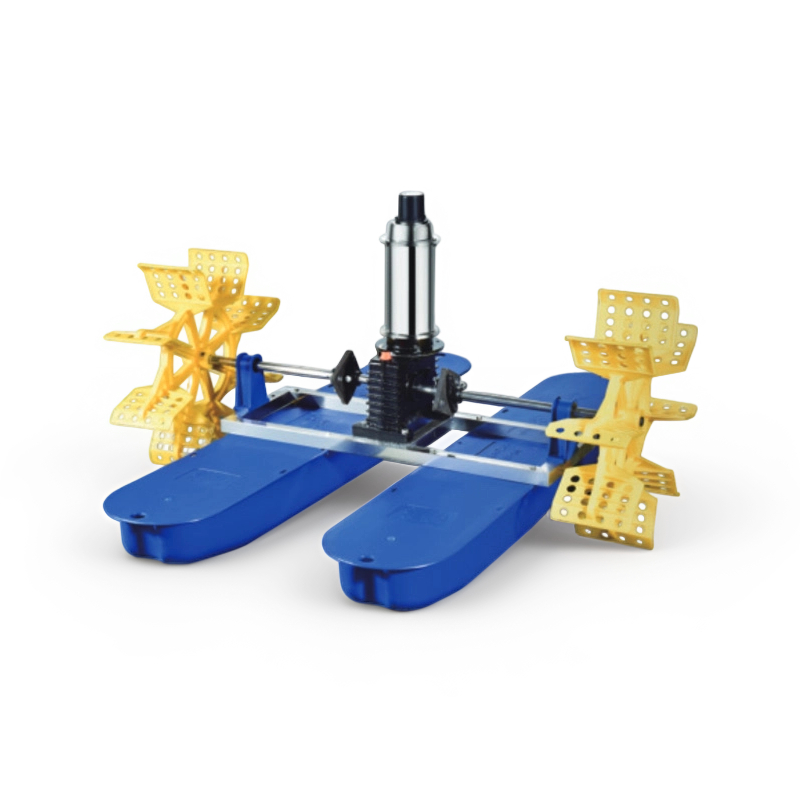
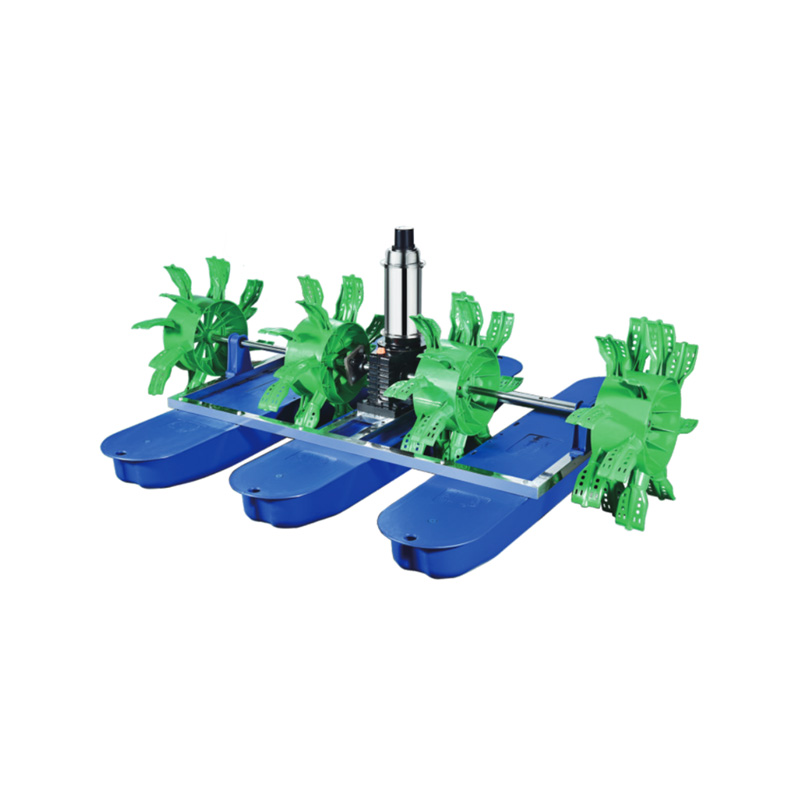
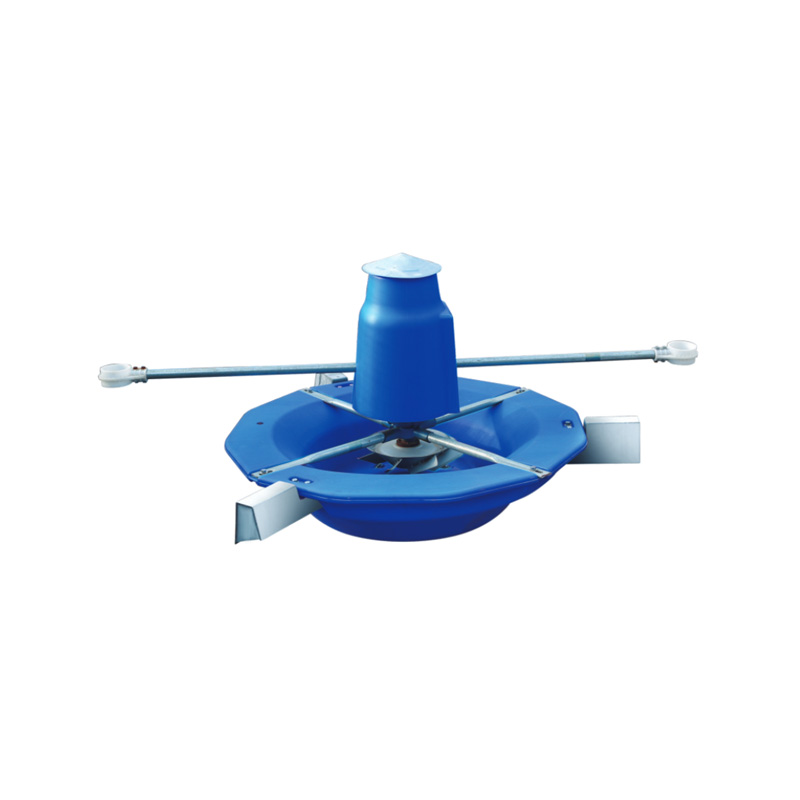
The surface floating impeller aerator consists of a floating support structure, a drive motor, a gear transmission system, and a rotating impeller. The float is manufactured from PE, or polyethylene, which provides buoyancy and resistance to normal water exposure. The impeller is available in plastic, stainless steel, or hot-dip galvanized steel plate, allowing buyers to select a configuration according to water conditions, operating intensity, corrosion concerns, and project budget.
The aerator is designed to work at the water surface. Its floating form eliminates the need for a heavy fixed platform in many pond applications. This makes deployment more convenient and allows the unit to be repositioned when pond layout, stocking conditions, or circulation requirements change.
A modular component design is used to support easier assembly and service. Instead of treating the aerator as one inseparable structure, the main functional parts are arranged as coordinated modules. This approach can simplify inspection, reduce the time required to replace selected parts, and support more efficient production and inventory management.
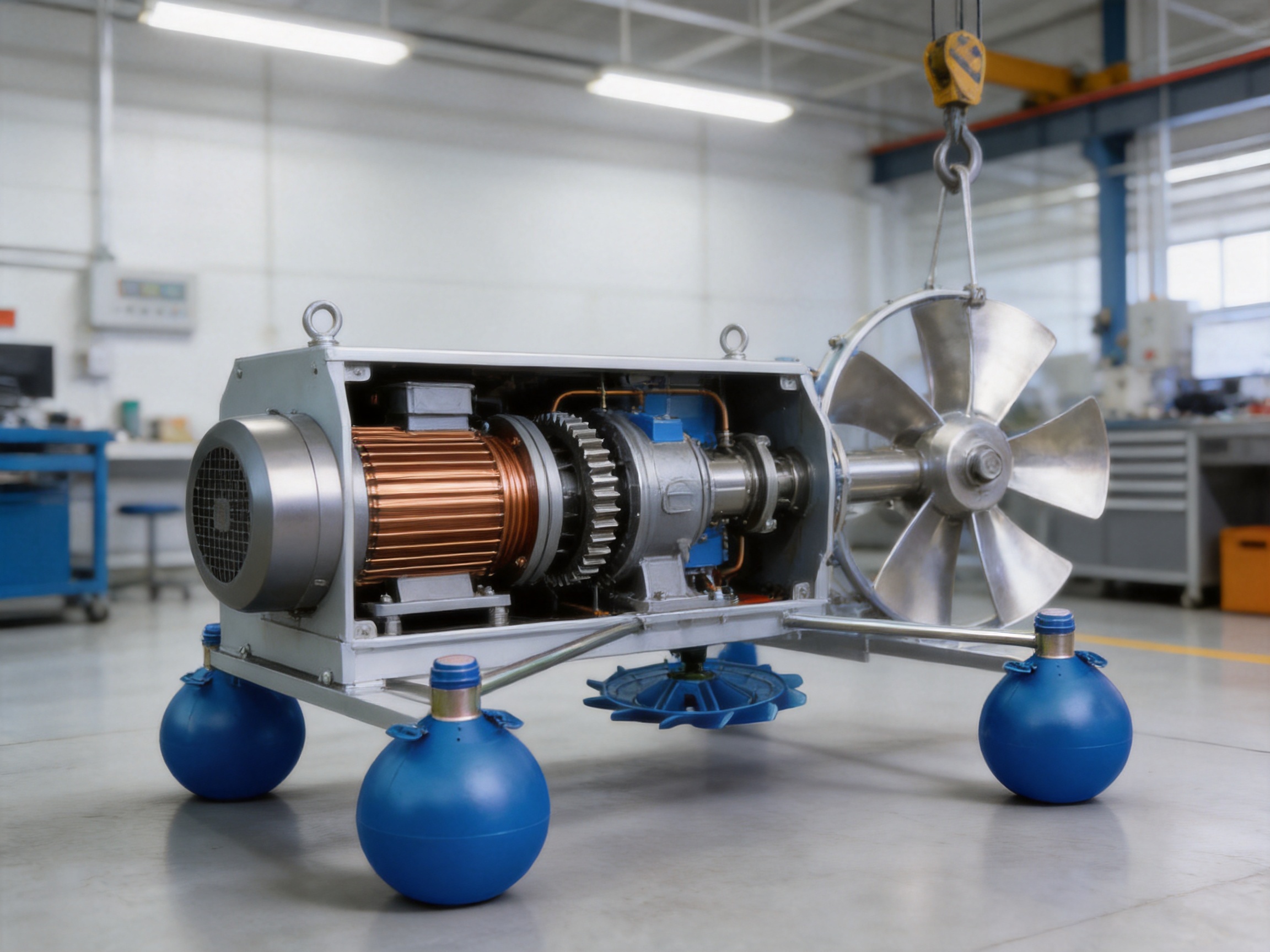
The transmission system uses alloy steel gears. The gear material is specified as chrome-manganese-titanium alloy steel, selected for its ability to provide a strong foundation for wear-resistant gear manufacturing. The gear surface receives carbon-nitride, also called carbonitriding, hardening. This treatment increases surface hardness while retaining a tougher core, a combination that is useful for components exposed to repeated tooth contact and rotational loads.
The impeller uses a non-welded assembled structure. Compared with an impeller formed through extensive welding, an assembled design can help reduce distortion and improve dimensional consistency. Correct concentricity is important because the impeller rotates continuously and must maintain balanced movement. Better concentricity contributes to smoother rotation, lower vibration, and more stable transmission loading.
The motor uses high-quality copper enameled wire for its winding. Copper provides good electrical conductivity, and the enamel insulation separates adjacent turns within the winding. The motor also uses an enhanced insulation process intended to support electrical safety and reliable operation in a demanding outdoor environment.
Protective devices are available as optional configurations. The exact protection arrangement should be selected according to the electrical system, local regulations, installation environment, and buyer requirements. A professional installation should include suitable overcurrent protection, grounding, isolation, and other electrical safeguards where required.
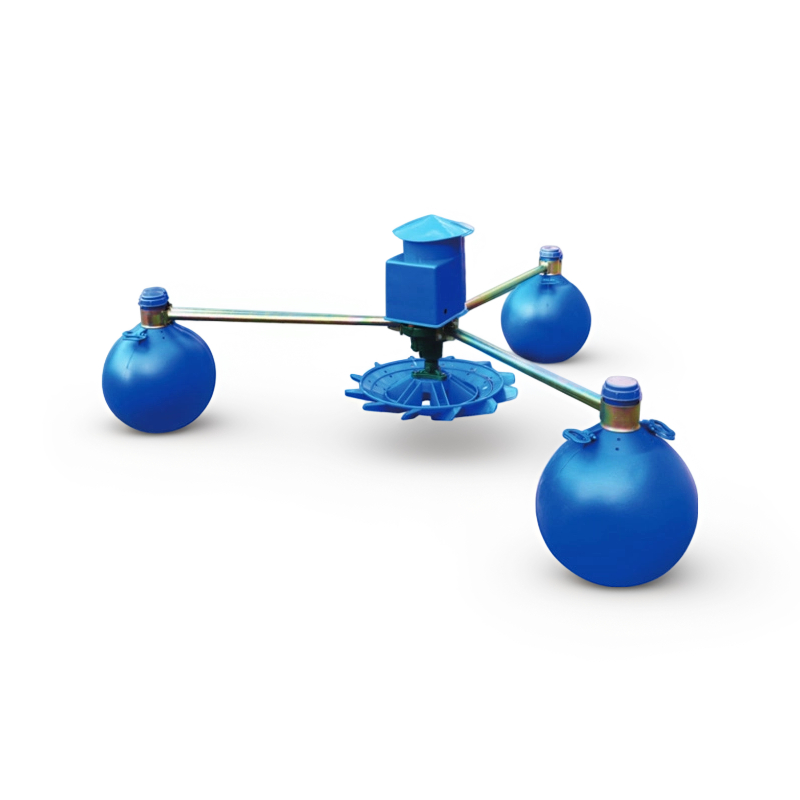
Surface Floating Impeller Aerator
Key Advantages Compared with Basic Floating Aerators
Durable Alloy Steel Gear Construction
The gear system is one of the most highly loaded parts of a geared aerator. Gear teeth repeatedly engage under torque, and the transmission must continue to operate while exposed to vibration, starting loads, water-related humidity, and long working cycles. A gear made from an appropriate alloy steel can provide a stronger material base than an ordinary low-grade steel component.
The use of chrome-manganese-titanium alloy steel is intended to balance strength, toughness, and suitability for surface hardening. Alloying elements can help improve the response of the steel to heat treatment and support the production of a durable gear surface. The resulting gear system is better positioned to handle repeated operation than a transmission using untreated or inadequately specified material.
For pond operators, gear durability has a direct relationship with operating continuity. A gearbox problem can stop aeration during a period of high oxygen demand, potentially creating a serious production risk. A robust gear structure helps reduce the likelihood of premature wear and supports more predictable maintenance planning.
Carbon-Nitride Surface Hardening
Carbonitriding introduces carbon and nitrogen into the surface layer of a steel component through a controlled hardening process. The treated surface can resist wear from repeated contact, while the interior retains a degree of toughness. This is important because a gear should not be excessively brittle. A very hard but fragile tooth can be vulnerable to cracking, while a soft tooth may wear rapidly.
The carbon-nitride treatment specified for this aerator is intended to increase surface hardness and extend gear service life. It also reflects a more advanced manufacturing approach than simply machining gears and placing them into service without a suitable surface treatment.
Manufacturing quality remains important even when a material and treatment have been selected correctly. Gear geometry, tooth accuracy, heat-treatment consistency, cleaning, inspection, lubrication, and assembly all influence the final result. A coordinated production process helps ensure that the gear is not only hard, but also correctly manufactured and properly integrated into the transmission assembly.
Non-Welded Impeller Assembly
The impeller directly transfers motor and gearbox power into water movement. Its shape, balance, diameter, material, and installation accuracy all influence aeration performance. If an impeller is distorted or poorly balanced, it can cause vibration and uneven loading. Such conditions may increase stress on the shaft, bearings, seals, gears, and motor.
The non-welded assembled design helps address this issue by reducing dependence on welded joints in the impeller structure. Welding can create localized heat and distortion, especially when thin or differently shaped components are joined. An assembled design allows the manufacturer to produce and align components with greater control before final fastening.
Improved concentricity supports smoother rotation. Smooth rotation can benefit the entire system by helping maintain stable torque transfer and reducing unnecessary mechanical vibration. It may also contribute to a more consistent water pattern, which is important when several aerators are installed in the same pond.
The availability of plastic, stainless steel, and hot-dip galvanized steel plate impellers gives importers and project designers additional flexibility. Plastic may be suitable where low weight and corrosion resistance are priorities. Stainless steel can be selected for demanding corrosion environments or applications requiring a durable metallic impeller. Hot-dip galvanized steel plate offers a protective zinc coating and may provide a practical balance between strength and cost, depending on water chemistry and maintenance conditions.
Copper Motor Winding
Motor winding quality affects efficiency, temperature rise, starting behavior, and service life. The use of high-quality copper enameled wire supports effective electrical conductivity and reliable insulation between winding turns. Compared with lower-conductivity winding materials, copper is widely used where dependable motor performance and efficient current transmission are required.
The winding is only one part of motor quality. Proper slot filling, winding arrangement, insulation treatment, varnishing or equivalent processing, connection quality, balancing, and final testing are also important. An enhanced insulation process helps protect the winding system against electrical breakdown, particularly when the equipment operates in a humid environment.
A floating aerator is normally installed outdoors, where moisture, temperature variation, splashing, and electrical load changes can affect equipment performance. For this reason, motor construction must be considered together with correct installation, cable selection, grounding, control equipment, and routine inspection.
PE Floating Structure
The float supports the motor and impeller assembly while allowing the aerator to remain at the water surface. PE is a practical floating material because it is lightweight, buoyant, and resistant to many common environmental exposures. Its relatively low weight also helps simplify handling during transport and installation.
A suitable float must provide stable support rather than merely remain afloat. It needs sufficient buoyancy for the complete operating assembly and should maintain an appropriate position as the impeller creates water movement. The design must also account for the weight of the motor, transmission, fasteners, cables, optional protective parts, and any temporary loads during handling.
Because the float is made from PE, it can contribute to a lower overall equipment weight compared with a heavy metal platform. This can reduce the difficulty of positioning the aerator in a pond and may help lower shipping and handling requirements for international buyers.
Optional Protective Devices
Different aquaculture farms have different electrical conditions and operational requirements. Some installations may need additional protective devices for overload, phase loss, leakage, dry running of associated equipment, or other risks. The aerator can be supplied with optional protective arrangements so that buyers can discuss an appropriate configuration with the manufacturer.
Optional protection should not be regarded as a replacement for correct installation. The purchaser should confirm the supply voltage, frequency, phase configuration, cable length, control panel requirements, grounding method, and local electrical standards before commissioning. Protection settings should be selected according to the motor rating and actual operating conditions.
Manufacturing Process and Quality Strengths
The product’s performance depends on a series of manufacturing steps rather than on one isolated feature. A reliable aerator factory must coordinate material selection, machining, heat treatment, motor production, impeller assembly, float production, final assembly, and inspection.
Engineering and Modular Product Development
Modular product development begins with the separation of the aerator into functional systems. The motor, gearbox, impeller, float, electrical components, and fasteners can be analyzed according to their individual loads and operating environments. This makes it easier to improve a selected module without redesigning the entire product.
Modularity also helps support different customer requirements. A buyer may require a plastic impeller for one market and stainless steel for another. Another project may need a 220 V configuration, while a larger farm may use a 380 V three-phase supply. A modular design allows the factory to organize these variations more efficiently while maintaining a common product platform.
Gear Material Preparation and Machining
Gear quality begins with material preparation. Alloy steel must be selected and processed consistently so that its chemical composition and mechanical properties are suitable for the intended application. Gear blanks are then formed and machined to create the required tooth profile, bore, and mounting surfaces.
Accurate machining is essential because the gear teeth must engage correctly. Errors in tooth spacing, profile, alignment, or surface finish can increase noise, vibration, and wear. Bearing seats and shaft interfaces also require appropriate dimensional control because misalignment can place additional loads on the gear system.
Carbon-Nitride Hardening
After gear machining, the surface-hardening process is used to improve wear resistance. Carbonitriding must be controlled through appropriate temperature, time, atmosphere, and cooling conditions. The objective is to create a hardened surface layer while preserving a tougher internal structure.
Quality control for treated gears can include visual checks, dimensional inspection, hardness testing, and verification of the treated surface where appropriate. Consistency is especially important when multiple gear sets are produced for different batches of aerators. Stable processing helps produce more uniform transmission behavior across the product range.
Motor Winding and Insulation Processing
Motor production requires careful preparation of the stator, winding insertion, lead connection, insulation treatment, and final assembly. High-quality copper enameled wire must be handled without damaging its insulation. Winding tension, turn arrangement, and slot filling influence both electrical performance and heat dissipation.
The enhanced insulation process is intended to protect the winding system from electrical faults. Depending on the factory’s production procedures, insulation quality can be supported through controlled winding operations, insulating materials, impregnation, curing, and electrical testing. The final motor should be checked for winding continuity, insulation resistance, and other relevant parameters before shipment.
International buyers should request the applicable test information for their project, especially when the aerator will be used in a large commercial farm or integrated into an automated control system. Motor details should be matched with the local power supply and the required control equipment.
Impeller Assembly and Balance Control
The non-welded impeller is assembled from prepared components rather than relying on a fully welded structure. During assembly, the components should be positioned correctly and secured with appropriate fasteners or connection methods. The shaft interface must be aligned so that the impeller rotates concentrically.
Balance and runout are important inspection considerations. An impeller that is not balanced can generate periodic vibration, especially at the specified operating speed of approximately 110 revolutions per minute for the listed models. Careful assembly and inspection help reduce this risk and support stable operation.
Float Production and Integration
The PE float must be produced with sufficient dimensional stability and buoyancy. Its connection points should be compatible with the motor and impeller support structure. During final integration, the factory should check the relationship between the float, drive assembly, impeller position, and waterline.
Good integration helps the aerator remain stable during startup and normal operation. It also supports safer transportation and handling because the main components are properly secured before delivery. Packaging should protect the float, motor, impeller, and exposed connection points from impact or deformation during shipment.
Technical Specifications
The following table summarizes the available model information supplied for this product. The values should be used as a general selection reference. Actual project performance can vary with water depth, temperature, salinity, stocking density, pond shape, installation position, water quality, power supply, and maintenance condition.
| Model | Voltage | Power | Speed | Oxygen Transfer Rate | Power Efficiency | Recommended Load | Weight | Container Quantity |
|---|---|---|---|---|---|---|---|---|
| ZT-1.1 | 380 V | 1.1 kW | 110 r/min | ≥1.6 kg O₂/h | ≥1.4 kg O₂/kWh | 3–4 mu | 70 kg | 85 units |
| ZT-1.5 | 380 V | 1.5 kW | 110 r/min | ≥2.3 kg O₂/h | ≥1.5 kg O₂/kWh | 4–8 mu | 80 kg | 80 units |
| ZT-1.5 | 220 V | 1.5 kW | 110 r/min | ≥2.3 kg O₂/h | ≥1.5 kg O₂/kWh | 4–8 mu | 80 kg | 80 units |
| ZT-3 | 380 V | 3 kW | 110 r/min | ≥4.5 kg O₂/h | ≥1.5 kg O₂/kWh | 8–12 mu | 100 kg | 80 units |
The unit “mu” is a traditional area measurement commonly used in China. Buyers in other regions should convert the recommended pond area according to local measurement practices and, more importantly, confirm the selection with the manufacturer based on actual biomass and oxygen demand. Pond area alone is not enough to determine the required number of aerators.
The listed oxygen transfer rate is a reference performance value. Oxygen transfer can change according to test conditions, water temperature, atmospheric pressure, water cleanliness, salinity, installation position, and operating depth. A farm with heavy stocking or high organic loading may require more equipment than a farm with the same surface area but lower oxygen demand.
The two 1.5 kW entries use different voltage configurations. This gives buyers a choice between a 380 V supply and a 220 V supply where the electrical infrastructure permits. Before ordering, the buyer should confirm whether the required configuration is single-phase or three-phase, the available frequency, motor starting requirements, and the compatibility of control equipment.
How the Aerator Works in a Pond
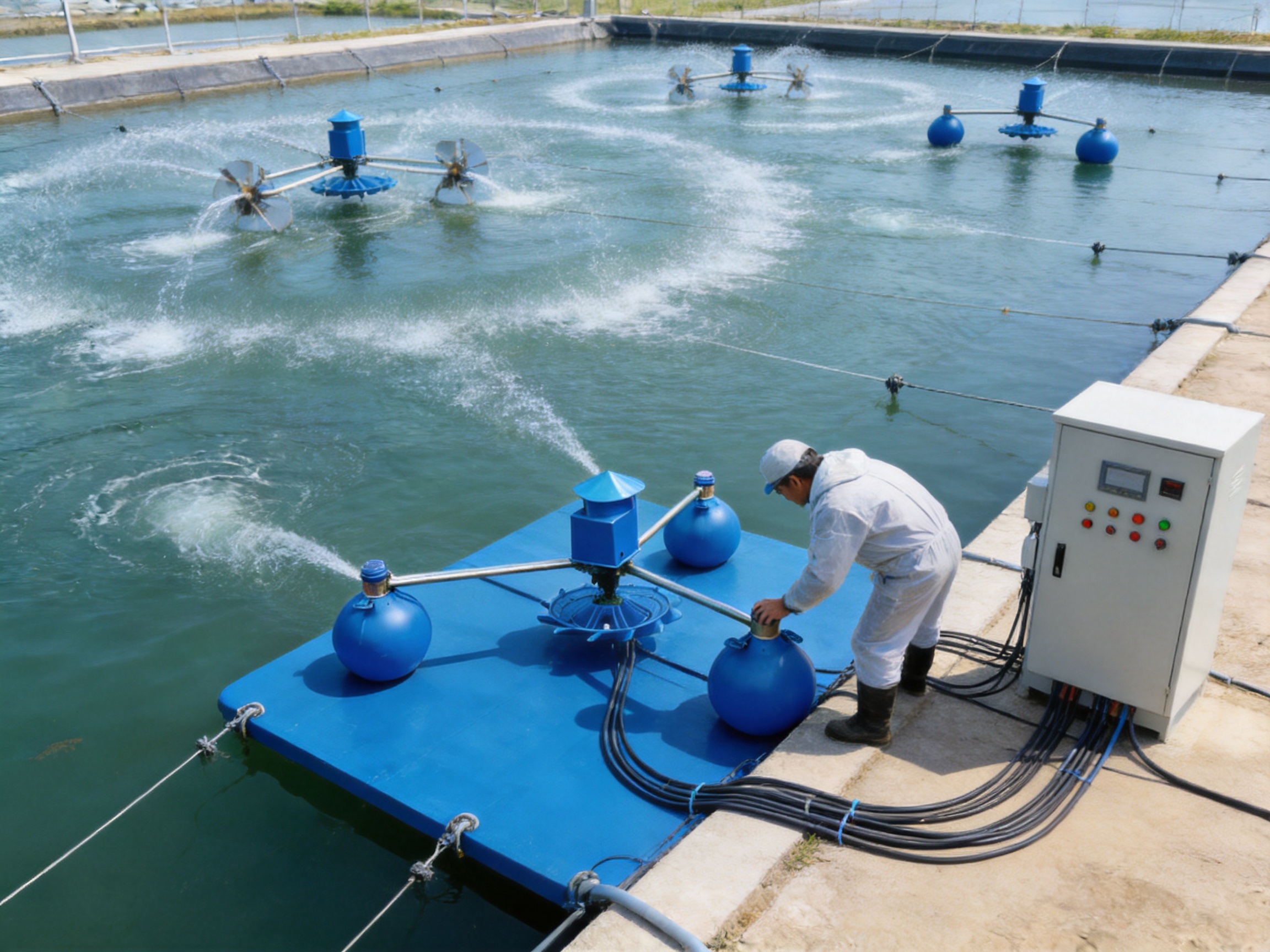
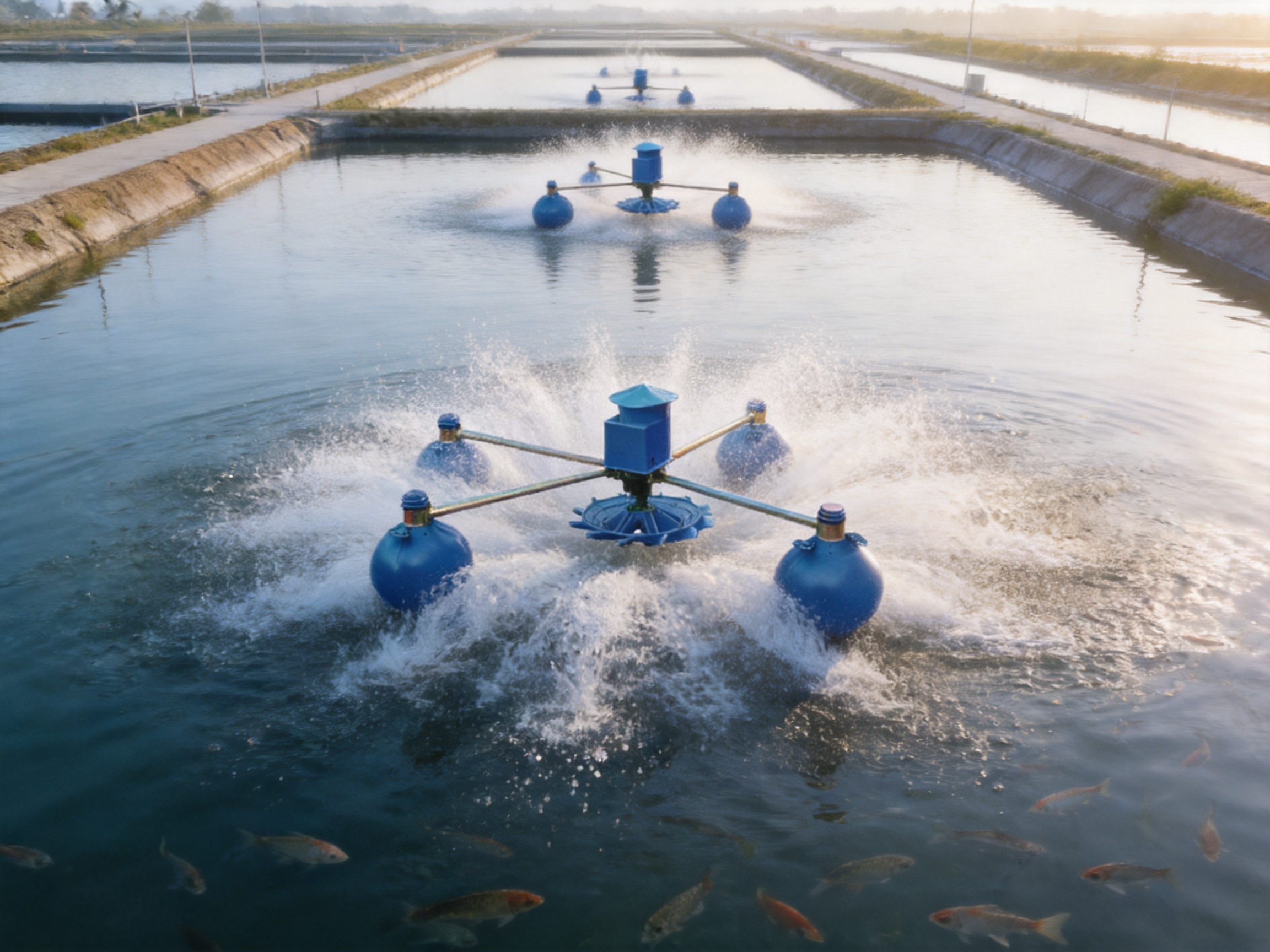
When the motor is energized, it transfers rotational power through the gear system to the impeller. The reduction and transmission arrangement allows the impeller to operate at the specified speed while producing the torque needed for water movement. As the impeller rotates at the surface, it lifts, spreads, and agitates water.
This action creates several beneficial effects. First, it increases the exposed water surface and promotes contact between air and water. Second, it moves oxygenated water outward from the operating area. Third, it can help break up stagnant zones where oxygen levels may otherwise become uneven. Fourth, surface movement can support the release of certain unwanted gases from the water, although the extent depends on pond conditions and aerator placement.
Correct positioning is essential. In a rectangular pond, aerators are often arranged to create a circulation pattern rather than isolated turbulence. In shrimp ponds, placement may be selected to encourage movement toward a collection or settling area, depending on the farm’s management method. The actual layout should be determined by pond shape, water depth, existing equipment, prevailing wind, stocking pattern, and drainage design.
Multiple aerators should be positioned so that their flow patterns complement one another. If units are too close together, their energy may be concentrated in one area. If they are too far apart, portions of the pond may remain poorly circulated. A commissioning test can help determine whether the water movement is distributed as intended.
Applications in Fish and Shrimp Farming
Fish Ponds
Fish ponds can benefit from surface aeration during periods of high feeding, rapid growth, warm weather, or low natural oxygen availability. The aerator can support daily oxygen management and provide additional capacity during emergency conditions. It may also be used as part of a scheduled night-time aeration program.
Different fish species have different oxygen requirements and behavior patterns. Some species remain near the surface during stress, while others occupy different water layers. Aeration and circulation can help reduce stratification, but the operating schedule should be adapted to the species, biomass, water temperature, and farm management plan.
Shrimp Ponds
Shrimp farming places strong demands on water quality and circulation. Shrimp may be sensitive to sudden changes in dissolved oxygen, organic loading, and bottom conditions. A properly positioned floating impeller aerator can help maintain water movement and support oxygen distribution across the pond.
In intensive shrimp production, aeration equipment is commonly operated for extended periods or according to a programmed schedule. The 1.5 kW and 3 kW models may be considered for ponds requiring higher capacity, while the 1.1 kW model can be useful for smaller or lower-load applications. Final selection should always be based on measured oxygen levels and the farm’s production plan.
Ecological and Utility Water Areas
Although the main focus of this product is aquaculture, floating surface aerators may also be considered for certain ecological water areas, landscape ponds, and water management projects. In these applications, the objective may include circulation, surface movement, and support for improved water conditions.
Project managers should evaluate whether the impeller material, electrical protection, noise level, and visual appearance are appropriate for the site. Where public access is possible, additional safety measures and restricted installation zones may be required.
Installation Considerations
Installation should begin with a review of the pond and the available electrical infrastructure. The installer should identify a suitable operating location, confirm adequate water depth for the impeller, establish a safe cable route, and determine how the floating unit will be anchored or restrained.
The unit should be positioned so that it can operate without striking pond walls, banks, pipes, cages, nets, or other equipment. Anchoring should allow normal movement caused by water level changes while preventing the aerator from drifting into an unsafe location. The anchoring system must be strong enough for local wind and water conditions.
Electrical installation should be completed by qualified personnel. The power supply must match the motor nameplate and selected model. Appropriate circuit protection, isolation, grounding, cable support, and moisture protection should be provided. Cables should not be allowed to float loosely near the impeller or become exposed to abrasion.
Before startup, the installer should inspect fasteners, float stability, impeller clearance, gearbox lubrication arrangements, cable connections, and the direction of rotation. The first operating test should be supervised. Unusual noise, excessive vibration, unstable floating position, abnormal current, or irregular water movement should be investigated immediately.
For large projects, commissioning records should include the model, voltage, current, installation position, operating condition, and initial observations. These records can help establish a baseline for future maintenance and troubleshooting.
Maintenance and Service Practices
Regular maintenance helps preserve the advantages of the gear system, motor, impeller, and float. The inspection frequency should reflect operating hours, water quality, salinity, debris levels, and seasonal conditions.
Operators should inspect the float for cracks, deformation, loose connections, and loss of buoyancy. The impeller should be checked for accumulated weeds, ropes, plastic, shells, or other debris. Even a small amount of material can affect balance and increase resistance. The shaft and fastening points should also be inspected for looseness or corrosion.
The gearbox should be checked according to the manufacturer’s recommended lubrication and inspection schedule. Signs of concern may include increasing noise, oil leakage, abnormal heat, vibration, or a reduction in water movement. If any of these symptoms appear, the equipment should be stopped and examined rather than operated until failure.
Motor maintenance includes checking electrical connections, insulation condition, current draw, protective devices, and signs of overheating. A motor that repeatedly trips protection may have an electrical or mechanical problem. Protection devices should never be bypassed to keep the aerator running.
Seasonal maintenance is especially important in regions with heavy rainfall, strong winds, freezing conditions, or significant water-level changes. Before storage or long shutdown periods, the operator should follow the applicable cleaning, drainage, inspection, and protection procedures.
Why It Is a Practical Choice for Importers
Importers and distributors often need more than a product with an attractive specification sheet. They require stable supply, clear model selection, adaptable configurations, technical communication, and support for different market requirements. A manufacturer with experience across multiple aeration and pumping product categories can be better positioned to provide coordinated solutions.
Zhejiang ZhenTai Mechanical and Electrical Co., Ltd. was established in 2018 in Wenling, Zhejiang Province, China. The company develops and manufactures more than 90 products across 10 series, including floating aerators, impeller aerators, water wheel aerators, water pumps, submersible pumps, and air blowers.
This broader product range is useful for buyers who manage complete aquaculture, irrigation, drainage, or water-treatment projects. Instead of sourcing every type of equipment from a separate supplier, an importer may discuss related product requirements with one factory. This can simplify technical communication, purchasing coordination, spare-parts planning, and future product development.
The company’s stated application fields include aquaculture, fish pond aeration, farmland irrigation, building foundation drainage, environmental protection, chemical industries, household water supply, ecological landscape lakes, and flood control and drainage. Such application diversity can contribute to practical manufacturing experience because products are developed for different operating environments and customer expectations.
OEM and ODM services are available for global buyers. Depending on the project, customization discussions may include product configuration, impeller material, voltage, packaging, labels, documentation, protective devices, and other commercial requirements. Buyers should provide detailed technical information at the quotation stage so that the factory can confirm feasibility and avoid misunderstandings.
Professional technical support is also valuable when a product is exported to a market with different electrical standards, pond layouts, climate conditions, and maintenance practices. A well-prepared buyer-supplier relationship should cover not only price and delivery, but also model selection, installation, operating limits, spare parts, warranty procedures, and after-sales communication.
Competitive Positioning
The product competes through a combination of mechanical construction, motor quality, configuration flexibility, and factory capability. Many low-cost aerators may provide basic floating operation, but differences can appear in gear material, surface treatment, impeller balance, winding quality, insulation processing, float stability, and service support.
The alloy steel gear and carbon-nitride surface treatment provide a stronger durability proposition than an untreated gear system. The non-welded assembled impeller offers a response to concerns about weld distortion and rotating balance. The copper winding and enhanced insulation process support a more dependable motor foundation. The choice of three impeller materials allows buyers to match equipment to different water environments and budgets.
The product also offers a useful range of power levels. The 1.1 kW model is designed for lower stated pond loads, the 1.5 kW models provide a mid-range option with two voltage configurations, and the 3 kW model is intended for higher stated loads. This gives distributors a compact product family rather than a single model that may be unsuitable for many installations.
Competitive performance should always be verified under comparable conditions. Buyers should compare oxygen transfer test methods, power efficiency, operating speed, warranty terms, material specifications, protection arrangements, spare-parts availability, packaging, and actual service records. The most economical purchase is not necessarily the lowest initial price; it is the solution that provides appropriate performance and dependable operation over its expected working life.
Selection Guide for Buyers
When selecting a model, begin with the pond’s actual operating requirements. Consider surface area, average and maximum biomass, species, feeding rate, water temperature, pond depth, salinity, organic loading, existing aeration capacity, and the required emergency reserve.
Next, confirm the electrical supply. The listed models include 380 V and 220 V options, but the buyer must confirm phase, frequency, starting current, control method, and local electrical requirements. A model that is mechanically suitable may still be inappropriate if the power supply cannot operate it safely.
Impeller material should be selected according to water chemistry and mechanical requirements. Plastic can be appropriate when low weight and corrosion resistance are important. Stainless steel may be preferred for more demanding corrosion conditions. Hot-dip galvanized steel plate may be suitable where strength and cost balance are important, subject to the water environment and maintenance plan.
Buyers should also ask about optional protective devices, spare impellers, gearbox parts, motor replacement procedures, packaging dimensions, container loading, and technical documentation. The supplied information indicates container quantities of 80 or 85 units for the listed models, but actual loading should be confirmed because packaging design and accessory arrangements can affect shipping volume.
Q&A
What is a surface floating impeller aerator?
It is a floating water-aeration machine that uses a motor-driven impeller at the pond surface. The impeller agitates and circulates water, increasing air-water contact and helping raise dissolved oxygen levels in fish and shrimp ponds.
What materials are used in this aerator?
The gear system uses chrome-manganese-titanium alloy steel with carbon-nitride surface hardening. The float uses PE. The impeller can be supplied in plastic, stainless steel, or hot-dip galvanized steel plate. The motor winding uses high-quality copper enameled wire.
What is the advantage of a non-welded impeller?
A non-welded assembled structure can help reduce distortion and improve concentricity. Better concentricity supports smoother rotation and may reduce vibration and uneven mechanical loading during operation.
Which voltage options are available?
The listed specifications include 380 V models and a 220 V version of the 1.5 kW model. Buyers should confirm phase, frequency, current, and local electrical requirements before ordering.
What power ratings are available?
The supplied models include 1.1 kW, 1.5 kW, and 3 kW configurations. The appropriate model depends on pond conditions, biomass, oxygen demand, existing aeration, and the required operating reserve.
How much oxygen can the aerator transfer?
The stated oxygen transfer rates are at least 1.6 kg O₂ per hour for the 1.1 kW model, at least 2.3 kg O₂ per hour for the 1.5 kW models, and at least 4.5 kg O₂ per hour for the 3 kW model. Actual results depend on test conditions and the operating environment.
Can the aerator be used in shrimp ponds?
Yes. It is designed for surface aeration in aquaculture applications, including fish and shrimp ponds. The final quantity and placement should be determined according to shrimp biomass, water quality, pond shape, stocking density, and farm management practices.
Does the product include protective devices?
Protective devices are available as optional configurations. The required protection should be discussed with the supplier and matched to the motor, electrical system, local regulations, and installation environment.
How should the unit be installed?
The aerator should be positioned where the impeller can operate freely and where the water movement supports the desired circulation pattern. It should be safely anchored, connected to a correctly rated power supply, grounded, and protected by suitable electrical equipment.
What should be checked during maintenance?
Operators should inspect the float, impeller, fasteners, shaft, gearbox, motor, cable connections, and protective devices. Debris should be removed, unusual vibration should be investigated, and gearbox maintenance should follow the applicable manufacturer recommendations.
Can the product be customized for import projects?
OEM and ODM services are available for global buyers. Customization discussions may include voltage, impeller material, protective devices, packaging, labels, documentation, and other project requirements, subject to technical confirmation.
What information should an importer provide when requesting a quotation?
The importer should provide the target market, pond type, number of units, required voltage and frequency, preferred impeller material, expected operating conditions, packaging needs, branding requirements, destination port, and any requested certificates or documents.
Conclusion
The surface floating impeller aerator is designed to provide practical and durable oxygenation for fish ponds, shrimp ponds, and other aquaculture water systems. Its floating structure supports flexible installation, while its impeller generates surface movement, air-water contact, and water circulation.
Its main technical advantages include a chrome-manganese-titanium alloy steel gear system, carbon-nitride gear hardening, a non-welded assembled impeller, high-quality copper motor winding, an enhanced insulation process, a PE float, and multiple impeller material options. These details address common concerns related to wear, vibration, corrosion, electrical reliability, and operating stability.
The product range covers 1.1 kW, 1.5 kW, and 3 kW models, with selected 220 V and 380 V configurations. This gives aquaculture operators and importers a choice of capacities for different pond conditions. However, correct selection requires more than comparing power ratings. Buyers should evaluate oxygen demand, biomass, water quality, electrical infrastructure, installation layout, and maintenance capability.
Supported by a factory producing aerators, pumps, and air blowers across multiple product series, the equipment is suitable for distributors, aquaculture farms, irrigation projects, and engineering buyers seeking a configurable surface aeration solution. With correct installation, suitable protection, and regular maintenance, the aerator can contribute to more stable pond oxygen management and dependable long-term operation.
References
1. Product technical information supplied for the surface floating impeller aerator, including model ratings, materials, construction features, and application data.
2. Product and company information supplied for Zhejiang ZhenTai Mechanical and Electrical Co., Ltd., including manufacturing scope, application fields, OEM/ODM capability, and technical support.
3. General principles of dissolved oxygen management in aquaculture systems.
4. General engineering principles for gear materials, carbonitriding, rotating equipment balance, and electric motor insulation.
5. General aquaculture equipment selection and pond aeration practices.