 English
 Español
 Indonesia
Introduction
Reliable oxygen management is one of the most important requirements in modern aquaculture. Whether a farm raises shrimp, fish, or other aquatic species, dissolved oxygen must be maintained at a suitable level throughout the culture cycle. Oxygen shortages can develop quickly during hot weather, at high stocking densities, after feeding, or during nighttime hours when photosynthesis stops. If aeration equipment cannot operate continuously under these conditions, the consequences may include reduced growth, feed waste, disease pressure, poor water quality, and stock loss.
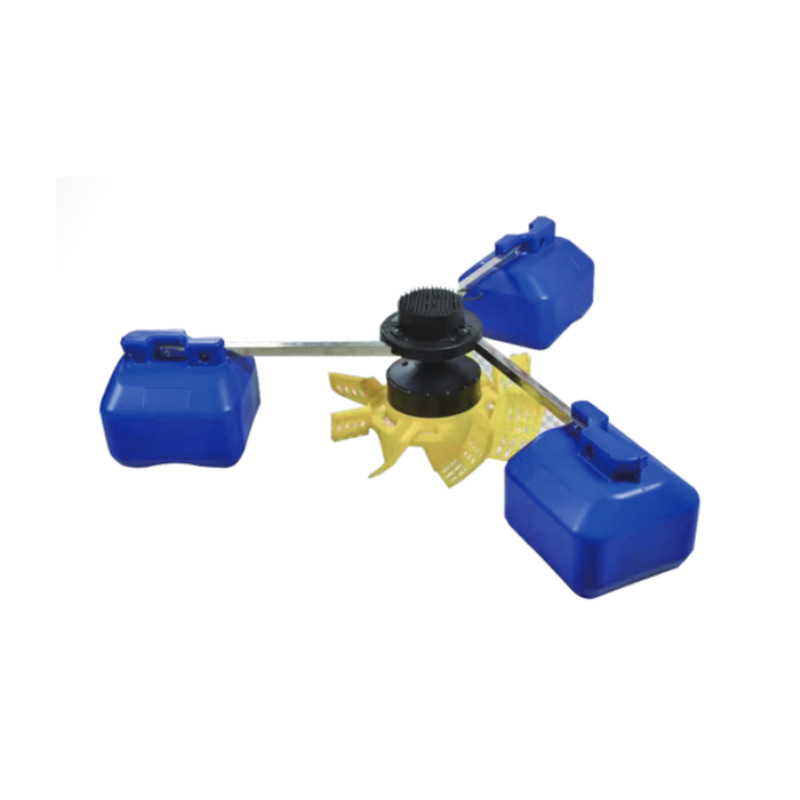
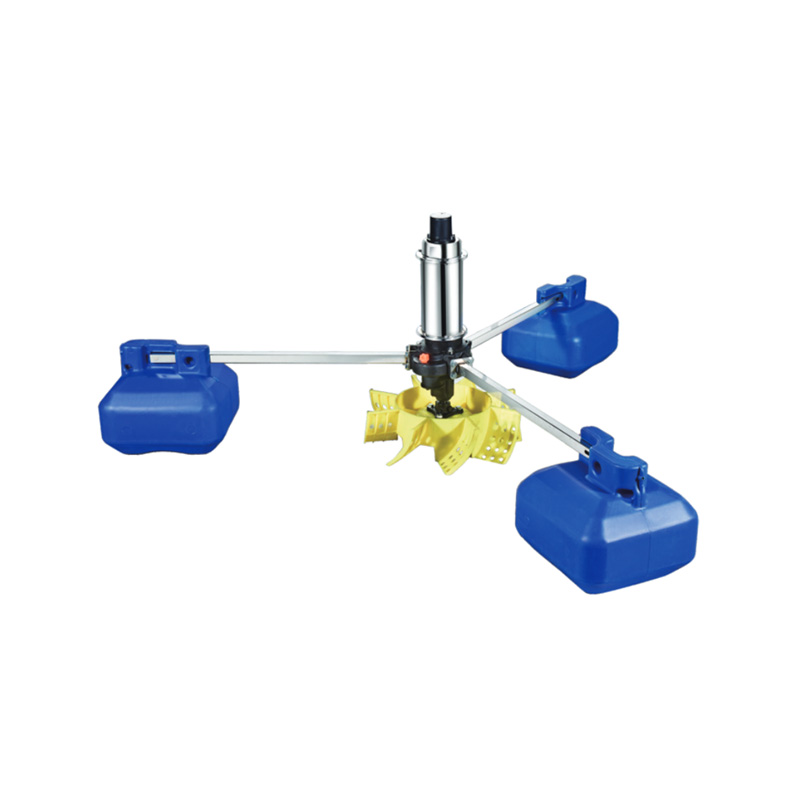
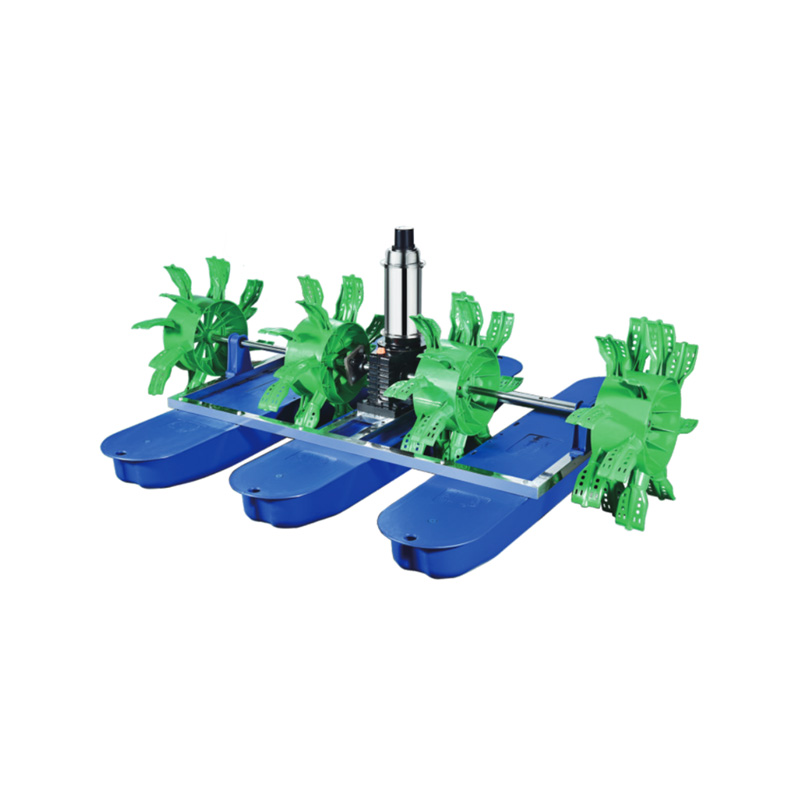
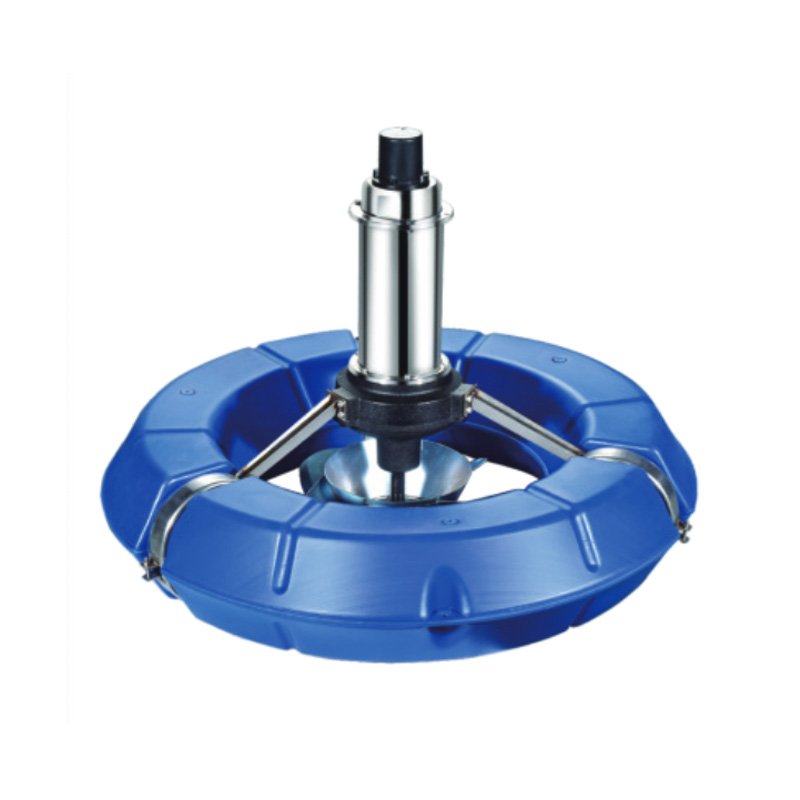
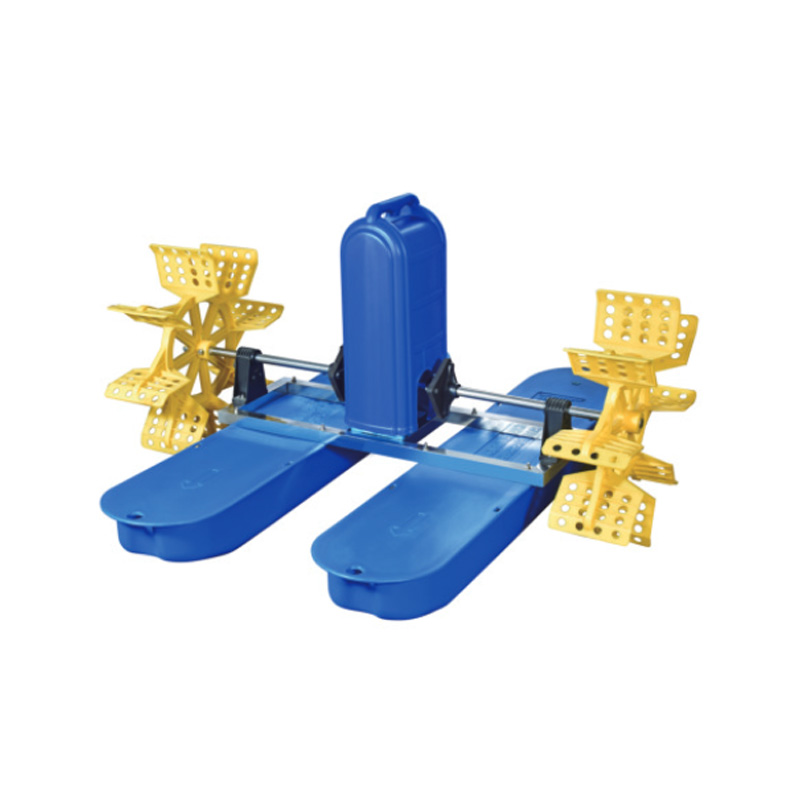
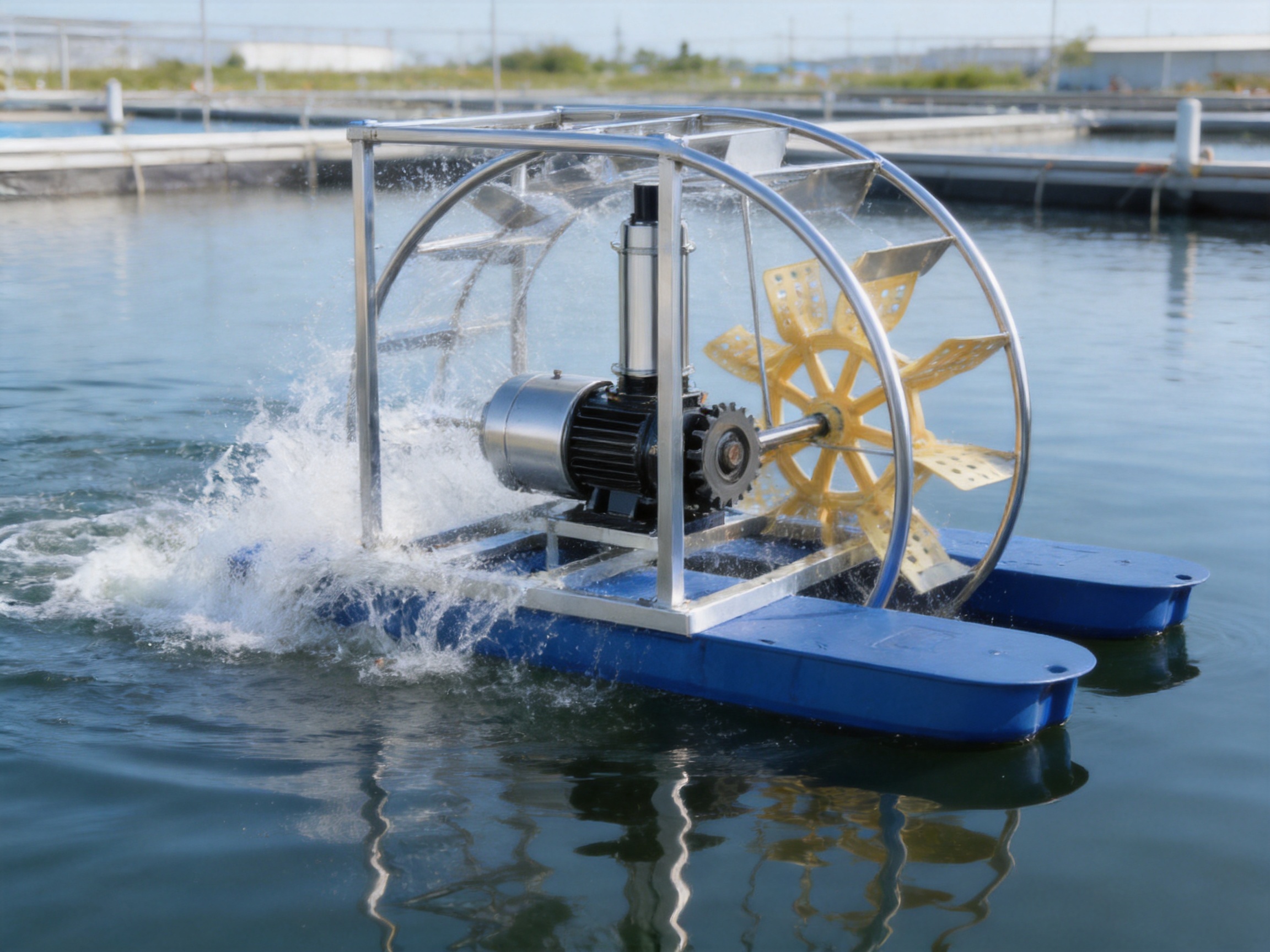
The stainless steel water-cooled paddle wheel aerator is designed for aquaculture operations that require dependable oxygen transfer, continuous operation, and strong resistance to demanding environmental conditions. Its water-cooled motor structure is an upgraded design that supports heat dissipation during prolonged operation. Combined with stainless steel structural components, a corrosion-resistant drive shaft, a mechanical sealing system, treated alloy-steel gears, and high-strength floating pontoons, the aerator is built for intensive pond applications.
This equipment is particularly suitable for shrimp ponds, fish farms, coastal aquaculture sites, high-temperature regions, and areas where water salinity or humidity creates additional challenges for conventional aerators. It combines the mixing and oxygenation advantages of a paddle wheel system with a motor structure intended to remain more stable during long operating periods.
Manufactured by Zhejiang ZhenTai Mechanical and Electrical Co., Ltd., the product reflects the company’s experience in aerators, water pumps, submersible pumps, and air blowers. The manufacturer develops and produces more than 90 products across 10 series, supplying equipment for aquaculture, irrigation, drainage, environmental protection, chemical applications, household water supply, ecological lakes, and flood-control projects.
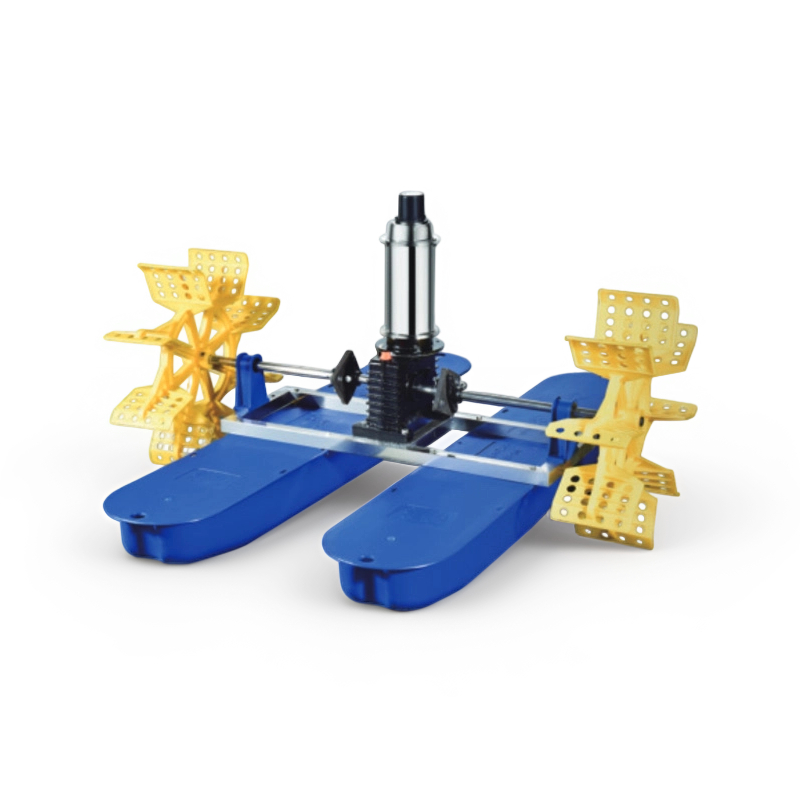
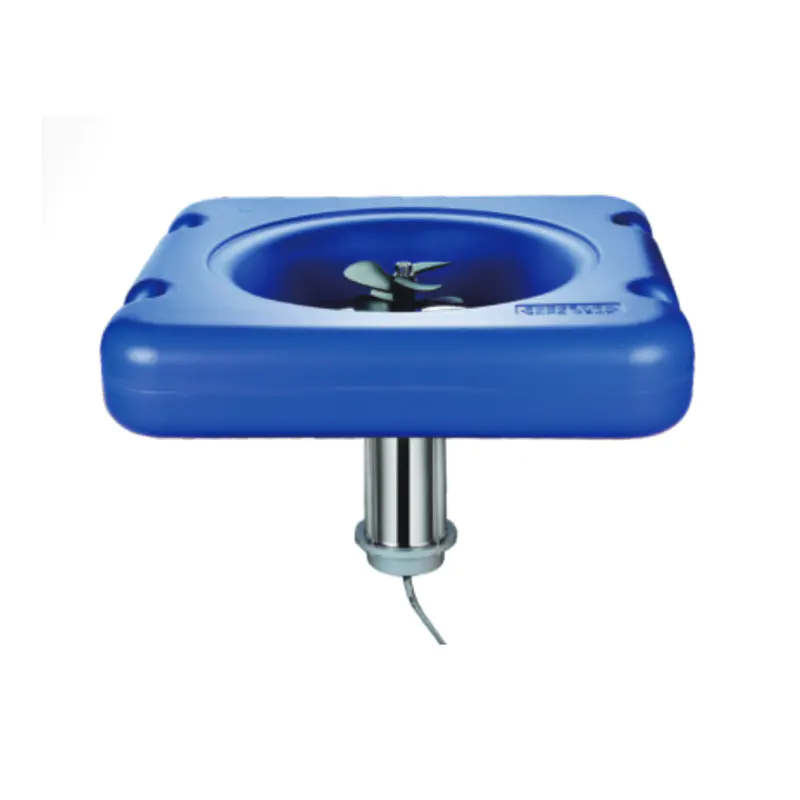
Stainless Steel Water-Cooled Paddle Wheel Aerator
Why Paddle Wheel Aeration Matters in Aquaculture
Aquaculture ponds require more than simple water movement. Effective aeration should introduce oxygen into the water, distribute oxygenated water through the pond, reduce stagnant zones, and support the decomposition of organic matter. A paddle wheel aerator accomplishes these tasks by rotating paddles through the water surface. The paddles lift and splash water, increase the contact area between water and air, and create circulation around the operating unit.
The resulting movement supports two essential functions. First, it improves oxygen transfer by exposing more water to atmospheric air. Second, it circulates the pond water so that oxygen is not concentrated only near the aerator. Better circulation can help reduce stratification and improve the overall distribution of dissolved oxygen.
For shrimp farming, pond circulation is especially important because shrimp often remain close to the bottom or in areas where organic matter accumulates. For fish farming, aeration supports active stock during periods of high respiration and helps the pond respond to changes in water quality. In both cases, an aerator is part of a wider water-management system that may also include water exchange, filtration, feeding control, and regular monitoring.
The paddle wheel design is widely used because it is practical, mechanically straightforward, and capable of producing visible water movement. Compared with systems that depend exclusively on diffusers or fine bubbles, a paddle wheel aerator offers strong surface agitation and horizontal circulation. Its floating configuration also makes it suitable for ponds where the operating position may need to be adjusted as water levels or farm conditions change.
Product Overview
The stainless steel water-cooled paddle wheel aerator is engineered for continuous pond operation. The primary upgrade is the use of a fully stainless steel water-cooled motor structure. During operation, the cooling system uses water-assisted heat dissipation to help control motor temperature. This is particularly valuable in warm climates, where high ambient temperatures can add to the thermal load created by continuous motor operation.
The motor is supported by a stainless steel frame and connected to the paddle wheel through a stainless steel drive shaft. The drive system uses chromium-manganese-titanium alloy steel gears treated through carbonitriding, which combines carburizing and nitriding processes. This treatment is intended to improve surface hardness, wear resistance, and service performance in a heavily loaded transmission system.
A mechanical seal helps isolate the internal drive components from water and helps prevent oil leakage. The floating structure uses high-strength pontoons to maintain stability on the pond surface. Together, these features create a configuration suited to demanding aquaculture environments where water exposure, vibration, heat, and long operating cycles are normal.
| Feature | Product Configuration | Operational Purpose |
|---|---|---|
| Motor structure | Stainless steel water-cooled motor | Supports heat dissipation during extended operation |
| Drive shaft | Stainless steel | Provides corrosion-resistant power transmission |
| Frame | Stainless steel | Improves structural durability in wet environments |
| Gear material | Chromium-manganese-titanium alloy steel | Supports strength and wear resistance |
| Gear treatment | Carbonitriding | Improves surface hardness and transmission durability |
| Sealing system | Mechanical seal | Helps reduce water entry and oil leakage |
| Installation style | Floating pond-surface installation | Allows practical positioning in aquaculture ponds |
Water-Cooled Motor Technology
Motor temperature is a major consideration for aquaculture equipment. An aerator may be expected to run for many hours per day, and in some operations it may operate around the clock. Heat generated by electrical losses, mechanical friction, and ambient conditions can increase the operating temperature of the motor. If heat is not managed effectively, insulation, bearings, seals, lubricants, and other components may experience additional stress.
The water-cooled structure assists the motor in transferring heat away from the operating components. Because the aerator works on the pond surface, water is readily available as part of the cooling design. The purpose is not to eliminate all thermal variation, but to help the motor maintain a more stable operating condition during prolonged use.
This characteristic is valuable in several situations. High-temperature areas can cause ordinary air-cooled equipment to operate closer to its thermal limits. Coastal farms may combine high temperatures with saline humidity, increasing the overall environmental burden on equipment. Intensive shrimp farms may also require long daily operating schedules, particularly during periods of high biomass or low nighttime oxygen production.
A water-cooled motor can offer an operational advantage over basic standard configurations when the equipment is correctly installed and maintained. Stable motor temperature may support more consistent performance, reduce thermal stress, and help the operator use the aerator for longer operating cycles. Actual results depend on water temperature, pond conditions, electrical supply, installation, maintenance, and operating load.
The water-cooled design should not be treated as a replacement for correct electrical protection or maintenance. Operators should still use suitable overload protection, inspect cables and connections, confirm grounding, and follow the manufacturer’s operating instructions. Cooling performance also depends on ensuring that the cooling structure remains unobstructed and that the aerator is installed securely.
Stainless Steel Construction for Demanding Environments
Water, humidity, dissolved salts, fertilizers, cleaning chemicals, and organic deposits can all contribute to corrosion. Aquaculture equipment is exposed to these factors repeatedly, often in combination. A frame or shaft that is not adequately protected may lose strength, become difficult to service, or transfer contamination into the operating environment.
The use of stainless steel for the motor structure, frame, and drive shaft provides a strong foundation for wet-environment service. Stainless steel is valued for its resistance to corrosion, ease of cleaning, and ability to maintain structural integrity under repeated exposure to water. It is also suitable for farms that place a high priority on hygienic equipment surfaces and long-term appearance.
The stainless steel frame supports the motor and transmission assembly while resisting the effects of splashing and humidity. The stainless steel drive shaft provides a corrosion-resistant connection between the drive system and paddle wheel. This is important because the shaft is directly associated with the rotating assembly and may be exposed to water, spray, and oxygenated air throughout operation.
Compared with painted mild steel, stainless steel can reduce dependence on surface coatings as the primary barrier against corrosion. Painted equipment may still perform effectively when coating quality and maintenance are excellent, but scratches, impact damage, and prolonged immersion can expose the underlying metal. Stainless steel construction offers a more durable material-based approach, particularly for operators working in coastal or saline conditions.
Material selection alone does not guarantee unlimited service life. The equipment should be rinsed or cleaned when necessary, especially after operation in saltwater or brackish water. Fasteners, electrical connections, bearings, seals, and other components should also be checked because corrosion can occur in assemblies even when the major structural parts are stainless steel.
Transmission System and Carbonitrided Gears
The gear system is responsible for transferring motor power to the paddle wheel. It must withstand repeated torque, vibration, shock loads, and continuous rotation. Aquaculture operation can be demanding because the paddle wheel may encounter changing water resistance, plant matter, suspended solids, and variations in water depth.
The product uses chromium-manganese-titanium alloy steel for its gears. Alloying elements are selected to support mechanical strength and resistance to wear. The gears are treated through carbonitriding, a thermochemical process that introduces carbon and nitrogen into the surface layer of the steel. The result is a hardened outer layer combined with a tougher internal core.
This combination is useful in transmission applications. The hardened surface can resist adhesive wear, surface fatigue, and repeated contact stress, while the core retains the toughness needed to absorb operating loads. Proper gear treatment can help maintain tooth geometry and transmission efficiency over extended use.
Compared with untreated or lower-grade gear materials, a carbonitrided alloy-steel gear system may offer better resistance to the conditions found in continuous-duty equipment. It can also support smoother power transmission when the gears are correctly manufactured, aligned, lubricated, and loaded within their design limits.
Gear durability is influenced by more than material selection. Correct lubrication is essential. Operators should inspect for unusual noise, vibration, overheating, lubricant leakage, or changes in paddle wheel speed. These signs may indicate alignment problems, wear, foreign material, overload, or insufficient lubrication. Early inspection can prevent a small transmission issue from becoming a major repair.
Mechanical Sealing and Water Protection
Water protection is central to the reliability of a floating aerator. The drive assembly must operate near a wet and constantly moving surface, while the internal gears require lubrication. A mechanical seal helps separate the water-facing environment from the internal transmission area.
The sealing system is designed to help prevent oil leakage and reduce water entry. This supports cleaner operation and protects the lubricant from contamination. A reliable seal also helps maintain the intended lubrication conditions for the gears and rotating components.
Mechanical seals are precision components and should be treated accordingly. Dry running, misalignment, excessive shaft movement, abrasive particles, and improper installation can shorten seal life. Operators should avoid running the equipment outside the recommended water conditions and should inspect the seal area during routine maintenance.
If oil is observed on the water surface, the aerator should be stopped and inspected. Continuing to operate with a damaged seal may allow further lubricant loss and increase the risk of transmission damage. Prompt maintenance helps protect both the equipment and the pond environment.
Floating Structure and Pond Installation
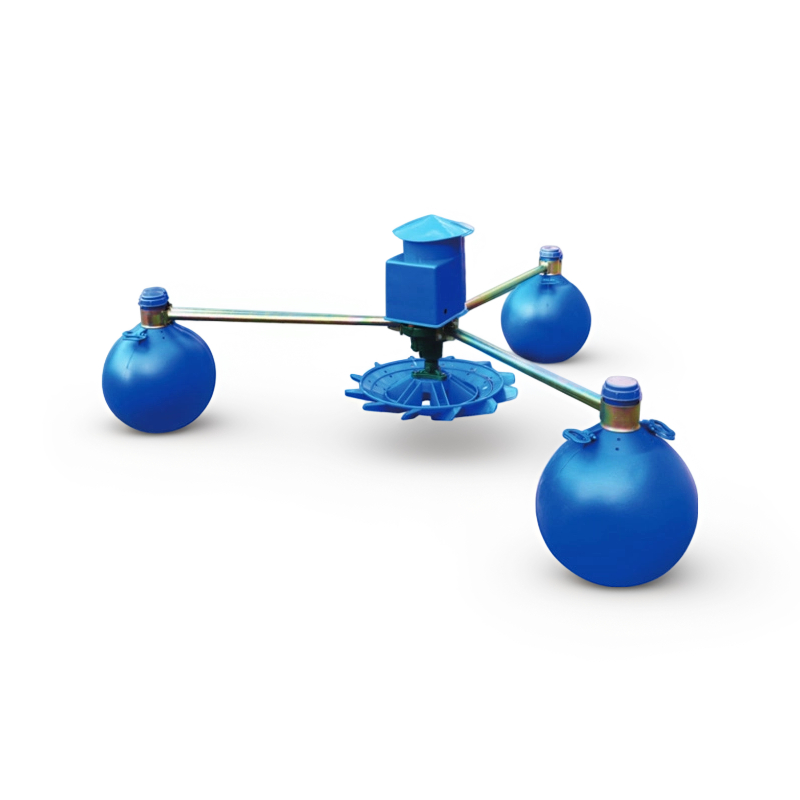
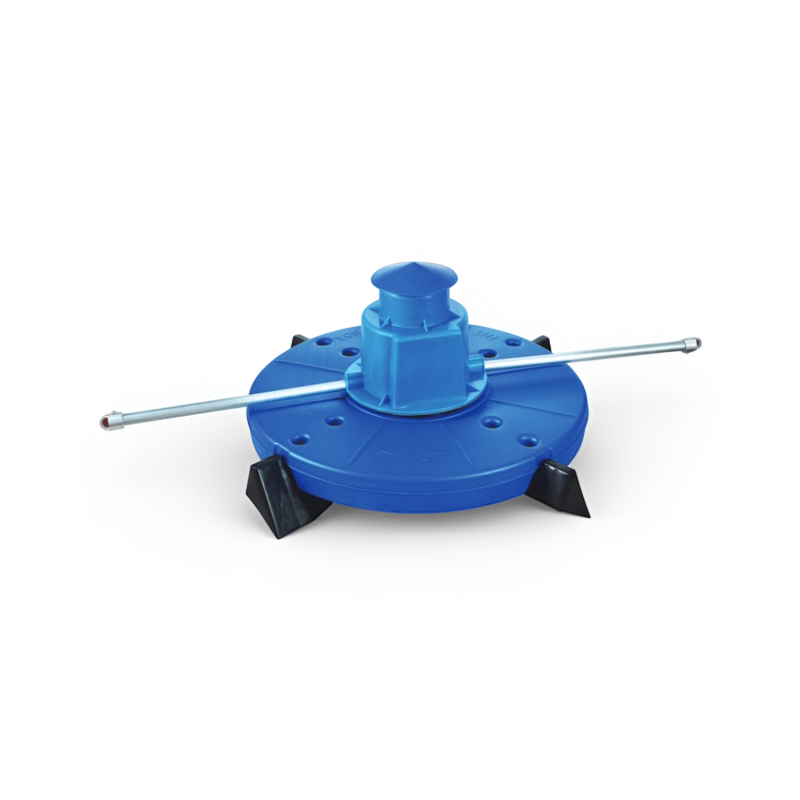
The aerator is installed on the pond surface using high-strength floating pontoons. The floating configuration keeps the paddle wheel positioned at the water surface, where it can create splash, agitation, and circulation. It also allows the unit to adapt to normal changes in pond water level.
Installation should begin with a suitable location. The aerator should be positioned where water movement can reach the largest practical area of the pond and where it will not interfere with feeding stations, pond liners, drainage structures, walkways, or other equipment. Operators should consider prevailing wind, pond geometry, water depth, stocking density, and the location of low-oxygen zones.
All frame, pontoon, motor, and support components must be secured before electrical power is connected. The unit should remain stable during startup and should not tilt excessively under operating load. Cables should be routed safely to prevent abrasion, accidental pulling, or contact with moving parts. Electrical components should be protected from water exposure and installed by qualified personnel.
Anchoring or positioning arrangements should allow the aerator to remain in its intended operating area without restricting normal movement of the floating structure. The method selected should match the pond layout and local operating conditions. In multiple-aerator installations, units should be arranged to encourage circulation rather than create competing water currents.
Before starting the equipment, inspect the paddle wheel for obstructions and verify that the rotating parts can move freely. Check the mechanical seal area, confirm that the pontoons are properly supported, and ensure that the electrical supply matches the specified voltage. A short test run should be used to identify abnormal vibration, noise, instability, or leakage before full-time operation begins.
Performance Data and Model Selection
The available product range includes 0.75 kW and 1.1 kW models at 380 V, as well as 1.5 kW models available at 220 V and 380 V. The listed oxygen transfer rate ranges from at least 1.1 to at least 1.9 according to the model. Listed power efficiency is at least 1.25 for the available configurations.
Model selection should not be based only on motor power. Farm managers should consider pond size, depth, stocking density, species, water temperature, salinity, expected operating hours, available electrical supply, and the number and position of aerators. The required capacity may also change as biomass increases during the production cycle.
| Model | Voltage | Power | Listed Oxygen Transfer Rate | Listed Power Efficiency | No-Load Noise | Weight | 20-Foot Container Quantity |
|---|---|---|---|---|---|---|---|
| ZT-0.75 | 380 V | 0.75 kW | ≥1.1 | ≥1.25 | ≤78 dB(A) | 80 kg | 85 |
| ZT-1.1 | 380 V | 1.1 kW | ≥1.25 | ≥1.25 | ≤80 dB(A) | 80 kg | 85 |
| ZT-1.5 | 220 V | 1.5 kW | ≥1.9 | ≥1.25 | ≤80 dB(A) | 100 kg | 70 |
| ZT-1.5 | 380 V | 1.5 kW | ≥1.9 | ≥1.25 | ≤80 dB(A) | 100 kg | 70 |
The performance values above are the supplied product data. Buyers should confirm the final technical specification, test method, electrical configuration, packaging details, and applicable certification before placing an order. Oxygen transfer performance can vary according to water temperature, salinity, altitude, water quality, immersion depth, paddle configuration, and test conditions.
The 220 V version may be appropriate for farms with single-phase electrical infrastructure, while the 380 V versions may suit three-phase systems commonly used in commercial aquaculture operations. Electrical compatibility should always be confirmed before purchase. Incorrect voltage selection can cause poor performance, motor damage, or unsafe operation.
Advantages Over Basic Competitor Configurations
Many paddle wheel aerators offer basic pond agitation, but not all models are designed for high-temperature or saline environments. The main competitive advantage of this product is the combination of water-cooled motor technology and stainless steel construction. Each feature addresses a different operating challenge, and their combination creates a more complete solution than a standard painted-frame, air-cooled configuration.
First, the water-cooled motor is designed for improved thermal management during extended operation. A basic air-cooled motor may be sufficient for moderate climates or shorter duty cycles, but operating conditions become more difficult when ambient temperature is high and the equipment runs continuously. Water-assisted cooling can help reduce operating temperature and support more stable performance.
Second, the stainless steel frame and drive shaft provide a stronger corrosion-resistance profile than conventional carbon-steel components protected only by paint. This is particularly relevant in shrimp ponds, coastal farms, brackish-water facilities, and humid regions. Reduced corrosion risk can support longer service intervals and preserve the mechanical integrity of the equipment.
Third, the carbonitrided alloy-steel gears provide a durable transmission foundation. Lower-cost competitors may use untreated gears or materials that are less suitable for continuous torque transmission. A treated gear system can improve wear resistance and support dependable power transfer when it is correctly lubricated and maintained.
Fourth, the mechanical sealing system helps protect the internal transmission and reduce the risk of lubricant leakage. Seal performance is an important distinction between a reliable commercial aerator and a product intended only for light or intermittent use.
Finally, the product is supplied by a manufacturer with a broad portfolio covering aerators, water pumps, submersible pumps, and air blowers. This product range gives buyers access to a broader water-management equipment source rather than requiring every item to be purchased from unrelated suppliers.
| Comparison Area | Basic Standard Aerator | Stainless Steel Water-Cooled Paddle Wheel Aerator |
|---|---|---|
| Motor cooling | Typically standard air cooling | Water-assisted cooling structure |
| Frame material | May rely on painted carbon steel | Stainless steel frame |
| Drive shaft | Material varies by supplier | Stainless steel drive shaft |
| Gear construction | May use standard untreated steel | Chromium-manganese-titanium alloy steel with carbonitriding |
| Sealing | Configuration varies | Mechanical seal designed to help control water and oil movement |
| Target environment | General pond use | High-temperature, high-salinity, and coastal aquaculture applications |
| Procurement support | May be limited to one product category | Manufacturer also supplies pumps and air blowers |
The comparison should be understood as a general equipment-selection guide rather than a universal performance guarantee. Competitor products vary widely in materials, manufacturing quality, motor design, testing, and after-sales service. Buyers should compare complete technical specifications and lifecycle costs rather than focusing only on purchase price.
Applications in Shrimp and Fish Farming
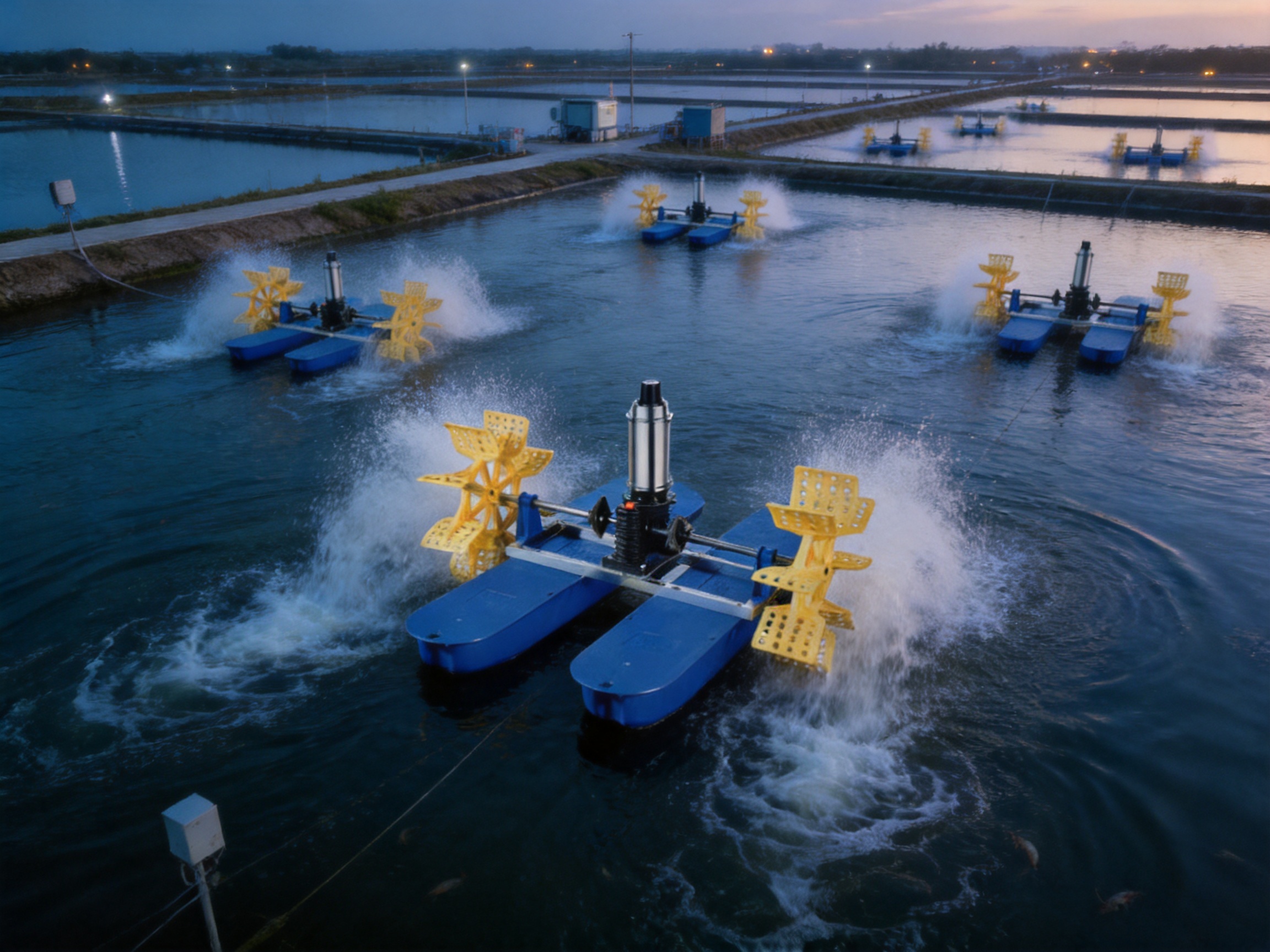
Shrimp ponds are a primary application for this aerator. Shrimp production commonly involves high stocking densities and substantial organic loading. During the production cycle, feed residues, fecal matter, algae, and suspended solids can affect water quality and oxygen demand. Paddle wheel aeration helps maintain water movement and supports oxygen availability during critical periods.
In shrimp farming, operators often increase aeration as biomass grows. Nighttime operation is especially important because photosynthesis ceases after sunset while shrimp, microorganisms, and other pond organisms continue consuming oxygen. The water-cooled motor is useful in operations where extended runtime is necessary, particularly during hot weather or late-stage production.
Fish farms can also use the aerator in nursery ponds, grow-out ponds, intensive culture systems, and holding areas. Fish species differ in oxygen requirements, but all culture systems benefit from an appropriate balance of oxygenation and circulation. The aerator can be deployed as a primary oxygenation unit or used with other systems, such as diffused-air blowers or water pumps.
Coastal and brackish-water farms may benefit from the stainless steel structure. Salinity can accelerate corrosion on exposed metal surfaces, especially where equipment is frequently splashed and allowed to dry. Regular freshwater rinsing and inspection remain necessary, but stainless steel construction provides a more suitable starting point for these conditions.
The equipment can also be applied in ecological landscape ponds, water-retention ponds, and other managed water bodies where circulation and oxygenation are required. Application outside aquaculture should be evaluated separately because water depth, debris, public access, and environmental requirements may differ from farm conditions.
Manufacturing Strengths
Zhejiang ZhenTai Mechanical and Electrical Co., Ltd. was established in 2018 and is located in Wenling, Zhejiang Province, China. The company specializes in the research, development, and production of more than 90 products across 10 series. Its product categories include floating aerators, impeller aerators, water wheel aerators, water pumps, submersible pumps, and air blowers.
This broad product base supports a manufacturing approach centered on water movement, aeration, pumping, and drainage. Instead of focusing on a single isolated product, the company develops equipment for connected applications such as fish pond management, farmland irrigation, foundation drainage, ecological water features, flood control, and environmental protection.
The manufacturing process for the paddle wheel aerator involves multiple quality-sensitive stages. Material selection is important because the frame, shaft, gears, seals, pontoons, motor, and paddle assembly all face different operating stresses. Stainless steel components require controlled fabrication and finishing. Gear components require suitable alloy material, accurate machining, and heat treatment. Motor and transmission assemblies require correct alignment and inspection.
Carbonitriding is a specialized process that must be controlled according to material, temperature, time, and required surface properties. The objective is to create a suitable hardened layer without compromising the toughness of the gear core. Proper post-treatment inspection and dimensional control are necessary to ensure that the treated gears fit and operate correctly within the transmission assembly.
Assembly quality also has a direct effect on reliability. The drive shaft must be aligned with the motor and paddle wheel. Bearings and seals must be installed without damage. The frame must hold the components securely while allowing the rotating assembly to operate with acceptable vibration. Pontoons must be fitted so that the completed unit remains stable on the water surface.
Product testing should include inspection of electrical operation, rotation, noise, vibration, sealing, floating stability, and overall assembly condition. The supplied data lists no-load noise values of no more than 78 dB(A) for the 0.75 kW model and no more than 80 dB(A) for the other listed models. Buyers requiring project-specific noise limits or performance certification should request the relevant test documentation.
Quality, Innovation, and OEM/ODM Capability
The company states that it focuses on quality, integrity, continuous technological innovation, reliable products, customized OEM/ODM services, and professional technical support. These capabilities are important for international buyers because aquaculture equipment is often selected for specific electrical systems, pond conditions, shipping requirements, and local installation practices.
OEM and ODM services can support product customization within feasible engineering limits. Buyers may require different voltage configurations, branding, packaging, documentation, electrical standards, spare-parts arrangements, or product combinations. A manufacturer with multiple product categories may also be able to coordinate aerators and pumps for a wider farm project.
Customization should be discussed before production begins. Technical drawings, nameplate information, motor specifications, cable requirements, packing dimensions, and inspection standards should be confirmed in writing. Buyers should also clarify minimum order quantities, sample procedures, production lead times, warranty terms, replacement-part availability, and export documentation.
Professional technical support is particularly useful for overseas customers. Correct installation has a major effect on aerator performance and service life. Guidance regarding pond positioning, electrical protection, anchoring, startup, maintenance, and troubleshooting can help reduce avoidable operating problems.
For distributors and wholesalers, stable product supply and consistent specifications are as important as individual unit performance. The listed container-loading quantities provide an initial reference for logistics planning: 85 units for the 0.75 kW and 1.1 kW models, and 70 units for the 1.5 kW models in a 20-foot container. Actual loading quantities should be reconfirmed according to final packaging and shipping arrangements.
Energy and Operating Efficiency
Energy cost is a major part of aquaculture operating expenditure. Aerators may run for many hours each day, so even small differences in energy consumption can affect the cost of a production cycle. The listed power-efficiency value for the available models is at least 1.25 according to the supplied specifications.
Energy efficiency should be evaluated together with oxygen transfer. A motor with lower electrical power is not automatically more economical if it provides insufficient oxygenation and requires additional units. Conversely, selecting an oversized unit may increase energy consumption without providing a proportional production benefit. The appropriate choice depends on the pond’s oxygen demand, the desired circulation pattern, and the farm’s operating schedule.
The water-cooled motor may support more stable operation under heat stress, but operators should still use an appropriate duty cycle when conditions exceed the design environment. Electrical voltage should remain within the required range, and voltage drop caused by long cables or undersized conductors should be avoided. Poor power quality can increase motor heating and reduce efficiency.
Routine maintenance also supports energy performance. Worn bearings, damaged paddles, misaligned shafts, contaminated gears, and partially obstructed rotating components can increase resistance. This may cause the motor to draw more power while delivering less effective water movement. A clean, correctly aligned, and properly lubricated aerator is more likely to perform efficiently.
Maintenance Recommendations
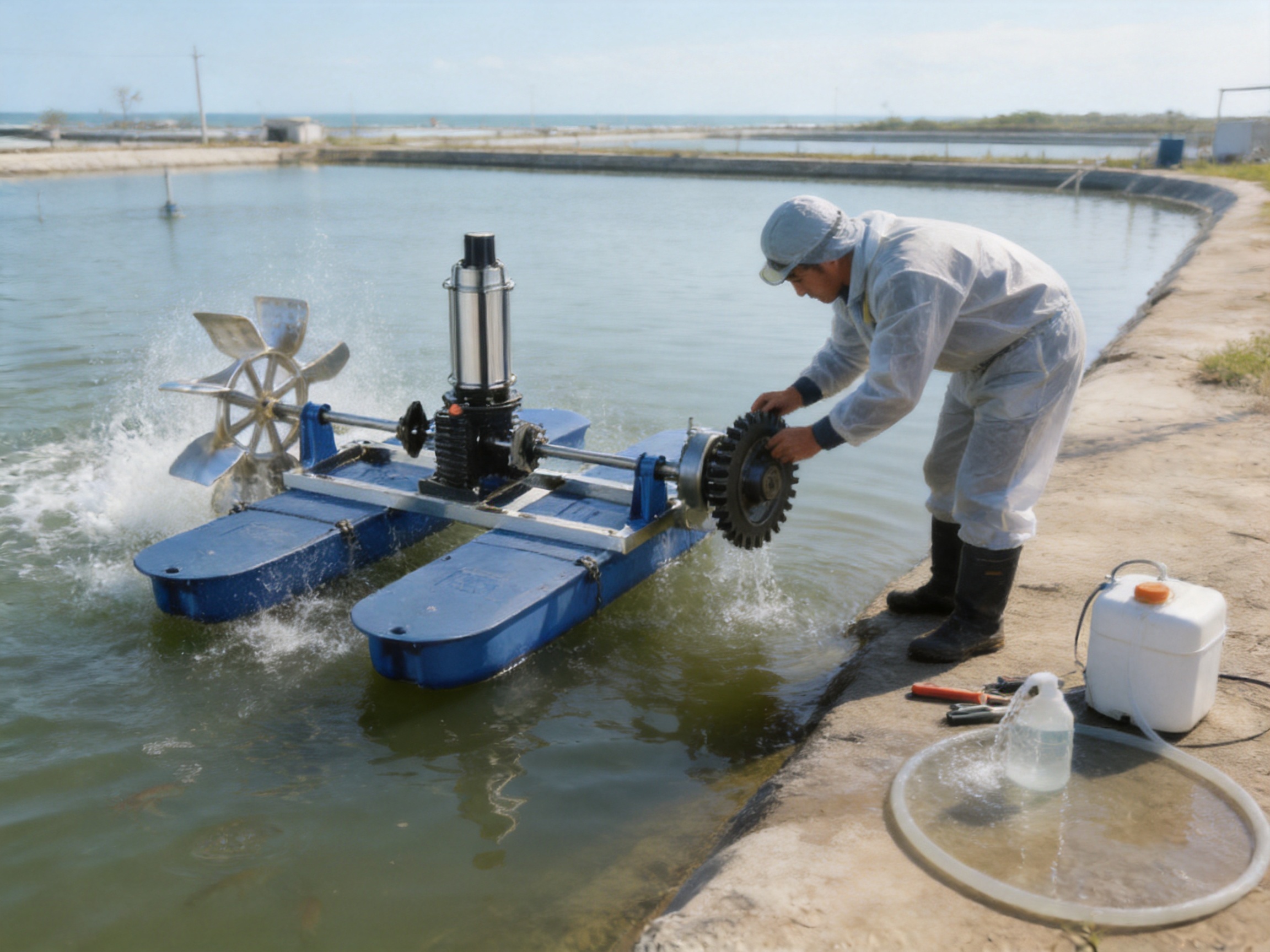
A maintenance program should begin with regular visual inspection. Check the pontoons for cracks, deformation, water absorption, or loose fittings. Inspect the stainless steel frame for damage and confirm that all fasteners remain secure. Examine the drive shaft, paddle wheel, mechanical seal area, cable routing, and electrical enclosure.
Before carrying out maintenance, disconnect the electrical supply and prevent accidental restart. Moving parts should be completely stopped before inspection. Electrical work should be performed by qualified personnel using suitable protective procedures.
Clean the paddle wheel when algae, plastic, rope, plant material, or other debris begins to reduce water movement. Debris can cause imbalance and increase vibration. In severe cases, it can overload the motor or damage the shaft and transmission. Cleaning frequency depends on pond conditions and should be increased where floating debris is common.
In saline or brackish water, rinse exposed equipment with clean freshwater when practical. This can reduce salt deposits and help protect surfaces, fasteners, and electrical connections. Avoid using cleaning agents that may damage seals, coatings, plastics, or the pond environment.
Inspect the gear housing and mechanical seal for leakage. Any sign of oil on the water surface should be treated as a maintenance issue. Confirm lubricant levels and replacement intervals according to the manufacturer’s instructions. Do not mix incompatible lubricants, and do not operate the transmission without adequate lubrication.
Monitor sound and vibration during normal operation. A gradual increase in noise may indicate gear wear, bearing damage, loose fasteners, shaft misalignment, or paddle obstruction. Sudden vibration should be investigated immediately. Preventive maintenance is generally less costly than repairing a failed aerator during a critical low-oxygen event.
Safe Operation
Safety begins with correct installation. The aerator should be placed on stable water and secured against unwanted movement. Operators should maintain a safe distance from the rotating paddle wheel and should not attempt to adjust or clean the unit while it is energized.
The electrical installation should include appropriate circuit protection, overload protection, grounding, and weather-resistant connections. The correct voltage and phase configuration must be confirmed before commissioning. In wet environments, electrical safety requires particular attention because water can reduce the effectiveness of inadequate insulation and increase shock risk.
Do not allow people, livestock, boats, nets, or loose ropes to approach the rotating assembly during operation. Farm workers should be trained to recognize emergency shutdown procedures. Warning signs and physical barriers may be appropriate around access points, especially in commercial or public-facing pond environments.
During storms, flooding, abnormal water levels, or severe electrical instability, the equipment should be operated only when conditions are safe and within the manufacturer’s recommendations. A floating aerator must not be used as a substitute for a properly designed electrical and anchoring system.
Purchasing Considerations for Farms and Distributors
Farm buyers should first identify the operating environment. Important questions include whether the pond contains freshwater, brackish water, or saltwater; whether summer temperatures are high; how many hours per day the aerator will operate; and whether the pond contains significant algae, vegetation, or suspended solids.
The next consideration is electrical infrastructure. The listed models include 220 V and 380 V options, but the buyer should confirm whether the supply is single-phase or three-phase and whether the available capacity is sufficient for startup and continuous operation. Cable length, voltage drop, control-panel requirements, and local electrical regulations should also be reviewed.
Buyers should compare the complete lifecycle cost rather than the initial purchase price alone. A product with stainless steel structural components, treated gears, a mechanical seal, and water-cooled motor technology may provide value through improved suitability for difficult conditions. Costs related to corrosion, replacement parts, downtime, energy, labor, and emergency repairs should be included in the evaluation.
Distributors should request product drawings, packing information, nameplate details, spare-parts lists, warranty policies, inspection reports, and after-sales procedures. They should also confirm whether product labels and manuals can be supplied in the required language and whether private-label packaging is available under an OEM arrangement.
Export buyers may need documentation for customs clearance, electrical compliance, wood packaging, insurance, and destination-country regulations. These requirements should be clarified during the quotation stage. The manufacturer’s location in Zhejiang Province provides access to an established industrial and logistics region, but final shipping arrangements depend on the selected port, destination, packaging, and trade terms.
Integrating the Aerator into a Pond Management Plan
An aerator performs best when it is integrated into a complete pond management plan. Dissolved oxygen should be measured with a reliable meter at representative locations and depths. Operators should identify the times when oxygen is lowest and schedule aeration accordingly. In many ponds, oxygen demand increases before sunrise, after heavy feeding, during cloudy weather, or after sudden changes in algae activity.
The number of aerators and their positions should be based on pond geometry and circulation objectives. One unit may be sufficient for a small pond, while larger ponds may require several units. Multiple aerators should be positioned to reduce dead zones and promote a consistent circulation pattern. Local water flow should be observed after installation, and positions can be adjusted if oxygen distribution remains uneven.
Aeration should be coordinated with feeding. Excessive feeding increases organic loading and oxygen demand. If feed remains uneaten, the operator should review feeding quantity, timing, and stock health rather than relying only on additional aeration. Water exchange, sludge management, and stocking density are also important factors.
The water-cooled paddle wheel aerator can provide strong mechanical oxygenation and circulation, but no equipment can compensate indefinitely for severely unbalanced pond management. Its best value is achieved when it is used as part of a monitored and preventive operating strategy.
Frequently Asked Questions
What is a water-cooled paddle wheel aerator?
It is a floating aquaculture aerator that uses rotating paddle wheels to agitate the pond surface and transfer oxygen into the water. Its motor incorporates a water-assisted cooling structure designed to help control operating temperature during extended use.
Which aquaculture environments are suitable for this product?
The product is suitable for shrimp ponds, fish farms, coastal aquaculture, high-temperature areas, and other wet environments where continuous oxygenation and water circulation are required. It is especially relevant where corrosion resistance and heat management are important selection criteria.
What materials are used in the main structure?
The motor structure, frame, and drive shaft are specified as stainless steel. The gears use chromium-manganese-titanium alloy steel and receive carbonitriding treatment. The floating structure uses high-strength pontoons.
How does the water-cooled motor help?
The water-cooled structure assists heat dissipation from the motor during operation. This can help reduce thermal stress and support more stable performance during long operating periods, especially in warm conditions. Actual cooling performance depends on water temperature, installation, electrical conditions, and operating load.
Is the aerator suitable for saltwater or brackish-water ponds?
The stainless steel construction makes the product suitable for demanding wet and saline environments, including coastal aquaculture. However, saltwater maintenance remains necessary. Rinsing, inspection, proper electrical protection, and timely replacement of worn seals or fasteners are recommended.
What voltage options are available?
The listed configurations include 380 V models at 0.75 kW and 1.1 kW, plus 1.5 kW models in both 220 V and 380 V versions. The buyer should confirm voltage, phase, frequency, and electrical requirements before ordering.
How should the aerator be installed?
Install the aerator on the pond surface with all frame, motor, pontoon, anchoring, and electrical components properly secured. Position it to encourage useful pond circulation, keep cables away from moving parts, and verify stable floating performance before full operation.
What maintenance is required?
Routine maintenance includes cleaning debris from the paddle wheel, checking fasteners and pontoons, inspecting the drive shaft and seal area, monitoring noise and vibration, confirming lubrication, and examining electrical connections. In saline environments, freshwater rinsing can help reduce salt deposits.
Can the product operate continuously?
The product is designed for demanding aquaculture operation and includes a water-cooled motor structure intended to assist long-term continuous use. Continuous operation must still remain within the specified electrical, environmental, and mechanical conditions, with proper maintenance and protection.
What are the advantages over a basic painted-frame aerator?
The main advantages are the water-assisted motor cooling system, stainless steel frame and drive shaft, treated alloy-steel gears, mechanical sealing system, and suitability for high-temperature and saline environments. These features may improve durability and operating stability compared with more basic configurations.
Does the manufacturer provide OEM or ODM service?
Zhejiang ZhenTai Mechanical and Electrical Co., Ltd. states that it provides customized OEM/ODM services. Buyers should discuss branding, packaging, voltage, documentation, technical requirements, minimum quantities, and production details before confirming an order.
How should buyers select the correct motor power?
Selection should consider pond size, species, stocking density, water temperature, salinity, operating hours, oxygen demand, electrical supply, and the number of aerators required. A technical evaluation is recommended rather than selecting a model based on motor power alone.
Conclusion
The stainless steel water-cooled paddle wheel aerator is designed for aquaculture operations that demand more than basic surface agitation. Its water-cooled motor structure addresses the challenge of heat generated during extended operation, while the stainless steel frame and drive shaft provide a strong material solution for wet, humid, and saline environments.
The chromium-manganese-titanium alloy-steel gears, carbonitriding treatment, and mechanical sealing system support the durability of the transmission. High-strength floating pontoons provide a practical pond-surface installation platform, and the available 0.75 kW, 1.1 kW, and 1.5 kW configurations allow buyers to evaluate equipment according to pond size and electrical infrastructure.
Compared with standard aerators that may use ordinary air-cooled motors, painted frames, and untreated transmission components, this configuration offers a more specialized approach for high-temperature, high-salinity, coastal, and continuous-duty applications. Its value is particularly clear when operators consider the full cost of corrosion, thermal stress, downtime, maintenance, and emergency replacement.
Zhejiang ZhenTai Mechanical and Electrical Co., Ltd. supports this product with experience across aerators, water pumps, submersible pumps, and air blowers. Its manufacturing capabilities, broad product portfolio, focus on innovation, and OEM/ODM support make it a potential equipment partner for aquaculture farms, wholesalers, distributors, project contractors, and international buyers.
For the best result, purchasers should confirm final technical data, electrical configuration, test conditions, shipping specifications, warranty terms, spare parts, and installation requirements before ordering. When correctly selected, installed, monitored, and maintained, this stainless steel water-cooled paddle wheel aerator can contribute to stable oxygen management and more reliable aquaculture production.
References
1. Supplied product specification for the stainless steel water-cooled paddle wheel aerator, including model, voltage, power, oxygen transfer, noise, weight, and container-loading data.
2. Supplied product description covering the water-cooled motor structure, stainless steel frame, stainless steel drive shaft, treated alloy-steel gears, mechanical seal, and floating pontoons.
3. Supplied company information for Zhejiang ZhenTai Mechanical and Electrical Co., Ltd., including product categories, manufacturing scope, applications, OEM/ODM capability, and technical-support strengths.
4. General aquaculture engineering principles concerning dissolved oxygen management, pond circulation, paddle wheel aeration, equipment installation, and preventive maintenance.
5. General materials-engineering principles concerning stainless steel corrosion resistance, alloy-steel gear construction, carbonitriding, mechanical sealing, and heat management in rotating equipment.