 English
 Español
 Indonesia
Reliable aeration is one of the most important requirements in intensive aquaculture. Fish, shrimp, and other aquatic organisms depend on sufficient dissolved oxygen for respiration, feeding, growth, disease resistance, and stable pond conditions. When stocking density increases, water temperature rises, or organic loading becomes heavier, natural oxygen transfer may no longer meet the needs of the culture system. A dependable paddle wheel aerator can therefore make an important contribution to pond productivity and operational stability.
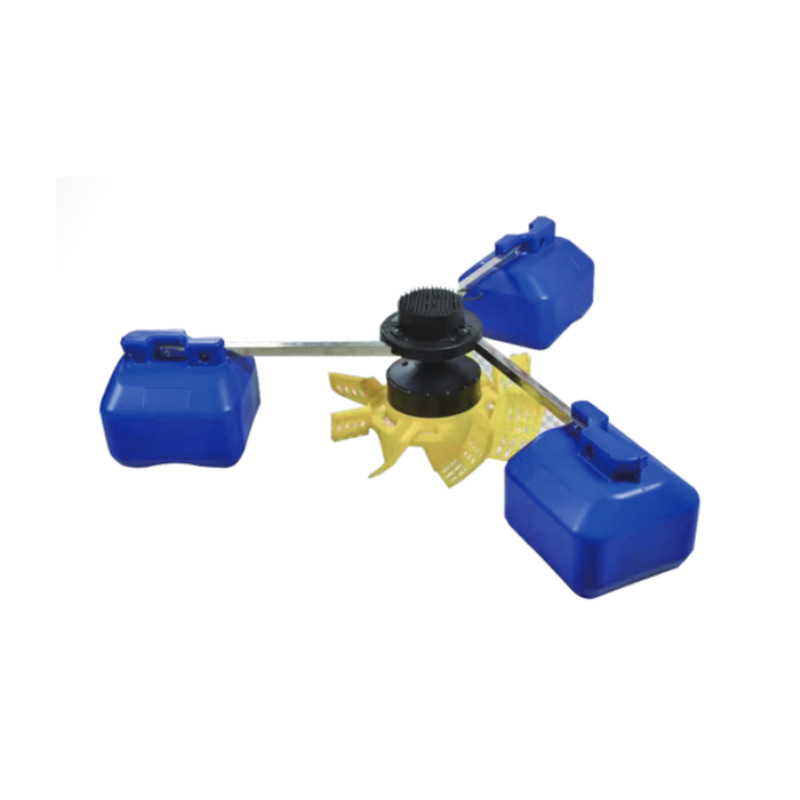
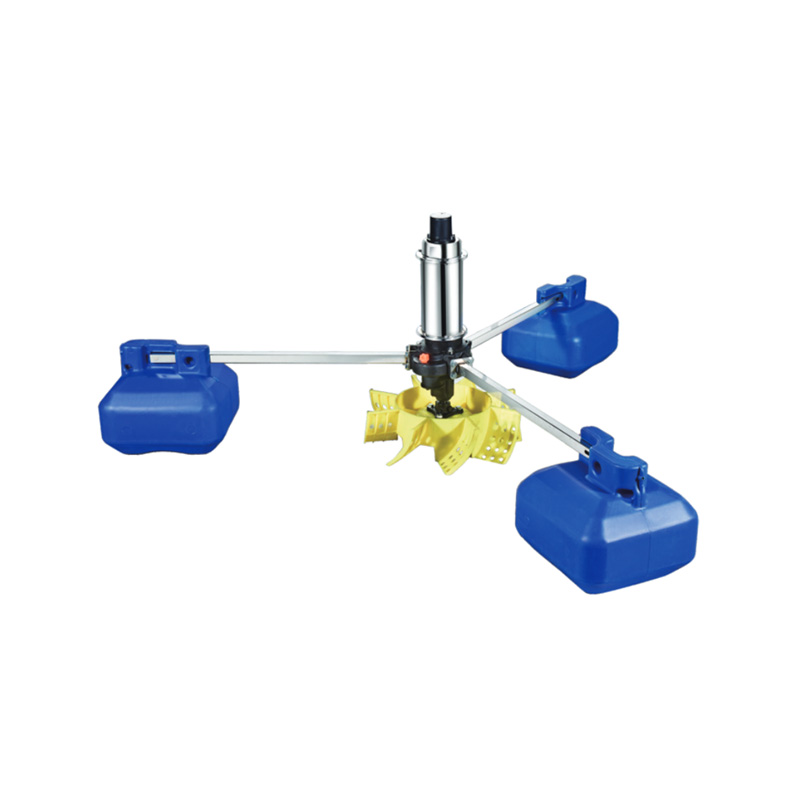
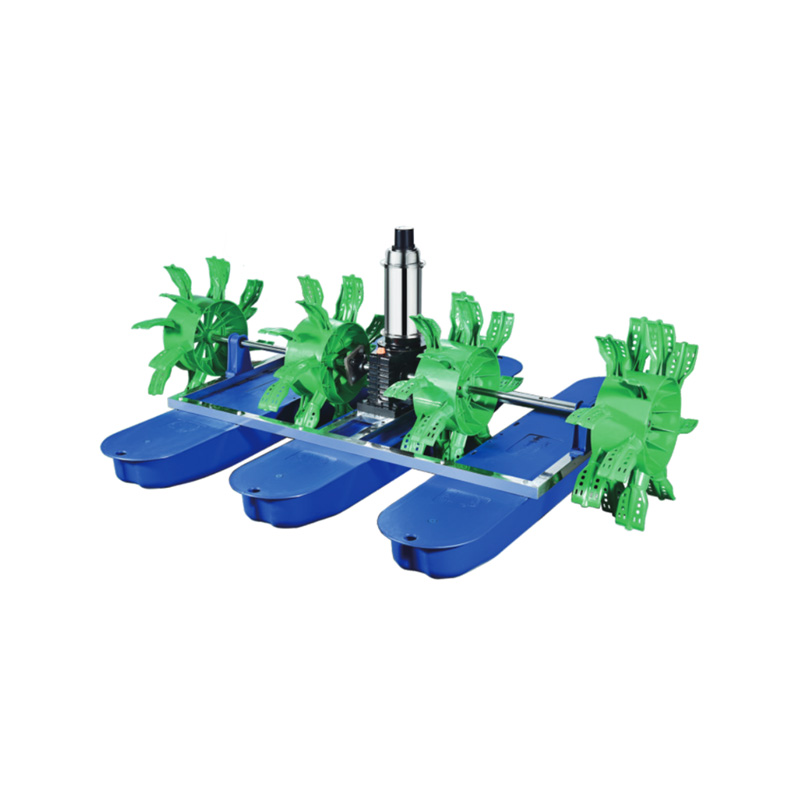
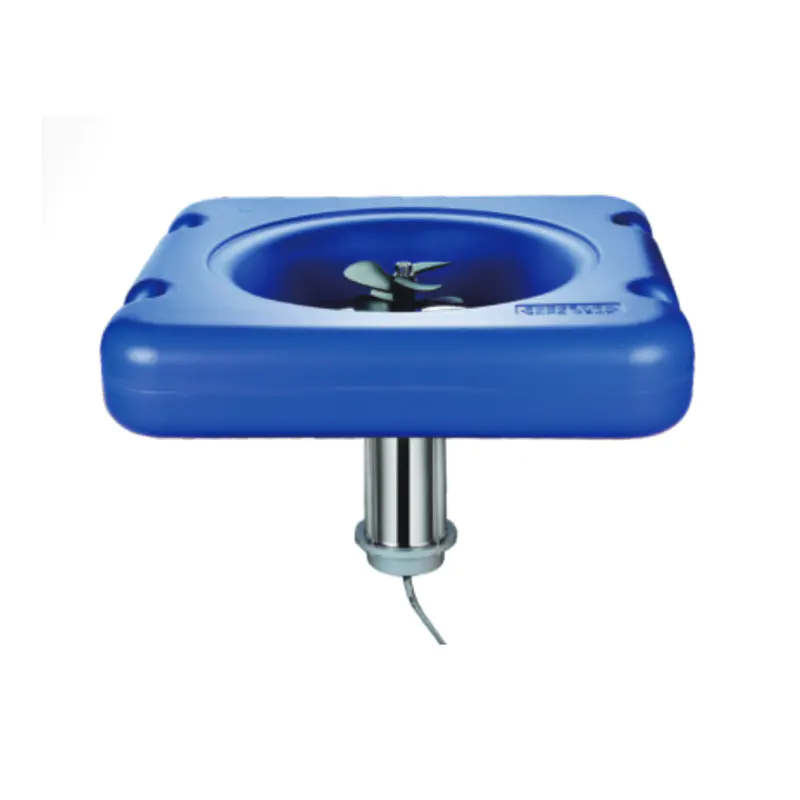
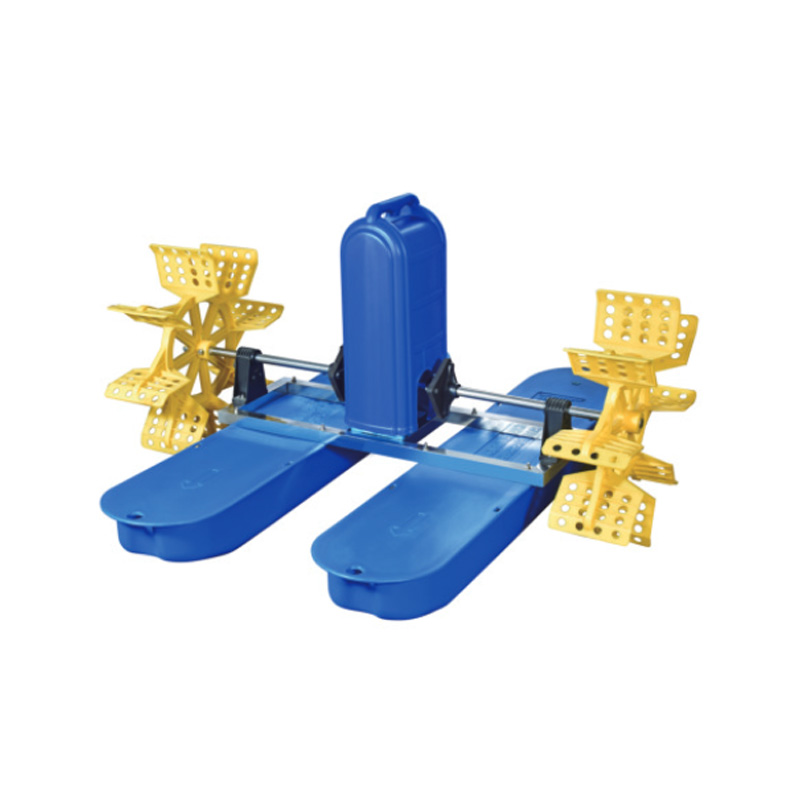
The stainless steel water-cooled paddle wheel aerator described in this article is designed for continuous pond aeration in demanding environments. Its construction combines a water-cooled motor, stainless steel structural components, a stainless steel drive shaft, an engineered alloy-steel gear system, mechanical sealing, and high-strength floating pontoons. Together, these features provide a practical solution for shrimp ponds, fish farms, coastal aquaculture facilities, and other operations where equipment may be exposed to heat, humidity, salt, splashing water, and extended operating cycles.
Unlike a basic aerator that relies only on an ordinary motor housing for heat dissipation, this design uses water-assisted cooling to help control motor temperature during operation. The approach is especially valuable in high-temperature and high-salinity areas, where motors and exposed metal components can experience greater thermal and corrosion-related stress. The stainless steel configuration also provides a durable foundation for buyers who require equipment that can remain in service under demanding aquaculture conditions.
Why Paddle Wheel Aeration Matters in Aquaculture
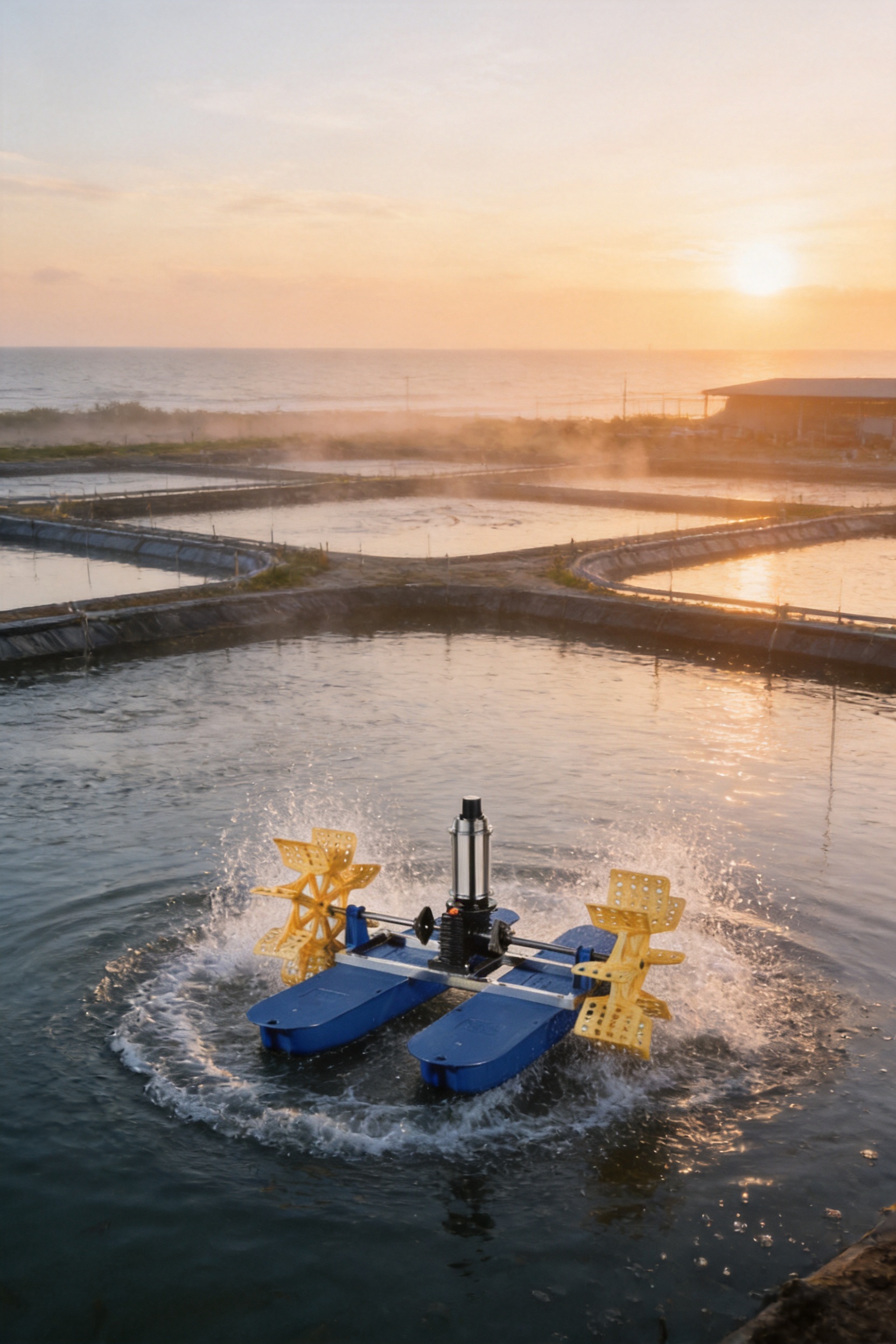
A paddle wheel aerator transfers oxygen into water by creating strong surface movement and exposing a large volume of water to the atmosphere. As the paddles rotate, they lift and splash water, increase air-water contact, and promote circulation across the pond. This action helps distribute dissolved oxygen and can reduce stagnant zones in the culture area.
Mechanical aeration is particularly important at night, during cloudy weather, after heavy feeding, and during periods of high biomass. Aquatic plants and algae may produce oxygen during daylight through photosynthesis, but they also consume oxygen during darkness. Bacteria decomposing organic matter likewise use oxygen. If the oxygen demand of the pond exceeds the natural supply, fish and shrimp may become stressed, feed conversion may deteriorate, and mortality risks may increase.
A paddle wheel aerator supports the pond in two complementary ways. First, it increases the rate at which oxygen enters the water. Second, it improves circulation, helping move oxygenated water toward areas that may otherwise receive limited exchange. Proper installation and operating management remain essential, but a well-designed aerator gives farm operators a strong mechanical tool for maintaining more stable water conditions.
The stainless steel water-cooled model is intended for buyers who need more than simple short-term aeration. Its structure is adapted to long-duration use, including applications where the equipment may operate for many hours or continuously according to the farm’s oxygen management plan. The combination of cooling, sealing, corrosion-resistant structural materials, and reinforced transmission components distinguishes it from more basic aeration equipment.
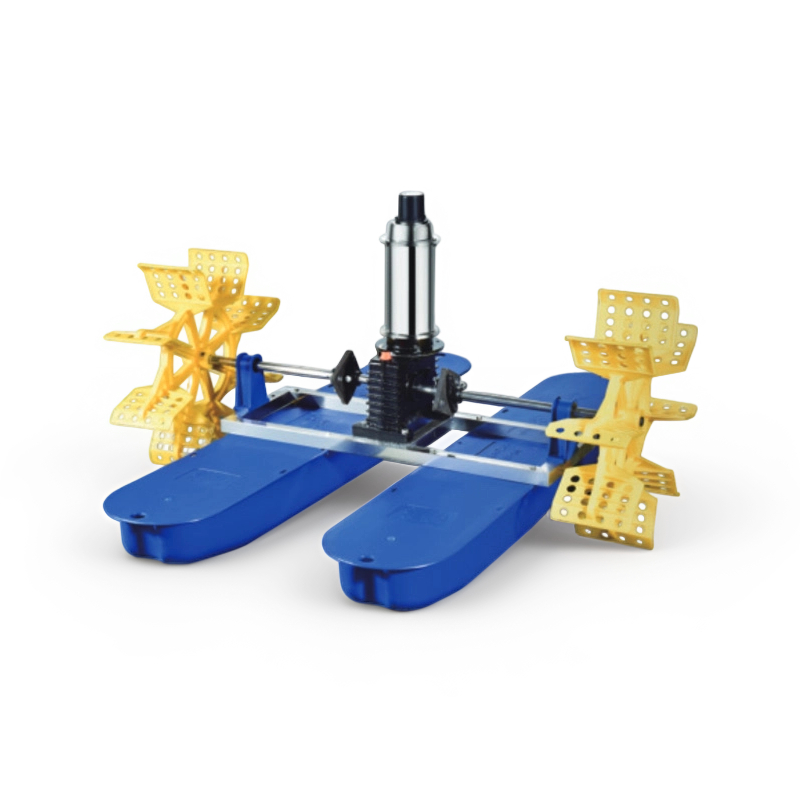
Stainless Steel Water-Cooled Paddle Wheel Aerator
Product Design and Main Construction Features
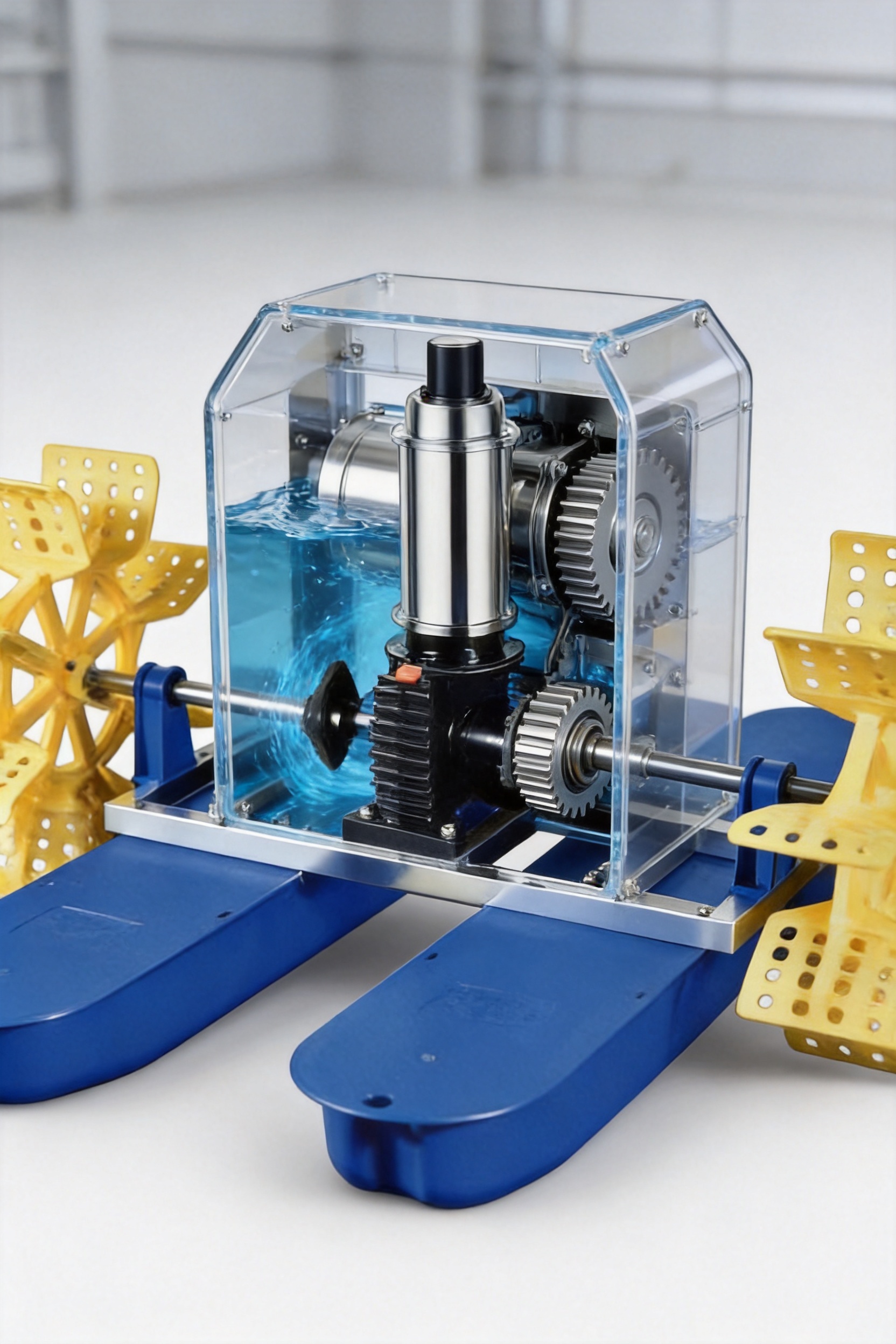
Fully Stainless Steel Water-Cooled Motor Structure
The central feature of this aerator is its fully stainless steel water-cooled motor structure. During normal operation, the motor generates heat. In warm climates, that heat can accumulate more quickly, especially when the equipment is used continuously or when ambient temperatures remain high throughout the day and night.
The water-assisted cooling system helps carry heat away from the motor during operation. By supporting heat dissipation, it helps reduce the thermal burden placed on internal motor components. Stable operating temperature is important because excessive heat can accelerate insulation aging, reduce lubrication performance, and increase the likelihood of interruptions over a long working cycle.
Water cooling is particularly relevant to shrimp farms and coastal fish farms. These operations often work in climates where water and air temperatures are high. Saltwater or brackish-water exposure can also make the operating environment more severe than a conventional freshwater installation. The water-cooled motor structure is therefore a practical advantage for users who need consistent aeration in hot and humid locations.
Stainless Steel Drive Shaft
The drive shaft transfers motor power to the paddle wheel assembly. Because it is exposed to vibration, torque, moisture, and repeated rotational loads, shaft material has a direct influence on the long-term reliability of the aerator.
This model uses a stainless steel drive shaft. The material is selected to provide durable performance in wet operating conditions and to reduce the maintenance concerns associated with ordinary untreated steel. A stainless shaft is also well suited to installations where splash, condensation, or saline water may come into contact with the transmission area.
For farm operators, the stainless steel shaft offers more than an appearance benefit. It contributes to a stronger and more stable power-transmission system. Reduced material degradation can help preserve alignment and rotational performance, provided that the equipment is installed correctly and inspected according to the operating environment.
Stainless Steel Frame
The frame supports the motor, transmission components, paddle wheel assembly, and floating arrangement. It must withstand vibration from rotating paddles while remaining stable on the pond surface. In addition, it is repeatedly exposed to water, humidity, splashing, and changing weather.
The stainless steel frame provides a robust structural base for these conditions. Compared with a standard frame configuration, stainless steel is better suited to wet and coastal environments because it offers improved resistance to corrosion-related deterioration. This makes the aerator appropriate for shrimp ponds, fish ponds, salt-affected areas, and facilities where regular washing and water exposure are part of daily operation.
A strong frame also supports better equipment stability. Excessive movement can increase vibration, place additional loads on the motor and gear system, and reduce the effectiveness of surface agitation. The stainless frame helps provide the rigidity required for dependable operation when the paddle wheel is working for extended periods.
High-Strength Floating Pontoons
The aerator is installed on the pond surface using floating pontoons. These components keep the unit afloat and help maintain the paddle wheel at the intended working position. High-strength pontoons are important because they must support the equipment while resisting repeated movement caused by rotating paddles, water currents, wind, and routine handling.
Stable floating support allows the paddle wheels to engage the water consistently. If the position of the unit changes excessively, the depth of paddle immersion may vary, affecting oxygen transfer and increasing mechanical stress. Properly secured pontoons therefore contribute to both performance and safety.
For commercial farms, durable pontoons can also simplify routine relocation or adjustment of aerators within a pond. Any movement should be performed carefully and in accordance with the farm’s operating procedures, but a strong floating structure gives buyers a reliable foundation for flexible pond management.
Transmission System for Long-Term Operation
Chromium-Manganese-Titanium Alloy Steel Gear
The gear system is responsible for transferring motor power to the paddle wheel while controlling the appropriate rotational relationship between the motor and the working assembly. Gears experience repeated contact stress, friction, vibration, and heat. Their quality has a direct effect on noise, energy transmission, service life, and operating stability.
This paddle wheel aerator uses chromium-manganese-titanium alloy steel for its gears. The alloy composition is intended to provide a strong and wear-resistant material for demanding transmission work. Chromium, manganese, and titanium are commonly associated with improvements in hardenability, toughness, structural stability, and resistance to mechanical wear when correctly processed.
The use of an alloy-steel gear material is an important distinction when comparing heavy-duty aerators with low-cost products that use less durable transmission components. A gear system designed for repeated service can better tolerate the demands of long operating cycles. This is particularly relevant for aquaculture farms that depend on aerators during critical periods when an unexpected shutdown could quickly affect water quality.
Carbonitriding Treatment
The gears receive carbonitriding treatment, described in the product information as a combination of carburizing and nitriding. This process modifies the surface of the gear teeth by introducing carbon and nitrogen into the outer layer of the material. The result is a hardened surface with a tougher supporting core.
Surface treatment is important because the outer faces of gear teeth experience repeated contact and sliding. A hardened surface can improve resistance to scuffing, pitting, and abrasive wear, while the less brittle core helps the component withstand shock and torque. The balance between surface hardness and core toughness is valuable in equipment that must transmit power continuously.
Compared with an untreated or lightly finished gear, a carbonitrided gear can offer a stronger defense against common forms of transmission wear. This does not eliminate the need for proper lubrication or maintenance, but it supports longer service intervals and more stable operation when the aerator is used under appropriate conditions.
The combination of alloy-steel construction and carbonitriding demonstrates the importance placed on manufacturing processes rather than only on exterior materials. A stainless steel frame protects the equipment from the surrounding environment, while a carefully treated gear system protects the internal power-transmission function. Both aspects are necessary for a reliable aquaculture machine.
Mechanical Seal Protection
The aerator is equipped with a mechanical sealing system. Seals are essential in equipment that operates near or in contact with water because they help isolate the internal lubrication and transmission areas from the external environment.
The mechanical seal helps prevent oil leakage during operation. It also helps reduce the possibility of water entering areas where it could contaminate lubricant or damage internal components. Seal performance depends on correct assembly, shaft condition, alignment, lubrication, and operating conditions, but the inclusion of a mechanical seal provides an important layer of protection.
For aquaculture operators, leakage control has both equipment and environmental value. Retaining lubricant inside the transmission system helps protect the gears and supports stable operation. At the same time, reducing the risk of oil entering the pond helps maintain a cleaner working environment. Regular inspection remains necessary, especially when the aerator is operated continuously or exposed to abrasive particles.
Advantages in High-Temperature and High-Salinity Environments
Many aquaculture sites are located in regions where heat, humidity, and saline water create challenging conditions for mechanical equipment. A standard aerator may perform adequately in moderate conditions but experience increased thermal stress or corrosion when used in a hot coastal pond.
The water-cooled motor directly addresses the heat issue. By assisting heat dissipation, the cooling system helps the motor maintain a more stable operating condition during long periods of use. This is an important advantage over ordinary air-cooled or conventionally enclosed motor structures when the surrounding environment is already hot and ventilation is limited.
The stainless steel frame and drive shaft address the wet and corrosive side of the application. While stainless steel does not make equipment maintenance-free, it is better suited to water exposure than many ordinary carbon-steel alternatives. The material choice is valuable for shrimp farms using brackish water, coastal farms exposed to salt-laden air, and facilities where washing and splashing are unavoidable.
The combined design is more useful than relying on one isolated feature. A cooled motor without a suitable frame may still suffer from structural corrosion. A stainless frame without appropriate motor cooling may still experience thermal stress. The product brings together thermal management, corrosion-conscious construction, transmission durability, and sealing protection in one aeration unit.
These advantages can help distinguish the aerator from competitors offering standard motors, painted frames, untreated shafts, or basic gears. Buyers should always compare complete specifications and application suitability rather than focusing only on rated power. In demanding aquaculture, the quality of the material system and manufacturing process can be as important as the nominal motor rating.
Performance Specifications
The available product range includes several power configurations. The following table presents the technical information supplied for the listed models.
| Model | Voltage | Power | Oxygen Transfer Rate | Power Efficiency | No-Load Noise | Weight | 20-Container Loading |
|---|---|---|---|---|---|---|---|
| ZT-0.75 | 380 V | 0.75 kW | ≥1.1 | ≥1.25 | ≤78 dB(A) | 80 kg | 85 units |
| ZT-1.1 | 380 V | 1.1 kW | ≥1.25 | ≥1.25 | ≤80 dB(A) | 80 kg | 85 units |
| ZT-1.5 | 220 V | 1.5 kW | ≥1.9 | ≥1.25 | ≤80 dB(A) | 100 kg | 70 units |
| ZT-1.5 | 380 V | 1.5 kW | ≥1.9 | ≥1.25 | ≤80 dB(A) | 100 kg | 70 units |
The oxygen transfer figures and power efficiency values are presented according to the supplied product information. Actual field performance may depend on water depth, salinity, temperature, paddle immersion, pond shape, stocking density, operating schedule, and installation quality. Buyers should confirm the applicable testing method and electrical requirements before placing an order.
The availability of both 220 V and 380 V configurations gives farms and distributors greater flexibility. Electrical infrastructure differs from one country or project to another, so voltage selection should be matched to the available power supply and the requirements of the farm’s electrical system. Professional electrical installation is recommended for safe and consistent operation.
The 0.75 kW and 1.1 kW models can serve applications where moderate aeration capacity is required, while the 1.5 kW models provide a higher rated power option. The correct choice should be based on pond size, water depth, biomass, expected oxygen demand, climate, and the number of units that will be operated together. A qualified aquaculture or electrical specialist can help determine the appropriate layout.
Manufacturing Strengths and Quality-Oriented Production
Integrated Product Development
The manufacturer, Zhejiang ZhenTai Mechanical and Electrical Co., Ltd., was established in 2018 in Wenling, Zhejiang Province, China. The company specializes in the research, development, and production of more than 90 products across 10 series. Its product range includes floating aerators, impeller aerators, water wheel aerators, water pumps, submersible pumps, and air blowers.
This product breadth is relevant to buyers seeking coordinated aquaculture and water-management equipment. A supplier experienced in several types of motors, pumps, aerators, and blowers can better understand the relationship between power transmission, water movement, electrical configuration, and field installation. It also gives international buyers a broader sourcing platform for projects that require more than one type of equipment.
Material Selection for Application Conditions
The manufacturing approach begins with selecting materials that reflect the working environment. Stainless steel is used for the motor structure, frame, and drive shaft. Alloy steel is selected for the gears, followed by carbonitriding treatment. The mechanical seal is included to protect the transmission area. These choices indicate a product developed around the actual challenges of aquaculture rather than around minimum-cost construction alone.
Material selection is especially important in equipment that operates in water. A component may be mechanically strong but unsuitable for a saline environment, or corrosion-resistant but unable to tolerate continuous torque. The product’s design combines environmental resistance and mechanical performance so that each major section supports the others.
Process-Based Reliability
Long-term equipment reliability is not created by material selection alone. It also depends on machining accuracy, gear treatment, assembly quality, sealing, alignment, inspection, and appropriate testing. The carbonitriding process applied to the gears is an example of a manufacturing step intended to improve functional performance rather than simply visual appearance.
The same principle applies to the water-cooled motor structure. Cooling passages and the motor enclosure must be assembled correctly so that water-assisted heat dissipation can perform its intended role. The drive shaft, seal, gear system, and paddle wheel must work together with suitable alignment. A complete product approach is therefore necessary to achieve the expected results in the field.
Experience Across Aquaculture and Water Applications
The company’s products are used in aquaculture, fish pond aeration, farmland irrigation, building foundation drainage, environmental protection, chemical industries, household water supply, ecological landscape lakes, and flood control and drainage. This broad application background supports practical knowledge of water movement and motor-driven equipment.
Although each application has different requirements, they share common engineering concerns: reliable power, resistance to wet conditions, stable operation, manageable maintenance, and suitability for project-specific environments. Experience across these fields can help the manufacturer respond to different buyer needs and develop products for both agricultural and industrial water-management applications.
OEM and ODM Support
The company provides customized OEM and ODM services for global customers. This can be useful for importers, wholesalers, distributors, and project contractors who require customized labeling, packaging, product configurations, or market-specific support. Customization should be discussed in detail before ordering so that electrical specifications, documentation, packaging, and inspection requirements are clearly agreed upon.
OEM and ODM capability also benefits buyers who are building a complete product range. A distributor may need several aerator power levels, different voltage options, or coordinated water pumps and blowers. A manufacturer with multiple product series can potentially support a more consistent sourcing program than a supplier focused on only one isolated model.
Comparison with Standard Paddle Wheel Aerators
When comparing this stainless steel water-cooled aerator with a standard paddle wheel model, buyers should examine the complete construction rather than only the advertised motor power. The main differences involve cooling, materials, sealing, gear treatment, and suitability for difficult operating environments.
Cooling Performance
Many conventional aerators use a standard motor structure without dedicated water-assisted cooling. Such a design may be sufficient for moderate operating conditions, but it can face greater thermal stress when ambient temperatures and water temperatures are high. The water-cooled structure provides an additional method of heat dissipation, supporting more stable operation during extended use.
Corrosion Resistance
Painted or ordinary steel frames may require more frequent attention in saline or humid environments. Surface damage can expose the underlying metal and allow corrosion to progress. The stainless steel frame and drive shaft of this model are better aligned with wet and coastal applications, helping reduce the maintenance burden associated with structural rust.
Transmission Durability
Basic gears may be made from ordinary steel with limited surface treatment. The use of chromium-manganese-titanium alloy steel and carbonitriding provides a more engineered transmission solution. The hardened gear surface is intended to resist wear during repeated contact, while the core retains the toughness needed for power transmission.
Sealing and Oil Retention
A mechanical seal helps protect the internal transmission system and reduce the risk of oil leakage. This is particularly important for floating equipment that operates close to pond water. Seal condition should still be inspected, but an appropriate sealing system provides a stronger basis for clean and reliable operation than a basic sealing arrangement.
Suitability for Continuous Operation
No aerator can operate indefinitely without suitable installation, electrical protection, lubrication, cleaning, and inspection. However, the water-cooled motor, treated gear system, stainless components, and mechanical seal are all relevant to extended operating cycles. These features make the product especially suitable for farms where aeration is a central part of daily oxygen management.
Installation and Operating Guidance
Positioning on the Pond Surface
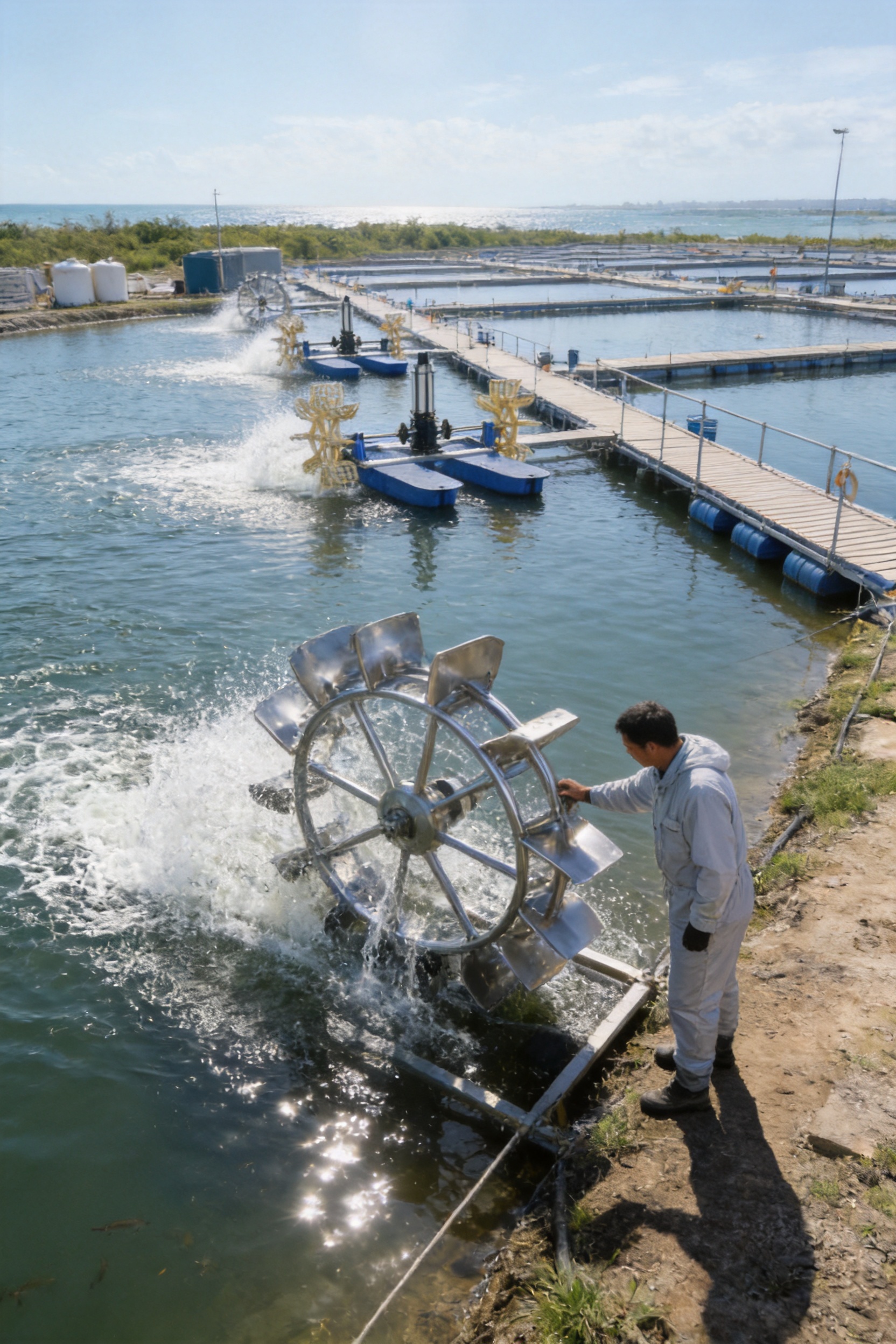
The aerator should be installed on the pond surface with all components properly secured before operation. The floating structure should be checked to ensure that the unit remains stable and that the paddle wheel has the intended contact with the water. The installation location should support effective circulation rather than allowing the discharged water to remain concentrated in one small area.
Operators should consider pond shape, corners, water inlets, drainage points, prevailing wind, and areas where fish or shrimp tend to gather. In larger ponds, several units may be positioned to create a circulation pattern. The exact arrangement depends on the site and should be determined through practical assessment of water movement and oxygen demand.
Electrical Preparation
Before connecting the aerator, confirm that the voltage matches the selected model. The listed configurations include 220 V and 380 V versions. Wiring, grounding, overload protection, and switching equipment should be selected and installed by qualified personnel.
Electrical components should be protected from water exposure, condensation, and accidental contact. Cables should be routed in a way that prevents damage from floating equipment, pond edges, vehicles, or farm tools. The power supply should be disconnected before inspection, cleaning, adjustment, or maintenance.
Initial Inspection
Before the first start-up, inspect the frame, pontoons, fasteners, drive shaft, paddle wheels, seals, and gear housing. Confirm that no packing material or foreign object remains in the moving area. Check that the unit floats evenly and that the paddle assembly can rotate freely without obstruction.
A short test run can be used to observe vibration, noise, water movement, and floating stability. Any abnormal vibration, unusual sound, leakage, or uneven movement should be investigated before regular operation begins. Early inspection can prevent a minor installation issue from becoming a major mechanical problem.
Operating in Saline Water
Saltwater and brackish water can accelerate corrosion on exposed surfaces and electrical connections. Operators should rinse suitable external areas with clean water when appropriate and remove accumulated deposits. The cleaning method should not damage seals, electrical components, or protective finishes.
Fasteners and connection points deserve particular attention because they may collect salt deposits or remain damp for long periods. Regular inspection helps identify discoloration, surface damage, looseness, or early signs of corrosion. Stainless steel improves resistance, but it does not remove the need for responsible maintenance.
Maintenance Practices for Long Service Life
A maintenance program should reflect operating hours, water quality, salinity, temperature, and the level of suspended solids in the pond. Equipment used continuously in a hot coastal environment may require more frequent inspection than equipment used intermittently in a clean freshwater pond.
Inspect the paddle wheel for damage, deformation, or blockage. Organic matter, plastic, rope, and other debris can affect balance and increase motor load. The unit should always be disconnected from the power supply before debris is removed.
Check the floating pontoons for cracks, deformation, water accumulation, or loose connections. A damaged pontoon can change the working angle of the aerator and place additional stress on the frame. Maintaining stable flotation is important for both aeration performance and operational safety.
Inspect the drive shaft and gear housing for signs of wear, unusual movement, or leakage. The mechanical seal should be monitored for oil leakage or evidence of water entry. If a seal problem is suspected, service should be completed promptly to protect the gear system.
Listen for changes in operating sound. A gradual increase in noise may indicate gear wear, insufficient lubrication, misalignment, loose fasteners, or damage to the paddle wheel. Similarly, increasing vibration should not be ignored because it can shorten the life of bearings, seals, gears, and structural connections.
Lubrication and service intervals should follow the manufacturer’s instructions and the conditions of use. Using the correct lubricant and maintaining the correct amount are important for gear protection. Overfilling, underfilling, or using an unsuitable lubricant may reduce performance or create new problems.
At the end of a production cycle, the aerator should be cleaned, inspected, and stored or prepared for the next operating period. Seasonal maintenance is an opportunity to replace worn components, tighten connections, review electrical protection, and confirm that cooling and sealing systems remain in good condition.
Applications for Farms, Distributors, and Project Buyers
Shrimp Ponds
Shrimp farming often involves high stocking densities, warm water, and saline or brackish conditions. These factors can create substantial oxygen demand and increase stress on pond equipment. The stainless steel water-cooled paddle wheel aerator is well suited to this environment because its cooling system addresses operating temperature while its stainless components support wet and saline service.
The aerator can be used as part of a broader shrimp pond management plan that includes water exchange, feeding control, biomass monitoring, sludge management, and dissolved oxygen measurement. Mechanical aeration is not a substitute for complete pond management, but it is an important tool for maintaining circulation and oxygen availability.
Freshwater Fish Farms
Freshwater fish farms also benefit from dependable paddle wheel aeration. The unit can support ponds used for carp, tilapia, catfish, and other cultured species, subject to project-specific requirements. Even when salinity is low, the water-cooled motor and durable gear system can provide value where equipment is expected to operate for long hours.
Coastal Aquaculture Facilities
Coastal farms may expose equipment to salt spray, humid air, and brackish water even when the aerator is not fully immersed. Stainless steel construction helps address these conditions. The product can be considered for farms that prioritize corrosion-conscious materials and want an aerator designed for challenging environmental exposure.
Wholesalers and Export Buyers
Wholesalers and export buyers often require a combination of product consistency, model selection, technical information, and shipment efficiency. The listed range includes different motor powers and voltage options, allowing distributors to serve multiple markets. The supplied container-loading figures may also assist in preliminary logistics planning, although final packing details should be confirmed for each order.
OEM and ODM support can help importers develop a product line under their own market identity. Buyers should request complete documentation, packaging specifications, spare-parts information, warranty terms, and inspection procedures before finalizing a commercial agreement.
How to Select the Appropriate Model
Model selection should begin with the pond’s oxygen demand rather than with motor power alone. Important factors include pond area, average depth, stocking density, species, feeding level, water temperature, organic load, expected operating hours, and the desired circulation pattern.
The 0.75 kW model may be suitable for smaller ponds or installations where several lower-power units will be distributed across a site. The 1.1 kW model provides a moderate increase in rated power. The 1.5 kW models are intended for applications requiring higher power, with both 220 V and 380 V configurations listed.
Using multiple aerators can sometimes produce better circulation than relying on one large unit, particularly in irregularly shaped ponds. However, the correct arrangement depends on farm layout and engineering judgment. Buyers should evaluate total installed power, expected oxygen transfer, electricity availability, service access, and redundancy requirements.
It is also important to confirm the meaning and testing basis of oxygen transfer and power efficiency values. Laboratory measurements may not exactly represent field conditions. Water temperature, salinity, altitude, paddle immersion depth, and fouling can influence actual performance. A responsible purchasing decision combines the published specifications with site-specific evaluation.
Frequently Asked Questions
What is the main advantage of the water-cooled motor?
The water-cooled motor uses water-assisted heat dissipation to help reduce operating temperature during extended use. This feature is particularly useful in hot climates, warm ponds, and continuous aquaculture operations where thermal stress may be greater.
Is this aerator suitable for shrimp ponds?
Yes. The product is designed for aquaculture applications and is especially suitable for shrimp ponds because it combines a water-cooled motor with stainless steel structural components. It can be used in freshwater, brackish-water, or coastal applications when the selected model and installation are appropriate.
Why is stainless steel used for the frame and drive shaft?
Stainless steel provides a durable material for wet environments and offers improved resistance to corrosion compared with many ordinary steel alternatives. The frame supports the equipment, while the stainless drive shaft transfers power in a moisture-exposed area.
What does carbonitriding do to the gears?
Carbonitriding introduces carbon and nitrogen into the gear surface to create a harder outer layer while retaining a tougher internal core. This treatment is intended to improve resistance to wear and support reliable power transmission during repeated operation.
What is the purpose of the mechanical seal?
The mechanical seal helps prevent oil leakage and reduces the possibility of water entering the internal transmission area. Seal condition should be checked regularly because correct sealing is important for gear protection and clean operation.
Are 220 V and 380 V models available?
Yes. The listed range includes 380 V versions for the 0.75 kW and 1.1 kW models, as well as 220 V and 380 V versions for the 1.5 kW model. Buyers should select the configuration that matches the available electrical infrastructure.
Can the aerator operate continuously?
The product is designed for demanding and extended aquaculture operation, and its water-cooled motor supports long-term use. Continuous operation must still follow proper installation, electrical protection, lubrication, inspection, and maintenance procedures.
How should the unit be installed?
Install the aerator on the pond surface and secure all components before operation. Confirm that the pontoons float evenly, the paddle wheel is unobstructed, the electrical supply is correct, and the unit operates without abnormal noise or vibration during testing.
Does stainless steel make the aerator maintenance-free?
No. Stainless steel improves resistance to wet and corrosive conditions, but routine inspection and cleaning are still required. Operators should monitor the frame, shaft, gear housing, mechanical seal, pontoons, paddle wheel, electrical connections, and fasteners.
Who can purchase this product?
The aerator is suitable for aquaculture farms, shrimp producers, freshwater fish farms, wholesalers, distributors, project contractors, and export buyers. OEM and ODM services are available for customers who require customized commercial arrangements.
Supplier Strength and International Cooperation
Zhejiang ZhenTai Mechanical and Electrical Co., Ltd. supplies aerators, submersible pumps, water pumps, and air blowers for aquaculture, irrigation, drainage, environmental protection, and related water-management projects. Its manufacturing base is located in Zhaoyang Industrial Park, Daxi Town, Wenling City, Zhejiang Province, China.
The company emphasizes quality, integrity, technological innovation, reliable products, customized OEM and ODM services, and professional technical support. These capabilities are relevant to international customers who need more than a single shipment of standard equipment. Long-term buyers often require stable product specifications, responsive communication, replacement parts, technical documents, and practical support after delivery.
For project procurement, buyers should communicate their pond conditions, water type, operating schedule, power supply, destination-market requirements, packaging expectations, and inspection standards at the quotation stage. Clear technical communication helps ensure that the selected product matches the intended application.
The stainless steel water-cooled paddle wheel aerator represents a focused solution for farms that need durable aeration under demanding conditions. Its major advantages come from the combination of water-assisted cooling, stainless steel construction, treated alloy-steel gears, mechanical sealing, and stable floating support. The result is a product designed to support reliable oxygen transfer and water circulation while addressing the heat, moisture, and corrosion challenges common in modern aquaculture.
Conclusion
Efficient aeration is essential for maintaining productive and stable aquaculture ponds. A paddle wheel aerator must do more than rotate a set of paddles: it must manage heat, resist water exposure, transmit power reliably, remain stable on the pond surface, and support extended operation.
The stainless steel water-cooled design addresses these requirements through a coordinated set of engineering features. The water-cooled motor assists heat dissipation, the stainless steel frame and drive shaft provide a durable wet-environment structure, the chromium-manganese-titanium alloy gears support mechanical strength, carbonitriding improves gear surface durability, and the mechanical seal helps protect the transmission system.
These features give the aerator meaningful advantages over simpler standard models, particularly in hot, saline, coastal, and high-demand aquaculture environments. Supported by a manufacturer with experience across aerators, pumps, blowers, irrigation, drainage, and other water applications, the product is suitable for farms, wholesalers, distributors, and export buyers seeking a dependable aquaculture equipment solution.
References
1. Manufacturer Technical Information: Stainless Steel Water-Cooled Paddle Wheel Aerator, product specifications and construction details.
2. Manufacturer Company Information: Product range, manufacturing background, application areas, OEM and ODM capabilities.
3. General Aquaculture Engineering Principles: Mechanical aeration, dissolved oxygen management, pond circulation, and equipment operation.
4. General Materials Engineering Principles: Stainless steel selection for wet environments and alloy-steel gear performance.
5. General Heat Treatment Principles: Carbonitriding, carburizing, nitriding, surface hardness, and wear resistance in transmission components.