 English
 Español
 Indonesia
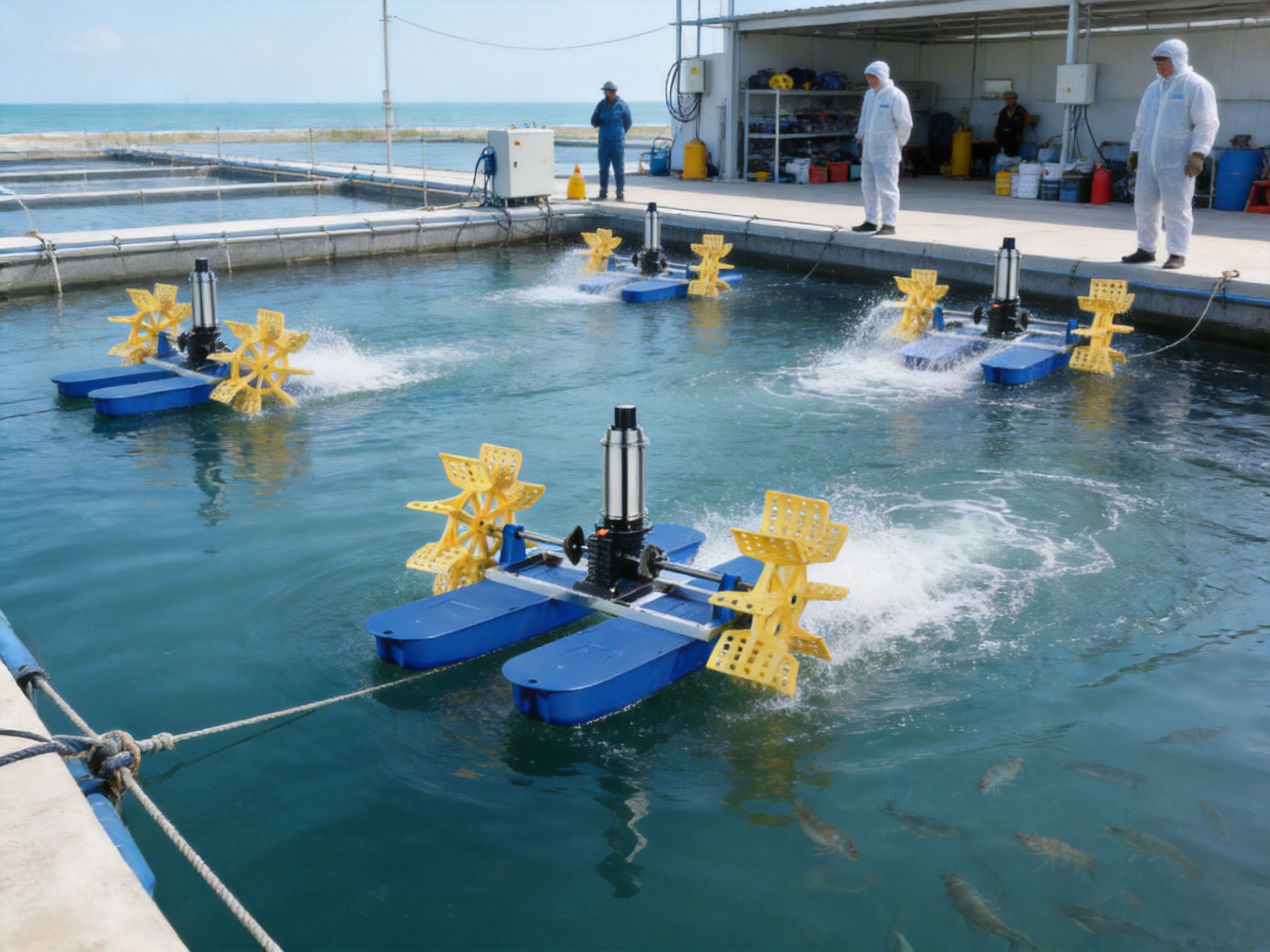
Aquaculture depends on stable dissolved oxygen, effective water circulation, and equipment capable of operating continuously in challenging pond conditions. When stocking densities increase, water temperatures rise, or salinity places additional stress on machinery, the aeration system becomes one of the most important components of farm infrastructure. The Stainless Steel Water-Cooled Paddle Wheel Aerator is designed for these demanding applications, combining a water-cooled motor, stainless steel structural components, treated alloy-steel gears, a mechanical sealing system, and high-strength floating pontoons.
This configuration is intended for shrimp ponds, fish ponds, coastal farms, high-temperature aquaculture facilities, and other operations where aerators may need to run for extended periods. Compared with conventional paddle wheel aerators that rely primarily on air cooling and painted or lower-grade structural materials, the water-cooled stainless steel design provides a more durable solution for harsh operating environments.
The equipment is manufactured by Zhejiang ZhenTai Mechanical and Electrical Co., Ltd., a Chinese producer of aerators, water pumps, submersible pumps, and air blowers. The company develops and manufactures more than 90 products across 10 product series, serving aquaculture, irrigation, drainage, environmental protection, chemical processing, household water supply, and ecological water applications. Its production experience, broad product range, OEM/ODM capabilities, and technical support enable international buyers to source complete equipment solutions from one specialized manufacturer.
The Importance of Reliable Aeration in Aquaculture
Dissolved oxygen is a fundamental factor in the growth, health, and survival of cultured aquatic organisms. Shrimp, fish, and other farmed species consume oxygen directly from the water. At the same time, organic matter, microorganisms, feed residues, and bottom sediments also contribute to oxygen demand. During periods of high stocking density or strong biological activity, oxygen can be depleted quickly if water is not adequately aerated and circulated.
Oxygen levels may change significantly between day and night. Photosynthetic organisms can produce oxygen during daylight but consume oxygen after sunset. Warm water also holds less dissolved oxygen than cool water, while the metabolic rate of many aquatic organisms increases as temperature rises. These conditions make nighttime operation and high-temperature performance especially important for commercial farms.
A paddle wheel aerator addresses these problems through two basic actions. First, its rotating paddles disturb the water surface and increase contact between water and air. Second, the rotating assembly pushes and circulates water, helping distribute oxygen through a larger area of the pond. This combination can support more uniform water conditions and reduce stagnant zones.
For intensive shrimp and fish farming, an aerator must do more than operate during occasional oxygen shortages. It should be able to work repeatedly and continuously, withstand moisture and splashing, maintain mechanical stability, and resist corrosion caused by water, salt, chemicals, and biological materials. The stainless steel water-cooled paddle wheel aerator is developed around these requirements.
Product Overview
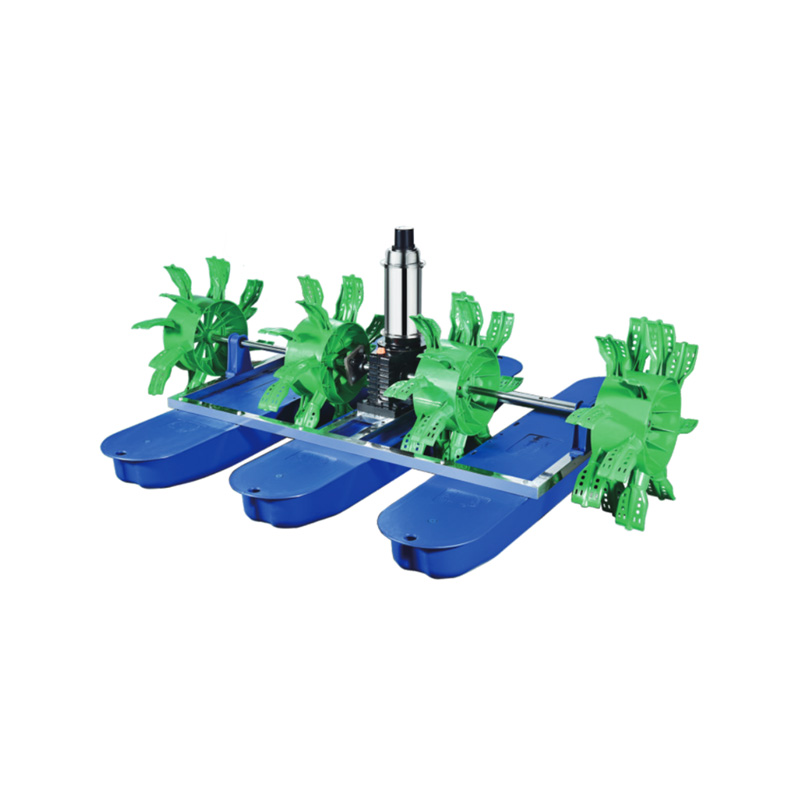
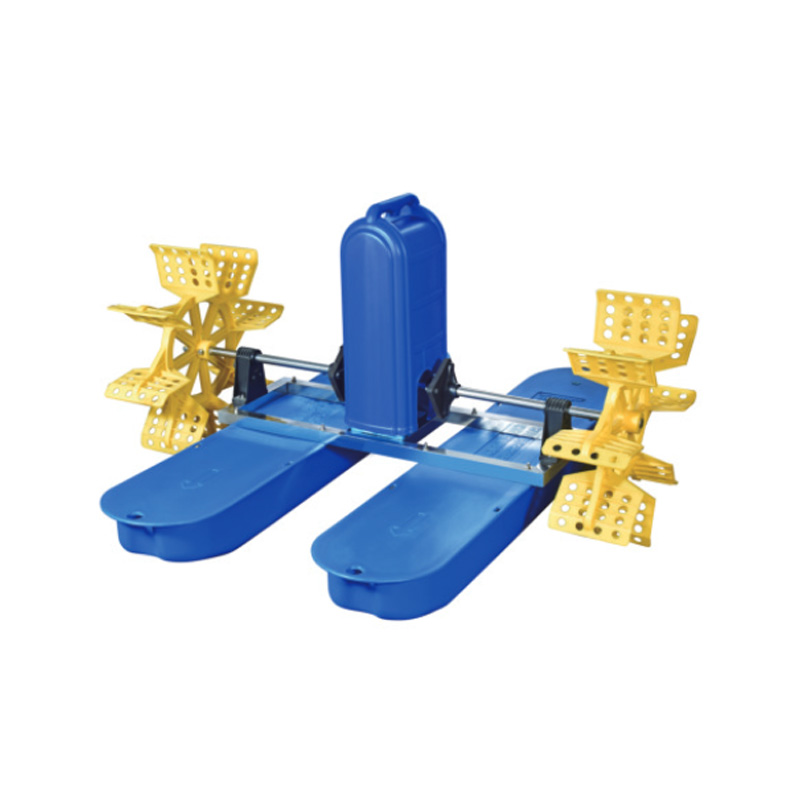
The Stainless Steel Water-Cooled Paddle Wheel Aerator is a floating pond aeration machine with a water-assisted cooling motor and paddle wheel transmission system. The equipment is installed on the pond surface, where its floating pontoons support the frame and keep the drive assembly positioned above the waterline. As the motor rotates the paddle wheel, water is agitated, circulated, and exposed to air.
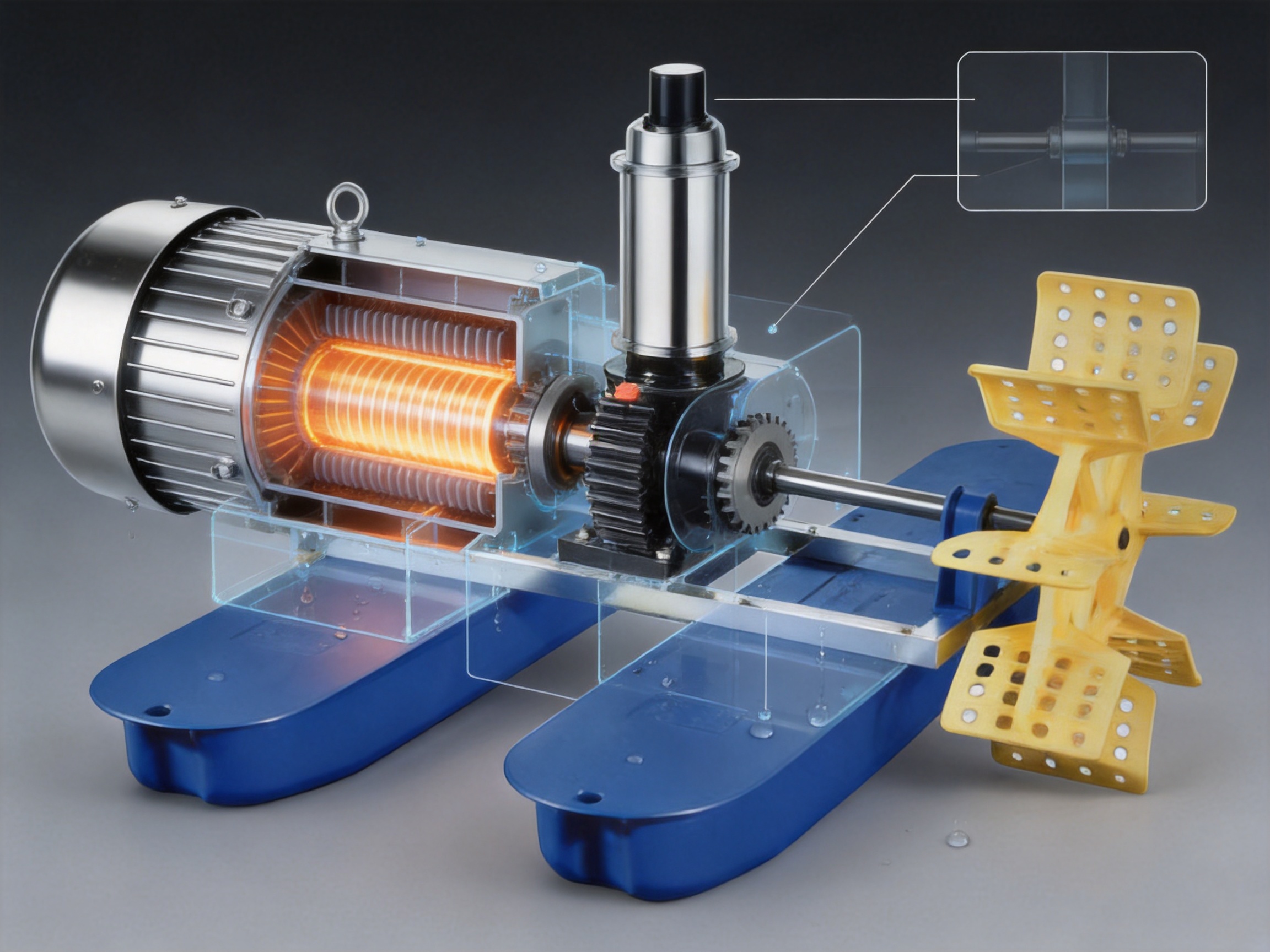
The motor structure is made from stainless steel and incorporates a water-cooled design. During operation, water assists with heat dissipation from the motor assembly. This feature is especially useful when the aerator operates for long periods in warm climates, where ambient air temperature may reduce the effectiveness of conventional cooling methods.
The frame and drive shaft are also made from stainless steel. The gear system uses chromium-manganese-titanium alloy steel, and the gears receive carbonitriding treatment, combining carburizing and nitriding processes. A mechanical seal is used to protect the drive assembly and help prevent oil leakage. High-strength floating pontoons support the system on the pond surface.
The product is available in several configurations based on motor power and voltage. The listed models include 0.75 kW, 1.1 kW, and 1.5 kW versions, with 220 V and 380 V options depending on the model. This range allows buyers to select a configuration appropriate for different farm sizes, electrical systems, and operating requirements.
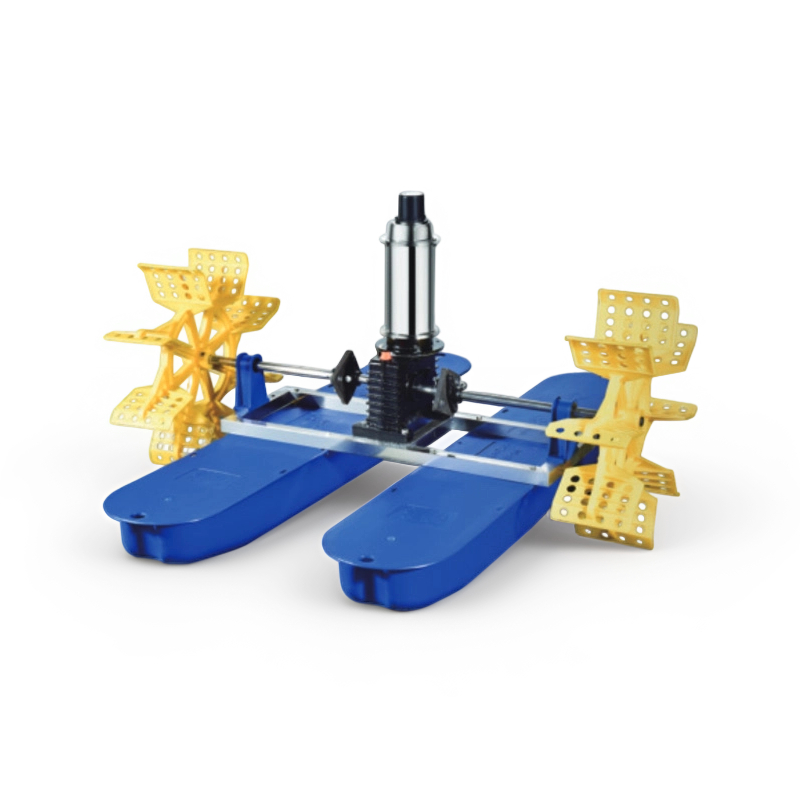
Stainless Steel Water-Cooled Paddle Wheel Aerator
Water-Cooled Motor Technology
The motor is one of the most important parts of a paddle wheel aerator because it determines operating stability, energy use, and the machine’s ability to withstand continuous duty. A conventional motor may depend mainly on air circulation and external cooling surfaces. In hot, humid, or poorly ventilated conditions, the motor temperature can rise more quickly, increasing thermal stress on insulation, bearings, seals, and other internal components.
The water-cooled motor used in this aerator incorporates water-assisted heat dissipation. As the unit operates on the pond surface, the cooling design helps transfer heat away from the motor structure. Lower operating temperature can support more stable performance during extended use, especially in hot climates and intensive aquaculture facilities where stopping the aerator may not be practical.
Water cooling is particularly relevant to coastal and high-salinity farms. Coastal ponds often present a combination of high ambient temperature, salt exposure, moisture, and long operating hours. These conditions place a greater burden on motor housings and mechanical components than ordinary freshwater applications. The water-cooled stainless steel structure provides an additional layer of protection for this type of environment.
Temperature control can also help reduce the risk of performance fluctuations. When a motor becomes excessively hot, electrical efficiency and component life may be affected. By assisting heat dissipation, the cooling system is intended to support a more consistent operating condition. Buyers should still follow correct installation, electrical protection, maintenance, and operating procedures, because cooling technology does not eliminate the need for proper system management.
The water-cooled configuration is an important distinction from many standard aerators. It is not simply a cosmetic change to the motor housing. It represents a design approach focused on continuous operation, heat management, and suitability for demanding pond environments.
Stainless Steel Construction for Harsh Environments
Stainless steel is used for the motor structure, frame, and drive shaft. This material selection is beneficial in applications involving repeated contact with water, condensation, splashing, and humid air. It also provides a cleaner and more durable surface than ordinary painted carbon steel when the equipment is used in aquaculture ponds.
The frame supports the motor, transmission assembly, paddle wheel, and floating structure. Frame deformation or corrosion can affect alignment and mechanical stability, so the use of stainless steel contributes to long-term structural reliability. A rigid frame can help maintain the correct relationship between the motor, shaft, gear assembly, and paddle wheel during operation.
The stainless steel drive shaft transfers rotational force from the transmission system to the paddle wheel. The shaft must tolerate torque, vibration, water exposure, and repeated starts and stops. Stainless steel provides corrosion resistance while maintaining the mechanical strength required for the drive function. Its use is particularly valuable in salty or mineral-rich water, where unprotected steel can deteriorate more rapidly.
Stainless steel construction also supports easier cleaning. Aquaculture equipment may accumulate algae, organic residue, mineral deposits, and biofilm. Smooth metal surfaces can be cleaned as part of a regular maintenance program, helping operators inspect the machine and identify wear or damage at an early stage.
Compared with lower-cost aerators made with ordinary steel components, this design is positioned for buyers who prioritize service life and environmental resistance over the lowest initial purchase price. The value of stainless steel becomes more apparent when equipment is used continuously, transported between ponds, exposed to salt spray, or installed in regions with high humidity.
Gear System and Carbonitriding Treatment
The gear system is manufactured from chromium-manganese-titanium alloy steel. Alloy steel is selected for applications where gears must transmit torque repeatedly and withstand contact stress between mating teeth. The alloy composition is intended to provide a strong foundation for the transmission components under continuous paddle wheel operation.
The gears receive carbonitriding treatment, described for this product as a combination of carburizing and nitriding. These surface-hardening processes modify the outer layer of the gear material while retaining a tougher internal structure. The result is intended to improve resistance to surface wear, contact fatigue, and repeated mechanical loading.
Gear treatment is especially important in paddle wheel aerators because the transmission system operates under a combination of rotational load, vibration, water exposure, and intermittent changes in resistance. Paddle wheels may encounter varying water depth, floating debris, biological material, or changes in pond conditions. A properly treated gear set can help support stable power transfer under these conditions.
The gear design also affects noise, efficiency, and maintenance requirements. Precise manufacturing, appropriate lubrication, and correct assembly are necessary to obtain the intended performance from treated alloy-steel gears. Operators should inspect the transmission according to the manufacturer’s maintenance guidance and ensure that lubrication is suitable for the specified gear housing and operating environment.
In comparison with basic gear systems using untreated or lower-grade materials, the alloy-steel and carbonitrided configuration offers a stronger foundation for long-term service. It is one of the product’s principal advantages for farms seeking equipment designed for continuous operation rather than occasional emergency use.
Mechanical Sealing and Oil Protection
The aerator uses a mechanical sealing system to help prevent oil leakage from the transmission area. Sealing is important because the gear assembly requires lubrication, while the surrounding pond environment contains water and contaminants. A reliable seal helps keep lubricant inside the drive assembly and reduces the risk of water entering sensitive mechanical areas.
Mechanical seals are designed to maintain contact between sealing surfaces under rotating conditions. Their effectiveness depends on proper installation, surface condition, alignment, lubrication, and operating temperature. In this aerator, the mechanical sealing system works together with the stainless steel shaft and motor structure to support a more protected drive assembly.
Preventing oil leakage is important for two reasons. First, it protects the transmission from insufficient lubrication and premature wear. Second, it supports cleaner pond operation by reducing the possibility of lubricant entering the water. Operators should nevertheless inspect the seal area regularly and stop the unit if abnormal leakage, vibration, or noise is observed.
The sealing system is another area where a purpose-built aquaculture aerator can offer advantages over general-purpose equipment. Pond aerators operate in a wet environment with frequent splashing and changing water conditions. Components that are acceptable in dry industrial applications may not provide the same protection when mounted directly above a pond.
Floating Structure and Pond Installation
The aerator is installed on the pond surface using high-strength floating pontoons. The pontoons provide buoyancy and help maintain the position of the motor and paddle wheel assembly. A stable floating structure is essential because the paddle wheel must remain at the correct operating depth to produce effective agitation and circulation.
Before operation, the equipment should be placed in an appropriate pond location and all components should be secured. The installation area should provide sufficient clearance for paddle rotation and maintenance access. Anchoring or positioning arrangements should be checked to ensure that wind, water movement, or operating vibration cannot move the aerator into an unsafe position.
The pond layout should also be considered. Aerators are commonly positioned to promote circulation across areas where oxygen demand is high or where stagnant water may develop. The final arrangement depends on pond geometry, stocking density, water depth, inlet and outlet locations, prevailing wind, and the number of aerators installed.
Electrical installation should be completed by qualified personnel. The correct voltage must be confirmed before connection, and the system should include suitable overload protection, grounding, isolation, and emergency shutoff provisions. Cables should be protected from mechanical damage, water exposure, and accidental contact with workers or farm equipment.
Correct installation directly affects product performance. Even a well-designed aerator may operate inefficiently if the paddle wheel is positioned too deeply, if the pontoons are uneven, or if the machine is not securely anchored. Installation checks should be completed before the first start and repeated after relocation or major maintenance.
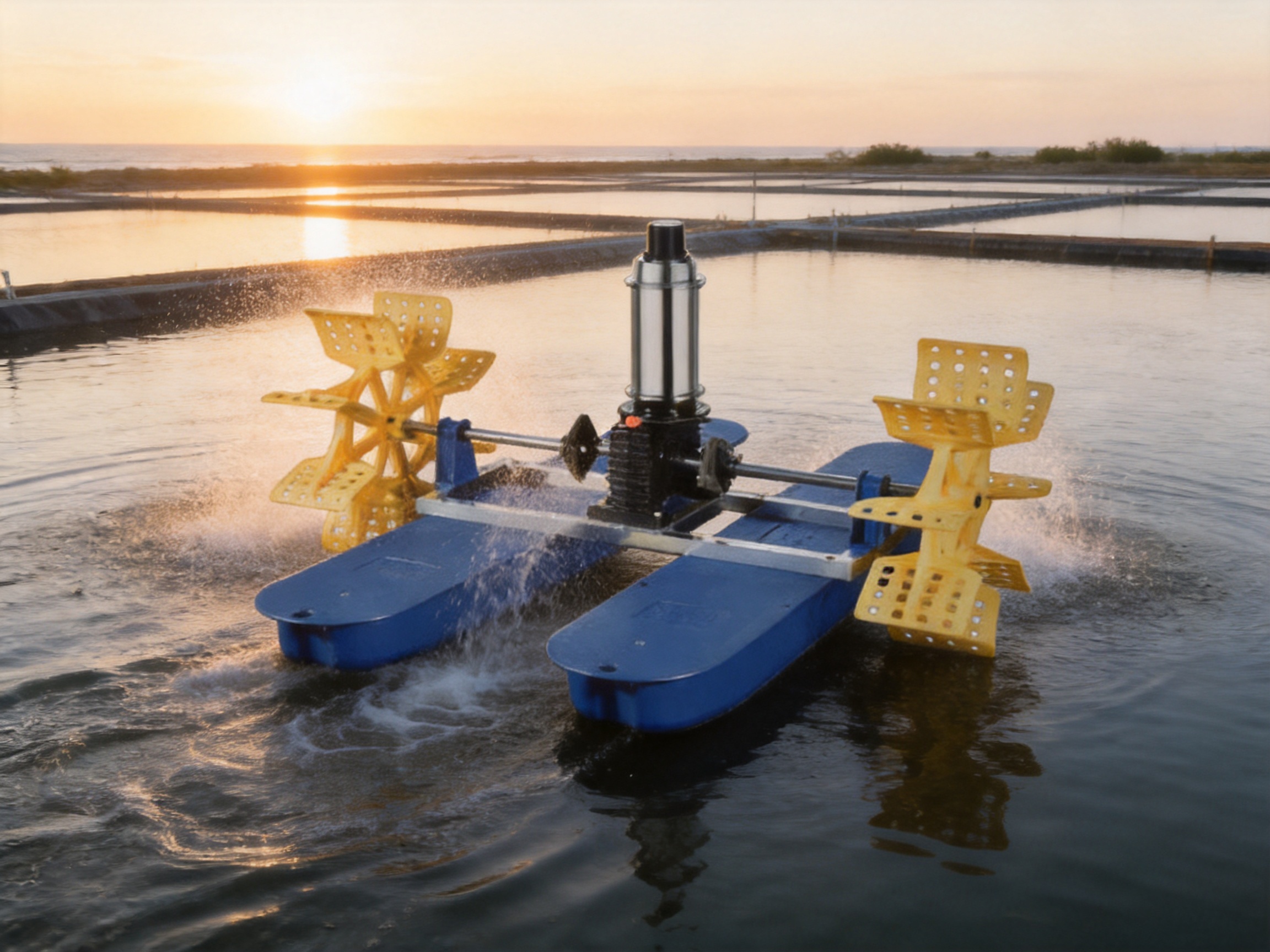
Performance Specifications
The product range includes several motor configurations. The following table presents the supplied specifications. Buyers should confirm the final model, voltage, testing method, packing quantity, and applicable technical standards with the manufacturer before placing an order, particularly for export projects.
| Model | Voltage | Power | Oxygen Transfer Rate | Power Efficiency | No-Load Noise | Weight | 20-Foot Container Quantity |
| ZT-0.75 | 380 V | 0.75 kW | ≥1.1 | ≥1.25 | ≤78 dB(A) | 80 kg | 85 units |
| ZT-1.1 | 380 V | 1.1 kW | ≥1.25 | ≥1.25 | ≤80 dB(A) | 80 kg | 85 units |
| ZT-1.5 | 220 V | 1.5 kW | ≥1.9 | ≥1.25 | ≤80 dB(A) | 100 kg | 70 units |
| ZT-1.5 | 380 V | 1.5 kW | ≥1.9 | ≥1.25 | ≤80 dB(A) | 100 kg | 70 units |
The supplied source data lists the oxygen transfer and power-efficiency headings with abbreviated units. Because technical notation may vary by testing standard or supplier documentation, purchasers should request the complete test report and confirm whether the stated oxygen transfer values are measured under a defined clean-water or pond-water condition. Such confirmation is particularly important when comparing products from different manufacturers.
The 0.75 kW model offers a compact option for applications requiring a lower installed power. The 1.1 kW model provides an intermediate configuration, while the 1.5 kW models are intended for applications requiring higher output. The choice should be based on pond size, biomass, water quality, target oxygen levels, electrical availability, and the number of aerators used together.
Model selection should not be based only on motor power. The aerator’s positioning, water depth, operating schedule, maintenance condition, and pond management practices also affect actual oxygen distribution. A professional farm design may use multiple units distributed across the pond rather than relying on a single high-power machine.
Advantages Over Standard Paddle Wheel Aerators
Enhanced Heat Management
The water-cooled motor is a major advantage for continuous operation in hot climates. Standard air-cooled units may be adequate in moderate conditions, but motor temperature can become a concern when ambient heat, solar exposure, and long running times combine. Water-assisted cooling helps manage heat during these demanding periods.
Improved Corrosion Resistance
The stainless steel motor structure, frame, and shaft provide stronger resistance to water and salt exposure than ordinary unprotected steel. This makes the aerator particularly suitable for shrimp ponds, coastal farms, brackish-water facilities, and other applications where corrosion is a major maintenance concern.
Stronger Transmission Materials
The chromium-manganese-titanium alloy-steel gears and carbonitriding treatment are designed to improve resistance to wear and repeated loading. This is beneficial for farms that operate aerators for long periods and need dependable power transmission.
Better Protection Against Oil Leakage
The mechanical sealing system helps keep lubricant inside the gear assembly and reduces the possibility of leakage into the pond. This supports both mechanical protection and cleaner aquaculture operations.
Suitable for Export and Industrial Purchasing
The product is available in multiple power and voltage configurations, and the manufacturer provides container-loading information for the listed models. This supports procurement planning for distributors, project contractors, farm groups, and export buyers. OEM and ODM services can also provide opportunities for customized branding, packaging, electrical configuration, or product combinations, subject to technical discussion.
Manufacturing Strengths and Quality-Oriented Production
Zhejiang ZhenTai Mechanical and Electrical Co., Ltd. was established in 2018 in Wenling, Zhejiang Province, China. The company specializes in research, development, and production across a broad range of mechanical and electrical products. Its portfolio includes floating aerators, impeller aerators, water wheel aerators, water pumps, submersible pumps, and air blowers.
A broad product portfolio provides several manufacturing advantages. It indicates experience with motors, shafts, frames, seals, pump bodies, electrical systems, floating structures, and rotating equipment. Knowledge developed in one product category can support improvements in another. For example, experience with water pumps and submersible equipment can contribute to better understanding of water exposure, sealing, corrosion, and motor protection in aerator production.
The company’s focus on continuous technological innovation is reflected in the upgraded water-cooled motor structure. Product development for aquaculture equipment requires attention to actual field conditions rather than only laboratory operation. High-temperature ponds, high salinity, continuous duty, fluctuating water quality, and demanding logistics all influence how a machine should be designed.
Manufacturing a stainless steel aerator involves several controlled stages. Material selection must be appropriate for the frame, shaft, motor structure, and transmission. Stainless steel components require accurate cutting, forming, welding, machining, and finishing. The drive shaft must be dimensionally compatible with bearings, seals, gears, and the paddle wheel. The gear set requires correct tooth geometry, heat treatment, assembly, and lubrication.
The carbonitriding process is a key part of the transmission manufacturing route. Surface treatment must be controlled to achieve the intended hardness and depth while avoiding excessive brittleness or deformation. After treatment, gears should be inspected for dimensions, surface condition, tooth accuracy, and assembly compatibility. A reliable production process connects material selection with treatment, machining, inspection, and final testing.
Mechanical seals also require proper assembly. Seal faces must remain clean and correctly aligned, while the shaft surface must be suitable for rotating contact. Improper installation can cause leakage even when the seal itself is high quality. For this reason, assembly procedures and worker training are important parts of product reliability.
Floating pontoons and frames must be checked for stability, buoyancy, alignment, and structural integrity. The completed aerator should be inspected for unusual vibration, noise, current draw, leakage, and paddle wheel operation before shipment. Export-oriented manufacturing also requires attention to packaging, corrosion protection during transport, loading efficiency, and documentation.
Applications in Shrimp and Fish Farming
Shrimp ponds are among the most demanding applications for aeration equipment. Shrimp production often involves high stocking density, warm water, feed input, organic loading, and salinity. These conditions can cause rapid oxygen consumption and create strong demand for continuous water movement. A stainless steel water-cooled paddle wheel aerator is suited to this environment because its structure is designed for moisture, heat, and salt exposure.
Fish ponds also benefit from paddle wheel aeration. Fish require adequate oxygen for respiration, and circulation can help distribute oxygen throughout the pond. Aeration may be especially important during cloudy weather, heavy rainfall, nighttime operation, algal crashes, or periods of high biomass.
The equipment can be used in earthen ponds, lined ponds, and other floating aquaculture systems where a surface-mounted aerator is appropriate. Farms may install one unit for a smaller pond or use several units to create a circulation pattern across a larger production area.
In coastal aquaculture, equipment may be exposed to salt spray even when the pond water itself is not extremely saline. Stainless steel components and a protected motor structure can help address this exposure. Nevertheless, regular freshwater rinsing, inspection, and maintenance are recommended where salt accumulation is significant.
The aerator may also be used in demonstration ponds, research facilities, fish hatchery support systems, and water management projects requiring surface agitation. The exact suitability depends on water depth, biological load, electrical infrastructure, and local installation requirements.
Energy Efficiency and Operating Management
Energy consumption is a major operating cost for aquaculture farms. Aerators may run for many hours per day, and some farms operate them continuously during critical production periods. Efficient aeration requires more than selecting a motor with a suitable power rating. The entire system must be installed and operated correctly.
The listed power-efficiency values are provided as equal to or greater than 1.25 under the supplier’s stated test conditions. Because efficiency terminology and test methods can differ, buyers should request clarification regarding the exact definition, units, water conditions, and measurement procedure. Independent comparison should always use equivalent testing standards.
Proper paddle immersion helps prevent unnecessary load. If the paddle wheel is positioned too deeply, resistance may increase and the motor may draw more power. If it is positioned too shallowly, water movement and oxygen transfer may be reduced. The frame and pontoons should be adjusted so that the paddle wheel operates at the intended depth and remains level.
Routine cleaning also supports efficiency. Algae, ropes, plastic, plant matter, or other debris can interfere with paddle rotation. A partially obstructed paddle wheel may produce less water movement while placing additional stress on the motor and transmission. Operators should disconnect the power before removing any obstruction.
Operating schedules should be based on pond conditions and farm management data. Dissolved oxygen meters, temperature measurements, weather observations, feeding schedules, and biomass estimates can help determine when aeration demand is greatest. Although the product is designed for continuous use, intelligent scheduling can help balance oxygen requirements and energy costs.
Maintenance Recommendations
Regular maintenance is essential for preserving the advantages of the water-cooled stainless steel design. Before each operating period, operators should visually inspect the frame, pontoons, paddle wheel, shaft, seals, cable connections, and anchoring system. Any loose fastener, abnormal corrosion, crack, deformation, or water entry should be investigated before continued operation.
The paddle wheel should be kept free of ropes, weeds, feed bags, plastic, and other debris. The wheel should rotate smoothly without unusual resistance. Damaged or unbalanced paddles can increase vibration and reduce aeration performance.
The gear housing should be checked for leakage, unusual noise, and excessive temperature. Lubricant levels and replacement intervals should follow the manufacturer’s instructions. Oil should be replaced with the recommended grade, and used lubricant should be collected and disposed of responsibly.
Mechanical seal areas should be inspected for signs of leakage. A small change in seal condition can become a more serious transmission problem if it is ignored. The shaft should be checked for scoring or corrosion that could damage the sealing surfaces.
Electrical components require equally careful attention. Terminals should remain dry and secure, protective devices should be tested, and grounding continuity should be verified. Any electrical maintenance should be performed by qualified personnel with the power isolated.
At the end of a production season, the aerator may be removed, cleaned, dried, and stored according to local conditions. In areas with severe winter weather, seasonal storage can help protect the floating structure and motor. In year-round operations, cleaning and inspection intervals should be established in the farm’s preventive maintenance plan.
Procurement Considerations for Global Buyers
International buyers should begin by identifying the intended application. Important factors include freshwater or saltwater use, pond size, species, stocking density, water temperature, operating hours, local voltage, available electrical phases, transport requirements, and service expectations.
The 220 V and 380 V options should not be treated as interchangeable. The buyer must confirm the local electrical supply, phase configuration, frequency, motor protection requirements, and control-panel compatibility. The model designation should be matched with the exact voltage shown on the commercial invoice, product label, and technical documentation.
Buyers should also request a complete product specification sheet. This should include dimensions, paddle wheel details, material grades, motor frequency, rotation speed, cable configuration, protection class, recommended water depth, noise test conditions, oxygen transfer test conditions, and installation instructions where available.
For container shipments, the listed quantity of 70 or 85 units per 20-foot container can assist with initial logistics planning. Actual loading quantity may change depending on packaging, spare parts, accessories, palletization, and container-loading regulations. A final packing list should be confirmed before shipment.
Distributors may benefit from OEM/ODM cooperation. Customization can potentially include labels, color schemes, packaging, manuals, electrical accessories, spare-part kits, and product combinations. Any customization should be reviewed for its effect on technical performance, certification, lead time, warranty, and minimum order quantity.
After-sales support is also important. Buyers should clarify warranty terms, recommended spare parts, troubleshooting procedures, technical documentation, replacement seal availability, gear and paddle wheel replacement, and communication channels. A reliable manufacturer should be able to support customers not only during the initial purchase but also during installation and long-term operation.
Company Capabilities and Industry Coverage
Zhejiang ZhenTai Mechanical and Electrical Co., Ltd. serves multiple industries that depend on reliable fluid movement and mechanical equipment. Its products are used in aquaculture, fish pond aeration, farmland irrigation, building foundation drainage, environmental protection, chemical industries, household water supply, ecological landscape lakes, and flood control and drainage.
This industry coverage supports a practical understanding of different working conditions. Aquaculture requires oxygen transfer and circulation. Irrigation requires dependable water movement. Drainage applications require handling of water during construction or flooding. Environmental and landscape applications require equipment that can operate in wet conditions while supporting water quality and circulation objectives.
The company emphasizes product quality, integrity, technological improvement, customized OEM/ODM services, and technical support for customers worldwide. These strengths are relevant to importers and project buyers who need more than a standard catalog item. They may need model selection assistance, configuration advice, container planning, product documentation, and long-term cooperation.
A manufacturer with multiple related product series can also support consolidated sourcing. An aquaculture buyer may require paddle wheel aerators, submersible pumps, water pumps, and air blowers for different parts of the same project. Sourcing these products from one experienced supplier can simplify communication, technical coordination, packaging, and spare-part planning.
Safety and Responsible Operation
Aerators combine electricity, rotating mechanical components, and open water, so safety must be a central part of installation and operation. Workers should not enter the pond or approach the paddle wheel while the machine is energized. Power must be disconnected and locked out before cleaning, adjustment, or repair.
The equipment should be installed where it can be inspected safely. Cables should not be left loose in walkways or exposed to vehicle traffic. Floating units should be secured to prevent movement into pond banks, walkways, intake structures, or other equipment.
Electrical protection should be selected according to the motor rating and local regulations. Grounding, overload protection, short-circuit protection, and emergency isolation are important. If the installation is outdoors, weather-resistant electrical enclosures and suitable cable glands should be used.
Responsible operation also includes environmental protection. The mechanical sealing system helps reduce the risk of oil leakage, but operators should monitor the machine and respond immediately to any sign of lubricant loss. Maintenance waste, used oil, damaged components, and packaging should be handled in accordance with applicable environmental requirements.
Q&A
What is the main advantage of the water-cooled design?
The water-cooled design assists heat dissipation from the motor during operation. It is particularly useful for long running periods, hot climates, high-temperature ponds, and coastal aquaculture environments where conventional air cooling may be under greater stress.
Is the aerator suitable for shrimp ponds?
Yes. The equipment is designed for aquaculture applications including shrimp ponds. Its stainless steel structure, water-cooled motor, treated alloy-steel gears, mechanical seal, and floating configuration are suitable for demanding shrimp-farming conditions. Final model selection should consider pond size, stocking density, salinity, water temperature, and required operating schedule.
Can it be used in saltwater or brackish water?
The product is intended for high-salinity and coastal aquaculture environments. Stainless steel components provide improved corrosion resistance compared with ordinary steel. However, salt exposure still requires regular inspection, cleaning, and maintenance. Buyers should confirm the specific stainless steel grades and recommended cleaning procedures for their water conditions.
What motor powers are available?
The listed range includes 0.75 kW, 1.1 kW, and 1.5 kW models. The 1.5 kW configuration is listed in both 220 V and 380 V versions, while the supplied 0.75 kW and 1.1 kW configurations are listed at 380 V. The exact electrical specification should be confirmed before ordering.
What is the purpose of the carbonitriding treatment?
Carbonitriding combines carburizing and nitriding to harden the surface layer of alloy-steel gears. The treatment is intended to improve resistance to wear and repeated contact stress while maintaining a tougher internal structure suitable for power transmission.
How does the mechanical seal protect the aerator?
The mechanical seal helps prevent lubricant from escaping from the gear assembly and helps limit water entry into sensitive mechanical areas. Operators should still inspect the seal regularly because wear, misalignment, damaged shaft surfaces, or improper assembly can affect sealing performance.
Does the aerator require anchoring?
Yes. The floating aerator should be positioned and secured so that wind, pond movement, and operating vibration cannot move it into an unsafe or ineffective location. The anchoring arrangement should be appropriate for the pond layout and should allow safe maintenance access.
Can the manufacturer provide OEM or ODM services?
The company offers OEM/ODM cooperation for global buyers. Possible customization should be discussed in advance because labeling, packaging, electrical configuration, accessories, documentation, minimum order quantity, lead time, and certification requirements may affect the final product.
What should be checked before purchasing?
Buyers should confirm the motor power, voltage, frequency, phase, material specification, dimensions, oxygen transfer test conditions, power-efficiency definition, packing quantity, warranty, spare parts, installation requirements, and after-sales support. These details are especially important when comparing products from different suppliers.
Can multiple units be installed in one pond?
Yes. Multiple aerators may be used to improve coverage and create a planned circulation pattern in larger ponds. The number and location of units should be determined from pond geometry, biomass, oxygen demand, water depth, and farm operating conditions.
Conclusion
The Stainless Steel Water-Cooled Paddle Wheel Aerator is designed for aquaculture operators who require durable, stable, and continuously serviceable equipment. Its principal features include a water-cooled stainless steel motor structure, stainless steel frame and drive shaft, chromium-manganese-titanium alloy-steel gears, carbonitriding treatment, mechanical sealing, and high-strength floating pontoons.
These features provide meaningful advantages over more basic aerators, particularly in hot, humid, high-salinity, and coastal environments. The water-cooled motor supports heat management, stainless steel components improve resistance to water exposure, treated gears support long-term transmission performance, and the mechanical seal helps protect the gear assembly and pond environment.
The manufacturer’s experience across aerators, pumps, air blowers, and related mechanical and electrical equipment strengthens its ability to serve aquaculture farms, distributors, contractors, and export buyers. With multiple models, 220 V and 380 V options, OEM/ODM support, container-loading capability, and technical assistance, the product can be considered for both individual farm installations and larger equipment-supply projects.
Successful performance still depends on correct model selection, installation, electrical protection, anchoring, maintenance, and pond management. When these factors are properly managed, the water-cooled stainless steel paddle wheel aerator can provide dependable oxygenation and circulation for shrimp and fish farming operations that demand reliable equipment over long service periods.
References
1. Product technical information for the Stainless Steel Water-Cooled Paddle Wheel Aerator, including model, motor power, voltage, oxygen transfer, efficiency, noise, weight, and container-loading data.
2. Manufacturer information for Zhejiang ZhenTai Mechanical and Electrical Co., Ltd., including company history, product categories, applications, OEM/ODM services, and technical support capabilities.
3. General aquaculture engineering principles concerning dissolved oxygen, pond circulation, paddle wheel aeration, motor operation, and equipment maintenance.
4. General mechanical engineering references concerning alloy-steel gears, carbonitriding, mechanical seals, stainless steel components, and rotating equipment inspection.
5. General farm equipment safety practices for electrical machinery, floating equipment, rotating assemblies, water environments, grounding, overload protection, and lockout procedures.