 English
 Español
 Indonesia
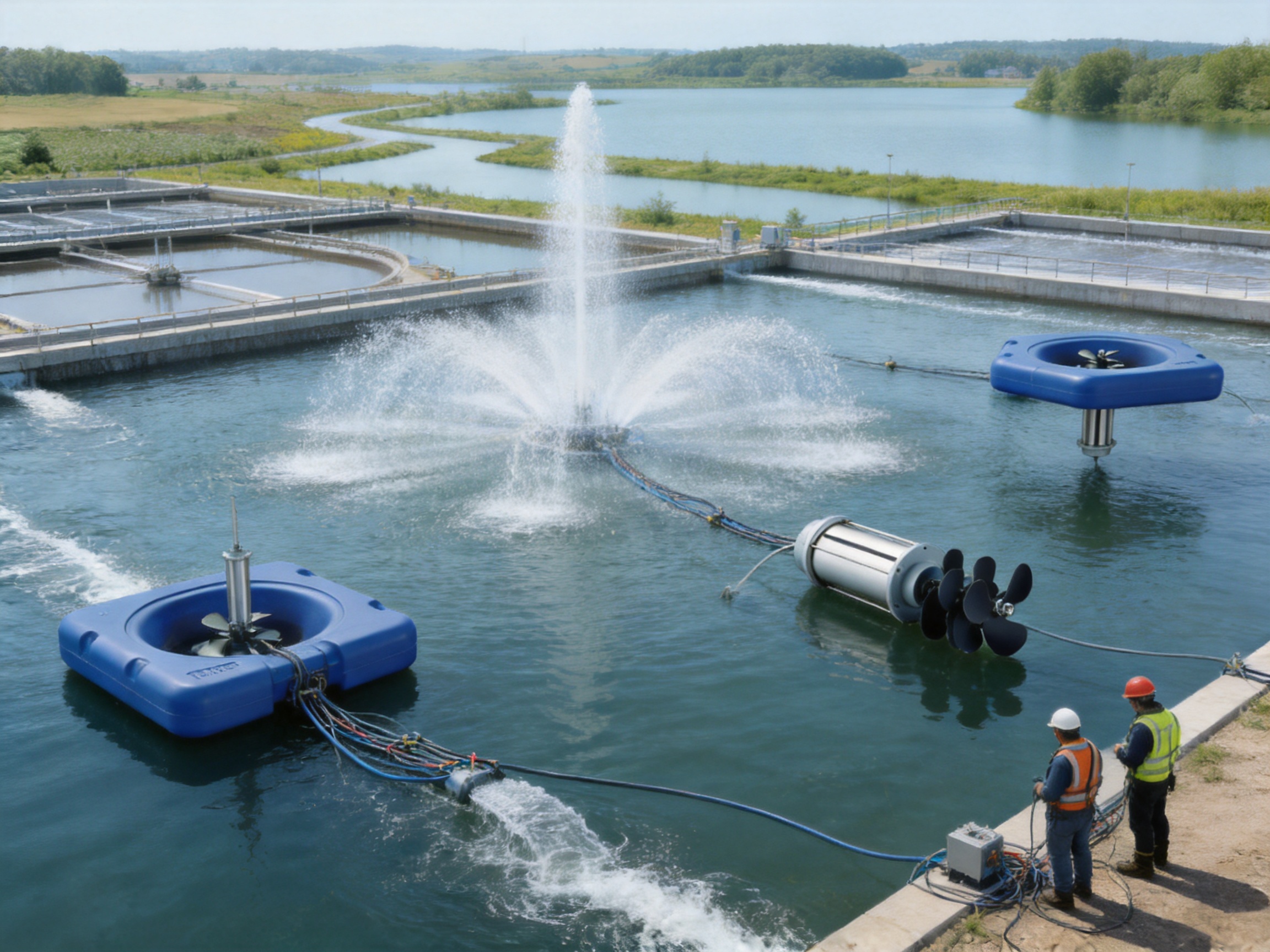
Efficient oxygen management is one of the most important requirements in aquaculture, wastewater treatment, and managed water environments. Fish, shrimp, beneficial microorganisms, and other aquatic organisms depend on sufficient dissolved oxygen for survival, growth, and biological activity. When oxygen levels decline, feeding efficiency can decrease, water quality can deteriorate, and aquatic life may become stressed. A dependable aeration system therefore needs to do more than simply move water. It must transfer oxygen efficiently, circulate a large volume of water, operate reliably for long periods, and remain suitable for demanding outdoor conditions.
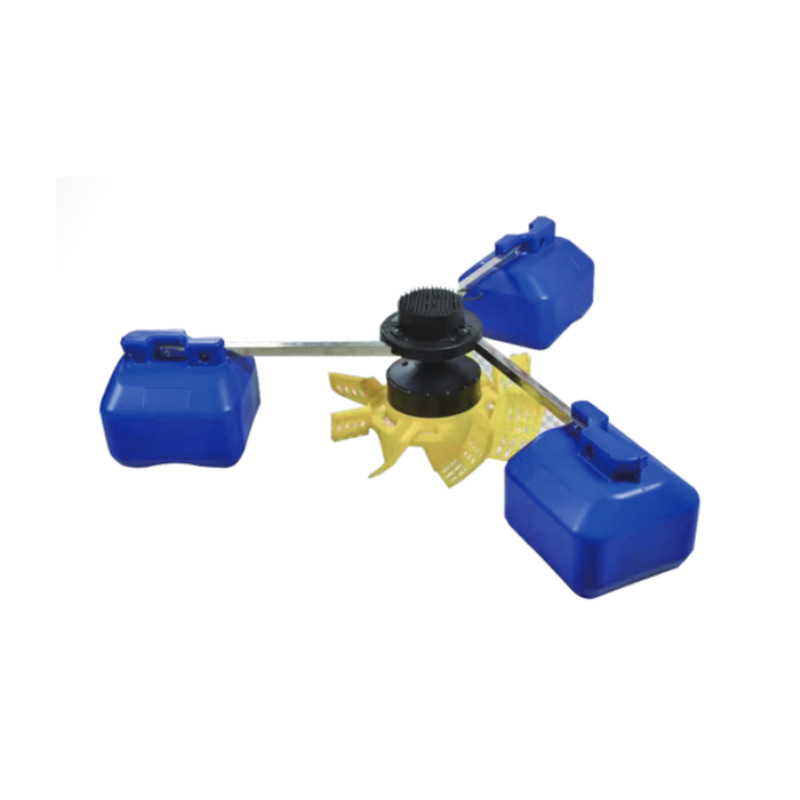
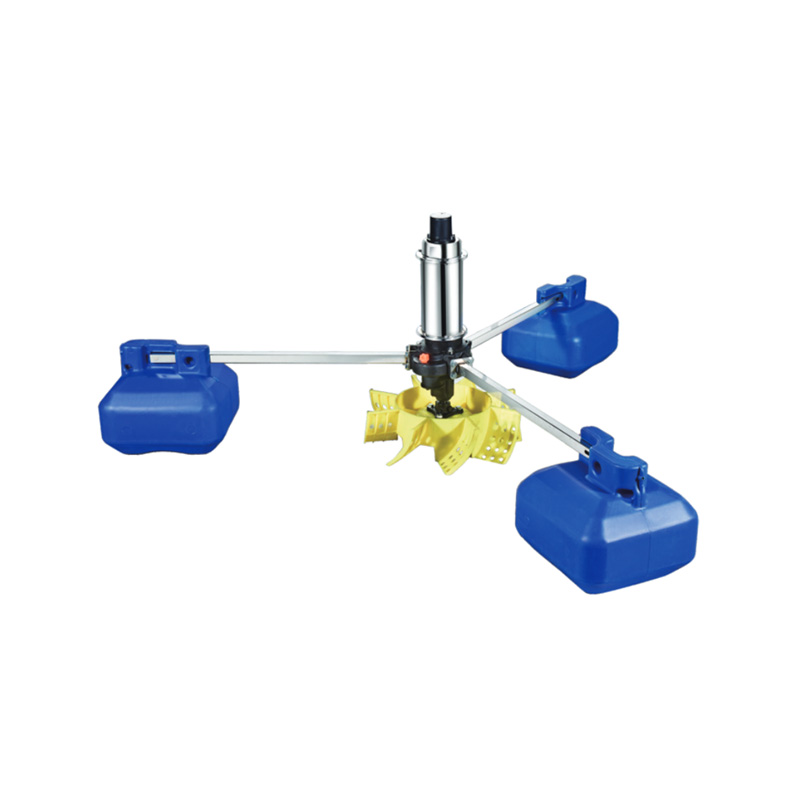
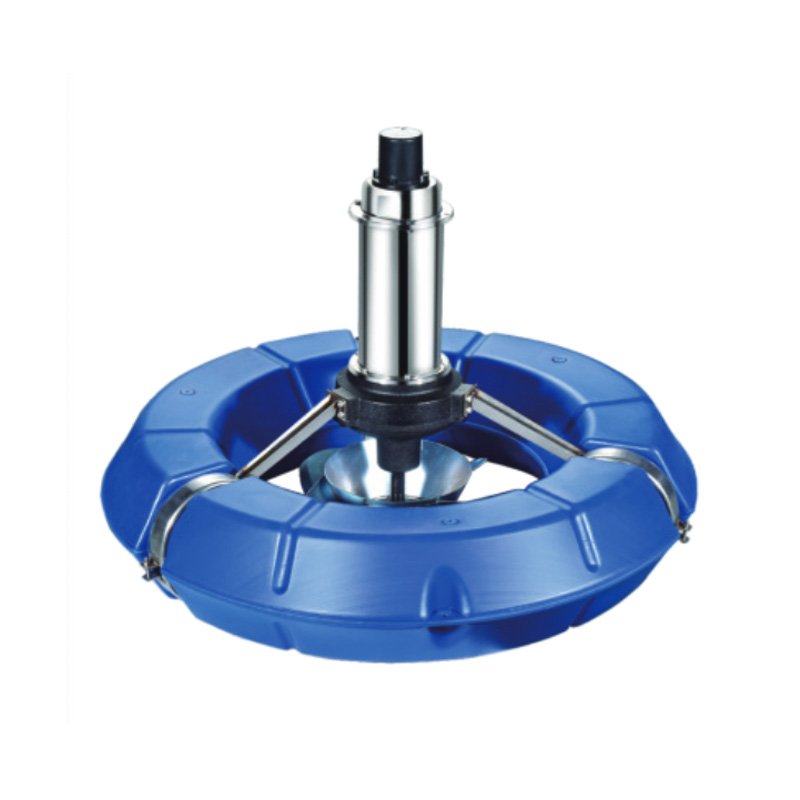
The Multi-Impeller Splash Aerator is designed around these requirements. It combines a fully submersible, water-cooled motor with a multi-impeller splash system and a sealed motor structure. During operation, the rotating impellers lift and disperse water into the air, producing a broad splash pattern and encouraging contact between atmospheric oxygen and the water surface. At the same time, the impellers generate vertical and radial water movement, helping distribute oxygenated water through the operating area.
This equipment is suitable for fish farming ponds, aquaculture facilities, wastewater treatment applications, ecological landscape lakes, and other water features that require continuous circulation and oxygenation. Its integrated construction reduces the need for separate motor cooling equipment, while the submerged operating configuration supports stable heat dissipation. The design also emphasizes sealing protection, precision rotation, and practical installation for professional and commercial users.
Why Dissolved Oxygen Management Matters
Dissolved oxygen is a critical water-quality parameter. In a fish pond, oxygen is consumed by fish, shrimp, algae, microorganisms, organic matter, and natural decomposition processes. Warm weather, high stocking densities, excessive feeding, cloudy conditions, and the decomposition of plant material can increase oxygen demand. At night or before sunrise, oxygen levels may become particularly difficult to maintain because photosynthetic oxygen production has stopped while biological consumption continues.
Insufficient oxygen can create several operational problems. Aquatic animals may gather near the surface, show reduced activity, consume less feed, or become more vulnerable to disease. In severe cases, low oxygen can result in mortality. In wastewater treatment, oxygen is also needed for biological processes that break down organic pollutants. Poor oxygen distribution may reduce treatment efficiency and create localized zones with undesirable water conditions.
Aeration addresses these challenges by increasing the interface between water and air. When water is lifted, broken into droplets, and exposed to the atmosphere, oxygen transfer can be improved. Water movement also helps prevent stagnant zones and distributes oxygen more evenly. The best equipment must balance oxygen transfer, circulation, energy consumption, mechanical durability, and ease of maintenance.
The Multi-Impeller Splash Aerator approaches this balance through a combination of water-splashing action and submerged circulation. Instead of relying on a narrow jet or a small localized disturbance, its multi-impeller configuration supports a wider operating pattern. This can be valuable where a pond or treatment basin requires both oxygen input and broader water movement.
Product Overview
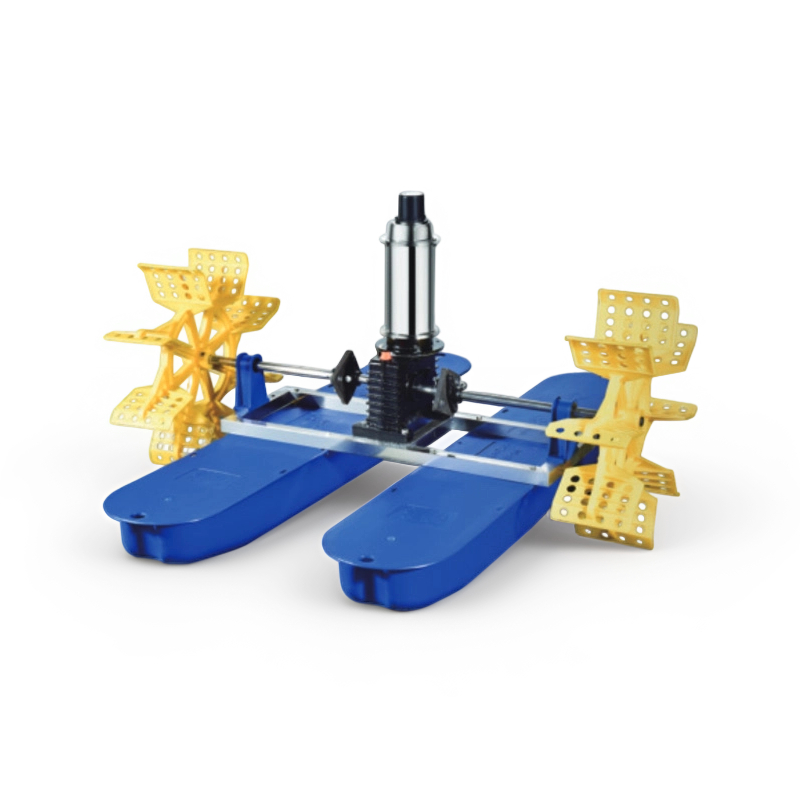
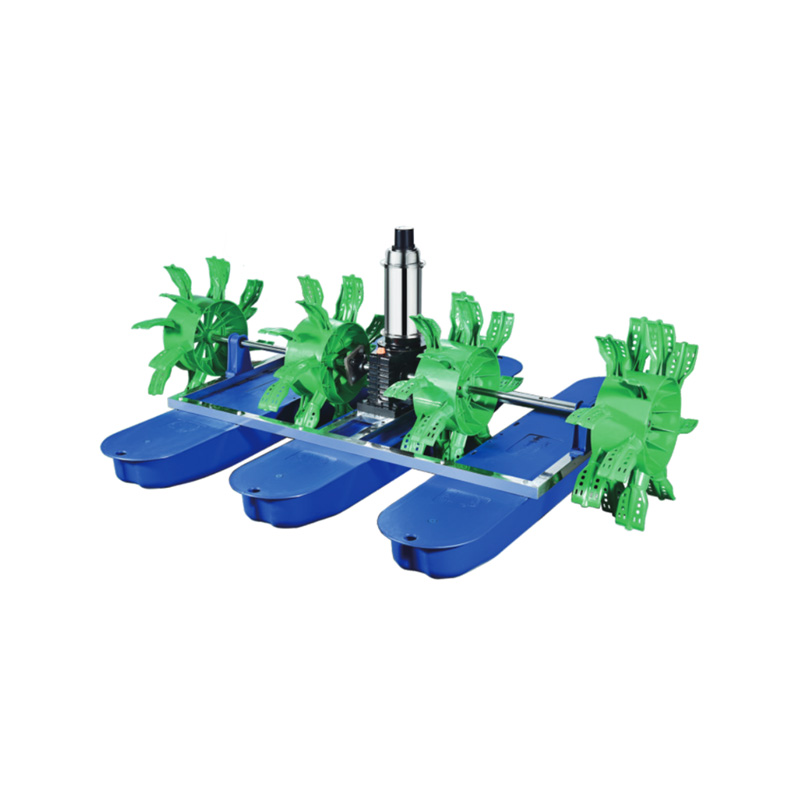
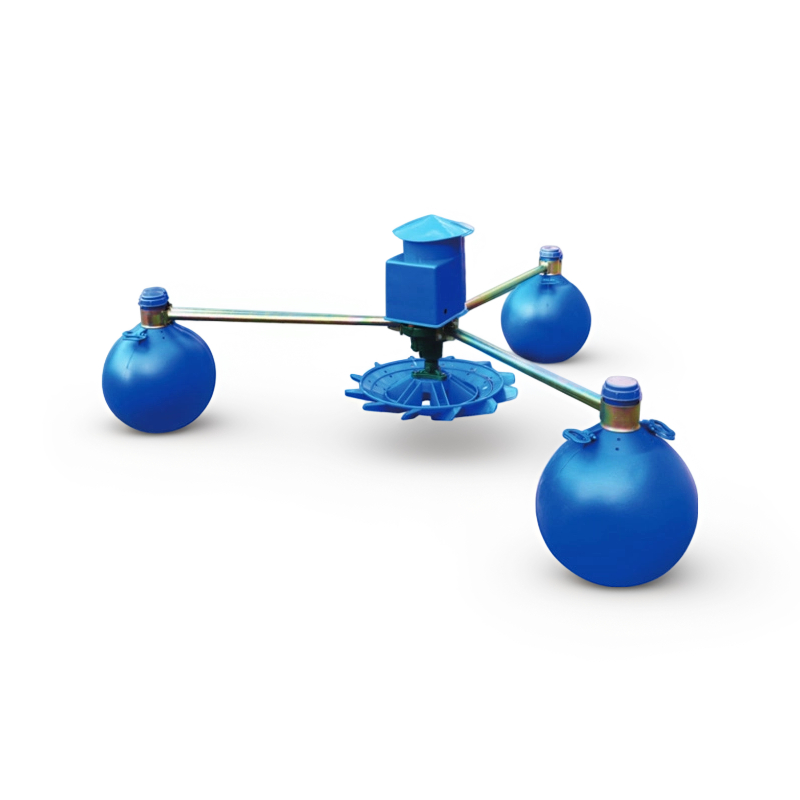
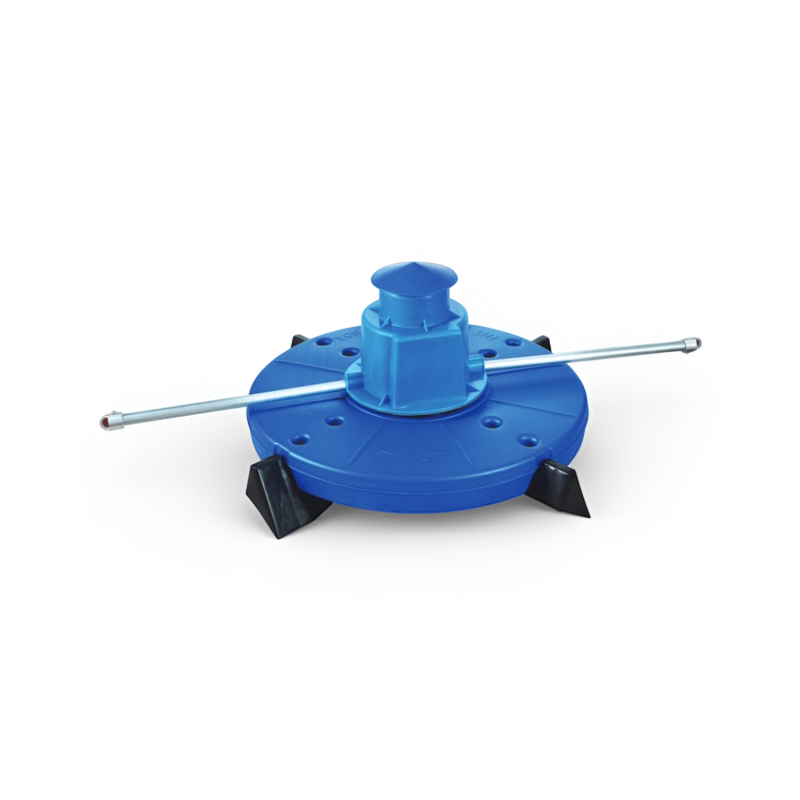
The Multi-Impeller Splash Aerator is a splash-type aeration machine equipped with a fully submersible motor and multiple rotating impellers. The motor is installed within the water environment and uses the surrounding water for continuous cooling. The impeller assembly lifts water and distributes it above the water surface, creating fine droplets and a broad splash area.
The system is intended for demanding applications where equipment may operate for extended periods. Its sealed motor structure helps protect internal components from direct contact with water, while the fluororubber mechanical seal is selected for sealing performance in challenging operating conditions. High-precision bearings support stable shaft rotation and help maintain smooth operation of the impeller system.
The supplied product information identifies the ZT-1.5 configuration in both 380-volt and 220-volt versions. Each listed version has a rated power of 1.5 kilowatts, a nominal speed of 430 revolutions per minute, an oxygen transfer rate of 2.8 kilograms of oxygen per hour, and a power efficiency value of 1.5 kilograms of oxygen per kilowatt-hour. The listed load range is 5 to 8 mu. Final selection should be based on site conditions, water depth, water quality, electrical supply, stocking density, and the required aeration layout.
| Item | ZT-1.5, 380 V Version | ZT-1.5, 220 V Version |
|---|---|---|
| Model | ZT-1.5 | ZT-1.5 |
| Voltage | 380 V | 220 V |
| Rated power | 1.5 kW | 1.5 kW |
| Current | 3.8 A | 12 A |
| Speed | 430 r/min | 430 r/min |
| Oxygen transfer rate | 2.8 kg O2/h | 2.8 kg O2/h |
| Power efficiency | 1.5 kg O2/kWh | 1.5 kg O2/kWh |
| Recommended listed load | 5–8 mu | 5–8 mu |
The technical values provide a useful basis for planning, but they should not be treated as a universal guarantee for every pond or treatment installation. Actual performance can vary according to water temperature, salinity, organic loading, water depth, water viscosity, installation position, electrical stability, and the number of aerators operating together. A professional application review is recommended for large or complex projects.
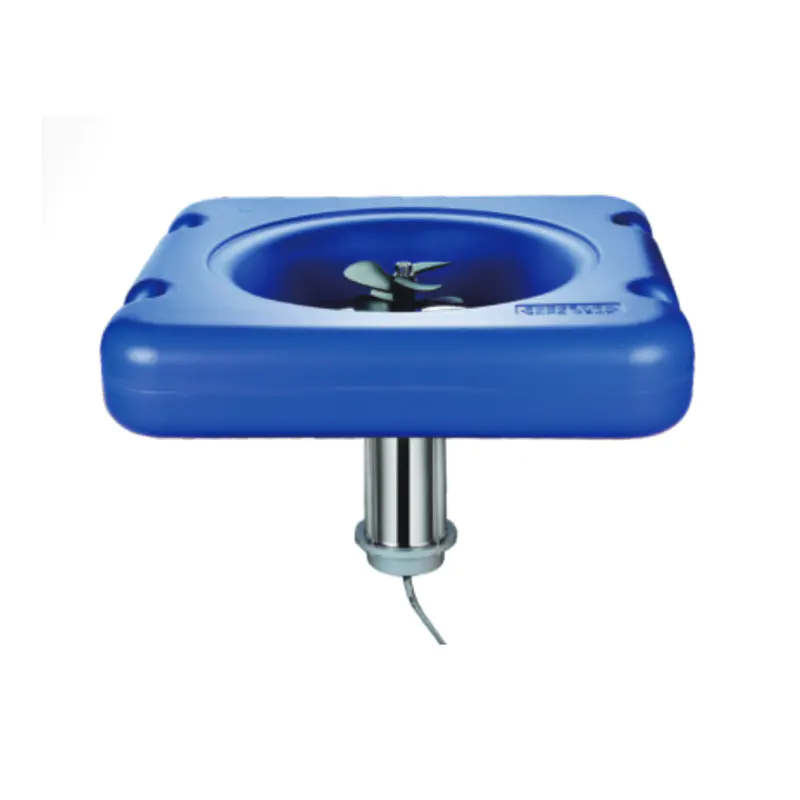
Multi-Impeller Splash Aerator
How the Multi-Impeller Splash System Works
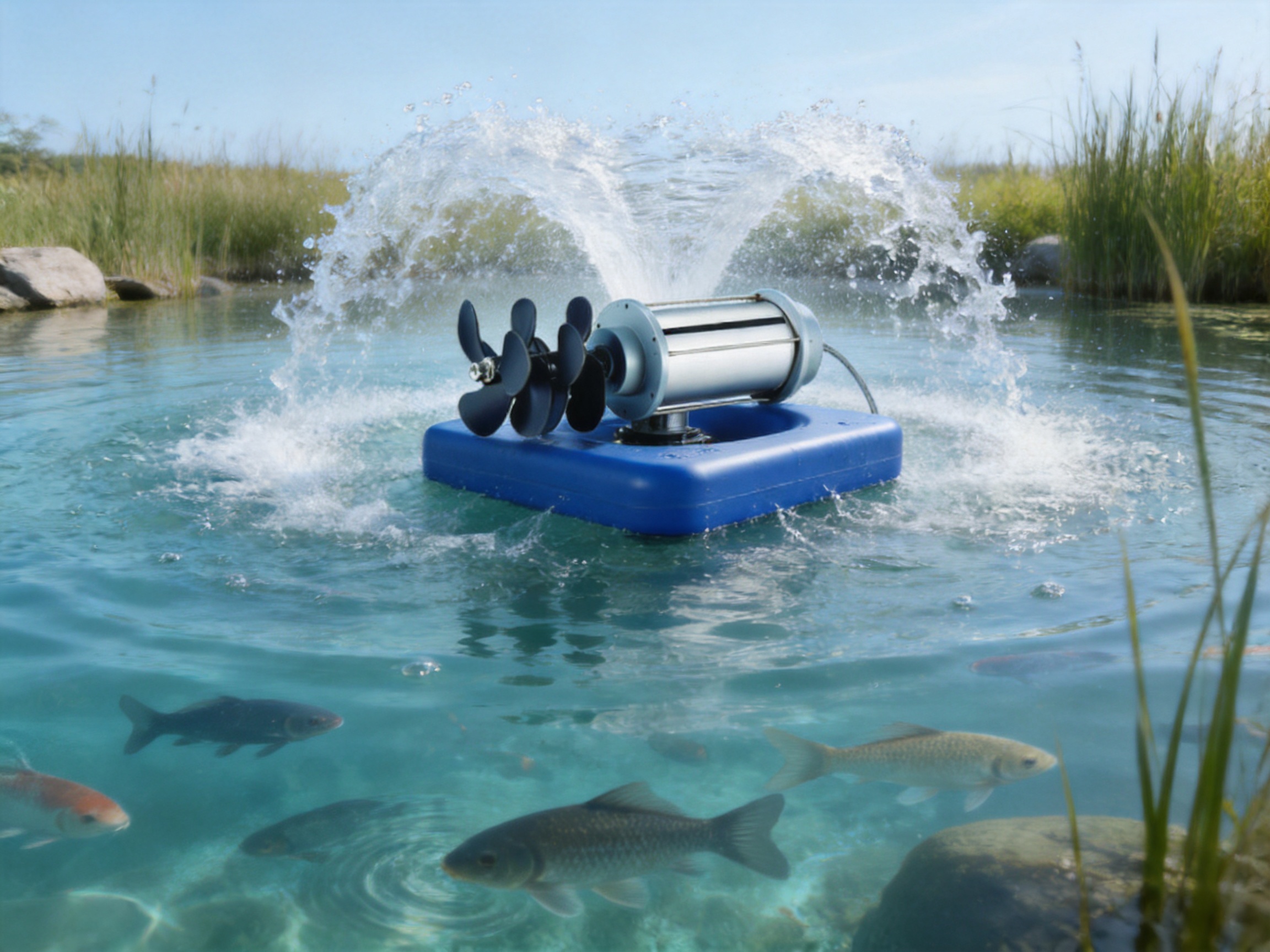
The central operating principle is the controlled movement of water through rotating impellers. When the aerator is energized, the motor turns the impeller system at the specified operating speed. The impellers draw and lift water, then project it upward and outward. As the water leaves the impeller area, it separates into droplets and sheets that return to the pond or basin surface.
This action improves oxygen transfer in several ways. First, the splash increases the surface area of the water exposed to the atmosphere. A larger air-water interface allows more opportunity for oxygen to enter the water. Second, the water droplets are surrounded by air during their flight, increasing contact between atmospheric oxygen and the water. Third, the returning water creates surface disturbance and circulation, preventing the water immediately around the equipment from remaining isolated from the rest of the pond.
The multi-impeller arrangement is important because several impellers can create a coordinated water movement pattern. Compared with a single concentrated discharge, the resulting flow may cover a broader area and produce more consistent circulation around the operating zone. Vertical movement brings lower water upward, while radial movement helps push oxygenated water away from the aerator. This combination can reduce localized stagnation when the machine is correctly positioned.
Flow distribution depends on pond geometry, water depth, embankments, partitions, vegetation, and other equipment. For this reason, the aerator should be installed as part of an overall circulation plan rather than placed without considering the shape of the water body. In larger ponds, several units may be arranged to create overlapping circulation patterns. In treatment basins, the equipment position may be selected to support the movement of water through biological or settling zones.
Surface Splashing and Oxygen Transfer
Water splashing is a practical and visible indication that the equipment is operating. However, splash appearance alone does not determine total oxygen transfer. Effective performance also depends on droplet formation, circulation depth, contact time with air, motor speed, water characteristics, and installation conditions. The multi-impeller design is intended to create strong water movement while maintaining a rated operating speed suitable for the supplied motor configuration.
Fine droplets generally provide more air-water contact area than a smooth, unbroken stream. The aerator uses the impeller system to separate water into active spray and splash patterns. When the droplets return to the surface, they contribute to agitation and circulation. This makes the equipment useful not only for adding oxygen but also for helping distribute oxygenated water through the pond.
Vertical and Radial Circulation
Many water bodies contain layers with different oxygen levels and temperatures. Lower water may become oxygen-deficient or stagnant, especially in deeper ponds or areas with high organic accumulation. The upward movement created by the impeller system helps bring water from below toward the surface. At the same time, radial movement helps carry surface water outward from the machine.
This combined movement can support more even water conditions. It may also help reduce floating debris concentration in a localized area and improve mixing between different parts of the pond. The actual circulation effect is influenced by the installation depth and the position of the unit relative to banks, cages, partitions, pipes, and other structures.
Advantages of the Fully Submersible Motor
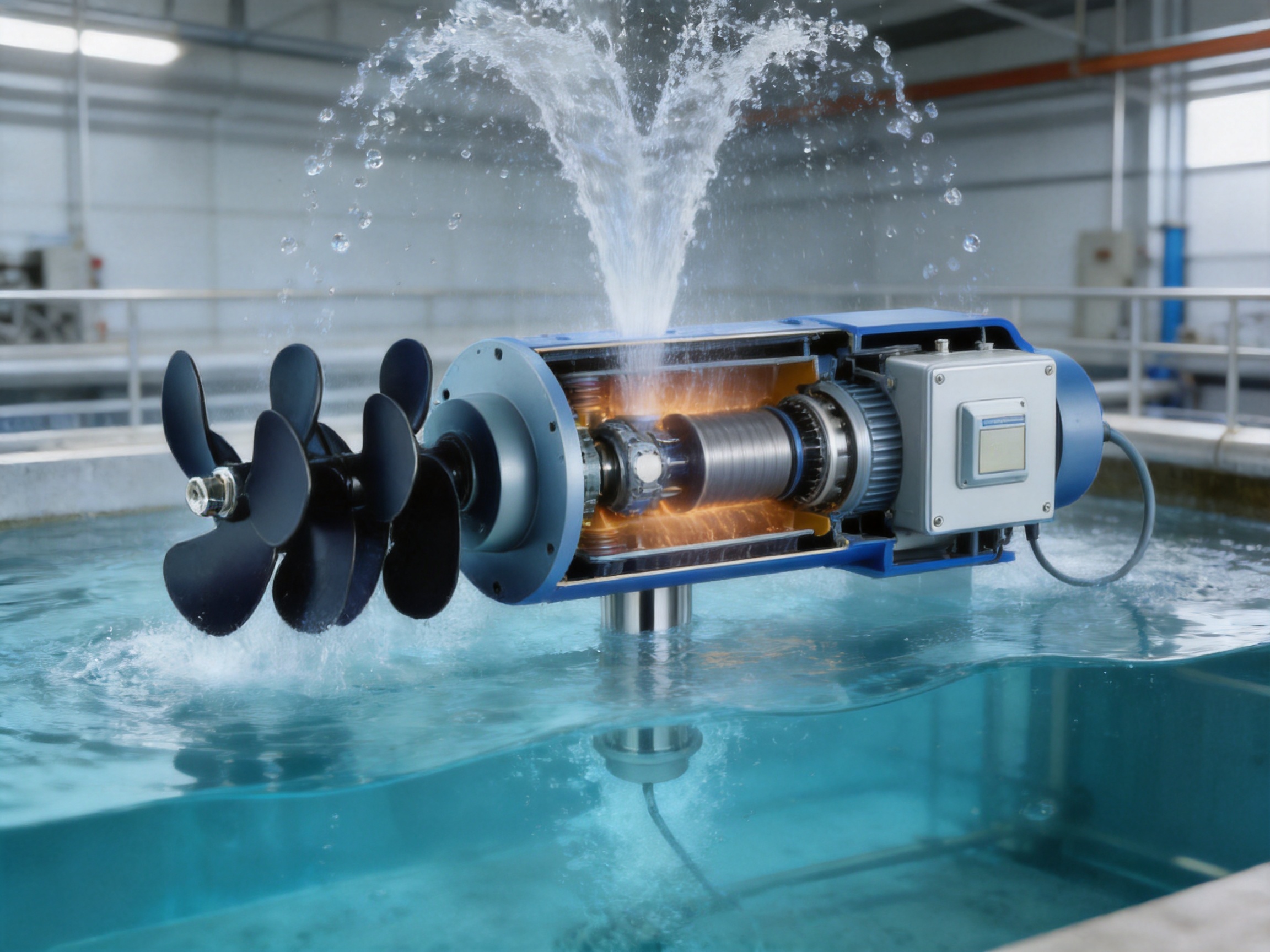
The fully submersible motor is one of the defining features of this aerator. Instead of using an exposed motor mounted above the water, the motor operates below the water surface. The surrounding water continuously absorbs heat generated during operation, creating a natural cooling environment.
Water cooling can be particularly useful in outdoor aquaculture applications where ambient temperatures are high. Air-cooled equipment may be affected by hot weather, dust, humidity, and restricted ventilation. A submerged motor avoids dependence on a separate fan or open-air cooling path. This contributes to a compact product structure and can help maintain stable motor conditions during continuous operation.
The submerged arrangement also places the power source close to the impeller system. This can reduce the need for a long mechanical transmission system, exposed belts, or external drive components. Fewer exposed transmission parts may simplify the operating layout and reduce the number of components subject to weather, splashing, and accidental contact.
At the same time, a submersible motor requires careful sealing. The motor housing, cable entry, shaft area, and mechanical seal must work together to keep water away from sensitive electrical and mechanical components. The product uses a sealed motor structure and a fluororubber mechanical seal to address this requirement. Proper sealing is essential to preserve insulation, protect bearings, and support long-term service life.
Continuous Cooling During Operation
Motor heat is generated by electrical losses, bearing friction, and mechanical load. In a submerged configuration, the surrounding water acts as the cooling medium. Provided that the equipment is installed at the correct water level and is not operated outside its intended conditions, this environment can support consistent heat transfer.
Continuous cooling is especially valuable during long aeration cycles. Fish farms may operate aerators at night, during hot weather, or during periods of high oxygen demand. Wastewater facilities may require extended operating schedules to support biological treatment. Stable cooling helps the motor maintain reliable performance during these demanding periods.
Compact Equipment Arrangement
Because the motor and impeller system are integrated into one submerged unit, the aerator can be installed without a separate motor platform or external mechanical drive assembly. This can be helpful where space is limited or where the site needs to keep the water surface relatively open.
The compact arrangement may also reduce installation complexity. Operators still need to provide appropriate electrical protection, support, anchoring, and cable routing, but the main operating mechanism is contained within the aerator assembly. This integrated design is one of the practical differences between a submerged splash aerator and certain surface-mounted or mechanically driven alternatives.
Sealing and Mechanical Protection
Sealing is a critical part of submersible equipment manufacturing. The motor must operate in direct contact with water, and the rotating shaft must pass through a boundary between the internal motor chamber and the wet operating environment. A reliable mechanical seal helps prevent water intrusion while allowing the shaft to rotate.
The Multi-Impeller Splash Aerator uses a fluororubber mechanical seal. Fluororubber is selected in many industrial sealing applications because it offers resistance to heat and a range of oils, chemicals, and environmental conditions. The suitability of any seal material depends on the actual water chemistry, temperature, contaminants, and operating schedule. Nevertheless, the specified material reflects the product’s focus on durable sealing in demanding applications.
The sealed motor structure also supports protection of the electrical winding and internal components. A well-designed housing should maintain structural integrity under water pressure and repeated thermal cycling. As the unit starts, runs, stops, and cools, different components experience changes in temperature and mechanical stress. Manufacturing quality is therefore important not only during initial assembly but also throughout the expected service period.
Precision Bearings and Stable Rotation
High-precision bearings support the shaft and allow the impeller system to rotate smoothly. Bearing quality affects vibration, noise, power consumption, shaft alignment, and mechanical life. In a splash aerator, the rotating assembly operates in a water environment and may experience changing hydraulic loads. Precision bearings help maintain controlled rotation under these conditions.
Stable rotation is directly related to the quality of water movement. If the shaft becomes misaligned or the impellers become unbalanced, vibration may increase and the splash pattern may change. Excessive vibration can also place additional stress on the seal, motor housing, and mounting system. For this reason, bearing selection and assembly accuracy are important parts of the product’s overall engineering.
Advantages Compared with Alternative Aeration Approaches
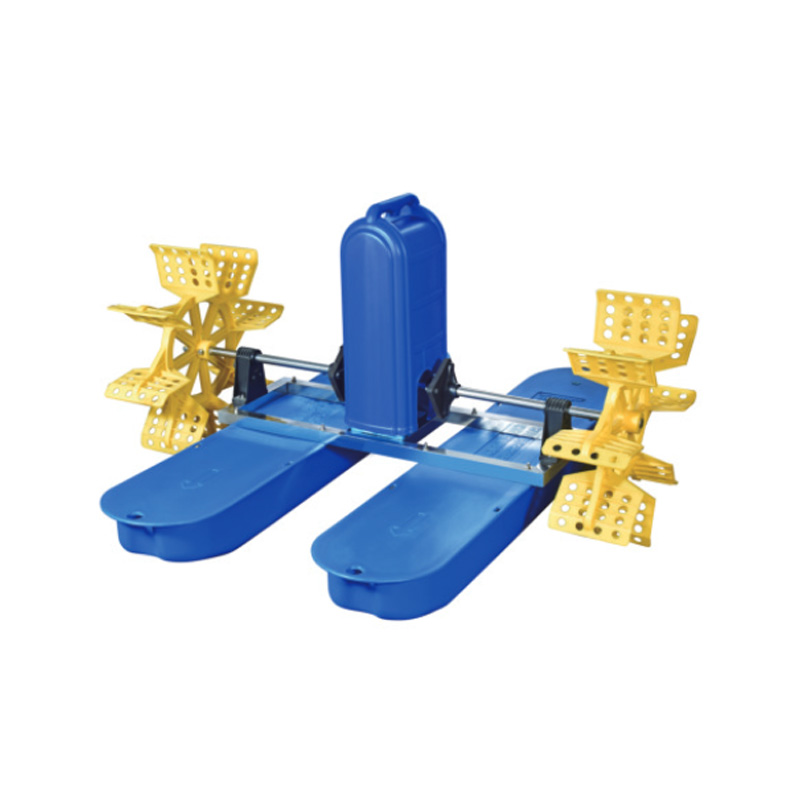
Different aerators are designed for different purposes. Paddlewheel aerators, fine-bubble diffusers, water pumps with venturi devices, surface fountains, and air blowers can all serve specific applications. The Multi-Impeller Splash Aerator is not intended to replace every type of aeration equipment. Its advantages are most relevant where users need splash-based oxygenation, strong water movement, a submerged motor, and a broad operating pattern.
Compared with Exposed-Motor Splash Equipment
An exposed-motor configuration may place the motor above the water and use a shaft, belt, or other transmission system to drive the impeller. Such equipment can be effective, but the external motor may be more exposed to rain, humidity, dust, salt air, and accidental contact with water. It may also require a supporting platform and additional mechanical protection.
The fully submersible motor of this aerator keeps the main drive system within the water environment. Natural water cooling can reduce reliance on external ventilation, and the integrated arrangement can provide a cleaner installation profile. The sealed motor design is especially valuable for users who prioritize protection from continuous splashing and outdoor exposure.
Compared with Single-Impeller Splash Designs
A single-impeller aerator may create an effective local splash pattern, but its circulation can be more concentrated. The multi-impeller system is designed to distribute water movement across several rotating elements. This can help create broader vertical and radial circulation, which is useful when the goal includes both oxygen transfer and pond mixing.
The appropriate design depends on the size and shape of the water body. A compact pond may not need a large number of impellers, while a broad aquaculture pond may benefit from a wider pattern. Users should evaluate the rated oxygen transfer and site conditions rather than selecting equipment only by visual splash height.
Compared with Fine-Bubble Diffusers
Fine-bubble diffusers introduce air below the water surface through a blower and diffuser network. They can be effective in deep basins and controlled treatment systems, but they require air piping, diffusers, and a separate air source. Diffusers may also need cleaning when biological growth or mineral deposits accumulate.
The splash aerator uses a direct mechanical water movement method. It does not require a separate air blower or underwater air distribution network for its basic operation. This can simplify the equipment arrangement for open ponds and fish farms. The best choice depends on water depth, oxygen demand, basin design, energy objectives, and maintenance preferences.
Compared with Simple Water Circulation Pumps
A general water pump may move a large volume of water but may not be optimized for air-water contact. A pump discharge can create circulation without producing the same droplet formation and broad splash pattern. The Multi-Impeller Splash Aerator is specifically configured to combine pumping action with surface exposure and splashing.
This makes it suitable for projects where water circulation and oxygen transfer are both important. The equipment should still be selected according to the required oxygen load, because water movement alone does not automatically indicate a specific oxygen transfer result.
Manufacturing Strengths and Engineering Focus
The manufacturer, Zhejiang ZhenTai Mechanical and Electrical Co., Ltd., specializes in aerators, submersible pumps, water pumps, and air blowers. The company was established in 2018 and is located in Wenling, Zhejiang Province, China, an area with a strong manufacturing base for pumps and mechanical and electrical products.
The company develops and produces more than 90 products across 10 series. Its product range includes floating aerators, impeller aerators, water wheel aerators, and water pumps. This product breadth is relevant to buyers because experience across related equipment categories can support practical understanding of motors, impellers, seals, pump bodies, electrical systems, and water-handling applications.
The company’s stated applications include aquaculture, fish pond aeration, farmland irrigation, building foundation drainage, environmental protection, chemical industries, household water supply, ecological landscape lakes, and flood control and drainage. These fields require different combinations of flow, pressure, durability, electrical configuration, and environmental resistance. Experience across these applications can encourage a more complete approach to product development.
Integrated Mechanical and Electrical Manufacturing
A submerged aerator is not only a motor and not only a water-moving machine. It is an integrated mechanical and electrical product. The motor must provide the required torque and speed, the impellers must convert rotational energy into useful hydraulic movement, the seals must protect the internal structure, and the housing must withstand the operating environment.
Manufacturing competence is therefore reflected in the relationship between components. Shaft alignment, bearing installation, seal compression, impeller balance, winding quality, cable sealing, and final testing all contribute to equipment reliability. A weakness in any one area may affect the entire product. An integrated manufacturer can coordinate these elements during design and assembly rather than treating them as unrelated parts.
Attention to Seal and Bearing Selection
The use of a fluororubber mechanical seal and high-precision bearings demonstrates attention to two areas that directly influence submersible equipment life. The seal supports water protection, while the bearings support smooth rotation. These components are small compared with the motor housing, but they have a major effect on operating stability.
Appropriate component selection should be supported by controlled assembly procedures. The seal must be installed without damage or contamination. Bearings must be seated correctly and aligned with the shaft. Impellers must be mounted securely and checked for balance. These practices help reduce vibration, leakage risk, and premature mechanical wear.
Product Development and Customization
The company provides OEM and ODM services for global buyers. Customization may be relevant when a distributor, aquaculture project contractor, or equipment integrator requires a specific voltage, branding arrangement, packaging method, cable length, installation structure, or product configuration.
OEM and ODM cooperation should begin with a clear technical specification. Important details include operating voltage, frequency, power rating, current, target water area, water depth, water chemistry, operating hours, required documentation, packaging requirements, and applicable market standards. Early technical communication helps prevent mismatches between the product and the installation environment.
Customization is most effective when it preserves the core safety and performance requirements of the equipment. Changes to the impeller, motor, seal, electrical cable, or housing should be evaluated by qualified engineers because they may affect cooling, current, balance, insulation, and oxygen transfer.
Applications in Aquaculture
Aquaculture farms need practical equipment that can operate in ponds, reservoirs, tanks, and other managed water environments. The Multi-Impeller Splash Aerator is suitable for fish farming ponds and other aquaculture areas where oxygen transfer and circulation are necessary.
In a fish pond, the aerator can be positioned to create a broad circulation route. Oxygenated surface water moves away from the machine, while lower or less-oxygenated water is drawn into the circulation pattern. Strategic placement may help reduce dead zones near corners, banks, feeding areas, or structures.
The equipment may be used during normal daily operation, high-temperature periods, nighttime hours, or emergency oxygen-demand conditions. The operating schedule should be determined by the farm’s stocking density, feeding plan, water quality, weather conditions, and dissolved oxygen monitoring program.
For shrimp farming and other aquaculture operations, water movement can be as important as oxygen transfer. Circulation helps distribute oxygen and may support more uniform conditions across the production area. However, operators should consider animal behavior, pond geometry, current strength, and the location of nets, cages, feeders, and other equipment before final installation.
Use in Wastewater Treatment
Wastewater treatment processes may require oxygen for biological treatment. The aerator can support oxygen input and circulation in suitable treatment basins, oxidation ponds, and environmental management systems. Its splash action promotes atmospheric contact, while the impeller movement helps mix the water.
Wastewater sites vary considerably. Some contain suspended solids, oils, chemicals, abrasive particles, or corrosive substances. Before installation, the user should confirm that the water chemistry and temperature are compatible with the motor housing, cable, mechanical seal, and other wetted components. If the water contains aggressive chemicals, a specific materials review may be necessary.
The aerator may be particularly useful in open or semi-open treatment areas where a self-contained splash unit is easier to install than a network of air pipes and diffusers. Treatment engineers should evaluate oxygen demand, basin volume, retention time, mixing requirements, and sludge conditions when determining the number and position of units.
Use in Landscape Lakes and Water Features
Ecological landscape lakes, park ponds, and decorative water bodies can benefit from water circulation and surface agitation. The aerator can help create visible water movement while supporting oxygenation. In these applications, appearance, noise, electrical safety, anchoring, and protection of visitors may be important design considerations.
Installation should keep cables organized and protect them from damage. The unit should be positioned so that the splash does not create unwanted spray on walkways, electrical panels, buildings, or sensitive plants. Where public access is possible, the responsible site manager should implement suitable barriers, warning signs, and electrical protection.
Installation Guidelines
Before installation, inspect the aerator, motor cable, impeller system, seal area, support components, and electrical connections. Confirm that the model voltage matches the available power supply. The 380-volt and 220-volt versions have different current requirements, so electrical devices must be correctly selected for the applicable configuration.
Place the aerator in the designated operating area and ensure that the unit is securely installed. The support or anchoring system must resist movement caused by starting torque, water reaction forces, wind, floating debris, and normal vibration. A unit that shifts position may create an uneven circulation pattern or place excessive stress on the cable and mounting structure.
The water depth should be sufficient for the equipment to operate as intended. Do not allow the motor to run without adequate water coverage. Dry operation can eliminate the cooling effect provided by the surrounding water and may cause rapid overheating or mechanical damage.
Electrical installation should be completed by qualified personnel. Appropriate protection may include an isolating switch, overload protection, short-circuit protection, grounding, leakage protection, and a correctly rated control panel. Cable routing should prevent abrasion, sharp bending, floating entanglement, and contact with moving components.
After installation, inspect the splash pattern and listen for unusual noise or vibration. Confirm that the unit starts smoothly and that the water movement is consistent. If the aerator moves excessively, produces irregular splashing, trips the electrical protection, or shows signs of leakage, stop operation and investigate the cause before continued use.
Positioning for Better Pond Circulation
There is no single installation position suitable for every pond. In a rectangular pond, the aerator may be positioned to encourage a circulation loop along the long axis. In an irregular pond, the unit may need to be placed away from corners or obstacles. In a pond with several aerators, units may be distributed to reduce stagnant areas and avoid opposing flows that cancel one another.
The installation should also consider feeding locations, water inlets, drainage points, cages, screens, pipes, and areas where sediment accumulates. Observing the surface movement after startup can help identify whether water is being distributed effectively. Dissolved oxygen measurements at several locations provide a more reliable basis for evaluating actual performance.
Operation and Maintenance
Regular inspection is recommended to maintain stable long-term operation. Operators should check the splash pattern, motor sound, vibration, power consumption, cable condition, mounting structure, and water level. A change in any of these factors may indicate wear, blockage, imbalance, electrical problems, or a change in pond conditions.
The impeller area should be inspected for weeds, ropes, plastic, nets, branches, and other debris. Foreign material can restrict rotation, change the splash pattern, increase motor load, or damage the seal. Before attempting to remove debris, disconnect the power supply and follow appropriate lockout and safety procedures.
The sealing system deserves particular attention. Signs of water intrusion, unusual motor current, repeated electrical trips, or changes in insulation resistance should be treated seriously. Submersible equipment should not be opened in the field unless the person performing the work has the appropriate training, tools, replacement parts, and testing equipment.
Bearings and rotating components should be monitored for unusual noise, vibration, or temperature changes. High-precision bearings can provide smooth operation when correctly installed and operated, but they are still subject to normal wear. Early detection of abnormal conditions may prevent more extensive damage to the shaft, impellers, seal, or motor.
Recommended Inspection Routine
Before each operating period, visually check the water level, cable route, mounting condition, and visible impeller area. Confirm that the unit is fully submerged and that no people, animals, or loose objects are in a hazardous proximity to the equipment.
During operation, observe whether the splash is even and whether the sound remains consistent. A gradual reduction in splash may result from debris, impeller wear, water-level changes, or an electrical issue. An increase in vibration may indicate imbalance, a loose mounting point, bearing wear, or an object caught in the rotating system.
At planned maintenance intervals, inspect electrical insulation, grounding continuity, fasteners, sealing components, and the condition of the impeller assembly. The exact maintenance interval should reflect operating hours, water quality, temperature, and the manufacturer’s technical recommendations.
Energy and Operating Efficiency
The listed ZT-1.5 configuration has a power rating of 1.5 kilowatts and a listed oxygen transfer rate of 2.8 kilograms of oxygen per hour. Its stated power efficiency is 1.5 kilograms of oxygen per kilowatt-hour. These values provide an initial reference for comparing equipment requirements and estimating operating needs.
Energy efficiency should be evaluated together with actual oxygen demand. Running more equipment than necessary may increase electricity consumption, while using too little aeration capacity may create water-quality risks. A practical operating plan may use dissolved oxygen monitoring, seasonal scheduling, and staged operation to match aeration output with changing pond conditions.
Electrical efficiency can also be affected by voltage stability, cable length, connection quality, motor condition, impeller loading, and water characteristics. A clean impeller operating at the correct water level generally places less unnecessary stress on the motor than a partially blocked or poorly positioned unit.
The 220-volt version has a listed current of 12 amperes, while the 380-volt version has a listed current of 3.8 amperes. These values are important when selecting circuit breakers, contactors, cables, control panels, and generators. Electrical design should account for starting characteristics and local electrical regulations rather than relying only on the nominal running current.
Quality, Reliability, and Buyer Support
For importers, distributors, farms, and project contractors, product reliability is only one part of the purchasing decision. Documentation, communication, packaging, spare parts, technical guidance, and after-sales support also influence the total value of the equipment.
Zhejiang ZhenTai Mechanical and Electrical Co., Ltd. focuses on quality, integrity, continuous technological innovation, reliable products, customized OEM and ODM services, and professional technical support for customers worldwide. These capabilities are relevant to buyers who need equipment for repeated projects or distribution through an established sales network.
A manufacturer with multiple product series can offer broader support when a project includes more than one water-handling requirement. For example, an aquaculture customer may need pond aerators, transfer pumps, drainage pumps, or other water equipment. A supplier experienced in related product categories can help coordinate specifications and reduce the complexity of sourcing from several unrelated manufacturers.
International buyers should provide accurate project information when requesting a quotation. Useful details include destination country, power standard, voltage and frequency, water type, pond dimensions, water depth, required operating hours, quantity, packaging expectations, private-label requirements, and delivery schedule. Clear information allows the supplier to recommend a suitable configuration and identify potential installation concerns before production.
OEM and ODM Considerations
For OEM projects, buyers may request customized labels, colors, packaging, manuals, cable arrangements, or external identification. For ODM projects, the requirements may involve deeper changes to the motor, impeller, housing, mounting system, or control equipment. The technical feasibility, development schedule, minimum order quantity, and testing requirements should be discussed in advance.
Any customized product should retain adequate protection for the motor and rotating assembly. A change in impeller diameter or speed, for example, may affect current, vibration, oxygen transfer, and seal loading. A change in cable length may affect voltage drop and installation safety. Engineering review is therefore essential before confirming a modified design.
How to Select the Correct Aerator Quantity
The number of aerators required depends on more than pond area. Important factors include fish species, stocking density, feeding rate, water temperature, organic loading, pond depth, water exchange, expected dissolved oxygen level, and the operating schedule. The listed 5-to-8-mu load range for the ZT-1.5 model should be treated as a reference for application planning rather than a substitute for a site-specific assessment.
For a basic planning calculation, a buyer may begin with the required oxygen demand and compare it with the rated oxygen transfer of each unit. However, rated oxygen transfer is generally determined under defined test conditions. Field performance may differ due to temperature, water quality, salinity, altitude, installation depth, and pond geometry. Safety margins may be appropriate where oxygen demand changes quickly or where emergency aeration is critical.
Distribution is also important. A sufficient total number of machines may still produce poor results if all units are installed in one area. The equipment should be positioned to support circulation through the full production zone. Monitoring at multiple points can reveal differences between the aerator outlet area, pond edges, bottom zones, and corners.
Safety Considerations
Water and electricity create serious hazards. The aerator should be installed, grounded, and protected by qualified electrical personnel. Do not touch the water, cable, mounting structure, or motor while the unit is energized. Always isolate the electrical supply before inspection, cleaning, relocation, or maintenance.
Operators should prevent swimmers, children, livestock, and unauthorized personnel from approaching operating equipment. In public landscape areas, physical barriers and warning signs may be necessary. Floating cables and loose anchoring components should be secured to prevent trips, entanglement, and mechanical damage.
Do not operate the aerator outside the specified voltage, water conditions, or installation requirements. If abnormal noise, excessive vibration, unusual odor, smoke, repeated tripping, or visible cable damage occurs, stop the equipment and arrange a professional inspection.
Frequently Asked Questions
What is a Multi-Impeller Splash Aerator?
It is a water aeration machine that uses multiple rotating impellers to lift and splash water into the air. The process increases air-water contact and supports dissolved oxygen transfer while creating vertical and radial circulation.
What type of motor does the aerator use?
The product uses a fully submersible water-cooled motor. The surrounding water continuously helps remove heat during operation, provided that the unit remains correctly submerged and is operated within its specified conditions.
What are the main applications?
The aerator is suitable for fish farming ponds, aquaculture facilities, wastewater treatment areas, ecological landscape lakes, and other managed water environments that require oxygenation and circulation.
What is the rated power of the listed model?
The listed ZT-1.5 configuration has a rated power of 1.5 kilowatts. It is available in the supplied information with both 380-volt and 220-volt electrical configurations.
What is the oxygen transfer rate?
The supplied technical information lists an oxygen transfer rate of 2.8 kilograms of oxygen per hour and a power efficiency of 1.5 kilograms of oxygen per kilowatt-hour. Actual field performance depends on water and installation conditions.
Why is a multi-impeller design useful?
Multiple impellers can support a broader movement pattern than a concentrated single-impeller arrangement. They help generate both vertical and radial water movement, which can improve circulation while supporting splash-based oxygen transfer.
How does the aerator compare with an air blower and diffuser?
An air blower and diffuser system introduces air through underwater piping and diffuser elements. The splash aerator uses direct mechanical water movement and does not require a separate air distribution network for its basic operation. The more suitable option depends on basin depth, oxygen demand, maintenance preferences, and project design.
What sealing material is used?
The product specifies a fluororubber mechanical seal. This seal is intended to support protection of the submerged motor structure, although compatibility should be confirmed when the equipment is used in chemically aggressive or unusually hot water.
What kind of bearings are included?
The product uses high-precision bearings to support smooth shaft rotation and stable impeller operation. Bearing condition should be monitored through operating sound, vibration, and other maintenance indicators.
How should the aerator be installed?
Place it in the designated water area, ensure that it is fully and securely installed, confirm the correct voltage, and protect the electrical system with suitable professional equipment. The unit should be positioned to support the desired pond circulation pattern.
Can the product be used continuously?
The design supports extended operation, and the submerged motor benefits from continuous water cooling. However, operating schedules should be based on actual oxygen demand, water conditions, electrical capacity, and proper maintenance. Continuous operation does not eliminate the need for inspection.
How often should maintenance be performed?
Inspection frequency depends on operating hours, water quality, debris levels, temperature, and application conditions. Operators should check the unit regularly and immediately investigate changes in splash pattern, vibration, sound, current, or sealing performance.
Can the manufacturer provide OEM or ODM services?
Yes. The company provides OEM and ODM services for global buyers. Custom requirements should be discussed in detail, including electrical specifications, packaging, labeling, cable arrangements, documentation, quantity, and any proposed mechanical changes.
What information should buyers provide when requesting a quotation?
Buyers should provide the application, pond or basin dimensions, water depth, water type, required aeration capacity, voltage and frequency, expected operating hours, quantity, destination market, packaging requirements, and any OEM or ODM expectations.
Conclusion
The Multi-Impeller Splash Aerator is designed for users who need a combination of oxygen transfer, water circulation, compact construction, and submerged motor cooling. Its multi-impeller system creates a broad splash pattern and supports vertical and radial movement, while the fully submersible motor uses the surrounding water for continuous cooling. The sealed motor structure, fluororubber mechanical seal, and high-precision bearings address important requirements for operation in wet and demanding environments.
With a listed 1.5-kilowatt configuration, 430 revolutions per minute operating speed, 2.8 kilograms of oxygen transfer per hour, and versions for 380-volt and 220-volt supplies, the product can be considered for fish farming ponds, aquaculture operations, wastewater treatment, and ecological landscape applications. Actual selection should always be based on site conditions and professional electrical and hydraulic assessment.
The manufacturing strengths behind the product include integrated mechanical and electrical expertise, a broad range of aeration and pumping equipment, attention to seals and bearings, product development across multiple water-handling applications, and support for OEM and ODM cooperation. For importers, aquaculture operators, project contractors, and distributors, these capabilities can support a practical approach to product selection, customization, installation, and long-term service.
When correctly selected, securely installed, and regularly maintained, the Multi-Impeller Splash Aerator can become an important part of a responsible water-management system. It helps improve contact between water and air, supports pond circulation, and provides a durable solution for applications where reliable oxygenation is essential.
References
1. Product technical information supplied for the Multi-Impeller Splash Aerator, including model, voltage, power, current, speed, oxygen transfer rate, efficiency, and listed load range.
2. Manufacturer company information supplied by Zhejiang ZhenTai Mechanical and Electrical Co., Ltd., including product categories, application fields, manufacturing capabilities, OEM and ODM services, and company background.
3. General engineering principles for mechanical surface aeration, air-water contact, dissolved oxygen transfer, and water circulation in aquaculture and wastewater systems.
4. General maintenance practices for submersible motors, mechanical seals, rotating impellers, precision bearings, and water-handling equipment.
5. General electrical safety principles for submerged motor equipment, grounding, overload protection, leakage protection, cable routing, and maintenance isolation.