 English
 Español
 Indonesia
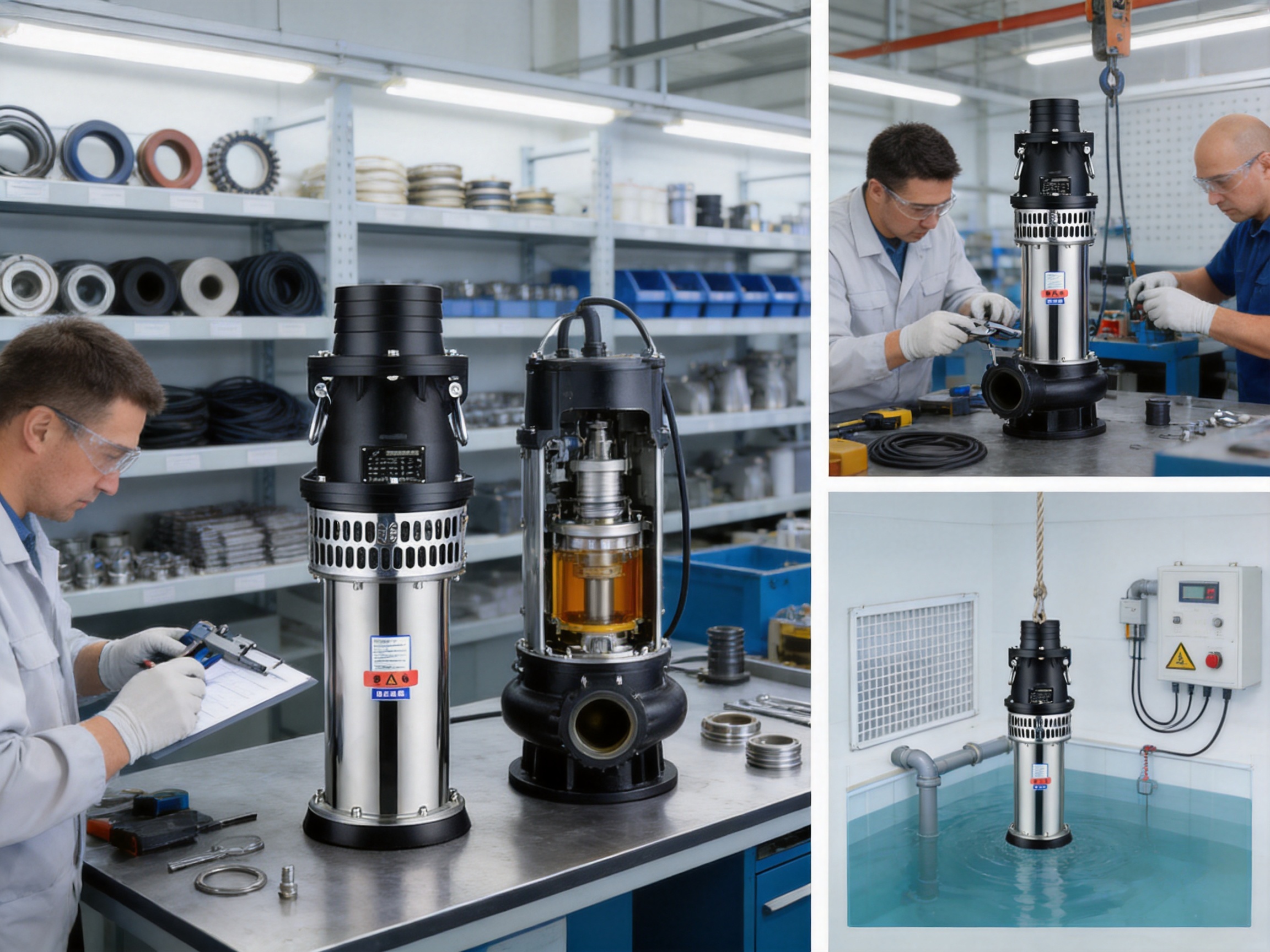
Reliable water movement is essential in agricultural irrigation, aquaculture, municipal drainage, construction, industrial processing, and many other applications. When a pumping system must operate directly below the water surface, a submersible electric pump can offer important practical benefits. It eliminates the need for a long suction line, reduces priming problems, and makes it possible to install the pumping unit close to the water source. The QY lightweight oil-immersed submersible pump is designed around these operating requirements, combining a compact pump-and-motor structure with a centrifugal or axial-flow hydraulic arrangement and an oil-filled three-phase asynchronous motor.
This pump series is intended for buyers who need a practical balance between flow capacity, lifting height, installation convenience, operating stability, and purchase value. Its available models cover capacities from 65 to 280 cubic meters per hour, power ratings from 3 to 7.5 kW, and maximum heads from 5 to 15 meters. This range gives farms, irrigation contractors, drainage service providers, water-supply installers, and equipment importers several configurations from which to select.
The lightweight design is particularly useful where pumps must be moved between ponds, wells, reservoirs, drainage pits, canals, or temporary irrigation points. Instead of relying on a large above-ground pumping station, users can lower the unit into the water, connect the discharge pipe and power supply, and place the pump into service after confirming that all operating and safety requirements have been met.
The oil-immersed motor structure also provides a protected operating environment for the electrical components. The motor is filled with insulating oil, while the sealing system uses mechanical seals and oil-resistant rubber sealing rings to help prevent water ingress. This construction is designed for stable operation in submerged conditions when the pump is correctly installed, fully immersed, and operated within its specified performance range.
Product Overview and Operating Principle
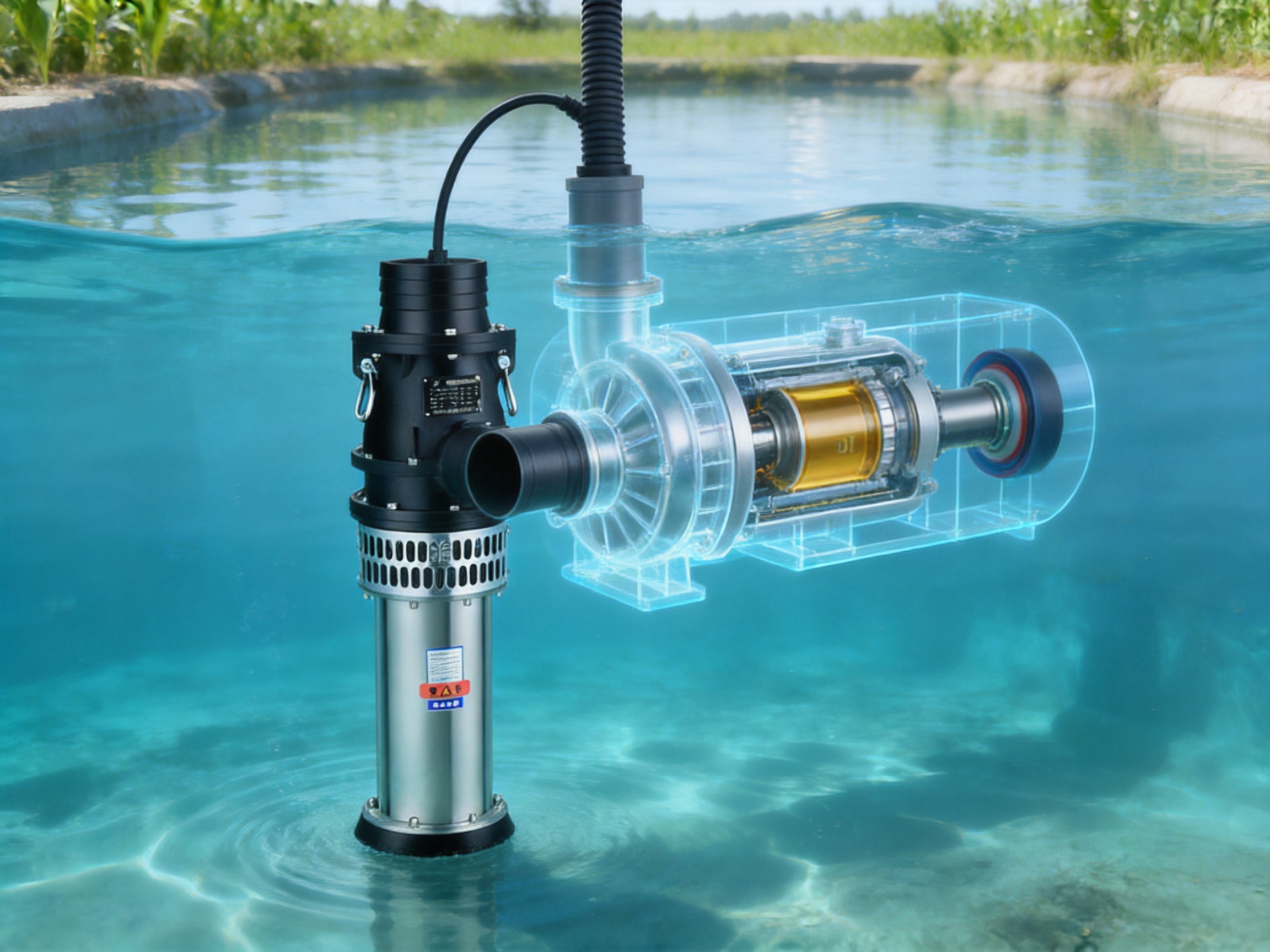
The QY series is a combined pumping and motor unit. Unlike a separately mounted surface pump, the motor and hydraulic section are integrated into one submersible assembly. The pump is lowered into the water, and the hydraulic section draws water through the inlet before directing it into the discharge pipe. Because the pump is positioned at the water source, the suction distance is minimized and the system can avoid many of the difficulties associated with surface-mounted suction pumps.
Depending on the selected model and hydraulic configuration, the upper pump section adopts either a centrifugal or axial-flow structure. Centrifugal designs are generally suitable when the system requires a combination of flow and lifting height. Axial-flow arrangements are commonly selected where very large water volumes must be moved against a relatively low head. The model data should therefore be reviewed carefully before purchase, especially when the installation requires a particular balance between discharge volume and elevation.
The lower section contains a three-phase asynchronous motor in an oil-filled housing. The oil helps insulate and protect the motor components and supports heat transfer during operation. The use of a three-phase motor is appropriate for agricultural, municipal, industrial, and commercial installations where three-phase power is available. The listed models use a rated voltage of 380 V, while buyers should confirm frequency, phase arrangement, starting method, cable length, and local electrical standards before ordering.
Submergence is an important part of the operating principle. Water surrounding the pump helps provide the conditions for safe operation and contributes to heat dissipation. The unit should not be run dry or operated partially submerged unless the manufacturer’s technical documentation specifically permits that condition. Before starting the pump, the operator should verify that the water level is sufficient, the intake is free from excessive debris, the discharge line is secure, and the electrical protection system is correctly installed.
Main Construction Features
Integrated Pump and Motor Assembly
The integrated configuration reduces the need for a separate motor base, coupling, suction pipe, and priming arrangement. This can simplify installation, especially in temporary irrigation or drainage systems. It also allows the pump to be installed in locations where there is insufficient space for a conventional surface pump and motor combination.
For contractors and distributors, an integrated design can make product handling more straightforward. The pump arrives as a complete operating unit rather than as several major components that must be aligned at the installation site. Fewer separate components may also reduce assembly time and help limit alignment errors during field installation.
Oil-Filled Three-Phase Asynchronous Motor
The motor uses a three-phase asynchronous operating principle and an oil-filled chamber. Three-phase motors are widely used in professional pumping systems because they can provide dependable continuous-duty performance when correctly sized and protected. The oil-filled motor construction is intended to maintain insulation and protect internal components in the submerged environment.
The oil chamber is part of the sealing and protection strategy. It works together with the double-end mechanical seal and the external single-end mechanical seal. This layered arrangement creates multiple barriers between the motor, oil chamber, and surrounding water. The precise inspection and replacement intervals depend on operating hours, water conditions, load, temperature, and the manufacturer’s maintenance instructions.
Mechanical Seal Protection
The pump uses a double-end mechanical seal in the oil chamber and a single-end mechanical seal externally. Mechanical seals are important in submersible equipment because leakage can damage the motor and reduce operating reliability. The sealing surfaces should remain clean and correctly installed, and the pump should not be operated with damaged cable entries, worn seals, or signs of oil leakage.
The static sealing system uses O-type oil-resistant rubber sealing rings. These rings support sealing at stationary joints and are selected to withstand contact with the oil used in the motor chamber. During maintenance, the sealing rings should be inspected for flattening, hardening, cracking, cuts, or deformation. Replacing a low-cost sealing ring during scheduled service can help prevent a more serious motor or bearing problem later.
Centrifugal or Axial-Flow Hydraulic Structure
The hydraulic structure gives the range flexibility for different water-moving requirements. A centrifugal pump typically develops more pressure than an axial-flow pump at a comparable power level, although actual performance depends on impeller design, speed, pipe losses, and system conditions. An axial-flow structure is often advantageous for high-volume, low-head movement, such as transferring water through open channels or managing water levels in ponds and drainage areas.
Buyers should compare the required working point rather than selecting a pump solely by maximum flow or maximum head. Maximum values are reference points and do not normally occur simultaneously. A proper selection should consider the desired flow at the required total dynamic head, including vertical lift, pipe friction, valves, bends, filters, and outlet restrictions.
Performance Range and Model Selection
The available QY models cover several combinations of power, diameter, flow, and head. This allows an installer to select a unit according to the application rather than using one oversized pump for every project. The listed connection sizes range from 4 inches to 8 inches, corresponding to 100 mm, 150 mm, and 200 mm nominal sizes.
| Model | Maximum Flow | Maximum Head | Power | Nominal Size | Voltage |
|---|---|---|---|---|---|
| QY65-10-3 | 65 m³/h | 10 m | 3 kW | 4 inches / 100 mm | 380 V |
| QY160-5-3 | 160 m³/h | 5 m | 3 kW | 6 inches / 150 mm | 380 V |
| QY95-14-4 | 95 m³/h | 14 m | 4 kW | 4 inches / 100 mm | 380 V |
| QY180-10-4 | 180 m³/h | 10 m | 4 kW | 6 inches / 150 mm | 380 V |
| QY160-12-5.5 | 160 m³/h | 12 m | 5.5 kW | 6 inches / 150 mm | 380 V |
| QY250-8-5.5 | 250 m³/h | 8 m | 5.5 kW | 8 inches / 200 mm | 380 V |
| QY280-15-7.5 | 280 m³/h | 15 m | 7.5 kW | 6 inches / 150 mm | 380 V |
| QY280-10-7.5 | 280 m³/h | 10 m | 7.5 kW | 8 inches / 200 mm | 380 V |
The QY65-10-3 is a practical choice for smaller irrigation lines, drainage points, and water-transfer tasks requiring up to 65 m³/h and a maximum head of 10 meters. The QY160-5-3 offers a larger nominal outlet and a high flow rating at a lower head, making it more appropriate for high-volume transfer over relatively short vertical distances.
Where the installation requires additional lifting capability, the QY95-14-4 provides a maximum head of 14 meters, while the QY160-12-5.5 offers up to 12 meters at a higher flow rating. These models may be considered for farms, water-supply networks, and drainage layouts where pipe resistance and elevation require more motor power.
The QY250-8-5.5 is designed for high-volume movement at a relatively low head. Its 8-inch connection may help reduce flow resistance when the piping system is correctly matched. For the largest listed flow requirements, the QY280-15-7.5 and QY280-10-7.5 provide up to 280 m³/h. The 6-inch version emphasizes greater head, while the 8-inch version is suited to a lower-head, high-volume layout.
These figures should be used for preliminary selection only. Actual output depends on the complete system. A long discharge pipe, numerous bends, an undersized hose, a clogged screen, or a restrictive valve can reduce the flow significantly. Professional users should request a pump curve or detailed operating data when the system requires accurate hydraulic planning.
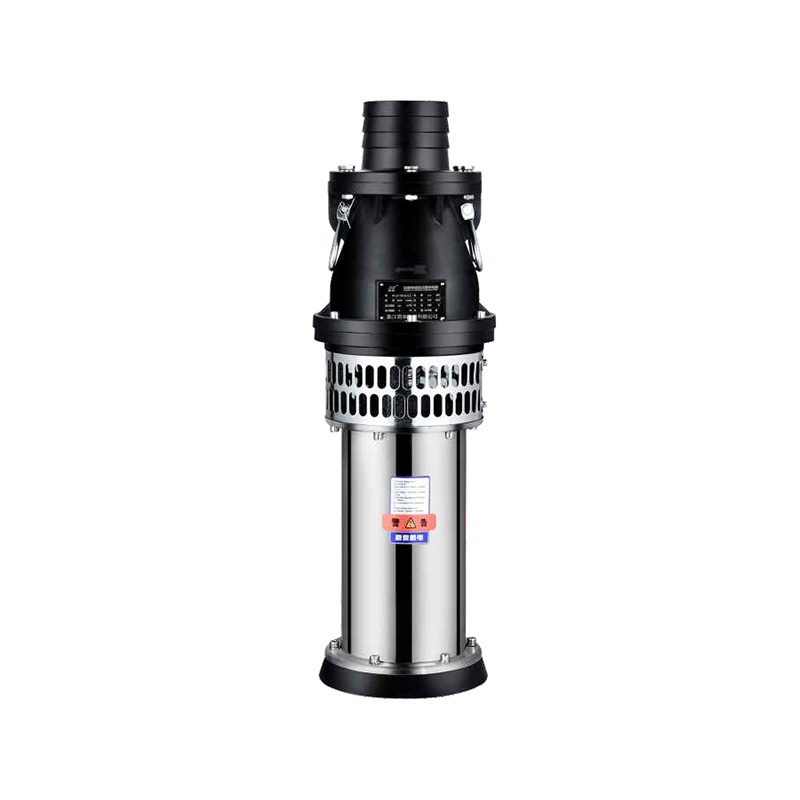
QY Lightweight Oil Immersed Submersible Pump
Advantages Compared with Conventional Surface Pumps
Reduced Priming Requirements
Surface-mounted pumps often require a filled suction pipe and pump casing before starting. Air leaks, foot-valve problems, or excessive suction lift can cause loss of prime and interrupt operation. A submersible pump is installed in the water, so the pump inlet is already positioned below the water level. This can simplify starting and reduce the risk of suction-related operating problems.
Efficient Use of Installation Space
The compact submerged arrangement is useful for drainage pits, reservoirs, fish ponds, canals, agricultural wells, and construction sites where above-ground space is limited. The motor does not need a separate shelter or foundation in the same way as a large surface installation. This can be valuable in temporary projects, rented agricultural land, emergency drainage, and locations with difficult access.
Lower Suction-Side Complexity
Because the pump is located at the water source, the suction-side pipe is short or eliminated. This reduces the number of fittings that can introduce air leaks. It also makes the system less sensitive to suction lift and atmospheric conditions. The discharge side still requires proper sizing, but the most demanding part of a conventional suction arrangement is simplified.
High-Volume Water Transfer
The range includes models with maximum flow ratings of 160, 180, 250, and 280 m³/h. These capacities make the series suitable for applications where water must be moved quickly, such as field irrigation, pond filling, drainage after heavy rain, water transfer between reservoirs, and flood-control support. The high-flow models can be matched with larger discharge piping to reduce friction losses and improve system performance.
Mobility for Multi-Point Use
A lightweight submersible pump can be moved from one water source to another when the project requires flexible operation. A farm may use the same unit at different irrigation ponds, while a drainage contractor may transport the pump between work areas. This mobility can improve equipment utilization and reduce the need to purchase a dedicated pump for every location.
Protected Motor Environment
The oil-filled motor and layered sealing arrangement provide a protective structure for submerged operation. The oil chamber, mechanical seals, and oil-resistant O-type rings are designed to work together. Although no seal system eliminates the need for inspection, this construction offers a purposeful approach to protecting the motor in wet working conditions.
Applications in Agriculture and Irrigation
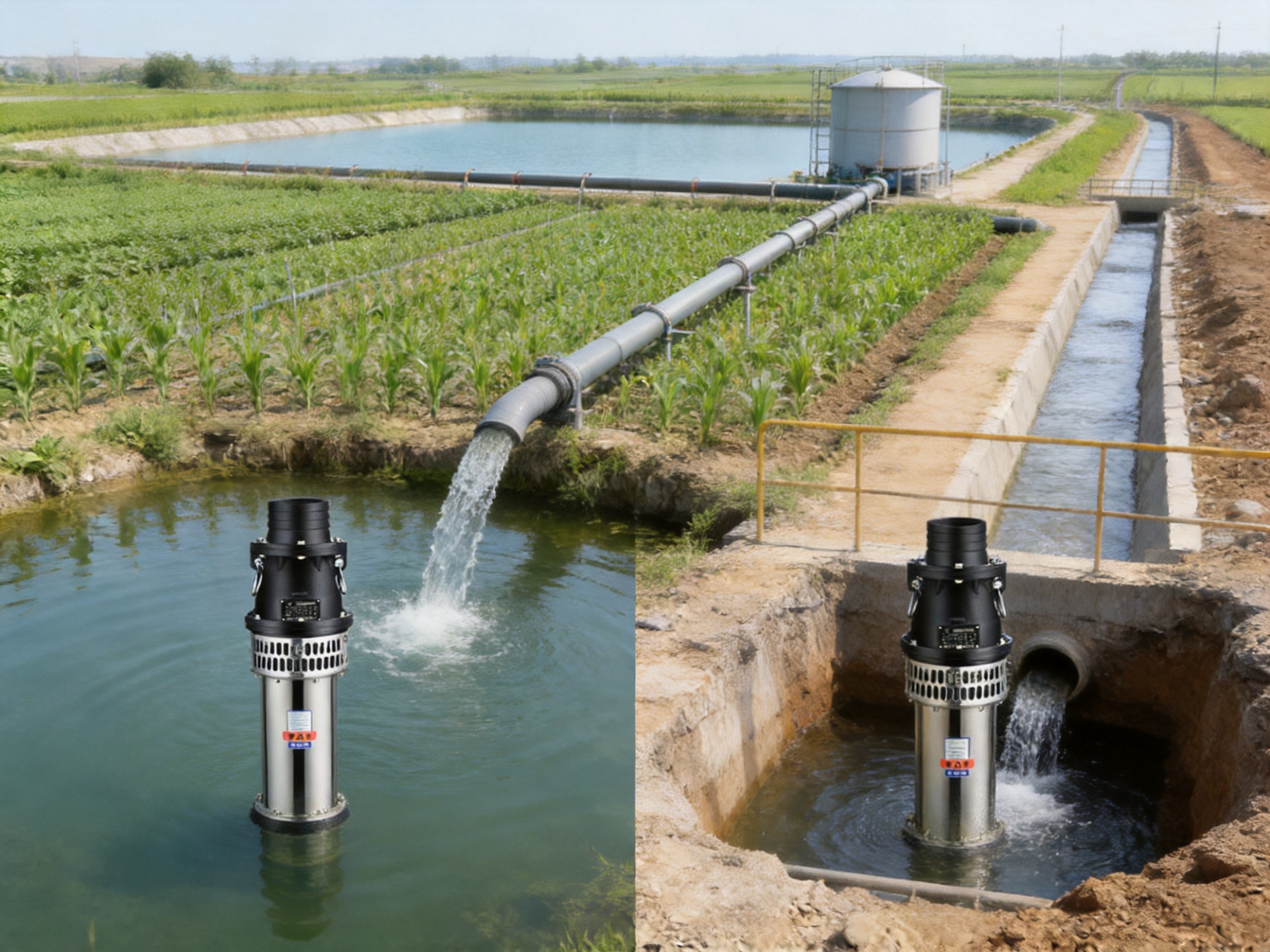
Irrigation systems require reliable water transfer during planting, growing, and harvesting periods. The QY pump can be used to lift or transfer water from storage ponds, rivers, canals, reservoirs, and other approved sources. Depending on the selected model, it can supply sprinkler systems, open irrigation channels, hose networks, or agricultural storage tanks.
For surface irrigation, the high-flow models can move large water volumes through suitably sized pipes or channels. For sprinkler irrigation, the installer should select a model capable of meeting both the required flow and the pressure loss in the network. A pump that produces high maximum flow but insufficient head may not provide the pressure required at the sprinkler heads.
The pump can also support water transfer between agricultural reservoirs. During dry periods, farmers may need to move water from a storage pond to a field-side tank or from a collection basin to an irrigation canal. The submersible design allows direct placement in the source basin and reduces the installation work associated with a surface suction pump.
When used in agricultural environments, the intake should be positioned away from heavy sediment accumulation. Mud, sand, stones, plant roots, and other solids can affect hydraulic performance and increase wear. If the water contains a significant amount of abrasive material, the buyer should discuss the operating conditions and material requirements with the supplier before final selection.
Applications in Drainage and Flood Control
Drainage work often involves rapidly changing water levels and temporary pumping locations. The pump can be used in collection pits, construction areas, basements, agricultural lowlands, waterlogged fields, and other locations where accumulated water must be removed. Its submerged installation allows it to begin transferring water once the water level reaches the required operating depth.
For emergency drainage, ease of deployment is an important advantage. A compact pump can be transported with hoses and electrical equipment, placed into the affected area, and connected to a discharge route. The operator must still establish a safe power supply, protect the cable from mechanical damage, and ensure that discharged water does not create a secondary hazard.
Municipal and industrial drainage systems may use the pump for support or temporary capacity. It can assist with water removal during maintenance, construction, storm events, or equipment failure. In permanent installations, engineers should verify duty cycle, water quality, solids content, control-panel requirements, and local electrical regulations.
The pump should not automatically be treated as a sewage or slurry pump. The supplied product information identifies irrigation, drainage, and water supply as its primary applications but does not specify a solids-handling impeller or sewage-cutting function. Where wastewater contains large solids, fibrous material, chemicals, or abrasive sludge, a purpose-built wastewater pump should be considered or the application should be confirmed with the manufacturer.
Applications in Water Supply and Industrial Projects
The QY series can be used for general water supply where the source and water quality are compatible with the pump materials and sealing system. Possible uses include transferring water to storage tanks, supplying process-water points, supporting landscape water features, and moving water within industrial or commercial properties.
In industrial settings, the pump can support non-corrosive water circulation, equipment cooling-water transfer, construction dewatering, and environmental-protection projects. The application should be reviewed carefully when water contains solvents, acids, alkalis, oils, high concentrations of dissolved chemicals, or elevated temperatures. Standard pump materials and rubber compounds may not be suitable for every industrial fluid.
For ecological landscape lakes and water features, the high-flow models may assist with circulation or replenishment. However, designers should consider noise, visual placement, water quality, fish safety, cable routing, and the possibility of clogging by leaves or aquatic vegetation. A protective intake screen may be necessary, provided that it does not create excessive flow resistance.
Manufacturing Strengths and Product Development Capability
The manufacturer is an established mechanical and electrical equipment producer located in Wenling, Zhejiang Province, China. Founded in 2018, the company develops and produces more than 90 products across 10 series. Its product portfolio includes floating aerators, impeller aerators, water wheel aerators, water pumps, submersible pumps, and air blowers.
This product breadth is relevant to the development of a submersible pump because it reflects experience across several types of water-moving and water-treatment equipment. A company working with aeration, pumping, aquaculture, drainage, and irrigation products must understand hydraulic movement, motor selection, sealing, electrical integration, and field installation conditions. Such cross-category knowledge can support more practical product development.
The manufacturing approach is focused on combining product research and development with production, quality control, customization, and technical support. For importers and project contractors, this integrated capability can be more valuable than purchasing a generic pump from a supplier that only handles trading or assembly. A manufacturer with direct product knowledge is better positioned to discuss model selection, application limits, spare parts, and OEM requirements.
The company’s location in Wenling, a major manufacturing area for pumps and mechanical equipment, provides access to an established industrial supply chain. This can support sourcing of motors, cast or formed pump components, electrical parts, seals, bearings, fasteners, cables, and packaging materials. The proximity of related suppliers may also help shorten production coordination and improve access to replacement components.
Advanced manufacturing should not be understood only as the use of complex automation. For a submersible pump, manufacturing quality depends on the control of many practical details: dimensional accuracy, impeller balance, shaft alignment, seal-seat condition, winding quality, oil filling, cable entry integrity, and final electrical testing. A strong production process brings these details together through consistent procedures and inspection.
Motor and Electrical Assembly
The three-phase asynchronous motor must be assembled with appropriate attention to winding insulation, rotor balance, bearing seating, shaft concentricity, and terminal connections. Oil filling must be performed correctly, with the proper oil type and quantity, while the housing and cable entry must be checked for leakage resistance.
Electrical testing is an important part of submersible pump production. Testing may include insulation resistance, winding resistance, no-load current, phase balance, rotation direction, and operating temperature under controlled conditions. The exact test program depends on the model and applicable standards, but a systematic final inspection helps identify defects before shipment.
Hydraulic Component Quality
The hydraulic section must be produced to maintain the intended relationship between the impeller, casing, shaft, and discharge outlet. Poor alignment or excessive clearance can reduce efficiency, increase vibration, and shorten service life. Impeller balancing is particularly important because an unbalanced rotating component can place additional loads on bearings and seals.
For a manufacturer offering both centrifugal and axial-flow structures, hydraulic product development must account for different flow patterns and operating conditions. Model-specific design and testing are necessary to ensure that the pump is appropriate for its stated flow and head range. Buyers should request technical curves and product drawings when integrating the pump into a larger system.
Sealing and Assembly Control
Sealing performance depends on more than the seal material itself. Mechanical seal faces must be correctly installed, stationary sealing surfaces must be clean, O-type rings must be properly seated, and fasteners must be tightened consistently. The assembly environment should reduce the risk of dust, scratches, and foreign matter entering the seal area.
Since the pump operates underwater, seal inspection is especially important. A pump can appear mechanically complete while still having a sealing weakness caused by incorrect assembly or damaged components. A disciplined production process therefore treats seal installation, oil-chamber inspection, and leak testing as key quality-control stages.
Production Flexibility and OEM/ODM Support
The company offers OEM and ODM services for global buyers. This can benefit distributors that need customized nameplates, packaging, manuals, colors, cable specifications, plug arrangements, voltage configurations, or model identification. Project buyers may also require particular discharge fittings, control-panel arrangements, or documentation packages.
Customization must be managed carefully because changes to voltage, frequency, motor configuration, cable length, hydraulic components, or sealing materials can affect performance and certification requirements. A capable manufacturer should review the requested changes technically rather than treating customization as a simple cosmetic adjustment.
Why Importers and Dealers May Prefer This Product Range
Importers often need products that can serve more than one market segment. The QY series offers models for smaller agricultural systems, high-volume irrigation, drainage contractors, water-transfer projects, and municipal support applications. A dealer can therefore present several solutions under one product family instead of stocking only one fixed specification.
The range also provides clear model naming based on flow, head, and power relationships. Although buyers should confirm the exact meaning of the model designation with the supplier, the listed data makes preliminary comparison relatively simple. A distributor can organize inventory by power level and connection size while offering customers different head and flow combinations.
Product versatility is another commercial advantage. The same general pump concept can be marketed for irrigation, pond drainage, reservoir transfer, building-site dewatering, water supply, and landscape applications. This broad application potential may help dealers reach agricultural, construction, municipal, environmental, and industrial customers.
Technical support is important for reducing returns and installation complaints. The supplier can assist buyers with product selection, operating conditions, sealing requirements, and OEM/ODM discussions. Importers should request complete technical documentation, recommended spare-parts lists, packaging details, warranty conditions, and inspection records before placing a commercial order.
For international buyers, the listed company contact channels include telephone, email, and WhatsApp communication. Clear pre-sale communication is recommended so that the supplier can confirm the destination country’s electrical requirements, preferred voltage and frequency, documentation needs, and applicable import or certification conditions.
Installation Recommendations
Inspect Before Installation
Before installation, inspect the pump body, discharge outlet, cable, lifting components, and visible fasteners. Confirm that the pump has not been damaged during transport. The cable should not have cuts, crushed sections, exposed conductors, or damaged insulation. The discharge hose or pipe should be clean, correctly sized, and securely connected.
Confirm Full Submergence
The pump must be fully submerged before operation unless the technical instructions for a specific model state otherwise. Adequate water depth helps support cooling and protects the motor from dry running. If the water level changes significantly during operation, a float switch, level sensor, or automatic control system may be required.
Use a Safe Lifting Arrangement
The electrical cable should never be used as the lifting rope. Use a suitable rope, chain, or lifting device attached to the designated lifting point. The pump should be lowered carefully to avoid impact with the basin, well wall, pipework, or other equipment. In a permanent installation, the unit should remain stable and should not rest in a position that blocks the inlet.
Protect the Electrical Supply
A stable power supply is essential. The electrical system should include appropriate overload protection, short-circuit protection, grounding, and a suitable control device. A qualified electrician should verify the voltage, phase sequence, cable size, and protection settings. The listed models use 380 V, but the actual supply conditions must be confirmed before connection.
Check Rotation and Discharge Conditions
For three-phase motors, incorrect phase sequence can cause the wrong rotation direction. Rotation should be checked according to the manufacturer’s approved procedure and local safety rules. The discharge pipe should be supported independently so that excessive pipe weight or vibration is not transferred to the pump outlet.
Maintenance and Service Practices
Regular maintenance supports reliable operation and helps identify small problems before they become major failures. The inspection schedule should reflect operating hours, water quality, sediment levels, temperature, and the importance of the pumping application.
Operators should monitor unusual noise, vibration, reduced flow, increased current, overheating, repeated trips, visible oil leakage, and changes in starting behavior. Any of these signs may indicate an obstruction, bearing problem, seal issue, electrical fault, incorrect operating point, or damaged hydraulic component.
The intake area should be inspected periodically. Leaves, weeds, plastic, stones, mud, and other debris can restrict water entry and reduce performance. The pump should be isolated from the power supply before cleaning or maintenance. Never place hands or tools near rotating components while the pump is connected to electricity.
The mechanical seals and O-type oil-resistant rubber rings should be checked during scheduled service. If the oil chamber shows contamination or water entry, the pump should be removed from service for inspection. Continuing to operate a pump after seal failure may allow water to reach the motor and cause more extensive damage.
Bearings, shafts, impellers, cable glands, and fasteners should also be inspected. Worn parts should be replaced with compatible components. Using incorrect seal dimensions, unsuitable rubber compounds, or non-matching electrical parts can compromise safety and performance.
At the end of seasonal use, especially in agricultural applications, the pump should be cleaned and stored according to the manufacturer’s instructions. It should be protected from freezing, impact, corrosive chemicals, and unnecessary exposure to direct sunlight. Before the next season, the cable, insulation, seals, and motor condition should be checked again.
Energy and Operating Cost Considerations
Operating cost depends on the motor power, running hours, electricity price, hydraulic efficiency, and actual water delivery. A pump should not be selected only by its largest possible flow. Oversizing can increase electricity consumption, create unnecessary pressure, and make the system difficult to control. Undersizing can cause long operating periods, poor water delivery, and motor overload.
The best model is normally the one that meets the required duty point with reasonable operating margin. The installer should calculate static head, friction head, pressure requirements, expected flow, and any seasonal changes in water level. Larger discharge piping may reduce friction and allow high-flow models to work more effectively.
Correct submergence and a clean intake also influence energy use. A partially blocked inlet can force the pump to operate inefficiently, while a discharge line that is too small can increase resistance. Regular cleaning and system inspection can therefore support both performance and energy management.
Three-phase power can be advantageous in professional installations because it is commonly available for agricultural, municipal, and industrial equipment. However, electrical imbalance, low voltage, loose connections, and incorrect overload settings can increase motor heating. Proper electrical commissioning is an essential part of reducing lifecycle cost.
Application Boundaries and Responsible Selection
The product is intended for water-pumping applications such as irrigation, drainage, and water supply. It should not be used automatically for every liquid or every drainage condition. Before purchase, the buyer should provide information about water temperature, solids content, acidity or alkalinity, salinity, oil contamination, sediment, required operating hours, and installation depth.
The published data shows maximum heads between 5 and 15 meters. These figures are suitable for many surface-water transfer and low-to-medium lift applications, but they should not be interpreted as proof that every model is suitable for very deep wells or high-pressure borehole systems. Deep-well installations often require specialized multistage borehole pumps with different diameter, cooling, and hydraulic requirements.
Likewise, maximum flow values are not guaranteed flow rates under every system condition. Buyers should obtain a performance curve or detailed engineering confirmation when exact flow is critical. A professional selection process protects both the user and the supplier by reducing the chance of a mismatch between the pump and the installation.
Quality, Reliability, and Customer Support
Quality for a submersible pump is created through the complete product lifecycle. It begins with appropriate design and component selection, continues through controlled manufacturing and testing, and extends into packaging, technical documentation, installation guidance, spare-parts availability, and after-sales communication.
The manufacturer emphasizes quality, integrity, technological innovation, reliable products, customized service, and professional technical support. These priorities are relevant to international customers that may need assistance after the equipment arrives at the destination. Clear communication about installation conditions and operating limits can prevent many avoidable problems.
For large orders, customers may consider pre-shipment inspection, sample approval, nameplate verification, electrical testing, packaging review, and documentation confirmation. Importers can also request a recommended maintenance schedule and a list of wearing parts, including mechanical seals, O-type rings, bearings, fasteners, and cable-related components where applicable.
The combination of a broad product portfolio and direct manufacturing capability can support project-based purchasing. A customer may source submersible pumps for drainage while also requiring aerators, air blowers, or other water-treatment equipment. Working with one experienced supplier can simplify communication and make it easier to coordinate technical specifications across a complete water-management project.
Frequently Asked Questions
What type of motor does the pump use?
The pump uses a three-phase asynchronous motor with an oil-filled internal chamber. The listed models are rated for 380 V, but the buyer should confirm the required frequency, phase arrangement, and electrical configuration for the destination market before ordering.
Does the pump need to be fully submerged?
Yes. The pump should be fully submerged before operation unless the specific technical instructions for the selected model provide another approved procedure. Submergence supports motor cooling and helps maintain safe operating conditions.
What applications are suitable for this pump?
Typical applications include agricultural irrigation, reservoir and pond water transfer, drainage, building-site dewatering, municipal support drainage, general water supply, landscape water movement, and selected industrial water-transfer projects.
Can it pump sewage or thick sludge?
The supplied product information identifies the pump primarily for irrigation, drainage, and water supply. It does not specify a dedicated sewage impeller or heavy-solids handling design. Wastewater, sludge, fibrous material, and abrasive slurry applications should be reviewed with the supplier before purchase.
How do I choose between the available models?
Compare the required flow and total head with the model data. Consider vertical lift, pipe length, pipe diameter, fittings, valves, outlet pressure, and water-level changes. Do not select a model solely by maximum flow or maximum head, because those values may not occur at the same operating point.
What is the difference between the 6-inch and 8-inch models?
The nominal connection size affects the recommended discharge piping and the hydraulic resistance of the system. The QY280-15-7.5 uses a 6-inch size and offers a listed maximum head of 15 meters, while the QY280-10-7.5 uses an 8-inch size and offers a listed maximum head of 10 meters. Final selection should be based on the complete system duty point.
Can the pump be used in a deep well?
The product is promoted for deep-well and borehole water-lifting applications, but the listed maximum heads are 5 to 15 meters. Buyers requiring a genuinely deep borehole installation should confirm the well diameter, static water level, dynamic water level, required head, cooling conditions, and pump suitability with the manufacturer. A specialized deep-well pump may be necessary for higher lifts.
How does the oil-filled motor help?
The oil-filled motor provides an insulating and protected environment for the motor components during submerged operation. It works with the mechanical seals and oil-resistant O-type sealing rings to help prevent water from reaching the electrical section.
What should be inspected during maintenance?
Inspect the cable, cable entry, mechanical seals, O-type rubber rings, oil condition, bearings, shaft, impeller, discharge connection, fasteners, and intake area. Watch for vibration, abnormal noise, reduced flow, overheating, electrical trips, or oil leakage.
Is OEM or ODM customization available?
OEM and ODM services are available for global buyers. Possible requirements may include packaging, nameplates, manuals, cable arrangements, voltage configurations, fittings, and other project-specific details. Each requested change should be technically reviewed before production.
What information should an importer provide when requesting a quotation?
The buyer should provide the required flow, total head, water type, water temperature, solids content, operating hours, power supply, destination country, cable length, discharge size, packaging requirements, quantity, and any certification or labeling requirements.
Conclusion
The QY lightweight oil-immersed submersible pump is a practical solution for water transfer, irrigation, drainage, and general water-supply projects. Its integrated pump-and-motor structure simplifies installation, while the oil-filled three-phase asynchronous motor supports stable submerged operation. The double-end mechanical seal in the oil chamber, external single-end mechanical seal, and oil-resistant O-type rubber sealing rings provide a layered sealing arrangement for protecting the motor.
With models ranging from 3 to 7.5 kW, maximum flow ratings from 65 to 280 m³/h, and maximum heads from 5 to 15 meters, the series covers a broad group of low- and medium-lift water-moving requirements. The product is especially attractive for farms, drainage contractors, aquaculture-related water systems, construction projects, municipal applications, industrial water transfer, and distributors seeking a versatile pump range.
Its competitive value comes from more than the pump specification alone. The manufacturer combines product research and development, production experience across multiple water-equipment categories, OEM/ODM capability, quality-focused manufacturing, and technical support for international customers. Buyers that match the pump carefully to the system duty point and follow proper installation and maintenance procedures can obtain dependable service and efficient water movement.
For the best result, users should confirm the actual flow at the required head, verify electrical compatibility, assess water quality, protect the intake, and maintain the sealing system regularly. With these considerations in place, the lightweight oil-immersed submersible design can provide a flexible and economical alternative to more complicated surface-pump installations.
References
1. Manufacturer-provided product specification for the QY Lightweight Oil-Immersed Submersible Pump.
2. Manufacturer-provided model data covering flow, head, motor power, nominal size, and voltage.
3. Manufacturer-provided company profile covering product development, manufacturing, OEM/ODM services, and application fields.
4. General principles of centrifugal and axial-flow pump selection for irrigation and drainage systems.
5. General maintenance practices for oil-filled submersible motors and mechanical sealing systems.
6. General electrical safety principles for three-phase submersible pump installations.