 English
 Español
 Indonesia
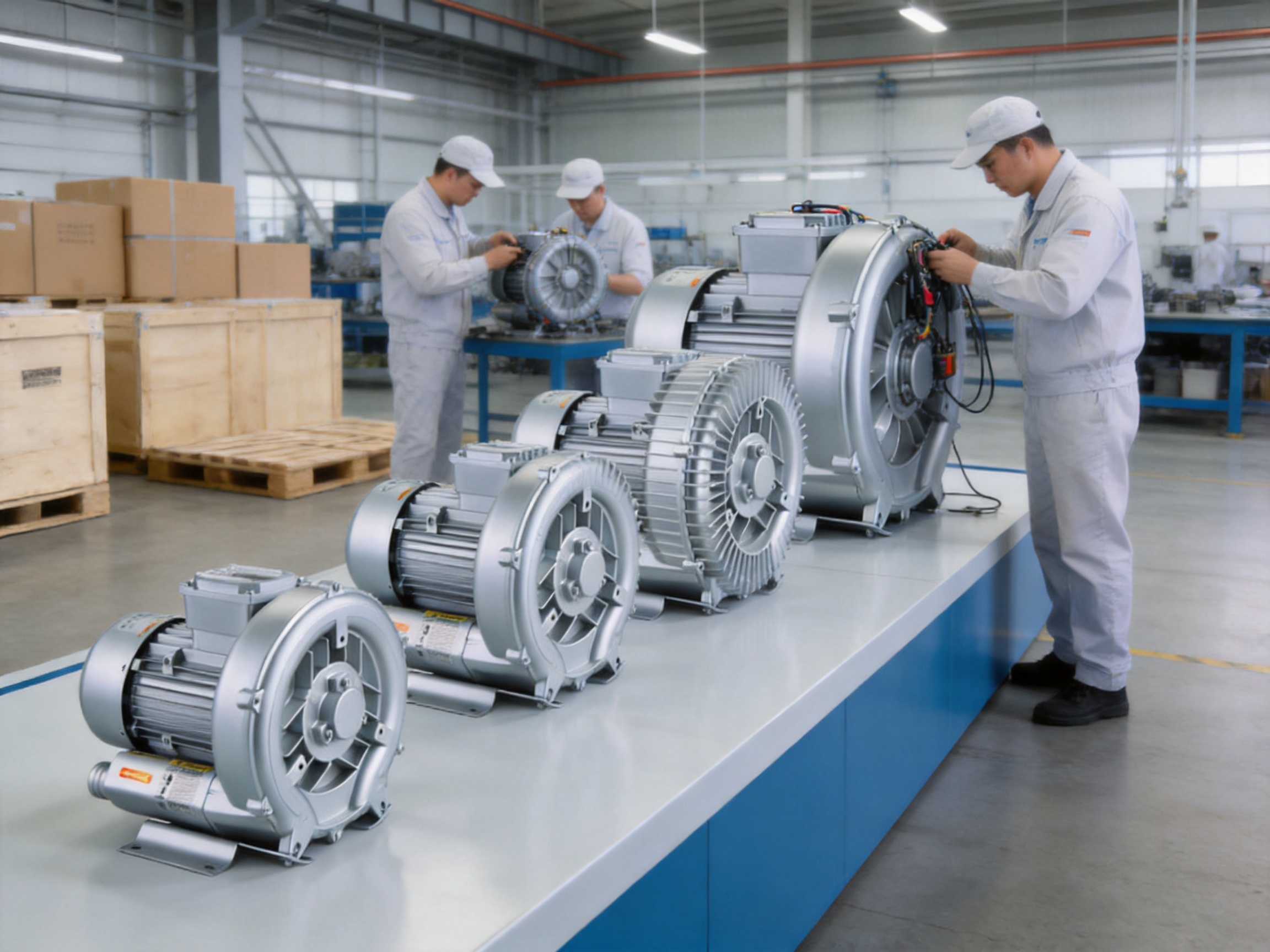
Reliable air movement is essential in pond aeration, aquaculture oxygenation, wastewater treatment, pneumatic conveying, environmental equipment, and many industrial processes. In these applications, the air source must provide stable pressure, dependable flow, low contamination, and consistent operation over long working periods. A high pressure vortex air blower is designed to meet these requirements while offering a compact alternative to many conventional air compressors and positive displacement systems.
The high pressure vortex air blower described in this article is a dual-function air source for both blowing and suction. Its aluminum alloy housing, multi-blade vortex impeller, fully enclosed externally ventilated motor, and oil-free airflow design make it suitable for systems that require clean air and continuous service. The product range includes compact single-phase models for smaller installations and higher-capacity three-phase models for commercial aquaculture farms, industrial equipment, and large aeration projects.
With maximum positive pressure ratings from 7 to 55 kPa, maximum negative pressure ratings from 5 to 43 kPa, and maximum airflow from 35 to 500 m³/h, the series covers a broad selection of operating conditions. The available power range extends from 0.12 kW to 7.5 kW. This allows system designers, installers, distributors, and project contractors to select a model according to pressure, flow, voltage, installation scale, and duty requirements.
What Is a High Pressure Vortex Air Blower?
A vortex air blower is a regenerative air-moving machine that uses a specially shaped impeller to create pressure and airflow. As the impeller rotates, air enters the inlet and is accelerated around the annular channel inside the blower. The air follows a circulating path and gains energy repeatedly before leaving through the outlet. This operating principle enables the blower to provide comparatively high pressure from a compact, oil-free structure.
Unlike an ordinary ventilation fan, a vortex blower is designed to overcome greater resistance in piping, diffusers, filters, and process equipment. It is not simply intended to move a large volume of air at very low pressure. Instead, it provides a balanced combination of airflow and pressure that is useful in aeration systems, air knives, suction tables, vacuum lifting equipment, filtration systems, and pneumatic applications.
The blower can operate in either positive-pressure or negative-pressure service. In blowing mode, it delivers air to a downstream system such as a pond diffuser, air manifold, mixing tank, or industrial nozzle. In suction mode, it draws air or gas from a connected system for applications such as vacuum holding, water removal, air extraction, and material handling. This dual-function design gives equipment builders more flexibility when specifying a single air source for different projects.
The airflow is oil-free and water-free under normal operating conditions. Since the air path does not depend on lubricating oil, the risk of oil contamination is reduced. This is particularly valuable in fish farming, environmental protection, wastewater treatment, and processes where air comes into contact with water or sensitive materials.
Core Construction and Operating Features
Aluminum Alloy Housing
The housing is made from aluminum alloy, a material that offers a useful balance of low weight, structural strength, corrosion resistance, and heat dissipation. Compared with heavier cast housings, an aluminum structure can simplify installation, handling, maintenance, and equipment integration. This is valuable for packaged aeration systems, skid-mounted equipment, mobile water treatment units, and export projects where transportation weight must be controlled.
Aluminum alloy also helps transfer heat away from the motor and blower assembly. Effective heat dissipation supports stable operation, especially when the blower is installed in a warm equipment room or operated for extended periods. The housing is designed to maintain the alignment and protection of the internal rotating components while providing suitable airflow around the motor.
Multi-Blade Vortex Impeller
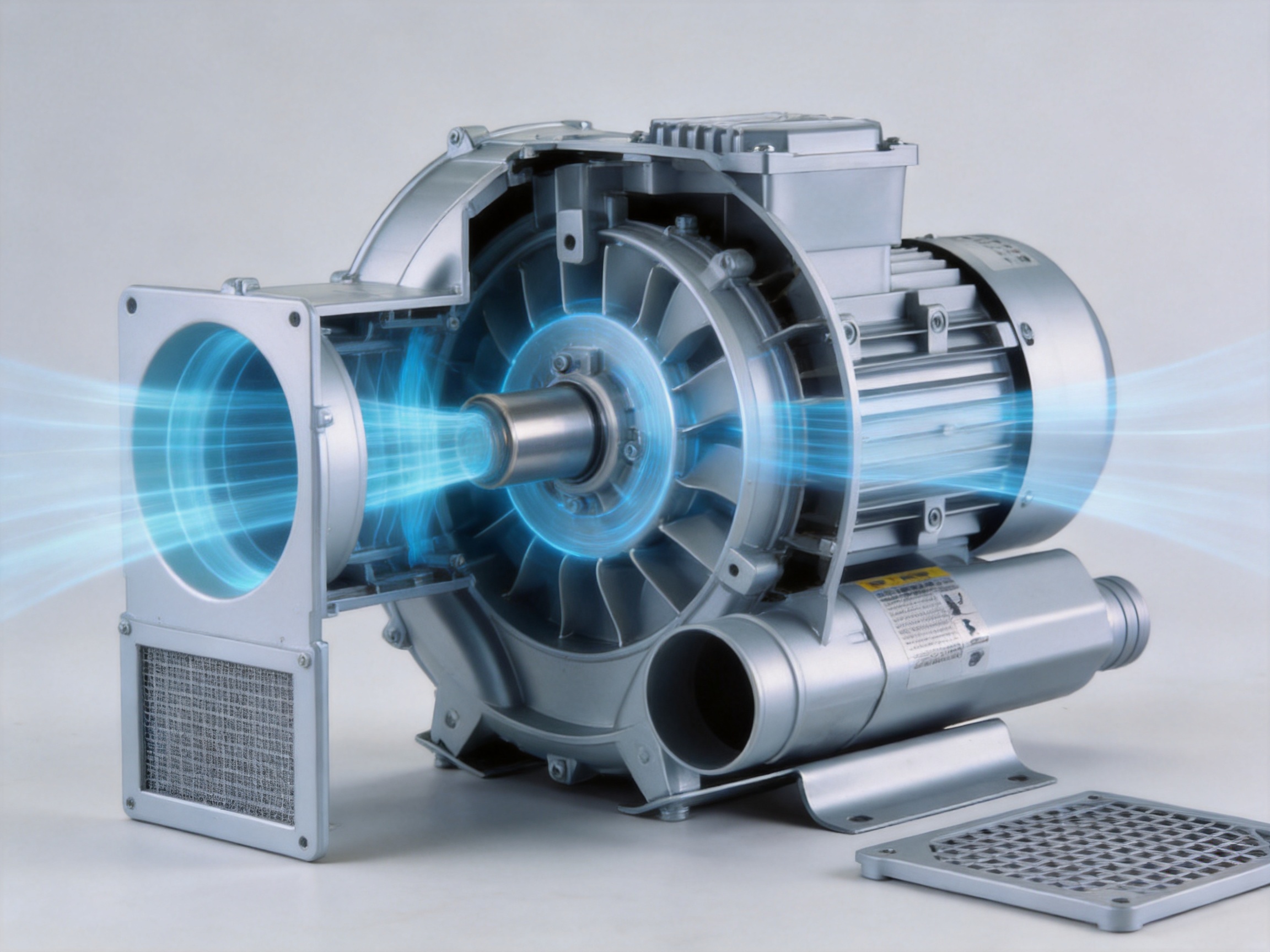
The impeller is the central working component of the blower. Its multi-blade vortex structure accelerates air through repeated circulation inside the blower channel. This design generates a stable pressure output without requiring oil lubrication in the air path. It also allows the blower to remain relatively compact while producing pressure levels suitable for diffuser aeration and industrial air applications.
A properly balanced impeller contributes to smooth operation and reduced vibration. Stable impeller rotation is important because excessive vibration can increase noise, place stress on bearings, loosen mounting hardware, and shorten the service life of connected piping. The impeller must rotate in the direction indicated on the housing, and installers should confirm rotation before placing the blower into continuous service.
Fully Enclosed Externally Ventilated Motor
The motor is a fully enclosed externally ventilated type. This structure helps protect the motor interior from dust and environmental exposure while using external ventilation to support heat removal. It is suitable for installations where the motor may be exposed to airborne particles, humidity, or general industrial conditions, although the blower should still be installed in a clean, dry, and well-ventilated location.
Both 220 V and 380 V configurations are available in selected models. Smaller models are offered for single-phase applications, while larger units are generally configured for three-phase power. This voltage selection enables the blower range to serve small farms, workshops, equipment manufacturers, commercial aquaculture facilities, and larger industrial projects.
Blowing and Suction in One Machine
Many air-handling systems require either pressure or vacuum, but not necessarily both at the same time. A dual-function vortex blower can be connected to the relevant side of a system according to the application. In positive-pressure service, it supplies air to the process. In negative-pressure service, it creates suction for extraction or vacuum holding.
This flexibility can reduce the number of different air-source products required by an equipment manufacturer. It also makes the blower useful for custom machinery where the operating function may change between production stages. However, the piping, filters, silencers, valves, and protective devices must be selected specifically for the intended pressure or vacuum duty.
Adjustable Damper System
An adjustable damper system can be used to control airflow according to process requirements. Airflow adjustment is helpful when the same blower model serves different pond sizes, diffuser layouts, pipe lengths, or process loads. It can also assist during commissioning by allowing the installer to balance air distribution between multiple branches.
Airflow should not be restricted excessively without checking the blower’s operating conditions. A damper, valve, or other adjustment device should be used within the recommended pressure and temperature limits. The blower should not be forced to operate against a blocked outlet or inlet, and the final selection should be based on the complete system curve rather than on airflow alone.
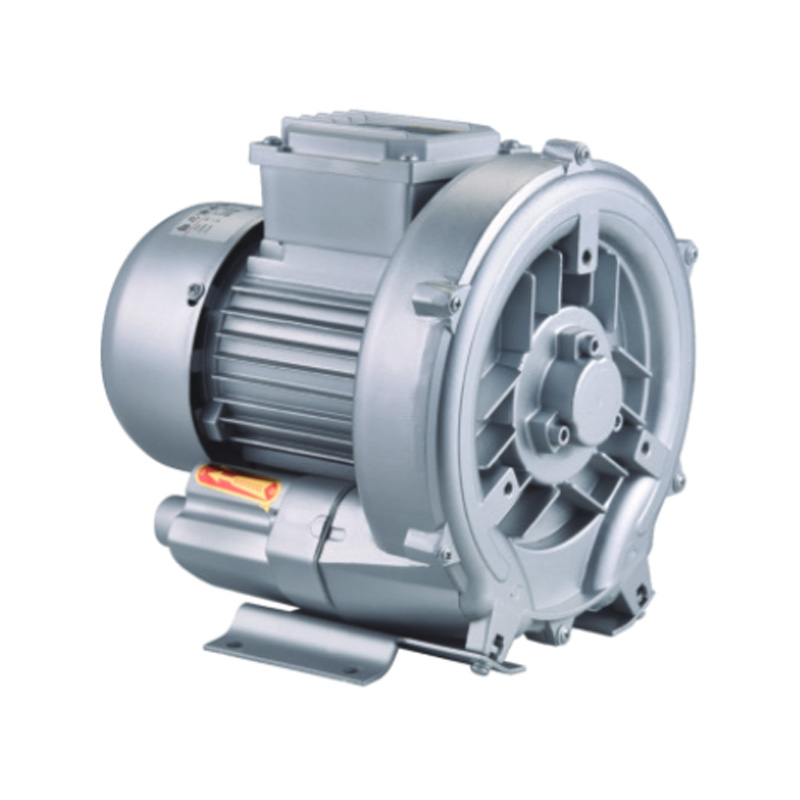
High Pressure Vortex Air Blower
Advantages for Pond Aeration Systems
Aquaculture farms and pond management systems require dependable oxygen transfer. Fish, shrimp, and other aquatic organisms consume dissolved oxygen, while microorganisms in the water also require oxygen to decompose organic matter. During hot weather, nighttime operation, high stocking density, or periods of heavy feeding, the oxygen demand of a pond can increase significantly.
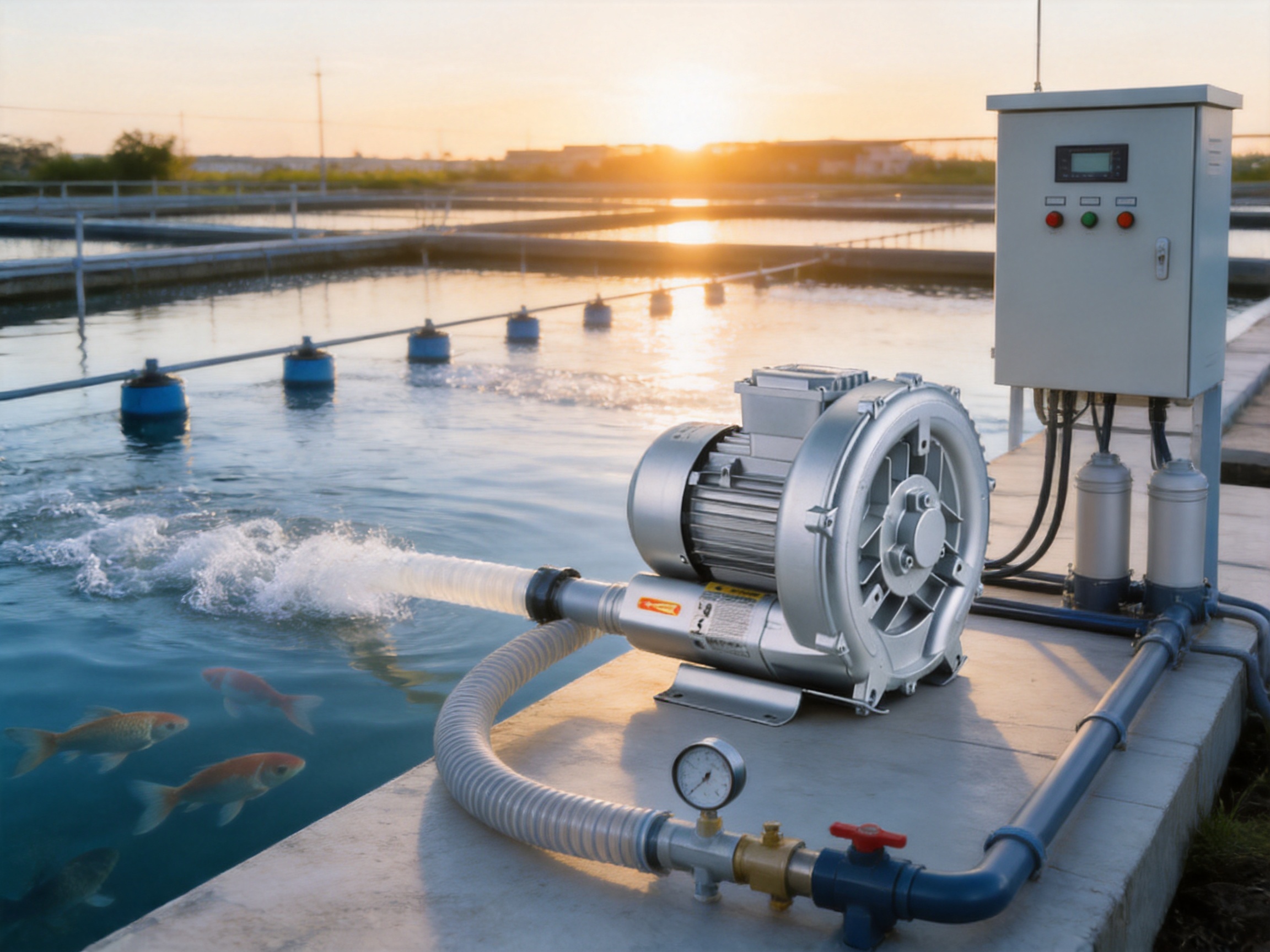
A vortex air blower supplies air to diffusers installed in the pond, tank, raceway, or treatment basin. The diffuser breaks the airflow into bubbles, increasing contact between air and water. As the bubbles rise, oxygen transfers from the air into the water. At the same time, the movement of the bubbles helps circulate the water column and distribute oxygen more evenly.
The high pressure characteristic is important because diffuser systems create resistance. Fine-bubble diffusers, long air hoses, manifold assemblies, check valves, and deep-water installation all require the blower to overcome pressure. A low-pressure ventilation fan may move air effectively in an open area but fail to deliver adequate flow when connected to submerged diffusers. The vortex blower is better suited to this type of pressurized aeration duty.
The oil-free air path is another benefit for aquatic applications. Air introduced into a fish pond should not carry lubricating oil or other contaminants from the air source. The blower’s oil-free design helps maintain cleaner aeration output and reduces the risk associated with oil-lubricated compression equipment.
Stable airflow is also useful when several diffusers are connected to a common manifold. If the blower output varies excessively, some diffusers may receive too much air while others receive too little. A stable source, combined with correctly sized piping and balancing valves, supports more uniform air distribution throughout the pond.
Applications in Fish Farms and Water Treatment
The blower can be used in earthen ponds, lined ponds, concrete tanks, hatcheries, nursery systems, recirculating aquaculture systems, and temporary aeration units. It is also suitable for wastewater aeration basins, environmental treatment equipment, biological filtration systems, and ecological landscape water features.
In a fish farm, the blower may operate continuously or according to a timer, dissolved oxygen controller, or farm management schedule. Installers should consider the local climate, installation altitude, water depth, pipe length, diffuser type, and required operating hours before selecting the model. A larger blower is not always the most efficient choice; the correct unit is the one that delivers the required air volume at the system’s actual resistance.
For wastewater systems, the blower may be connected to multiple submerged air grids or tubular diffusers. In these applications, the blower must be protected from corrosive gases, excessive humidity, and contaminated air returning through the pipeline. Check valves, air filters, moisture separators, and suitable silencers can help protect the blower and maintain reliable operation.
Advantages Compared with Conventional Air Equipment
Compact Design and Lower Installation Burden
Vortex blowers generally provide a compact package in relation to their pressure capability. Their aluminum alloy structure helps reduce handling weight, while the integrated motor and impeller arrangement simplifies equipment layout. This is advantageous where the blower must fit inside a control cabinet, equipment shelter, mobile aeration trailer, or packaged treatment skid.
A compact design can also reduce the size of the supporting frame and simplify shipping. For export wholesalers and project contractors, lower equipment weight may contribute to easier warehouse handling and more efficient container loading. The practical benefit is not only lower transport effort but also faster installation at the final project site.
Oil-Free Air Delivery
Oil-lubricated compressors may require oil separators, oil changes, and additional maintenance to prevent contamination. In contrast, the vortex blower produces air without introducing lubricating oil into the air path. This makes it appropriate for applications involving water, biological treatment, food-related equipment, aquaculture, and clean process air.
Oil-free operation does not mean that the blower can be exposed to unlimited contamination. The inlet air should be filtered, and the inlet filter should be maintained. Dust, fibers, insects, and other particles can damage the impeller or obstruct the airflow channel. Oil-free performance is therefore best achieved together with correct filtration and regular cleaning.
Stable Pressure for Diffuser Systems
Diffuser aeration requires the air source to overcome the combined resistance of water depth, diffuser membranes, pipes, elbows, valves, and manifolds. The high pressure design of the vortex blower provides a stronger operating margin than a standard low-pressure fan. This supports deeper diffuser placement and longer distribution lines when the selected model matches the system requirements.
The pressure range of the series extends from 7 kPa on the smallest model to 55 kPa on the largest listed model. This range allows the equipment to serve both small local installations and larger commercial systems. The maximum pressure values should be treated as selection references rather than as universal operating points. Actual airflow decreases as system pressure increases, so performance must be evaluated using the manufacturer’s performance curve or project-specific test data.
Low-Noise Operation
The vortex air blower is designed to provide stable airflow with comparatively low operating noise. Noise is an important consideration in fish farms located near homes, hotels, offices, laboratories, and residential communities. It is also important for workers who spend long periods near mechanical equipment.
Noise levels depend on the model, installation surface, inlet and outlet silencers, piping, vibration isolation, operating pressure, and surrounding room acoustics. The blower should be placed on a stable base and connected with reinforced flexible rubber hose sections where appropriate. Correctly installed silencers and clean filters can further reduce unwanted noise caused by turbulence and restriction.
Dual-Function Flexibility
Many conventional air fans are optimized primarily for blowing and cannot provide meaningful suction performance. The vortex blower’s positive-pressure and negative-pressure capabilities make it more versatile. The listed models provide maximum negative pressure from 5 to 43 kPa, giving designers a useful option for vacuum and extraction systems.
This feature may reduce the need to purchase separate pressure and suction machines for certain equipment designs. It can also support product standardization for manufacturers that sell different machines using a common air-source platform. A standardized range simplifies spare-parts planning, operator training, and technical documentation.
Available Models and Performance Range
The model range begins with the XGB-120, a 0.12 kW unit with a rated voltage of 220 V. It provides a maximum positive pressure of 7 kPa, maximum negative pressure of 5 kPa, and maximum airflow of 35 m³/h. With a weight of approximately 6.5 kg, it is suitable for compact equipment and small air requirements.
The XGB-250 and XGB-370 models increase the available pressure and flow for small commercial installations. The XGB-250 produces up to 60 m³/h and 12 kPa positive pressure. The XGB-370 produces up to 65 m³/h and 13 kPa positive pressure. Both models are available in 220 V configurations, while the XGB-370 is also available in a 380 V version.
For medium applications, the XGB-550 and XGB-750 offer 85 m³/h and 140 m³/h maximum airflow respectively. Their maximum positive pressure ratings are 16 kPa and 20 kPa. These models may be suitable for medium fish ponds, multiple diffuser branches, small wastewater equipment, and industrial air-handling units.
The XGB-1100 and XGB-1500 provide maximum airflow of 180 m³/h and 250 m³/h. Their maximum positive pressure ratings are 26 kPa and 28 kPa. These models are available in both 220 V and 380 V configurations, making them adaptable to different power infrastructures.
For larger projects, the three-phase XGB-2200, XGB-3000, XGB-4000, XGB-5500, and XGB-7500 models provide progressively higher performance. The largest model in the supplied range reaches a maximum positive pressure of 55 kPa, maximum negative pressure of 43 kPa, and maximum airflow of 500 m³/h.
| Model | Voltage | Rated Current | Power | Maximum Positive Pressure | Maximum Negative Pressure | Maximum Airflow | Weight |
|---|---|---|---|---|---|---|---|
| XGB-120 | 220 V | 0.60 A | 0.12 kW | 7 kPa | 5 kPa | 35 m³/h | 6.5 kg |
| XGB-250 | 220 V | 1.75 A | 0.25 kW | 12 kPa | 10 kPa | 60 m³/h | 8 kg |
| XGB-370 | 220 V | 2.00 A | 0.37 kW | 13 kPa | 11 kPa | 65 m³/h | 9.5 kg |
| XGB-370 | 380 V | 0.97 A | 0.37 kW | 13 kPa | 11 kPa | 65 m³/h | 9.5 kg |
| XGB-550 | 220 V | 3.50 A | 0.55 kW | 16 kPa | 14 kPa | 85 m³/h | 12.5 kg |
| XGB-550 | 380 V | 1.20 A | 0.55 kW | 16 kPa | 14 kPa | 85 m³/h | 12.5 kg |
| XGB-750 | 220 V | 6.50 A | 0.75 kW | 20 kPa | 18 kPa | 140 m³/h | 15 kg |
| XGB-750 | 380 V | 2.00 A | 0.75 kW | 20 kPa | 18 kPa | 140 m³/h | 15 kg |
| XGB-1100 | 220 V | 7.20 A | 1.10 kW | 26 kPa | 23 kPa | 180 m³/h | 20 kg |
| XGB-1100 | 380 V | 2.80 A | 1.10 kW | 26 kPa | 23 kPa | 180 m³/h | 20 kg |
| XGB-1500 | 220 V | 9.00 A | 1.50 kW | 28 kPa | 24 kPa | 250 m³/h | 22 kg |
| XGB-1500 | 380 V | 3.40 A | 1.50 kW | 28 kPa | 24 kPa | 250 m³/h | 22 kg |
| XGB-2200 | 380 V | 5.50 A | 2.20 kW | 35 kPa | 28 kPa | 310 m³/h | 36 kg |
| XGB-3000 | 380 V | 7.00 A | 3.00 kW | 37 kPa | 30 kPa | 370 m³/h | 38 kg |
| XGB-4000 | 380 V | 8.20 A | 4.00 kW | 40 kPa | 32 kPa | 400 m³/h | 50 kg |
| XGB-5500 | 380 V | 12.00 A | 5.50 kW | 50 kPa | 40 kPa | 480 m³/h | 65 kg |
| XGB-7500 | 380 V | 15.50 A | 7.50 kW | 55 kPa | 43 kPa | 500 m³/h | 67 kg |
The ratings in the table provide a useful first-stage reference for model selection. The final choice should also consider continuous duty, local electrical standards, ambient temperature, installation altitude, pipe friction, diffuser resistance, required dissolved oxygen, and available ventilation. Buyers should request the applicable performance curve and technical confirmation for the intended operating point before placing a large project order.
How to Select the Correct Blower
Determine the Required Airflow
The first selection step is to determine how much air the system requires. In pond aeration, this may depend on pond volume, stocking density, species, water temperature, feeding level, diffuser efficiency, and the desired operating schedule. In industrial equipment, the requirement may be specified by nozzle flow, vacuum capacity, conveying speed, or process air volume.
Airflow should be calculated for the complete system rather than estimated from the blower outlet size. Several small diffusers may require less total air than a large diffuser grid, but their resistance may be different. A technical calculation should include the number of branches, pipe diameter, pipe length, fittings, valves, filters, and submerged depth.
Calculate Pressure or Vacuum Resistance
The blower must provide enough pressure to overcome the resistance of the connected system. For pond diffusers, water depth is a major factor. A diffuser installed deeper underwater requires greater pressure before air can enter the water. Membrane resistance and fouling can add further pressure demand.
For suction applications, the designer should calculate the required vacuum level and check the amount of air leakage in the system. Poorly sealed connections can reduce vacuum performance and force the blower to operate unnecessarily. The maximum negative pressure specification should not be treated as a target operating point unless the system has been designed and tested for that condition.
Match the Electrical Supply
Small projects may use 220 V single-phase power, while commercial facilities commonly use 380 V three-phase power. The motor voltage must match the available supply, and the rated current should be considered when selecting circuit protection, contactors, cables, and overload devices.
Electrical installation should be completed by qualified personnel. The equipment should be properly grounded, protected against overload, and installed with a suitable disconnecting device. Voltage fluctuations, phase imbalance, and undersized cables can cause overheating or reduced performance.
Allow a Practical Operating Margin
Choosing a blower that operates continuously at its absolute maximum pressure or airflow may leave little room for filter loading, diffuser aging, temperature changes, or future system expansion. A reasonable operating margin can improve reliability and provide flexibility. However, excessive oversizing may waste energy and make airflow control more difficult.
The most efficient selection is normally a model that operates near its intended duty point rather than at an extreme end of its performance range. Installers should compare the expected system pressure and airflow with the blower performance curve and confirm that the motor load remains within the rated range.
Manufacturing Strengths and Quality-Focused Production
The blower is produced by Zhejiang ZhenTai Mechanical and Electrical Co., Ltd., a manufacturer located in Wenling, Zhejiang Province, China. Established in 2018, the company specializes in the research, development, and production of more than 90 products across 10 series. Its product scope includes floating aerators, impeller aerators, water wheel aerators, water pumps, submersible pumps, and air blowers.
This product diversity provides an important manufacturing advantage. The company works with several related categories of water and air equipment rather than producing only one isolated product. Experience with aerators, pumps, motors, housings, impellers, and water-handling systems can support practical product development and application-oriented engineering.
The manufacturing process begins with product design and specification control. A blower must maintain appropriate relationships between motor power, impeller geometry, housing dimensions, inlet and outlet passages, bearing support, and cooling structure. Consistency in these details is essential because a small change in impeller balance or airflow channel geometry can influence pressure, noise, vibration, and power consumption.
Aluminum alloy housing production requires attention to dimensional accuracy and surface quality. The housing must provide sufficient structural support while maintaining the internal clearance required for the impeller. The inlet and outlet passages must be free from unnecessary obstruction, and mounting points must remain aligned during assembly.
Impeller manufacturing is another critical stage. The multi-blade vortex impeller must be formed and finished consistently so that airflow characteristics remain stable from unit to unit. Rotating components should be checked for balance and suitable fit before final assembly. Correct balance helps limit vibration and supports longer bearing life during continuous operation.
Motor integration requires careful attention to electrical connections, insulation, shaft alignment, ventilation, and protective components. The fully enclosed externally ventilated motor must be assembled so that the motor and blower can dissipate heat under normal operating conditions. The final assembly should be inspected for unusual resistance, abnormal noise, looseness, and visible damage.
Testing is an essential part of quality control. Depending on the production and order requirements, testing may include electrical inspection, no-load running, rotation verification, airflow confirmation, pressure checking, vibration observation, noise evaluation, and visual inspection. These checks help identify assembly problems before products are packed and shipped.
The company’s location in Wenling, a major manufacturing area for pumps and electromechanical products, also supports access to industrial supply chains, technical workers, components, machining services, and logistics networks. For overseas customers, this manufacturing environment can help support repeat orders, spare-parts coordination, OEM development, and export packaging.
The manufacturer emphasizes quality, integrity, continuous technological innovation, reliable products, customized OEM and ODM services, and professional technical support. These capabilities are particularly relevant to distributors and equipment builders that need more than a standard catalog product. A project may require a specific voltage, label, connection arrangement, packaging method, color, documentation format, or integration with a larger aeration system.
OEM and ODM Support
OEM support can allow a buyer to market the blower under a private label or integrate it into an existing product line. ODM cooperation may include adjustments to the product configuration, appearance, control arrangement, or application package. The feasibility of any modification should be confirmed through technical review, sample evaluation, and production approval.
For export wholesalers, consistent product identification is important. Model numbers, voltage markings, nameplates, manuals, cartons, and spare-parts lists should correspond accurately with the ordered configuration. Clear documentation helps reduce installation errors when products are distributed across different countries and used by separate contractors.
Professional technical support is also valuable during project planning. The customer may need help selecting a model, understanding pressure and airflow ratings, checking electrical compatibility, arranging accessories, or preparing a maintenance schedule. Application support can improve the probability that the blower will be correctly sized and installed.
Installation Guidelines
Place the blower on a stable, clean, dry, and well-ventilated surface. The installation base should be strong enough to support the equipment and resist vibration. Avoid placing the blower directly in standing water, near uncontrolled spray, or in a location where dust and debris can enter the inlet.
Check the direction of impeller rotation before full operation. The correct direction is indicated on the housing. Incorrect rotation can reduce airflow, cause abnormal noise, increase motor loading, and compromise system performance. The rotation check should be performed by qualified personnel using appropriate electrical safety procedures.
Connect the blower to external piping with reinforced rubber hoses or other suitable flexible connections. Flexible sections can reduce the transfer of vibration from the blower to rigid piping. They can also compensate for minor alignment differences and simplify future maintenance.
The piping should be correctly sized for the required airflow and pressure. Undersized pipes create unnecessary friction and may increase operating pressure. Excessive elbows, sharp bends, sudden reductions, and poorly designed manifolds can also reduce efficiency. For pond aeration, the air distribution manifold should be balanced so that each branch receives the intended flow.
Install a suitable inlet filter to prevent dust and particles from entering the blower. In suction applications, the filter may need to be more robust because the blower can draw contaminants from the connected system. The filter should be accessible for cleaning or replacement.
Use check valves where reverse flow could occur. A check valve may help prevent water from moving backward through an aeration line when the blower stops. In some installations, additional moisture protection or a drain arrangement may be required. The specific piping layout should be designed according to the project environment.
Do not operate the blower with a blocked inlet or outlet. A restriction can cause excessive pressure, increased temperature, abnormal motor load, and premature failure. Adjustable dampers should be set gradually while monitoring pressure, current, temperature, noise, and airflow.
Maintenance and Long-Term Reliability
Regular maintenance helps preserve airflow performance and reduce unplanned downtime. The inlet and outlet filters should be inspected according to operating conditions. Dusty workshops, agricultural areas, and outdoor installations may require more frequent cleaning than clean indoor environments.
Silencers should also be inspected because accumulated dust or debris can restrict the airflow path. A dirty silencer may increase pressure and noise. Filters and silencers should be cleaned or replaced when they can no longer provide the required flow with acceptable resistance.
Operators should listen for changes in sound during operation. A new rattling, scraping, humming, or vibrating noise may indicate a loose connection, impeller contamination, bearing wear, damaged flexible hose, or mounting problem. Early inspection can prevent a minor issue from becoming a major failure.
Check the electrical connections periodically for signs of overheating, looseness, or corrosion. The motor current can be compared with the rated value under the actual operating condition. A significant increase may indicate excessive pressure, blocked filtration, voltage problems, bearing friction, or another system fault.
The blower exterior should be kept clean so that heat can dissipate effectively. Do not cover the motor ventilation area with materials or install the unit in a sealed enclosure without suitable ventilation. If the blower is placed inside a cabinet, the cabinet should be designed to prevent heat accumulation.
Before maintenance, disconnect the electrical power and prevent accidental restart. Allow hot components to cool and confirm that the connected piping is not under pressure or vacuum. Maintenance procedures should follow the applicable safety regulations and the specific technical documentation supplied with the unit.
Applications Beyond Pond Aeration
Wastewater and Environmental Treatment
Vortex blowers are widely suited to biological treatment systems where air must be introduced into tanks or basins. They can supply air to submerged diffusers used for oxygen transfer and mixing. The oil-free air path is useful where contamination must be minimized, while the pressure capability supports diffuser resistance.
Pneumatic Conveying and Air Assistance
Some material-handling systems use controlled airflow to move lightweight materials, prevent bridging, or assist discharge from hoppers. The blower can provide a stable source for air-assist equipment when the required pressure and flow fall within the model’s operating range. The inlet filter and piping must be selected according to the material environment.
Vacuum Holding and Lifting
The negative-pressure capability allows the blower to support vacuum tables, lifting devices, packaging machines, and fixture systems. The application must be sealed adequately, and the required vacuum level should be compared with the blower’s negative-pressure rating. A vacuum relief valve may be required to protect the equipment when the system is blocked or unloaded.
Air Knives and Drying Systems
Industrial drying and air-blowing equipment may use vortex blowers to produce a continuous stream of oil-free air. The blower can be connected to an air knife, nozzle manifold, or drying chamber where clean and stable airflow is required. The pressure requirement, nozzle configuration, and ambient temperature must be assessed during system design.
Landscape Lakes and Decorative Water Features
Ecological lakes, ornamental ponds, and landscape water features can benefit from air circulation and oxygenation. A properly selected blower can support diffuser networks that reduce stagnant zones and improve water movement. The equipment should be installed in a protected location with suitable weather and moisture protection.
Why the Product Is Suitable for Export Buyers
Global buyers often require products that combine technical performance with practical supply support. This blower series offers a broad model range, multiple voltage options, positive and negative pressure capability, and a clear application focus. These features make it easier for wholesalers and system integrators to serve different market segments with one product family.
The company supplies equipment for aquaculture farms, irrigation projects, environmental applications, industrial systems, and household water supply. Its wider product portfolio can help buyers source related aerators, pumps, and water-handling equipment from one manufacturing partner. This may simplify communication, order management, packaging coordination, and technical documentation.
Export buyers may also benefit from the company’s OEM and ODM orientation. A distributor can discuss branding, label requirements, packaging, manuals, spare parts, and project-specific configurations. For larger orders, the buyer can work with the manufacturer to establish a repeatable configuration and inspection process.
Technical information should be confirmed before shipment, including rated voltage, phase, frequency, current, motor protection, outlet connection, rotation direction, maximum pressure, maximum vacuum, airflow, weight, and packaging dimensions. Clear confirmation is particularly important when products are exported to countries with different electrical systems and regulatory expectations.
Frequently Asked Questions
What is the main use of this high pressure vortex air blower?
Its main uses include pond diffuser aeration, aquaculture oxygenation, wastewater treatment, industrial air supply, vacuum applications, air extraction, and other systems that require stable pressure and oil-free airflow. The correct use depends on the required pressure, airflow, voltage, and installation environment.
Can the blower be used for both blowing and suction?
Yes. The blower is designed as a dual-function air source. It can provide positive pressure for air delivery or negative pressure for suction applications. The connected piping, filters, valves, and protective devices must be selected for the intended operating mode.
Is the air output oil-free?
Yes. The blower is designed to provide oil-free and water-free air under normal operating conditions. Proper inlet filtration and maintenance are still required to prevent dust, moisture, or other environmental contaminants from entering the air path.
Which model is suitable for a fish pond?
There is no single model for every pond. The selection depends on pond size, water depth, diffuser type, number of diffusers, pipe length, desired oxygenation rate, and operating pressure. Small ponds may use models such as the XGB-120, XGB-250, or XGB-370, while larger systems may require the XGB-750, XGB-1100, XGB-1500, or higher-capacity three-phase models.
What is the maximum airflow available?
The listed product range reaches a maximum airflow of 500 m³/h on the XGB-7500 model. Actual airflow depends on operating pressure and system resistance. Maximum airflow is generally associated with a lower pressure condition than the maximum pressure rating.
What is the highest positive pressure available?
The highest listed maximum positive pressure is 55 kPa on the XGB-7500 model. The XGB-5500 is rated at up to 50 kPa, while the XGB-4000 is rated at up to 40 kPa. The blower should be selected according to the actual duty point rather than the maximum rating alone.
Are both 220 V and 380 V versions available?
Yes. Selected models are available in 220 V and 380 V configurations. The larger models in the listed range are generally designed for 380 V three-phase power. Buyers should confirm voltage, phase, frequency, rated current, and local electrical requirements before ordering.
How should the blower be installed?
Install it on a stable, clean, dry, and well-ventilated surface. Check the rotation direction indicated on the housing. Use suitable reinforced flexible hoses to connect the blower to the piping, and install filters, silencers, check valves, and dampers as required by the system design.
How often should the filters be cleaned?
The maintenance interval depends on dust levels, humidity, operating hours, and installation conditions. Filters should be inspected regularly and cleaned or replaced when contaminated. A filter that is heavily blocked can reduce airflow, increase pressure, raise motor load, and cause overheating.
Can the manufacturer provide customized products?
The manufacturer offers OEM and ODM cooperation. Customers can discuss product labeling, packaging, documentation, application requirements, and selected technical configurations. Customization should be reviewed and confirmed by the manufacturer before production.
What information should be provided when requesting a quotation?
A quotation request should include the required airflow, working pressure or vacuum, voltage, phase, frequency, application, quantity, installation environment, connection requirements, destination country, packaging requirements, and whether OEM branding is required. Providing this information allows the manufacturer to recommend a more suitable model.
Conclusion
The high pressure vortex air blower is a practical air-source solution for pond aeration, aquaculture, wastewater treatment, industrial equipment, vacuum systems, and environmental applications. Its aluminum alloy housing, multi-blade vortex impeller, fully enclosed externally ventilated motor, oil-free airflow, adjustable damper capability, and dual blowing and suction function provide a strong combination of flexibility and operating value.
The model range covers compact 0.12 kW units through 7.5 kW three-phase equipment, with maximum airflow up to 500 m³/h and maximum positive pressure up to 55 kPa. This broad selection allows buyers to match the blower to different pond sizes, diffuser arrangements, industrial systems, and electrical supplies.
Manufacturing experience across aerators, water pumps, submersible pumps, and air blowers supports the company’s ability to provide application-focused equipment. Its emphasis on product development, quality control, OEM and ODM cooperation, technical support, and export service makes the blower suitable for distributors, installers, contractors, and global project buyers.
For the best result, the blower should be selected using the complete system requirements rather than maximum airflow or pressure alone. Correct sizing, suitable filtration, proper ventilation, secure electrical installation, clean piping, and scheduled maintenance will help the equipment deliver dependable performance throughout its working life.
References
1. Product technical information for the high pressure vortex air blower series, including model ratings, voltage options, pressure values, airflow values, and weights.
2. Manufacturer profile and company information for Zhejiang ZhenTai Mechanical and Electrical Co., Ltd., Wenling, Zhejiang Province, China.
3. General engineering principles for regenerative and vortex blower operation, including pressure generation, airflow resistance, impeller function, and suction performance.
4. General aquaculture aeration principles concerning dissolved oxygen, diffuser resistance, water depth, air distribution, and pond circulation.
5. General industrial guidance for blower installation, filtration, flexible connections, electrical protection, ventilation, inspection, and preventive maintenance.