 English
 Español
 Indonesia
Reliable water transfer is essential in agriculture, aquaculture, construction, emergency drainage, landscaping, environmental management, and many other applications. Where electrical power is unavailable, unstable, or impractical, a gasoline engine water pump provides an independent and flexible solution. The Gasoline Engine Water Pump described in this article is designed for users who need dependable water movement, convenient transportation, efficient fuel use, and stable operation in demanding working environments.
This engine-driven pump combines a lightweight, easy-start gasoline engine with a high-efficiency impeller and a carefully balanced frame structure. Its design is intended to deliver practical performance across different water transfer requirements, from general irrigation and pond management to drainage and long-distance water delivery. The product range includes models with two-inch and three-inch inlet and outlet configurations, maximum flow rates from 25 to 45 cubic meters per hour, and maximum lifts from 25 to 100 meters.
The pump is manufactured by Zhejiang ZhenTai Mechanical and Electrical Co., Ltd., a Chinese manufacturer specializing in aerators, air blowers, submersible pumps, and water pumps. Established in 2018, the company operates from Wenling, Zhejiang Province, and serves customers in aquaculture, agriculture, environmental protection, construction, chemical processing, household water supply, and ecological landscaping. Its experience across multiple pump and aeration product categories supports a practical understanding of fluid movement, equipment durability, and application-specific performance.
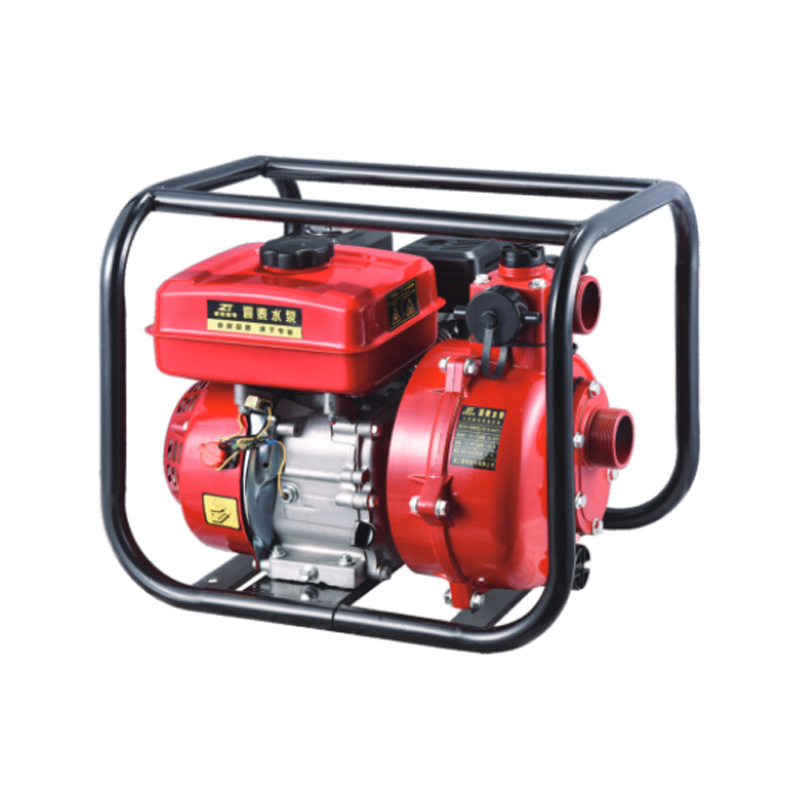
Gasoline Engine Water Pump
Why an Engine-Driven Water Pump Matters
Many water transfer tasks take place far from a dependable electrical supply. Farmland, fish ponds, construction sites, drainage areas, rural properties, and emergency locations may not have convenient access to grid power. Even when electricity is available, an electrically powered pump may be limited by cable length, voltage instability, generator capacity, or the risk of electrical equipment operating near water.
A gasoline engine water pump addresses these limitations by integrating its own power source. The engine directly drives the pump, allowing the unit to operate independently of the local electrical network. This makes it easier to move the equipment between work locations and helps users respond quickly when water must be transferred without delay.
Compared with many fixed electric pump installations, a portable engine-driven design can reduce setup restrictions. The user can position the unit near a pond, irrigation channel, drainage area, or water storage tank and connect the appropriate suction and discharge pipelines. Once the engine has been started and the pump has reached stable operating conditions, the unit can provide continuous water movement for the intended application.
The design is especially useful where mobility is more important than permanent installation. Farms may need to serve several fields. Aquaculture operators may use equipment around different ponds. Contractors may move a pump between construction areas. Property owners may require seasonal irrigation or emergency drainage. In each case, a self-contained water pump offers a practical alternative to a permanently installed system.
Product Design Overview
The Gasoline Engine Water Pump is built around four principal design objectives: usable output, efficient operation, portability, and stability. These objectives are addressed through the selection of a gasoline engine, the use of a high-efficiency impeller, fluid simulation optimization, and a low-center-of-gravity frame.
The gasoline engine provides the mechanical energy required to drive the impeller. All listed models use a 170F engine with a rated power of 7.5 HP and a speed of 3,600 revolutions per minute. This common engine platform simplifies product selection and supports a consistent operating concept across the range.
The high-efficiency impeller is responsible for converting rotational energy into water flow and pressure. Its performance influences both the quantity of water transferred and the height to which the water can be lifted. By combining impeller design with fluid simulation optimization, the pump is intended to achieve a balanced relationship between head and flow rather than focusing on only one performance measurement.
The frame supports the engine and pump body while helping the unit remain steady during operation. Its low-center-of-gravity structure is designed to reduce instability and make the equipment easier to handle. This is particularly valuable when the pump is placed on outdoor ground, near a pond, beside a drainage channel, or on a temporary work surface.
The result is a self-contained machine that can be transported, positioned, connected, started, and operated without requiring a complex permanent installation. The combination of engine power, hydraulic optimization, and frame stability gives the pump a broad range of practical uses.
High-Efficiency Impeller and Fluid Simulation Optimization
The impeller is one of the most important components in any centrifugal water pump. It determines how effectively the pump transfers energy from the engine into the water. An impeller that is poorly matched to the pump casing or operating range may create unnecessary turbulence, inefficient flow, unstable pressure, or excessive energy consumption.
This product uses a high-efficiency impeller supported by fluid simulation optimization. Fluid simulation allows engineers to examine how water moves through the pump system before final production. Areas such as velocity distribution, pressure changes, internal flow paths, and possible turbulence can be evaluated during the design process.
The practical purpose of this approach is to improve the balance between flow rate and lift. A pump designed only for high flow may perform poorly when water must be delivered to a higher elevation. A pump designed only for high pressure may move less water than required for irrigation or drainage. The listed models provide different combinations of maximum flow and lift, allowing users to select a performance profile that better suits the application.
For example, the CHP-20A model has a maximum stated flow of 35 cubic meters per hour and a maximum lift of 70 meters. The CHP-20B model has a maximum stated flow of 30 cubic meters per hour and a maximum lift of 100 meters. These specifications indicate different priorities within the same general product family. CHP-20A offers a higher stated flow, while CHP-20B is intended for applications requiring greater maximum lift.
The GWB-20 and GWB-30 models are oriented toward higher-volume, lower-lift water movement. GWB-20 provides a maximum stated flow of 25 cubic meters per hour and a maximum lift of 28 meters, while GWB-30 provides a maximum stated flow of 45 cubic meters per hour and a maximum lift of 25 meters. This makes the GWB-30 particularly suitable for applications where moving a larger quantity of water over a relatively moderate height is the primary objective.
Actual performance depends on pipeline length, pipe diameter, elevation, fittings, water conditions, suction conditions, and operating procedures. The maximum values in the table should therefore be used as reference points for product selection rather than as guaranteed simultaneous operating values. Proper system design remains essential for achieving efficient results.
Engine Performance and Fuel Efficiency
The pump uses a gasoline engine designed to provide strong output while remaining practical for portable operation. Each listed model is equipped with a 170F engine rated at 7.5 HP and operating at 3,600 rpm. This power level is suitable for driving compact pump systems while keeping the equipment manageable for transportation and field use.
One of the stated advantages of the engine is its easy-start characteristic. Starting convenience is important when equipment is used repeatedly throughout the day or when it must be activated quickly during drainage and emergency water transfer. A pump that starts with less effort can reduce operator fatigue and improve work efficiency.
The lightweight engine structure also contributes to portability. A portable pump may need to be unloaded from a vehicle, carried across uneven ground, repositioned near a different water source, or stored after use. Reducing unnecessary weight makes these tasks easier and can help a single operator manage the equipment more effectively, subject to safe handling practices.
Fuel efficiency is another important consideration for engine-driven equipment. The product description states that fuel efficiency has been improved compared with previous models. Lower fuel consumption can reduce operating costs, extend working time between refueling, and make the pump more convenient for remote locations where fuel access may be limited.
Fuel efficiency is influenced by more than the engine itself. Correct pump sizing, clean filters, suitable pipeline dimensions, proper engine maintenance, and operation near the intended duty point all affect consumption. A pump that is too large for the application may waste fuel, while a pump that is too small may need to operate for longer periods. Selecting the correct model is therefore an important part of achieving economical operation.
The four available configurations make it possible to match engine-driven performance with different hydraulic requirements. Users can choose between higher-lift models for elevated delivery and higher-flow models for rapid transfer over shorter distances. This flexibility helps prevent the common problem of using one general-purpose pump for every application, regardless of the actual system requirements.
Stable Low-Center-of-Gravity Frame
Engine-driven pumps generate vibration while operating, particularly at high rotational speeds. A stable frame helps keep the pump in position and reduces the risk of movement caused by vibration, hose tension, uneven ground, or accidental contact with the equipment.
The frame used for this product is designed with a low center of gravity. Positioning the weight closer to the supporting surface helps improve balance. It can also make the pump feel more stable during connection, startup, and continuous operation.
Frame stability is important for hydraulic performance as well as operator convenience. If the pump shifts during operation, the suction hose or discharge hose may become strained. Connections may be placed under unnecessary stress, and the pump may no longer be positioned correctly relative to the water source. A stable structure helps maintain a more consistent installation.
For outdoor applications, the pump should still be placed on a firm and level surface whenever possible. The low-center-of-gravity design improves stability but does not eliminate the need for proper site preparation. Loose soil, steep slopes, deep mud, or unstable platforms can create hazards for any engine-driven machine.
The frame also supports the product’s portable character. A well-designed frame can provide practical lifting and handling points while protecting key components during transportation. Users should follow safe manual handling procedures and use suitable lifting equipment when the unit cannot be safely moved by hand.
Available Models and Performance Range
The product family includes four models: CHP-20A, CHP-20B, GWB-20, and GWB-30. Although all models use the same listed engine power, they are differentiated by inlet and outlet size, maximum flow, maximum lift, and suction capability.
| Model | Inlet/Outlet Size | Maximum Flow Q | Maximum Lift H | Suction | Power | Speed | Engine Model |
|---|---|---|---|---|---|---|---|
| CHP-20A | 50 mm / 2 inches | 35 m³/h | 70 m | 8 m | 7.5 HP | 3,600 rpm | 170F |
| CHP-20B | 50 mm / 2 inches | 30 m³/h | 100 m | 8 m | 7.5 HP | 3,600 rpm | 170F |
| GWB-20 | 50 mm | 25 m³/h | 28 m | 7–8 m | 7.5 HP | 3,600 rpm | 170F |
| GWB-30 | 80 mm | 45 m³/h | 25 m | 7–8 m | 7.5 HP | 3,600 rpm | 170F |
The CHP-20A and CHP-20B models both use a 50 mm, or two-inch, inlet and outlet arrangement. CHP-20A provides the higher stated maximum flow of the two, while CHP-20B provides the higher stated maximum lift. This distinction is useful when choosing equipment for different pipeline layouts.
CHP-20A may be appropriate for irrigation, general water transfer, and applications requiring a combination of useful flow and significant elevation capability. CHP-20B may be preferred where the delivery point is substantially higher or where pipeline pressure requirements are more demanding.
GWB-20 uses a 50 mm connection and offers a maximum stated lift of 28 meters. Its performance profile is suited to moderate-lift transfer, pond service, garden irrigation, and drainage applications where a 25 cubic meter per hour maximum flow is sufficient.
GWB-30 uses a larger 80 mm connection and offers the highest stated maximum flow in the range at 45 cubic meters per hour. Its maximum lift is 25 meters, so it is oriented toward moving larger volumes over shorter or moderate distances. The larger connection can help support higher-volume transfer when the rest of the pipeline system is correctly matched.
Users should consider both the water source and the destination when selecting a model. The required flow rate, vertical elevation, horizontal distance, pipe diameter, suction height, and number of elbows or valves all influence the appropriate choice. A supplier or technical representative can help evaluate these factors for a specific installation.
Advantages Compared with Ordinary Portable Pumps
Portable water pumps are available in many forms, and product quality can vary significantly. The advantages of this product are based on the combined design of its engine, impeller, hydraulic optimization, frame, and model range rather than on a single feature.
First, the independent gasoline engine allows the pump to operate where electrical power is unavailable. This can be a major advantage over electric pumps in remote fields, pond areas, construction sites, and emergency locations. The user does not need to depend entirely on fixed wiring or locate a suitable electrical outlet close to the water source.
Second, the engine provides high power output in a relatively compact mobile format. The listed 7.5 HP rating gives the pump sufficient mechanical input for both moderate-flow and higher-lift configurations. This provides more application flexibility than a small low-power pump intended only for short-distance transfer.
Third, the high-efficiency impeller and fluid simulation optimization support a more deliberate hydraulic design. Instead of relying only on basic component selection, the pump system is developed with attention to internal water movement and the relationship between head and flow. This can help users obtain more predictable results when the pump is matched to the right application.
Fourth, the low-center-of-gravity frame provides a stable foundation. Some competing portable pumps may be difficult to keep steady on outdoor surfaces, particularly when hoses pull against the connections. A stable frame can improve operating confidence and reduce unnecessary movement.
Fifth, the product range offers different performance profiles. Users do not have to choose between only one general-purpose configuration. They can select a higher-lift model, a higher-flow model, or a moderate-duty option according to the system requirements.
Finally, the manufacturer’s broader product expertise is valuable. Zhejiang ZhenTai Mechanical and Electrical Co., Ltd. develops and produces more than 90 products across 10 series, including floating aerators, impeller aerators, water wheel aerators, air blowers, submersible pumps, and water pumps. Experience across these categories provides a wider technical foundation in motors, engines, impellers, water movement, aeration, and equipment used in outdoor environments.
Applications in Agriculture and Irrigation
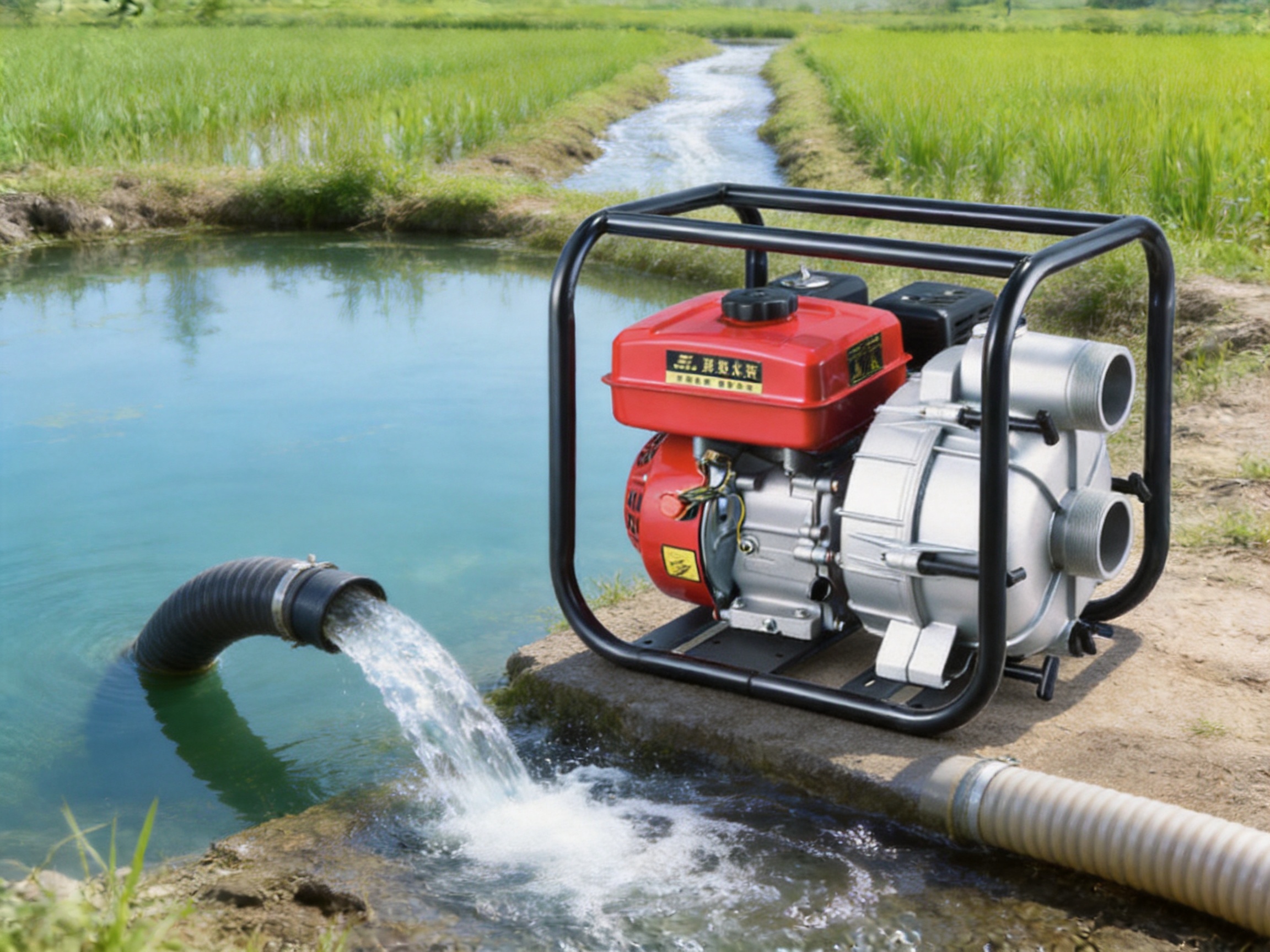
Agricultural water management often requires equipment that can be moved between fields and operated independently. The gasoline engine water pump can support irrigation from ponds, canals, storage tanks, rivers, and other suitable water sources, provided that the water is compatible with the pump and the installation is correctly designed.
For irrigation, model selection should begin with the required delivery rate and elevation. A field located at a higher level may require a model with greater lift capacity. A system intended to fill a storage tank or distribute water through multiple outlets may place greater emphasis on stable pressure and the available flow at the operating point.
The pump can also support seasonal farming activities. During dry periods, it may be used to move water from a reservoir to irrigation lines. After heavy rainfall, it may help drain low areas, channels, or temporary collection points. Its independent engine makes it useful for sites where electrical infrastructure has not yet been installed.
Pipeline design is essential in irrigation applications. The suction hose should be strong enough to resist collapse under negative pressure, and the discharge line should be properly sized for the expected flow. Excessively narrow pipes can increase friction loss and reduce practical performance. Long pipelines, sharp bends, clogged filters, and partially closed valves can also affect the water delivered at the destination.
Applications in Aquaculture and Fish Pond Management
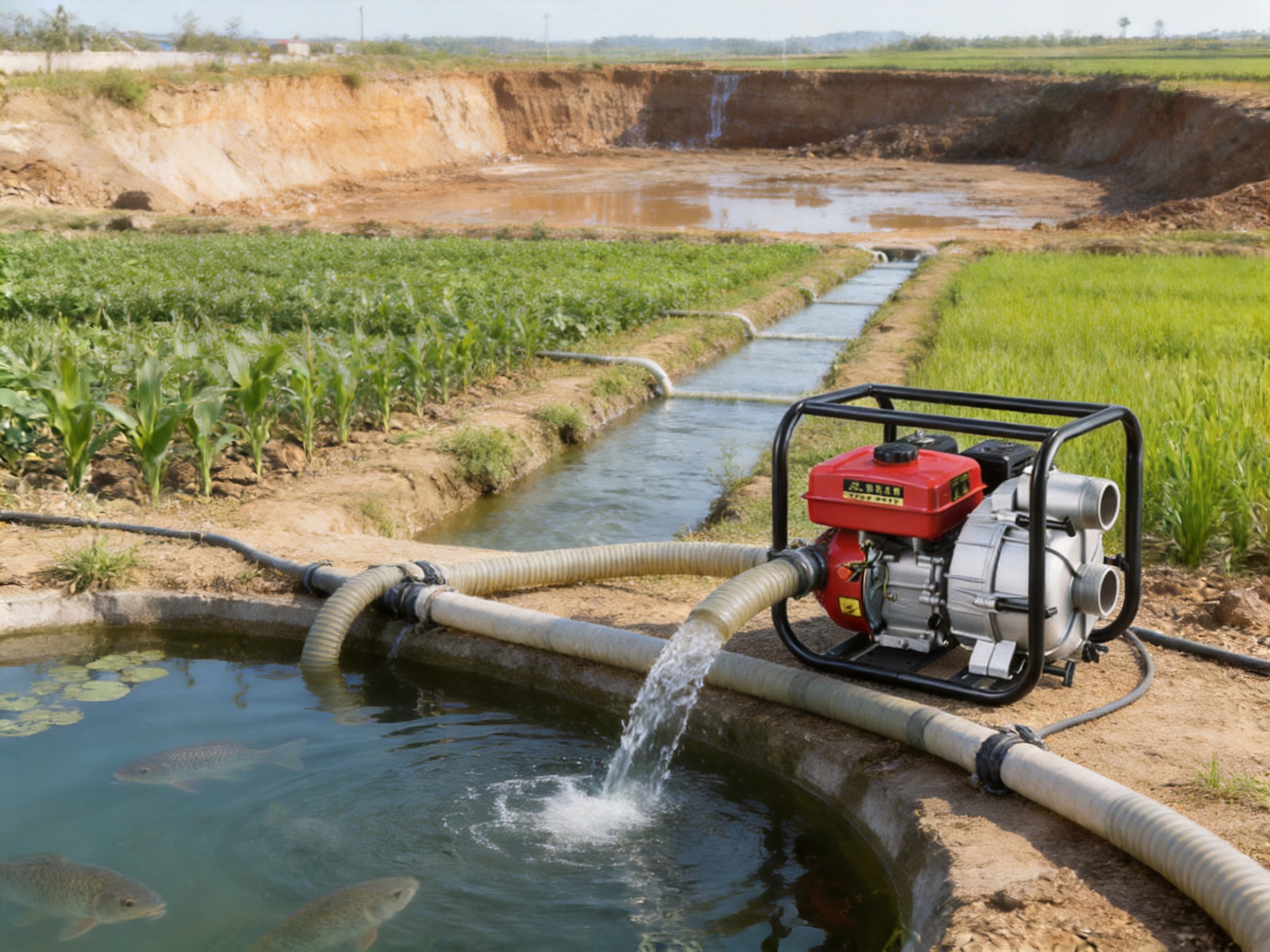
Aquaculture facilities require careful management of water levels, pond circulation, cleaning, filling, and drainage. A gasoline engine water pump can be useful as a support machine for pond maintenance, water replacement, emergency drainage, and transfer between reservoirs or culture areas.
Because aquaculture sites may include multiple ponds spread across an outdoor area, portability is particularly useful. The pump can be moved to the location where water is needed instead of installing a separate permanent pump at every pond. The low-center-of-gravity frame helps provide a stable operating platform near the pond, while the engine eliminates dependence on nearby electrical outlets.
When used around fish or other aquatic organisms, the operator should ensure that the water transfer method is appropriate for the species and production system. Sudden changes in water level, temperature, turbidity, or water quality may affect aquatic life. The pump should be operated according to the farm’s water management procedures, and intake arrangements should be designed to prevent the unnecessary capture of fish, debris, or other objects.
The pump may also be used to assist with pond cleaning and maintenance. Before any such operation, users should confirm that the water contains no materials that could damage the impeller or block the suction line. If the application involves mud, sludge, abrasive solids, or heavily contaminated water, a pump specifically designed for solids handling may be more suitable.
Applications in Construction and Drainage
Construction sites frequently experience water accumulation in excavations, foundation areas, trenches, and low-lying work zones. Removing water promptly can help maintain access, protect materials, and support safer working conditions. A portable gasoline engine water pump is valuable in these situations because it can be positioned close to the affected area and operated without waiting for permanent site power.
The different models offer options for both lift and flow. A deeper excavation or higher discharge point may require greater lift, making a CHP-20A or CHP-20B configuration more suitable depending on the full system calculation. A broad area with a lower discharge height may benefit from the higher flow capacity of the GWB-30.
Construction drainage conditions can change quickly. Operators should inspect the suction point frequently to ensure that soil, stones, wood, plastic, and other debris do not block the intake. A suitable strainer or foot valve may be required, depending on the installation. The discharge hose should be directed to an approved drainage location and secured against movement.
The pump should not be placed inside an enclosed space where gasoline engine exhaust can accumulate. Outdoor operation with adequate ventilation is essential. The operator must also keep fuel away from ignition sources and allow hot engine components to cool before refueling or maintenance.
Environmental Protection and Emergency Water Transfer
Water pumps are used in environmental protection activities such as watercourse maintenance, temporary dewatering, flood response, and the management of ecological landscape areas. A mobile engine-driven unit can be transported to locations where water must be moved quickly and where fixed systems are unavailable.
During emergency drainage, ease of startup and portability are particularly valuable. The equipment can be stored in a vehicle, warehouse, farm building, or service facility and deployed when required. The product’s common 170F engine platform also helps create a consistent operating and maintenance approach across multiple units.
Emergency applications require careful planning. Operators should identify safe fuel storage arrangements, inspect hoses and fittings before the rainy season, and confirm that the pump can reach the expected water source and discharge point. A pump’s rated maximum lift should not be treated as a substitute for a complete emergency drainage plan.
Environmental applications may involve sensitive water bodies. Users should prevent fuel, lubricants, and other contaminants from entering the water. Refueling should take place away from drainage channels whenever practical, and spills should be managed immediately according to site procedures.
Manufacturing Strengths and Production Approach
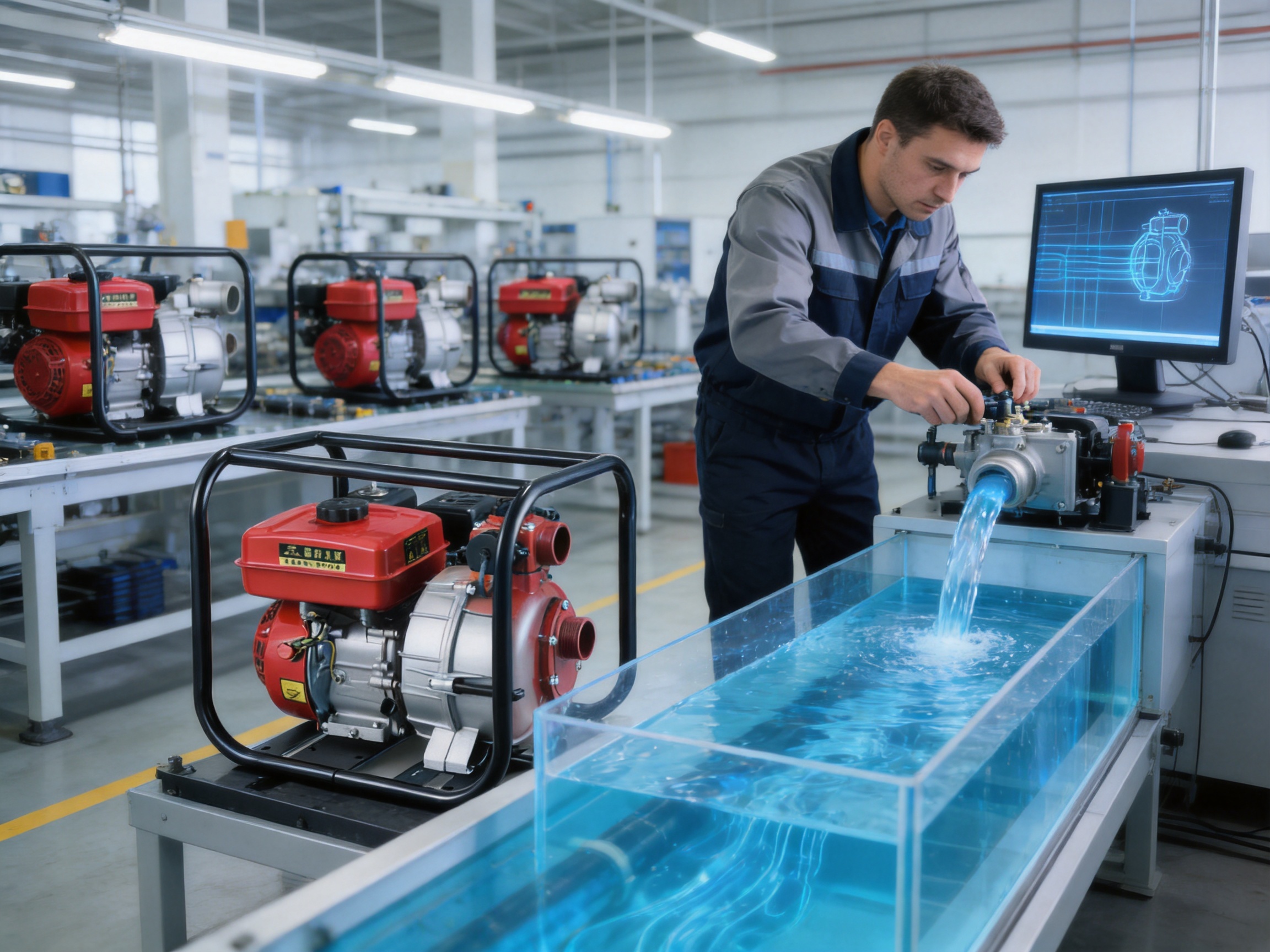
The performance of a water pump depends not only on its published specifications but also on the consistency of its manufacturing process. Zhejiang ZhenTai Mechanical and Electrical Co., Ltd. focuses on research, development, production, quality, technological innovation, and technical support. These capabilities are important when supplying equipment to customers with different operating conditions and project requirements.
The company’s product portfolio includes more than 90 products across 10 series. This range indicates experience in designing equipment for different types of fluid movement and air-water treatment. Product categories include floating aerators, impeller aerators, water wheel aerators, submersible pumps, water pumps, and air blowers.
Manufacturing a gasoline engine water pump requires coordination between mechanical structure, engine mounting, rotating components, hydraulic passages, frame design, and final assembly. A reliable production process should maintain appropriate alignment between the engine and pump assembly, ensure secure fastening, verify rotating component movement, and inspect the completed unit before shipment.
Fluid simulation optimization is one of the advanced design methods identified for this product. It helps engineers evaluate internal flow behavior and refine the relationship between impeller geometry, pump casing, flow rate, and lift. This engineering approach can reduce dependence on trial-and-error development and support a more consistent product design.
Frame design is also part of the manufacturing process. The low-center-of-gravity structure must support the equipment while remaining suitable for transport and outdoor operation. Welding, fastening, alignment, and surface treatment all influence the long-term usability of the frame.
Engine-driven products also require attention to practical assembly details. The fuel system, engine controls, mounting points, pump housing, hoses, and protective components need to work together as a complete machine. Final inspection should confirm that the engine can be started, the pump rotates correctly, and the unit is ready for installation according to the operating instructions.
ZhenTai’s manufacturing strength is further supported by its emphasis on OEM and ODM services. This allows global buyers, distributors, project contractors, and equipment brands to discuss customized product requirements. Possible customization areas may include product configuration, labeling, packaging, documentation, model selection, and application-specific arrangements, subject to technical evaluation and production feasibility.
Quality, Reliability, and Technical Support
Quality in a portable water pump includes more than engine operation. It also covers hydraulic performance, frame stability, connection quality, starting behavior, component compatibility, and the ability to maintain the machine over time.
A manufacturer with experience in several related equipment categories can offer broader technical support. Customers may need help selecting between a water pump, submersible pump, aerator, or air blower depending on the application. ZhenTai’s product coverage allows it to discuss different equipment solutions for aquaculture farms, irrigation projects, drainage work, and environmental facilities.
Technical support is especially important when the pump must be integrated into a larger system. The supplier can help clarify the difference between maximum head and operating head, assess connection sizes, review suction requirements, and identify a suitable model for the intended duty. This reduces the risk of choosing equipment based only on a single headline specification.
Reliable service also depends on clear communication. The company provides multiple contact channels for international buyers, including telephone, email, and WhatsApp communication. These channels can support product inquiries, quotation requests, application discussions, OEM/ODM consultation, and after-sales communication.
Customers should provide as much application information as possible when requesting a recommendation. Useful details include the water source, required flow, vertical lift, horizontal distance, pipe diameter, suction height, water quality, operating hours, and environmental conditions. Accurate information helps the supplier identify a more suitable model and avoid unnecessary oversizing or undersizing.
Installation and Operating Procedure
Before operation, place the pump on a stable, level surface. The location should be well ventilated and protected from unnecessary exposure to flooding, excessive dust, open flames, and unsafe traffic. Keep the pump away from areas where people may trip over hoses or where vehicles could strike the equipment.
Inspect the engine, pump body, frame, fuel system, and fasteners before starting. Confirm that the correct fuel and lubricating oil have been added according to the engine manufacturer’s instructions. Do not start the engine if fuel is leaking or if any major component appears damaged.
Install the suction and discharge pipelines carefully. The suction hose must be suitable for suction service and should be connected without air leaks. Even a small leak on the suction side can reduce priming performance and prevent the pump from operating correctly. The hose should be as short and direct as practical, with unnecessary bends avoided.
Check that the water source is deep enough for the intake arrangement and that the suction strainer is clear. If a foot valve or other priming component is required by the installation, it should be installed correctly. The suction line should not rest in mud or draw in large debris.
Connect the discharge line securely and direct it toward the intended destination. Support long hoses where necessary and avoid sharp bends that could restrict flow. Make sure that hose pressure ratings and connection sizes are suitable for the application.
Prime the pump according to the operating instructions before starting the engine. Many centrifugal pumps require water in the pump chamber to establish the initial pumping action. Operating a pump without the required water can cause poor performance or damage to internal components.
Start the engine using the standard starting procedure. Allow the engine to warm up and reach stable operating conditions before applying full load. Observe the pump for unusual vibration, leakage, abnormal noise, unstable flow, or unexpected movement.
During operation, monitor the fuel level, engine temperature, hose connections, water flow, and pump position. If the pump loses prime, stop the engine and investigate the cause rather than allowing the unit to run continuously without effective water movement.
When stopping the equipment, follow the correct shutdown sequence. If the pump will not be used for an extended period, drain or protect the system as recommended for the local climate and water conditions. Store the pump in a dry and secure location after it has cooled.
Maintenance Recommendations
Routine maintenance helps preserve starting reliability, fuel efficiency, hydraulic performance, and service life. The engine should be maintained according to the 170F engine instructions, including oil inspection, air filter care, spark plug inspection, fuel system maintenance, and periodic servicing.
Inspect the pump body and connections regularly for leaks. Examine the suction hose for cracks, flattening, soft spots, or damage. Check the discharge hose and clamps for wear. Replace damaged hoses or fittings before they fail during operation.
Keep the suction strainer clean. A blocked strainer can reduce flow, increase suction resistance, and cause the pump to lose prime. The correct cleaning frequency depends on the quality of the water. Muddy ponds, agricultural channels, and construction drainage areas may require more frequent inspection than clean storage tanks.
Inspect the frame for loose bolts, damaged welds, corrosion, or deformation. Because the frame supports the engine and pump, any structural problem should be addressed before continued operation. Confirm that the pump remains level and stable when placed on its normal working surface.
Keep the engine exterior reasonably clean and free from material that could obstruct cooling. Do not use high-pressure water directly on sensitive engine or control components. Before performing maintenance, stop the engine, disconnect the relevant controls, allow hot parts to cool, and prevent accidental startup.
At the end of a seasonal operating period, prepare the unit for storage according to the engine and pump instructions. Protect the equipment from moisture, freezing conditions, unauthorized use, and contamination. Proper storage can reduce startup problems when the pump is needed again.
How to Select the Correct Model
Model selection should begin with the required flow rate. Determine how much water must be transferred per hour or per minute. If the application involves filling a tank, estimate the tank volume and the desired filling time. If the application is irrigation, consider the flow required by the sprinklers, hoses, or distribution network.
Next, calculate the total lift. Vertical lift is the height difference between the water surface at the source and the discharge point. It is not the same as the length of the pipeline. Horizontal pipe length adds friction loss, which must also be considered.
Pipeline diameter is another major factor. The connection size of the pump should be matched with the system as closely as practical. Reducing the pipe too much can increase resistance and restrict flow. The GWB-30, with its 80 mm connection, is intended for a higher-flow configuration than the models using 50 mm or two-inch connections.
Suction height should also be reviewed. The listed suction values are 8 meters for CHP-20A and CHP-20B and 7–8 meters for GWB-20 and GWB-30. These values should be treated as reference limits under suitable conditions. Actual suction performance can be affected by altitude, water temperature, hose condition, air leakage, priming, and water level changes.
For higher-lift service, CHP-20B has the highest listed maximum lift at 100 meters. CHP-20A offers a maximum lift of 70 meters with a higher stated maximum flow of 35 cubic meters per hour. For moderate-lift, higher-volume transfer, GWB-30 offers the highest stated maximum flow at 45 cubic meters per hour.
Users should avoid selecting a model solely because it has the highest numerical rating. The best pump is the one whose operating range matches the actual system. A technical recommendation based on complete application data is more reliable than a comparison of maximum values alone.
Safety Considerations
Gasoline engine equipment must be operated outdoors or in a location with sufficient ventilation. Exhaust gases can contain carbon monoxide and other harmful substances. Never operate the pump in an enclosed room, basement, tunnel, vehicle, or other poorly ventilated area.
Gasoline is flammable. Refuel only after stopping the engine and allowing it to cool. Keep fuel containers closed and stored away from heat, sparks, flames, and direct sunlight. Clean up spills immediately and do not restart the engine until spilled fuel has evaporated and the area is safe.
Water and electricity can create severe hazards when used together. Keep electrical accessories, extension cords, and control equipment away from wet areas unless they are specifically rated and protected for the environment. The engine-driven design reduces dependence on electrical power but does not remove the need for general site safety.
Wear suitable protective equipment, including hearing protection where necessary, safety footwear, gloves, and eye protection. Do not touch hot engine or exhaust components. Keep children and unauthorized personnel away from the operating machine.
Never remove guards or attempt to reach moving components while the engine is running. Stop the engine before clearing blockages, adjusting hoses, inspecting the impeller area, or performing maintenance. If the pump produces abnormal noise, strong vibration, smoke, fuel leakage, or unstable output, stop operation and investigate the problem safely.
Benefits for International Buyers and Project Customers
International buyers often need more than a standard product listing. They may require stable supply, model consistency, packaging support, documentation, technical communication, and customization. Zhejiang ZhenTai Mechanical and Electrical Co., Ltd. serves global customers with a focus on reliable products, professional support, and OEM/ODM cooperation.
The manufacturer’s product range allows distributors to develop a broader equipment offering. A customer serving aquaculture farms may need aerators, air blowers, submersible pumps, and gasoline water pumps from one supplier. A contractor may require different pumps for irrigation, drainage, and foundation work. A complete category portfolio can simplify sourcing and communication.
OEM and ODM services may be useful for buyers that operate under their own brands or require project-specific configurations. Product labeling, packaging, technical documents, and other commercial requirements can be discussed with the manufacturer. Technical feasibility, order quantity, lead time, and testing requirements should be confirmed before final agreement.
Supplier evaluation should include more than price. Buyers should assess the pump’s specifications, production capabilities, quality procedures, technical response, spare parts availability, packaging, and after-sales communication. A product with an appropriate hydraulic design and dependable support may provide better long-term value than a lower-cost pump with limited technical guidance.
Conclusion
The Gasoline Engine Water Pump is designed to provide independent, portable, and efficient water transfer for agriculture, aquaculture, construction, drainage, environmental management, and other outdoor applications. Its key features include a 7.5 HP 170F gasoline engine, easy-start operation, lightweight construction, improved fuel efficiency, a high-efficiency impeller, fluid simulation optimization, and a stable low-center-of-gravity frame.
The four-model range gives users choices for different operating requirements. CHP-20A combines a 35 cubic meter per hour maximum flow with a 70-meter maximum lift. CHP-20B emphasizes high-lift operation with a listed maximum of 100 meters. GWB-20 provides moderate-flow performance with a 28-meter maximum lift, while GWB-30 delivers the highest listed flow of 45 cubic meters per hour through an 80 mm connection.
Compared with basic portable pumps, the product offers a more complete design approach. Engine selection, hydraulic optimization, impeller efficiency, frame stability, and model differentiation are considered together. This can help users select a machine that more closely matches the demands of their water transfer system.
Behind the product is Zhejiang ZhenTai Mechanical and Electrical Co., Ltd., a manufacturer with experience across more than 90 products and 10 product series. Its capabilities in aerators, air blowers, submersible pumps, and water pumps support a broad understanding of fluid movement and outdoor equipment applications. The company’s emphasis on quality, innovation, OEM/ODM services, and technical support makes it a suitable partner for distributors, contractors, farms, aquaculture operators, and international project buyers.
Correct model selection, proper installation, routine maintenance, and safe operation remain essential. When these factors are managed carefully, the gasoline engine water pump can provide a practical solution for moving water in locations where mobility, autonomy, and dependable performance are important.
Questions and Answers
What type of power source does the pump use?
The pump is driven by a gasoline engine rather than an electric motor. All listed models use a 170F engine with a rated power of 7.5 HP and a speed of 3,600 rpm.
Can the pump operate without grid electricity?
Yes. Because the pump has its own gasoline engine, it can operate in locations where grid electricity is unavailable or inconvenient, provided that the unit is operated safely and supplied with the correct fuel.
Which model provides the highest maximum lift?
CHP-20B has the highest listed maximum lift at 100 meters. It has a 50 mm, or two-inch, inlet and outlet size, a maximum stated flow of 30 cubic meters per hour, and an 8-meter suction specification.
Which model provides the highest maximum flow?
GWB-30 provides the highest listed maximum flow at 45 cubic meters per hour. It uses an 80 mm connection and has a maximum stated lift of 25 meters.
What is the difference between CHP-20A and CHP-20B?
Both models use a 50 mm, or two-inch, inlet and outlet arrangement and the same listed 7.5 HP 170F engine. CHP-20A has a higher maximum stated flow of 35 cubic meters per hour and a maximum lift of 70 meters, while CHP-20B has a maximum stated flow of 30 cubic meters per hour and a maximum lift of 100 meters.
What is the purpose of fluid simulation optimization?
Fluid simulation optimization is used to study and improve water movement through the impeller and pump passages. It supports a balanced relationship between flow rate and lift and helps engineers refine the hydraulic design before production.
Is the pump suitable for aquaculture applications?
It can be used for suitable aquaculture tasks such as pond filling, water transfer, maintenance, and drainage. Operators should consider fish safety, water quality, intake protection, and the specific requirements of the aquaculture system.
What surface should be used for installation?
The pump should be placed on a stable, level surface. The low-center-of-gravity frame improves stability, but the site should still be firm, well ventilated, and free from conditions that could cause the equipment to tip or move.
Why is suction-side sealing important?
Air entering through a suction-side leak can reduce priming performance, lower water output, and cause the pump to lose prime. The suction hose, clamps, fittings, and strainer should therefore be installed and inspected carefully.
Can the pump transfer muddy or contaminated water?
The product information describes the pump as a water transfer pump but does not specify a solids-handling design. Users should avoid water containing large solids, abrasive particles, or materials that could block or damage the impeller unless the application has been confirmed as suitable by the supplier.
What maintenance is required?
Maintenance includes engine oil and air filter care, spark plug and fuel system inspection, hose and connection checks, suction strainer cleaning, frame inspection, leak inspection, and proper storage. Maintenance intervals should follow the engine and pump instructions.
Does the manufacturer support OEM and ODM projects?
Yes. Zhejiang ZhenTai Mechanical and Electrical Co., Ltd. welcomes OEM and ODM cooperation. Buyers should discuss product configuration, labeling, packaging, documentation, quantity, testing, and delivery requirements with the manufacturer.
How should buyers choose a model?
Buyers should calculate the required flow, total vertical lift, pipeline length, pipe diameter, suction height, water quality, and operating schedule. The model should be selected according to the actual operating point rather than a single maximum specification.
References
1. Zhejiang ZhenTai Mechanical and Electrical Co., Ltd. Product information for Gasoline Engine Water Pump, models CHP-20A, CHP-20B, GWB-20, and GWB-30.
2. Zhejiang ZhenTai Mechanical and Electrical Co., Ltd. Company profile and product category information for aerators, air blowers, submersible pumps, and water pumps.
3. Manufacturer-provided operating guidance for stable placement, pipeline connection, engine startup, and normal pump operation.
4. General centrifugal pump engineering principles concerning flow rate, total head, suction conditions, pipeline friction, and impeller performance.
5. General small gasoline engine maintenance and outdoor equipment safety practices.