 English
 Español
 Indonesia
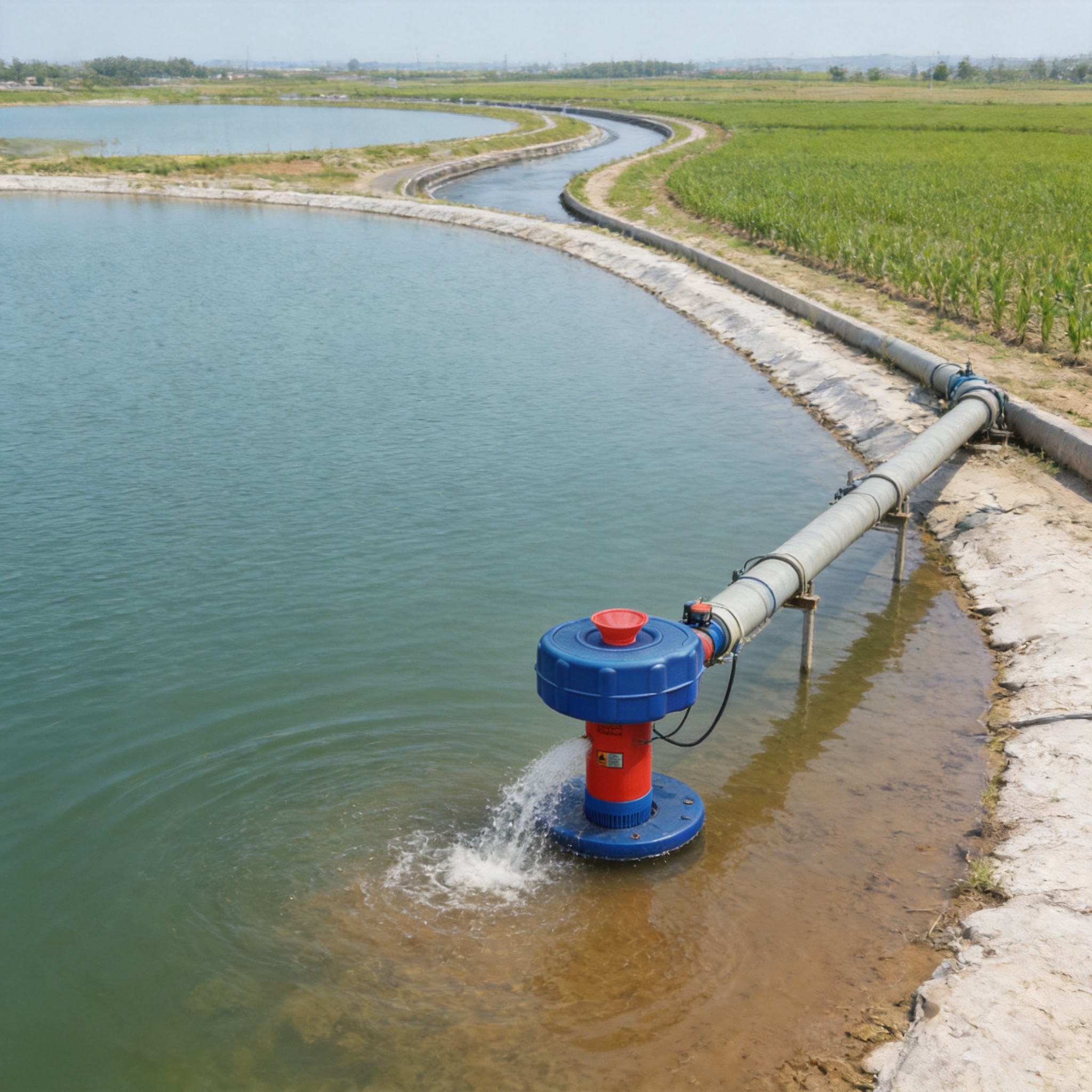
Reliable water movement is essential in aquaculture, irrigation, drainage, ecological restoration, and landscape water management. A pond or reservoir may contain changing water levels, suspended solids, silt, organic matter, and uneven underwater terrain. Conventional fixed pumps and submersible pumps can perform well in suitable conditions, but they may require foundations, permanent intake structures, foot valves, or frequent attention to sediment accumulation. A floating fountain aerator water pump offers a practical alternative by combining surface-floating installation with electric pumping, water circulation, and aeration performance.
This equipment is designed to float on the water surface while drawing water from approximately 25 to 50 centimeters below the surface. Because the pump follows changes in water level, it can maintain a relatively stable intake position without requiring a rigid mounting platform. The design is suitable for fish ponds, shrimp farms, irrigation reservoirs, drainage projects, ecological lakes, and other applications where stable surface-layer water intake is important.
In addition to its pumping function, the equipment can support aeration and circulation. Water movement helps distribute oxygenated water, reduce stagnant zones, and improve the overall circulation pattern of a pond or lake. For aquaculture operators, wholesalers, project contractors, and equipment distributors, this combination can reduce the need to purchase separate circulation and aeration equipment for certain operating conditions.
Manufactured by a specialized Chinese producer of aerators, water pumps, submersible pumps, and air blowers, the product benefits from a broad equipment portfolio and experience across multiple application fields. The manufacturer develops and produces more than 90 products in 10 series, including floating aerators, impeller aerators, water wheel aerators, and water pumps. This product breadth supports application-oriented product selection, OEM/ODM cooperation, and technical communication with customers in different markets.
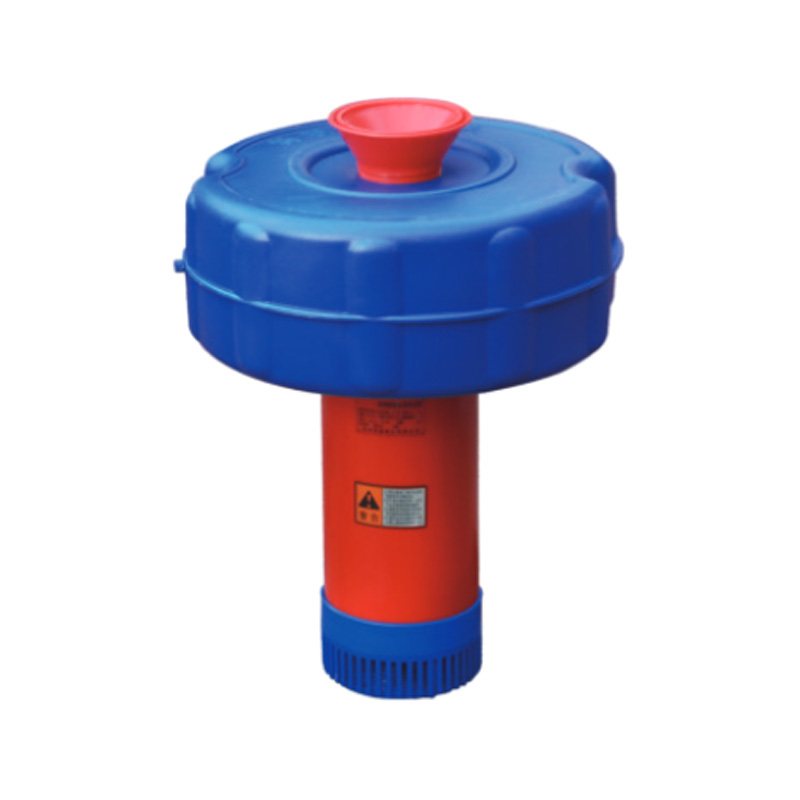
Floating Aerator Fountain Water Pump
What Is a Floating Fountain Aerator Water Pump?
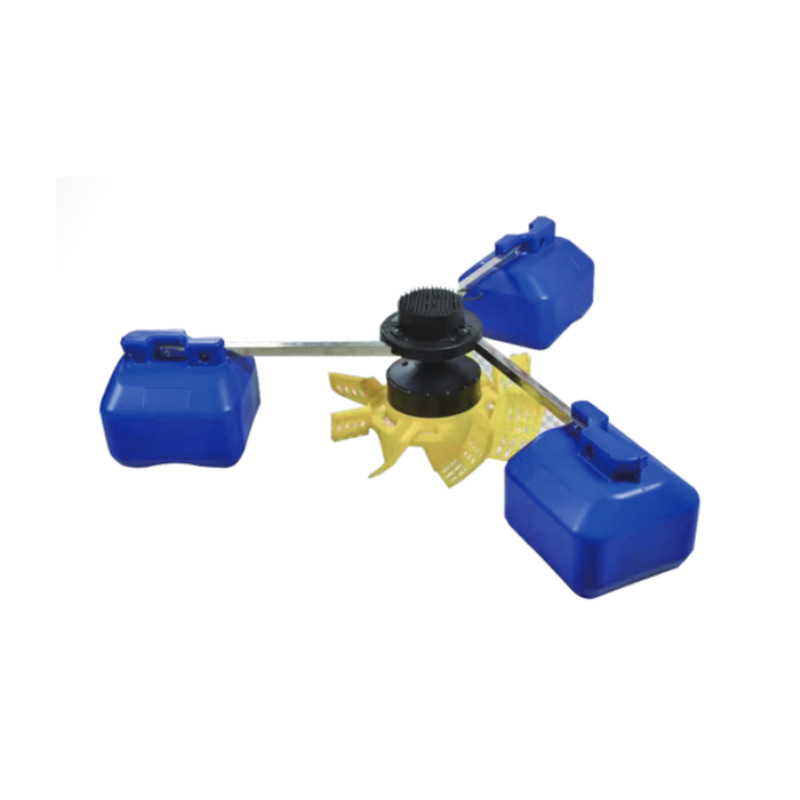
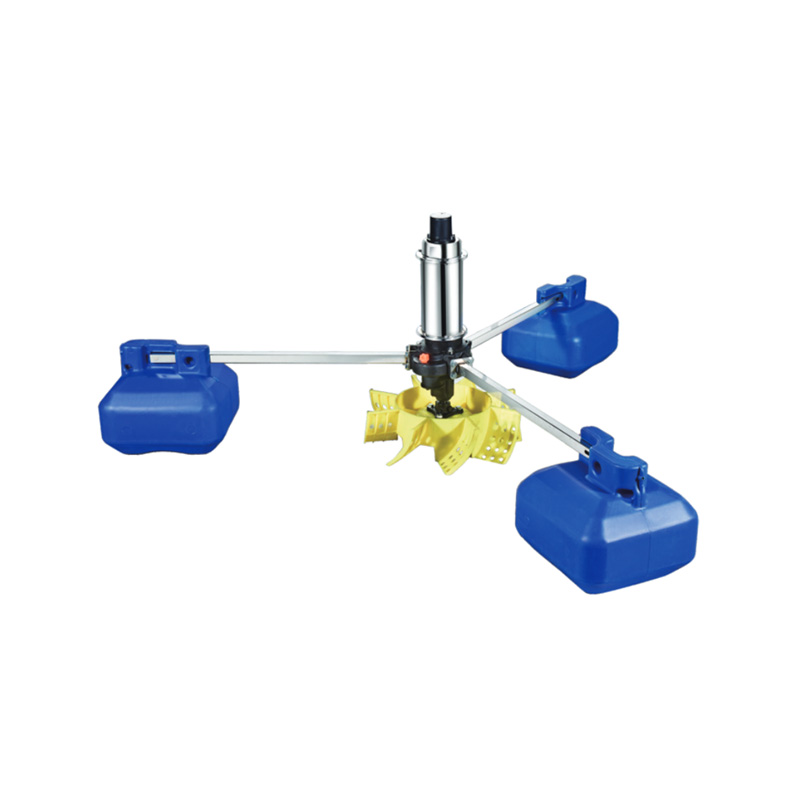
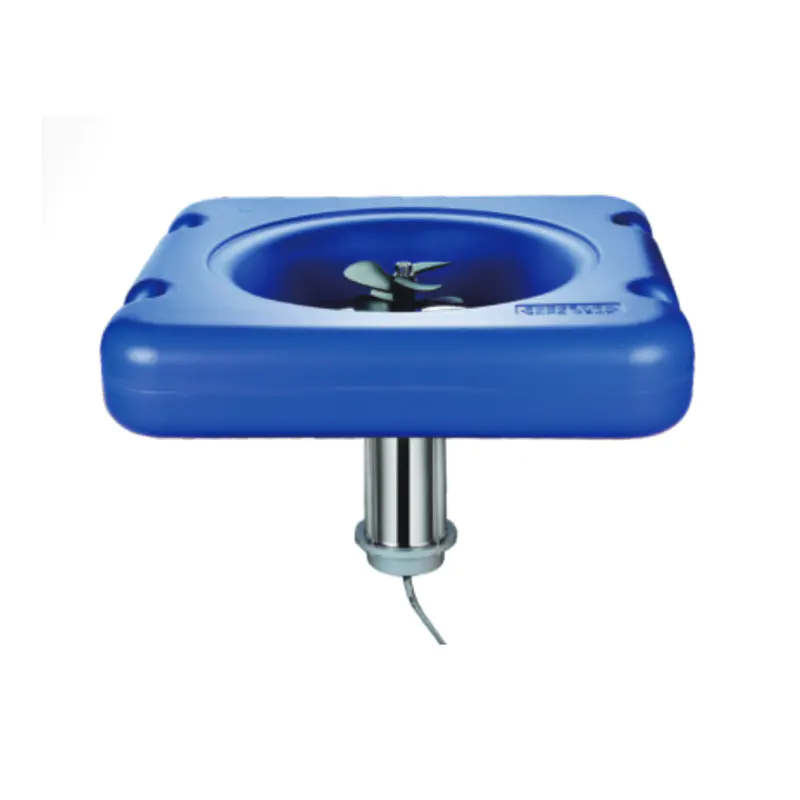
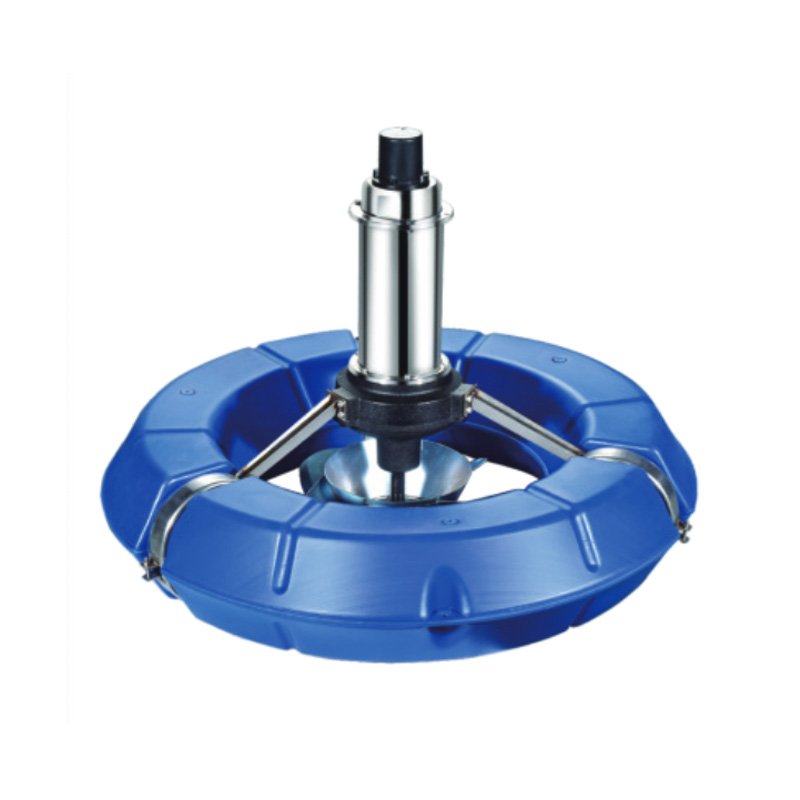
A floating fountain aerator water pump is an electrically powered pumping unit installed directly on the water surface. Instead of standing on a fixed foundation or being placed at the bottom of a pond, the unit is supported by a floating structure. The pump intake remains below the water surface, generally between 25 and 50 centimeters deep, allowing the system to draw relatively clean surface-layer water while reducing direct contact with bottom sediment.
The floating structure automatically responds to changes in water level. When the level rises, the unit rises with it. When the level falls, the unit moves downward while remaining on the surface. This operating principle is especially useful in reservoirs, ponds, and drainage areas where the water depth changes during irrigation, rainfall, evaporation, or seasonal operation.
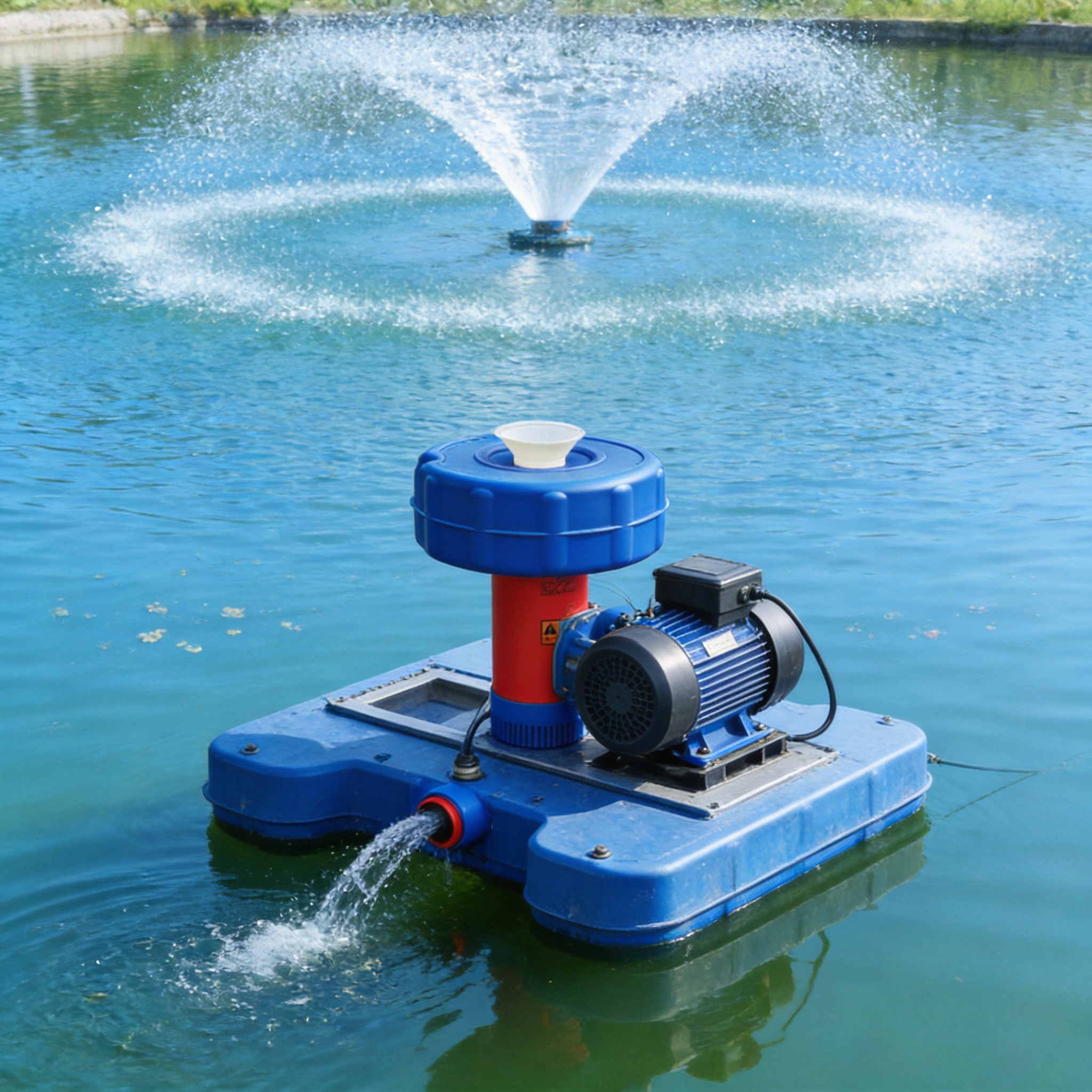
The equipment is also described as a fountain aerator because discharged water can create active surface movement. Water circulation at the surface promotes contact between water and air. Depending on installation configuration and operating conditions, the visible water movement may assist oxygen transfer, improve circulation, and contribute to a more dynamic pond environment.
Unlike a simple decorative fountain, this equipment is designed as a practical water-management machine. Its primary value lies in the combination of electric pumping, floating installation, surface-layer intake, and water movement. For commercial aquaculture and irrigation users, the fountain effect is part of a wider circulation and aeration function rather than merely an ornamental feature.
Core Operating Principle
The operating process is straightforward. The floating pump is placed on the water surface, connected to the appropriate power supply, and positioned according to the required discharge direction and pipeline arrangement. Once energized, the electric motor drives the pump, drawing water through the submerged intake. The water is then discharged through the outlet, generating circulation and, where configured, a fountain-like surface flow.
Because the inlet is positioned beneath the surface rather than directly at the pond bottom, the pump can reduce the quantity of settled sediment entering the hydraulic passage. This does not mean that the equipment is immune to all solids or that routine inspection is unnecessary. However, the surface-floating arrangement can reduce the risk associated with bottom silt compared with an intake located close to the lowest point of a pond.
The floating installation also minimizes the effect of changing water levels. A fixed pump may lose its ideal intake depth when a reservoir becomes shallow or may require structural modification when the water level rises. A floating unit moves with the water, helping maintain the intended intake relationship with the surface layer.
The system does not normally require a concrete foundation. This can shorten installation time and reduce civil construction requirements. In many applications, the operator only needs to position the unit, connect the relevant pipeline and electrical supply, and secure the equipment according to site conditions and safety requirements.
Principal Product Advantages
Surface-Floating Installation
The most distinctive advantage is the floating installation method. A floating pump can be deployed in a pond, reservoir, or lake without constructing a permanent pump base. This is useful for temporary irrigation, seasonal aquaculture, emergency drainage, and projects where civil works are undesirable.
Lower installation complexity can also benefit distributors and contractors. A product that does not require a large foundation can be introduced into a wider range of projects. It may be suitable for customers who need a fast replacement unit, a mobile water-management solution, or an economical supplement to an existing pumping system.
Automatic Adaptation to Water-Level Changes
The unit follows the water surface as the level changes. This feature supports more consistent surface-layer water intake and reduces the need for manual adjustment. In an irrigation reservoir, for example, the water level may gradually decrease during pumping. In a drainage pond, the level may change rapidly after rainfall. The floating structure allows the pump to remain operational while adapting to these conditions.
Automatic adaptation also reduces dependence on a fixed intake elevation. This can be an important practical advantage over conventional installations that must be carefully positioned at a particular depth. The operator still needs to confirm that sufficient water depth is available and that the floating equipment is properly secured, but the system is inherently more flexible than a rigid foundation-mounted design.
Reduced Exposure to Bottom Sediment
Silt and sediment are common causes of operational problems in ponds, reservoirs, canals, and drainage areas. A bottom-mounted intake can draw settled material into the pump, particularly when water movement disturbs the pond floor. Excessive sediment may contribute to blockage, wear, reduced flow, or more frequent cleaning.
The floating pump draws water from approximately 25 to 50 centimeters below the surface. This location is normally separated from the heaviest layer of bottom sediment. By reducing direct exposure to silt, the design can improve operational stability and convenience in comparison with an intake installed close to the bottom.
Site conditions still matter. Heavy floating debris, algae, aquatic plants, or suspended solids may require inlet screening, regular observation, or additional management. The floating configuration is a method of reducing sediment-related risk, not a substitute for proper operating procedures.
No Foundation Required
A conventional pump installation may require concrete work, support brackets, permanent pipe supports, or a dedicated pump room. These requirements can increase project cost and extend the installation schedule. The floating model avoids the need for a permanent foundation in many applications.
This advantage is valuable in ecological lakes and aquaculture ponds where construction may disturb the surrounding environment. It is also useful for temporary water-transfer projects, seasonal farms, and customers who need to relocate equipment between water bodies. A floating system can be removed, stored, inspected, or redeployed more easily than a permanent fixed installation.
Rainproof Outdoor Design
The product is designed for outdoor operation with a rainproof protection characteristic. This supports use in open ponds, reservoirs, irrigation sites, and drainage locations. Outdoor equipment must still be installed with appropriate electrical protection, grounding, cable management, and local safety controls. Rainproof design improves suitability for exposed environments, but it does not eliminate the need for responsible electrical installation.
Combined Pumping, Circulation, and Aeration Potential
A major commercial advantage is the combination of pumping and aeration-related functions. Water movement created by the discharge can improve circulation and promote air-water contact. In aquaculture, circulation can help reduce stagnant areas and distribute water conditions more evenly throughout a pond.
The product may be particularly attractive to operators who want one floating unit to perform more than simple water transfer. A separate water pump and aerator may be necessary in some applications, but the combined design can simplify equipment selection where the required flow, head, and aeration effect are compatible with the site.
For wholesalers, the combined product category can also broaden the potential customer base. The same product family may be marketed to aquaculture farms, irrigation users, environmental contractors, landscape lake managers, and drainage service providers.
Performance Range and Model Selection
The available specifications include several electric models with rated power figures listed in the supplied product information as 750, 1100, 1500, 2200, and 2800, together with voltage, head, flow, and caliber information. Because regional catalogs may express power units differently, buyers should confirm the final nameplate unit, electrical frequency, current, and phase configuration before ordering.
| Model | Listed Power | Voltage | Head | Flow | Caliber |
|---|---|---|---|---|---|
| ZT2800-6-100 | 2800 | 380 V, three-phase | 6 m | 100 m³/h | 150 mm, 6 inch |
| ZT2800-6-100 | 2800 | 220 V, single-phase | 6 m | 100 m³/h | 150 mm, 6 inch |
| ZT2200-6-55 | 2200 | 380 V, three-phase | 6 m | 55 m³/h | 100 mm, 4 inch |
| ZT2200-6-55 | 2200 | 220 V, single-phase | 6 m | 55 m³/h | 100 mm, 4 inch |
| ZT1500-6-40 | 1500 | 220 V, single-phase | 6 m | 40 m³/h | 80 mm, 3 inch |
| ZT1500-6-40 | 1500 | 380 V, three-phase | 6 m | 40 m³/h | 80 mm, 3 inch |
| ZT1100-7-30 | 1100 | 380 V, three-phase | 7 m | 30 m³/h | 80 mm, 3 inch |
| ZT1100-7-30 | 1100 | 220 V, single-phase | 7 m | 30 m³/h | 80 mm, 3 inch |
| ZT750-7-25 | 750 | 380 V, three-phase | 7 m | 25 m³/h | 80 mm, 3 inch |
| ZT750-7-25 | 750 | 220 V, single-phase | 7 m | 25 m³/h | 80 mm, 3 inch |
The model naming structure gives a useful first indication of the nominal performance grouping. Models associated with higher listed power generally provide greater flow capacity, while the numerical suffixes indicate the stated head and flow combination. However, model selection should never rely on the name alone. Buyers should evaluate the required discharge distance, pipeline length, pipe diameter, elevation difference, water quality, desired circulation pattern, and available electrical supply.
Choosing by Flow Requirement
Flow is normally expressed in cubic meters per hour. A small aquaculture pond may require a different circulation volume from a large reservoir or irrigation project. The 25 m³/h and 30 m³/h models may suit smaller circulation duties, while the 55 m³/h and 100 m³/h models can support larger water movement requirements when the installation conditions are appropriate.
Higher flow is not automatically better. Excessive circulation can increase energy consumption, disturb fish or shrimp, create unwanted erosion, or produce an unsuitable current pattern. The best model is the one that delivers the required water movement efficiently and consistently.
Choosing by Head
Head represents the pressure or elevation capability of the pump, expressed in meters. A project involving a long discharge pipeline or a higher outlet elevation may require more head than a short, open discharge arrangement. The listed models provide heads of 6 or 7 meters, but the actual operating point depends on system resistance.
Pipeline friction, bends, valves, outlet fittings, and elevation all influence the final flow. Buyers should provide complete installation details to the supplier or a qualified pump engineer. A model that appears suitable by nominal flow may deliver less flow if the pipeline resistance is higher than expected.
Choosing by Voltage and Phase
The product range includes both 220 V single-phase and 380 V three-phase versions for several models. Single-phase models may be convenient for smaller farms, domestic agricultural sites, and locations without industrial three-phase power. Three-phase models are often preferred for larger commercial installations where a suitable three-phase supply is available.
Electrical conditions vary by country and region. Before placing an order, the buyer should confirm voltage, frequency, phase, starting current, cable requirements, control equipment, and local electrical regulations. Matching the pump to the available electrical system is essential for safe and stable operation.
Applications in Aquaculture
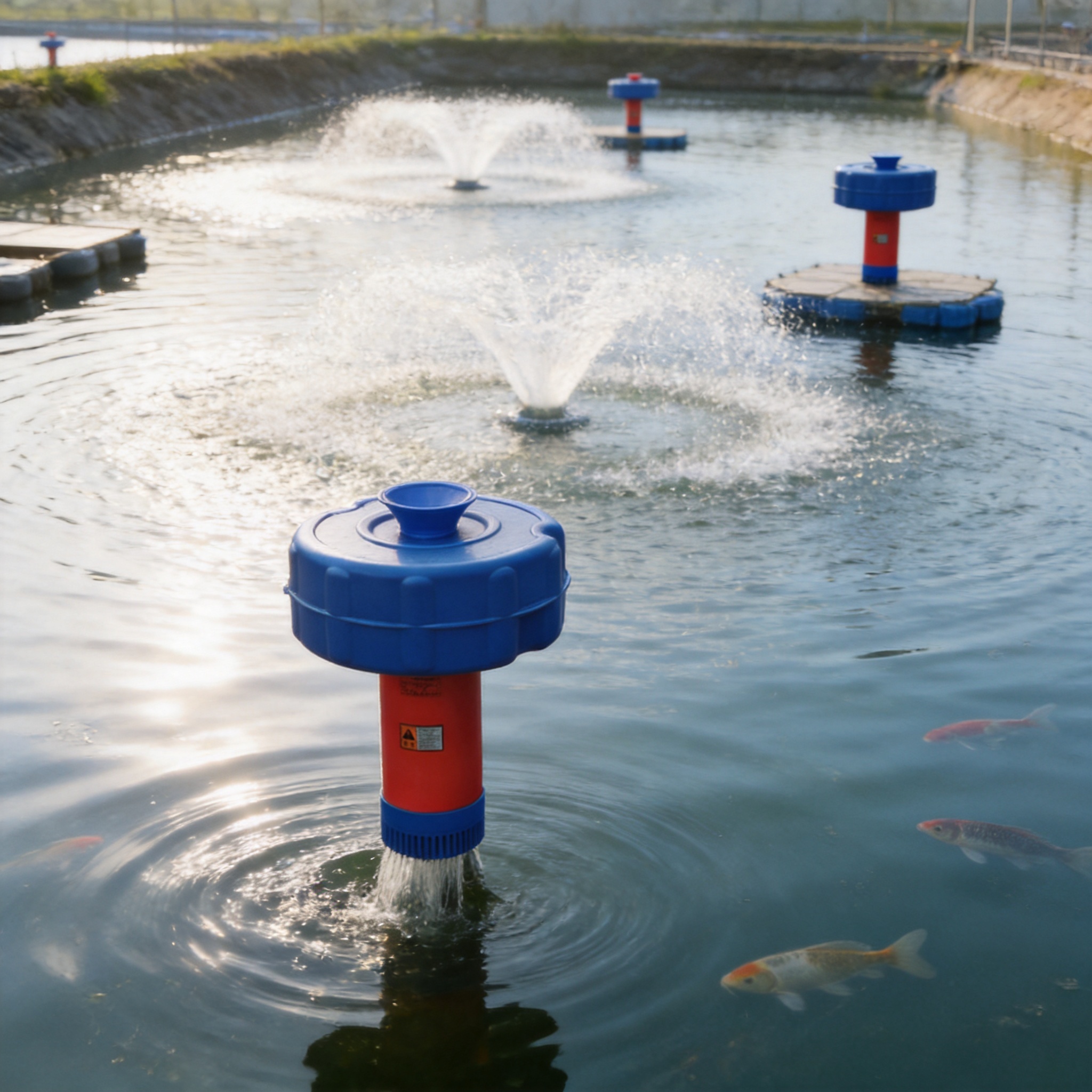
Fish ponds and shrimp farms require more than a supply of water. They require circulation, oxygen management, temperature distribution, and control of stagnant areas. A floating fountain aerator water pump can support these objectives by moving water through the pond and increasing surface activity.
In fish farming, surface circulation can help distribute oxygenated water and reduce differences in water quality between zones. It may also assist in moving surface water away from enclosed corners and toward areas where circulation is needed. Operators should position the unit according to pond geometry, stocking density, prevailing wind, and the location of other aeration equipment.
In shrimp farming, circulation requirements may vary with pond size, stocking density, water depth, and management strategy. A floating unit can be repositioned or installed at a practical location without building a permanent base. This flexibility can be helpful when pond layouts change or when a farm needs to adjust the circulation pattern during different production stages.
The product should be viewed as one part of an aquaculture water-management system. Water quality testing, feeding control, sludge management, biological balance, and additional aeration may still be required. The pump can improve circulation and air-water contact, but operating performance must be matched to the biological needs of the farm.
Applications in Irrigation and Drainage
Floating pumps are useful in irrigation reservoirs, agricultural ponds, canals, and temporary water-storage areas. The ability to follow changing water levels makes the unit suitable for reservoirs that are gradually depleted during irrigation. The surface intake can also help reduce the quantity of bottom silt entering the pump compared with a low-level intake.
For drainage, the pump can be placed on accumulated water and operated without constructing a permanent foundation. This may be useful at farmland, construction areas, flood-control locations, building foundations, and other sites where water must be removed quickly. A rainproof outdoor design supports exposed operation, provided that the power connection and control equipment are installed safely.
Drainage applications often involve unpredictable conditions. Operators should check for stones, branches, plastic materials, aquatic plants, and other debris before starting the pump. The floating structure reduces sediment exposure, but large debris can still obstruct the intake or discharge system. A basic inspection and cleaning plan is therefore important for maintaining reliable operation.
Applications in Ecological and Landscape Lakes
Landscape lakes and ecological water bodies benefit from controlled water movement. Stagnant zones may produce undesirable odors, uneven water quality, algae accumulation, or poor visual conditions. A floating fountain aerator can contribute to visible water activity while supporting circulation.
Because the unit does not require a large permanent foundation, it can be introduced with less structural alteration to the surrounding lake environment. This is useful for projects where the appearance of the shoreline must be preserved or where the installation may need to be removed for maintenance.
The visible fountain effect may also provide a more attractive water display. However, fountain height and spray pattern depend on the actual system configuration, pump operating point, outlet arrangement, and site conditions. Project designers should evaluate appearance, splash control, electrical safety, and surrounding landscaping before final installation.
Comparison with Conventional Submersible Pumps
Submersible pumps are widely used for drainage, irrigation, and water transfer. They are placed below the water surface and can be effective when the water source, depth, and sediment conditions are suitable. Nevertheless, a submersible pump may be more exposed to bottom sediment if installed too close to the pond floor. It may also require lifting equipment or additional labor for inspection and removal.
The floating fountain aerator water pump differs in several important ways. Its intake is positioned in the surface layer, its body remains accessible at the water surface, and its position changes with the water level. These features can improve convenience and reduce the impact of bottom silt in suitable applications.
| Comparison Point | Floating Fountain Aerator Water Pump | Traditional Submersible Pump |
|---|---|---|
| Installation position | Floats on the water surface | Installed below the water surface |
| Water-level adaptation | Moves with changing water levels | Fixed according to installation position |
| Foundation requirement | No permanent foundation normally required | May require supports, lifting arrangements, or fixed mounting |
| Intake position | Approximately 25–50 cm below the surface | Often positioned deeper, depending on design |
| Bottom sediment exposure | Reduced when correctly positioned above the pond floor | May be greater when installed near settled sediment |
| Surface circulation | Supports pumping, circulation, and fountain-style water movement | Usually focused on submerged transfer or drainage |
| Maintenance access | Accessible at the water surface | May require removal from the water |
This comparison does not mean that one product replaces every submersible pump. Submersible pumps remain appropriate for deep wells, confined sumps, high-submergence applications, and projects requiring a fully submerged design. The floating model is most advantageous when surface-layer intake, water-level flexibility, reduced foundation work, and circulation are important priorities.
Comparison with Fixed Surface Pump Installations
A fixed surface pump is normally installed on land or on a permanent platform. Such a system may provide easy access and can be highly effective when the water source is close to the pump and the intake structure is stable. However, the installation often requires a suitable elevation, a protected pump location, a fixed suction line, and measures to prevent loss of prime.
The floating model places the pump close to the water source and avoids many suction-side complications associated with a distant land-based pump. Since the unit moves with the water level, it can remain in a useful relationship with the water surface. It also avoids the need for a large building or permanent pump base in many projects.
The best choice depends on operating conditions. A fixed surface system may be preferable when equipment must remain completely on land, when extensive control equipment is required indoors, or when the water body has strong waves that could affect floating equipment. A floating system is attractive when mobility, surface intake, and rapid deployment are more important.
Manufacturing Strengths and Product Development Capability
The manufacturer of this floating pump operates in Wenling, Zhejiang Province, a region known for the production of pumps and mechanical and electrical equipment. Established in 2018, the company focuses on the research, development, and production of more than 90 products across 10 series.
Its product portfolio includes floating aerators, impeller aerators, water wheel aerators, water pumps, submersible pumps, and air blowers. This range is significant because water-management projects frequently require more than one type of equipment. A supplier with multiple aeration and pumping technologies can help customers compare alternatives according to pond size, water depth, required oxygen transfer, flow, electrical supply, and installation limitations.
A broad product range also strengthens manufacturing knowledge. Experience with different pump structures and aerator configurations supports a more complete understanding of hydraulic performance, motor matching, water circulation, outdoor operation, and application-specific product design. This experience is reflected in the floating unit’s focus on surface intake, sediment resistance, water-level adaptation, and simplified installation.
Integrated Research and Production Orientation
The company describes itself as engaged in research, development, and production rather than only trading or reselling equipment. This integrated orientation supports closer control of product design, model development, manufacturing coordination, and technical response.
For buyers, the benefit is practical. Engineering questions can be discussed with a supplier familiar with the structure and intended operating conditions of the equipment. This can help customers select the appropriate flow range, head, voltage, phase configuration, and installation method.
Quality and Reliability Focus
The company emphasizes quality, integrity, continuous technological innovation, and reliable products. For water pumps and aerators, reliability is especially important because equipment may operate for long periods in wet, outdoor, and electrically demanding environments.
A reliable manufacturing approach includes attention to product consistency, correct motor and pump matching, appropriate protection, stable assembly, and inspection before shipment. The supplied product information highlights rainproof design, sediment and silt resistance, and stable operation as important characteristics. These features correspond directly to the conditions encountered in aquaculture, irrigation, drainage, and ecological water projects.
OEM and ODM Support
OEM and ODM services are available for global buyers. OEM cooperation may be useful for distributors who need their own branding, packaging, labels, or market-specific documentation. ODM cooperation can support customers who require modifications to product appearance, configuration, performance range, or installation details, subject to technical feasibility and order requirements.
Customization is especially valuable for international wholesalers because electrical standards, language requirements, packaging expectations, and market preferences differ from one country to another. A manufacturer with a broad product family can also help distributors build a more complete catalog instead of relying on a single pump model.
Application Experience Across Industries
The company’s products are used in aquaculture, fish pond aeration, farmland irrigation, building foundation drainage, environmental protection, chemical industries, household water supply, ecological landscape lakes, and flood control and drainage. This application diversity supports a practical approach to product development.
Different industries create different design priorities. Aquaculture emphasizes circulation and oxygen management. Irrigation emphasizes dependable water transfer. Drainage emphasizes rapid deployment and solids tolerance. Landscape applications emphasize appearance and environmental integration. Experience across these areas helps the manufacturer position the floating pump as a flexible product rather than a single-purpose machine.
Installation Guidance
Before installation, confirm the water depth, water quality, intended flow direction, discharge route, power supply, and anchoring requirements. The unit should have sufficient room to float freely without striking the pond wall, bottom, intake structures, boats, or other equipment.
Place the pump directly on the water surface and verify that the intake remains below the waterline. The stated intake position is approximately 25 to 50 centimeters beneath the surface. The exact operating position may depend on the floating structure and water conditions, so the equipment should be checked after deployment.
Connect the discharge pipeline with suitable support. The pipeline should not pull excessively on the floating pump or force the unit into an unstable position. Where necessary, use a flexible connection or an arrangement that allows the floating equipment to move as the water level changes.
The unit should be secured against drifting, especially in ponds exposed to wind, waves, boat traffic, or strong discharge reaction. Anchoring must allow vertical movement while limiting excessive horizontal movement. The precise method depends on pond geometry and local conditions.
Electrical installation should be completed by qualified personnel. Confirm the rated voltage, phase, frequency, cable size, circuit protection, grounding, and emergency shutoff arrangement. Outdoor electrical equipment should be protected from mechanical damage and unauthorized access. The pump should not be energized until the unit is correctly afloat and the intake is submerged.
Operation and Maintenance
Routine maintenance begins with observation. Operators should check whether the unit is floating level, whether the intake is unobstructed, whether the discharge is stable, and whether unusual vibration or noise is present. Changes in water color, debris concentration, algae growth, or sediment movement may indicate that cleaning or repositioning is required.
Inspect the intake area regularly. Although the floating design reduces contact with bottom silt, floating leaves, plastic, aquatic plants, and other materials can still block the inlet. Remove debris only after the power supply has been safely isolated.
Check the discharge pipeline and connections for leaks, excessive movement, or mechanical stress. A damaged pipeline can reduce flow and place an unintended load on the floating unit. The anchoring system should also be inspected after storms, high winds, flooding, or significant changes in water level.
Electrical components should be checked according to local regulations and the manufacturer’s recommendations. Look for damaged insulation, loose terminals, water ingress, overheating, or abnormal current. Do not continue operating the pump if there is evidence of an electrical fault.
At the end of a seasonal project, clean the equipment and store it in a suitable location if removal is required. For permanent installations, establish a periodic service schedule that includes inspection of the pump, motor, floating structure, intake, discharge, electrical system, and anchoring arrangement.
How the Product Improves Project Efficiency
Project efficiency includes more than pump output. It also involves installation time, civil works, maintenance access, adaptability, and the ability to use one product in multiple water-management roles. The floating fountain aerator water pump addresses these factors through its foundation-free installation, water-level adaptation, surface intake, and combined circulation function.
For an aquaculture farm, the unit may be deployed without excavating or constructing a permanent pump station. For an irrigation project, it can follow the reservoir level as water is withdrawn. For a drainage contractor, it can provide a mobile solution for temporary water accumulation. For a landscape operator, it can add circulation and visible water movement without a large structural alteration.
The reduction in installation complexity can be particularly important for international projects. A simpler installation may reduce the amount of local civil work required and make it easier for distributors to train customers. This does not remove the need for professional electrical and hydraulic planning, but it can make the overall project easier to organize.
Benefits for Wholesalers and Distributors
Wholesalers often seek products that can serve several customer groups. This floating pump is applicable to aquaculture farms, irrigation users, drainage contractors, ecological lake operators, environmental projects, and landscape water installations. Its multifunctional positioning can support a wider sales strategy than a pump designed only for one narrow application.
The availability of both single-phase and three-phase options increases market flexibility. Different customers can select a model according to their local power supply and required flow. Multiple model sizes also allow distributors to offer a product range rather than a single capacity.
The manufacturer’s wider catalog provides an additional commercial advantage. Distributors can source floating aerators, impeller aerators, water wheel aerators, submersible pumps, water pumps, and air blowers from a supplier familiar with aquaculture and water-management equipment. This may simplify product sourcing and technical communication.
OEM and ODM support can help distributors develop market-specific product lines. Packaging, labels, manuals, and configuration requirements can be discussed during the quotation and technical confirmation process. Buyers should provide complete specifications early, including voltage, frequency, phase, flow, head, outlet size, intended application, and branding requirements.
Recommended Selection Process
Begin by defining the primary function. Decide whether the main requirement is aquaculture circulation, surface aeration, irrigation transfer, drainage, ecological lake movement, or a combination of these duties. The primary function affects the preferred flow, outlet arrangement, operating duration, and installation position.
Next, measure the water body and hydraulic route. Record water depth, normal and minimum water levels, pond size, discharge distance, pipeline diameter, elevation difference, and the number of bends or fittings. These details help determine whether the listed head and flow are suitable.
Confirm the water quality. Note whether the water contains silt, algae, aquatic plants, floating waste, chemical residues, or abrasive particles. The product is designed to reduce sediment and silt blockage, but severe solids conditions may require additional screening or a different pump configuration.
Confirm the electrical supply. Choose between single-phase and three-phase options only after checking the actual site power. Verify voltage and frequency with the supplier. If the equipment will be exported, request the correct nameplate, manual, cable arrangement, and electrical documentation for the destination market.
Finally, discuss installation and service requirements. Confirm the floating structure, discharge connection, anchoring method, spare parts, packaging, warranty terms, and recommended maintenance schedule. A complete technical review before purchase helps prevent problems after delivery.
Frequently Asked Questions
What is the primary purpose of this floating pump?
Its primary purpose is to provide electrically powered water pumping from the surface layer while floating on the water. It can also support circulation and aeration-related functions in ponds, reservoirs, aquaculture facilities, drainage areas, and ecological lakes.
How deep is the water intake?
The stated intake position is approximately 25 to 50 centimeters below the water surface. This surface-layer intake helps reduce direct exposure to bottom sediment and silt.
Does the unit require a concrete foundation?
No permanent foundation is normally required. The pump is placed directly on the water surface and supported by its floating structure. It should still be secured correctly for the specific pond, reservoir, wind, and wave conditions.
Can the pump operate when the water level changes?
Yes. The floating structure moves with the water level, helping maintain the intended surface-layer intake position. The operator must ensure that the water remains deep enough for safe intake operation.
Is this equipment suitable for fish ponds and shrimp farms?
Yes. It is designed for applications involving fish pond aeration, aquaculture circulation, shrimp farming, and related water-management duties. The correct model depends on pond size, stocking conditions, required circulation, water quality, and available power.
Can it be used for irrigation?
Yes. The floating design is suitable for irrigation reservoirs, agricultural ponds, and other surface-water sources. It can follow changing water levels and reduce the need for a fixed intake structure.
Does the pump eliminate sediment problems completely?
No. Its surface intake reduces exposure to bottom sediment and may lower the risk of silt blockage compared with a low-level intake, but debris, algae, suspended solids, and heavy sediment can still affect operation. Routine inspection and cleaning remain necessary.
Are single-phase and three-phase versions available?
Yes. The listed range includes 220 V single-phase and 380 V three-phase versions for several models. Voltage, frequency, and phase should be confirmed before ordering because electrical standards differ by market.
What flow capacities are listed?
The supplied specifications list flows of 25, 30, 40, 55, and 100 cubic meters per hour. Actual flow depends on head, pipeline resistance, outlet configuration, and site conditions.
What head options are listed?
The listed models provide nominal heads of 6 or 7 meters. The required model should be selected according to the complete hydraulic system, including elevation, pipeline length, fittings, and discharge conditions.
Can the product be customized?
OEM and ODM services are available for global buyers. Customization requirements should be discussed in advance and may include branding, packaging, documentation, electrical configuration, or other technically feasible changes.
What industries does the manufacturer serve?
The manufacturer serves aquaculture, fish pond aeration, farmland irrigation, building foundation drainage, environmental protection, chemical industries, household water supply, ecological landscape lakes, and flood control and drainage.
What should be checked before starting the pump?
Confirm that the unit is floating level, the intake is submerged, the discharge connection is secure, the anchoring is suitable, the pipeline is unobstructed, and the electrical supply is correctly protected. Do not start the unit if the intake is blocked or the equipment is unstable.
Is the product suitable for outdoor operation?
The unit has a rainproof design characteristic and is intended for outdoor water applications. Electrical installation must still include appropriate grounding, circuit protection, cable protection, and compliance with local safety requirements.
Conclusion
The floating fountain aerator water pump provides a flexible approach to surface-water intake, circulation, and aeration. Its floating installation follows changing water levels, requires no permanent foundation in normal applications, and positions the intake approximately 25 to 50 centimeters below the surface. This arrangement can reduce the effects of bottom sediment and simplify operation compared with certain conventional fixed or low-level pump installations.
With models covering listed flows from 25 to 100 cubic meters per hour and options for 220 V single-phase or 380 V three-phase power, the range can serve smaller farms, commercial aquaculture facilities, irrigation reservoirs, drainage projects, and ecological water bodies. The product should be selected according to actual head, flow, pipe resistance, water quality, and electrical conditions.
The manufacturer strengthens this product offering through a broad portfolio of more than 90 products across 10 series, covering floating aerators, impeller aerators, water wheel aerators, water pumps, submersible pumps, and air blowers. Its research, development, production, quality focus, application experience, and OEM/ODM capabilities make it a suitable supply partner for international buyers seeking aquaculture and water-management equipment.
For the best result, customers should provide complete project information before ordering and establish a proper installation, electrical protection, inspection, and maintenance plan. When correctly matched to the site, this floating equipment can provide an efficient and adaptable solution for water pumping, circulation, and aeration.
References
1. Supplied product specification for the Floating Fountain Aerator Water Pump, including model, voltage, head, flow, and caliber information.
2. Supplied technical description of surface-floating operation, 25–50 centimeter intake depth, rainproof design, and sediment-resistant application.
3. Supplied company profile covering research, development, production, product series, aquaculture applications, irrigation, drainage, and ecological water management.
4. General principles of pump selection, hydraulic head, pipeline resistance, electrical matching, and water-management equipment maintenance.