 English
 Español
 Indonesia
Reliable oxygen management is one of the most important requirements in modern aquaculture. Fish, shrimp, and other aquatic organisms consume dissolved oxygen continuously, while decomposition of feed residues, organic matter, and biological waste can consume additional oxygen from the water. When oxygen levels fall, animals may experience stress, reduced feeding activity, slow growth, increased disease susceptibility, or sudden mortality. For this reason, pond operators need aeration equipment that can deliver stable oxygen transfer, operate efficiently, and withstand demanding outdoor conditions.
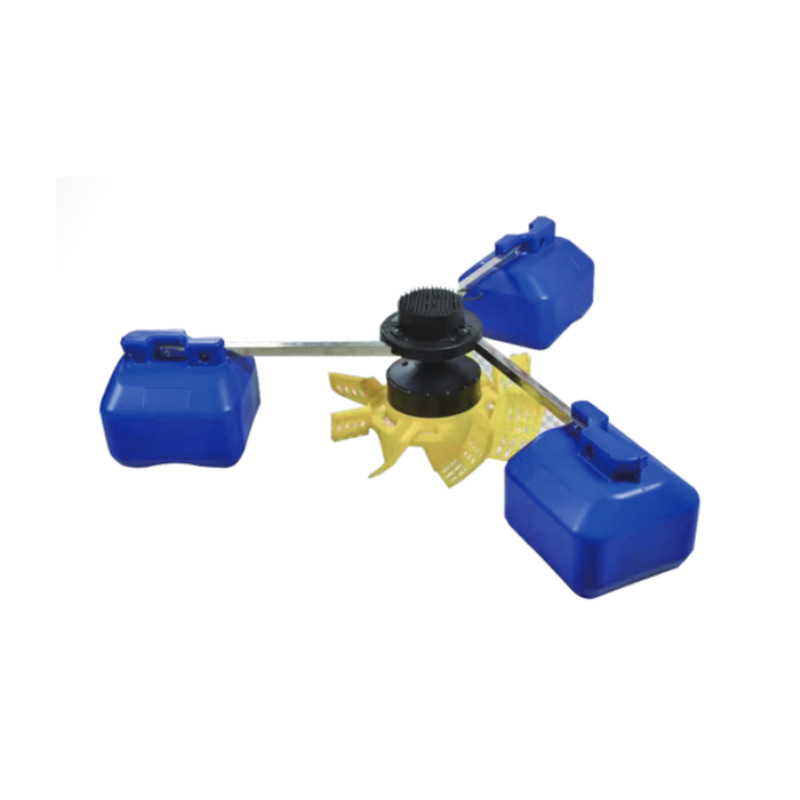
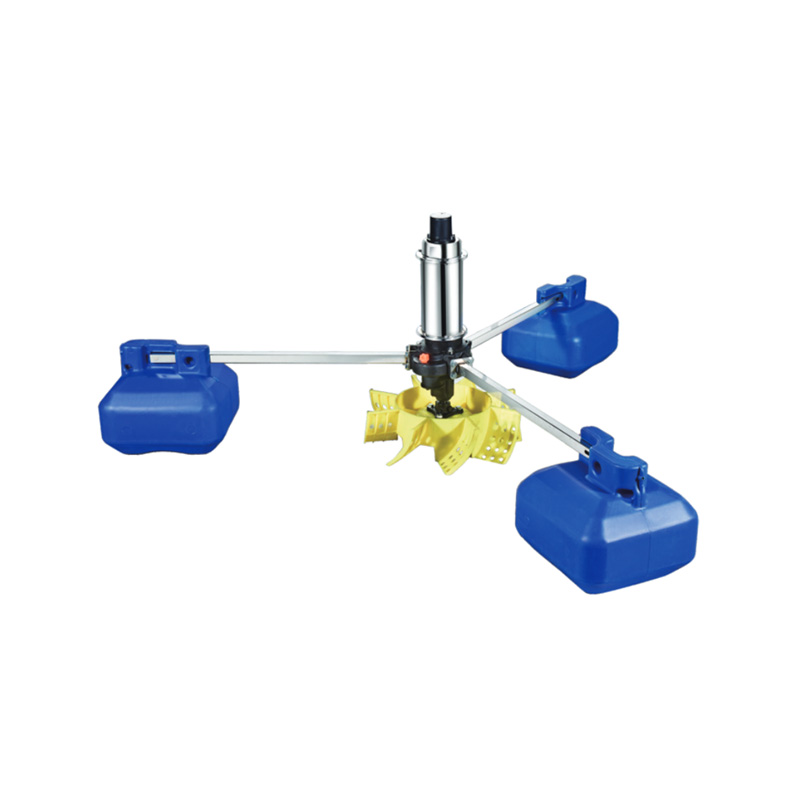
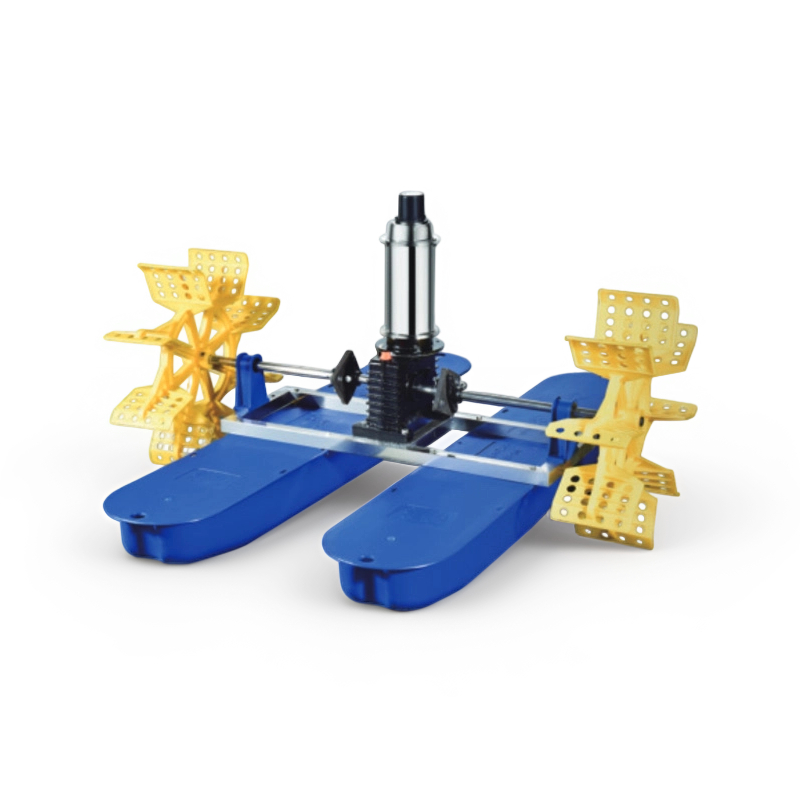
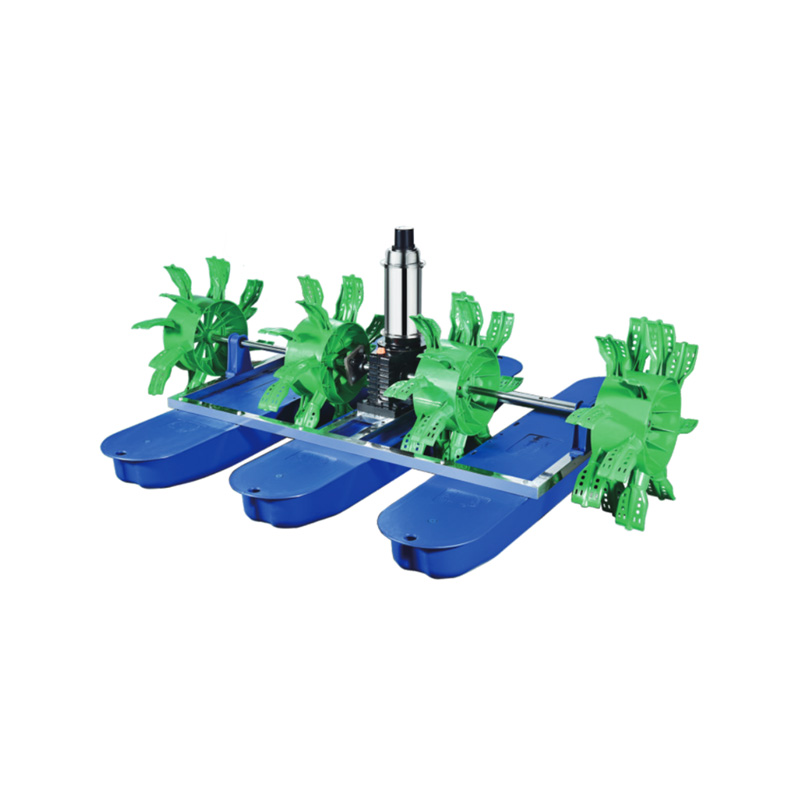
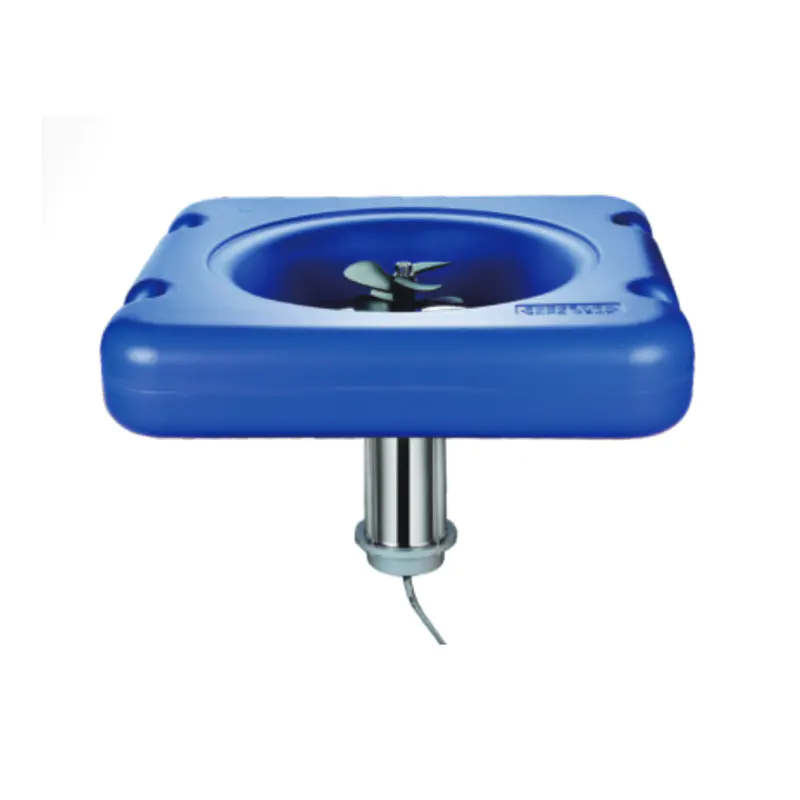
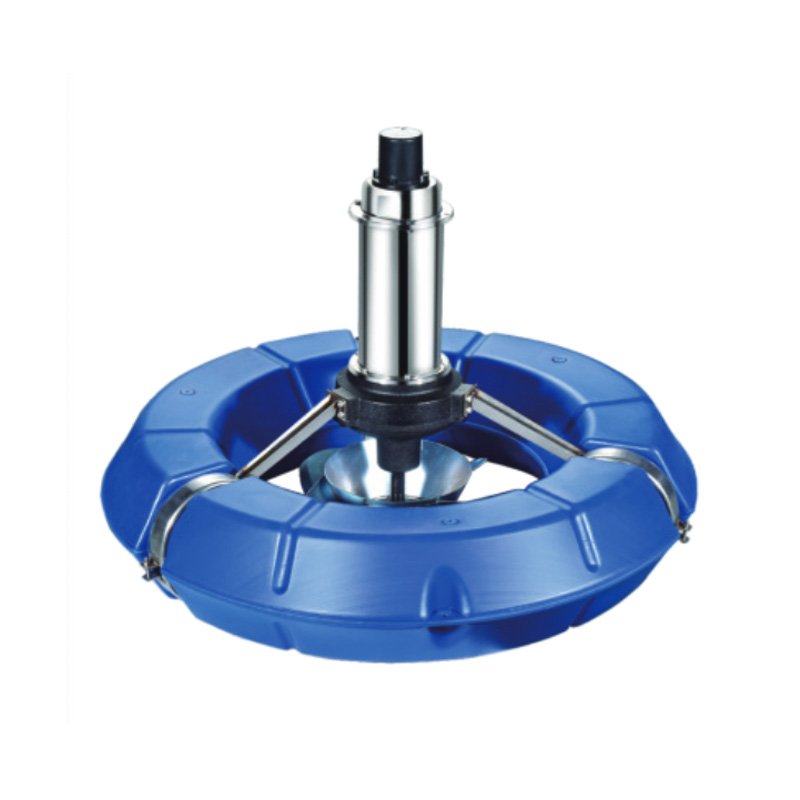
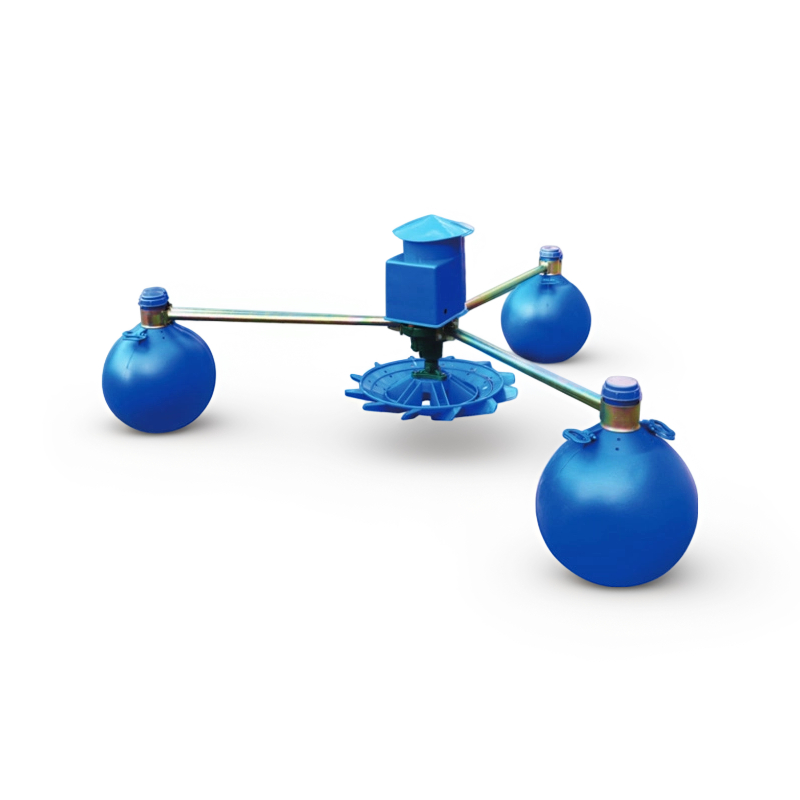
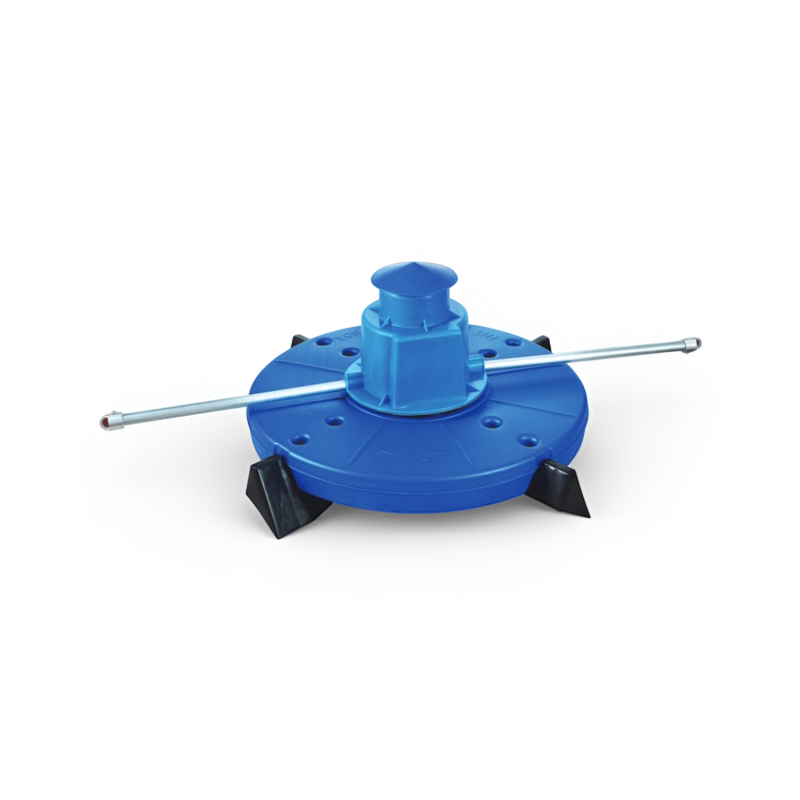
The paddle wheel aerator is a practical solution for aquaculture farms, fish ponds, shrimp ponds, ecological lakes, and other water management applications. Its rotating paddle wheel agitates and circulates the water surface, increasing contact between water and air while promoting oxygen transfer throughout the pond. The design supplied by Zhejiang ZhenTai Mechanical and Electrical Co., Ltd. combines a floating structure, nylon impeller, stainless steel shaft and frame, mechanical sealing, and an arc-shaped bevel gear transmission system.
Compared with conventional worm gear aerators, this transmission design is intended to reduce energy consumption while maintaining consistent aeration output. The manufacturer states that the system can save more than 20 percent energy compared with traditional worm gear models. For farms operating multiple aerators over long daily cycles, this improvement can contribute to lower operating expenses and better overall energy management.
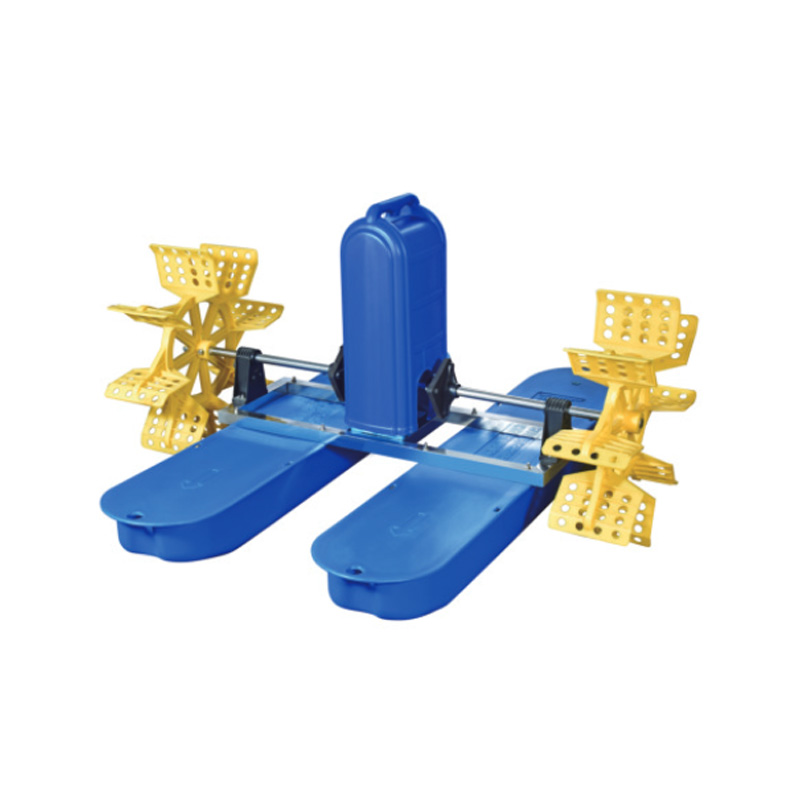
Paddle Wheel Aerator
Why Dissolved Oxygen Matters in Aquaculture
Dissolved oxygen is the oxygen present in water in a form that aquatic organisms can use. Oxygen enters pond water naturally through surface diffusion, photosynthesis, rainfall, wind, and water movement. However, natural oxygenation is often insufficient in intensively managed ponds. High stocking densities, warm weather, heavy feeding, algae fluctuations, and nighttime respiration can all reduce oxygen availability.
Aeration equipment helps address these challenges by increasing the water-air contact area and moving oxygen-depleted water toward the surface. A paddle wheel also creates circulation, helping distribute oxygen more evenly rather than leaving stagnant zones in corners, near pond bottoms, or around pond banks.
In shrimp and fish production, oxygen demand may change significantly during the production cycle. Larger animals require more oxygen, and biomass increases as the crop develops. Weather events can also change oxygen conditions quickly. Cloudy days may reduce photosynthesis, while hot conditions increase metabolic demand. During nighttime, photosynthesis stops but respiration continues. A dependable aerator allows operators to respond to these changes with a controlled and repeatable method.
Mechanical aeration is also important for maintaining a healthier pond environment. Better circulation can help distribute nutrients and temperature, reduce localized organic accumulation, and support more uniform water conditions. Although aeration cannot replace responsible feeding, water testing, sludge management, or disease prevention, it is a central part of a comprehensive pond management program.
Working Principle of a Paddle Wheel Aerator
A paddle wheel aerator uses an electric motor to rotate a set of paddles at the water surface. As the paddles enter and leave the water, they lift and splash water into the air. This action breaks the water into droplets and thin sheets, increasing the surface area exposed to atmospheric oxygen. At the same time, the rotating assembly generates horizontal circulation across the pond.
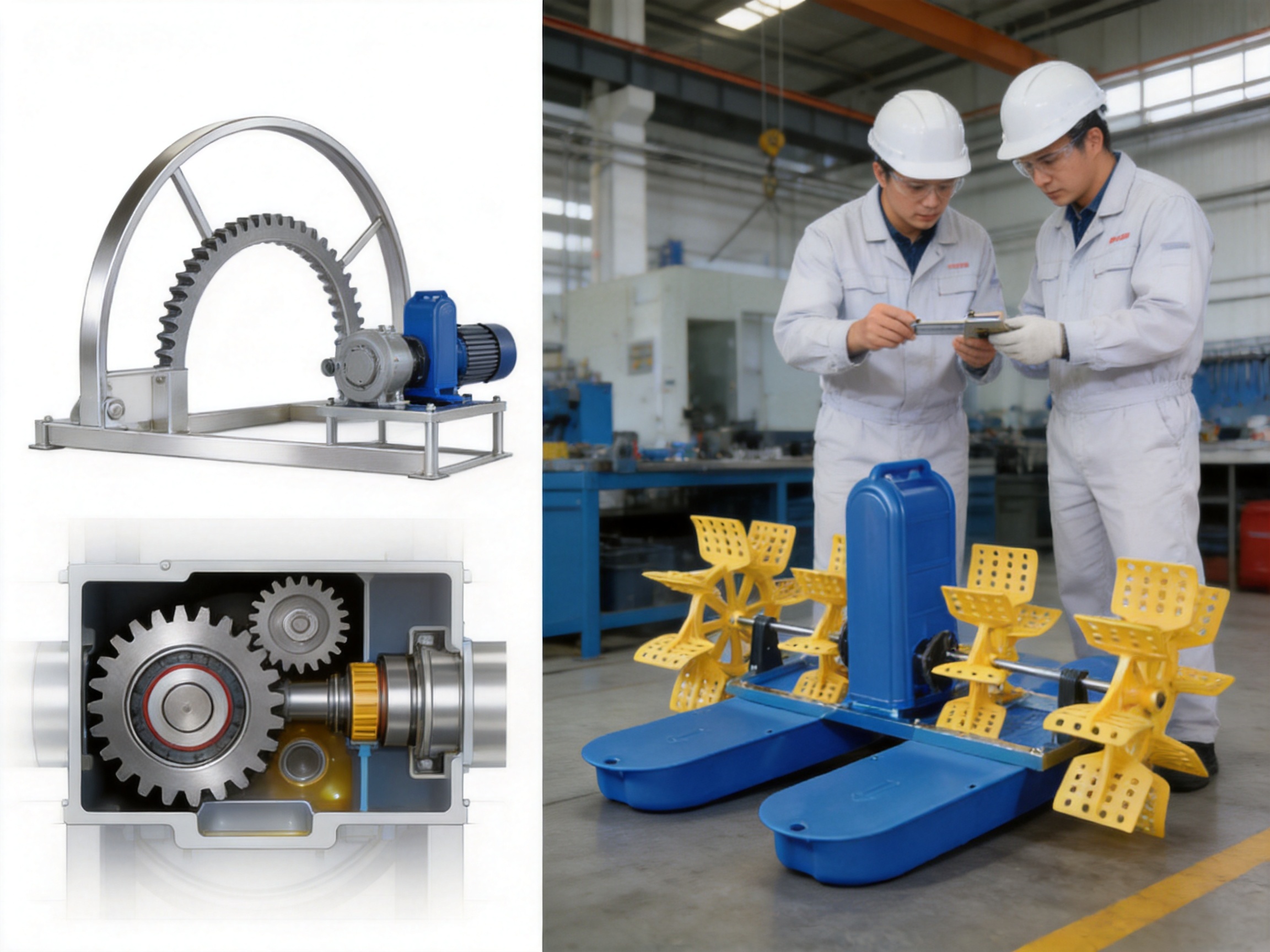
The motor transfers power through a gear system to the paddle wheel shaft. The arc-shaped bevel gear transmission used in this product is designed to transfer motion efficiently while maintaining stable rotation. The gear system replaces a traditional worm gear structure, which can experience greater friction and energy loss in certain operating conditions.
The aerator floats on the surface using plastic floats. The frame and shaft are made from stainless steel, providing a practical combination of strength, corrosion resistance, and suitability for outdoor water applications. The impeller is made from nylon, a lightweight material that can help reduce rotating mass while providing resistance to ordinary pond operating conditions.
During operation, the mechanical seal helps isolate the transmission and motor-related components from water and lubricating oil. The seal design is intended to reduce the possibility of oil leakage and protect internal components. A built-in motor protection device provides an additional safety function by helping reduce the risk of damage caused by abnormal operating conditions.
Key Product Advantages
Energy-Saving Arc-Shaped Bevel Gear Transmission
The most notable difference between this paddle wheel aerator and many conventional designs is its transmission system. Traditional worm gear mechanisms can provide useful reduction ratios, but they may also generate sliding friction and heat during operation. The arc-shaped bevel gear arrangement is designed to improve mechanical transmission efficiency through a more suitable gear engagement structure.
The stated energy saving is more than 20 percent compared with conventional worm gear models. Actual savings will depend on factors such as water depth, operating hours, electrical supply, loading, maintenance, and pond conditions. Even so, a more efficient transmission system can be especially valuable in commercial aquaculture facilities where aerators operate for many hours each day.
Lower energy consumption can provide several practical benefits. It can reduce electricity costs, decrease the load on generators or electrical distribution systems, and make it more economical to install several aerators for large ponds. It may also help operators maintain required oxygen conditions without increasing installed motor capacity unnecessarily.
Stable Aeration Performance
Energy efficiency is useful only when aeration performance remains stable. The paddle wheel configuration is designed to provide continuous water agitation and surface exposure. Stable rotation helps maintain consistent circulation and oxygen transfer during normal operation.
The available models provide oxygen transfer rates from at least 1.10 to 1.90 kg O₂ per hour, depending on motor power and configuration. The listed power efficiency is at least 1.25 kg O₂ per kilowatt-hour for the available models. These figures provide a useful basis for comparing capacity, but final equipment selection should consider pond size, animal biomass, water quality, local climate, desired oxygen levels, and the number of aerators operating simultaneously.
Durable Materials for Outdoor Use
Aquaculture equipment operates in a wet, chemically active environment. Water may contain salts, feed residues, fertilizers, cleaning chemicals, and biological matter. The use of stainless steel for the shaft and frame provides a stronger level of corrosion resistance than untreated ordinary steel. It also supports long-term structural stability where the equipment is repeatedly exposed to water and humid air.
The nylon impeller is lightweight and suitable for high-frequency rotation. Its lower weight can reduce the mechanical load on the drive system. Plastic floats provide buoyancy and support the aerator on the water surface while helping separate the operating components from direct immersion.
Material selection alone does not eliminate maintenance requirements. Operators should still inspect the equipment regularly, remove accumulated debris, check fasteners, and examine the shaft and seal. Proper cleaning and storage during extended shutdown periods can significantly improve service life.
Mechanical Seal for Oil Leakage Prevention
The mechanical seal is an important component in a surface aerator. It helps protect the drive assembly from water intrusion and helps prevent lubricating oil from escaping into the surrounding water. Oil leakage is undesirable in aquaculture because it may affect water quality and increase maintenance requirements.
A mechanical seal must be correctly installed and kept in good condition. Operators should look for signs of abnormal oil loss, water entry, unusual vibration, or changes in operating noise. If a seal becomes worn, replacement should be carried out promptly using compatible components and correct installation procedures.
Built-In Motor Protection
The motor includes a built-in protection device intended to help prevent damage under abnormal operating conditions. Such conditions may include overload, overheating, blocked rotation, or other electrical and mechanical problems, depending on the protection configuration used with the selected model.
Motor protection is an important advantage for equipment installed in remote pond areas, where immediate service may not always be available. However, built-in protection should not be considered a substitute for correct electrical installation. The power supply should include appropriate switching, grounding, circuit protection, and isolation equipment selected by a qualified electrician.
Technical Specifications
The following table summarizes the available model information provided for the paddle wheel aerator. Two versions of the ZT-1.5 model are listed with different voltage options. Buyers should confirm the required voltage, phase arrangement, frequency, wiring, and motor configuration before placing an order.
| Model | Voltage | Power | Oxygen Transfer Rate | Power Efficiency | No-Load Noise | Weight | 20-Foot Container Quantity |
| ZT-0.75 | 380 V | 0.75 kW | At least 1.10 kg O₂/h | At least 1.25 kg O₂/kWh | Not more than 78 dB(A) | 80 kg | 85 units |
| ZT-1.1 | 380 V | 1.1 kW | At least 1.25 kg O₂/h | At least 1.25 kg O₂/kWh | Not more than 80 dB(A) | 80 kg | 85 units |
| ZT-1.5 | 220 V | 1.5 kW | At least 1.90 kg O₂/h | At least 1.25 kg O₂/kWh | Not more than 80 dB(A) | 100 kg | 70 units |
| ZT-1.5 | 380 V | 1.5 kW | At least 1.90 kg O₂/h | At least 1.25 kg O₂/kWh | Not more than 80 dB(A) | 100 kg | 70 units |
The oxygen transfer figures should be interpreted as reference performance values under specified test conditions. Oxygen transfer can vary with water temperature, salinity, atmospheric pressure, water depth, pond geometry, and test methodology. In a commercial installation, the total required capacity should be determined by considering peak oxygen demand rather than average daily demand alone.
Comparing the Design with Conventional Aerators
Different aerator types serve different purposes. Diffused air systems use blowers and submerged air lines to release air bubbles into the water. Vertical pump aerators draw water upward and spray it into the air. Paddle wheel aerators rely on surface agitation and horizontal circulation. The best choice depends on pond shape, depth, stocking density, available power, and the operator’s management practices.
Within the paddle wheel category, transmission efficiency is a major comparison point. A conventional worm gear aerator may be familiar and economical to purchase, but its sliding gear action can produce more frictional loss. The arc-shaped bevel gear system in this product is designed to improve power transmission and reduce energy consumption while maintaining stable paddle rotation.
The product also combines several features in one design: a floating platform, stainless steel structure, nylon impeller, mechanical seal, built-in motor protection, and multiple voltage and power options. These features can make it suitable for dealers and farm operators seeking a standard aerator platform that can be adapted to different pond sizes and electrical conditions.
Another competitive advantage is the manufacturer’s product range. In addition to floating and paddle wheel aerators, the company develops impeller aerators, water wheel aerators, submersible pumps, water pumps, and air blowers. This broader product capability can help customers source complementary equipment from one supplier, particularly when a project requires aeration, drainage, water transfer, or circulation equipment.
Manufacturing and Engineering Strengths
Product Development Experience
Zhejiang ZhenTai Mechanical and Electrical Co., Ltd. was established in 2018 in Wenling, Zhejiang Province, China. The company develops and produces more than 90 products across 10 series. Its product categories include floating aerators, impeller aerators, water wheel aerators, water pumps, submersible pumps, and air blowers.
A broad product portfolio can support practical engineering development because the manufacturer works with different motor, pump, transmission, sealing, flotation, and water-handling requirements. Experience across these categories can contribute to better component matching and more complete support for aquaculture and irrigation projects.
Gear Material and Surface Treatment
The gear system uses chromium-manganese-titanium alloy steel. Alloying elements can help improve the strength and wear resistance of gear components when the material is properly processed. The gear surface receives carburizing and nitriding hardening treatment. These processes are used to increase surface hardness while retaining a tougher internal structure.
For a transmission system operating under repeated loads, surface hardness is important because gear teeth must resist wear, pitting, and deformation. A hardened surface can support longer service life when the gears are correctly lubricated and aligned. The internal toughness of the gear body is also important because excessively brittle components can be vulnerable to impact or cracking.
The actual performance of any gear set depends on more than material selection. Tooth geometry, heat treatment control, machining accuracy, lubrication, bearing support, assembly alignment, and inspection standards all affect operating reliability. The arc-shaped bevel gear concept is therefore most effective when supported by disciplined manufacturing and quality control.
Mechanical and Electrical Integration
A paddle wheel aerator is not simply a motor attached to a rotating wheel. The motor, gear system, shaft, impeller, float, frame, seal, and protective device must work together as an integrated unit. Incorrect alignment can cause vibration, noise, seal wear, or uneven loading. The manufacturer’s focus on mechanical and electrical equipment allows these elements to be developed as a coordinated assembly.
The stainless steel frame and shaft provide structural support for the rotating components. The floats maintain the correct operating position at the water surface. The motor and gear system deliver the necessary torque. The impeller converts rotational power into water movement, while the mechanical seal helps protect the transmission area. Each component contributes to the overall performance of the aerator.
Quality-Oriented Production
Reliable manufacturing requires attention to incoming materials, machining, heat treatment, assembly, electrical testing, and final inspection. For this type of product, useful inspection points may include gear dimensions, hardness, shaft straightness, bearing condition, seal installation, motor insulation, current draw, vibration, rotation direction, float balance, and operating noise.
Final testing helps identify problems before shipment. A unit that runs smoothly during inspection is more likely to provide a straightforward installation experience for the customer. Dealers and project contractors can also benefit from consistent specifications, standardized spare parts, and repeatable assembly procedures.
The company emphasizes quality, integrity, continuous technological innovation, reliable products, customized OEM and ODM services, and professional technical support. These capabilities are relevant to international buyers who may require private labeling, product configuration, packaging changes, documentation, or adjustments for local electrical standards.
Installation Recommendations
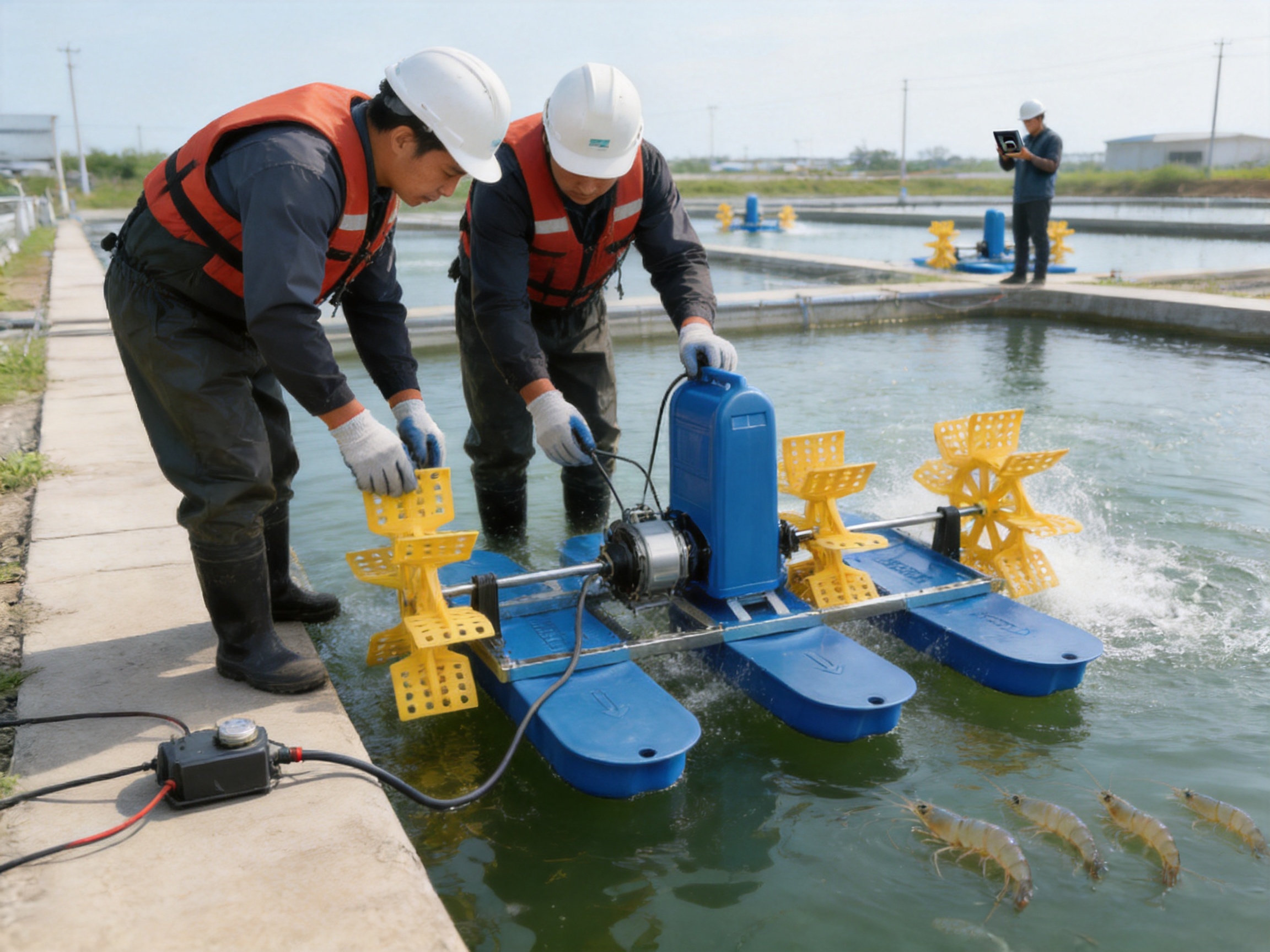
Correct installation is essential for safe operation and effective aeration. Before placing the unit in the pond, inspect the floats, frame, shaft, impeller, gear housing, motor, seal, and fasteners. Confirm that no parts were damaged during transportation and that all components are securely fixed.
The aerator should be installed on a stable section of the water surface with enough clearance for the paddle wheel to rotate freely. The unit should not be placed where pond banks, cages, nets, pipes, vegetation, or floating debris can contact the impeller. Adequate space around the unit allows water to circulate and makes future maintenance easier.
Electrical installation should be completed by qualified personnel. The power supply must match the selected model. The listed products include 220 V and 380 V configurations, so operators should verify the voltage before connection. The electrical system should include suitable overload protection, grounding, an emergency disconnect, and weather-resistant connections.
Before starting the aerator, check that the shaft rotates without obstruction. Confirm that the gear housing contains the correct lubricant and that there are no visible signs of leakage. Make sure the floating structure is balanced and that the aerator sits at the intended operating level.
After startup, observe the direction of rotation, water movement, noise, vibration, and current condition. A small amount of normal operating noise is expected, but sudden knocking, grinding, excessive vibration, or unstable rotation may indicate a mechanical or electrical problem. Stop the unit immediately if abnormal behavior occurs and investigate before resuming operation.
Operation in Fish and Shrimp Ponds
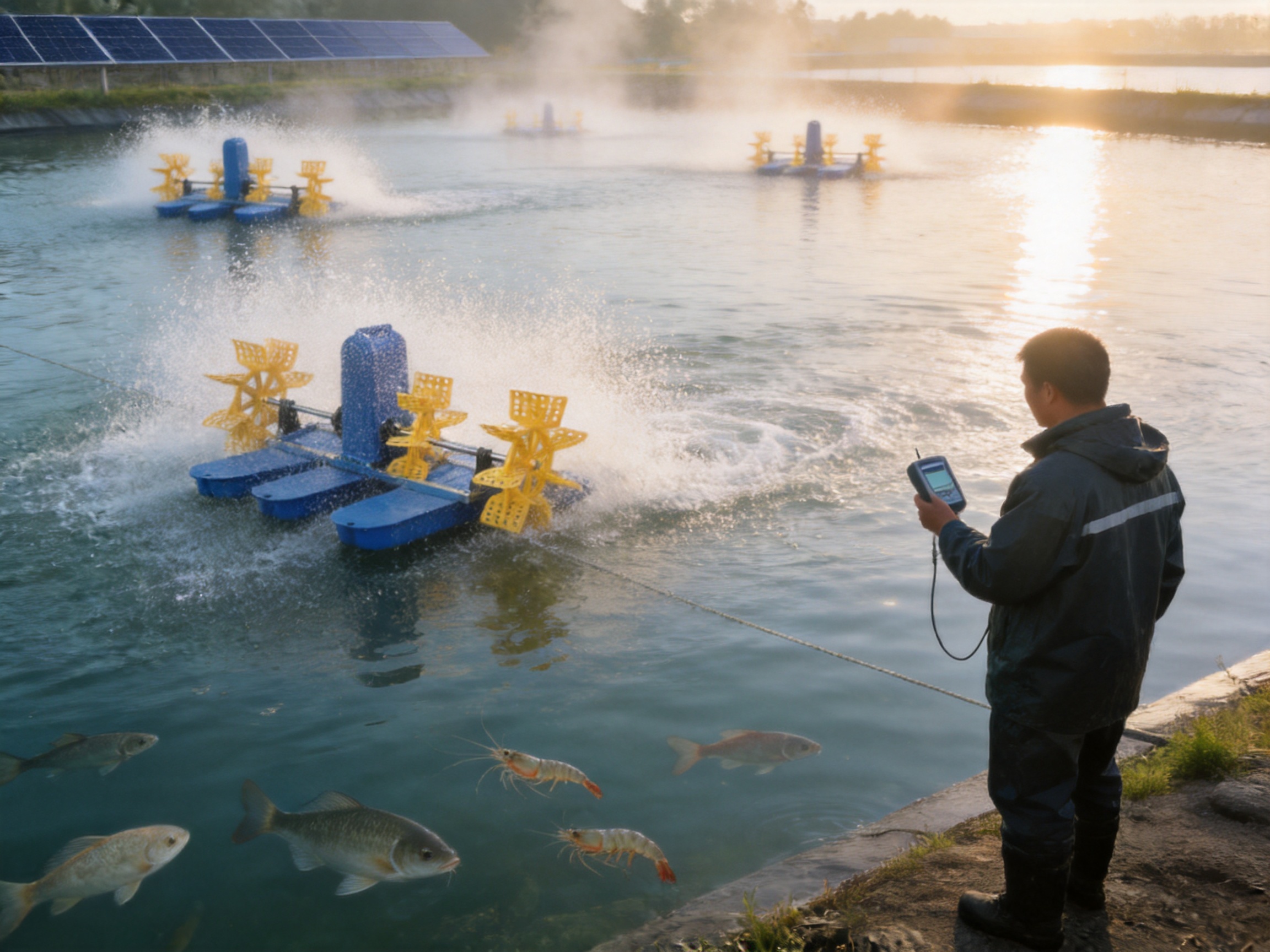
Aerator operation should be coordinated with the farm’s water quality program. Operators may use dissolved oxygen meters to determine when aeration is needed and to identify areas that require greater circulation. Automatic timers, sensors, or control panels can help manage operating periods, although control settings should be adjusted according to local conditions and production objectives.
Many pond operators increase aeration during the night and early morning, when photosynthesis is absent and oxygen levels may be at their lowest. Additional aeration may be required after heavy feeding, during hot weather, after prolonged cloudy conditions, or when animals show signs of stress. The precise schedule depends on stocking density, species, water depth, algae activity, and farm management practices.
For large ponds, several aerators may be arranged to create a circulation pattern rather than simply concentrating water movement in one area. The installation layout should avoid dead zones and excessive current near delicate stock or pond structures. The number and position of units should be planned using pond geometry and operational experience.
In shrimp ponds, circulation is particularly important because organic solids may accumulate in certain areas. Paddle wheel movement can help guide water and suspended material toward collection or discharge zones, depending on pond design. Aeration should be combined with responsible feeding, periodic water testing, bottom management, and appropriate biosecurity practices.
Maintenance and Service Practices
Regular maintenance protects efficiency and reduces the likelihood of unexpected downtime. Before maintenance begins, disconnect the power supply and ensure that the equipment cannot restart accidentally. Never place hands or tools near a rotating paddle wheel while the motor is energized.
Daily or Routine Checks
Operators should observe the aerator during operation and listen for changes in sound. They should check for abnormal vibration, uneven flotation, reduced water movement, visible oil leakage, and loose fasteners. Any floating rope, net, plant material, or other debris should be removed safely after the unit has been switched off and isolated.
Periodic Mechanical Inspection
The shaft, frame, paddle wheel, gear housing, bearings, and mounting points should be inspected periodically. Check whether the shaft remains straight and whether the impeller is securely attached. Examine the nylon paddles for cracks, distortion, excessive wear, or missing sections. Damaged paddles can reduce aeration performance and create imbalance.
The gear system should be checked for proper lubrication and signs of wear. The condition of the mechanical seal is especially important. Oil around the housing, water entering the gear chamber, or repeated loss of lubricant may indicate that the seal requires service.
Electrical Inspection
Inspect cables, terminals, grounding connections, switches, and protective devices. Outdoor electrical components should be protected from moisture and mechanical damage. If the motor repeatedly trips its protection device, do not bypass the protection or continue restarting the unit. Investigate possible overload, blocked rotation, low voltage, phase problems, insulation failure, or other faults.
Planned maintenance is normally less costly than emergency replacement. Keeping records of operating hours, inspections, seal changes, lubricant changes, and unusual events can help operators identify developing problems and schedule service before peak production periods.
Environmental and Economic Benefits
Energy-efficient aeration can reduce the cost of maintaining suitable pond conditions. Because aerators may operate for many hours, even a moderate reduction in energy consumption can become meaningful over a full production cycle. The stated energy saving of more than 20 percent compared with conventional worm gear models provides a useful reason to evaluate the product for new installations or replacement projects.
Lower energy demand can also support farms that rely on generators, solar-assisted systems, or limited electrical infrastructure. A more efficient unit may allow a farm to operate more aerators within the available electrical capacity. This can improve operational flexibility during high-demand periods.
Efficient equipment may reduce indirect environmental impacts associated with electricity generation. However, the environmental performance of an aerator also depends on its service life, repairability, material use, packaging, and end-of-life handling. Durable components, replaceable wear parts, and proper maintenance can help extend the useful life of the equipment.
From an economic perspective, the total cost of ownership includes the purchase price, electricity, maintenance, spare parts, labor, downtime, and expected service life. An inexpensive unit that consumes more power or requires frequent repairs may cost more over time than a better-engineered model with higher efficiency and stable operation.
Applications Beyond Aquaculture
Although the primary application is fish and shrimp pond aeration, paddle wheel aerators may also be used in ecological lakes, landscape ponds, wastewater holding areas, and other water management environments where surface agitation and circulation are required. The exact suitability depends on water chemistry, regulatory requirements, contamination risks, and the desired oxygen transfer rate.
In ecological landscape lakes, the aerator can help improve surface movement and reduce stagnant areas. In certain water treatment or holding applications, surface aeration may support biological processes that require oxygen. Operators should confirm that the materials, motor configuration, and maintenance procedures are appropriate for each specific environment.
The company’s wider range of submersible pumps, water pumps, and air blowers also supports applications such as irrigation, building foundation drainage, environmental protection, chemical industries, household water supply, flood control, and ecological water management. This diversified product capability can be useful for distributors serving several industries.
Choosing the Right Model
Model selection should begin with the available electrical supply. The listed paddle wheel aerators include 380 V models at 0.75 kW and 1.1 kW, as well as 220 V and 380 V versions at 1.5 kW. Using the wrong voltage can damage the motor or create a serious safety hazard, so electrical compatibility must be confirmed before purchase.
The required oxygen capacity is the next consideration. Operators should estimate peak oxygen demand based on species, biomass, water temperature, feeding rate, pond depth, and emergency operating requirements. The oxygen transfer values in the specification table can then be used as reference points for determining the number of aerators required.
Pond shape and circulation requirements also influence the decision. A long or irregular pond may need multiple smaller units positioned strategically, while a compact pond may be served by fewer higher-capacity units. The position of the aerators should support circulation without creating excessive turbulence or damaging pond liners and structures.
Buyers should also evaluate shipping and logistics. The listed container quantities are 85 units for the ZT-0.75 and ZT-1.1 models and 70 units for the ZT-1.5 models in a 20-foot container. Actual loading may vary according to packaging, spare parts, pallet configuration, and shipping regulations. Dealers should confirm final packing details with the supplier.
OEM, ODM, and International Supply Support
International buyers often require more than a standard product. They may need different voltage configurations, language-specific manuals, customized labels, special packaging, spare parts packages, or product changes for a particular market. OEM and ODM support can help distributors create a product offering that matches local requirements.
A manufacturer with experience in motors, pumps, aerators, and related equipment is better positioned to discuss practical customization. Changes to electrical components, flotation parts, frame dimensions, transmission ratios, or packaging should be evaluated carefully because each modification can affect performance, safety, cost, and certification requirements.
Professional technical support is also valuable after delivery. Installation guidance, troubleshooting assistance, spare parts identification, and maintenance recommendations can reduce downtime for overseas customers. For dealers, responsive communication can strengthen customer service and simplify after-sales management.
Zhejiang ZhenTai Mechanical and Electrical Co., Ltd. is located in Zhaoyang Industrial Park, Daxi Town, Wenling City, Zhejiang Province, China. The company supplies equipment for aquaculture farms, irrigation projects, drainage applications, environmental protection, and other water management needs. Its focus on product development and international customer support makes it a potential partner for distributors and project buyers seeking a broader equipment range.
Safety Considerations
Safety should be considered during installation, operation, inspection, and removal. The paddle wheel creates moving mechanical parts and should never be approached while energized. Warning signs and physical barriers may be appropriate around ponds accessible to workers or the public.
Electrical work must be performed by qualified personnel using equipment rated for wet and outdoor conditions. Grounding and residual-current protection should be applied according to local regulations. Cables should be routed to prevent damage from vehicles, farm equipment, animals, water movement, and sharp edges.
Do not operate the aerator if the float is damaged, the frame is unstable, the impeller is cracked, or the gear housing is leaking. Do not modify protective devices or remove guards unless the unit has been fully isolated and the work is performed by trained service personnel.
When lifting or moving the equipment, use suitable methods because the listed unit weights range from approximately 80 to 100 kilograms. Lifting points, packaging instructions, and safe handling procedures should be followed to reduce the risk of injury or structural damage.
Frequently Asked Questions
What is the main function of a paddle wheel aerator?
The main function is to increase dissolved oxygen and circulate pond water. The rotating paddle wheel splashes water into the air, increases water-air contact, and moves water across the pond surface.
How does this design save energy?
The aerator uses an arc-shaped bevel gear transmission instead of a conventional worm gear structure. The manufacturer states that the design can reduce energy consumption by more than 20 percent compared with traditional worm gear models. Actual savings depend on operating conditions and maintenance.
What materials are used in the aerator?
The floats are made from plastic, the impeller is made from nylon, and the shaft and frame are made from stainless steel. The gears use chromium-manganese-titanium alloy steel with carburizing and nitriding hardening treatment.
Which electrical models are available?
The available specifications include 380 V models at 0.75 kW and 1.1 kW, plus 1.5 kW models available in both 220 V and 380 V versions. Buyers should confirm the exact electrical configuration before ordering.
What is the oxygen transfer capacity?
The listed oxygen transfer rates range from at least 1.10 kg O₂ per hour for the 0.75 kW model to at least 1.90 kg O₂ per hour for the 1.5 kW models. Actual field performance can vary according to water and operating conditions.
Is the aerator suitable for shrimp ponds?
Yes. The product is designed for aquaculture applications including fish and shrimp ponds. The correct number and placement of units should be selected according to shrimp biomass, pond size, water depth, stocking density, and oxygen demand.
Why is the mechanical seal important?
The mechanical seal helps protect the transmission area and reduce the possibility of lubricating oil leaking into the water. It should be inspected regularly and replaced when signs of wear or leakage appear.
Does the aerator require regular maintenance?
Yes. Operators should inspect the impeller, shaft, frame, floats, fasteners, gear housing, lubricant, mechanical seal, electrical connections, and motor protection system. Regular maintenance helps preserve performance and reduce unplanned downtime.
Can the product be customized?
The manufacturer provides OEM and ODM services for global buyers. Possible requirements may include labeling, packaging, electrical configuration, documentation, and selected product modifications. Customization should be discussed and technically reviewed before production.
How should the aerator be installed?
Install it securely on the water surface in an area free from obstructions. Confirm that the floats are balanced, the paddle wheel can rotate freely, the power supply matches the model, and all electrical connections are safely grounded and protected.
What should an operator do if the motor trips?
Switch off and isolate the power supply, then investigate the cause. Possible causes include overload, blocked rotation, low voltage, phase imbalance, damaged wiring, or mechanical failure. The protective device should not be bypassed, and the unit should not be repeatedly restarted without inspection.
Conclusion
The paddle wheel aerator provides a practical and efficient method for increasing dissolved oxygen and circulating water in fish ponds, shrimp ponds, aquaculture farms, and selected water management applications. Its arc-shaped bevel gear transmission is designed to improve energy performance compared with traditional worm gear systems, with stated energy savings of more than 20 percent.
The combination of stainless steel structural components, a nylon impeller, plastic floats, mechanical sealing, built-in motor protection, and multiple power configurations gives the product a balanced design for commercial pond operations. The listed models provide oxygen transfer capacity from at least 1.10 to 1.90 kg O₂ per hour, allowing buyers to select equipment according to the size and oxygen demand of their installation.
Product performance depends on correct model selection, secure installation, appropriate electrical protection, suitable operating schedules, and regular maintenance. When these factors are managed properly, the aerator can support healthier pond conditions, more stable production, and improved energy control.
Supported by experience in aerators, pumps, blowers, and related mechanical and electrical equipment, Zhejiang ZhenTai Mechanical and Electrical Co., Ltd. offers a broader supply capability for aquaculture and water management customers. Its manufacturing focus, alloy gear treatment, integrated product development, and OEM/ODM support make the paddle wheel aerator a suitable option for farms, dealers, contractors, and international distributors seeking dependable pond aeration equipment.
References
1. Zhejiang ZhenTai Mechanical and Electrical Co., Ltd. Product specifications for paddle wheel aerators.
2. Zhejiang ZhenTai Mechanical and Electrical Co., Ltd. Company information and product range documentation.
3. General aquaculture engineering principles concerning dissolved oxygen, pond circulation, and mechanical aeration.
4. General gear engineering principles concerning bevel gear transmission, carburizing, nitriding, wear resistance, and lubrication.
5. General electrical safety practices for outdoor motor-driven equipment in wet environments.