 English
 Español
 Indonesia
A reliable aeration system is one of the most important pieces of equipment in modern aquaculture. Fish, shrimp, and other aquatic organisms require sufficient dissolved oxygen to grow, feed, reproduce, and remain healthy. When oxygen levels fall, pond animals become stressed, feed conversion may deteriorate, harmful gases can accumulate, and mortality can occur rapidly. For this reason, pond operators need aerators that provide stable oxygen transfer, dependable circulation, efficient energy use, and long service life.
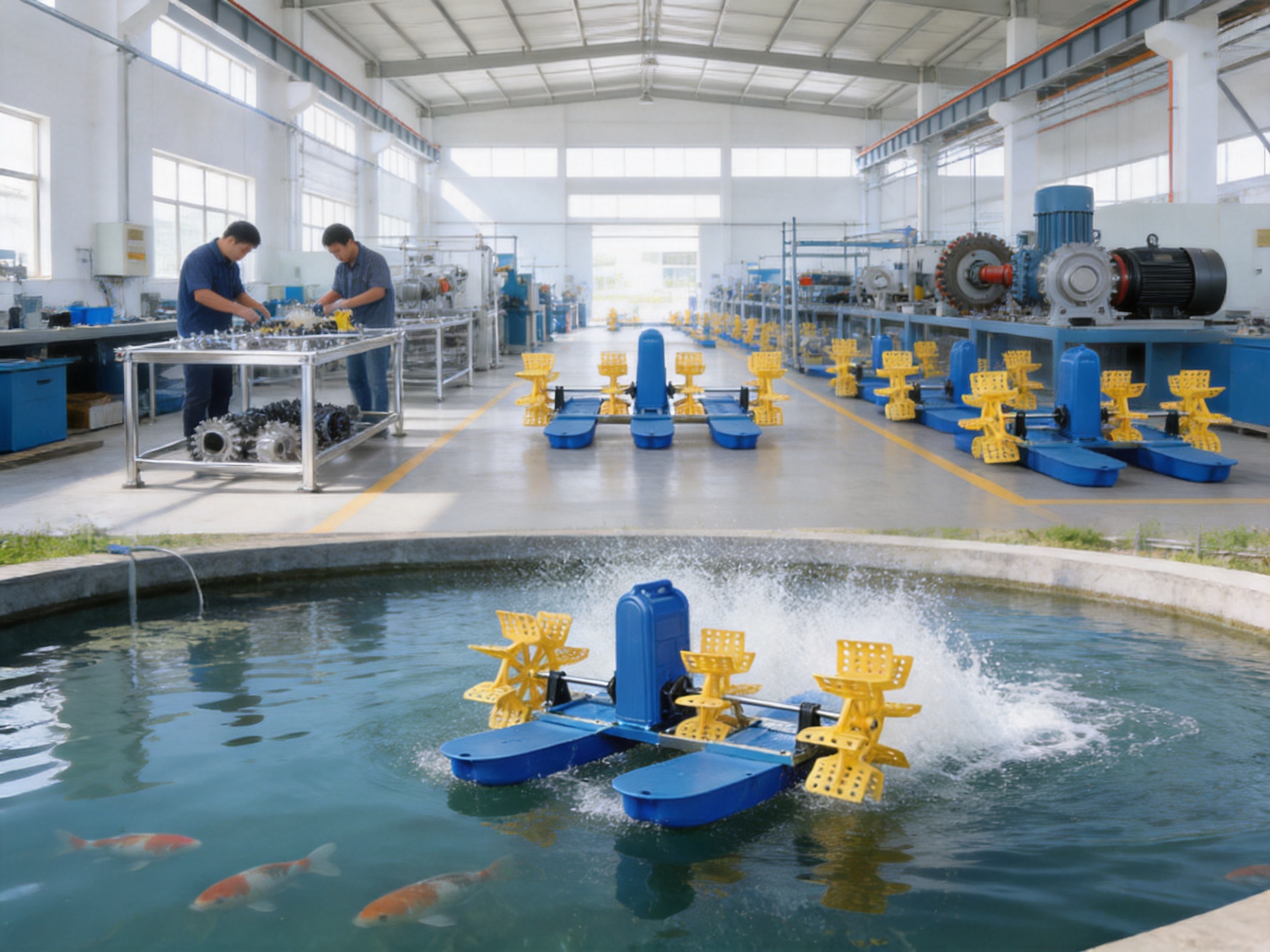
The paddle wheel aerator described in this article is designed for fish ponds, shrimp ponds, aquaculture farms, ecological lakes, and other water environments where mechanical oxygenation is required. It combines an electric motor, a redesigned arc-shaped bevel gear transmission system, nylon paddle wheels, stainless steel structural components, floating supports, a mechanical seal, and a built-in motor protection device. The result is a practical surface aeration solution that focuses on oxygen transfer, operating efficiency, durability, and ease of maintenance.
Manufactured by Zhejiang ZhenTai Mechanical and Electrical Co., Ltd., the product is supported by an established industrial production background in Wenling, Zhejiang Province, China. The company develops and produces aerators, water pumps, submersible pumps, air blowers, and related equipment for aquaculture, irrigation, drainage, environmental protection, and industrial applications. Its product range includes more than 90 products across 10 series, providing customers with access to a broader equipment portfolio and technical support capability.
Why Paddle Wheel Aeration Matters in Aquaculture
Dissolved oxygen is a central operating factor in aquaculture. Fish and shrimp consume oxygen continuously, while microorganisms also require oxygen to break down organic matter. Uneaten feed, animal waste, algae, and suspended solids can increase the oxygen demand of pond water. During periods of high stocking density, warm weather, cloudy conditions, or nighttime respiration, natural oxygen replenishment may not be sufficient.
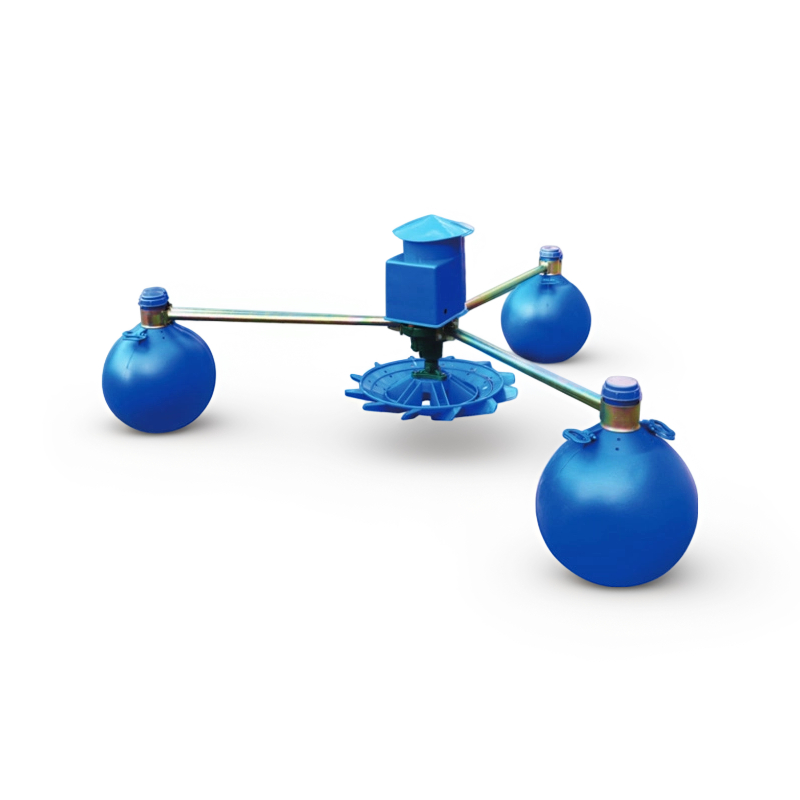
A paddle wheel aerator addresses this problem by mechanically agitating the water surface. As the impellers rotate, their paddles lift and move water, increasing the contact between water and air. This movement supports oxygen transfer and helps distribute oxygenated water throughout the pond. The circulation effect can also reduce stagnant areas, improve water movement, and help create a more uniform pond environment.
In shrimp farming, pond oxygenation is particularly important because shrimp are sensitive to sudden changes in water quality. In fish farming, a lack of oxygen can cause fish to gather near the surface, stop feeding, or become vulnerable to disease. Continuous or scheduled operation of an efficient aerator can therefore support better management of water quality and reduce the risks associated with oxygen depletion.
A properly selected aerator should not be judged only by motor power. Other factors include oxygen transfer rate, power efficiency, mechanical transmission design, sealing performance, materials, noise, weight, installation requirements, and long-term serviceability. The paddle wheel aerator combines these considerations in one integrated design.
Product Overview
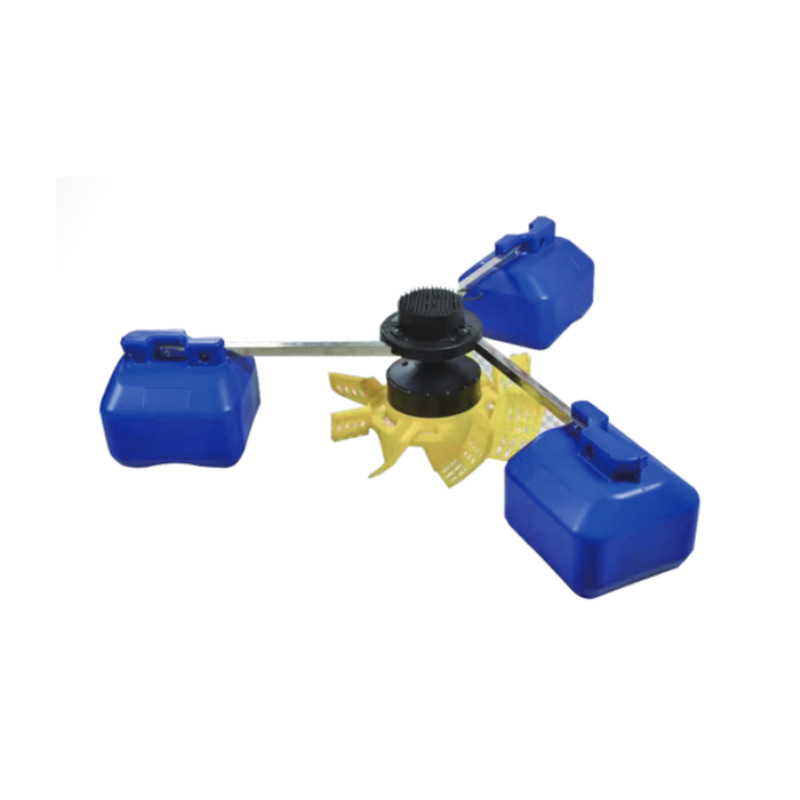
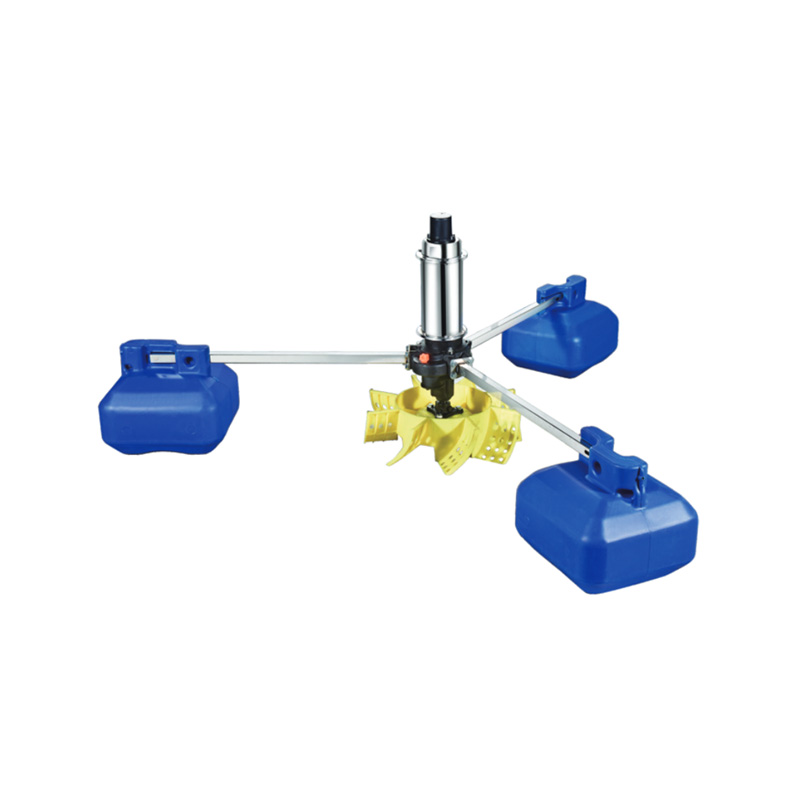
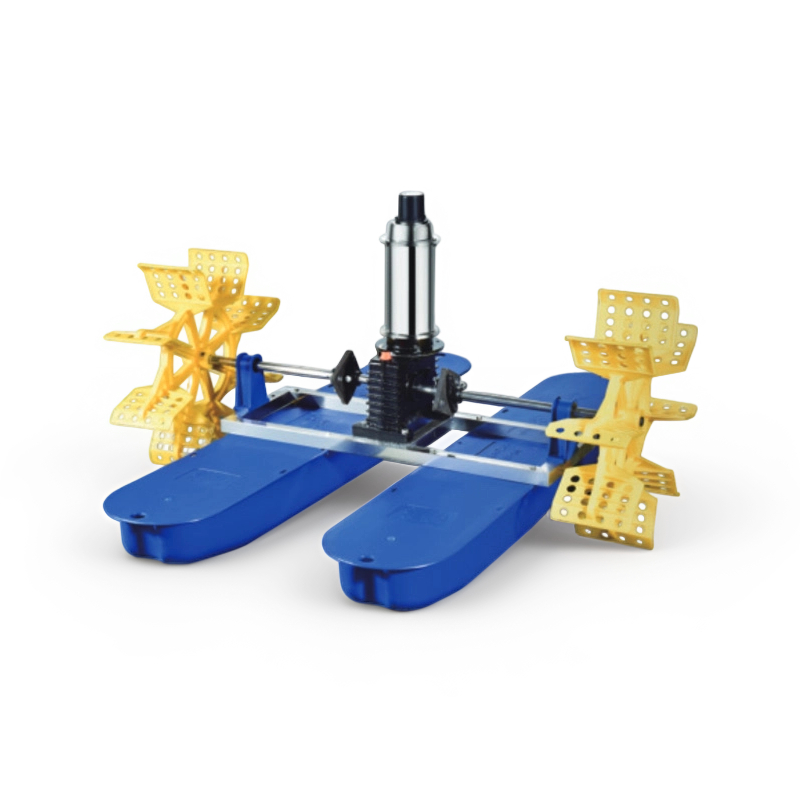
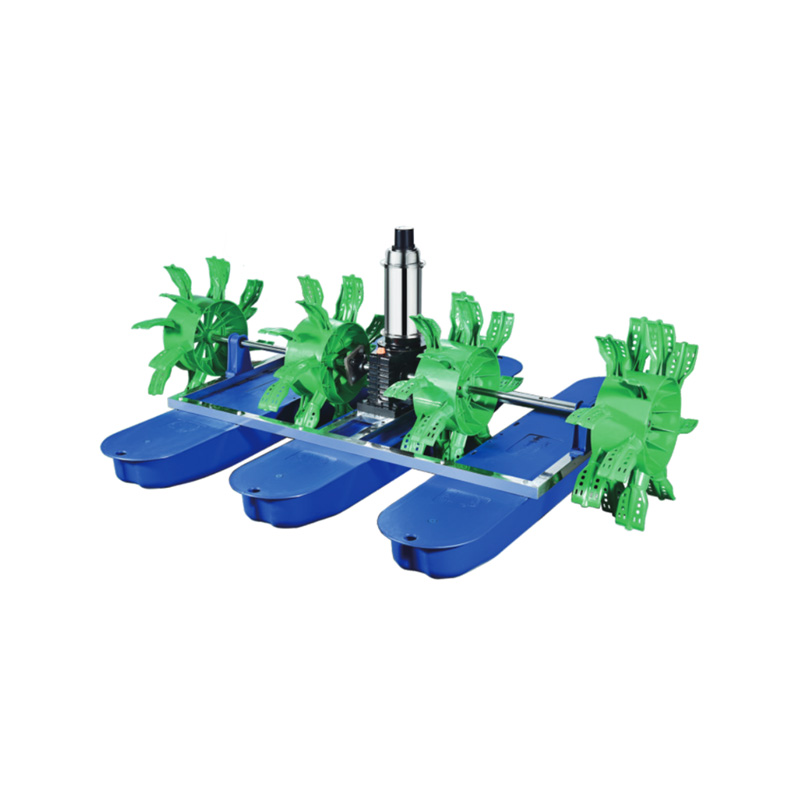
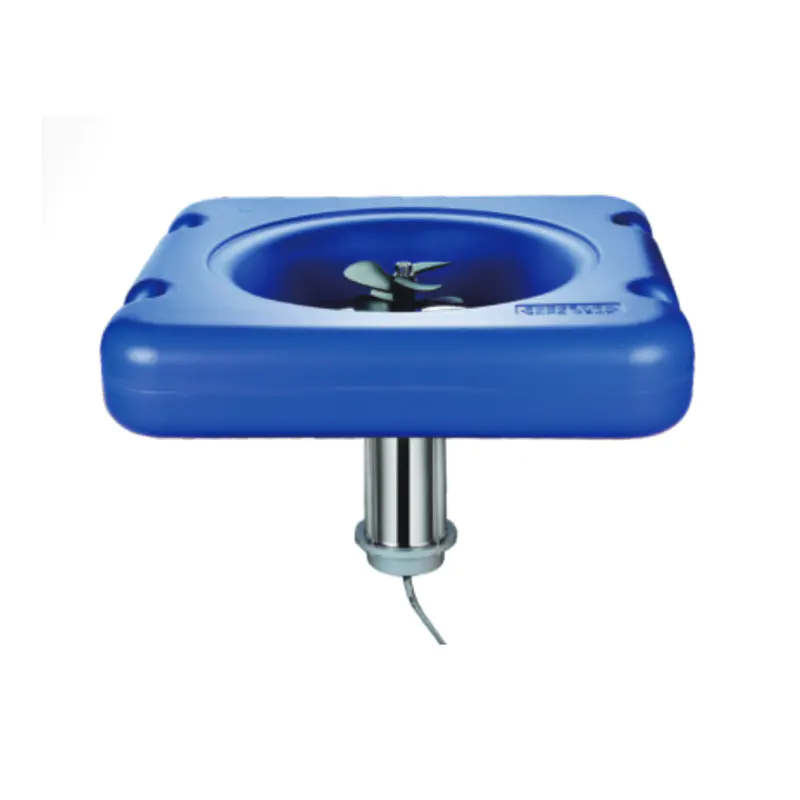
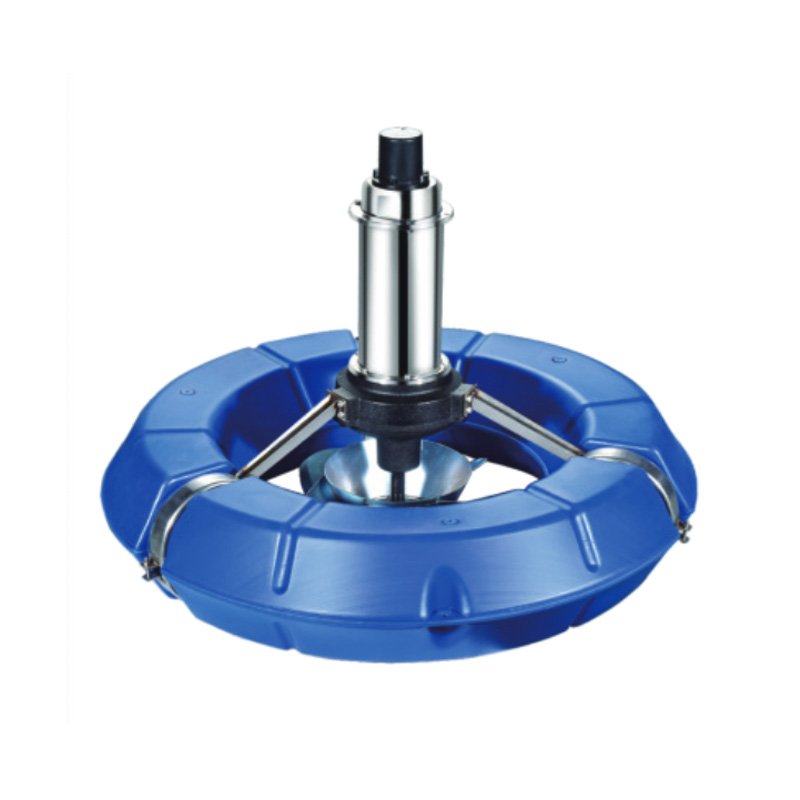
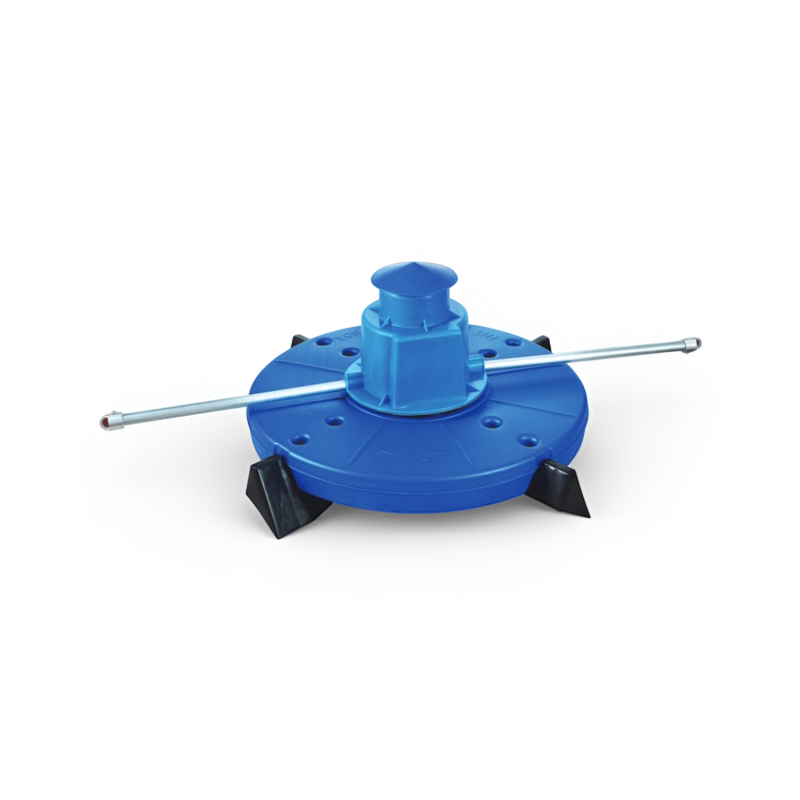
This electric paddle wheel aerator is available in several configurations with rated power options of 0.75 kW, 1.1 kW, and 1.5 kW. The listed voltage options include 220 V and 380 V, allowing buyers to select a model that matches the available electrical infrastructure. The equipment is designed to operate on the water surface using floating supports made from plastic, while the shaft and frame are manufactured from stainless steel.
The impeller is made from nylon. Nylon is a practical material for paddle wheel applications because it provides a combination of low weight, mechanical strength, corrosion resistance, and suitability for wet operating environments. A lighter impeller can reduce the load placed on the drive system and can simplify handling during installation or maintenance.
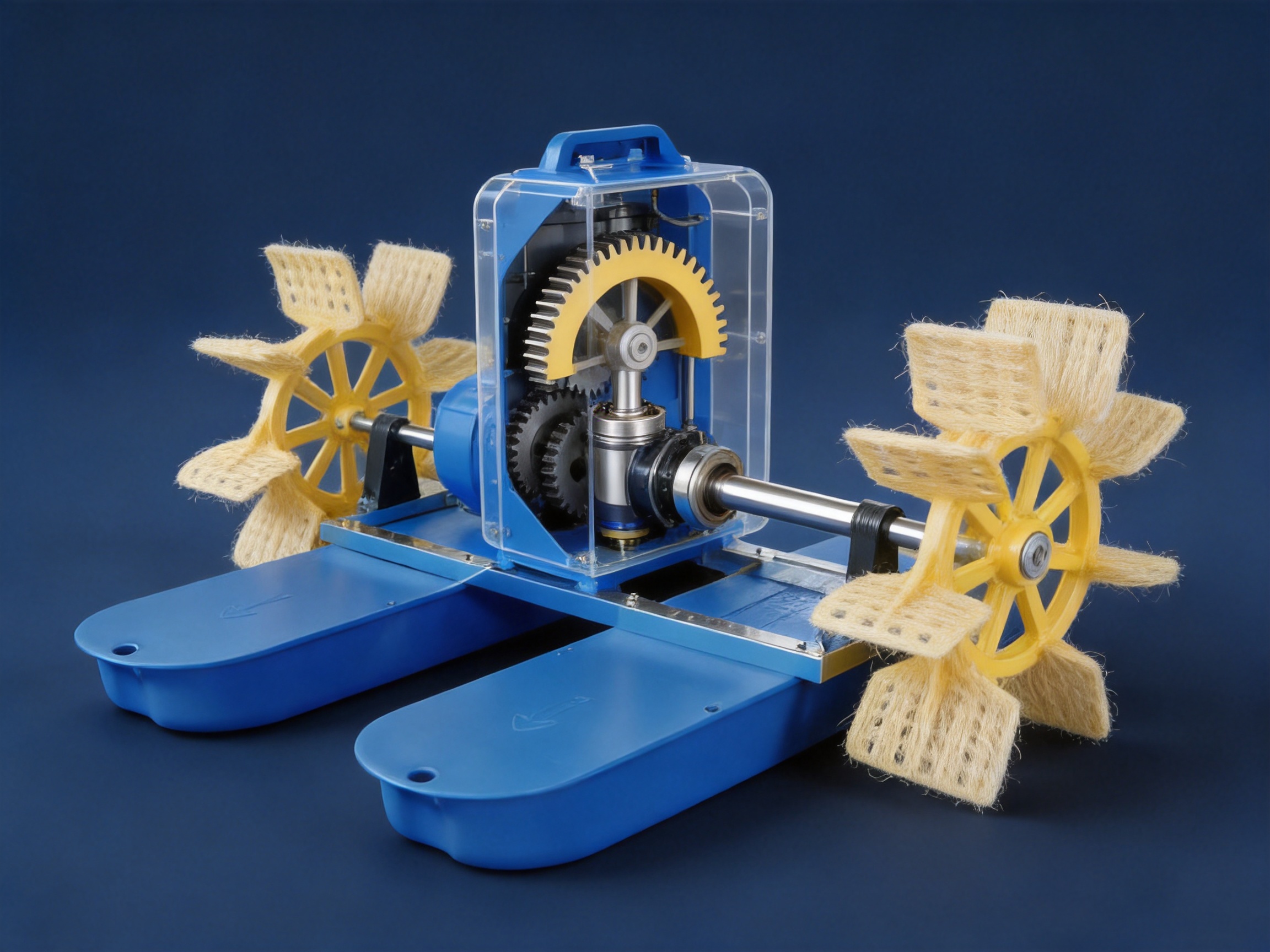
The most important mechanical improvement is the arc-shaped bevel gear transmission system. Traditional paddle wheel aerators often use worm gear structures. While worm gears are widely used in mechanical equipment, they may generate higher friction and heat and can result in lower transmission efficiency. The arc-shaped bevel gear arrangement is designed to transmit power more efficiently and to reduce energy consumption while maintaining stable paddle wheel rotation.
According to the provided product specifications, the redesigned transmission system can save more than 20 percent energy compared with conventional worm gear models. Actual results depend on operating conditions, water depth, pond size, load, maintenance, voltage stability, and operating schedule, but the design provides a clear advantage for farms seeking to reduce electricity consumption.
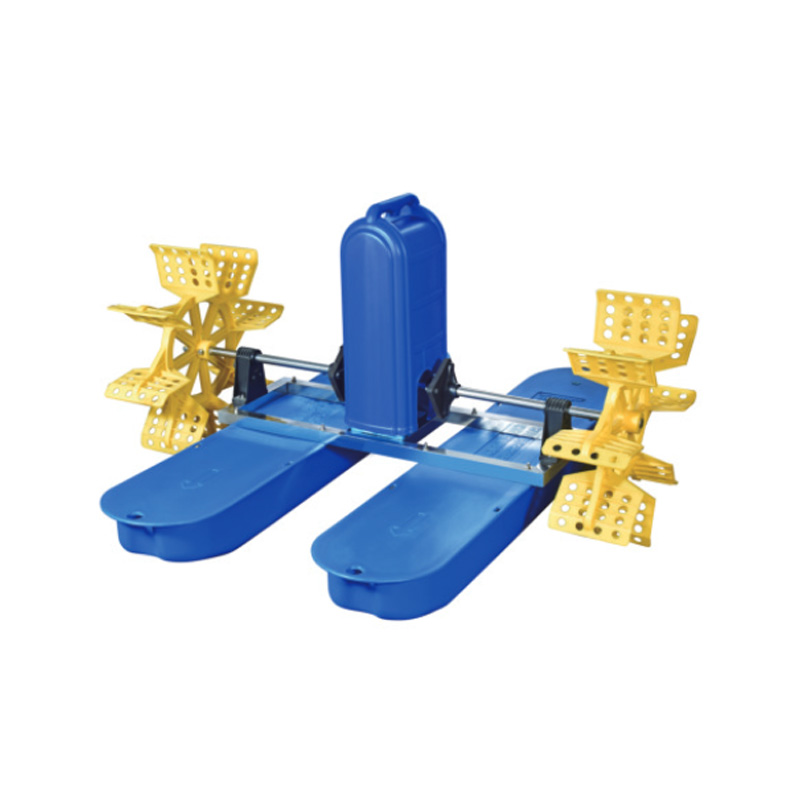
Paddle Wheel Aerator
Arc-Shaped Bevel Gear Transmission
The transmission system is the mechanical heart of a paddle wheel aerator. It transfers motor power to the paddle wheel and determines how efficiently electrical energy becomes useful water movement. A transmission system with excessive friction can waste energy as heat, increase component wear, and reduce the amount of power available for aeration.
This product replaces the traditional worm gear structure with an arc-shaped bevel gear system. The gear geometry is intended to support smoother power transmission and improved energy performance. By using a bevel gear arrangement, the drive system can transfer rotational force through a compact mechanical structure while maintaining the required output for the paddle wheel.
The gears are made from chromium-manganese-titanium alloy steel. This type of alloy steel is selected for demanding mechanical applications because it can provide a strong foundation for wear resistance and load-bearing performance when processed correctly. The gear surface receives carburizing and nitriding hardening treatment. These processes improve the hardness of the working surface while retaining a tougher internal structure, helping the gear resist wear and repeated contact stress.
Carburizing increases the carbon content near the surface of the steel, allowing the outer layer to become hard after heat treatment. Nitriding introduces nitrogen into the surface layer and can further improve surface hardness and resistance to friction. The combination of alloy steel and surface hardening is valuable in an aerator because the transmission may operate for long periods under continuous load.
Compared with a basic transmission that uses untreated or lightly processed gears, the hardened gear system can offer improved durability and more consistent operating performance. It also supports the product’s energy-saving objective by helping maintain efficient contact between the drive components. Stable gear engagement is important because irregular movement can create vibration, noise, power loss, and unnecessary stress on the motor and shaft.
For pond operators, the practical benefit is not limited to a lower theoretical energy figure. A well-designed transmission can help the aerator maintain stable paddle wheel speed, reduce avoidable mechanical losses, and support predictable oxygen transfer. For farms operating several aerators, even a moderate efficiency improvement per unit can produce a meaningful reduction in total electricity demand over a growing cycle.
Energy Efficiency for Commercial Pond Operations
Electricity is a recurring operating expense in aquaculture. Aerators may run for many hours each day, particularly during hot weather, high-density production, nighttime periods, or emergency oxygen conditions. A product that delivers the required aeration with lower energy consumption can help reduce operating costs without requiring the farm to compromise on oxygen management.
The claimed energy saving of more than 20 percent compared with conventional worm gear models is one of the product’s primary competitive advantages. The comparison is especially relevant for buyers replacing older aerators that use less efficient transmission systems. Lower energy demand may also reduce the load on the farm’s electrical distribution system, generators, or solar-assisted power infrastructure.
Energy efficiency can contribute to more flexible aerator scheduling. For example, a farm may be able to operate the equipment for longer periods within the same electricity budget, or operate several machines at the same time when oxygen demand is high. The correct operating strategy should always be determined by water quality monitoring, stocking density, weather, and professional aquaculture management.
Power efficiency is listed at not less than 1.25 kg oxygen per kilowatt-hour for the models in the provided table. This figure expresses the relationship between oxygen transfer and electrical energy input. A higher oxygen transfer value per unit of electricity generally indicates that the aerator can provide more useful aeration for the same power consumption.
Stable Oxygen Transfer and Water Movement
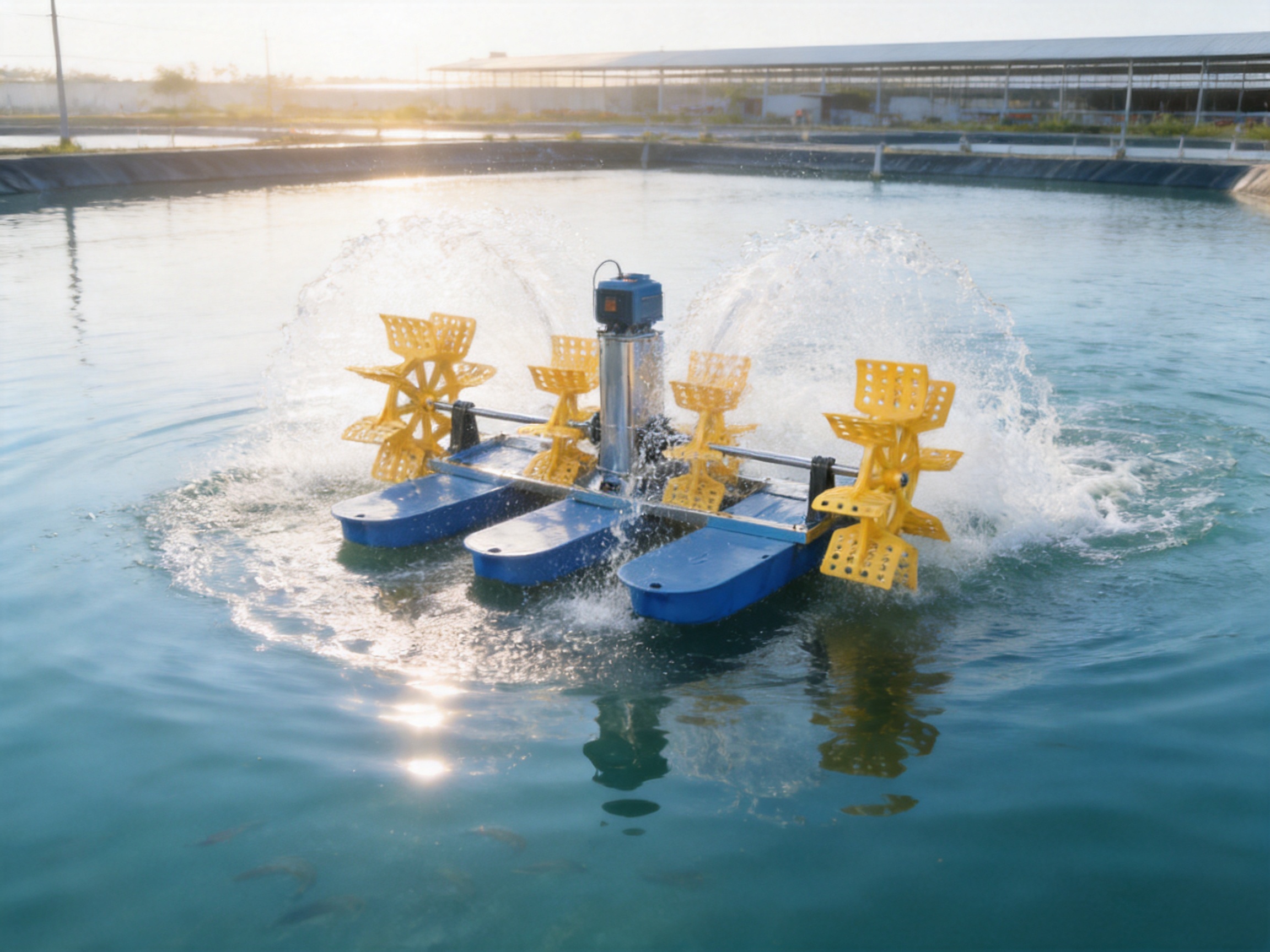
The paddle wheel works by rotating through the surface water and creating a combination of splashing, lifting, and horizontal movement. This action increases the water-air interface and encourages oxygen to enter the water. At the same time, the resulting current helps move water away from the aerator and brings lower-oxygen water toward the surface.
The listed oxygen transfer rates range from at least 1.10 kg oxygen per hour for the 0.75 kW model to at least 1.90 kg oxygen per hour for the 1.5 kW models. The actual oxygen transfer achieved at a particular site will depend on water temperature, salinity, altitude, organic loading, pond geometry, water depth, paddle wheel positioning, and other conditions.
Stable rotation is essential because inconsistent paddle speed can lead to irregular splashing and uneven aeration. The arc-shaped bevel gear system is designed to maintain steady power transmission, helping the paddle wheel produce a consistent operating pattern. This is useful for ponds where continuous circulation and predictable oxygen delivery are important.
When multiple aerators are installed, their positions should be planned to promote circulation throughout the pond rather than concentrating movement in one area. Installation layout may vary according to pond shape, water depth, inlet and outlet locations, stocking density, and the farm’s water management system. Operators should avoid positioning aerators so that water currents create excessive erosion, disturb pond liners, or cause feed and sediment to accumulate in undesirable areas.
Durable Materials for Wet and Demanding Conditions
Aquaculture equipment operates in a challenging environment. It is exposed to water, humidity, splashing, suspended solids, biological material, and frequent starts and stops. Saltwater or brackish water can be especially demanding because dissolved salts may accelerate corrosion of unsuitable metals. The material selection of this paddle wheel aerator is therefore an important part of its design.
Stainless Steel Shaft and Frame
The shaft and frame are made from stainless steel. Stainless steel is widely used in wet equipment because it offers strong corrosion resistance and mechanical durability. The shaft must transmit torque from the gearbox to the paddle wheel, while the frame must support the motor, transmission, impeller, and floating structure. These parts need to remain stable under vibration and repeated loading.
A stainless steel structure can also simplify cleaning and routine inspection. Smooth, corrosion-resistant surfaces are less likely to deteriorate rapidly in comparison with ordinary unprotected steel. However, operators should still rinse and inspect the equipment regularly, especially when the aerator is used in saline water or when organic deposits collect around the shaft and frame.
Nylon Impeller
The impeller is made from nylon and is designed to provide effective surface agitation with relatively low weight. Nylon is resistant to many common forms of moisture-related deterioration and does not rust. Its lower mass can reduce handling difficulty and may help decrease the mechanical load during acceleration.
The paddle wheel is one of the most active parts of the machine. It experiences repeated contact with water, possible impact from floating debris, and continuous rotational stress. Operators should inspect the nylon paddles for cracks, distortion, looseness, or unusual wear. Damaged or unbalanced paddles should be replaced promptly because an imbalanced impeller can increase vibration and place additional stress on the shaft and transmission.
Plastic Floats
The floating supports are made from plastic. Their role is to maintain the aerator at the water surface and provide buoyancy for the operating assembly. Plastic floats are not affected by rust in the same way as ferrous metal floats, and they can help keep the overall product weight manageable.
Float condition should be checked before installation and throughout the service life of the equipment. Cracks, punctures, deformation, or loose mounting points may reduce stability. The aerator must remain level and securely supported so that the paddle wheel enters the water at the intended position.
Mechanical Seal and Oil Leakage Prevention
Sealing performance is essential in any motor-driven machine operating near water. Water entering the transmission or motor area can cause corrosion, lubricant contamination, electrical problems, and premature failure. At the same time, lubricant must remain inside the gear housing to protect the gears and bearings.
This paddle wheel aerator uses a mechanical seal with an oil leakage prevention design. A mechanical seal is engineered to maintain a controlled sealing interface between rotating and stationary components. When correctly installed and maintained, it helps limit the escape of lubricating oil and reduces the possibility of water entering critical mechanical areas.
The seal contributes to both equipment reliability and environmental responsibility. Preventing oil leakage helps protect the surrounding pond water and reduces the chance of contamination around the aerator. Operators should inspect the sealing area for oil marks, water ingress, abnormal heat, or unusual noise. A seal that shows signs of failure should be serviced before continued operation causes damage to the transmission.
Seal life may depend on alignment, shaft condition, operating temperature, water quality, operating hours, and maintenance practices. The machine should not be operated with a visibly damaged seal or with insufficient lubricant. Service procedures should follow the manufacturer’s technical guidance and should be carried out by qualified personnel when internal components must be opened.
Built-In Motor Protection
The motor includes a built-in protection device designed to help prevent damage caused by abnormal operating conditions. Electrical motors can be affected by overload, overheating, voltage abnormalities, blocked or overloaded mechanical components, and other problems. A protection device can help reduce the risk of severe motor damage when such conditions occur.
Motor protection does not eliminate the need for correct electrical installation. The aerator should be connected to a suitable power supply with correctly sized wiring, switching equipment, grounding, and protective components. The voltage must match the selected model. The 220 V and 380 V configurations should not be interchanged without confirming compatibility with the motor and the complete electrical system.
Operators should also consider the starting current of the motor, the length of the power cable, the capacity of the distribution panel, and the presence of other high-load equipment on the same circuit. Electrical work should be completed by qualified professionals in accordance with applicable local requirements.
If the protection device activates repeatedly, the aerator should not simply be restarted again and again. Repeated trips may indicate a mechanical obstruction, damaged bearing, low voltage, incorrect wiring, excessive load, water ingress, or another underlying issue. The cause should be identified before normal operation resumes.
Manufacturing Strengths and Production Approach
Zhejiang ZhenTai Mechanical and Electrical Co., Ltd. is based in Zhaoyang Industrial Park, Daxi Town, Wenling City, Zhejiang Province, China. Wenling is recognized as an important manufacturing area for pumps, motors, and mechanical and electrical products. The company’s location provides access to an industrial supply chain, engineering resources, component suppliers, and manufacturing experience related to water equipment.
The company was established in 2018 and has developed a product portfolio of more than 90 products across 10 series. Its products include floating aerators, impeller aerators, water wheel aerators, water pumps, submersible pumps, and air blowers. This range allows the company to serve customers with different requirements, from pond oxygenation and water circulation to irrigation, drainage, and industrial water handling.
A broad product portfolio can strengthen manufacturing efficiency because related products may share engineering knowledge, component sourcing, testing methods, and after-sales experience. Experience with water pumps and aerators also helps a manufacturer understand the practical problems faced by farms, contractors, distributors, and equipment integrators.
The paddle wheel aerator reflects a product development approach that combines an established operating concept with a redesigned transmission system. Instead of changing only the motor rating or impeller shape, the design focuses on the mechanical power path. Replacing the traditional worm gear structure with an arc-shaped bevel gear system demonstrates attention to transmission efficiency, surface treatment, sealing, and long-term operating performance.
The specified use of chromium-manganese-titanium alloy steel, carburizing, nitriding, stainless steel, nylon, plastic floats, and mechanical sealing indicates a component-by-component approach to product design. Each material is selected for a particular operating requirement, including wear resistance, corrosion resistance, buoyancy, weight, sealing, or mechanical strength.
Quality-Oriented Component Selection
Reliable manufacturing begins with consistent raw materials and controlled processing. Gear performance depends on the composition of the alloy steel, heat treatment, surface hardness, dimensional accuracy, and assembly quality. Shaft and frame performance depends on material thickness, welding or fastening quality, alignment, and corrosion resistance. Impeller performance depends on molding quality, balance, dimensional stability, and secure attachment.
The product’s design provides a foundation for quality control at several stages. Gear components can be checked after carburizing and nitriding for surface condition and dimensional conformity. Shafts can be inspected for straightness and fit. Frames can be checked for structural stability and alignment. Floats can be examined for buoyancy and mounting integrity. Complete units can be tested for rotation, vibration, sealing, noise, and electrical performance.
Although the exact factory inspection procedures may vary according to production order and configuration, these manufacturing priorities are important for a product intended to run in ponds for long periods. Consistency from unit to unit is particularly valuable for distributors and commercial farms that purchase multiple machines.
OEM and ODM Support
The company provides customized OEM and ODM services for global buyers. This can be useful for importers, distributors, aquaculture equipment brands, engineering contractors, and agricultural supply companies that need products adapted to a particular market or project.
Customization may involve product labeling, packaging, documentation, electrical configuration, product combinations, or other agreed requirements. Any modification should be confirmed through technical communication before production. Important parameters include voltage, frequency, motor power, plug or cable requirements, packing dimensions, labeling language, and applicable market expectations.
OEM and ODM capability can also help buyers develop a coordinated equipment range. A distributor may need paddle wheel aerators together with water pumps, submersible pumps, or air blowers. Working with a manufacturer that produces several related product categories can simplify sourcing and support a more consistent product strategy.
Specification Summary
The following table summarizes the technical information supplied for the available paddle wheel aerator models. Buyers should confirm final specifications, electrical requirements, packaging details, and testing conditions with the manufacturer before placing an order.
| Model | Voltage | Power | Oxygen Transfer Rate | Power Efficiency | No-Load Noise | Weight | Quantity per 20-Foot Container |
|---|---|---|---|---|---|---|---|
| ZT-0.75 | 380 V | 0.75 kW | At least 1.10 kg O₂/h | At least 1.25 kg O₂/kWh | Not more than 78 dB(A) | 80 kg | 85 units |
| ZT-1.1 | 380 V | 1.1 kW | At least 1.25 kg O₂/h | At least 1.25 kg O₂/kWh | Not more than 80 dB(A) | 80 kg | 85 units |
| ZT-1.5 | 220 V | 1.5 kW | At least 1.90 kg O₂/h | At least 1.25 kg O₂/kWh | Not more than 80 dB(A) | 100 kg | 70 units |
| ZT-1.5 | 380 V | 1.5 kW | At least 1.90 kg O₂/h | At least 1.25 kg O₂/kWh | Not more than 80 dB(A) | 100 kg | 70 units |
The model information shows that the 1.5 kW versions provide the highest listed oxygen transfer rate. The 220 V model may suit sites with a compatible single-phase electrical arrangement, while the 380 V options may suit facilities with three-phase power. Electrical selection must be based on the complete power system and should be confirmed before shipment.
The listed no-load noise levels are not more than 78 dB(A) for the 0.75 kW model and not more than 80 dB(A) for the other listed models. Noise during actual pond operation may differ because water movement, installation conditions, surrounding structures, and mechanical loading can affect sound levels.
Installation Guidance
Correct installation is essential for safe and efficient operation. Before placing the aerator on the pond, inspect the motor, gearbox, impeller, shaft, frame, floats, fasteners, cable, and sealing areas. Confirm that no part has been damaged during transport. All protective packaging should be removed before operation, but packaging materials should not be discarded until the equipment has been checked.
The aerator should be installed securely on the water surface before it is energized. The floating supports must be properly positioned, and all mounting points should be tightened. The machine should remain stable and level. If the unit tilts excessively, the paddle wheel may enter the water unevenly, resulting in abnormal vibration, uneven oxygenation, or increased load on the shaft.
Electrical connections must be protected from water exposure. Cables should be routed so that they do not hang loosely in the water, rub against sharp edges, or become trapped by moving parts. A suitable switch and protective system should be provided. Grounding is important for electrical safety, particularly in a wet environment.
Before the first full operation, rotate or inspect the impeller according to the manufacturer’s instructions to ensure that it can move freely. Check that there are no ropes, weeds, plastic, branches, or other debris near the paddle wheel. Start the equipment briefly and observe the rotation, water movement, vibration, sound, and float stability. Stop the machine immediately if there is abnormal noise, heavy vibration, oil leakage, electrical odor, or unstable floating behavior.
The aerator should not be installed where pond banks, liners, cages, walkways, or other structures can interfere with the paddle wheel. Adequate clearance should be maintained around the moving components. In areas where people or animals may approach the equipment, additional safety measures may be necessary.
Operation and Pond Management
Aeration requirements vary throughout the production cycle. Oxygen demand generally rises as fish or shrimp biomass increases. Warm water can hold less dissolved oxygen than cool water, while high temperatures may also increase the metabolism of cultured animals and microorganisms. Cloudy weather can reduce photosynthetic oxygen production, and nighttime conditions naturally eliminate photosynthetic oxygen generation.
The aerator may be operated continuously or according to a planned schedule. The correct approach depends on the pond’s oxygen readings, stocking density, feeding program, water temperature, weather, and farm management plan. A dissolved oxygen meter can provide useful information for adjusting operating times and identifying periods of elevated risk.
During operation, the paddle wheel should create a consistent water pattern without excessive splashing outside the pond. Operators should observe whether the current reaches the intended pond area and whether dead zones remain. If several aerators are used, their positions may need to be adjusted to improve circulation and prevent localized accumulation of organic matter.
It is important not to treat the aerator as a substitute for complete water quality management. Aeration supports oxygen transfer and circulation, but it does not independently control ammonia, nitrite, pH, alkalinity, salinity, suspended solids, or disease. Effective aquaculture requires a combination of water testing, appropriate feeding, biomass control, waste management, and biosecurity.
Maintenance Recommendations
Regular inspection helps protect the investment and maintain consistent aeration performance. A basic inspection should include the impeller, shaft, frame, floats, fasteners, mechanical seal, gearbox, electrical cable, and motor protection system.
Remove weeds, ropes, feed bags, plastic, and other debris from around the paddle wheel. Foreign material can restrict rotation and increase motor load. If the impeller becomes partially blocked, the motor may overheat or the protection device may activate. Cleaning should be carried out only after the power supply has been disconnected and the moving parts have completely stopped.
Inspect the nylon paddles for cracks, deformation, looseness, and uneven wear. A damaged paddle can reduce oxygen transfer and create imbalance. All paddles should remain properly secured. If a replacement is required, the replacement part should match the original design and should be installed so that the impeller remains balanced.
Check the stainless steel shaft for corrosion marks, bending, abnormal movement, or wear near the seal and bearing areas. Examine the frame for loose fasteners or structural damage. The plastic floats should be checked for cracking, leakage, or loss of buoyancy. Any component that affects the stability of the aerator should be repaired or replaced before the unit is returned to service.
Inspect the mechanical seal for oil leakage and water intrusion. A small amount of contamination around the seal may indicate an early problem. If oil is visible in the pond or around the gearbox, stop the machine and investigate the source. Continued operation with a failing seal can damage internal parts and may affect water quality.
Gear lubricant should be checked and replaced according to the manufacturer’s maintenance schedule and the actual operating environment. Using the wrong lubricant or operating with an insufficient level can increase friction and heat. Internal gearbox work should be performed by trained personnel in a clean environment to prevent contamination.
Electrical cables, terminals, switches, and protective components should be inspected for moisture, looseness, damage, or overheating. If the built-in motor protection activates repeatedly, the cause must be diagnosed rather than bypassed. Operators should keep a maintenance record that includes operating hours, inspections, repairs, lubricant changes, and unusual events.
Advantages Compared with Conventional Paddle Wheel Designs
The product’s principal advantage over conventional worm gear paddle wheel aerators is its redesigned transmission system. By using an arc-shaped bevel gear structure, the machine is intended to reduce mechanical energy loss and provide more efficient operation. The stated energy saving of more than 20 percent offers a clear point of differentiation for farms concerned about electricity costs.
The gear material and surface treatment provide a second advantage. Chromium-manganese-titanium alloy steel combined with carburizing and nitriding hardening is designed to improve surface durability and resistance to repeated gear contact. This is especially important in an aerator expected to operate for extended periods in a humid environment.
The mechanical seal adds another layer of protection. Oil leakage prevention helps preserve lubricant inside the gearbox and reduces the risk of contamination around the machine. The built-in motor protection device further supports operational reliability by helping respond to abnormal conditions.
The combination of stainless steel structural parts, nylon impellers, and plastic floats also offers a balanced design. The stainless steel shaft and frame provide corrosion resistance and strength, while the nylon impeller and plastic floats help reduce corrosion concerns and keep the equipment manageable during installation.
Compared with basic low-cost models that focus primarily on motor output, this aerator pays attention to the complete operating system. Transmission efficiency, gear treatment, sealing, motor protection, component materials, and manufacturing support all contribute to the total value of the equipment.
Applications Beyond Standard Fish Ponds
The aerator is suitable for a variety of aquaculture applications. Fish farms may use it to support oxygenation in earthen ponds, concrete tanks, or lined water bodies. Shrimp farms can use paddle wheel aeration to improve surface agitation and circulation in production ponds. The appropriate model and quantity will depend on pond size, stocking density, species, salinity, and the farm’s oxygen management plan.
The equipment may also be used in ecological lakes, landscape water bodies, and other managed water environments where circulation and oxygenation are required. In these settings, the operator should consider appearance, sound, placement, access for maintenance, and the protection of nearby aquatic plants or structures.
Water treatment and environmental applications may require mechanical aeration to support biological activity or reduce stagnant conditions. Before applying the unit in a specialized process, the buyer should confirm chemical compatibility, operating temperature, water quality, required oxygen transfer, and any project-specific safety requirements.
Because the company also supplies water pumps, submersible pumps, and air blowers, customers may be able to combine the paddle wheel aerator with other equipment for water intake, circulation, drainage, or supplemental aeration. A complete system should be designed according to the actual hydraulic and biological requirements of the project.
Selection Considerations for Importers and Distributors
Importers and distributors should begin by identifying the electrical standards of their target market. The available configurations include 220 V and 380 V models, but voltage, frequency, phase, cable design, motor protection, plugs, and documentation should all be confirmed. A product suitable for one market may require adaptation for another.
Shipping and logistics are also important. The listed weight is 80 kg for the 0.75 kW and 1.1 kW models and 100 kg for the 1.5 kW models. The stated loading quantity for a 20-foot container is 85 units for the 0.75 kW and 1.1 kW models and 70 units for the 1.5 kW models. Final shipping volume and loading arrangements should be verified according to packaging configuration.
Distributors should request product drawings, installation instructions, spare parts information, maintenance recommendations, and electrical specifications. They should also establish how warranty claims, replacement components, and technical questions will be handled. Since paddle wheel aerators operate in water, access to seals, impellers, fasteners, and other wear-related parts can be important for after-sales service.
OEM and ODM buyers should discuss branding, packaging, labels, manuals, colors, model names, and any market-specific requirements before production begins. Clear technical communication reduces the risk of misunderstanding and helps ensure that the finished equipment matches the buyer’s sales and service plans.
Why Manufacturing Support Matters to End Users
For an aquaculture farm, an aerator is not simply a piece of hardware. It is part of a production system that affects animal health, water quality, electricity use, labor, and operational risk. A manufacturer’s ability to provide technical guidance and replacement support can therefore be as important as the initial product price.
Zhejiang ZhenTai Mechanical and Electrical Co., Ltd. focuses on product development, manufacturing, OEM/ODM service, and technical support. Its experience across aerators, pumps, and air blowers gives the company a practical understanding of water equipment applications. This broader capability can help buyers select complementary products and resolve application questions.
The company’s stated focus on quality, integrity, technological innovation, reliable products, and professional customer service supports its role as a supply partner for international buyers. Customers can use the company’s product range for aquaculture farms, irrigation projects, building foundation drainage, environmental protection, chemical industries, household water supply, landscape lakes, and flood control and drainage.
A factory with a diversified product range may also be better positioned to support long-term cooperation. Product improvements can be developed from field feedback, and manufacturing resources can be applied across related equipment categories. For distributors, this can simplify communication and create opportunities to build a complete water equipment portfolio.
Safety and Responsible Use
All installation, wiring, inspection, and repair work should be conducted with appropriate safety precautions. Power must be disconnected before personnel approach the impeller, shaft, gearbox, or electrical components. The equipment should never be handled while the paddle wheel is rotating.
Because the aerator is installed on water, electrical safety deserves special attention. Connections should be protected against moisture, and grounding and leakage protection should be provided as required by local regulations. Damaged cables, switches, or enclosures should be replaced rather than temporarily repaired with unsuitable materials.
Operators should keep people, clothing, ropes, nets, and tools away from rotating parts. Children and unauthorized personnel should not be permitted to approach the equipment. The pond area should have clear procedures for emergency shutdown and maintenance access.
Responsible operation also includes preventing lubricant leakage, collecting damaged plastic components, and disposing of used oil and replacement parts correctly. Maintaining the aerator helps extend its life and reduces the environmental impact associated with premature replacement.
Q&A
What is the main function of this paddle wheel aerator?
The main function is to increase dissolved oxygen and improve water circulation in fish ponds, shrimp ponds, aquaculture farms, lakes, and other managed water environments. The rotating nylon paddle wheel agitates the water surface and promotes contact between air and water.
How is this model different from a conventional worm gear aerator?
It uses an arc-shaped bevel gear transmission system instead of the traditional worm gear structure. The redesigned transmission is intended to reduce mechanical energy losses and provide energy savings of more than 20 percent compared with conventional worm gear models.
What materials are used in the product?
The gears use chromium-manganese-titanium alloy steel with carburizing and nitriding hardening. The impeller is made from nylon, the shaft and frame are made from stainless steel, and the floats are made from plastic. The equipment also uses a mechanical seal for oil leakage prevention.
Which power ratings are available?
The listed power ratings are 0.75 kW, 1.1 kW, and 1.5 kW. The 1.5 kW model is listed in both 220 V and 380 V configurations, while the 0.75 kW and 1.1 kW models in the supplied specifications are listed at 380 V.
What oxygen transfer rate can the aerator provide?
The listed oxygen transfer rate is at least 1.10 kg oxygen per hour for the 0.75 kW model, at least 1.25 kg oxygen per hour for the 1.1 kW model, and at least 1.90 kg oxygen per hour for the 1.5 kW models. Actual performance depends on water and operating conditions.
Can the aerator be used in shrimp ponds?
Yes. The product is promoted for fish and shrimp ponds. Shrimp pond operators should select the model quantity and installation layout according to stocking density, pond dimensions, salinity, oxygen demand, water depth, and local management practices.
Does the aerator require regular maintenance?
Yes. Operators should inspect the paddle wheel, shaft, frame, floats, fasteners, mechanical seal, gearbox, electrical system, and motor protection device. Debris should be removed, lubricant should be maintained, and damaged components should be repaired or replaced promptly.
What should be done if the motor protection device activates?
The equipment should be switched off and inspected. Possible causes include overload, blocked paddles, abnormal voltage, water ingress, mechanical damage, or wiring problems. The protection device should not be bypassed, and repeated activation should be investigated by qualified personnel.
Can the product be customized for international buyers?
The manufacturer provides OEM and ODM services. Buyers can discuss electrical configurations, labeling, packaging, documentation, and other agreed requirements. All technical details should be confirmed before production.
What should buyers confirm before ordering?
Buyers should confirm voltage, frequency, phase, power, oxygen transfer requirements, pond application, quantity, packaging, loading information, spare parts, documentation, delivery terms, and after-sales support. They should also verify the final specification for the selected model.
Conclusion
The electric paddle wheel aerator is designed to provide practical and efficient oxygenation for fish ponds, shrimp ponds, aquaculture farms, lakes, and related water applications. Its main technical advantage is the arc-shaped bevel gear transmission, which replaces a conventional worm gear structure and is designed to reduce energy consumption by more than 20 percent. This efficiency focus can be especially valuable for commercial farms operating several aerators for long periods.
The product also combines chromium-manganese-titanium alloy steel gears, carburizing and nitriding hardening, stainless steel shafts and frames, nylon impellers, plastic floats, a mechanical seal, and built-in motor protection. Together, these features support durability, stable operation, corrosion resistance, oil leakage prevention, and protection against abnormal motor conditions.
Behind the product is a Chinese manufacturer with experience in aerators, water pumps, submersible pumps, and air blowers. With more than 90 products across 10 series, OEM/ODM capability, and applications covering aquaculture, irrigation, drainage, environmental protection, and industrial water handling, the company can support both individual equipment purchases and broader project requirements.
For the best results, buyers should match the model to their electrical system and oxygen demand, install the unit securely, monitor dissolved oxygen, maintain the mechanical and electrical components, and follow safe operating procedures. When selected and managed correctly, this paddle wheel aerator can be a dependable tool for improving pond oxygenation while controlling energy use and supporting more stable aquaculture production.
References
1. Product specification sheet for the electric paddle wheel aerator, including model ratings, oxygen transfer data, power efficiency, noise, weight, and container loading information.
2. Manufacturer-provided technical description of the arc-shaped bevel gear transmission system, alloy steel gears, carburizing and nitriding treatment, mechanical seal, motor protection, nylon impeller, stainless steel frame, and plastic floats.
3. Manufacturer company information for Zhejiang ZhenTai Mechanical and Electrical Co., Ltd., including product categories, manufacturing location, OEM/ODM services, and application sectors.
4. General aquaculture engineering principles concerning dissolved oxygen, mechanical surface aeration, water circulation, pond management, and aerator maintenance.
5. General mechanical engineering principles concerning bevel gear transmission, carburizing, nitriding, corrosion-resistant materials, mechanical seals, and motor protection systems.